

|
시장보고서
상품코드
2154911
남미의 파사드 : 시장 점유율 분석, 업계 동향과 통계, 성장 예측(2026-2031년)South America Facade - Market Share Analysis, Industry Trends & Statistics, Growth Forecasts (2026 - 2031) |
||||||
 Mordor Intelligence
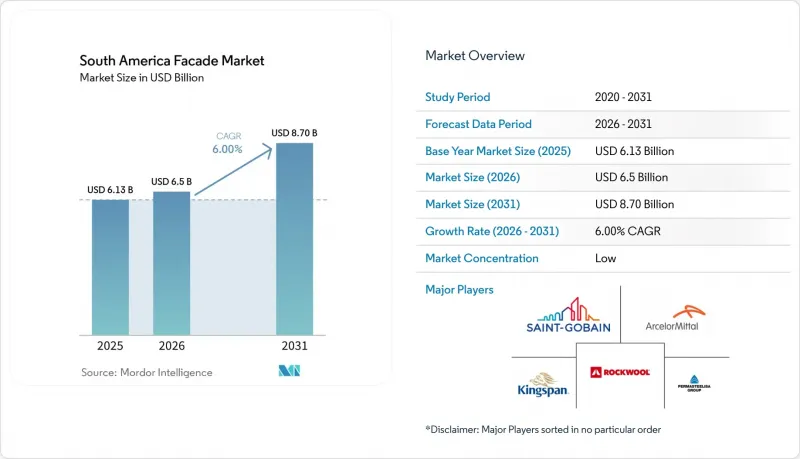
에 따르면 남미의 파사드 시장 규모는 2025년에 61억 3,000만 달러로 평가되며, 2026년 65억 달러에서 2031년까지 87억 달러에 달할 것으로 예측되고 있으며, 예측 기간(2026-2031년)에 CAGR은 6%에 달할 전망입니다.
남미 파사드 시장의 동향 및 인사이트
상업 및 인프라 건설의 회복이 파사드 수요를 견인
브라질에서는 2025년 4월부터 2026년 4월 사이에 43만 8,000세대의 주택이 준공되어, 이에 따라 알루미늄 형재, 건축용 유리, 창문 및 파사드 시스템에 대한 수요가 유지되었습니다. 이 나라의 건설 활동에는 더 다양한 유형의 외장 자재가 필요한 공공 사업 및 상업 프로젝트도 포함됩니다. 칠레에서는 2026년 건설 투자 총액이 4.8% 증가할 것으로 예측되며, 그 원인 중 하나로 광업 및 에너지 인프라를 꼽을 수 있습니다. 이러한 시설에서는 기상 조건에 노출되거나 가혹한 운영 환경을 견딜 수 있는 내구성이 뛰어난 외장이 요구되는 경우가 많습니다. 따라서 남미의 파사드 시장에서는 사무실 건물뿐만 아니라 물류 시설, 데이터센터, 에너지 관련 시설 등에서도 수요가 있습니다. 시각적 투명성보다 시공 속도, 단열성, 내구성이 중시되는 경우, 금속나 단열 패널 시스템이 적합할 수 있습니다.
에너지 절약 건축 요건의 강화가 고성능 파사드의 채택을 촉진
브라질에서는 2025년 9월, 신축 건물에 대한 최소 에너지 성능 기준이 공표되었으며, 2027년부터 순차적으로 적용이 시작됩니다. 연방 정부의 공공 건축물은 2027년까지 ‘국가 에너지 절약 라벨’ 레벨 A를 달성해야 하며, 반면 신규 민간 상업 건축물은 2030년 이후 최소한 레벨 C를 충족해야 합니다. 파사드 설계는 일사열 획득, 단열성, 기밀성, 유리 및 통기층의 성능을 통해 이러한 성과에 영향을 미칩니다. 이 기준으로 인해 상업 시설 및 공공 시설 프로젝트에서 고성능 유리, 단열 알루미늄 프레임 및 통기형 클래딩의 중요성이 높아지고 있습니다. 남미의 파사드 시장에서는 개발업자들이 의무화일 이전에 에너지 성능 인증을 취득하려 할 가능성이 있으므로, 사양 변경이 조기에 발생할 수 있습니다. 이에 따라 시험을 거친 시스템과 명확한 성능 문서를 제공하는 공급업체가 유리한 입장에 서게 될 것입니다.
알루미늄, 철강, 유리, 수지의 가격 변동이 비용을 상승시키고 있습니다.
알루미늄, 철강, 유리, 수지의 비용은 파사드 시스템에 투입되는 자재의 대부분을 차지하므로 프로젝트 예산을 좌우합니다. 가격 변동으로 인해 설계 및 시공 기간이 긴 프로젝트에서는 이익률을 유지하기 어려워질 수 있습니다. 시공사는 대체 패널을 도입하거나 조달 일정을 재검토함으로써 이에 대응할 가능성이 있습니다. 고급 커튼월이나 유닛화 시스템은 성능 요건으로 인해 자재 대체가 제한되므로 여전히 위험에 노출되어 있습니다. 남미의 파사드 시장에서는 개발업자가 가격 상승 조항을 확신 있게 설정하지 못할 경우, 조달 결정이 지연될 가능성이 있습니다. 공급 옵션과 투명성이 높은 가격 메커니즘을 유지하고 있는 공급업체는 고객을 위해 이러한 위험을 완화할 수 있습니다.
부문 분석
2025년, 통기형 파사드는 지역별 유형별 매출의 52%를 차지하며 최대 부문이 되었습니다. 이 시스템의 공기층은 외장재와 구조체를 분리하여 열 관리, 습기 배출 및 환기를 가능하게 합니다. 이러한 기능 덕분에 이 시스템은 상업용 고층 빌딩, 공공 시설 및 고부가가치 주택 건축에 적합합니다. 브라질 건설 산업 협회는 2025년 7개 주의 전문가들과 통기식 파사드의 성능에 대해 협의했습니다. 이러한 노력은 이전에는 고급 프로젝트로만 제한되었던 이 시스템에 대한 기술적 관심이 높아지고 있음을 반영합니다. 통기형 파사드는 2031년까지 연평균 성장률(CAGR) 6.5%로 성장할 것으로 예측됩니다. 가장 규모가 크게 성장 속도가 빠른 유형으로서의 위상은, 더 많은 건축 분야로 채택이 확대될 여지가 있음을 시사합니다.
비통기식 파사드 및 기타 유형은 저비용 주택이나 대량 생산형 주택 분야에서 여전히 중요한 역할을 하고 있습니다. 이러한 대안은 건축주가 초기 비용이나 기존 시공 방식을 우선시할 때 채택하기 쉬운 경우가 있습니다. 또한 에너지 요구 사항이 그리 엄격하지 않거나 프로젝트 예산이 엄격하게 관리되는 경우에도 적합합니다. 그러나 에너지 성능과 습기 대책의 중요성이 점점 더 커지고 있는 상업 프로젝트에서는 이러한 선택지의 입지가 어려워질 것입니다. 브라질의 새로운 에너지 요구 사항에 따라 라벨이나 적합성 기록을 통해 건축 외피의 성능을 입증해야 할 필요가 생겼습니다. 따라서 남미의 파사드 시장에서는 다양한 유형의 조합이 유지되는 한편, 첨단인 프로젝트에서는 고성능 시스템이 더 큰 역할을 하게 될 것입니다. 공급업체는 기존 시스템에 더해, 시험을 거친 통기형 솔루션을 제공함으로써 양쪽의 요구를 모두 충족시킬 수 있습니다.
2025년 기준으로 커튼월 시스템은 남미 파사드 시장의 42%를 차지하며, 가장 큰 파사드 시스템 부문으로 자리매김하고 있습니다. 이러한 시스템은 유리와 알루미늄으로 연속적인 외장면을 형성하는 고층 사무실, 복합 용도 건물, 호텔, 공공 시설 등의 프로젝트에서 널리 채택되고 있습니다. 비내력 구조이므로 건물의 주요 구조가 완성된 단계에서 설치가 가능합니다. 대규모 프로젝트에서는 일사 제어 유리, 차양 요소, 신축 이음매를 통합하기 위해서도 커튼월이 채택되고 있습니다. 2025년에 완공된 상파울루의 MASP 피에트로 마리아 발디 확장관에서는 일사량을 제어하고 에너지 소비를 줄이기 위해 파형 알루미늄으로 제작된 커튼 클래딩이 사용되었습니다. 커튼월은 디자인의 질과 에너지 성능 모두가 자산 가치를 결정하는 요소가 되는 고급 도시 개발과 앞으로도 밀접한 관련을 유지할 것입니다. 또한 이 시스템은 광범위하고 눈에 띄는 표면을 덮기 때문에 신뢰성 높은 엔지니어링과 시공 관리가 요구됩니다.
레인스크린 클래딩 시장은 2031년까지 연평균 성장률(CAGR) 6.8%로 성장할 것으로 예측되며, 이는 파사드 시스템 유형 중 가장 높은 성장률입니다. 이 시스템의 중공 구조는 물을 단열층에서 멀리 떨어뜨려 습기 관리를 지원합니다. 따라서 습도가 높은 지역, 연안 지역, 열대 지역은 물론 리모델링 프로젝트에서도 유용합니다. 레인스크린 솔루션에는 금속, 섬유 시멘트, 복합재, 석재 및 기타 패널 재료가 사용됩니다. 남미의 파사드 시장에서 기존 상업용 자산에 대해 공사 지장을 최소화하는 시스템을 요구하는 소유주가 늘어남에 따라 레인스크린 용도 시장 규모는 확대될 가능성이 있습니다. 한편, 외관이나 독자적인 소재 선택이 설계의 핵심이 되는 문화 시설이나 공공 시설 등의 특수한 프로젝트에서는 다른 시스템 유형도 여전히 중요한 역할을 하고 있습니다. 공급업체가 신축 및 리모델링 조건 모두에 적합한 모듈식 시스템을 제공한다면, 남미의 파사드 시장은 그 혜택을 누릴 수 있을 것입니다.
기타 혜택:
- 엑셀 형식의 시장 예측(ME) 시트
- 3개월간의 애널리스트 지원
자주 묻는 질문
목차
제1장 서론
- 조사 전제조건과 시장 정의
- 조사 범위
제2장 조사 방법
제3장 개요
제4장 시장 동향과 분석
- 시장 개요
- 시장 성장 촉진요인
- 시장 성장 억제요인
- 파사드 업계에서 이용되는 다양한 구조에 관한 개요
- 가격결정 분석
- 밸류·공급망 분석
- 규제 상황
- 기술 전망
- 업계의 매력 - Five Forces 분석 분석
- 소비자 행동 분석(건설업자, 건축가, 디벨로퍼, 개인 구입자, 시설·부동산 관리자/건물 소유주)
- 지속가능성의 동향
제5장 시장 규모와 성장 예측
- 유형별
- 파사드 시스템의 유형별
- 소재별
- 설치 형태별
- 최종사용자별
- 국가별
- 브라질
- 아르헨티나
- 콜롬비아
- 칠레
- 기타 남미 국가
제6장 경쟁 구도
- 시장 집중도
- 전략적 동향
- 시장 점유율 분석
- 기업 개요
- Compagnie de Saint-Gobain S.A.
- ArcelorMittal S.A.
- Kingspan Group plc
- ROCKWOOL A/S
- Permasteelisa Group
- AGC Inc.
- Reynaers Aluminium
- Schuco International SCS
- ALUK Group
- Etex N.V.
- Hunter Douglas N.V.
- Lindner Group
- Seele Unternehmensgruppe GmbH
- SABIC
- Sysbuilding Construcoes e Empreendimentos
- Arkos Brasil
- Kichler Engenharia de Fachadas
- TAMLYN do Brasil
- Aluminio Alcoa/Alcoa Corporation
- Hydro Extrusions/Norsk Hydro ASA
제7장 시장 기회와 향후 전망
KSA 26.10.28According to Mordor Intelligence, the South America facade market size was valued at USD 6.13 billion in 2025 and is estimated to grow from USD 6.5 billion in 2026 to reach USD 8.70 billion by 2031, at a CAGR of 6% during the forecast period (2026-2031).
South America Facade Market Trends and Insights
Commercial and Infrastructure Construction Recovery Drives Facade Demand
Brazil completed 438,000 housing units between April 2025 and April 2026, which sustained demand for aluminum profiles, architectural glass, windows, and facade systems. The country's construction activity also includes public works and commercial projects that require a broader range of external building materials. Chile projected 4.8% growth in total construction investment during 2026, led in part by mining and energy infrastructure. These facilities often need durable enclosures that manage weather exposure and operating conditions. The South America facade market, therefore, has demand beyond office towers, including logistics buildings, data centers, and energy-related facilities. Metal and insulated panel systems can be suitable where speed, thermal control, and durability matter more than visual transparency.
Energy-Efficient Building Requirements Increase High-Performance Facade Adoption
Brazil published minimum energy performance standards for new buildings in September 2025, with compliance stages beginning in 2027. Federal public buildings must reach Level A under the National Energy Conservation Label by 2027, while new private commercial buildings must meet at least Level C from 2030. Facade design affects these outcomes through solar heat gain, insulation, air leakage, glazing, and ventilation cavity performance. The standards make high-performance glazing, thermally broken aluminum frames, and ventilated cladding more relevant in commercial and institutional projects. The South America facade market is likely to see earlier specification changes because developers may seek energy credentials before the mandatory dates. This can favor suppliers that provide tested systems and clear performance documentation.
Aluminum, Steel, Glass, and Resin Price Volatility Raises Costs
Aluminum, steel, glass, and resin costs shape project budgets because they account for a large share of facade-system inputs. Price movements can make it difficult to protect margins on projects that have long design and construction periods. Contractors may respond by using alternative panels or by revising purchasing schedules. Premium curtain wall and unitized systems remain exposed because their performance requirements limit material substitution. The South America facade market can face delayed procurement decisions when developers cannot confidently set escalation provisions. Suppliers that maintain supply options and transparent price mechanisms can reduce this risk for customers.
Other drivers and restraints analyzed in the detailed report include:
- Urban Vertical Construction Boosts Facade System Demand
- Climate-Responsive Design Drives Moisture and Solar-Control Solutions
- Skilled Facade Installation Shortages Constrain Project Delivery
For complete list of drivers and restraints, kindly check the Table Of Contents.
Segment Analysis
Ventilated facades held 52% of regional type revenue in 2025 and were the largest type segment. Their air cavity separates the cladding from the structure and can support heat management, moisture drainage, and ventilation. These functions make the system relevant for commercial towers, institutional projects, and higher-value residential buildings. The Brazilian Chamber of Construction Industry discussed ventilated-facade performance with specialists from 7 states during 2025. This work reflects greater technical attention to a system that previously had a narrower premium-project base. Ventilated facades are forecast to grow at a 6.5% CAGR through 2031. Their position as both the largest and fastest-growing type shows that adoption has room to extend across more building categories.
Non-ventilated facades and other types remain relevant in lower-cost and mass-housing applications. These options can be easier to use when building owners prioritize initial cost and conventional construction methods. They can also remain suitable when energy requirements are less demanding or project budgets are tightly controlled. However, their position becomes more difficult in commercial projects as energy and moisture performance take greater importance. New Brazilian energy requirements add pressure to show envelope performance through labels and compliance records. The South America facade market is therefore likely to maintain a broad type mix while higher-performance systems take a larger role in advanced projects. Suppliers can serve both needs by offering conventional systems alongside tested ventilated solutions.
Curtain wall systems held 42% of the South America facade market in 2025, making them the largest facade-system segment. They are widely used in high-rise office, mixed-use, hotel, and institutional projects where glass and aluminum create a continuous exterior surface. Their non-load-bearing design can allow installation while the building's core structure is completed. Large projects also use them to integrate solar-control glazing, shading elements, and movement joints. The MASP Pietro Maria Bardi extension in Sao Paulo, completed in 2025, used corrugated aluminum curtain cladding to manage sunlight and lower energy use. Curtain walls will remain linked to premium urban development where design quality and energy performance are both part of the asset proposition. They also require reliable engineering and installation control because the systems cover large and visible surfaces.
Rainscreen cladding is forecast to grow at a 6.8% CAGR through 2031, the fastest rate among facade-system types. Its cavity arrangement can direct water away from the thermal envelope and support moisture control. This makes it relevant in humid, coastal, and tropical settings as well as in renovation projects. Rainscreen solutions can use metal, fiber cement, composite, stone, and other panel materials. The South America facade market size for rainscreen applications can expand as owners seek low-disruption systems for existing commercial assets. Other system types retain a role in specialty cultural and institutional projects where the external appearance or a unique material choice drives the design. The South America facade market can benefit when suppliers offer modular systems that suit both new construction and retrofit conditions.
Complete Report Scope:
- By Type
- Ventilated
- Non-Ventilated
- Others
- By Facade System Type
- Rainscreen Cladding
- Curtain Wall Systems
- Others
- By Material
- Glass
- Metal
- Plastic & Fibers
- Stone
- Others
- By Installation
- New Construction
- Renovation & Retrofit
- By End-User
- Commercial
- Residential
- Others
- By Country
- Brazil
- Argentina
- Colombia
- Chile
- Rest of South America
List of Companies Covered in this Report:
- Compagnie de Saint-Gobain S.A.
- ArcelorMittal S.A.
- Kingspan Group plc
- ROCKWOOL A/S
- Permasteelisa Group
- AGC Inc.
- Reynaers Aluminium
- Schuco International SCS
- ALUK Group
- Etex N.V.
- Hunter Douglas N.V.
- Lindner Group
- Seele Unternehmensgruppe GmbH
- SABIC
- Sysbuilding Construcoes e Empreendimentos
- Arkos Brasil
- Kichler Engenharia de Fachadas
- TAMLYN do Brasil
- Aluminio Alcoa / Alcoa Corporation
- Hydro Extrusions / Norsk Hydro ASA
Additional Benefits:
- The market estimate (ME) sheet in Excel format
- 3 months of analyst support
TABLE OF CONTENTS
1 Introduction
- 1.1 Study Assumptions & Market Definition
- 1.2 Scope of the Study
2 Research Methodology
3 Executive Summary
4 Market Insights and Dynamics
- 4.1 Market Overview
- 4.2 Market Drivers
- 4.2.1 Commercial and Infrastructure Construction Recovery Drives Facade Demand
- 4.2.2 Energy-Efficient Building Requirements Increase High-Performance Facade Adoption
- 4.2.3 Urban Vertical Construction Boosts Facade System Demand
- 4.2.4 Climate-Responsive Design Drives Moisture and Solar-Control Solutions
- 4.2.5 Building Retrofits Increase Facade Modernization Demand
- 4.2.6 Off-Site Fabrication Accelerates Facade Installation
- 4.3 Market Restraints
- 4.3.1 Aluminum, Steel, Glass, and Resin Price Volatility Raises Costs
- 4.3.2 Skilled Facade Installation Shortages Constrain Project Delivery
- 4.3.3 Fragmented Country and Municipal Regulations Increase Compliance Complexity
- 4.3.4 Limited Local Ventilated Facade Standards Slow Market Adoption
- 4.4 Brief on Different Structures Used in the Facades Industry
- 4.5 Pricing Analysis
- 4.6 Value / Supply-Chain Analysis
- 4.7 Regulatory Landscape
- 4.8 Technological Outlook
- 4.9 Industry Attractiveness - Porter's Five Forces Analysis
- 4.9.1 Bargaining Power of Suppliers
- 4.9.2 Bargaining Power of Consumers
- 4.9.3 Threat of New Entrants
- 4.9.4 Threat of Substitutes
- 4.9.5 Intensity of Competitive Rivalry
- 4.10 Consumer Behavior Analysis (Contractors, Architects, Developers, Individual Buyers, Facility & Property Managers/Building Owners)
- 4.11 Sustainability Trends
5 Market Size & Growth Forecasts (Value, in USD Billion)
- 5.1 By Type
- 5.1.1 Ventilated
- 5.1.2 Non-Ventilated
- 5.1.3 Others
- 5.2 By Facade System Type
- 5.2.1 Rainscreen Cladding
- 5.2.2 Curtain Wall Systems
- 5.2.3 Others
- 5.3 By Material
- 5.3.1 Glass
- 5.3.2 Metal
- 5.3.3 Plastic & Fibers
- 5.3.4 Stone
- 5.3.5 Others
- 5.4 By Installation
- 5.4.1 New Construction
- 5.4.2 Renovation & Retrofit
- 5.5 By End-User
- 5.5.1 Commercial
- 5.5.2 Residential
- 5.5.3 Others
- 5.6 By Country
- 5.6.1 Brazil
- 5.6.2 Argentina
- 5.6.3 Colombia
- 5.6.4 Chile
- 5.6.5 Rest of South America
6 Competitive Landscape
- 6.1 Market Concentration
- 6.2 Strategic Moves
- 6.3 Market Share Analysis
- 6.4 Company Profiles (Includes Global Level Overview, Market Level Overview, Core Segments, Financials as Available, Strategic Information, Products & Services, and Recent Developments)
- 6.4.1 Compagnie de Saint-Gobain S.A.
- 6.4.2 ArcelorMittal S.A.
- 6.4.3 Kingspan Group plc
- 6.4.4 ROCKWOOL A/S
- 6.4.5 Permasteelisa Group
- 6.4.6 AGC Inc.
- 6.4.7 Reynaers Aluminium
- 6.4.8 Schuco International SCS
- 6.4.9 ALUK Group
- 6.4.10 Etex N.V.
- 6.4.11 Hunter Douglas N.V.
- 6.4.12 Lindner Group
- 6.4.13 Seele Unternehmensgruppe GmbH
- 6.4.14 SABIC
- 6.4.15 Sysbuilding Construcoes e Empreendimentos
- 6.4.16 Arkos Brasil
- 6.4.17 Kichler Engenharia de Fachadas
- 6.4.18 TAMLYN do Brasil
- 6.4.19 Aluminio Alcoa / Alcoa Corporation
- 6.4.20 Hydro Extrusions / Norsk Hydro ASA
7 Market Opportunities & Future Outlook
- 7.1 White-Space & Unmet-Need Assessment


