

|
시장보고서
상품코드
2154978
건설용 유리 : 시장 점유율 분석, 업계 동향과 통계, 성장 예측(2026-2031년)Construction Glass - Market Share Analysis, Industry Trends & Statistics, Growth Forecasts (2026 - 2031) |
||||||
 Mordor Intelligence
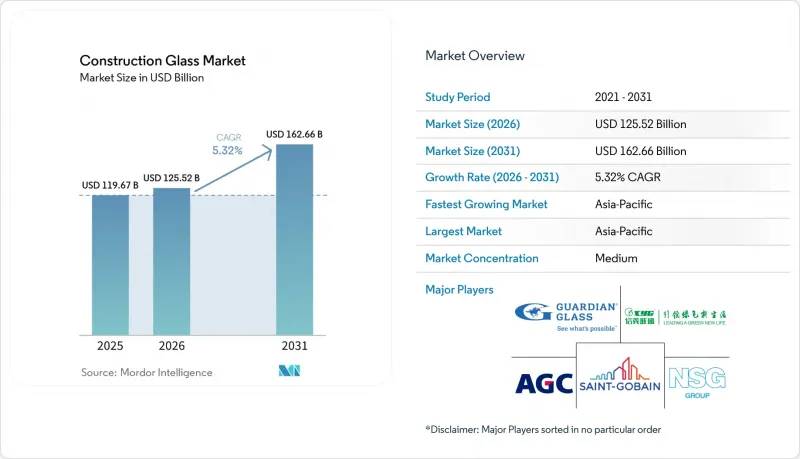
에 따르면 건축용 유리 시장 규모는 2025년에 1,196억 7,000만 달러로 평가되며, 2026년 1,255억 2,000만 달러에서 2031년까지 1,626억 6,000만 달러에 달할 것으로 예측되고 있으며, 예측 기간(2026-2031년)에 CAGR은 5.32%에 달할 전망입니다.
세계 건축용 유리 시장의 동향 및 인사이트
에너지 효율에 관한 규제가 유리 사양 기준을 재정의
현재 건축 에너지 기준에는 주요 건설 시장에서 표준 플로트 유리의 사용을 제한하는 구속력 있는 성능 요건이 규정되어 있습니다. 개정된 ‘건축물의 에너지 성능에 관한 지침(EPBD)’ 2024/1275는 2024년 5월에 발효되었으며, 유럽연합(EU) 회원국들에게 2026년 5월 29일까지 해당 요건을 국내법에 반영할 것을 의무화하고 있습니다. 이 지침은 2030년 이후 모든 신축 건물에 대해 제로 배출 기준 달성을 의무화하고 있으며, 건물 에너지 계산에서 창문의 중요성이 높아지고 있습니다. 뉴욕시는 2026년 3월 30일부터 ‘2025년 에너지 절약 규정’의 시행을 시작했으며, 이는 건축 외피에 관한 규제가 더욱 엄격해진 또 다른 사례입니다. 캘리포니아주의 ‘2025년 건축물 에너지 효율 기준’은 2026년 1월 1일 이후의 신규 건축 허가에 적용되며, 기후대에 관계없이 창문에 대한 요건이 강화됩니다. 건축가와 개발업자가 프로젝트 초기 단계에서 단열 유리나 코팅 유리를 채택하여 설계 및 시공 중 사양 변경을 피함으로써, 건축용 유리 시장은 혜택을 볼 것입니다.
아시아태평양의 도시화와 고층 건축이 구조적인 수요를 창출
중국, 인도 및 아세안(ASEAN) 국가들의 광범위한 도시 개발로 인해 중국의 주택 부동산 시장은 이전 수준에 비해 안정세를 보이고 있지만, 상업 프로젝트, 교통 인프라, 스마트 시티 시설에서는 여전히 대량의 건축용 유리가 요구되고 있습니다. 인도의 경우, 도시 지역 중산층의 확대와 정부의 주택 공급 프로그램으로 인해 국내외 제조업체의 고객 기반이 확대되고 있습니다. 또한 이 지역의 건축용 유리 시장은 공항, 교통 기관의 역, 상업 시설, 공공 건축물에서 일반 주택 건설보다 고성능 유리가 요구됨에 따라 점점 더 다양해지고 있습니다. 일본과 한국에서는 엄격한 에너지 기준이 유지되고 있으며, 이것이 첨단 주택용 유리의 사용을 촉진하고 있습니다. 베트남, 인도네시아, 필리핀에서는 상업 건축, 도시 성장, 그리고 에너지 절약 제품에 대한 현지 생산 능력 부족으로 인해 지역 수요 기반이 확대되고 있습니다.
에너지 집약적인 용해로 가동과 탄소 배출 감축 비용이 생산자들에게 부담을 주고 있습니다.
유리 용해로는 1,200°C에서 1,700°C의 온도 범위에서 연속 가동되므로, 에너지 소비는 생산자에게 주요 운영 비용이 되고 있습니다. 배출 규제로 인해 저탄소 생산 설비에 대한 투자가 요구되는 가운데, 건축용 유리 시장은 추가적인 비용 압박에 직면하고 있습니다. 용광로의 가동 기간은 10년 이상 지속될 수 있으며, 냉간 수리를 통해만 대규모 기술 업그레이드가 가능하므로 생산자가 설비를 현대화할 수 있는 속도는 제한적입니다. 하이브리드 용광로나 전기로는 직접 배출량을 줄이는 수단이 되지만, 막대한 설비 투자가 필요하며 저탄소 전력 공급 상황에 의존합니다. 생고뱅과 AGC는 스페인 아빌레스에 위치한 플로트 유리 공장에서 ‘FurHy’ 하이브리드 전기로를 개발 중이며, 2027년 하반기 가동을 시작할 것으로 예상됩니다. 소규모 제조업체의 경우, 가격 경쟁력과 생산량을 유지하면서 이와 유사한 프로젝트에 자금을 투입하는 것이 더욱 어려워질 수 있습니다.
부문별 분석
2025년, 건축용 유리 시장에서 강화유리는 30.45%의 점유율을 차지했습니다. 이는 샤워실, 유리문, 하단부 창문 등에서 사용이 필수로 여겨지는 점이 배경에 있습니다. 또한 구조용 실리콘 접착 파사드의 핵심 제품으로도 기능하며, 주거 및 상업 건축 양쪽에서 폭넓은 수요를 지원하고 있습니다. 접합 유리는 여전히 2위 제품 카테고리이며, 허리케인이 빈번한 지역이나 방음성이 요구되는 도시 지역 프로젝트에서의 사용이 확대되고 있습니다. 폴리비닐부티랄(PVB) 및 이오노플라스트(Ionoplast)로 제작된 중간막은 파손 후에도 구조적 무결성을 유지하는 데 도움이 되며, 해안 지역 건축 프로젝트에서 고속 허리케인 지역에 대한 요구 사항 및 관련 인증 기준을 충족합니다.
복층 유리 유닛은 지역에 따라 건설 수요가 편차를 보이지만, 2031년까지 연평균 성장률(CAGR) 5.78%로 성장할 것으로 예측되며, 이는 건축용 유리 시장에서 제품 유형 중 가장 높은 성장률입니다. ‘건축물의 에너지 성능에 관한 지침(EPBD) 2024/1275’ 및 중국의 ‘GB 55015-2021’에 따라 신축 및 리모델링 수요는 더욱 엄격한 U값 요건을 충족하는 이중 유리 및 삼중 유리 유닛으로 이동하고 있습니다. 단열 유닛의 리모델링 수요는 창문 교체가 에너지 소비, 쾌적성 및 건축 기준 요건에 의해 촉진되므로 신축 주기와는 비교적 낮은 상관관계를 보입니다. 단열 유닛의 1제곱미터당 매출은 같은 면적의 표준 플로트 유리의 3-5배에 달하므로 제조업체 입장에서는 단순한 베이스 유리 공급에 그치지 않고 단열 유닛 제조로 사업을 전환할 수 있는 좋은 기회가 되고 있습니다.
지역별 분석
아시아태평양은 2025년 건축용 유리 시장 점유율의 40.12%를 차지하고 있으며, 2031년까지 연평균 성장률(CAGR) 5.62%로 성장할 것으로 예측됩니다. 중국은 건축용 유리 시장에서 여전히 판유리의 최대 생산국이자 소비국입니다. 중국에서는 주택 부동산 시장의 활동이 둔화되고 있음에도 불구하고 상업용 건축, 교통 인프라 및 태양전지판 공급망이 생산 능력 가동률을 지탱하고 있습니다. 인도에서는 건설 확대, 스마트 시티 구상 및 주택 건설 프로그램이 건축용 유리에 대한 폭넓은 수요를 지원하고 있습니다. 인도네시아, 베트남, 태국, 필리핀에서는 도시화, 중산층 확대 및 신규 상업 건축을 통해 추가적인 성장 기회가 창출되고 있습니다.
북미는 상업 건축 활동과 건물 개보수에 힘입어 건축용 유리 시장에서 지역별 2위 자리를 차지하고 있습니다. 뉴욕시의 ‘로컬로 97’, 미국 냉난방 공조 공학회(ASHRAE) 90.1-2022의 전미적 채택, 그리고 캘리포니아주의 ‘타이틀 24’에 따라 건축 외피의 성능 향상이 요구되고 있습니다. ‘인플레이션 억제법’에 따른 에너지 효율 세액 공제는 미국내 기존 건축물의 창문 개보수에 대한 재정적 지원을 제공하고 있습니다. 캐나다의 ‘국가 에너지 코드’, 멕시코의 상업용 건축 계획, 그리고 데이터센터 프로젝트가 해당 지역의 수요를 더욱 끌어올리고 있습니다.
유럽의 건축용 유리 시장은 신축에서 리모델링으로 전환되고 있습니다. ‘건물의 에너지 성능에 관한 지침(EPBD)’에 기반한 ‘국가 건축 리모델링 계획’의 틀에 따라 2030년대에 걸쳐 리모델링 공사 수요가 창출되고 있습니다. 북유럽 국가들에서는 엄격한 창호 U값 기준이 적용되고 있으며, 이것이 삼중 유리 유닛의 수요를 지원하고 있습니다. 중동 및 아프리카는 여전히 소규모 시장이지만, GCC(걸프협력회의) 국가들의 메가 프로젝트와 남아프리카의 상업 건축이 성장 기회를 제공하고 있습니다. 신이 글라스(Xinyi Glass)는 사우디아라비아에 3억 8,600만 달러 규모의 생산 거점을 건설하기 위한 프로젝트 협력 협정을 체결했습니다. 이는 해당 지역이 현지 플로트 유리 및 Low-E 유리 제조를 지원할 역량을 갖추고 있음을 반영합니다.
기타 혜택:
- 엑셀 형식의 시장 예측(ME) 시트
- 3개월간의 애널리스트 지원
자주 묻는 질문
목차
제1장 서론
- 조사 전제조건과 시장 정의
- 조사 범위
제2장 조사 방법
제3장 개요
제4장 시장 구도
- 시장 개요
- 시장 성장 촉진요인
- 시장 성장 억제요인
- 밸류체인 분석
- Porter's Five Forces 분석
제5장 시장 규모와 성장 예측
- 제품 유형별
- 제조 프로세스별
- 용도별
- 지역별
- 아시아태평양
- 중국
- 인도
- 일본
- 한국
- ASEAN 국가
- 기타 아시아태평양 국가
- 북미
- 미국
- 캐나다
- 멕시코
- 유럽
- 독일
- 영국
- 프랑스
- 이탈리아
- 북유럽 국가
- 기타 유럽 국가
- 남미
- 브라질
- 아르헨티나
- 기타 남미 국가
- 중동 및 아프리카
- 사우디아라비아
- 남아프리카공화국
- 기타 중동 및 아프리카 국가
- 아시아태평양
제6장 경쟁 구도
- 시장 집중도
- 전략적 동향
- 시장 점유율·순위 분석
- 기업 개요
- AGC Inc.
- CARDINAL GLASS INDUSTRIES, INC
- Central Glass Co., Ltd.
- China Glass Holdings Limited
- CSG HOLDING CO.,LTD.
- Fuyao Glass Industry Group Co., Ltd.
- Guardian Glass
- Jinjing(Group) Co., Ltd
- Nippon Sheet Glass Co., Ltd
- Saint-Gobain
- SCHOTT AG
- Sisecam
- Taiwan Glass
- Vitro, S.A.B. de C.V.
- Xinyi Glass Holdings Limited
제7장 시장 기회와 향후 전망
KSA 26.10.28According to Mordor Intelligence, the construction glass market size was valued at USD 119.67 billion in 2025 and is estimated to grow from USD 125.52 billion in 2026 to reach USD 162.66 billion by 2031, at a CAGR of 5.32% during the forecast period (2026-2031).
Global Construction Glass Market Trends and Insights
Energy-Efficiency Mandates Are Redrawing Glass Specification Norms
Building energy codes now set binding performance requirements that limit the use of standard float glass in major construction markets. The revised Energy Performance of Buildings Directive (EPBD) 2024/1275 took effect in May 2024 and requires European Union member states to incorporate its requirements into national law by May 29, 2026. The directive requires all new buildings to meet zero-emission standards from 2030 onward, increasing the importance of windows in building energy calculations. New York City began enforcing its 2025 Energy Conservation Code on March 30, 2026, providing another example of tighter building-envelope rules. California's 2025 Building Energy Efficiency Standards apply to new permits from January 1, 2026, and tighten fenestration requirements across climate zones. The construction glass market benefits when architects and developers select insulating or coated products early in a project, avoiding specification changes during design or construction.
Urbanization and High-Rise Construction in Asia-Pacific Generate Structural Demand
Extensive urban development across China, India, and ASEAN countries has moderated China's residential real estate activity from earlier levels, but commercial projects, transportation infrastructure, and smart-city facilities continue to require significant quantities of architectural glazing. India's expanding urban middle class and government housing programs are broadening the customer base for local and international manufacturers. The construction glass market in the region is also becoming more varied, as airports, transit stations, commercial centers, and public buildings require higher-performance glass than basic residential construction. Japan and South Korea maintain strict energy requirements that support the use of advanced residential glazing. Vietnam, Indonesia, and the Philippines are extending the regional demand base through commercial construction, urban growth, and limited local capacity for energy-efficient products.
Energy-Intensive Furnace Operations and Carbon-Abatement Costs Pressure Producers
Glass furnaces operate continuously at temperatures ranging from 1,200°C to 1,700°C, making energy consumption a major operating cost for producers. The construction glass market faces additional cost pressures as emissions regulations require investment in lower-carbon production equipment. Furnace campaigns can run for a decade or more before a cold repair allows a major technology upgrade, limiting the pace at which producers can modernize equipment. Hybrid and electrified furnaces offer a path to lower direct emissions, but require significant capital investment and depend on the availability of low-carbon electricity. Saint-Gobain and AGC are developing the FurHy hybrid electric furnace at the Aviles, Spain, float-glass plant, with operations expected to begin in the second half of 2027. Smaller producers may find it harder to fund similar projects while maintaining price competitiveness and production output.
Other drivers and restraints analyzed in the detailed report include:
- Commercial Facade and Curtain-Wall Expansion Elevates Average Glass Value
- Building Renovation and Glazing Replacement Create a Policy-Backed Demand Floor
- Raw Material and Energy Price Volatility Constrain Cost Predictability
For complete list of drivers and restraints, kindly check the Table Of Contents.
Segment Analysis
Tempered glass held 30.45% of the construction glass market share in 2025, supported by its required use in shower enclosures, glass doors, and low-height windows. It also serves as a base product for structural silicone-glazed facades, sustaining broad demand across residential and commercial construction. Laminated glass remained the second-largest product category, gaining use in hurricane-prone locations and acoustically sensitive urban projects. Polyvinyl butyral (PVB) and ionoplast interlayers help retain structural integrity after breakage, aligning with high-velocity hurricane-zone requirements and related certification practices for coastal building projects.
Insulating glass units are forecast to grow at a 5.78% CAGR through 2031, the fastest rate among product types in the construction glass market, even as construction demand remains uneven across regions. The Energy Performance of Buildings Directive (EPBD) 2024/1275 and China's GB 55015-2021 are directing new-build and retrofit demand toward double- and triple-pane units that meet tighter U-value requirements. Renovation demand for insulating units is less tied to new construction cycles, as window replacements are driven by energy use, comfort, and code requirements. Each square meter of an insulating unit generates 3 to 5 times the revenue of an equivalent area of basic float glass, creating an opportunity for producers to shift toward manufacturing insulating units rather than supplying only base glass.
Complete Report Scope:
- By Product Type
- Laminated Glass
- Tempered Glass
- Insulated Glass Units
- Others
- By Manufacturing Process
- Float Process
- Rolled Process
- Others
- By Application
- Residential
- Commercial
- Others
- By Geography
- Asia-Pacific
- China
- India
- Japan
- South Korea
- ASEAN Countries
- Rest of Asia-Pacific
- North America
- United States
- Canada
- Mexico
- Europe
- Germany
- United Kingdom
- France
- Italy
- NORDIC Countries
- Rest of Europe
- South America
- Brazil
- Argentina
- Rest of South America
- Middle East and Africa
- Saudi Arabia
- South Africa
- Rest of Middle East and Africa
- Asia-Pacific
Geography Analysis
Asia-Pacific accounted for 40.12% of the construction glass market share in 2025 and is forecast to grow at a 5.62% CAGR through 2031. China remains the largest producer and consumer of flat glass in the construction glass market. Commercial construction, transportation infrastructure, and the solar panel supply chain support capacity utilization even as residential property activity in China has moderated. India's construction expansion, smart-city initiatives, and housing programs support broad demand for architectural glass. Indonesia, Vietnam, Thailand, and the Philippines offer further growth opportunities through urbanization, expanding middle-income populations, and greenfield commercial construction.
North America held the second-largest regional position in the construction glass market, supported by commercial construction activity and building retrofits. Local Law 97 in New York City, national adoption of American Society of Heating, Refrigerating and Air-Conditioning Engineers (ASHRAE) 90.1-2022, and California Title 24 require stronger building-envelope performance. Energy-efficiency tax credits under the Inflation Reduction Act provide financial support for window upgrades in existing US buildings. Canada's National Energy Code, Mexico's commercial construction pipeline, and data-center projects add to regional demand.
Europe's construction glass market is shifting from new construction toward renovation. The Energy Performance of Buildings Directive (EPBD) National Building Renovation Plan framework is creating a pipeline for retrofit activity through the 2030s. Nordic countries apply stringent window U-value standards that sustain demand for triple-pane units. The Middle East and Africa remain smaller markets, but GCC megaprojects and South Africa's commercial construction present growth opportunities. Xinyi Glass signed a project cooperation agreement for a USD 386 million production base in Saudi Arabia, reflecting the region's capacity to support local float and Low-E glass manufacturing.
- AGC Inc.
- CARDINAL GLASS INDUSTRIES, INC
- Central Glass Co., Ltd.
- China Glass Holdings Limited
- CSG HOLDING CO.,LTD.
- Fuyao Glass Industry Group Co., Ltd.
- Guardian Glass
- Jinjing (Group) Co., Ltd
- Nippon Sheet Glass Co., Ltd
- Saint-Gobain
- SCHOTT AG
- Sisecam
- Taiwan Glass
- Vitro, S.A.B. de C.V.
- Xinyi Glass Holdings Limited
Additional Benefits:
- The market estimate (ME) sheet in Excel format
- 3 months of analyst support
TABLE OF CONTENTS
1 Introduction
- 1.1 Study Assumptions and Market Definition
- 1.2 Scope of the Study
2 Research Methodology
3 Executive Summary
4 Market Landscape
- 4.1 Market Overview
- 4.2 Market Drivers
- 4.2.1 Energy-Efficiency Requirements for Building Envelopes
- 4.2.2 Urbanization and High-Rise Construction in Asia-Pacific
- 4.2.3 Commercial Facade and Curtain-Wall Expansion
- 4.2.4 Building Renovation and Glazing Replacement Demand
- 4.2.5 Climate-Resilient and Impact-Resistant Building Design
- 4.3 Market Restraints
- 4.3.1 Energy-Intensive Furnace Operations and Carbon-Abatement Costs
- 4.3.2 Volatility in Soda Ash, Silica Sand and Energy Prices
- 4.3.3 High Installed Cost of Smart and Advanced Glazing
- 4.4 Value Chain Analysis
- 4.5 Porter's Five Forces Analysis
- 4.5.1 Bargaining Power of Suppliers
- 4.5.2 Bargaining Power of Buyers
- 4.5.3 Threat of New Entrants
- 4.5.4 Threat of Substitutes
- 4.5.5 Industry Rivalry
5 Market Size and Growth Forecasts (Value)
- 5.1 By Product Type
- 5.1.1 Laminated Glass
- 5.1.2 Tempered Glass
- 5.1.3 Insulated Glass Units
- 5.1.4 Others
- 5.2 By Manufacturing Process
- 5.2.1 Float Process
- 5.2.2 Rolled Process
- 5.2.3 Others
- 5.3 By Application
- 5.3.1 Residential
- 5.3.2 Commercial
- 5.3.3 Others
- 5.4 By Geography
- 5.4.1 Asia-Pacific
- 5.4.1.1 China
- 5.4.1.2 India
- 5.4.1.3 Japan
- 5.4.1.4 South Korea
- 5.4.1.5 ASEAN Countries
- 5.4.1.6 Rest of Asia-Pacific
- 5.4.2 North America
- 5.4.2.1 United States
- 5.4.2.2 Canada
- 5.4.2.3 Mexico
- 5.4.3 Europe
- 5.4.3.1 Germany
- 5.4.3.2 United Kingdom
- 5.4.3.3 France
- 5.4.3.4 Italy
- 5.4.3.5 NORDIC Countries
- 5.4.3.6 Rest of Europe
- 5.4.4 South America
- 5.4.4.1 Brazil
- 5.4.4.2 Argentina
- 5.4.4.3 Rest of South America
- 5.4.5 Middle East and Africa
- 5.4.5.1 Saudi Arabia
- 5.4.5.2 South Africa
- 5.4.5.3 Rest of Middle East and Africa
- 5.4.1 Asia-Pacific
6 Competitive Landscape
- 6.1 Market Concentration
- 6.2 Strategic Moves
- 6.3 Market Share (%)/Ranking Analysis
- 6.4 Company Profiles (includes Global Overview, Market Overview, Core Segments, Financials as available, Strategic Information, Products and Services, and Recent Developments)
- 6.4.1 AGC Inc.
- 6.4.2 CARDINAL GLASS INDUSTRIES, INC
- 6.4.3 Central Glass Co., Ltd.
- 6.4.4 China Glass Holdings Limited
- 6.4.5 CSG HOLDING CO.,LTD.
- 6.4.6 Fuyao Glass Industry Group Co., Ltd.
- 6.4.7 Guardian Glass
- 6.4.8 Jinjing (Group) Co., Ltd
- 6.4.9 Nippon Sheet Glass Co., Ltd
- 6.4.10 Saint-Gobain
- 6.4.11 SCHOTT AG
- 6.4.12 Sisecam
- 6.4.13 Taiwan Glass
- 6.4.14 Vitro, S.A.B. de C.V.
- 6.4.15 Xinyi Glass Holdings Limited
7 Market Opportunities and Future Outlook
- 7.1 White-Space and Unmet-Need Assessment


