

|
시장보고서
상품코드
2156873
항공우주 보험 : 시장 점유율 분석, 업계 동향과 통계, 성장 예측(2026-2031년)Aerospace Insurance - Market Share Analysis, Industry Trends & Statistics, Growth Forecasts (2026 - 2031) |
||||||
 Mordor Intelligence
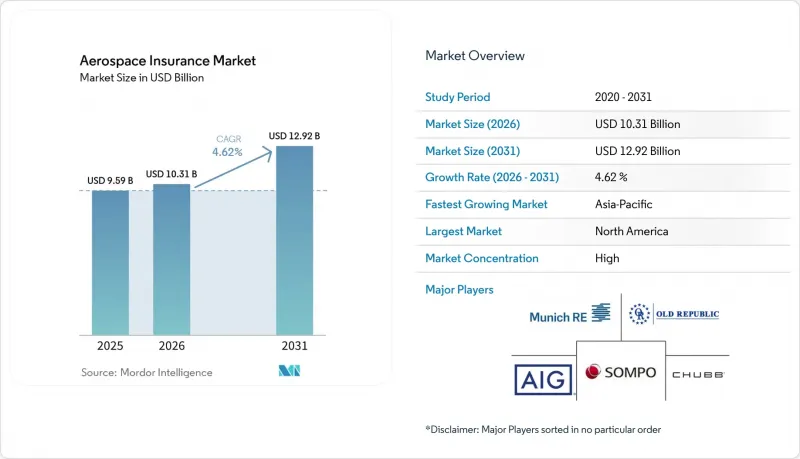
에 따르면 항공우주 보험 시장 규모는 2025년에 95억 9,000만 달러로 평가되며, 2026년 103억 1,000만 달러에서 2031년까지 129억 2,000만 달러에 달할 것으로 예측되고 있으며, 예측 기간(2026-2031년)에 CAGR은 4.62%에 달할 전망입니다.
전 세계 항공우주 보험 시장의 동향 및 인사이트
위성, 상업용 우주 및 발사 활동의 확대
상업 우주 활동의 확대에 따라 보험 대상이 되는 위험은 연간 보험료 수입의 증가율을 웃도는 속도로 증가하고 있습니다. 위성산업협회(Satellite Industry Association)의 보고에 따르면 2024년에는 259회의 궤도 발사가 이루어졌습니다. 그러나 보험에 가입된 위성의 수는 같은 속도로 증가하지 않았기 때문에 보험료는 이미 배치된 자산 중 더 좁은 범위에 집중되는 결과를 낳았습니다. 2026년에 진입한 우주 보험의 인수 능력은 전년 대비 15% 이상 증가했으나, 메가 콘스텔레이션을 대상으로 한 보험에 대한 구매자의 수요는 여전히 제한적이었습니다. 2025년 12월에 발생한, 4억 달러 이상이 보험으로 보장되었던 ‘SpainSat NG-2’의 전손 사고로 인해 우주 보험의 손해율은 15%에서 75%로 상승했습니다. 이러한 상황으로 인해 발사 활동 전체가 증가하더라도 항공우주 보험 시장은 상당한 손해 변동 위험에 노출되기 쉬워졌습니다.
드론, 무인항공기(UAV) 및 첨단 항공 모빌리티 플랫폼의 보급 확대
무인 항공 시스템은 항공우주 보험 시장의 위험 풀을 확대하고 있지만, 전문적인 가격 책정 시스템은 여전히 발전 단계에 있습니다. 스위스 리(Swiss Re)는 일반 배상 책임 보험 계약에 가격 책정이 되지 않은 드론 관련 위험이 포함되어 있을 가능성이 있으므로, 드론의 보급이 체계적인 배상 책임의 공백을 초래할 수 있다고 지적했습니다. FAA(미국 연방항공청) 및 EASA(유럽항공안전청)가 시야 외(BVLOS) 운항의 범위를 확대함에 따라 기업의 드론 기체군에는 그 운용 위험을 반영한 보상이 필요하게 됩니다. 기존 항공 보험사들은 이러한 드론 기체 군을 위한 보험 프로그램을 처리할 수 있는 판매 규모를 반드시 갖추고 있는 것은 아닙니다. WTW는 2026년에 신규 진입하는 매니징 제너럴 에이전트(MGA) 및 위임 권한 기관이 드론 전문 보험 인수 능력을 제공하는 중요한 채널이 될 것이라고 지적하고 있습니다. 형식 인증 취득을 앞둔 eVTOL 기체에 대해서도, 상업 운항이 본격화되기 전에 기체 보험 및 배상 책임 보험의 조건을 마련해야 합니다.
고액 손해 재해 및 누적 손실 위험
항공우주 보험 시장에서는 중대한 사건이 발생하기 전에 일상적인 손해 청구가 연간 항공 보험료의 50%에서 66%를 차지하므로 손해 경제성에 비대칭성이 발생하고 있습니다. 2025년 1월 아메리칸 항공의 추락 사고, 2025년 6월 에어 인디아의 사고, 그리고 2025년 11월 UPS 화물기 손실이 항공 보험의 손해 환경을 악화시키는 한 요인이 되었습니다. 2024년 12월 하순 제주항공의 사고 역시 이 기간 중의 손해 심각성을 더욱 가중시키는 결과를 낳았습니다. 2025년 6월 고등법원의 판결에 따라 에어캡(AirCap)사는 전쟁 위험 보험 계약에 기반하여 약 10억 3,500만 달러를 지급하라는 명령을 받았으며, 보험사 측은 2026년 3월 이 판결에 대해 항소할 수 있는 허가를 받았습니다. 이 광범위한 소송은 당초 평가액이 최대 47억 달러에 달하는 약 150대의 항공기 및 엔진을 대상으로 하고 있으며, 항공 보험 분야의 막대한 노출에 대한 불확실성이 지속되고 있습니다. 그 결과, 인수사는 기존 모델로는 파악하기 어려운 손실 누적 시나리오를 고려해야 합니다.
부문별 분석
2025년, 항공 부문은 항공우주 보험 시장 점유율의 92.71%를 차지하고 있으며, 이는 항공사 기단, 화물 항공사, 일반 항공 및 항공 배상 책임 보험에 걸친 광범위한 보험료 기반을 반영합니다. 2026년 5월 현재 IATA의 미인도 주문량 18,100대는 기단 관련 보험 위험이 지속될 것임을 지원합니다. 항공사 고객들은 2025년에 기록된 막대한 손실을 감안하여, 2026년에는 기체 보험 및 배상 책임 보험의 보험료율이 10%에서 15% 상승할 것으로 예측됩니다. 일반 항공 고객 중 손익 실적이 양호한 건에 대해서는 여전히 보험 인수 여력이 있으며, 신규 MGA(보험 대리점)들이 고객 확보 경쟁을 벌이고 있으며, 보험료율 인하를 받을 수 있습니다. 이러한 차이는 인수 조건이 사업 형태나 손해 실적에 따라 크게 다르다는 것을 보여줍니다. 전 세계 항공기 보유 대수와 관련 배상 책임이 확대되는 가운데, 항공우주 보험 시장의 규모는 여전히 항공 분야에 의해 크게 견인되고 있습니다.
우주 분야는 2031년까지 연평균 성장률(CAGR) 6.82%를 기록할 것으로 예측되며, 항공우주 보험 시장에서 가장 빠르게 성장하는 위험 영역이 되고 있습니다. 상업용 발사 및 달 표면 활동의 증가에 따라 전문적인 보상이 필요한 자산의 범위가 확대되고 있습니다. 2026년에 들어 우주 분야의 보험 인수 여력은 15% 이상 증가했으나, 위성 군집에 대한 보험 수요가 제한적이었기 때문에 노출액이 보험료로 이어지는 움직임은 억제되었습니다. 2025년 3월 중국에서 결성된 국내 발사 컨소시엄은 25건의 민간 상업 발사에 걸쳐 14억 7,000만 달러 규모의 노출액을 보장했습니다. 이러한 움직임으로 인해 향후 기존 국제 보험 인수 경로에 대한 의존도가 낮아질 가능성이 있습니다. 개별 위성의 손상은 여전히 연간 실적을 급격히 바꿀 가능성이 있으므로, 보험 인수 여력의 배분에는 신중한 대응이 요구됩니다.
배상책임보험은 2025년에 항공우주 보험 시장 점유율의 45.68%를 차지할 것으로 예상되며, 2031년까지 연평균 성장률(CAGR) 5.34%로 성장할 것으로 전망됩니다. 이 부문은 제3자 배상 책임 요건의 확대, 북미 지역의 배심원 판결에 따른 배상액 증가, 그리고 새로운 유형의 피보험 사업자들의 유입으로 혜택을 보고 있습니다. 이러한 요인들로 인해 배상 책임 보험이 필요한 보험 계약의 수와 개별 피보험자가 요구하는 보험 금액 상한선 모두 증가하고 있습니다. 따라서 배상책임보험은 2025년 보험 유형 중 최대 점유율을 차지할 뿐만 아니라 가장 높은 성장률을 보일 것으로 전망됩니다. 이 부문의 위상은 항공사의 보험 수요 기반을 형성하는 데 있으며, 강제 배상책임 제도가 수행하는 역할도 반영하고 있습니다. 보험사에게 있으며, 중요한 과제는 기존 및 신흥 운항 사업자에 대한 인수 능력을 유지하면서, 배상 한도액에 따른 위험을 관리하는 것입니다.
현대식 와이드바디 항공기의 재조달 비용이 지속적으로 3억 달러를 상회함에 따라 기체 및 재산 손해에 대한 보험료율은 상승하고 있습니다. 2025년 6월 러시아에서 압류된 항공기에 대한 판결 이후, 항공 전쟁 및 관련 위험에 대한 보상에 대해서는 더욱 엄격한 심사가 이루어지고 있습니다. 이 판결에서는 총액 47억 달러에 달하는 청구에 대한 주요 배상 경로로 전쟁 위험 보험 계약이 특정되었으나, 현재 이 판결에 대해서는 항소가 진행 중입니다. 그 밖의 전문 분야로는 공항 배상 책임, 정비·수리 사업자, 항공기 부품 제조업체 등이 있습니다. 이러한 분야는 취급 규모가 작더라도 항공 관련 사건으로 인해 소송에 직면할 가능성이 있습니다. '몬트리올 협약'은 전 세계 항공사 배상책임 인수에 있으며, 기본적인 수요를 지원하는 강제적인 배상책임 체계를 규정하고 있습니다.
지역별 분석
2025년, 북미는 전 세계 항공우주 보험료의 52.69%를 차지하며 항공우주 보험 시장에서 가장 큰 지역 점유율을 확보했습니다. 이 지역은 미국의 대규모 민간 항공기 기단과 피보험사 1곳당 높은 배상 책임 위험에 의해 지원되고 있습니다. WTW는 2026년에 미국 항공사 위험에 대해 일부 계약에서 자기부담금 인상을 포함해 더 엄격한 갱신 조건이 적용될 것으로 예상하고 있습니다. AerCap 판결로 인해 손해배상 합의와 관련된 문제가 추가되면서, 전 세계 손해 경제에 대한 이 지역의 영향력이 더욱 강화되었습니다. 캐나다 상업 항공 업계의 회복과 멕시코내 일반 항공 활동의 확대로 인해 해당 지역의 보험 기반은 확대되고 있습니다. 그 결과, 수요는 견고하지만 배상 책임 및 거액 손해의 변동 위험에 노출된 대규모의 성숙한 시장이 형성되고 있습니다.
아시아태평양은 2031년까지 연평균 성장률(CAGR) 6.91%로 성장할 것으로 예측되며, 이는 항공우주 보험 시장에서 지역별 가장 높은 성장률입니다. 에어버스(Airbus)는 2035년까지 인도의 민간 항공기 보유 대수가 2,250대에 달할 것으로 전망하고 있으며, 인디고(Indigo)는 900대 이상의 항공기를 발주했습니다. 중국에서는 1,000대의 신규 항공기 수요가 예상되며, 2025년에 설립된 국내 우주 보험 컨소시엄은 발사 위험을 국내에서 관리하려는 노력을 보여주고 있습니다. 2044년까지 성장세가 가장 두드러진 항공 여행 시장 상위 10개 중 8개를 인도, 중국, 동남아시아가 차지할 것으로 예상됩니다. 인도의 DGCA(민간항공총국)와 중국의 CAAC(민용항공국)는 의무 보험 요건을 강화하고 있는 반면, 싱가포르의 CAAS(민간항공국)는 자국을 항공 보험의 허브로 자리매김하고자 하고 있습니다. 이러한 동향은 지역내 비즈니스 기회를 확대하는 한편, 현지 지식과 체계적인 데이터 수집의 중요성을 더욱 높이고 있습니다.
유럽은 두 번째로 큰 지역 거점이며, 전 세계 항공우주 리스크의 대부분을 인수하고 있는 로이즈(Lloyd’s) 및 런던 시장의 생태계가 여전히 존재하고 있습니다. 유럽 항공우주 보험 시장의 규모는 이러한 전문적인 인수 노하우와 국제적인 보험 인수 역량의 집중에 의해 지원되고 있습니다. 2026년 IUAI 조사에 따르면 항공 보험 전문가의 75%가 지정학적 불안정성을 이 부문의 가장 큰 시스템적 위험으로 간주하고 있는 것으로 나타났습니다. 중동 및 아프리카 역시 UAE와 사우디아라비아의 수주 잔고가 합계 3,000대를 넘어섬에 따라 전략적인 성장 잠재력을 지니고 있습니다. 2025년 11월, 중동 항공사들의 수요는 전년 동월 대비 9.6% 증가를 기록했습니다. 남미에서는 라틴아메리카 전체 보험 시장의 성장에 힘입어 브라질과 콜롬비아에서 보험 보급률이 향상되고 있습니다.
기타 혜택:
- 엑셀 형식의 시장 예측(ME) 시트
- 3개월간의 애널리스트 지원
자주 묻는 질문
목차
제1장 서론
- 조사 전제조건과 시장 정의
- 조사 범위
제2장 조사 방법
제3장 개요
제4장 시장 구도
- 시장 개요
- 시장 성장 촉진요인
- 시장 성장 억제요인
- 밸류체인 분석
- 규제 상황
- 기술 전망
- Porter's Five Forces 분석
- 주요 항공우주 보험 종목에서의 가격 분석
제5장 시장 규모와 성장 예측
- 리스크 영역별
- 보험 유형별
- 최종사용자별
- 유통 채널별
- 지역별
- 북미
- 미국
- 캐나다
- 멕시코
- 남미
- 브라질
- 아르헨티나
- 기타 남미 국가
- 유럽
- 영국
- 독일
- 프랑스
- 이탈리아
- 스페인
- 기타 유럽 국가
- 아시아태평양
- 중국
- 일본
- 인도
- 한국
- 호주
- 인도네시아
- 태국
- 말레이시아
- 싱가포르
- 베트남
- 기타 아시아태평양 국가
- 중동 및 아프리카
- 사우디아라비아
- 아랍에미리트
- 튀르키예
- 남아프리카공화국
- 이집트
- 기타 중동 및 아프리카 국가
- 북미
제6장 경쟁 구도
- 시장 집중도
- 전략적 동향
- 시장 점유율 분석(상위 5-6사)
- 기업 개요
- American International Group, Inc.(AIG)
- Allianz SE/Allianz Commercial
- AXA SA/AXA XL
- Chubb Limited
- Global Aerospace, Inc.
- Starr Insurance
- Tokio Marine HCC
- Munich Re
- Swiss Re
- HDI Global SE
- Berkshire Hathaway Specialty Insurance
- American Financial Group, Inc./Great American Insurance Group
- USAIG
- Beazley plc
- Sompo Holdings, Inc./Sompo International
- Hiscox Ltd
- Marsh McLennan
- Aon plc
- WTW
- Arthur J. Gallagher & Co.
제7장 시장 기회와 향후 전망
KSA 26.10.29According to Mordor Intelligence, the aerospace insurance market size was valued at USD 9.59 billion in 2025 and is estimated to grow from USD 10.31 billion in 2026 to reach USD 12.92 billion by 2031, at a CAGR of 4.62% during the forecast period (2026-2031).
Global Aerospace Insurance Market Trends and Insights
Growth in Satellite, Commercial Space, and Launch Activities
Commercial space activity is increasing insurable exposure faster than annual premium income reflects. The Satellite Industry Association reported 259 orbital launches in 2024. Insured satellite numbers did not increase at the same pace, which concentrated premiums across a smaller share of deployed assets. Space insurance capacity entering 2026 increased by more than 15% year over year, although buyer demand for mega-constellation cover remained limited. The December 2025 total loss of SpainSat NG-2, insured for more than USD 400 million, moved the space insurance loss ratio from 15% to 75%. These conditions make the Aerospace insurance market more exposed to substantial loss volatility even when aggregate launch activity rises.
Increasing Adoption of Drones, UAVs, and Advanced Air Mobility Platforms
Unmanned aerial systems are broadening the addressable risk pool for the aerospace insurance market, but specialized pricing systems are still developing. Swiss Re identified drone proliferation as a source of systematic liability gaps, since general liability policies can contain unpriced drone exposure. As the FAA and EASA expand beyond-visual-line-of-sight frameworks, enterprise drone fleets require coverage that reflects their operating risks. Traditional aviation carriers do not always have the distribution scale to serve these fleet programs. WTW identified new managing general agent entrants and delegated authority facilities as important channels for specialist drone capacity in 2026. eVTOL aircraft approaching type certification also require hull and liability terms before commercial operations reach scale.
High-Severity Catastrophic and Accumulation Loss Exposure
The aerospace insurance market has asymmetric loss economics because attritional claims absorb 50% to 66% of annual aviation premiums before severe events are counted. The American Airlines crash in January 2025, the Air India incident in June 2025, and the UPS freighter loss in November 2025 contributed to a challenging aviation loss environment. The late-December 2024 Jeju Air disaster also added to the severity of the period. A June 2025 High Court ruling awarded AerCap approximately USD 1.035 billion under war-risk policies, and insurers were granted permission to appeal the ruling in March 2026. The broader litigation concerns nearly 150 aircraft and engines originally valued at up to USD 4.7 billion, sustaining uncertainty around significant aviation insurance exposures. Underwriters consequently need to account for accumulation scenarios that are difficult for existing models to capture.
Other drivers and restraints analyzed in the detailed report include:
- Rising Aircraft, Spacecraft, and Other Aerospace Asset Values and Claims Costs
- Expansion of Commercial Aviation, General Aviation, and Aerospace Activities
- Limited Historical Loss Data for Emerging Aviation and Space Technologies
For complete list of drivers and restraints, kindly check the Table Of Contents.
Segment Analysis
Aviation held 92.71% of the aerospace insurance market share in 2025, reflecting its broad premium base across airline fleets, cargo carriers, general aviation, and aviation liability. IATA's 18,100-unit order backlog in May 2026 supports continued fleet-related insurance exposure. Airline customers face projected hull and liability rate increases of 10% to 15% in 2026 following the high-severity losses recorded in 2025. General aviation accounts with profitable loss records can still receive rate reductions because capacity remains available and new MGAs are competing for business. This difference shows that underwriting conditions vary materially by operating profile and loss performance. The aerospace insurance market size remains largely driven by aviation, as the global fleet and associated liabilities expand.
Space is projected to record a 6.82% CAGR through 2031, making it the faster-growing risk domain in the aerospace insurance market. More commercial launches and lunar activity are expanding the range of assets that need specialist cover. Space capacity was more than 15% higher entering 2026, but limited demand for constellation coverage restrained the translation of exposure into premium. China's March 2025 domestic launch consortium covered USD 1.47 billion in exposure across 25 private commercial launches. The development may reduce dependence on established international placement routes over time. Individual satellite losses remain capable of changing annual class results quickly, which requires cautious deployment of capacity.
Liability captured 45.68% of the aerospace insurance market share in 2025 and is projected to grow at a 5.34% CAGR through 2031. The segment benefits from broader third-party liability requirements, greater jury award severity in North America, and new categories of insured operators. These factors increase both the number of policies requiring liability cover and the limits sought by individual insureds. Liability, therefore, combines the largest 2025 insurance-type position with the highest projected growth rate. The segment's position also reflects the role of compulsory liability frameworks in creating baseline demand for airline coverage. For insurers, the key task is to manage limit exposure while maintaining capacity for established and emerging operators.
Hull and physical damage pricing is increasing as replacement costs for modern widebody aircraft regularly exceed USD 300 million. Aviation war and allied perils coverage has received closer scrutiny after the June 2025 ruling on aircraft withheld in Russia. The ruling identified war-risk policies as the primary recovery route for claims totaling USD 4.7 billion, although the decision is under appeal. Other specialty lines cover airport liability, maintenance and repair organizations, and aircraft product manufacturers. These lines are smaller by volume but can face correlated litigation linked to aviation events. The Montreal Convention provides a compulsory liability framework that supports baseline demand for airline liability underwriting worldwide.
Complete Report Scope:
- By Risk Domain
- Aviation
- Space
- By Insurance Type
- Hull and Physical Damage
- Liability
- Aviation War and Allied Perils
- Other Specialty
- By End User
- Commercial Aviation Operators
- General and Business Aviation Operators
- Aviation Products Liability Insureds
- Airports and Aviation Infrastructure
- Aircraft Lessors and Financiers
- Space Operators
- By Distribution Channel
- Broker-placed Open Market
- Delegated Authority
- Direct
- By Geography
- North America
- United States
- Canada
- Mexico
- South America
- Brazil
- Argentina
- Rest of South America
- Europe
- United Kingdom
- Germany
- France
- Italy
- Spain
- Rest of Europe
- Asia-Pacific
- China
- Japan
- India
- South Korea
- Australia
- Indonesia
- Thailand
- Malaysia
- Singapore
- Vietnam
- Rest of Asia-Pacific
- Middle East and Africa
- Saudi Arabia
- United Arab Emirates
- Turkey
- South Africa
- Egypt
- Rest of Middle East and Africa
- North America
Geography Analysis
North America held 52.69% of global aerospace insurance premiums in 2025, giving it the largest regional position in the aerospace insurance market. The region is supported by the United States' large commercial aviation fleet and high per-insured liability exposure. WTW expects tougher renewal conditions for United States airline risks in 2026, including higher retentions for some accounts. The AerCap ruling added a claims settlement issue that reinforces the region's influence on global loss economics. Canada's commercial aviation recovery and Mexico's growing general aviation activity broaden the regional insurance base. The result is a large and mature market with strong demand but meaningful exposure to liability and large-loss volatility.
Asia-Pacific is forecast to grow at a 6.91% CAGR through 2031, the fastest regional rate in the aerospace insurance market. Airbus expects India's commercial fleet to reach 2,250 aircraft by 2035, while IndiGo holds more than 900 aircraft on order. China is expected to require 1,000 new aircraft, and its 2025 domestic space insurance consortium indicates an effort to retain launch risk domestically. India, China, and Southeast Asia are expected to account for 8 of the 10 fastest-growing air travel markets through 2044. India's DGCA and China's CAAC have strengthened compulsory insurance requirements, while Singapore's CAAS is positioning the city-state as an aviation insurance hub. These developments increase regional opportunity but also make local knowledge and disciplined data collection more important.
Europe is the second-largest regional base and remains home to the Lloyd's and London Market ecosystem that underwrites a large share of global aerospace risks. The aerospace insurance market size in Europe benefits from this concentration of specialist underwriting expertise and international placement capacity. The 2026 IUAI survey found that 75% of aviation insurance professionals considered geopolitical instability the sector's largest systemic threat. The Middle East and Africa also offer strategic growth potential as the UAE and Saudi Arabia hold a combined order backlog above 3,000 aircraft. Middle East carriers recorded 9.6% year-over-year demand growth in November 2025. South America is showing improving insurance penetration in Brazil and Colombia, supported by broader insurance growth in Latin America.
- American International Group, Inc. (AIG)
- Allianz SE / Allianz Commercial
- AXA SA / AXA XL
- Chubb Limited
- Global Aerospace, Inc.
- Starr Insurance
- Tokio Marine HCC
- Munich Re
- Swiss Re
- HDI Global SE
- Berkshire Hathaway Specialty Insurance
- American Financial Group, Inc. / Great American Insurance Group
- USAIG
- Beazley plc
- Sompo Holdings, Inc. / Sompo International
- Hiscox Ltd
- Marsh McLennan
- Aon plc
- WTW
- Arthur J. Gallagher & Co.
Additional Benefits:
- The market estimate (ME) sheet in Excel format
- 3 months of analyst support
TABLE OF CONTENTS
1 INTRODUCTION
- 1.1 Study Assumptions and Market Definition
- 1.2 Scope of the Study
2 RESEARCH METHODOLOGY
3 EXECUTIVE SUMMARY
4 MARKET LANDSCAPE
- 4.1 Market Overview
- 4.2 Market Drivers
- 4.2.1 Growth in Global Aviation and Space Assets and Insurable Exposure
- 4.2.2 Expansion of Commercial Aviation, General Aviation, and Aerospace Activities
- 4.2.3 Growth in Satellite, Commercial Space, and Launch Activities
- 4.2.4 Increasing Adoption of Drones, UAVs, and Advanced Air Mobility Platforms
- 4.2.5 Rising Aircraft, Spacecraft, and Other Aerospace Asset Values and Claims Costs
- 4.2.6 Increasing Liability Exposure Across Aviation and Space Operations
- 4.3 Market Restraints
- 4.3.1 High-Severity Catastrophic and Accumulation Loss Exposure
- 4.3.2 Limited Historical Loss Data for Emerging Aviation and Space Technologies
- 4.3.3 High Technical Complexity and Specialized Underwriting Requirements
- 4.3.4 Cyclical Underwriting Capacity and Competitive Pricing Pressure
- 4.4 Value Chain Analysis
- 4.4.1 Aviation and Space Insureds and Risk Originators
- 4.4.2 Insurance Brokers, MGAs, and Specialty Intermediaries
- 4.4.3 Reinsurers, Alternative Risk-Capital Providers, Claims Specialists, and Other Risk-Service Providers
- 4.5 Regulatory Landscape
- 4.5.1 Aviation Liability, Compulsory Insurance, and Financial Responsibility Requirements
- 4.5.2 Unmanned Aircraft Systems and Advanced Air Mobility Insurance Requirements
- 4.5.3 Space Launch, Satellite, and Space Operations Liability and Financial Responsibility Requirements
- 4.5.4 Cross-Border Aerospace Operations, Sanctions, and War-Risk Insurance Requirements
- 4.6 Technological Outlook
- 4.6.1 Artificial Intelligence and Advanced Analytics in Aerospace Underwriting
- 4.6.2 Flight Data, Telematics, and Real-Time Aviation Risk Monitoring
- 4.6.3 Satellite Tracking, Space Situational Awareness, Space-Debris, and Conjunction Risk Analytics
- 4.6.4 Digital Claims Management and Automated Policy Administration Across Aerospace Insurance Lines
- 4.7 Porter's Five Forces Analysis
- 4.7.1 Threat of New Entrants
- 4.7.2 Bargaining Power of Suppliers
- 4.7.3 Bargaining Power of Buyers
- 4.7.4 Threat of Substitutes
- 4.7.5 Intensity of Competitive Rivalry
- 4.8 Pricing Analysis Across Key Aerospace Insurance Lines
- 4.8.1 Aviation: Airline, General Aviation, Hull, Liability, War-Risk, Aircraft Lessor, Product Liability, MRO, Service Provider, Airport, and Municipality Coverage
- 4.8.2 Space: Pre-Launch, Launch, In-Orbit, Satellite and Spacecraft Physical Damage, and Third-Party Liability Coverage
5 MARKET SIZE AND GROWTH FORECASTS
- 5.1 By Risk Domain
- 5.1.1 Aviation
- 5.1.2 Space
- 5.2 By Insurance Type
- 5.2.1 Hull and Physical Damage
- 5.2.2 Liability
- 5.2.3 Aviation War and Allied Perils
- 5.2.4 Other Specialty
- 5.3 By End User
- 5.3.1 Commercial Aviation Operators
- 5.3.2 General and Business Aviation Operators
- 5.3.3 Aviation Products Liability Insureds
- 5.3.4 Airports and Aviation Infrastructure
- 5.3.5 Aircraft Lessors and Financiers
- 5.3.6 Space Operators
- 5.4 By Distribution Channel
- 5.4.1 Broker-placed Open Market
- 5.4.2 Delegated Authority
- 5.4.3 Direct
- 5.5 By Geography
- 5.5.1 North America
- 5.5.1.1 United States
- 5.5.1.2 Canada
- 5.5.1.3 Mexico
- 5.5.2 South America
- 5.5.2.1 Brazil
- 5.5.2.2 Argentina
- 5.5.2.3 Rest of South America
- 5.5.3 Europe
- 5.5.3.1 United Kingdom
- 5.5.3.2 Germany
- 5.5.3.3 France
- 5.5.3.4 Italy
- 5.5.3.5 Spain
- 5.5.3.6 Rest of Europe
- 5.5.4 Asia-Pacific
- 5.5.4.1 China
- 5.5.4.2 Japan
- 5.5.4.3 India
- 5.5.4.4 South Korea
- 5.5.4.5 Australia
- 5.5.4.6 Indonesia
- 5.5.4.7 Thailand
- 5.5.4.8 Malaysia
- 5.5.4.9 Singapore
- 5.5.4.10 Vietnam
- 5.5.4.11 Rest of Asia-Pacific
- 5.5.5 Middle East and Africa
- 5.5.5.1 Saudi Arabia
- 5.5.5.2 United Arab Emirates
- 5.5.5.3 Turkey
- 5.5.5.4 South Africa
- 5.5.5.5 Egypt
- 5.5.5.6 Rest of Middle East and Africa
- 5.5.1 North America
6 COMPETITIVE LANDSCAPE
- 6.1 Market Concentration
- 6.2 Strategic Moves
- 6.3 Market Share Analysis (Top 5-6 players)
- 6.4 Company Profiles (includes Global Level Overview, Market Level Overview, Core Segments, Financials as available, Strategic Information, Market Rank/Share, Products and Services, Recent Developments)
- 6.4.1 American International Group, Inc. (AIG)
- 6.4.2 Allianz SE / Allianz Commercial
- 6.4.3 AXA SA / AXA XL
- 6.4.4 Chubb Limited
- 6.4.5 Global Aerospace, Inc.
- 6.4.6 Starr Insurance
- 6.4.7 Tokio Marine HCC
- 6.4.8 Munich Re
- 6.4.9 Swiss Re
- 6.4.10 HDI Global SE
- 6.4.11 Berkshire Hathaway Specialty Insurance
- 6.4.12 American Financial Group, Inc. / Great American Insurance Group
- 6.4.13 USAIG
- 6.4.14 Beazley plc
- 6.4.15 Sompo Holdings, Inc. / Sompo International
- 6.4.16 Hiscox Ltd
- 6.4.17 Marsh McLennan
- 6.4.18 Aon plc
- 6.4.19 WTW
- 6.4.20 Arthur J. Gallagher & Co.
7 MARKET OPPORTUNITIES AND FUTURE OUTLOOK
- 7.1 White-Space and Unmet-Need Assessment
- 7.1.1 Coverage Solutions for Emerging Aviation and Advanced Air Mobility Risks
- 7.1.2 Insurance Solutions for Emerging Space Activities and NewSpace Risks
- 7.1.3 Cyber, Data, and Technology-Driven Risk Solutions Across Aerospace Operations
- 7.2 Future Outlook
- 7.2.1 Aviation Insurance Market Outlook
- 7.2.2 Space Insurance Market Outlook
- 7.2.3 Aerospace Insurance Capacity, Pricing, and Risk-Capital Outlook


