|
시장보고서
상품코드
1682716
의약품 콜드체인 시장 : 1차 포장 유형별, 2차 포장 유형별, 사용법 유형별, 주요 지역별 - 업계 동향과 세계 예측(- 2035년)Cold Chain Market for Pharmaceuticals by Type of Primary Packaging, Type of Secondary Packaging, Type of Usability and Key Geographical Regions : Industry Trends and Global Forecasts, Till 2035 |
||||||

세계 의약품 콜드체인 시장 규모는 2035년까지 예측 기간 동안 3.8%의 연평균 복합 성장률(CAGR)로 확대되어 현재 63억 8,000만 달러에서 2035년까지 96억 달러로 성장할 것으로 예상됩니다.
콜드체인은 과학, 기술, 공정 개발의 세 가지 측면을 결합한 개념입니다. 콜드체인 솔루션은 공급망의 다양한 단계에서 제품의 유효성과 무결성을 유지하는 데 도움이 됩니다. 또한 최근 몇 년동안 이해관계자들은 모니터링 및 추적을 위한 첨단 도구와 기술, 특히 IoT, RFID, 블록체인과 같은 실시간 모니터링 기술 개발에 집중하고 있습니다. 또한, 커넥티드 콜드체인 솔루션은 여러 단계에 걸친 자동화, 인위적인 취급 오류 제거 등 기존 방식에 비해 다양한 이점을 제공하는 것으로 확인되었습니다.
가까운 미래에 커넥티드 콜드체인 솔루션은 온도에 민감한 제품과 관련된 많은 문제(추적/추적 및 배송 시간 제한 등)를 극복하고, 제품 부패 가능성을 최소화하고 추가 비용을 절감하는 데 중요한 역할을 할 것으로 보입니다. 현재 진행 중인 기술 혁신의 속도와 기술 발전, 업계 관계자들의 끊임없는 노력으로 인해 제약용 콜드체인 시장은 향후 큰 성장을 이룰 것으로 예상됩니다.
현재 70개 이상의 기업이 온도에 민감한 의약품의 보관 및 운송을 위한 콜드체인 컨테이너/배송업체를 제공합니다. 약 70%의 콜드체인 컨테이너/선적업체가 패시브 콜드체인 패키징 솔루션을 제공하고 있으며, 대부분의 중견기업은 콜드체인 솔루션의 설계, 추적, 재사용 서비스를 제공합니다. 온도, 습도, 빛, 충격, 위치, 콜드체인 배송 상태 등 중요한 파라미터를 모니터링하는 데이터 로거 및 인디케이터를 제공합니다. 경쟁이 치열해짐에 따라 이해관계자들은 각자의 서비스 포트폴리오를 강화하고 진화하는 업계 벤치마크에 대응하기 위해 꾸준히 역량을 확장하고 있습니다.

2022년 이후 약 35%에 가까운 거래가 체결되었으며, 그 중 대부분(40%)은 서비스 계약입니다. 이 분야에 대한 관심 증가는 지난 몇 년동안 보고된 M&A의 수에 반영되어 있습니다. 이러한 노력의 약 65%는 지리적 통합에 초점을 맞춘 것으로 나타났습니다. 콜드체인 컨테이너/선적 관련 특허는 이 분야에서 창출된 지적 재산을 보호하기 위해 업계 내외의 진입자들이 거의 90건에 가까운 특허를 출원/출원했습니다. 생물학적 제제 파이프라인의 확대와 콜드체인 산업의 기술 발전에 힘입어 콜드체인 패키징 제품 시장은 예측 가능한 미래에 큰 성장을 이룰 것으로 예상됩니다.

세계의 의약품 콜드체인 시장에 대해 조사했으며, 시장 개요와 함께 1차 포장 유형별/2차 포장 유형별/용도별/주요 지역별 동향, 시장 진출 기업 프로파일 등의 정보를 전해드립니다.
목차
제1장 서문
제2장 조사 방법
제3장 경제 및 기타 프로젝트 특유의 고려사항
제4장 주요 요약
제5장 서론
제6장 시장 구도 : 콜드체인 컨테이너/하송업자
제7장 시장 구도 상황 : 데이터 로거 프로바이더
제8장 벤치마크 분석
제9장 기업 개요
- 본 장의 개요
- Cold Chain Technologies
- Cryopak
- CSafe
- EMBALL'ISO
- Intelsius
- Nordic Cold Chain Solutions
- Peli BioThermal
- SEE
- SOFRIGAM
- Sonoco Thermosafe
- Tempack
- 기타 주요 시장 진출기업
제10장 파트너십 및 협업
제11장 특허 분석
제12장 규제에 관한 권고와 가이드라인
제13장 향후 동향과 향후 성장 기회
제14장 시장에 대한 영향 분석 : 성장 촉진요인 및 억제요인, 기회, 과제
제15장 의약품 콜드체인 시장
제16장 의약품 콜드체인 시장, 1차 포장 유형별
제17장 의약품 콜드체인 시장, 2차 포장 유형별
제18장 의약품 콜드체인 시장, 사용법 유형별
제19장 의약품 콜드체인 시장, 주요 지역별
제20장 결론
제21장 주요 인사이트
제22장 부록 1 : 표 형식 데이터
제23장 부록 2 : 기업 및 단체 리스트
LSH 25.03.27COLD CHAIN MARKET FOR PHARMACEUTICALS: OVERVIEW
As per Roots Analysis, the global cold chain market for pharmaceuticals is estimated to grow from USD 6.38 billion in the current year to USD 9.6 billion by 2035, at a CAGR of 3.8% during the forecast period, till 2035.
The market opportunity for cell and gene therapy supply chain software has been distributed across the following segments:
Type of Primary Packaging
- Vials
- Ampoules
- Pre-filled Syringes
- Bags
Type of Secondary Packaging
- Cold Boxes
- Vaccine Carriers
- Insulated Containers
Type of Usability
- Reusable
- Single-use
Key Geographical Regions
- North America
- Europe
- Asia-Pacific
- Middle East and North Africa
- Latin America
- Rest of the World
COLD CHAIN MARKET FOR PHARMACEUTICALS: GROWTH AND TRENDS
Cold chain is a three-fold concept, involving certain aspects that can be co-related to science, technology, and process development. Cold chain solutions aid in maintaining product efficacy and integrity at different stages of the supply chain. Moreover, over the last couple of years, stakeholders have been focused on the development of advanced tools and techniques for monitoring and tracking purposes, particularly real-time monitoring technologies, such as IoT, RFID and blockchain. Additionally, connected cold chain solutions have been observed to offer various advantages over conventional methodologies, including automation across several steps and elimination of human handling errors.
In the near future, connected cold chain solutions are likely to play an important role in overcoming many of the challenges (such as tracking / tracing and delivery time restrictions) that are associated with temperature-sensitive products, thereby minimizing the chances of product spoilage and saving additional costs. Given the ongoing pace of innovation, coupled with technological advancement and continuous efforts of industry players, the cold chain market for pharmaceuticals is expected to witness significant growth in the foreseen future.
COLD CHAIN MARKET FOR PHARMACEUTICALS: KEY INSIGHTS
The report delves into the current state of the cold chain market for pharmaceuticals and identifies potential growth opportunities within the industry. Some key findings from the report include:
1. More than 70 companies currently offer cold chain containers / shippers for the storage and transportation of temperature-sensitive pharmaceutical products.
2. Around 70% of the cold chain container / shipper providers offer passive cold chain packaging solutions; majority of the mid-sized players provide design, track and trace and reuse services for cold chain solutions.
3. Over 65 companies provide data loggers and indicators to monitor crucial parameters, such as temperature, humidity, light, shock, location and status of the cold chain shipment.
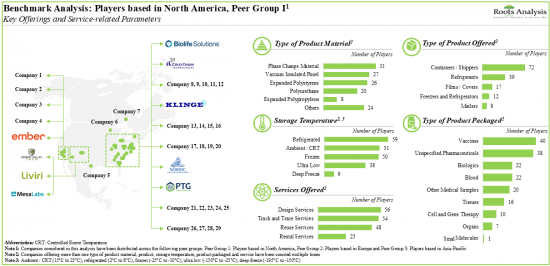
4. Owing to the high competition, stakeholders are steadily expanding their capabilities in order to augment their respective service portfolios and comply to the evolving industry benchmarks.
5. A considerable increase in partnership activity has been observed in the recent years; close to 35% of the deals have been inked since 2022, of which, majority (40%) are service agreements.
6. The rising interest in this domain is reflected in the number of mergers and acquisitions reported in the last few years; around 65% of such initiatives were focused on geographical consolidation.
7. Close to 90 patents have been filed / granted for cold chain containers / shippers by industry and non-industry players to protect intellectual property generated within this field.
8. Driven by the expanding pipeline of biologics, and technological advancements in cold chain industry, the market for cold chain packaging products is poised to witness significant growth in foreseeable future.
COLD CHAIN MARKET FOR PHARMACEUTICALS: KEY SEGMENTS
Currently, Vials Occupies the Largest Share of the Cold Chain Market for Pharmaceuticals
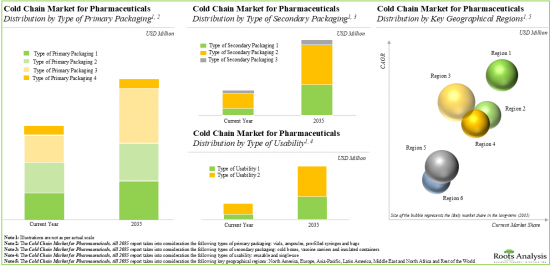
Based on the type of primary packaging, the market is segmented into vials, ampoules, pre-filled syringes and bags. At present, vials hold the maximum share of the cold chain market for pharmaceuticals. This trend is unlikely to change in the near future.
Insulated Container is the Fastest Growing Segment of the Cold Chain Market for Pharmaceuticals During the Forecast Period
Based on the type of secondary packaging, the market is segmented into cold boxes, vaccine carriers and insulated containers. At present, cold boxes hold the maximum share of the cold chain market for pharmaceuticals. However, insulated containers are likely to drive the market in the coming decade.
Reusable Packaging is Likely to Dominate the Cold Chain Market for Pharmaceuticals During the Forecast Period
Based on the type of usability, the market is segmented into reusable and single-use. At present, reusable packaging holds the maximum share of the cold chain market for pharmaceuticals. This trend is likely to remain the same in the forthcoming years.
Asia-Pacific Accounts for the Largest Share of the Market
Based on key geographical regions, the market is segmented into North America, Europe, Asia-Pacific, Middle East and North Africa, Latin America, and Rest of the World. Majority share is expected to be captured by players based in Asia-Pacific. It is worth highlighting that, over the years, the market in Europe is expected to grow at a higher CAGR.
Example Players in the Cold Chain Market for Pharmaceuticals
- Cold Chain Technologies
- Cryopak
- CSafe
- EMBALL'ISO
- Intelsius
- Nordic Cold Chain Solutions
- Peli BioThermal
- SEE
- SOFRIGAM
- Sonoco Thermosafe
- Tempack
COLD CHAIN MARKET FOR PHARMACEUTICALS: RESEARCH COVERAGE
- Market Sizing and Opportunity Analysis: The report features an in-depth analysis of the cold chain market for pharmaceuticals, focusing on key market segments, including [A] type of primary packaging, [B] type of secondary packaging, [C] type of usability and [D] key geographical regions.
- Market Landscape 1: A comprehensive evaluation of cold chain container / shipper providers, considering various parameters, such as [A] year of establishment, [B] company size (in terms of the number of employees), [C] location of headquarters, [D] type of cold chain solution, [E] type of product offered, [F] type of product material, [G] type of product packaged, [H] storage temperature and [I] service offered.
- Market Landscape 2: A comprehensive evaluation of data logger providers, considering various parameters, such as [A] year of establishment, [B] company size (in terms of the number of employees), [C] location of headquarters, [D] types of product offered, [E] mode of data transmission, [F] type of data captured, [G] type of pharmaceutical monitored, [H] temperature range.
- Regulatory and Reimbursement Landscape Analysis: A discussion on general regulatory guidelines established and issued by major regulatory bodies for cold chain market for pharmaceuticals. In addition, it includes an insightful analysis, featuring a comparison of the contemporary regulatory scenarios in key geographies across the globe.
- Competitive Benchmarking Analysis: A competitive benchmarking analysis that emphasizes the primary focus areas of cold chain container / shipper providers. This analysis compares their existing capabilities within and beyond their respective peer groups based in North America, Europe and Asia-Pacific. It offers stakeholders insights into potential strategies for achieving a competitive edge in the industry.
- Company Profiles: In-depth profiles of key cold chain container / shipper providers, focusing on [A] company overviews, [B] product portfolio, [C] service portfolio [D] recent developments and [E] an informed future outlook.
- Partnerships and Collaborations: An analysis of partnerships established in this sector, since 2019, based on several parameters, such as [A] year of partnership, [B] type of partnership, [C] application, [D] type of product, [E] geography and [F] most active players (in terms of number of partnerships). In addition, it includes an insightful analysis of the mergers and acquisitions that have been inked between various stakeholders since 2019, based on relevant parameters, such as [A] year of acquisition, [B] type of acquisition, [C] application, [D] type of product, [E] geography, [F] most active players (in terms of number of partnerships), [G] ownership exchange matrix and [H] key value drivers.
- Patent Analysis: Detailed analysis of various patents filed / granted related to cold chain market for pharmaceuticals based on [A] type of patent, [B] publication year, [C] application year, [D] type of organization, [E] patent jurisdiction, [F] CPC symbols, [G] emerging focus areas, [H] leading industry players. It also includes a patent benchmarking analysis and a detailed valuation analysis.
- Upcoming Trends and Future Growth Opportunities: An detailed discussion on the upcoming trends and future opportunities in the cold chain pharmaceutical industry, featuring details on key tools and technologies associated with connected cold chain (artificial intelligence, augmented reality, automation and robotics, big data analytics, block chain technology, cloud computing, internet of things, radio frequency identification tags). It also presents information on real-time monitoring, methods for its integration in cold chain, growth opportunities and cost benefits associated with real-time monitoring in cold chain.
- Market Impact Analysis: The report analyzes various factors such as drivers, restraints, opportunities, and challenges affecting the market growth.
KEY QUESTIONS ANSWERED IN THIS REPORT
- How many companies are currently engaged in this market?
- Which are the leading companies in this market?
- What kind of partnership models are commonly adopted by industry stakeholders?
- What are the factors that are likely to influence the evolution of this market?
- What is the current and future market size?
- What is the CAGR of this market?
- How is the current and future market opportunity likely to be distributed across key market segments?
REASONS TO BUY THIS REPORT
- The report provides a comprehensive market analysis, offering detailed revenue projections of the overall market and its specific sub-segments. This information is valuable to both established market leaders and emerging entrants.
- Stakeholders can leverage the report to gain a deeper understanding of the competitive dynamics within the market. By analyzing the competitive landscape, businesses can make informed decisions to optimize their market positioning and develop effective go-to-market strategies.
- The report offers stakeholders a comprehensive overview of the market, including key drivers, barriers, opportunities, and challenges. This information empowers stakeholders to stay abreast of market trends and make data-driven decisions to capitalize on growth prospects.
ADDITIONAL BENEFITS
- Complimentary PPT Insights Packs
- Complimentary Excel Data Packs for all Analytical Modules in the Report
- 10% Free Content Customization
- Detailed Report Walkthrough Session with Research Team
- Free Updated report if the report is 6-12 months old or older
TABLE OF CONTENTS
1. PREFACE
- 1.1. Cold Chain Market for Pharmaceuticals
- 1.2. Key Market Insights
- 1.3. Scope of the Report
- 1.4. Research Methodology
- 1.5. Frequently Asked Questions
- 1.6. Chapter Outlines
2. RESEARCH METHODOLOGY
- 2.1. Chapter Overview
- 2.2. Research Assumptions
- 2.3. Project Methodology
- 2.4. Forecast Methodology
- 2.5. Robust Quality Control
- 2.6. Key Market Segmentations
- 2.7. Key Considerations
- 2.7.1. Demographics
- 2.7.2. Economic Factors
- 2.7.3. Government Regulations
- 2.7.4. Supply Chain
- 2.7.5. COVID Impact / Related Factors
- 2.7.6. Market Access
- 2.7.7. Healthcare Policies
- 2.7.8. Industry Consolidation
3. ECONOMIC AND OTHER PROJECT SPECIFIC CONSIDERATIONS
- 3.1. Chapter Overview
- 3.2. Market Dynamics
- 3.2.1. Time Period
- 3.2.1.1. Historical Trends
- 3.2.1.2. Current and Forecasted Estimates
- 3.2.2. Currency Coverage
- 3.2.2.1. Overview of Major Currencies Affecting the Market
- 3.2.2.2. Impact of Currency Fluctuations on the Industry
- 3.2.3. Foreign Exchange Impact
- 3.2.3.1. Evaluation of Foreign Exchange Rates and Their Impact on Market
- 3.2.3.2. Strategies for Mitigating Foreign Exchange Risk
- 3.2.4. Recession
- 3.2.4.1. Historical Analysis of Past Recessions and Lessons Learnt
- 3.2.4.2. Assessment of Current Economic Conditions and Potential Impact on the Market
- 3.2.5. Inflation
- 3.2.5.1. Measurement and Analysis of Inflationary Pressures in the Economy
- 3.2.5.2. Potential Impact of Inflation on the Market Evolution
- 3.2.1. Time Period
4. EXECUTIVE SUMMARY
5. INTRODUCTION
- 5.1. Chapter Overview
- 5.2. Introduction to Cold Chain Packaging
- 5.3. Historical Timeline of Cold Chain
- 5.4. Cold Chain Solutions for Pharmaceutical Industry
- 5.4.1. Cold Chain Packaging Solutions: Containers and Shippers
- 5.4.1.1. Active Cold Chain Packaging Solutions
- 5.4.1.2. Passive Cold Chain Packaging Solutions
- 5.4.1.3. Insulated Cold Chain Packaging Solutions
- 5.4.2. Cold Chain Monitoring Solutions: Data Loggers
- 5.4.2.1. Data Loggers
- 5.4.2.2. Indicators
- 5.4.1. Cold Chain Packaging Solutions: Containers and Shippers
- 5.5. Applications of Cold Chain in Pharmaceutical Industry
- 5.6. Current Challenges and Future Perspectives
6. OVERALL MARKET LANDSCAPE: COLD CHAIN CONTAINER / SHIPPER PROVIDERS
- 6.1. Chapter Overview
- 6.2. Cold Chain Container / Shipper Providers: Overall Market Landscape
- 6.2.1. Analysis by Year of Establishment
- 6.2.2. Analysis by Company Size
- 6.2.3. Analysis by Location of Headquarters (Region)
- 6.2.4. Analysis by Location of Headquarters (Country)
- 6.2.5. Analysis by Type of Cold Chain Solution
- 6.2.6. Analysis by Type of Product Offered
- 6.2.7. Analysis by Type of Product Material
- 6.2.8. Analysis by Type of Product Packaged
- 6.2.9. Analysis by Storage Temperature
- 6.2.10. Analysis by Type of Service Offered
- 6.2.11. Analysis by Company Size and Type of Service Offered
7. OVERALL MARKET LANDSCAPE: DATA LOGGER PROVIDERS
- 7.1. Chapter Overview
- 7.2. Data Logger Providers: Overall Market Landscape
- 7.3. Analysis by Year of Establishment
- 7.4. Analysis by Company Size
- 7.5. Analysis by Location of Headquarters (Region)
- 7.6. Analysis by Location of Headquarters (Country)
- 7.7. Analysis by Type of Product Offered
- 7.8. Analysis by Mode of Data Transmission
- 7.9. Analysis by Type of Data Captured
- 7.10. Analysis by Type of Pharmaceutical Monitored
- 7.11. Analysis by Temperature Range
- 7.12. Analysis by Type of Product Offered and Mode of Data Transmission
- 7.13. Analysis by Type of Product Offered and Type of Data Captured
8. BENCHMARKING ANALYSIS
- 8.1. Chapter Overview
- 8.2. Assumptions and Methodology
- 8.3. Benchmarking Analysis of Cold Chain Container / Shipper Providers
- 8.3.1. Benchmarking Analysis: Players based in North America (Peer Group I)
- 8.3.2. Benchmarking Analysis: Players based in Europe (Peer Group II)
- 8.3.3. Benchmarking Analysis: Large Players based in Asia-Pacific and RoW (Peer Group III)
- 8.4. Concluding Remarks
9. COMPANY PROFILES
- 9.1. Chapter Overview
- 9.2. Cold Chain Technologies
- 9.2.1. Company Overview
- 9.2.2. Product Portfolio
- 9.2.3. Service Portfolio
- 9.2.4. Recent Developments and Future Outlook
- 9.3. Cryopak
- 9.3.1. Company Overview
- 9.3.2. Product Portfolio
- 9.3.3. Service Portfolio
- 9.3.4. Recent Developments and Future Outlook
- 9.4. CSafe
- 9.4.1. Company Overview
- 9.4.2. Product Portfolio
- 9.4.3. Service Portfolio
- 9.4.4. Recent Developments and Future Outlook
- 9.5. EMBALL'ISO
- 9.5.1. Company Overview
- 9.5.2. Product Portfolio
- 9.5.3. Service Portfolio
- 9.5.4. Recent Developments and Future Outlook
- 9.6. Intelsius
- 9.6.1. Company Overview
- 9.6.2. Product Portfolio
- 9.6.3. Service Portfolio
- 9.6.4. Recent Developments and Future Outlook
- 9.7. Nordic Cold Chain Solutions
- 9.7.1. Company Overview
- 9.7.2. Product Portfolio
- 9.7.3. Service Portfolio
- 9.7.4. Recent Developments and Future Outlook
- 9.8. Peli BioThermal
- 9.8.1. Company Overview
- 9.8.2. Product Portfolio
- 9.8.3. Service Portfolio
- 9.8.4. Recent Developments and Future Outlook
- 9.9. SEE
- 9.9.1. Company Overview
- 9.9.2. Product Portfolio
- 9.9.3. Service Portfolio
- 9.9.4. Recent Developments and Future Outlook
- 9.10. SOFRIGAM
- 9.10.1. Company Overview
- 9.10.2. Product Portfolio
- 9.10.3. Service Portfolio
- 9.10.4. Recent Developments and Future Outlook
- 9.11. Sonoco Thermosafe
- 9.11.1. Company Overview
- 9.11.2. Product Portfolio
- 9.11.3. Service Portfolio
- 9.11.4. Recent Developments and Future Outlook
- 9.12. Tempack
- 9.12.1. Company Overview
- 9.12.2. Product Portfolio
- 9.12.3. Service Portfolio
- 9.12.4. Recent Developments and Future Outlook
- 9.13. Other Leading Players
- 9.13.1. Almac
- 9.13.2. B Medical Systems
- 9.13.3. BioLife Solutions
- 9.13.4. CRS Mobile Cold Storage
- 9.13.5. Desert Valley Tech
- 9.13.6. Dubai Instruments
- 9.13.7. Envirotainer
- 9.13.8. Global Cold Chain Solutions (Headquartered in Australia)
- 9.13.9. Global Cold Chain Solutions (Headquartered in Singapore)
- 9.13.10. Klinge
- 9.13.11. Krautz-temax
- 9.13.12. Meds2go
- 9.13.13. phasetwo
- 9.13.14. Polar Tech Industries
- 9.13.15. Skycell
- 9.13.16. UPS Healthcare
10. PARTNERSHIPS AND COLLABORATIONS
- 10.1. Chapter Overview
- 10.2. Partnership Models
- 10.3. Cold Chain for Pharmaceuticals: Partnerships and Collaborations
- 10.3.1. Analysis by Year of Partnership
- 10.3.2. Analysis by Type of Partnership
- 10.3.3. Analysis by Year and Type of Partnership
- 10.3.4. Analysis by Application Area
- 10.3.5. Analysis by Type of Product / Technology Targeted
- 10.3.6. Analysis by Geography
- 10.3.6.1. Local and International Agreements
- 10.3.6.2. Intercontinental and Intracontinental Agreements
- 10.3.7. Most Active Players: Analysis by Number of Partnerships
- 10.4. Cold Chain for Pharmaceuticals: Acquisitions
- 10.4.1. Analysis by Year of Acquisition
- 10.4.2. Analysis by Type of Acquisition
- 10.4.3. Analysis by Year and Type of Acquisition
- 10.4.4. Analysis by Application Area
- 10.4.5. Analysis by Type of Product / Technology Targeted
- 10.4.6. Analysis by Geography
- 10.4.6.1. Local and International Agreements
- 10.4.6.2. Intercontinental and Intracontinental Agreements
- 10.4.7. Ownership Change Matrix
- 10.4.8. Analysis by Key Value Drivers
11. PATENT ANALYSIS
- 11.1. Chapter Overview
- 11.2. Scope and Methodology
- 11.3. Cold Chain for Pharmaceuticals: Patent Analysis
- 11.3.1. Analysis by Type of Patent
- 11.3.2. Analysis by Publication Year
- 11.3.3. Analysis by Type of Patent and Publication Year
- 11.3.4. Analysis by Application Year
- 11.3.5. Analysis by Type of Organization
- 11.3.6. Analysis by Patent Jurisdiction
- 11.3.7. Analysis by CPC Symbols
- 11.3.8. Analysis by Emerging Focus Area
- 11.3.9. Leading Industry Players: Analysis by Number of Patents
- 11.4. Cold Chain for Pharmaceuticals: Patent Benchmarking Analysis
- 11.4.1. Analysis by Patent Characteristics
- 11.4.1.1. Cold Chain Technologies and Ember LifeSciences
- 11.4.1.2. Other Leading Patent Assignees
- 11.4.1. Analysis by Patent Characteristics
- 11.5. Patent Valuation Analysis
12. REGULATORY RECOMMENDATIONS AND GUIDELINES
- 12.1. Chapter Overview
- 12.2. Regulatory Guidelines Issued by International Authorities
- 12.2.1. World Health Organization (WHO)
- 12.2.2. International Air Transport Association (IATA)
- 12.2.3. International Safe Transit Association (ISTA)
- 12.3. Regulatory Guidelines Issued by Regional Authorities
- 12.3.1. Regulatory Guidelines for Cold Chain Management in the US
- 12.3.1.1. United States Food and Drug Administration (USFDA)
- 12.3.2. United States Pharmacopeia (USP)
- 12.3.3. Regulatory Guidelines for Cold Chain Management in Canada
- 12.3.3.1. Health Canada
- 12.3.4. Regulatory Guidelines for Cold Chain Management in Europe
- 12.3.4.1. European Medicine Agency
- 12.3.1. Regulatory Guidelines for Cold Chain Management in the US
- 12.4. Recommendations for Different Steps of Cold Chain
- 12.5. Comparative Analysis of Regulatory Authorities
13. UPCOMING TRENDS AND FUTURE GROWTH OPPORTUNITIES
- 13.1. Chapter Overview
- 13.2. Connected Cold Chain: Key Tools and Technologies
- 13.2.1. Artificial Intelligence
- 13.2.2. Augmented Reality
- 13.2.3. Automation and Robotics
- 13.2.4. Big Data Analytics
- 13.2.5. Block Chain Technology
- 13.2.6. Cloud Computing
- 13.2.7. Internet of Things
- 13.2.8. Radio Frequency Identification (RFID) Tags
- 13.3. Connected Cold Chain: Future Growth Opportunities
- 13.4. Real-Time Monitoring: An Application of Connected Cold Chain Solutions
- 13.4.1. Methods for Integration of Real-Time Monitoring in Cold Chain
- 13.4.1.1. RFID Based Real-Time Monitoring
- 13.4.1.2. Blockchain And IoT Based Real-Time Monitoring
- 13.4.2. Growth Opportunities for Real-Time Monitoring in Connected Cold Chain
- 13.4.3. Cost Benefits of Real-Time Monitoring in Cold Chain
- 13.4.1. Methods for Integration of Real-Time Monitoring in Cold Chain
14. MARKET IMPACT ANALYSIS: DRIVERS, RESTRAINTS, OPPORTUNITIES AND CHALLENGES
- 14.1. Chapter Overview
- 14.2. Market Drivers
- 14.3. Market Restraints
- 14.4. Market Opportunities
- 14.5. Market Challenges
- 14.6. Conclusion
15. COLD CHAIN MARKET FOR PHARMACEUTICALS
- 15.1. Chapter Overview
- 15.2. Assumptions and Methodology
- 15.3. Global Cold Chain Market for Pharmaceuticals, Historical Trends (since 2019) and Forecasted Estimates (till 2035)
- 15.3.1. Scenario Analysis
- 15.4. Key Market Segmentations
- 15.5. Dynamic Dashboard
16. COLD CHAIN MARKET FOR PHARMACEUTICALS, BY TYPE OF PRIMARY PACKAGING
- 16.1. Chapter Overview
- 16.2. Key Assumptions and Methodology
- 16.3. Cold Chain for Pharmaceuticals: Analysis by Type of Primary Packaging (2019, current year and 2035)
- 16.3.1. Vials: Historical Trends (since 2019) and Forecasted Estimates (till 2035)
- 16.3.2. Ampoules: Historical Trends (since 2019) and Forecasted Estimates (till 2035)
- 16.3.3. Pre-filled Syringes: Historical Trends (since 2019) and Forecasted Estimates (till 2035)
- 16.3.4. Bags: Historical Trends (since 2019) and Forecasted Estimates (till 2035)
- 16.4. Data Triangulation and Validation
17. COLD CHAIN MARKET FOR PHARMACEUTICALS, BY TYPE OF SECONDARY PACKAGING
- 17.1. Chapter Overview
- 17.2. Key Assumptions and Methodology
- 17.3. Cold Chain for Pharmaceuticals: Analysis by Type of Secondary Packaging (2019, current year and 2035)
- 17.3.1. Cold Boxes: Historical Trends (since 2019) and Forecasted Estimates (till 2035)
- 17.3.2. Vaccine Carriers: Historical Trends (since 2019) and Forecasted Estimates (till 2035)
- 17.3.3. Insulated Containers: Historical Trends (since 2019) and Forecasted Estimates (till 2035)
- 17.4. Data Triangulation and Validation
18. COLD CHAIN MARKET FOR PHARMACEUTICALS, BY TYPE OF USABILITY
- 18.1. Chapter Overview
- 18.2. Key Assumptions and Methodology
- 18.3. Cold Chain for Pharmaceuticals: Analysis by Type of Usability (2019, current year and 2035)
- 18.3.1. Reusable Containers / Shippers: Historical Trends (since 2019) and Forecasted Estimates (till 2035)
- 18.3.2. Single-use Containers / Shippers: Historical Trends (since 2019) and Forecasted Estimates (till 2035)
- 18.4. Data Triangulation and Validation
19. COLD CHAIN MARKET FOR PHARMACEUTICALS, BY KEY GEOGRAPHICAL REGIONS
- 19.1. Chapter Overview
- 19.2. Key Assumptions and Methodology
- 19.3. Cold Chain for Pharmaceuticals: Analysis by Key Geographical Regions (2019, current year and 2035)
- 19.3.1. North America: Historical Trends (since 2019) and Forecasted Estimates (till 2035)
- 19.3.2. Europe: Historical Trends (since 2019) and Forecasted Estimates (till 2035)
- 19.3.3. Asia-Pacific: Historical Trends (since 2019) and Forecasted Estimates (till 2035)
- 19.3.4. Middle East and North America: Historical Trends (since 2019) and Forecasted Estimates (till 2035)
- 19.3.5. Latin America: Historical Trends (since 2019) and Forecasted Estimates (till 2035)
- 19.3.6. Rest of the World: Historical Trends (since 2019) and Forecasted Estimates (till 2035)
- 19.4. Data Triangulation and Validation
20. CONCLUSION
21. EXECUTIVE INSIGHTS
- 21.1. Chapter Overview
- 21.2. EMBALL'ISO
- 21.2.1. Company Snapshot
- 21.2.2. Interview Transcript
- 21.3. Tower Cold Chain
- 21.3.1. Company Snapshot
- 21.3.2. Interview Transcript