


|
시장보고서
상품코드
1771293
KRAS 시장 : 업계 동향과 세계 예측 - 적응증별, 분자 유형별, 치료 유형별, 투여 경로별, 주요 지역별KRAS Market: Industry Trends and Global Forecasts - Distribution by Type of Indication, Type of Molecule, Type of Therapy, Route of Administration and Key Geographical Regions |
||||||

세계 KRAS 시장 : 개요
올해 전 세계 KRAS 시장 규모는 7,300만 달러에 달했습니다. 이 시장은 예측 기간 동안 53.6%의 연평균 복합 성장률(CAGR)로 확대될 것으로 예측됩니다.
시장 세분화 및 기회 분석은 다음과 같은 매개 변수로 세분화됩니다.
적응증 유형
- 급성 골수성 백혈병
- 대장암
- 두경부암
- 폐암
- 난소암
- 췌장암
- 펠란 맥더미드 증후군
- 피부암
분자 유형
- 생물학적 제제
- 저분자
치료 유형
- 단독요법
- 병용요법
투여 경로
- 정맥 투여
- 근육 내 투여
- 피부 속
- 안구 내
- 복강 내
- 경구
- 피하
주요 지역
- 북미
- 유럽
- 아시아태평양
- 중동 및 북아프리카
- 라틴아메리카
세계의 KRA 시장 : 성장과 동향
암은 심혈관계 질환에 이어 사망원인 2위이며, 전 세계적으로 보고된 사망원인의 6분의 1을 차지합니다. 국제암연구소(IARC)에 따르면, 2040년까지 새로 발생하는 암 환자 수는 전 세계적으로 2,750만 명으로 증가할 것으로 예측됩니다. 이 질환으로 인한 사망률이 높은 주요 요인은 진단이 늦어지는 경우가 많으며, 그 결과 치료가 늦어지고 환자의 생존 가능성이 현저히 낮아지기 때문입니다.
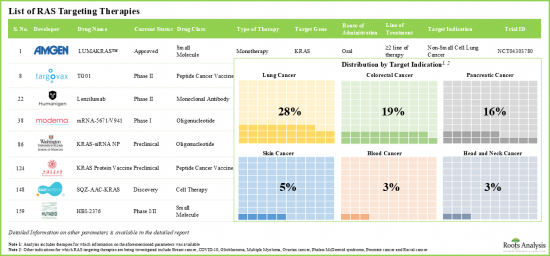
기존 치료법이 RAS 돌연변이 암 치료에 큰 효과를 보이지 못하면서, RAS 유전자를 특이적으로 표적으로 하는 새로운 약물이 유망한 대안으로 떠오르고 있습니다. 실제로 이 분야의 약물 개발자들은 질병의 발병과 진행의 주요 원인인 특정 암 유전자 돌연변이를 표적으로 삼는 치료법 개발에 점점 더 많은 노력을 기울이고 있습니다. 주목할 만한 점은 한때 치료할 수 없는 표적으로 여겨졌던 RAS가 인간암의 30%와 관련이 있다는 것입니다. 수년 동안 RAS 돌연변이 유전자를 특이적으로 표적으로 삼는 수많은 약물 후보물질이 연구되어 왔습니다. 또한, 유망한 임상시험 결과, 막대한 자금 지원, 표적 치료법에 대한 수요 증가에 힘입어 RAS 표적 치료제 시장은 향후 10년간 꾸준히 성장할 것으로 예측됩니다.
세계의 KRA 시장 : 주요 인사이트
이 보고서는 세계 KRAS 시장의 현황을 조사하고 잠재적인 성장 기회를 파악하고 있습니다. 본 보고서의 주요 조사 결과는 다음과 같습니다.
- 현재 여러 기업이 RAS 돌연변이로 인한 다양한 암 치료를 위한 신약 후보물질 개발에 참여하고 있다고 주장하고 있습니다.
- 대부분의 신약 후보물질은 개발 초기 단계에서 평가되고 있으며, 단독 또는 다른 제품과 병용하여 다양한 투여 경로로 투여되고 있습니다.
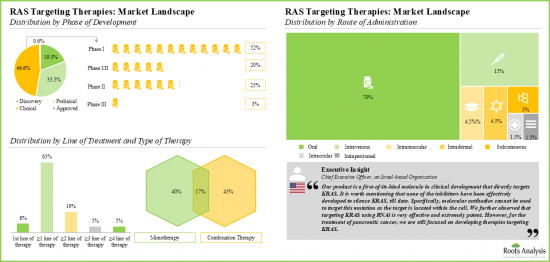
- 70% 이상의 치료제가 단독 또는 다른 제품과의 병용요법으로 전임상 및 임상 단계에서 평가되고 있으며, RAS를 표적으로 하는 치료제의 대부분(79%)은 경구용으로 설계되어 있습니다.
- 각 지역 기업들은 경쟁 우위를 확보하기 위해 자원과 자본 양면에서 적극적인 투자를 통해 자체 개발 제품의 연구개발에 힘쓰고 있습니다.
- 최근 몇 년 동안, 이 새로운 유형의 치료제와 관련된 임상시험의 수는 다양한 지역에서 크게 증가했습니다.
- 임상연구 활동은 등록된 임상시험 수로 볼 때 지난 3년간 CAGR 5%로 증가한 것으로 보고되고 있습니다. 전체 임상시험 수 중 약 25%는 이미 종료되었으나, 60%는 현재 진행 중이며, 현재도 환자를 모집하고 있습니다.
- 최근 많은 기업들이 신규 저분자 화합물 후보물질 개발을 위해 전략적 제휴를 맺고 있습니다.
- 그 중 대부분은 제품 라이선스 계약으로 전체의 30% 이상을 차지합니다.
- 수익률을 기대하며 많은 공공 및 민간 투자자들이 지난 5년 동안 여러 차례의 자금 조달 라운드에 걸쳐 투자했습니다.
- 이 중 약 6억 달러가 벤처캐피털에 의한 자금 조달로 전체의 약 40%를 차지합니다. 한편, 5건 이상의 IPO/매각이 보고되었으며, 이들 기업은 총 7억 7,500만 달러 이상의 자금을 조달했습니다.
- 과거와 현재 진행 중인 연구는 암을 적응증으로 하는 치료에 초점을 맞추었습니다.
- 지난해에는 국내 대학에 소속된 저자의 대다수(80%)가 KRAS에 초점을 맞춘 논문을 발표했습니다.
- 지난 몇 년 동안 RAS 표적치료에 초점을 맞춘 연구 논문을 포함한 논문 수가 급격히 증가하고 있습니다.
- 발표된 논문/기사를 보면, 현재 연구 활동은 RAS 아이소폼, 주로 돌연변이 KRAS 유전자를 표적으로 삼는 것에 집중되어 있음을 알 수 있습니다.
- 대부분의 출판물은 대장암, 폐암, 췌장암을 대상으로 한 RAS 표적치료제에 초점을 맞추었습니다.
- 의약품 개발 기업들은 자체 개발한 제품을 적절히 수익화하기 위해 제품 출시 주기의 다양한 단계에서 다양한 상업화 전략을 적극적으로 모색하고 있습니다.
- RAS 표적치료제 시장은 암 부담 증가와 표적치료제에 대한 수요 증가에 힘입어 향후 10년간 높은 성장률을 보일 것으로 예측됩니다.
- 전체 시장 기회는 다양한 유형의 치료제와 투여 경로에 분산될 것으로 보입니다.
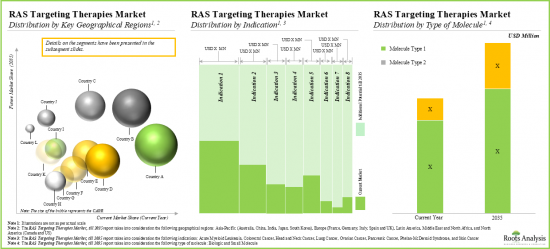
KRAS 시장 진출기업 사례
- Amgen
- GlobeImmune
- Jacobio Pharmaceuticals
- Mirati Therapeutics
- Novartis
- Onconova Therapeutics
- Targovax
- Verastem Oncology.
세계 KRAS 시장
- 시장 규모 및 기회 분석 : 본 보고서는(A) 적응증 유형,(B) 분자 유형,(C) 치료 유형,(D) 투여 경로,(E) 주요 지역 등 주요 시장 부문에 초점을 맞추어 세계 KRAS 시장을 상세하게 분석합니다.
- 시장 상황:(A) 개발 현황,(B) 개발 단계,(C) 분자 유형,(D) 치료 유형,(E) 표적 치료 영역,(F) 표적 유전자,(G) 치료 라인,(H) 투여 경로 등 다양한 매개 변수를 고려한 RAS 표적 치료제에 대한 종합적인 평가. 또한,(A) 설립연도,(B) 직원수,(C) 지리적 입지 등 몇 가지 관련 파라미터를 기반으로 RAS 표적 치료제 개발에 종사하는 기업에 대한 종합적인 평가도 포함됩니다.
- 임상시험 분석 :(A) 임상시험 등록 연도,(B) 임상시험 단계,(C) 임상시험 모집 현황,(D) 등록된 환자군,(E) 임상시험 설계,(F) 주요 산업 스폰서/공동연구자,(G) 임상시험 초점,(H) 표적 적응증,(i) 가장 인기 있는 적응증,(J) 임상시험의 지역 분포 등. 다양한 RAS 표적 치료제의 임상시험을 여러 관련 매개변수를 바탕으로 상세하게 분석합니다.
- 제품 경쟁 분석 : A) 기업 규모,(B) 리드 분자 개발 단계 등의 요인을 고려하여 KRAS 시장에 종사하는 주요 기업의 통찰력 있는 경쟁 분석(각 개발 포트폴리오의 강점을 기반으로).
- 기업 프로파일:(A) 기업 개요,(B) 제품 포트폴리오,(C) 최근 동향 및 정보에 입각한 미래 전망에 초점을 맞춘 RAS 표적 치료제를 제공하는 기업의 상세한 프로파일.
- 출판물 분석 :(A) 출판 연도,(B) 중점 분야,(C) 분자 유형,(D) 인기 키워드,(E) 주요 저널을 기준으로 RAS 표적치료제 연구와 관련된 약 1,600여 편의 학술 논문을 종합적으로 분석하였습니다.
- 파트너십 및 공동연구: A) 파트너십 체결 연도, B) 파트너십 유형, C) 분자 유형, D) 가장 활발한 진출 기업(파트너십 체결 수), E) 파트너십 활동의 지역별 분포 등 몇 가지 매개변수를 바탕으로 이 분야에서 이해관계자들이 체결한 체결한 거래에 대한 통찰력 있는 분석.
- 자금조달 및 투자: A) 벤처캐피탈로부터의 자금조달, B) 부채별 자금조달, C) 보조금/상금, D) IPO를 통한 자금조달, E) KRAS 시장에 참여한 진입기업이 진행한 후속 기업공개 등 다양한 투자에 대한 상세 분석.
- 주요 상업화 전략: KRAS 시장에 진출한 제약사들이 시판 전, 시판 중, 시판 후 등 시장 개척의 다양한 단계에 걸쳐 채택한 다양한 상업화 전략에 대해 자세히 설명합니다.
세계의 KRAS 시장에 대해 조사했으며, 시장 개요와 함께 적응증별/분자 유형별/치료 유형별/투여 경로별 동향, 지역별 동향, 시장 진출기업 프로파일 등의 정보를 전해드립니다.
목차
제1장 서문
제2장 주요 요약
제3장 서론
- RAS 표적 치료 개요
- 돌연변이 RAS 유전자 표적 치료에 사용되는 접근법
- 역사적으로 주목할 만한 발전
- RAS 돌연변이 암에서 두드러진 유전자 드라이버 관련 돌연변이
- RAS 돌연변이 암 치료와 관련된 도전 과제 및 향후 전망
제4장 현재 시장 구도
- RAS 표적치료 : 파이프라인 리뷰
- RAS 표적치료 : 개발 상황
제5장 임상시험과 엔드포인트 분석
- RAS 표적치료 : 임상시험 리스트
제6장 제품 경쟁력 분석
- 제품 경쟁력 : 북미
- 제품 경쟁력 : 유럽
- 제품 경쟁력 : 아시아태평양
제7장 기업 개요
- Amgen
- GlobeImmune
- Jacobio Pharmaceuticals
- Mirati Therapeutics
- Novartis
- Onconova Therapeutics
- Targovax
- Verastem Oncology
제8장 출판물 분석
- RAS 표적치료 : 최근 출판물
제9장 파트너십 및 협업
- RAS 표적치료 : 파트너십 및 협업 리스트
제10장 자금조달과 투자 분석
- RAS 표적치료 : 자금조달과 투자
제11장 주요 상업화 전략
제12장 시장 규모 평가와 기회 분석
- 예측 조사 방법과 주요 전제조건
- 세계의 RAS 표적치료 시장(-2035년)
- 세계의 RAS 표적치료 시장(-2035년) : 적응증별
- 세계의 RAS 표적치료 시장(-2035년) : 분자 유형별
- 세계의 RAS 표적치료 시장(-2035년) : 치료 유형별
- 세계의 RAS 표적치료 시장(-2035년) : 투여 경로별
- 세계의 RAS 표적치료 시장(-2035년) : 지역별
- RAS 표적치료 : 개별 제품 판매 예측
- LUMAKRASTM(Amgen) : 판매 예측
- Adagrasib(Mirati Therapeutics) : 판매 예측
- AMO-01(AMO Pharma) : 판매 예측
- Antroquinonol(Golden Biotech) : 판매 예측
- Binimetinib(Array Biopharma) : 판매 예측
- CH7126766/VS6766(Verastem Oncology) : 판매 예측
- LXH274(Novartis) : 판매 예측
- Rigosertib(Onconova Therapeutics) : 판매 예측
- RMC-4630(Revolution Medicine) : 판매 예측
- TG01(Targovax) : 판매 예측
- Tipifarnib(Kura Oncology) : 판매 예측
- siG12D(Silenseed) : 판매 예측
제13장 결론
제14장 부록 1 : 표 형식 데이터
제15장 부록 2 : 기업 및 단체 리스트
LSH 25.07.22GLOBAL KRAS MARKET: OVERVIEW
As per Roots Analysis, the global KRAS market valued at USD 73 million in the current year is expected to grow at a CAGR of 53.6% during the forecast period.
The market sizing and opportunity analysis has been segmented across the following parameters:
Type of Indication
- Acute Myeloid Leukemia
- Colorectal Cancer
- Head and Neck Cancer
- Lung Cancer
- Ovarian Cancer
- Pancreatic Cancer
- Phelan-McDermid Syndrome
- Skin Cancer
Type of Molecule
- Biologic
- Small Molecule
Type of Therapy
- Monotherapy
- Combination Therapy
Route of Administration
- Intravenous
- Intramuscular
- Intradermal
- Intraocular
- Intraperitoneal
- Oral
- Subcutaneous
Key Geographical Regions
- North America
- Europe
- Asia-Pacific
- Middle East and North Africa
- Latin America
GLOBAL KRAS MARKET: GROWTH AND TRENDS
Cancer is considered to be the second leading cause of mortality, after cardiovascular diseases, accounting for every sixth reported death in the world. The International Agency for Research on Cancer (IARC) states that the number of new cancer cases is expected to grow to 27.5 million across the globe, by 2040. A major factor contributing to the high mortality rate associated with this condition is the tendency for late diagnosis, which in turn delays treatment and significantly reduces the patient's chances of survival.
Given that conventional therapies have been unable to exhibit significant efficacy in the treatment of RAS mutated cancers, novel drugs, specifically targeting the RAS gene, have emerged as a promising alternative. In fact, drug developers in this field are increasingly focusing on creating therapies that target specific oncogenic mutations primarily responsible for the onset and progression of the disease. Notably, RAS which was once considered to be an undruggable target, has been linked to 30% of human cancer. Over the years, numerous drug candidates have been investigated to specifically target RAS-mutated genes. Additionally, driven by encouraging clinical trial results, substantial financial assistance, and growing demand for targeted therapeutic modalities, the RAS targeting therapies market is anticipated to witness steady growth over the next decade
GLOBAL KRAS MARKET: KEY INSIGHTS
The report delves into the current state of global KRAS market and identifies potential growth opportunities within industry. Some key findings from the report include:
- Presently, several companies claim to be engaged in the development of novel drug candidates for the treatment of various cancers originating due to RAS mutations.
- Most of the drug candidates are being evaluated in early stages of development, either as monotherapies or in combination with other products, for delivery via different administration routes.
- Over 70% of the therapies are being evaluated across preclinical and clinical stages, either as monotherapies or in combination with other products. Majority of the RAS targeting therapies (79%) are designed for administration via the oral route.
- In pursuit of gaining a competitive edge, firms located in different regions are actively investing, in terms of both resources and capital, to conduct R&D of their proprietary products.
- Over the years, there has been significant increase in number of clinical trials related to this novel class of therapies, across different geographies.
- Clinical research activity, in terms of the number of trials registered, is reported to have increased at a CAGR of 5%, in the past three years. Of the total number of trials, close to 25% of the studies have already been completed, while 60% are active and still recruiting patients.
- In recent years, a large number of companies have recently entered into strategic collaborations for the development of novel small molecule candidates.
- Majority of the deals were reported to be product licensing agreements, representing over 30% of the total number of instances.
- Foreseeing lucrative returns, many public and private investors have made investments across several funding rounds, in the last five years.
- Of the total, close to USD 600 million was raised through venture capital financing, representing around 40% of the overall share. On the other hand, over 5 instances of IPOs / secondary offerings were reported, wherein players collectively raised more than USD 775 million in financing.
- Both industry players and academic institutes have made significant contributions towards expanding the pool of published scientific literature; past and ongoing studies were focused on treatment of cancer indications.
- Majority of the authors affiliated with deemed universities have published articles focused on KRAS (80%), in the last year.
- In the past years, there has been an exponential increase in the number of publications, including research articles focused on RAS targeting therapies.
- Published articles / papers indicate that the current research activity is focused on targeting RAS isoforms, primarily mutated KRAS gene.
- Majority of the publications are focused on RAS targeting therapies intended for colorectal cancer, lung cancer and pancreatic cancer.
- In order to adequately monetize their proprietary offerings, drug developers are actively exploring diverse commercialization strategies across various stages of a product's launch cycle.
- Driven by the growing cancer burden and rising need for targeted drug therapies, the RAS targeted therapies market is projected to grow at a lucrative rate over the coming decade.
- The overall market opportunity is likely to be distributed across different types of therapies and routes of administration.
Example Players in the KRAS Market
- Amgen
- GlobeImmune
- Jacobio Pharmaceuticals
- Mirati Therapeutics
- Novartis
- Onconova Therapeutics
- Targovax
- Verastem Oncology.
GLOBAL KRAS MARKET
- Market Sizing and Opportunity Analysis: The report features an in-depth analysis of the global KRAS market, focusing on key market segments, including [A] type of indication, [B] type of molecule, [C] type of therapy, [D] route of administration and [E] key geographical regions.
- Market Landscape: A comprehensive evaluation of RAS targeting therapies, considering various parameters, such as [A] current status of development, [B] phase of development, [C] type of molecule, [D] type of therapy, [E] target therapeutic area, [F] target gene, [G] line of treatment and [H] route of administration. Additionally, the section includes a comprehensive evaluation of companies engaged in the development of RAS targeting therapies, based on several relevant parameters, such as [A] year of establishment, [B] employee count and [C] geographical presence.
- Clinical Trial Analysis: An in-depth analysis of clinical trials of various RAS targeting therapies, based on several relevant parameters, such as [A] trial registration year, [B] trial phase, [C] trial recruitment status, [D] enrolled patient population, [E] study design, [F] leading industry sponsors / collaborators, [G] trial focus, [H] target indication, [I] most popular indications and [J] regional distribution of trials.
- Product Competitiveness Analysis: An insightful competitive analysis of key players engaged in KRAS market (on the basis of the strength of their respective development portfolios), examining factors, such as [A] company size and [B] stage of development of lead molecules.
- Company Profiles: In-depth profiles of companies engaged in offering RAS targeting therapies, focusing on [A] company overview, [B] product portfolio and [C] recent developments and an informed future outlook.
- Publication Analysis: A comprehensive analysis of close to 1,600 peer-reviewed scientific articles related to research on RAS targeting therapies, based on [A] year of publication, [B] focus areas, [C] type of molecule, [D] popular keywords and [E] key journals.
- Partnerships and Collaborations: An insightful analysis of the deals inked by stakeholders in this domain, based on several parameters, such as [A] year of partnership, [B] type of partnership, [C] type of molecule, [D] most active players (in terms of the number of partnerships signed) and [E] geographical distribution of partnership activity.
- Funding and Investments: An in-depth analysis of various investments, such as [A] venture capital financing, [B] debt financing, [C] grants / awards, [D] capital raised from IPOs and [E] subsequent offerings that were undertaken by players engaged in KRAS market.
- Key Commercialization Strategies: A detailed discussion on the various commercialization strategies that have been adopted by drug developers engaged in KRAS market across different stages of therapy development, including pre-drug launch, at / during drug launch and post-marketing stage.
KEY QUESTIONS ANSWERED IN THIS REPORT
- How many companies are currently engaged in this market?
- Which are the leading companies in this market?
- What factors are likely to influence the evolution of this market?
- What is the current and future market size?
- What is the CAGR of this market?
- How is the current and future market opportunity likely to be distributed across key market segments?
REASONS TO BUY THIS REPORT
- The report provides a comprehensive market analysis, offering detailed revenue projections of the overall market and its specific sub-segments. This information is valuable to both established market leaders and emerging entrants.
- Stakeholders can leverage the report to gain a deeper understanding of the competitive dynamics within the market. By analyzing the competitive landscape, businesses can make informed decisions to optimize their market positioning and develop effective go-to-market strategies.
- The report offers stakeholders a comprehensive overview of the market, including key drivers, barriers, opportunities, and challenges. This information empowers stakeholders to stay abreast of market trends and make data-driven decisions to capitalize on growth prospects.
ADDITIONAL BENEFITS
- Complimentary PPT Insights Packs
- Complimentary Excel Data Packs for all Analytical Modules in the Report
- 15% Free Content Customization
- Detailed Report Walkthrough Session with Research Team
- Free Updated report if the report is 6-12 months old or older
TABLE OF CONTENTS
1. PREFACE
- 1.1. Scope of the Report
- 1.2. Research Methodology
- 1.2.1. Research Assumptions
- 1.2.2. Project Methodology
- 1.2.3. Forecast Methodology
- 1.2.4. Robust Quality Control
- 1.2.5. Key Considerations
- 1.2.5.1. Demographics
- 1.2.5.2. Economic Factors
- 1.2.5.3. Government Regulations
- 1.2.5.4. Supply Chain
- 1.2.5.5. COVID Impact / Related Factors
- 1.2.5.6. Market Access
- 1.2.5.7. Healthcare Policies
- 1.2.5.8. Industry Consolidation
- 1.3 Key Questions Answered
- 1.4. Chapter Outlines
2. EXECUTIVE SUMMARY
3. INTRODUCTION
- 3.1. Overview of RAS Targeting Therapies
- 3.2. Approaches Used to Target Mutated RAS Gene
- 3.3. Historical Notable Developments
- 3.4. Prominent Gene Driver Related Mutations in RAS Mutated Cancers
- 3.5. Challenges and Future Perspectives Associated with Treatment of RAS Mutated Cancers
4. CURRENT MARKET LANDSCAPE
- 4.1. RAS Targeting Therapies: Pipeline Review
- 4.1.1. Analysis by Phase of Development
- 4.1.2. Analysis by Route of Administration
- 4.1.3. Analysis by Line of Treatment
- 4.1.4. Analysis by Type of Therapy
- 4.1.5. Analysis by Type of Molecule
- 4.1.6. Analysis by Target Gene
- 4.1.7. Analysis by Target Therapeutic Area
- 4.1.8. Analysis by Phase of Development and Leading Players
- 4.2. RAS Targeting Therapies: Developer Landscape
- 4.2.1. Analysis by Year of Establishment
- 4.2.2. Analysis by Company Size
- 4.2.3. Analysis by Location of Headquarters
- 4.2.4. Analysis by Geography
5. CLINICAL TRIALS AND ENDPOINT ANALYSIS
- 5.1. RAS Targeting Therapies: List of Clinical Trials
- 5.1.1. Analysis by Trial Status
- 5.1.2. Analysis by Trial Registration Year
- 5.1.3. Analysis by Type of Masking
- 5.1.4. Analysis by Type of Intervention Model
- 5.1.5. Analysis by Study Design
- 5.1.6. Analysis by Type of Sponsor
- 5.1.7. Most Active Players: Analysis by Number of Trials Registered
- 5.1.8. Analysis by Trial Registration Year and Geography
- 5.1.9. Analysis by Type of Target Indication
- 5.1.10. Analysis by Enrolled Patient Population
- 5.1.11. Analysis of Enrolled Patient Population by Geography
- 5.1.12. Analysis of Number of Clinical Trials by Geography
6. PRODUCT COMPETITIVENESS ANALYSIS
- 6.1. Product Competitiveness: North America
- 6.2. Product Competitiveness: Europe
- 6.3. Product Competitiveness: Asia-Pacific
7. COMPANY PROFILES
- 7.1. Amgen
- 7.1.1. Company Overview
- 7.1.2. Financial Information
- 7.1.3. Portfolio of RAS Targeting Therapies
- 7.1.4. Recent Developments and Future Outlook
- 7.2. GlobeImmune
- 7.2.1. Company Overview
- 7.2.2. Financial Information
- 7.2.3. Portfolio of RAS Targeting Therapies
- 7.2.4. Recent Developments and Future Outlook
- 7.3. Jacobio Pharmaceuticals
- 7.3.1. Company Overview
- 7.3.2. Financial Information
- 7.3.3. Portfolio of RAS Targeting Therapies
- 7.3.4. Recent Developments and Future Outlook
- 7.4. Mirati Therapeutics
- 7.4.1. Company Overview
- 7.4.2. Financial Information
- 7.4.3. Portfolio of RAS Targeting Therapies
- 7.4.4. Recent Developments and Future Outlook
- 7.5. Novartis
- 7.5.1. Company Overview
- 7.5.2. Financial Information
- 7.5.3. Portfolio of RAS Targeting Therapies
- 7.5.4. Recent Developments and Future Outlook
- 7.6. Onconova Therapeutics
- 7.6.1. Company Overview
- 7.6.2. Financial Information
- 7.6.3. Portfolio of RAS Targeting Therapies
- 7.6.4. Recent Developments and Future Outlook
- 7.7. Targovax
- 7.7.1. Company Overview
- 7.7.2. Financial Information
- 7.7.3. Portfolio of RAS Targeting Therapies
- 7.7.4. Recent Developments and Future Outlook
- 7.8. Verastem Oncology
- 7.8.1. Company Overview
- 7.8.2. Financial Information
- 7.8.3. Portfolio of RAS Targeting Therapies
- 7.8.4. Recent Developments and Future Outlook
8. PUBLICATION ANALYSIS
- 8.1. RAS Targeting Therapies: Recent Publications
- 8.1.1. Analysis by Year of Publication
- 8.1.2. Analysis by Type of Publication
- 8.1.3. Analysis by Study Objective
- 8.1.4. Analysis by Emerging Focus Areas
- 8.1.5. Analysis by Target Therapeutic Area
- 8.1.6. Analysis by Target Gene
- 8.1.7. Analysis by Target Indication
- 8.1.8. Analysis by Affiliation of First Author
- 8.1.9. Leading Players: Analysis by Number of Publications
- 8.1.10. Key Journals: Analysis by Number of Publications
9. PARTNERHSIPS AND COLLABORATIONS
- 9.1. RAS Targeting Therapies: List of Partnerships and Collaborations
- 9.1.1. Analysis by Year of Partnership
- 9.1.2. Analysis by Type of Partnership
- 9.1.3. Analysis by Type of Partner
- 9.1.4. Analysis by Type of Molecule
- 9.1.5. Most Active Players: Analysis by Number of Partnerships
- 9.1.6. Most Active Partners: Analysis by Number of Partnerships
- 9.1.7. Regional Analysis
- 9.1.8. Intercontinental and Intracontinental Agreements
10. FUNDING AND INVESTMENT ANALYSIS
- 10.1. RAS Targeting Therapies: Funding and Investments
- 10.1.1. Analysis by Number of Funding Instances
- 10.1.2. Analysis by Amount Invested
- 10.1.3. Analysis by Type of Funding
- 10.1.4. Most Active Players: Analysis by Amount Raised
- 10.1.5. Most Active Investors: Analysis by Number of Instances
- 10.1.6. Analysis by Geography
11. KEY COMMERCIALIZATION STRATEGIES
- 11.1. Successful Drug Launch Strategy: ROOTS Framework
- 11.2. Successful Drug Launch Strategy: Product Differentiation
- 11.3. Commonly Adopted Commercialization Strategies based on the Development Stage of the Product
- 11.4. Key Commercialization Strategies Adopted by Companies Focused on RAS Targeting Therapies
- 11.4.1. Strategies Adopted Before Therapy Approval
- 11.5. Strategies Adopted During / Post Therapy Approval
- 11.6. Analysis by Ease of Implementation, Value Addition and Current Adoption (Harvey Ball Framework)
12. MARKET SIZING AND OPPORTUNITY ANALYSIS
- 12.1. Forecast Methodology and Key Assumptions
- 12.2. Global RAS Targeting Therapies Market, Till 2035
- 12.3. Global RAS Targeting Therapies Market, Till 2035: Distribution by Target Indication
- 12.4. Global RAS Targeting Therapies Market, Till 2035: Distribution by Type of Molecule
- 12.5. Global RAS Targeting Therapies Market, Till 2035: Distribution by Type of Therapy
- 12.6. Global RAS Targeting Therapies Market, Till 2035: Distribution by Route of Administration
- 12.7. Global RAS Targeting Therapies Market, Till 2035: Distribution by Geography
- 12.8. RAS Targeting Therapies: Individual Product Sales Forecasts
- 12.8.1. LUMAKRASTM (Amgen): Sales Forecast
- 12.8.2. Adagrasib (Mirati Therapeutics): Sales Forecast
- 12.8.3. AMO-01 (AMO Pharma): Sales Forecast
- 12.8.4. Antroquinonol (Golden Biotech): Sales Forecast
- 12.8.5. Binimetinib (Array Biopharma): Sales Forecast
- 12.8.6. CH7126766/VS6766 (Verastem Oncology): Sales Forecast
- 12.8.7. LXH274 (Novartis): Sales Forecast
- 12.8.8. Rigosertib (Onconova Therapeutics): Sales Forecast
- 12.8.9. RMC-4630 (Revolution Medicine): Sales Forecast
- 12.8.10. TG01 (Targovax): Sales Forecast
- 12.8.11. Tipifarnib (Kura Oncology): Sales Forecast
- 12.8.12. siG12D (Silenseed): Sales Forecast
13. CONCLUSION
14. APPENDIX 1: TABULATED DATA
15. APPENDIX 2: LIST OF COMPANIES AND ORGANIZATIONS

(주말 및 공휴일 제외)


