

|
시장보고서
상품코드
2107341
유전체 편집 시장 : 채택된 결제 방법별, 유전자 편집 기술별, 유전자 편집 접근 방식별, 유전자 도입 방법별, 유전자 도입 모달리티별, 최종사용자별, 지역별, 주요 기업별 - 동향 및 예측(-2035년)Genome Editing Market by Type of Payment Method Employed, Gene Editing Technique, Gene Editing Approach, Gene Delivery Method, Gene Delivery Modality, End-User, Geographical Regions, and Leading Industry Players - Trends and Forecast Till 2035 |
||||||

유전체 편집 시장 : 개요
세계의 유전체 편집 시장 규모는 2035년까지 예측 기간 동안 CAGR 10.8%라는 눈부신 성장을 나타내고, 올해 52억 9,000만 달러에서 2035년에는 133억 6,000만 달러에 달할 것으로 추정됩니다.
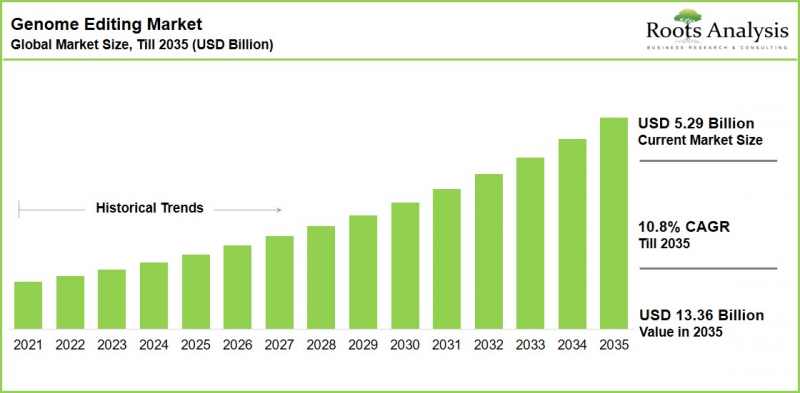
유전체 편집 시장 : 성장 및 동향
유전체 편집이란, 연구자가 생물의 유전체 내 DNA 단편을 삽입, 삭제 또는 치환할 수 있게 해주는 일련의 유전자 공학 기술을 의미합니다. 지난 30년 동안 유전자 편집 분야에서는 징크 핑거 뉴클레아제(ZFN), 전사 활성화 인자 유사 효과자 뉴클레아제(TALEN), 그리고 CRISPR-Cas 시스템이라는 세 가지 주요 도구가 등장했습니다. 현재 CRISPR 유전체 편집 도구는 그 정확성, 비용 대비 효과, 그리고 설계의 용이성 덕분에 유전자 편집에 널리 활용되고 있습니다.
유전성 질환으로 인한 전 세계적인 질병 부담의 규모와 영아 사망률에서 유전성 질환이 차지하는 비율이 높다는 점을 배경으로, 유전체 편집의 임상적 근거는 현저히 강화되고 있습니다. 이러한 질병 부담에 더해, 세포 치료 및 유전자 치료에 관한 규제 체계가 성숙해감에 따라, 유전체 편집은 단순한 연구 도구에서 상업적으로 실현 가능한 치료법으로 발전했습니다. 현재 1,000건이 넘는 임상 프로그램이 진행 중이며, 유전자 편집 및 유전자 기반 치료법이 평가되고 있습니다.
제약 회사와 생명공학 기업들은 자체 신약 개발에 드는 막대한 비용과 유전자 편집 제품 개발 시 발생하는 규제상의 복잡성을 이유로, 독자적인 툴킷을 구축하기보다는 외부 편집 플랫폼의 라이선스를 취득하는 경향이 강해지고 있습니다. 이로 인해 유전체 편집 밸류체인의 핵심에 위치한 독자적인 기술 라이선싱 경제가 형성되고 있으며, 이는 유통업체나 채널 파트너가 이 분야에 진출하기 전에 이해해야 할 중요한 구조적 특징입니다.
성장의 원동력 : 전 세계 유전체 편집 시장 확장을 뒷받침하는 요인
시장의 성장은 CRISPR 기반의 세포 치료 및 유전자 치료에 대한 꾸준한 임상 검증에 의해 주도되고 있습니다. 또한, 유전체 편집의 대상 질환이 단일 유전자 질환에서 종양학, 신경학, 대사성 질환으로 확대되고 있는 점, 그리고 기술 개발사에 의한 라이선싱 활동의 활성화가 시장의 주요 촉진요인으로 작용하고 있습니다. 오프타겟 효과를 줄이면서 더 정밀한 편집을 가능하게 하는 차세대 베이스 편집 및 프라임 편집 도구로의 전환으로 인해, 이 분야에서 대상이 될 수 있는 치료 범위는 확대되고 있습니다. 또한, 농업 및 진단 분야에서의 유전체 편집 응용이 확대되고 있는 점도 핵심 치료 분야 이외에서의 이러한 성장 궤도를 뒷받침하고 있습니다.
시장의 과제 : 진전을 가로막는 중대한 장벽
성장세는 강하지만, 업계 관계자들은 시장 성장을 저해하는 몇 가지 과제에 직면해 있습니다. 생체 내 유전체 편집은 여전히 면역원성, 오프타겟 효과, 그리고 불충분한 조직 특이성으로 인해 제약을 받고 있습니다. 한편, 체외 접근법은 높은 비용과 운영상의 복잡성으로 인해 제약을 받고 있습니다. 또한, CRISPR 관련 지적 재산권의 분산과 끊임없이 변화하는 규제 체계로 인해 라이선싱 관련 과제와 제품 승인에 대한 불확실성이 여전히 존재합니다.
유전체 편집 시장 세분화
시장 규모 및 기회 분석은 다음 매개변수를 기반으로 세분화되었습니다:
채택된 결제 방식별
- 선불
- 마일스톤 지급
유전자 편집 기술별
- CRISPR-Cas 시스템
- TALEN
- 메가뉴클레아제
- ZFN
- 기타 기술
유전자 편집 접근 방식별
- 유전자 녹아웃
- 유전자 녹인
유전자 도입 방법별
- 엑 비보
- 생체 내
유전자 도입 방식별
- 바이러스 벡터
- 비바이러스성 벡터
치료법별
- 세포 치료
- 유전자 치료
- 기타
용도별
- 신약 및 의약품 개발
- 진단
최종사용자별
- 제약·바이오기술 기업
- 학술·연구 기관
지역별
- 북미
- 미국
- 캐나다
- 유럽
- 독일
- 프랑스
- 아일랜드
- 아시아태평양
- 중국
- 일본
- 한국
유전체 편집 시장 : 주요 시장 세분화에 대한 인사이트
결제 방식별
현재 시장 점유율에서 가장 큰 비중을 차지하는 것은 선불 방식입니다. 단기적인 자본 투자는 독자적인 유전체 편집 플랫폼을 확보하기 위한 기술의 즉각적인 확보나 라이선싱 권리 취득에 여전히 중점을 두고 있습니다. 그러나 향후 라이선싱 계약이 성숙해지고 더 많은 프로그램이 임상 및 상업적 마일스톤을 달성함에 따라, 2035년까지 마일스톤 기반 지불 부문이 세계 시장에서 가장 큰 점유율을 차지할 것으로 예측됩니다.
유전자 편집 기술별
CRISPR-Cas 시스템이 기술 분야를 주도하고 있습니다. 이러한 높은 점유율은 해당 시스템의 범용성뿐만 아니라, 정확도나 오프타겟 효과와 같은 기존 과제를 해결하는 베이스 에디팅(base editing) 및 프라임 에디팅(prime editing)과 같은 정교한 파생 기술의 등장 덕분입니다. 특히, 이 부문은 앞으로도 성장세를 이어가며 예측 기간 동안 높은 연평균 성장률(CAGR)을 기록할 것으로 전망됩니다.
시장의 주도적 지위는 이 플랫폼이 본래 지닌 범용성과 급속한 구조적 개선을 통해 유지되고 있습니다. 차세대 도구, 특히 베이스 에디팅과 프라임 에디팅은 오프타겟 절단이나 이중가닥 DNA 절단과 같은 초기 안전성 및 정확도상의 과제를 완화하여, CRISPR을 주요 임상 표준으로서 확고한 지위에 올려놓고 있습니다.
유전자 편집 접근법별
유전자 녹아웃 기법은 세계 시장에서 가장 큰 점유율을 차지하고 있습니다. 이러한 높은 점유율은 정확한 서열 삽입을 실현하기 위해 더 복잡한 최적화가 필요한 녹인 전략에 비해 기술적으로 비교적 단순하기 때문입니다.
유전자 도입 방법별
엑 비보(체외) 전달법이 시장에서 가장 큰 점유율을 차지하고 있습니다. 이러한 우위는 주로 체외에서 세포를 변형함으로써, 인 비보(체내) 전달법에 비해 더 엄격한 품질 관리가 가능하고, 오프타겟 위험을 저감할 수 있기 때문입니다. 엑 비보 유전체 편집에서는 환자 유래 세포를 분리하여 관리된 실험실 조건 하에서 유전자 변형을 수행하고, 편집 효율과 안전성에 대해 엄격한 시험을 거친 후 환자에게 재주입합니다.
이러한 접근 방식을 통해 정밀한 품질 관리가 가능해지며, 오프타겟 편집이 최소화되고 유전체 편집 성분에 대한 전신 노출이 감소하므로 전반적인 안전성 프로파일이 향상됩니다. 또한, 엑 비보 전달법은 조혈모세포나 면역세포를 표적으로 하는 CRISPR-Cas, TALEN 및 아연 손가락 뉴클레아제를 기반으로 한 치료법에 매우 적합하며, 이러한 치료법들은 유망한 임상 결과를 보여주고 있습니다.
유전자 도입 방법별
바이러스 벡터는 높은 유전자 도입 효율, 견고한 트랜스유전자 발현, 그리고 광범위한 임상 검증을 바탕으로 현재 유전체 편집 시장에서 가장 큰 점유율을 차지하고 있습니다. 아데노연관바이러스(AAV), 렌티바이러스 벡터, 아데노바이러스 벡터 등의 전달 플랫폼은 임상시험 및 승인된 유전자·세포 치료 모두에서, 특히 ex vivo 용도로 널리 사용되고 있습니다. 확립된 제조 공정, 충분히 규명된 안전성 프로파일, 그리고 규제 당국의 이해가 이러한 시장에서의 입지를 더욱 공고히 하고 있습니다.
그러나 예측 기간 동안에는 비바이러스성 전달 방식이 가장 높은 연평균 성장률(CAGR)을 보일 것으로 예상됩니다. 이러한 변화는 더 안전하고, 확장성이 높으며, 비용 대비 효율이 뛰어난 전달 플랫폼에 대한 수요 증가에 의해 주도되고 있습니다. 지질 나노입자(LNP), 고분자 나노입자, 전기천공법 및 기타 물리적 전달 기술은 삽입 돌연변이 유발 위험을 제거하고, 면역원성을 감소시키며, 반복 투여를 가능하게 하기 때문에 특히 생체 내 유전체 편집 용도에서 매우 매력적입니다.
치료법별
세포 치료는 가장 큰 점유율을 차지하는 주요 응용 분야입니다. 이러한 높은 점유율은 여러 질환 영역에 걸친 폭넓은 유용성을 반영합니다. 유전체 편집을 적용한 세포 치료법, 특히 CAR-T, TCR-T 및 조혈모세포 기반 치료법은 놀라운 임상적 성공을 거두고 있으며, 정확한 유전자 변형, 엄격한 품질 관리 및 안전성 향상을 가능하게 하는 ‘ex vivo(체외) 편집’의 활용으로 인한 혜택을 누리고 있습니다. 자가 및 동종 세포 치료 파이프라인의 확대에 더해, 규제 당국의 승인 증가, 제조에 대한 투자, 전략적 제휴의 진전이 맞물리면서 이 부문의 시장 내 주도적 지위는 지속적으로 강화되고 있습니다.
한편, 희귀 질환 및 단일 유전자 질환에 초점을 맞춘 유전자 치료는 예측 기간 동안 높은 연평균 성장률(CAGR)을 기록할 것으로 전망됩니다. 이러한 성장은 CRISPR 기반 기술, 염기 편집, 프라임 편집 및 mRNA를 활용한 유전체 편집 기술의 급속한 발전에 힘입은 것으로, 이러한 기술 덕분에 치료 기회가 희귀한 단일 유전자 질환을 넘어 더 일반적인 유전성 질환, 대사성 질환, 안과 질환, 심혈관질환, 신경 질환으로 확대되고 있습니다.
용도별
신약 개발이 시장을 주도하고 있습니다. 이러한 최대 점유율은 새로운 약물 표적을 식별하기 위한 CRISPR 기반 스크리닝의 활용에 힘입은 것입니다. 한편, 진단 용도는 현재 규모가 작지만, 유전체 편집 도구가 질환의 조기 발견에 응용됨에 따라 예측 기간 동안 높은 연평균 성장률(CAGR)로 확대될 것으로 예상됩니다.
최종사용자별
제약사 및 생명공학 기업이 시장에서 가장 큰 점유율을 차지하고 있으며, 이는 해당 분야의 기술 라이선싱 및 통합 계약의 약 90%가 학술 기관이 아닌 민간 기업과 체결되고 있다는 사실과 일치합니다.
북미가 최대 점유율을 차지하며, 아시아태평양은 더 높은 연평균 성장률(CAGR)로 성장
당사의 예측에 따르면, 북미는 세계 시장을 선도하고 있으며 앞으로도 지배적인 위치를 유지할 전망입니다. 이러한 성장은 기술 개발 기업의 집중, 가장 많은 라이선싱 거래 건수, 그리고 해당 분야에 유입되는 벤처 캐피털 및 기관 투자자 자금이 가장 많다는 점에 의해 뒷받침되고 있습니다.
유전체 편집 시장의 주요 기업 예시
- Arcturus Therapeutics
- ArsenalBio
- Avectas
- Beam Therapeutics
- Bio-Sourcing
- Caribou Biosciences
- Century Therapeutics
- CRISPR Therapeutics
- Editas Medicine
- Flash BioSolutions
- Graphite Bio
- Intellia Therapeutics
- NTrans Technologies
- OXGENE
- Prime Medicine
- Revvity
- Vor Biopharma
전문가 인터뷰 및 업계 분석
본 조사에서 제시된 견해와 인사이트는 여러 이해관계자와의 논의를 바탕으로 합니다. 본 조사 보고서에는 다음 업계 관계자들과의 인터뷰 상세 기록이 수록되어 있습니다:
- 미국 대형 기관 최고경영자(CEO)
- 미국 중견 기업 최고과학책임자(CSO)
- 유럽 대형 기업 최고기술책임자(CTO)
- 미국 대형 기관 사업 개발 담당 부사장
- 아시아태평양 학술 기관, 연구 책임자
- 미국 중견 기관 최고 의료 책임자
유전체 편집 시장 : 조사 범위
- 시장 규모 및 기회 분석 : 채택된 결제 방식의 종류, 유전자 편집 기술의 종류, 유전자 편집 접근법, 유전자 전달 방법의 종류, 유전자 전달 방식, 치료법의 종류, 응용 분야, 최종사용자 유형, 지역 등 주요 부문에 걸친 유전체 편집 시장의 규모와 전망에 대한 상세한 분석입니다.
- 기술 및 개발 기업 동향 : 유전자 편집에 관한 현재의 기술 동향을 유전자 편집 기술 유형, 유전자 편집 접근법, 유전자 전달 방법, 유전자 전달 모달리티, 대응 가능한 개발 단계의 최고 단계, 치료 영역 및 응용 분야별로 상세히 평가함과 동시에, 설립 연도, 기업 규모, 본사 소재지, 사업 모델을 기반으로 기술 제공업체를 분석합니다.
- 기업 경쟁력 분석 : 유전체 편집 기술 제공업체에 대한 통찰력 있는 경쟁력 분석입니다. 기업의 강점과 기술력을 기준으로 벤치마킹을 수행하며, 북미, 유럽, 아시아태평양에 본사를 둔 동종 업계 기업 그룹별로 분류하고 있습니다.
- 기업 개요 : 북미, 유럽, 아시아태평양에서 유전체 편집 기술을 개발하고 있는 주요 기업의 상세 및 개요 프로필입니다. 각 기업의 개요, 기술 포트폴리오, 최근 동향 및 정보에 기반한 향후 전망을 수록하고 있습니다.
- 제휴·공동 연구 분석 : 2018년 이후 유전체 편집 기술 제공업체 간의 제휴 활동을 연도별, 제휴 유형별, 중점 분야별, 지역별, 그리고 가장 활발한 기업별로 평가한 종합적인 분석입니다.
- 특허 분석 : 2018년 이후, 유전체 편집 기술 제공업체별 출원 및 등록된 특허에 대해 공개 연도, 지역, CPC 분류, 출원인 유형별로 평가한 상세한 분석에 더해, 특허 벤치마킹, 평가 및 인용 분석을 수행합니다.
- 자금 조달 및 투자 분석 : 2018년 이후 유전자 편집 기술 제공업체 간의 자금 조달 및 투자 활동에 대한 종합적인 평가로, 연도, 자금 조달 유형, 투자 금액, 지역 및 가장 활발한 참여자와 투자자별로 평가됩니다.
- 시장 영향 분석 : 유전체 편집 시장의 성장에 영향을 미치는 촉진요인, 제약요인, 기회 및 과제에 대한 상세한 분석입니다.
목차
제1장 배경
제2장 조사 방법
제3장 시장 역학
제4장 거시경제 지표
제5장 주요 요약
제6장 소개
제7장 시장 구도 : 유전체 편집 기술
제8장 기술 경쟁력 분석
제9장 유전체 편집 시장 : 북미에 거점을 둔 주요 기업 개요
제10장 유전체 편집 시장 : 유럽에 거점을 둔 주요 기업 개요
제11장 유전체 편집 시장 : 아시아태평양 및 세계 기타 지역에 거점을 둔 주요 기업 개요
제12장 파트너십과 협력 관계
제13장 특허 분석
제14장 자금 조달과 투자 분석
제15장 시장 영향 분석 : 촉진요인, 저해요인, 기회, 과제
제16장 유전체 편집 기술 시장
제17장 유전체 편집 기술 시장(결제 방법별)
제18장 유전체 편집 기술 시장(유전자 편집 기술별)
제19장 유전체 편집 기술 시장(유전자 편집 방법별)
제20장 유전체 편집 기술 시장(유전자 도입 방법별)
제21장 유전체 편집 기술 시장(유전자 도입 접근 방식별)
제22장 유전체 편집 기술 시장(치료법별)
제23장 유전체 편집 기술 시장(용도별)
제24장 유전체 편집 기술 시장(최종사용자별)
제25장 유전체 편집 기술 시장(주요 지역별)
제26장 유전체 편집 기술 시장 : 주요 업계 진출 기업
제27장 결론
제28장 경영진 인사이트
제29장 부록 1 : 표형식 데이터
제30장 부록 2 : 기업 및 조직 리스트
KSM 26.08.13GENOME EDITING MARKET: OVERVIEW
As per Roots Analysis, the global genome editing market is estimated to grow from USD 5.29 billion in the current year to USD 13.36 billion by 2035, at an impressive CAGR of 10.8%, during the forecast period, till 2035.
Genome Editing Market: Growth and Trends
Genome editing refers to a set of genetic engineering techniques that allow researchers to insert, delete, or replace segments of DNA within the genome of an organism. Three broad classes of tools have emerged in gene editing over the past three decades namely, zinc finger nucleases (ZFNs), transcription activator-like effector nucleases (TALENs), and the CRISPR-Cas system. Presently, CRISPR genome editing tool is widely used for gene editing owing to its precision, cost efficiency, and ease of design.
The clinical rationale for genome editing has strengthened significantly, driven by the substantial global burden of genetic disorders and the significant contribution of inherited genetic conditions to infant mortality. This disease burden, combined with maturing regulatory pathways for cell and gene therapies, has pushed genome editing from a research tool into a commercially viable therapeutic modality. Presently, over a thousand active clinical programs are currently evaluating gene-edited and gene-based interventions.
Pharmaceutical and biotechnology companies are increasingly licensing external editing platforms rather than building proprietary toolkits due to the high expense of in-house discovery and the regulatory complexity of gene-edited product development. This has created a distinct technology-licensing economy that sits at the center of the genome editing value chain and is a key structural feature distributors and channel partners should understand before entering this space.
Growth Drivers: Factors Fueling Expansion of the Global Genome Editing Market
Market growth is being driven by the steady clinical validation of CRISPR-based cell and gene therapies. Further, the expanding disease scope of genome editing beyond monogenic disorders into oncology, neurology and metabolic disease, and rising out-licensing activity among technology originators are the key drivers of the market. The transition toward next-generation base and prime editing tools, which offer more precise edits with fewer off-target effects, is widening the addressable therapeutic scope of the field. Growing agricultural and diagnostic applications of genome editing are reinforcing this trajectory outside of core therapeutics.
Market Challenges: Critical Barriers Hindering Progress
Despite strong momentum, the industry players are witnessing several challenges that impede market growth. In vivo genome editing remains limited by immunogenicity, off-target effects, and inadequate tissue specificity. On the other hand, ex vivo approaches are hindered by high costs and operational complexity. Additionally, fragmented CRISPR intellectual property and evolving regulatory frameworks continue to create licensing challenges and uncertainty around product approvals.
Genome Editing Market Segments
The market sizing and opportunity analysis has been segmented across the following parameters:
By Type of Payment Method Employed
- Upfront Payments
- Milestone Payments
By Type of Gene Editing Technique
- CRISPR-Cas System
- TALENs
- Meganucleases
- ZFNs
- Other Techniques
By Gene Editing Approach
- Gene Knock-Out
- Gene Knock-In
By Type of Gene Delivery Method
- Ex Vivo
- In Vivo
By Gene Delivery Modality
- Viral Vectors
- Non-Viral Vectors
By Type of Therapy
- Cell Therapies
- Gene Therapies
- Other Therapies
By Application Area
- Drug Discovery and Development
- Diagnostics
By Type of End-User
- Pharmaceutical and Biotechnology Companies
- Academic and Research Institutes
By Geographical Regions
- North America
- US
- Canada
- Europe
- Germany
- France
- Ireland
- Asia-Pacific
- China
- Japan
- South Korea
Genome Editing Market: Key Segmentation Insights
By Payment Method
Upfront payments currently account for the largest share of the market. Capital commitment in the short term remains heavily weighted toward immediate technology acquisition and licensing rights to secure proprietary genome editing platforms. However, in the future, milestone-based payments segment is projected to hold the highest global market share by 2035 as licensing deals mature and more programs advance through clinical and commercial milestones.
By Gene Editing Technique
CRISPR-Cas systems dominate the technology landscape. This highest share is due to the versatility of the system and the emergence of refined variants such as base and prime editing that address earlier limitations around precision and off-target effects. Notably, this segment will continue to gain momentum, anticipated to register higher CAGR during the forecast period.
Market leadership is sustained by the platform's inherent versatility and rapid structural refinements. Next-generation tools specifically base editing and prime editing are mitigating early safety and accuracy challenges like off-target cleavage and double-stranded DNA breaks, solidifying CRISPR's position as the primary clinical standard.
By Gene Editing Approach
Gene knock-out approaches hold the largest share of the global market. This highest share is due to their relative technical simplicity compared with knock-in strategies, which require more complex optimization to achieve precise sequence insertion.
By Gene Delivery Method
Ex vivo delivery leads by holding highest share of the market. This dominance is largely because modifying cells outside the body allows tighter quality control and lower off-target risk than in vivo delivery. In ex vivo genome editing, patient-derived cells are isolated, genetically modified under controlled laboratory conditions, rigorously tested for editing efficiency and safety, and then reinfused into the patient.
This approach enables precise quality control, minimizes off-target editing, and reduces systemic exposure to genome editing components, thereby improving the overall safety profile. Furthermore, ex vivo delivery is well suited for CRISPR-Cas, TALEN, and zinc finger nuclease-based therapies targeting hematopoietic stem cells and immune cells, which have demonstrated encouraging clinical outcomes.
By Gene Delivery Modality
Viral vectors currently account for the largest share of the genome editing market, owing to their high gene transfer efficiency, robust transgene expression, and extensive clinical validation. Delivery platforms such as adeno-associated viruses (AAVs), lentiviral vectors, and adenoviral vectors are widely used in both clinical trials and approved gene and cell therapies, particularly for ex vivo applications. Their established manufacturing processes, well-characterized safety profiles, and regulatory familiarity have further strengthened their market position.
However, non-viral delivery modalities are expected to witness the fastest CAGR during the forecast period. This shift is driven by increasing demand for safer, more scalable, and cost-effective delivery platforms. Technologies such as lipid nanoparticles (LNPs), polymer-based nanoparticles, electroporation, and other physical delivery methods eliminate the risk of insertional mutagenesis, reduce immunogenicity, and enable repeat dosing, making them particularly attractive for in vivo genome editing applications.
.
By Type of Therapy
Cell therapies represent the leading application by holding the highest share. This highest share reflects their broad utility across multiple disease areas. Genome-edited cell therapies, particularly CAR-T, TCR-T, and hematopoietic stem cell-based therapies, have demonstrated significant clinical success and benefit from the use of ex vivo editing, which enables precise genetic modification, stringent quality control, and improved safety. The expanding pipeline of autologous and allogeneic cell therapies, coupled with increasing regulatory approvals, manufacturing investments, and strategic collaborations, continues to strengthen the segment's market leadership.
On the other hand, gene therapy, which is more narrowly focused on rare and monogenic conditions, is expected to grow at a higher CAGR during the forecast period. This growth is driven by the rapid advancement of CRISPR-based, base editing, prime editing, and mRNA-enabled genome editing technologies, which are expanding therapeutic opportunities beyond rare monogenic disorders to include more prevalent genetic, metabolic, ophthalmic, cardiovascular, and neurological diseases.
By Application Area
Drug discovery and development dominate the market. This highest share is driven by the use of CRISPR-based screening to identify novel drug targets. Conversely, diagnostic applications, while smaller today, are expected to expand at a higher CAGR during the forecast period as genome editing tools are adapted for early disease detection.
By End User
Pharmaceutical and biotechnology companies capture the highest share of the market, consistent with the fact that roughly 90% of technology licensing and integration agreements in this space are inked with commercial rather than academic entities.
North America Holds the Highest Share and Asia-Pacific Grows at Higher CAGR
According to our projections, North America leads the global market and is likely to remain dominant in the future. This growth is underpinned by the concentration of technology developers, the highest volume of licensing transactions and the largest pool of venture and institutional capital directed toward the sector.
Example Players in Genome Editing Market
- Arcturus Therapeutics
- ArsenalBio
- Avectas
- Beam Therapeutics
- Bio-Sourcing
- Caribou Biosciences
- Century Therapeutics
- CRISPR Therapeutics
- Editas Medicine
- Flash BioSolutions
- Graphite Bio
- Intellia Therapeutics
- NTrans Technologies
- OXGENE
- Prime Medicine
- Revvity
- Vor Biopharma
Expert Interview and Industry Insights
The opinions and insights presented in this study were influenced by discussions conducted with multiple stakeholders. The research report features detailed transcripts of interviews held with the following industry stakeholders:
- Chief Executive Officer, Large Organization, US
- Chief Scientific Officer, Mid-Sized Organization, US
- Chief Technology Officer, Large Organization, Europe
- Vice President, Business Development, Large Organization, US
- Head of Research, Academic Institute, Asia-Pacific
- Chief Medical Officer, Mid-Sized Organization, US
GENOME EDITING MARKET: RESEARCH COVERAGE
- Market Sizing and Opportunity Analysis: An in-depth analysis of the genome editing market size and forecast across key segments, including type of payment method employed, type of gene editing technique, gene editing approach, type of gene delivery method, gene delivery modality, type of therapy, application area, type of end-user and geography.
- Technology and Developer Landscape: A detailed assessment of the current technology landscape for genome editing, evaluated by type of gene editing technique, gene editing approach, gene delivery method, gene delivery modality, highest phase of development supported, therapeutic area and application area, along with an analysis of technology providers by year of establishment, company size, location of headquarters and operating model.
- Company Competitiveness Analysis: An insightful competitiveness analysis of genome editing technology providers, benchmarked on company strength and technology strength, segmented across peer groups headquartered in North America, Europe, and Asia-Pacific.
- Company Profiles: Elaborate and short profiles of prominent players developing genome editing technologies across North America, Europe and Asia-Pacific, featuring company overview, technology portfolio, recent developments, and an informed future outlook.
- Partnerships and Collaborations Analysis: A comprehensive assessment of partnership activity among genome editing technology providers since 2018, evaluated by year, type of partnership, focus area, geography, and most active players.
- Patent Analysis: An in-depth analysis of patents filed and granted to genome editing technology providers since 2018, evaluated by publication year, geography, CPC classification, and applicant type, along with patent benchmarking, valuation, and citation analysis.
- Funding and Investment Analysis: A comprehensive assessment of funding and investment activity among genome editing technology providers since 2018, evaluated by year, type of funding, amount invested, geography, and most active players and investors.
- Market Impact Analysis: An in-depth analysis of the drivers, restraints, opportunities, and challenges influencing the growth of the genome editing market.
Key Questions Answered in this Report
- How large is the genome editing market today, and how large will it be by 2035?
- Which gene editing techniques, delivery methods and delivery modalities are gaining or losing share?
- Which companies are best positioned across each segment, and how deep is their technology and pipeline portfolio?
- How is the balance between upfront and milestone-based licensing likely to evolve?
- Which application areas beyond drug discovery offer the strongest medium-term upside?
- Which geographies offer the best combination of near-term revenue and long-term growth rate?
Reasons to Buy this Report
Distributors evaluating the genome editing opportunity need more than a headline market size figure. This report is built to support commercial decision-making, not just awareness, and differentiates itself on the following counts:
- Top-Down and Bottom-Up Triangulated Forecasting: Revenue projections for each segment are cross-validated using both technology-adoption trends and company-level deal data, reducing forecast risk for investors and channel partners.
- Primary Research: Insights are grounded in interviews with CEOs, chief scientific officers, and business development leaders across large, mid-sized and academic organizations, not desk research alone.
- Investor-Grade Financial Context: Company profiles include funding history, recent capital deployment and partnership activity, positioned for use in diligence and business case development.
- Patent and IP Landscape Clarity: A dedicated patent benchmarking chapter helps distributors and licensees navigate the fragmented CRISPR intellectual property landscape before entering supply or distribution agreements.
Additional Benefits
- Complementary Insights Pack
- 15% Free Content Customization
- Detailed Report Walkthrough Session with Research Team
- Free Updated report if the report is 6-12 months old or older
TABLE OF CONTENTS
1. BACKGROUND
- 1.1. Context
- 1.2. Project Objectives
2. RESEARCH METHODOLOGY
- 2.1. Chapter Overview
- 2.2. Research Assumptions
- 2.2.1. Market Landscape and Market Trends
- 2.2.2. Market Forecast and Opportunity Analysis
- 2.2.3. Comparative Analysis
- 2.3. Database Building
- 2.3.1. Data Collection
- 2.3.2. Data Validation
- 2.3.3. Data Analysis
- 2.4. Project Methodology
- 2.4.1. Secondary Research
- 2.4.1.1. Annual Reports
- 2.4.1.2. Academic Research Papers
- 2.4.1.3. Company Websites
- 2.4.1.4. Investor Presentations
- 2.4.1.5. Regulatory Filings
- 2.4.1.6. White Papers
- 2.4.1.7. Industry Publications
- 2.4.1.8. Conferences and Seminars
- 2.4.1.9. Government Portals
- 2.4.1.10. Media and Press Releases
- 2.4.1.11. Newsletters
- 2.4.1.12. Industry Databases
- 2.4.1.13. Roots Proprietary Databases
- 2.4.1.14. Paid Databases and Sources
- 2.4.1.15. Social Media Portals
- 2.4.1.16. Other Secondary Sources
- 2.4.2. Primary Research
- 2.4.2.1. Types of Primary Research
- 2.4.2.1.1. Qualitative Research
- 2.4.2.1.2. Quantitative Research
- 2.4.2.1.3. Hybrid Approach
- 2.4.2.2. Advantages of Primary Research
- 2.4.2.3. Techniques for Primary Research
- 2.4.2.3.1. Interviews
- 2.4.2.3.2. Surveys
- 2.4.2.3.3. Focus Groups
- 2.4.2.3.4. Observational Research
- 2.4.2.3.5. Social Media Interactions
- 2.4.2.4. Key Opinion Leaders Considered in Primary Research
- 2.4.2.4.1. Company Executives (CXOs)
- 2.4.2.4.2. Board of Directors
- 2.4.2.4.3. Company Presidents and Vice Presidents
- 2.4.2.4.4. Research and Development Heads
- 2.4.2.4.5. Technical Experts
- 2.4.2.4.6. Subject Matter Experts
- 2.4.2.4.7. Scientists
- 2.4.2.4.8. Doctors and Other Healthcare Providers
- 2.4.2.5. Ethics and Integrity
- 2.4.2.5.1. Research Ethics
- 2.4.2.5.2. Data Integrity
- 2.4.2.1. Types of Primary Research
- 2.4.3. Analytical Tools and Databases
- 2.4.1. Secondary Research
- 2.5. Robust Quality Control
3. MARKET DYNAMICS
- 3.1. Chapter Overview
- 3.2. Forecast Methodology
- 3.2.1. Top-down Approach
- 3.2.2. Bottom-up Approach
- 3.2.3. Hybrid Approach
- 3.3. Market Assessment Framework
- 3.3.1. Total Addressable Market (TAM)
- 3.3.2. Serviceable Addressable Market (SAM)
- 3.3.3. Serviceable Obtainable Market (SOM)
- 3.3.4. Currently Acquired Market (CAM)
- 3.4. Forecasting Tools and Techniques
- 3.4.1. Qualitative Forecasting
- 3.4.2. Correlation
- 3.4.3. Regression
- 3.4.4. Extrapolation
- 3.4.5. Convergence
- 3.4.6. Sensitivity Analysis
- 3.4.7. Scenario Planning
- 3.4.8. Data Visualization
- 3.4.9. Time Series Analysis
- 3.4.10. Forecast Error Analysis
- 3.5. Key Considerations
- 3.5.1. Demographics
- 3.5.2. Government Regulations
- 3.5.3. Reimbursement Scenarios
- 3.5.4. Market Access
- 3.5.5. Supply Chain
- 3.5.6. Industry Consolidation
- 3.5.7. Pandemic / Unforeseen Disruptions Impact
- 3.6. Limitations
4. MACRO-ECONOMIC INDICATORS
- 4.1. Chapter Overview
- 4.2. Market Dynamics
- 4.2.1. Time Period
- 4.2.1.1. Historical Trends
- 4.2.1.2. Current and Forecasted Estimates
- 4.2.2. Currency Coverage
- 4.2.2.1. Major Currencies Affecting the Market
- 4.2.2.2. Factors Affecting Currency Fluctuations on the Industry
- 4.2.2.3. Impact of Currency Fluctuations on the Industry
- 4.2.3. Foreign Currency Exchange Rate
- 4.2.3.1. Impact of Foreign Exchange Rate Volatility on the Market
- 4.2.3.2. Strategies for Mitigating Foreign Exchange Risk
- 4.2.4. Recession
- 4.2.4.1. Assessment of Current Economic Conditions and Potential Impact on the Market
- 4.2.4.2. Historical Analysis of Past Recessions and Lessons Learnt
- 4.2.5. Inflation
- 4.2.5.1. Measurement and Analysis of Inflationary Pressures in the Economy
- 4.2.5.2. Potential Impact of Inflation on the Market Evolution
- 4.2.6. Interest Rates
- 4.2.6.1. Interest Rates and Their Impact on the Market
- 4.2.6.2. Strategies for Managing Interest Rate Risk
- 4.2.7. Commodity Flow Analysis
- 4.2.7.1. Type of Commodity
- 4.2.7.2. Origins and Destinations
- 4.2.7.3. Values and Weights
- 4.2.7.4. Modes of Transportation
- 4.2.8. Global Trade Dynamics
- 4.2.8.1. Import Scenario
- 4.2.8.2. Export Scenario
- 4.2.8.3. Trade Policies
- 4.2.8.4. Strategies for Mitigating the Risks Associated with Trade Barriers
- 4.2.8.5. Impact of Trade Barriers on the Market
- 4.2.9. War Impact Analysis
- 4.2.9.1. Russian-Ukraine War
- 4.2.9.2. Israel-Hamas War
- 4.2.10. COVID Impact / Related Factors
- 4.2.10.1. Global Economic Impact
- 4.2.10.2. Industry-specific Impact
- 4.2.10.3. Government Response and Stimulus Measures
- 4.2.10.4. Future Outlook and Adaptation Strategies
- 4.2.11. Other Indicators
- 4.2.11.1. Fiscal Policy
- 4.2.11.2. Consumer Spending
- 4.2.11.3. Gross Domestic Product
- 4.2.11.4. Employment
- 4.2.11.5. Taxes
- 4.2.11.6. Stock Market Performance
- 4.2.11.7. Cross Border Dynamics
- 4.2.1. Time Period
- 4.3. Conclusion
5. EXECUTIVE SUMMARY
6. INTRODUCTION
- 6.1. Chapter Overview
- 6.2. Introduction to Gene Editing
- 6.2.1. Evolution of Gene Editing
- 6.2.2. Gene Editing Technologies
- 6.2.2.1. CRISPR - CAS System
- 6.2.2.2. Transcription Activator-Like Effector Nucleases (TALENs)
- 6.2.2.3. Zinc Finger Nucleases (ZFNs)
- 6.2.2.4. Meganucleases / Homing Endonucleases
- 6.3. Applications of Genome Editing Technologies
- 6.4. Other Emerging Technologies
- 6.5. Concluding Remarks
7. MARKET LANDSCAPE: GENOME EDITING TECHNOLOGIES
- 7.1. Chapter Overview
- 7.2. Genome Editing: Technology Landscape
- 7.2.1. Analysis by Type of Gene Editing Technique
- 7.2.2. Analysis by Type of Gene Editing Approach
- 7.2.3. Analysis by Type of Gene Delivery Method
- 7.2.4. Analysis by Type of Gene Delivery Modality
- 7.2.5. Analysis by Highest Phase of Drug Development Supported
- 7.2.6. Analysis by Therapeutic Area
- 7.2.7. Analysis by Application Area
- 7.3. Genome Editing: Technology Providers Landscape
- 7.3.1. Analysis by Year of Establishment
- 7.3.2. Analysis by Company Size
- 7.3.3. Analysis by Location of Headquarters
- 7.3.4. Analysis by Company Size and Location of Headquarters
- 7.3.5. Most Active Players: Analysis by Number of Technologies
- 7.3.6. Analysis by Operational Model
8. TECHNOLOGY COMPETITIVENESS ANALYSIS
- 8.1. Chapter Overview
- 8.2. Assumptions / Key Parameters
- 8.3. Methodology
- 8.4. Technology Competitiveness Analysis
- 8.4.1. Genome Editing Technologies Offered by Players Headquartered in North America
- 8.4.2. Genome Editing Technologies Offered by Players Headquartered in Europe
- 8.4.3. Genome Editing Technologies Offered by Players Headquartered in Asia-Pacific, Middle East and North Africa, and Latin America
9. GENOME EDITING MARKET: COMPANY PROFILES OF PLAYERS BASED IN NORTH AMERICA
- 9.1. Chapter Overview
- 9.2. Arcturus Therapeutics
- 9.2.1. Company Overview
- 9.2.2. Financial Information
- 9.2.3. Technology Portfolio
- 9.2.4. Recent Developments and Future Outlook
- 9.3. Arsenal Bio
- 9.3.1. Company Overview
- 9.3.2. Technology Portfolio
- 9.3.3. Recent Developments and Future Outlook
- 9.4. Beam Therapeutics
- 9.4.1. Company Overview
- 9.4.2. Financial Information
- 9.4.3. Technology Portfolio
- 9.4.4. Recent Developments and Future Outlook
- 9.5. Caribou Biosciences
- 9.5.1. Company Overview
- 9.5.2. Financial Information
- 9.5.3. Technology Portfolio
- 9.5.4. Recent Developments and Future Outlook
- 9.6. Century Therapeutics
- 9.6.1. Company Overview
- 9.6.2. Financial Information
- 9.6.3. Technology Portfolio
- 9.6.4. Recent Developments and Future Outlook
- 9.7. CRISPR Therapeutics
- 9.7.1. Company Overview
- 9.7.2. Financial Information
- 9.7.3. Technology Portfolio
- 9.7.4. Recent Developments and Future Outlook
- 9.8. Editas Medicine
- 9.8.1. Company Overview
- 9.8.2. Financial Information
- 9.8.3. Technology Portfolio
- 9.8.4. Recent Developments and Future Outlook
- 9.9. Intellia Therapeutics
- 9.9.1. Company Overview
- 9.9.2. Financial Information
- 9.9.3. Technology Portfolio
- 9.9.4. Recent Developments and Future Outlook
- 9.10. Prime Medicine
- 9.10.1. Company Overview
- 9.10.2. Technology Portfolio
- 9.10.3. Recent Developments and Future Outlook
- 9.11. Vor Biopharma
- 9.11.1. Company Overview
- 9.11.2. Technology Portfolio
- 9.11.3. Recent Developments and Future Outlook
10. GENOME EDITING MARKET: COMPANY PROFILES OF PLAYERS BASED IN EUROPE
- 10.1. Chapter Overview
- 10.2. Avectas
- 10.2.1. Company Overview
- 10.2.2. Technology Portfolio
- 10.3. Bio-Sourcing
- 10.3.1. Company Overview
- 10.3.2. Technology Portfolio
- 10.4. Flash Therapeutics
- 10.4.1. Company Overview
- 10.4.2. Technology Portfolio
- 10.5. NTrans Technologies
- 10.5.1. Company Overview
- 10.5.2. Technology Portfolio
- 10.6. OXGENE (Acquired by WuXi AppTec)
- 10.6.1. Company Overview
- 10.6.2. Technology Portfolio
- 10.7. Revvity (formerly known as Horizon Discovery)
- 10.7.1. Company Overview
- 10.7.2. Technology Portfolio
11. GENOME EDITING MARKET: COMPANY PROFILES OF PLAYERS BASED IN ASIA-PACIFIC AND REST OF THE WORLD
- 11.1. Chapter Overview
- 11.2. Edigene
- 11.2.1. Company Overview
- 11.2.2. Technology Portfolio
- 11.3. Fortgen
- 11.3.1. Company Overview
- 11.3.2. Technology Portfolio
- 11.4. G+FLAS Life Sciences
- 11.4.1. Company Overview
- 11.4.2. Technology Portfolio
- 11.5. TargetGene Biotechnologies
- 11.5.1. Company Overview
- 11.5.2. Technology Portfolio
12. PARTNERSHIPS AND COLLABORATIONS
- 12.1. Chapter Overview
- 12.2. Partnership Models
- 12.3. Genome Editing Technologies: Partnerships and Collaborations
- 12.3.1. Analysis by Year of Partnership
- 12.3.2. Analysis by Type of Partnership
- 12.3.3. Analysis by Year and Type of Partnership
- 12.3.4. Analysis by Purpose of Partnership
- 12.3.5. Analysis by Type of Partner
- 12.3.6. Analysis by Location of Headquarters of Partner
- 12.3.7. Most Active Players: Analysis by Number of Partnerships
- 12.3.8. Analysis by Geography
- 12.3.8.1. Local and International Agreements
- 12.3.8.2. Intercontinental and Intracontinental Agreements
13. PATENT ANALYSIS
- 13.1. Chapter Overview
- 13.2. Scope and Methodology
- 13.3. Genome Editing Domain: Patent Analysis
- 13.3.1. Analysis by Publication Year
- 13.3.2. Analysis by Type of Patent and Publication Year
- 13.3.3. Analysis by Geography
- 13.3.4. Analysis by CPC Symbols
- 13.3.5. Leading Industry Players: Analysis by Number of Patents
- 13.4. Genome Editing Domain: Patent Benchmarking Analysis
- 13.4.1. Analysis by Patent Characteristics
- 13.4.2. Analysis by Leading Industry Players
- 13.5. Patent Valuation Analysis
14. FUNDING AND INVESTMENT ANALYSIS
- 14.1. Chapter Overview
- 14.2. Funding Models
- 14.3. Genome Editing Market: Funding and Investment Analysis
- 14.3.1. Analysis by Year of Funding
- 14.3.1.1. Cumulative Year-wise Trend of Funding Instances
- 14.3.1.2. Cumulative Year-wise Trend of Amount Invested
- 14.3.2. Analysis by Type of Funding
- 14.3.2.1. Analysis by Funding Instances
- 14.3.2.2. Analysis by Amount Invested
- 14.3.3. Analysis by Year and Type of Funding
- 14.3.4. Analysis by Geography
- 14.3.5. Most Active Players: Analysis by Amount Invested and Number of Funding Instances
- 14.3.6. Leading Investors: Analysis by Number of Funding Instances
- 14.3.1. Analysis by Year of Funding
- 14.4. Concluding Remarks
15. MARKET IMPACT ANALYSIS: DRIVERS, RESTRAINTS, OPPORTUNITIES AND CHALLENGES
- 15.1. Chapter Overview
- 15.2. Market Drivers
- 15.3. Market Restraints
- 15.4. Market Opportunities
- 15.5. Market Challenges
- 15.6. Conclusion
16. GENOME EDITING TECHNOLOGIES MARKET
- 16.1. Chapter Overview
- 16.2. Assumptions and Methodology
- 16.3. Genome Editing Technologies Market: Forecasted Estimates, till 2035
- 16.3.1. Scenario Analysis
- 16.3.1.1. Conservative Scenario
- 16.3.1.2. Optimistic Scenario
- 16.3.1. Scenario Analysis
- 16.4. Key Market Segmentations
17. GENOME EDITING TECHNOLOGIES MARKET, BY TYPE OF PAYMENT METHOD EMPLOYED
- 17.1. Chapter Overview
- 17.2. Key Assumptions and Methodology
- 17.3. Genome Editing Technologies Market: Distribution by Type of Payment Method Employed
- 17.3.1. Genome Editing Technologies Market for Milestone Payments: Forecasted Estimates, till 2035
- 17.3.2. Genome Editing Technologies Market for Upfront Payments: Forecasted Estimates, till 2035
- 17.4. Data Triangulation
18. GENOME EDITING TECHNOLOGIES MARKET, BY TYPE OF GENE EDITING TECHNIQUE
- 18.1. Chapter Overview
- 18.2. Key Assumptions and Methodology
- 18.3. Genome Editing Technologies Market: Distribution by Type of Gene Editing Technique
- 18.3.1. Genome Editing Technologies Market for CRISPR-Cas System: Forecasted Estimates, till 2035
- 18.3.2. Genome Editing Technologies Market for TALENs: Forecasted Estimates, till 2035
- 18.3.3. Genome Editing Technologies Market for Meganucleases: Forecasted Estimates, till 2035
- 18.3.4. Genome Editing Technologies Market for ZFNs: Forecasted Estimates, till 2035
- 18.3.5. Genome Editing Technologies Market for Other Techniques: Forecasted Estimates, till 2035
- 18.4. Data Triangulation
19. GENOME EDITING TECHNOLOGIES MARKET, BY GENE EDITING APPROACH
- 19.1. Chapter Overview
- 19.2. Key Assumptions and Methodology
- 19.3. Genome Editing Technologies Market: Distribution by Gene Editing Approach
- 19.3.1. Genome Editing Technologies Market for Gene Knock-Out Approaches: Forecasted Estimates, till 2035
- 19.3.2. Genome Editing Technologies Market for Gene Knock-In Approaches: Forecasted Estimates, till 2035
- 19.4. Data Triangulation
20. GENOME EDITING TECHNOLOGIES MARKET, BY GENE DELIVERY METHOD
- 20.1. Chapter Overview
- 20.2. Key Assumptions and Methodology
- 20.3. Genome Editing Technologies Market: Distribution by Gene Delivery Method
- 20.3.1. Genome Editing Technologies Market for Ex Vivo Delivery Methods: Forecasted Estimates, till 2035
- 20.3.2. Genome Editing Technologies Market for In Vivo Delivery Methods: Forecasted Estimates, till 2035
- 20.4. Data Triangulation
21. GENOME EDITING TECHNOLOGIES MARKET, BY GENE DELIVERY MODALITY
- 21.1. Chapter Overview
- 21.2. Key Assumptions and Methodology
- 21.3. Genome Editing Technologies Market: Distribution by Gene Delivery Modality
- 21.3.1. Genome Editing Technologies Market for Viral Vectors: Forecasted Estimates, till 2035
- 21.3.2. Genome Editing Technologies Market for Non-Viral Vectors: Forecasted Estimates, till 2035
- 21.4. Data Triangulation
22. GENOME EDITING TECHNOLOGIES MARKET, BY TYPE OF THERAPY
- 22.1. Chapter Overview
- 22.2. Key Assumptions and Methodology
- 22.3. Genome Editing Technologies Market: Distribution by Type of Therapy
- 22.3.1. Genome Editing Technologies Market for Cell Therapies: Forecasted Estimates, till 2035
- 22.3.2. Genome Editing Technologies Market for Gene Therapies: Forecasted Estimates, till 2035
- 22.3.3. Genome Editing Technologies Market for Other Therapies: Forecasted Estimates, till 2035
- 22.4. Data Triangulation
23. GENOME EDITING TECHNOLOGIES MARKET, BY APPLICATION AREA
- 23.1. Chapter Overview
- 23.2. Key Assumptions and Methodology
- 23.3. Genome Editing Technologies Market: Distribution by Application Area
- 23.3.1. Genome Editing Technologies Market for Drug Discovery and Development: Forecasted Estimates, till 2035
- 23.3.2. Genome Editing Technologies Market for Diagnostics: Forecasted Estimates, till 2035
- 23.4. Data Triangulation
24. GENOME EDITING TECHNOLOGIES MARKET, BY TYPE OF END USER
- 24.1. Chapter Overview
- 24.2. Key Assumptions and Methodology
- 24.3. Genome Editing Technologies Market: Distribution by Type of End User
- 24.3.1. Genome Editing Technologies Market for Pharmaceutical and Biotechnology Companies: Forecasted Estimates, till 2035
- 24.3.2. Genome Editing Technologies Market for Academic and Research Institutes: Forecasted Estimates, till 2035
- 24.4. Data Triangulation
25. GENOME EDITING TECHNOLOGIES MARKET, BY KEY GEOGRAPHICAL REGIONS
- 25.1. Chapter Overview
- 25.2. Key Assumptions and Methodology
- 25.3. Genome Editing Technologies Market: Distribution by Key Geographical Regions
- 25.3.1. Genome Editing Technologies Market in North America: Forecasted Estimates, till 2035
- 25.3.1.1. Genome Editing Technologies Market in the US: Forecasted Estimates, till 2035
- 25.3.1.2. Genome Editing Technologies Market in Canada: Forecasted Estimates, till 2035
- 25.3.2. Genome Editing Technologies Market in Europe: Forecasted Estimates, till 2035
- 25.3.2.1. Genome Editing Technologies Market in Germany: Forecasted Estimates, till 2035
- 25.3.2.2. Genome Editing Technologies Market in France: Forecasted Estimates, till 2035
- 25.3.2.3. Genome Editing Technologies Market in Ireland: Forecasted Estimates, till 2035
- 25.3.3. Genome Editing Technologies Market in Asia-Pacific: Forecasted Estimates, till 2035
- 25.3.3.1. Genome Editing Technologies Market in South Korea: Forecasted Estimates, till 2035
- 25.3.3.2. Genome Editing Technologies Market in China: Forecasted Estimates, till 2035
- 25.3.3.3. Genome Editing Technologies Market in Japan: Forecasted Estimates, till 2035
- 25.3.1. Genome Editing Technologies Market in North America: Forecasted Estimates, till 2035
- 25.4. Market Dynamics Assessment
- 25.4.1. Penetration Growth (P-G) Matrix
- 25.5. Data Triangulation
26. GENOME EDITING TECHNOLOGIES MARKET: LEADING INDUSTRY PLAYERS
- 26.1. Chapter Overview
- 26.2. Leading Industry Players


