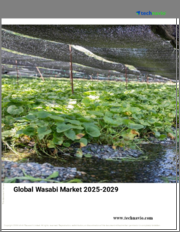
|
시장보고서
상품코드
1898026
와사비 시장 : 규모, 점유율, 성장 분석, 제품 유형별, 유통 채널별, 최종 사용자별, 형태별, 용도별, 지역별, 업계 예측(2026-2033년)Wasabi Market Size, Share, and Growth Analysis, By Product Type (Fresh Wasabi, Wasabi Paste), By Distribution Channel (Online Retail, Supermarkets and Hypermarkets), By End User, By Form, By Application, By Region - Industry Forecast 2026-2033 |
||||||

세계의 와사비 시장 규모는 2024년에 4억 9,901만 달러로 평가되었고, 2025년 5억 4,691만 달러에서 2033년까지 11억 3,868만 달러로 성장할 전망입니다. 예측기간(2026-2033년) CAGR은 9.6%를 나타낼 전망입니다.
일본 요리의 인기 상승과 음식 식품 시장의 성장으로 전 세계적으로 와사비 수요가 증가하고 있습니다. 소비자가 식물 유래의 조미료를 요구하는 중, 또 퓨전 요리를 탐구하는 가운데, 와사비는 이러한 변화하는 기호를 충족시킬 수 있는 존재로서 자리매김되고 있습니다. 게다가 음식의 즐거움과 건강 효과를 양립시키는 기능성 식품에 대한 관심의 고조가 와사비의 매력을 한층 돋보이게 하고 있습니다. 이러한 동향의 시너지 효과에 의해 건강 지향의 라이프 스타일에 따른 다양하고 풍미 있는 식사 경험을 요구하는 소비자가 늘어나는 가운데, 세계 시장에서의 와사비 소비의 견고한 성장이 기대됩니다. 일반적으로 이러한 식문화와 건강지향의 동향이 기세를 늘릴수록 와사비 시장은 발전을 계속할 전망입니다.
세계의 와사비 시장 성장 촉진요인
와사비 시장은 그 전통적인 일본의 뿌리를 넘어 다양한 요리 요리사와 식통을 매료하는 고급 식품 재료로 대두함에 따라 현저한 성장을 이루고 있습니다. 저명한 레스토랑에서는 일반적인 와사비 대체품과는 차별화되는 신선하고 청량감이 있는 매운맛과 독특한 풍미로 진짜 와사비 뿌리(와사비아 자포니카)를 채택하는 경향이 강해지고 있습니다. 소비자의 가처분 소득이 증가함에 따라 장인의 기술이 빛나는 다양한 풍미에 대한 관심이 높아지고 있으며, 이것이 음식 식품 수요를 견인하고 있습니다. 이러한 음식의 기호의 변화는 세계 시장에서 와사비의 인기와 소비량을 지속적으로 높이고 있습니다.
세계의 와사비 시장 성장 억제요인
세계의 와사비 시장이 직면하는 큰 도전 중 하나는 소비자가 진정한 와사비와 일반 대체 와사비 기반 대체품을 구별하기 어려운 점입니다. 이로 인해 실제 와사비아 자포니카를 거의 포함하지 않거나 전혀 포함하지 않는 제품이 "와사비"라고 거짓으로 표시되는 오표시가 퍼지고 있습니다. 이러한 행위는 진짜 와사비 시장을 손상시킬 뿐만 아니라 제품에 대한 소비자의 신뢰도 손상합니다. 또한 지역별로 규제 감독이 다르기 때문에 실제 생산자가 표시 기준을 효과적으로 유지하는 노력이 복잡해지고 있습니다. 이 혼란은 결국 소비자가 진짜 와사비에 프리미엄 가격을 지불하는 의지에 영향을 미치고 시장 전체의 역학에 악영향을 미칩니다.
세계의 와사비 시장 동향
세계의 와사비 시장에서는 건강 지향의 포지셔닝과 기능성 재료로서의 와사비의 활용을 중심으로 주목할 만한 추세를 보이고 있습니다. 소비자의 건강 의식이 높아지는 가운데, 와사비가 가지는 항균 작용, 항염증 작용, 소화기 건강에의 효과가 재검토되어 웰니스 지향 제품에 있어서 수요를 견인하고 있습니다. 이소티오시아네이트 유래의 특성으로 인해 와사비는 식중독균 억제, 염증 완화, 호흡기 건강의 지원에 효과가 있어 가능성이 점점 인정되고 있습니다. 그 결과, 브랜드 각 사는 마케팅이나 포장에 있어서 이러한 건강 효과를 전략적으로 강조해, 와사비의 인지를 단순한 풍미 증강제로부터, 특히 일본, 한국, 미국 등 시장에서 기능성 식품 부문의 귀중한 원료로 발전시키고 있습니다.
자주 묻는 질문
목차
소개
- 조사의 목적
- 조사 범위
- 정의
조사 방법
- 정보 조달
- 2차 자료 및 1차 자료 수집 방법
- 시장 규모 예측
- 시장의 전제조건과 제한
주요 요약
- 세계 시장 전망
- 공급과 수요 동향 분석
- 부문별 기회 분석
시장 역학과 전망
- 시장 규모
- 시장 역학
- 성장 촉진요인과 기회
- 억제 요인과 과제
- Porter's Five Forces 분석
주요 시장 인사이트
- 중요성공요인
- 경쟁도
- 주요 투자 기회
- 시장 생태계
- 시장의 매력 지수(2025년)
- PESTEL 분석
- 거시경제지표
- 밸류체인 분석
- 가격 분석
세계의 와사비 시장 규모 : 제품 유형별 & CAGR(2026-2033년)
- 생와사비
- 와사비 페이스트
- 와사비 분말
- 와사비 스낵
- 와사비 조미료
세계의 와사비 시장 규모 : 유통 채널별 & CAGR(2026-2033년)
- 온라인 소매
- 슈퍼마켓 및 하이퍼마켓
- 전문점
- 푸드서비스 산업
- 직접 판매
세계의 와사비 시장 규모 : 최종 사용자별 & CAGR(2026-2033년)
- 가정
- 음식점 및 카페
- 식품 제조업체
- 케이터링 서비스
- 식품 소매업체
세계의 와사비 시장 규모 : 형태별 & CAGR(2026-2033년)
- 액체
- 분말
- 페이스트
- 고형 조각
- 냉동
세계의 와사비 시장 규모 : 용도별 & CAGR(2026-2033년)
- 요리 용도
- 식품 장식
- 가공 식품
- 딥 및 소스
- 구이용 조미료
세계의 와사비 시장 규모 & CAGR(2026-2033년)
- 북미
- 미국
- 캐나다
- 유럽
- 독일
- 스페인
- 프랑스
- 영국
- 이탈리아
- 기타 유럽
- 아시아태평양
- 중국
- 인도
- 일본
- 한국
- 기타 아시아태평양
- 라틴아메리카
- 브라질
- 기타 라틴아메리카
- 중동 및 아프리카
- GCC
- 남아프리카
- 기타 중동 및 아프리카
경쟁 정보
- 상위 5개사 비교
- 주요 기업의 시장 포지셔닝(2025년)
- 주요 시장 기업이 채택한 전략
- 최근 시장 동향
- 기업의 시장 점유율 분석(2025년)
- 주요 기업의 기업 프로파일
- 기업의 상세
- 제품 포트폴리오 분석
- 기업의 부문별 점유율 분석
- 수익의 전년대비 비교(2023-2025년)
주요 기업 프로파일
- S& B Foods Inc.(Japan)
- KINJIRUSHI Co., Ltd.(Japan)
- Kikkoman Corporation(Japan)
- Yamasa Corporation(Japan)
- Eden Foods(USA)
- Beaverton Foods Inc.(USA)
- Silver Spring Foods Inc.(USA)
- Wingreens Farms(India)
- Oregon Coast Wasabi(USA)
- Real Wasabi LLC(USA)
- Wasabi Essentials Ltd.(UK)
- World Wasabi Inc.(USA)
- MUSO Co., Ltd.(Japan)
- Clearspring Ltd.(UK)
- Pacific Coast Wasabi Ltd.(Canada)
- McCormick & Company, Inc.(USA)
- TasFoods Ltd.(Australia)
- The Wasabi Co.(UK)
결론과 권고
SHW 26.01.14Global Wasabi Market size was valued at USD 499.01 Million in 2024 and is poised to grow from USD 546.91 Million in 2025 to USD 1138.68 Million by 2033, growing at a CAGR of 9.6% during the forecast period (2026-2033).
The rising popularity of Japanese cuisine, coupled with the growth of gourmet food markets, is driving an increased demand for wasabi worldwide. As consumers seek out plant-based condiments and explore fusion cuisine, wasabi is positioned to meet these evolving preferences. Additionally, the growing focus on functional foods, which offer health benefits alongside culinary enjoyment, further enhances the appeal of wasabi. This combination of trends indicates a robust potential for wasabi consumption across global markets, as consumers continue to embrace diverse and flavorful dining experiences that align with their health-conscious lifestyles. Overall, the wasabi market is expected to thrive as these culinary and health trends gain momentum.
Top-down and bottom-up approaches were used to estimate and validate the size of the Global Wasabi market and to estimate the size of various other dependent submarkets. The research methodology used to estimate the market size includes the following details: The key players in the market were identified through secondary research, and their market shares in the respective regions were determined through primary and secondary research. This entire procedure includes the study of the annual and financial reports of the top market players and extensive interviews for key insights from industry leaders such as CEOs, VPs, directors, and marketing executives. All percentage shares split, and breakdowns were determined using secondary sources and verified through Primary sources. All possible parameters that affect the markets covered in this research study have been accounted for, viewed in extensive detail, verified through primary research, and analyzed to get the final quantitative and qualitative data.
Global Wasabi Market Segments Analysis
Global Wasabi Market is segmented by Product Type, Distribution Channel, End User, Form, Application and region. Based on Product Type, the market is segmented into Fresh Wasabi, Wasabi Paste, Wasabi Powder, Wasabi Snacks and Wasabi Condiments. Based on Distribution Channel, the market is segmented into Online Retail, Supermarkets and Hypermarkets, Specialty Stores, Food Service and Direct Sales. Based on End User, the market is segmented into Households, Restaurants and Cafes, Food Manufacturers, Catering Services and Food Retailers. Based on Form, the market is segmented into Liquid, Powder, Paste, Solid Pieces and Frozen. Based on Application, the market is segmented into Culinary Uses, Food Decoration, Processed Food Products, Dips and Sauces and Condiment for Grilled Foods. Based on region, the market is segmented into North America, Europe, Asia Pacific, Latin America and Middle East & Africa.
Driver of the Global Wasabi Market
The global wasabi market is witnessing significant growth as wasabi emerges as a premium culinary ingredient that captivates chefs and food lovers across various cuisines, transcending its traditional Japanese roots. Renowned restaurants are opting for authentic wasabi root (Wasabia japonica) due to its fresh, clean heat and distinctive flavor, setting it apart from common horseradish alternatives. As consumers' disposable incomes rise, there is an increased enthusiasm for artisanal and diverse flavors, which is driving the demand for gourmet food. This shift in culinary preferences is continually enhancing the popularity and consumption of wasabi in the global market.
Restraints in the Global Wasabi Market
One of the significant challenges facing the global wasabi market is the difficulty consumers have in distinguishing authentic wasabi from horseradish-based substitutes. This leads to widespread mislabeling, where products are falsely advertised as "wasabi" despite containing minimal or no actual Wasabia japonica. Such practices not only undermine the market for authentic wasabi but also erode consumer trust in the product. Additionally, regulatory oversight differs across regions, complicating efforts for genuine producers to uphold labeling standards effectively. This confusion ultimately affects consumers' willingness to pay premium prices for authentic wasabi, negatively impacting the overall market dynamics.
Market Trends of the Global Wasabi Market
The global wasabi market is experiencing a notable trend centered around health-focused positioning and the incorporation of wasabi as a functional ingredient. As consumers become more health-conscious, the inherent antibacterial, anti-inflammatory, and digestive health benefits of wasabi are gaining recognition, propelling its demand in wellness-oriented products. Deriving its properties from isothiocyanates, wasabi is increasingly acknowledged for its potential to combat foodborne pathogens, alleviate inflammation, and support respiratory wellness. Consequently, brands are strategically emphasizing these health benefits in their marketing and packaging efforts, evolving the perception of wasabi from a mere flavor enhancer to a valuable ingredient in the functional foods arena, particularly in markets like Japan, South Korea, and the United States.
Table of Contents
Introduction
- Objectives of the Study
- Scope of the Report
- Definitions
Research Methodology
- Information Procurement
- Secondary & Primary Data Methods
- Market Size Estimation
- Market Assumptions & Limitations
Executive Summary
- Global Market Outlook
- Supply & Demand Trend Analysis
- Segmental Opportunity Analysis
Market Dynamics & Outlook
- Market Overview
- Market Size
- Market Dynamics
- Drivers & Opportunities
- Restraints & Challenges
- Porters Analysis
- Competitive rivalry
- Threat of substitute
- Bargaining power of buyers
- Threat of new entrants
- Bargaining power of suppliers
Key Market Insights
- Key Success Factors
- Degree of Competition
- Top Investment Pockets
- Market Ecosystem
- Market Attractiveness Index, 2025
- PESTEL Analysis
- Macro-Economic Indicators
- Value Chain Analysis
- Pricing Analysis
Global Wasabi Market Size by Product Type & CAGR (2026-2033)
- Market Overview
- Fresh Wasabi
- Wasabi Paste
- Wasabi Powder
- Wasabi Snacks
- Wasabi Condiments
Global Wasabi Market Size by Distribution Channel & CAGR (2026-2033)
- Market Overview
- Online Retail
- Supermarkets and Hypermarkets
- Specialty Stores
- Food Service
- Direct Sales
Global Wasabi Market Size by End User & CAGR (2026-2033)
- Market Overview
- Households
- Restaurants and Cafes
- Food Manufacturers
- Catering Services
- Food Retailers
Global Wasabi Market Size by Form & CAGR (2026-2033)
- Market Overview
- Liquid
- Powder
- Paste
- Solid Pieces
- Frozen
Global Wasabi Market Size by Application & CAGR (2026-2033)
- Market Overview
- Culinary Uses
- Food Decoration
- Processed Food Products
- Dips and Sauces
- Condiment for Grilled Foods
Global Wasabi Market Size & CAGR (2026-2033)
- North America (Product Type, Distribution Channel, End User, Form, Application)
- US
- Canada
- Europe (Product Type, Distribution Channel, End User, Form, Application)
- Germany
- Spain
- France
- UK
- Italy
- Rest of Europe
- Asia Pacific (Product Type, Distribution Channel, End User, Form, Application)
- China
- India
- Japan
- South Korea
- Rest of Asia-Pacific
- Latin America (Product Type, Distribution Channel, End User, Form, Application)
- Brazil
- Rest of Latin America
- Middle East & Africa (Product Type, Distribution Channel, End User, Form, Application)
- GCC Countries
- South Africa
- Rest of Middle East & Africa
Competitive Intelligence
- Top 5 Player Comparison
- Market Positioning of Key Players, 2025
- Strategies Adopted by Key Market Players
- Recent Developments in the Market
- Company Market Share Analysis, 2025
- Company Profiles of All Key Players
- Company Details
- Product Portfolio Analysis
- Company's Segmental Share Analysis
- Revenue Y-O-Y Comparison (2023-2025)
Key Company Profiles
- S&B Foods Inc. (Japan)
- Company Overview
- Business Segment Overview
- Financial Updates
- Key Developments
- KINJIRUSHI Co., Ltd. (Japan)
- Company Overview
- Business Segment Overview
- Financial Updates
- Key Developments
- Kikkoman Corporation (Japan)
- Company Overview
- Business Segment Overview
- Financial Updates
- Key Developments
- Yamasa Corporation (Japan)
- Company Overview
- Business Segment Overview
- Financial Updates
- Key Developments
- Eden Foods (USA)
- Company Overview
- Business Segment Overview
- Financial Updates
- Key Developments
- Beaverton Foods Inc. (USA)
- Company Overview
- Business Segment Overview
- Financial Updates
- Key Developments
- Silver Spring Foods Inc. (USA)
- Company Overview
- Business Segment Overview
- Financial Updates
- Key Developments
- Wingreens Farms (India)
- Company Overview
- Business Segment Overview
- Financial Updates
- Key Developments
- Oregon Coast Wasabi (USA)
- Company Overview
- Business Segment Overview
- Financial Updates
- Key Developments
- Real Wasabi LLC (USA)
- Company Overview
- Business Segment Overview
- Financial Updates
- Key Developments
- Wasabi Essentials Ltd. (UK)
- Company Overview
- Business Segment Overview
- Financial Updates
- Key Developments
- World Wasabi Inc. (USA)
- Company Overview
- Business Segment Overview
- Financial Updates
- Key Developments
- MUSO Co., Ltd. (Japan)
- Company Overview
- Business Segment Overview
- Financial Updates
- Key Developments
- Clearspring Ltd. (UK)
- Company Overview
- Business Segment Overview
- Financial Updates
- Key Developments
- Pacific Coast Wasabi Ltd. (Canada)
- Company Overview
- Business Segment Overview
- Financial Updates
- Key Developments
- McCormick & Company, Inc. (USA)
- Company Overview
- Business Segment Overview
- Financial Updates
- Key Developments
- TasFoods Ltd. (Australia)
- Company Overview
- Business Segment Overview
- Financial Updates
- Key Developments
- The Wasabi Co. (UK)
- Company Overview
- Business Segment Overview
- Financial Updates
- Key Developments