|
시장보고서
상품코드
1899632
이기종 네트워크 시장 규모, 점유율, 성장 분석 : 컴포넌트별, 기술별, 도입 형태별, 최종사용자별, 용도별, 지역별 - 업계 예측(2026-2033년)Heterogeneous Network Market Size, Share, and Growth Analysis, By Component (Hardware, Software), By Technology (Cellular Technology, Wi-Fi), By Deployment, By End-User, By Application, By Region - Industry Forecast 2026-2033 |
||||||

세계의 이기종 네트워크 시장 규모는 2024년에 275억 2,000만 달러로 평가되었고, 2025년 316억 5,000만 달러에서 2033년까지 968억 1,000만 달러로 성장할 전망이며, 예측 기간(2026-2033년) CAGR은 15%를 보일 것으로 예측됩니다.
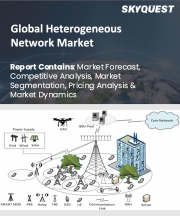
세계 이기종 네트워크(HetNet) 시장은 매크로셀, 스몰셀, Wi-Fi 등 통신기술이 다양화되고 융합된 형태를 보이고 있으며, 이는 통신 분야에서 점점 더 필수적인 존재로 자리 잡고 있습니다. 시장 성장의 주요 촉진요인으로는 네트워크 커버리지, 용량, 사용자 경험 향상에 대한 수요 증가를 들 수 있습니다. 특히 도시지역에서 HetNet은 네트워크 혼잡 완화 및 데이터 전송 속도 향상에 매우 중요한 역할을 하고 있습니다. 5G 기술의 도입은 변화하는 연결 요구사항에 대응하기 위해 스몰셀 및 이기종 네트워크의 확장을 크게 촉진하고 있습니다. 또한, 사물인터넷(IoT)의 부상과 스마트 기기 증가는 이종 네트워크의 발전을 더욱 촉진하는 데 있어 매우 중요합니다. 그러나 기술 통합, 간섭 관리, 네트워크 계층 간의 원활한 핸드오버 등의 과제는 여전히 존재하지만, 기술 발전은 신뢰할 수 있는 무선 통신 솔루션을 제공하는 데 있어 탄탄한 미래를 보여주고 있습니다.
세계 이기종 네트워크 시장 성장 촉진요인
강화된 모바일 광대역 서비스와 전반적인 네트워크 성능에 대한 수요 증가는 세계 이종 네트워크 시장의 중요한 촉진요인입니다. 스몰셀, 매크로셀 및 다양한 기술을 통합하는 이기종 네트워크는 네트워크 혼잡 문제를 효과적으로 해결하는 동시에 보다 견고하고 안정적인 연결성을 제공합니다. 이 조합은 사용자 증가하는 데이터 요구 사항을 충족하고 원활하고 효율적인 통신을 보장하는 데 매우 중요합니다. 더 빠르고 안정적인 네트워크에 대한 요구가 증가함에 따라, HetNet은 서비스 제공업체가 우수한 품질의 경험을 제공하고 진화하는 디지털 환경을 지원하기 위한 실현 가능한 솔루션으로 부상하고 있습니다.
세계 이기종 네트워크 시장 성장 억제요인
세계 이기종 네트워크 시장이 직면한 가장 큰 과제는 HetNet 아키텍처 내에서 다양한 통신 기술을 통합하는 복잡한 프로세스입니다. 스몰셀과 매크로셀을 포함한 서로 다른 네트워크 계층 간의 원활한 핸드오버의 필요성은 효과적인 제어를 방해하는 복잡성을 야기합니다. 이로 인해 잠재적인 연결성 장애가 발생하여 중단 없는 서비스 품질 유지가 어려워질 수 있습니다. 사업자들이 네트워크 성능과 사용자 경험을 최적화하기 위해 노력하는 가운데, 이러한 다양한 구성 요소 간의 연계와 관련된 기술적 어려움은 시장의 발전과 확장에 큰 제약 요인으로 작용하고 있습니다. 이러한 문제를 해결하는 것은 완벽하게 작동하는 이기종 네트워크 생태계를 구현하는 데 매우 중요합니다.
세계 이기종 네트워크 시장 동향
세계 이기종 네트워크(HetNet) 시장은 5G 기술의 확산과 통합 증가에 힘입어 눈에 띄는 추세를 보이고 있습니다. 전 세계 5G 네트워크의 확산에 따라 효율적인 성능을 보장하기 위한 네트워크 고밀도화를 실현하는 데 있어 HetNet은 필수불가결한 존재가 되고 있습니다. 또한, 네트워크 가상화와 소프트웨어 정의 네트워크(SDN)에 대한 집중은 이러한 네트워크의 역동적이고 유연한 관리를 강화하고 다양한 기술 간의 원활한 통신을 촉진합니다. HetNet은 고도의 연결성 요구와 혁신적인 네트워크 관리 솔루션의 결합을 통해 차세대 통신을 지원하고 현대 사용자의 요구에 부응하는 중요한 기반이 되고 있습니다.
자주 묻는 질문
목차
서론
- 조사 목적
- 조사 범위
- 정의
조사 방법
- 정보 조달
- 2차와 1차 데이터 방법
- 시장 규모 예측
- 시장 전제조건과 제한
주요 요약
- 세계 시장 전망
- 공급과 수요 동향 분석
- 부문별 기회 분석
시장 역학과 전망
- 시장 규모
- 시장 역학
- 성장 촉진요인과 기회
- 성장 억제요인과 과제
- Porter의 Five Forces 분석
주요 시장 인사이트
- 중요 성공 요인
- 경쟁 정도
- 주요 투자 기회
- 시장 생태계
- 시장의 매력 지수(2025년)
- PESTEL 분석
- 거시경제 지표
- 밸류체인 분석
- 가격 분석
- 사례 연구
- 기술 진보
- 규제 상황
- 특허 분석
- 무역 분석
세계의 이기종 네트워크 시장 규모 : 컴포넌트별&CAGR(2026-2033)
- 하드웨어
- 매크로 기지국
- 스몰셀
- 펨토셀
- 피코셀
- 마이크로셀
- 분산 안테나 시스템(DAS)
- 소프트웨어
- 네트워크 관리
- 네트워크 최적화
- 서비스
- 전문 서비스
- 매니지드 서비스
세계의 이기종 네트워크 시장 규모 : 기술별&CAGR(2026-2033)
- 셀룰러 기술
- 3G
- 4G/LTE
- 5G
- Wi-Fi
- Bluetooth
- 기타
- Zigbee
- NFC
세계의 이기종 네트워크 시장 규모 : 전개 형태별&CAGR(2026-2033)
- On-Premise
- 클라우드 기반
세계의 이기종 네트워크 시장 규모 : 최종사용자별&CAGR(2026-2033)
- 통신사업자
- 기업
- 중소기업(SME)
- 대기업
- 주택용
세계의 이기종 네트워크 시장 규모 : 용도별&CAGR(2026-2033)
- 상업용
- 소매
- 호스피탈리티
- 헬스케어
- 산업
- 제조업
- 에너지 및 유틸리티
- 공공안전
- 운송 및 물류
세계의 이기종 네트워크 시장 규모&CAGR(2026-2033)
- 북미
- 미국
- 캐나다
- 유럽
- 독일
- 스페인
- 프랑스
- 영국
- 이탈리아
- 기타 유럽
- 아시아태평양
- 중국
- 인도
- 일본
- 한국
- 기타 아시아태평양
- 라틴아메리카
- 브라질
- 기타 라틴아메리카
- 중동 및 아프리카
- GCC 국가
- 남아프리카공화국
- 기타 중동 및 아프리카
경쟁 정보
- 주요 5개사 비교
- 주요 기업의 시장 포지셔닝(2025년)
- 주요 시장 기업이 채택한 전략
- 최근 시장 동향
- 기업의 시장 점유율 분석(2025년)
- 주요 기업 개요
- 기업 상세
- 제품 포트폴리오 분석
- 기업 부문별 점유율 분석
- 매출 전년대비 비교(2023-2025년)
주요 기업 개요
- CommScope Inc.(USA)
- NEC Corporation(Japan)
- Ceragon Networks Ltd.(Israel)
- AirHop Communications(USA)
- Samsung Electronics(South Korea)
- Texas Instruments Incorporated(USA)
- Ruckus Networks(USA)
- TE Connectivity(Switzerland)
- ZTE Corporation(China)
- Nokia Networks(Finland)
- Huawei Technologies Co., Ltd.(China)
- Ericsson(Sweden)
- Cisco Systems, Inc.(USA)
- Qualcomm Incorporated(USA)
- Intel Corporation(USA)
- Fujitsu Limited(Japan)
- Alcatel-Lucent Enterprise(France)
- Extreme Networks, Inc.(USA)
결론과 제안
LSH 26.01.15Global Heterogeneous Network Market size was valued at USD 27.52 Billion in 2024 and is poised to grow from USD 31.65 Billion in 2025 to USD 96.81 Billion by 2033, growing at a CAGR of 15% during the forecast period (2026-2033).
The global Heterogeneous Network (HetNet) market showcases a diverse blend of communication technologies, including macrocells, small cells, and Wi-Fi, which are increasingly essential in the telecommunications sector. Key drivers of market growth include the surging demand for enhanced network coverage, capacity, and user experience. HetNets are vital in alleviating network congestion and boosting data transfer rates, especially in urban centers. The rollout of 5G technology significantly propels the expansion of small cells and HetNets to meet changing connectivity requirements. Moreover, the rise of the Internet of Things (IoT) and the growing number of smart devices are pivotal in further stimulating HetNet development. However, challenges such as technology integration, interference management, and seamless handovers between network layers persist, yet advancements signal a robust future in delivering reliable wireless communication solutions.
Top-down and bottom-up approaches were used to estimate and validate the size of the Global Heterogeneous Network market and to estimate the size of various other dependent submarkets. The research methodology used to estimate the market size includes the following details: The key players in the market were identified through secondary research, and their market shares in the respective regions were determined through primary and secondary research. This entire procedure includes the study of the annual and financial reports of the top market players and extensive interviews for key insights from industry leaders such as CEOs, VPs, directors, and marketing executives. All percentage shares split, and breakdowns were determined using secondary sources and verified through Primary sources. All possible parameters that affect the markets covered in this research study have been accounted for, viewed in extensive detail, verified through primary research, and analyzed to get the final quantitative and qualitative data.
Global Heterogeneous Network Market Segments Analysis
Global Heterogeneous Network Market is segmented by Component, Technology, Deployment, End-User, Application and region. Based on Component, the market is segmented into Hardware, Software and Services. Based on Technology, the market is segmented into Cellular Technology, Wi-Fi, Bluetooth and Others. Based on Deployment, the market is segmented into On-Premises and Cloud-Based. Based on End-User, the market is segmented into Telecom Operators, Enterprises and Residential. Based on Application, the market is segmented into Commercial, Industrial, Public Safety and Transportation and Logistics. Based on region, the market is segmented into North America, Europe, Asia Pacific, Latin America and Middle East & Africa.
Driver of the Global Heterogeneous Network Market
The increasing demand for enhanced mobile broadband services and overall network performance is a significant driver for the Global Heterogeneous Network market. Heterogeneous networks, which integrate small cells, macrocells, and various technologies, effectively address issues of network congestion while providing more robust and reliable connectivity. This combination is crucial in meeting the rising data requirements of users, ensuring seamless and efficient communication. As the need for faster and more dependable networks grows, HetNets emerge as a viable solution, enabling service providers to deliver superior quality experiences and support the evolving digital landscape.
Restraints in the Global Heterogeneous Network Market
A significant challenge facing the Global Heterogeneous Network market is the intricate process of integrating various communication technologies within a HetNet architecture. The necessity for seamless handovers between differing network layers, including small cells and macrocells, introduces complexities that can hinder effective control. This can lead to potential disruptions in connectivity, making it difficult to maintain uninterrupted service quality. As operators strive to optimize network performance and user experience, the technical difficulties associated with coordination among these diverse components pose considerable restraints in the advancement and expansion of the market. Addressing these hurdles is critical for achieving a fully operational HetNet ecosystem.
Market Trends of the Global Heterogeneous Network Market
The Global Heterogeneous Network (HetNet) market is witnessing a significant trend driven by the increasing deployment and integration of 5G technology. As 5G networks are rolled out worldwide, HetNets are becoming essential for achieving the necessary network densification to ensure efficient performance. Furthermore, the focus on network virtualization and software-defined networking (SDN) enhances the dynamic and flexible management of these networks, facilitating seamless communication across diverse technologies. This convergence of advanced connectivity needs and innovative network management solutions positions HetNets as a crucial framework for supporting next-generation telecommunications and addressing the demands of modern users.
Table of Contents
Introduction
- Objectives of the Study
- Scope of the Report
- Definitions
Research Methodology
- Information Procurement
- Secondary & Primary Data Methods
- Market Size Estimation
- Market Assumptions & Limitations
Executive Summary
- Global Market Outlook
- Supply & Demand Trend Analysis
- Segmental Opportunity Analysis
Market Dynamics & Outlook
- Market Overview
- Market Size
- Market Dynamics
- Drivers & Opportunities
- Restraints & Challenges
- Porters Analysis
- Competitive rivalry
- Threat of substitute
- Bargaining power of buyers
- Threat of new entrants
- Bargaining power of suppliers
Key Market Insights
- Key Success Factors
- Degree of Competition
- Top Investment Pockets
- Market Ecosystem
- Market Attractiveness Index, 2025
- PESTEL Analysis
- Macro-Economic Indicators
- Value Chain Analysis
- Pricing Analysis
- Case Studies
- Technology Advancement
- Regulatory Landscape
- Patent Analysis
- Trade Analysis
Global Heterogeneous Network Market Size by Component & CAGR (2026-2033)
- Market Overview
- Hardware
- Macro Base Stations
- Small Cells
- Femtocells
- Picocells
- Microcells
- Distributed Antenna Systems (DAS)
- Software
- Network Management
- Network Optimization
- Services
- Professional Services
- Managed Services
Global Heterogeneous Network Market Size by Technology & CAGR (2026-2033)
- Market Overview
- Cellular Technology
- 3G
- 4G/LTE
- 5G
- Wi-Fi
- Bluetooth
- Others
- Zigbee
- NFC
Global Heterogeneous Network Market Size by Deployment & CAGR (2026-2033)
- Market Overview
- On-Premises
- Cloud-Based
Global Heterogeneous Network Market Size by End-User & CAGR (2026-2033)
- Market Overview
- Telecom Operators
- Enterprises
- Small and Medium Enterprises (SMEs)
- Large Enterprises
- Residential
Global Heterogeneous Network Market Size by Application & CAGR (2026-2033)
- Market Overview
- Commercial
- Retail
- Hospitality
- Healthcare
- Industrial
- Manufacturing
- Energy and Utilities
- Public Safety
- Transportation and Logistics
Global Heterogeneous Network Market Size & CAGR (2026-2033)
- North America (Component, Technology, Deployment, End-User, Application)
- US
- Canada
- Europe (Component, Technology, Deployment, End-User, Application)
- Germany
- Spain
- France
- UK
- Italy
- Rest of Europe
- Asia Pacific (Component, Technology, Deployment, End-User, Application)
- China
- India
- Japan
- South Korea
- Rest of Asia-Pacific
- Latin America (Component, Technology, Deployment, End-User, Application)
- Brazil
- Rest of Latin America
- Middle East & Africa (Component, Technology, Deployment, End-User, Application)
- GCC Countries
- South Africa
- Rest of Middle East & Africa
Competitive Intelligence
- Top 5 Player Comparison
- Market Positioning of Key Players, 2025
- Strategies Adopted by Key Market Players
- Recent Developments in the Market
- Company Market Share Analysis, 2025
- Company Profiles of All Key Players
- Company Details
- Product Portfolio Analysis
- Company's Segmental Share Analysis
- Revenue Y-O-Y Comparison (2023-2025)
Key Company Profiles
- CommScope Inc. (USA)
- Company Overview
- Business Segment Overview
- Financial Updates
- Key Developments
- NEC Corporation (Japan)
- Company Overview
- Business Segment Overview
- Financial Updates
- Key Developments
- Ceragon Networks Ltd. (Israel)
- Company Overview
- Business Segment Overview
- Financial Updates
- Key Developments
- AirHop Communications (USA)
- Company Overview
- Business Segment Overview
- Financial Updates
- Key Developments
- Samsung Electronics (South Korea)
- Company Overview
- Business Segment Overview
- Financial Updates
- Key Developments
- Texas Instruments Incorporated (USA)
- Company Overview
- Business Segment Overview
- Financial Updates
- Key Developments
- Ruckus Networks (USA)
- Company Overview
- Business Segment Overview
- Financial Updates
- Key Developments
- TE Connectivity (Switzerland)
- Company Overview
- Business Segment Overview
- Financial Updates
- Key Developments
- ZTE Corporation (China)
- Company Overview
- Business Segment Overview
- Financial Updates
- Key Developments
- Nokia Networks (Finland)
- Company Overview
- Business Segment Overview
- Financial Updates
- Key Developments
- Huawei Technologies Co., Ltd. (China)
- Company Overview
- Business Segment Overview
- Financial Updates
- Key Developments
- Ericsson (Sweden)
- Company Overview
- Business Segment Overview
- Financial Updates
- Key Developments
- Cisco Systems, Inc. (USA)
- Company Overview
- Business Segment Overview
- Financial Updates
- Key Developments
- Qualcomm Incorporated (USA)
- Company Overview
- Business Segment Overview
- Financial Updates
- Key Developments
- Intel Corporation (USA)
- Company Overview
- Business Segment Overview
- Financial Updates
- Key Developments
- Fujitsu Limited (Japan)
- Company Overview
- Business Segment Overview
- Financial Updates
- Key Developments
- Alcatel-Lucent Enterprise (France)
- Company Overview
- Business Segment Overview
- Financial Updates
- Key Developments
- Extreme Networks, Inc. (USA)
- Company Overview
- Business Segment Overview
- Financial Updates
- Key Developments