|
시장보고서
상품코드
1900374
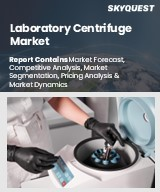
실험실용 원심분리기 시장 - 규모, 점유율, 성장 분석 : 제품 유형별, 모델 유형별, 로터 설계별, 용도별, 용도별, 최종 사용자별, 지역별 산업 예측(2026-2033년)Laboratory Centrifuge Market Size, Share, and Growth Analysis, By Product (Equipment, Accessories), By Model Type, By Rotor Design, By Intended Use, By Application, By End User, By Region - Industry Forecast 2026-2033 |
||||||

세계의 실험실용 원심분리기 시장 규모는 2024년 16억 8,000만 달러로 평가되었고, 2025년 17억 6,000만 달러에서 2033년까지 25억 6,000만 달러로 성장할 전망입니다. 예측기간 중(2026-2033년) CAGR은 4.8%로 예상됩니다.
세계의 실험실용 원심분리기 시장은 기술 혁신과 제약, 생명공학, 임상연구 등 다양한 분야에서의 자동화 수요 증가에 힘입어 역동적인 변화를 경험하고 있습니다. 특히 높은 처리량을 필요로 하는 유전체 및 단백질체학 분석에서 뛰어난 정확도, 속도 및 원활한 데이터 통합을 제공하는 첨단 원심분리 시스템에 대한 투자가 실험실에서 증가하고 있습니다. AI 및 IoT 기술의 통합으로 원심분리기의 기능성이 향상되고 진단 도구, 예지보전, 원격 감시를 갖춘 스마트 시스템의 인기가 높아지고 있습니다. 이러한 성장 동향은 진보된 진단 도구의 필요성, 생명과학 분야에서의 조사 증가, 만성 질환 만연에 의한 정확한 진단에 대한 수요가 증가함에 따라 추진되고 있습니다. 동시에 식품 안전 검사에서의 이용 증가와 엄격한 규제기준의 강화도 뒷받침 요인이 되고 있습니다.
세계의 실험실용 원심분리기 시장 촉진 요인
세계의 실험실용 원심분리기 시장은 유전체학, 단백질체학, 바이오의약품 연구 등의 분야에서의 응용 확대에 견인되어 현저한 성장을 이루고 있습니다. 신속한 처리 시간과 높은 정밀도를 제공하는 원심분리기에 대한 수요가 높아지고 있습니다. 연구소는 시료 무결성을 유지하면서 더 많은 양의 시료를 처리할 수 있는 원심분리기 모델에 대한 투자를 선호합니다. 이러한 추세는 연구 능력과 효율성 향상을 위한 광범위한 노력을 반영하며, 업계는 진화하는 과학적 요구와 기술적 진보(최적화된 성능 및 처리 시간 단축을 위한 AI 통합 포함)에 계속 적응하고 있습니다.
세계의 실험실용 원심분리기 시장 억제 요인
세계의 실험실용 원심분리기 시장은 인공지능(AI), 사물인터넷(IoT), 자동화 기능 등의 첨단기술 통합에 따른 비용 상승으로 중대한 제약에 직면하고 있습니다. 이러한 혁신은 효율성, 안전성 및 정밀도를 높이는 반면, 일반적으로 기존 원심분리기 모델에 비해 30%에서 50% 상당의 가격 상승을 수반합니다. 이 가격 프리미엄은 특히 개발도상 지역의 중소규모 연구소에 중대한 과제가 됩니다. 예산 제약으로 인해, 최신 기술을 탑재한 신형 모델에 대한 투자를 앞두고, 구식 기기를 계속 사용할 수밖에 없는 케이스가 빈번하기 때문입니다.
세계의 실험실용 원심분리기 시장 동향
세계의 실험실용 원심분리기 시장에서는 연구자와 기관의 환경 의식이 높아짐에 따라 지속가능성과 에너지 효율화를 위한 큰 동향이 탄생하고 있습니다. 제조업체 각사는 전력을 저소비할 뿐만 아니라, 저소음 및 장수명을 실현하는 원심분리기의 개발에 투자를 추진하고 있습니다. 이 혁신은 지속 가능한 실험실 운영을 위한 광범위한 노력과 일치하여 환경 친화적인 장비에 대한 수요 증가로 이어지고 있습니다. 실험실이 운용 성능을 유지하면서 탄소발자국의 최소화를 도모하는 중, 에너지 절약형 원심분리기 도입이 가속하고 있어, 보다 환경에 배려한 기술로의 전환을 앞둔 시장 동향을 반영하고 있습니다.
자주 묻는 질문
목차
소개
- 조사 목적
- 조사 범위
- 정의
조사 방법
- 정보 조달
- 2차 및 1차 데이터 수집 방법
- 시장 규모 예측
- 시장의 전제조건과 제한
주요 요약
- 세계 시장 전망
- 공급과 수요 동향 분석
- 부문별 기회 분석
시장 역학과 전망
- 시장 규모
- 시장 역학
- 촉진 요인과 기회
- 억제 요인과 과제
- Porter's Five Forces 분석
주요 시장 인사이트
- 중요 성공요인
- 경쟁도
- 주요 투자 기회
- 시장 생태계
- 시장의 매력 지수(2025년)
- PESTEL 분석
- 거시경제 지표
- 가격 분석
- 규제 분석
세계의 실험실용 원심분리기 시장 : 제품별 규모 및 CAGR(2026-2033년)
- 장치
- 다목적 원심분리기
- 초원심분리기
- 미니 원심분리기
- 기타 원심분리기
- 부속품
- 로터
- 튜브
- 원심분리기용 병
- 원심분리기용 버킷
- 원심분리기용 플레이트
- 기타 원심분리기용 액세서리
세계의 실험실용 원심분리기 시장 : 모델 유형별 규모 및 CAGR(2026-2033년)
- 탁상형 원심분리기
- 거치형 원심분리기
세계의 실험실용 원심분리기 시장 : 로터 설계별 규모 및 CAGR(2026-2033년)
- 고정각 로터
- 스윙 버킷 로터
- 수직 로터
- 기타 로터
세계의 실험실용 원심분리기 시장 : 용도별 규모 및 CAGR(2026-2033년)
- 범용 원심분리기
- 임상용 원심분리기
- 전임상용 원심분리기
세계의 실험실용 원심분리기 시장 : 용도별 규모 및 CAGR(2026-2033년)
- 진단
- 미생물학
- 세포체학
- 유전체학
- 단백질체학
- 혈액 성분 분리
- 기타 용도
세계의 실험실용 원심분리기 시장 : 최종 사용자별 규모 및 CAGR(2026-2033년)
- 병원
- 바이오테크놀러지 및 제약기업
- 학술 및 연구기관
세계의 실험실용 원심분리기 시장 : 규모 및 CAGR(2026-2033년)
- 북미
- 미국
- 캐나다
- 유럽
- 독일
- 스페인
- 프랑스
- 영국
- 이탈리아
- 기타 유럽
- 아시아태평양
- 중국
- 인도
- 일본
- 한국
- 기타 아시아태평양
- 라틴아메리카
- 브라질
- 기타 라틴아메리카
- 중동 및 아프리카
- GCC 국가
- 남아프리카
- 기타 중동 및 아프리카
경쟁 정보
- 상위 5개사 비교
- 주요 기업의 시장 포지셔닝(2025년)
- 주요 시장 기업이 채용한 전략
- 최근 시장 동향
- 기업의 시장 점유율 분석(2025년)
- 주요 기업 프로파일
- 기업 상세
- 제품 포트폴리오 분석
- 기업의 부문별 점유율 분석
- 전년대비 수익 비교(2023-2025년)
주요 기업 프로파일
- Andreas Hettich GmbH & Co. KG
- Becton, Dickinson and Company
- Danaher Corporation
- Eppendorf AG
- GTCR LLC
- HERMLE Labortechnik
- Kubota Corporation
- QIAGEN NV
- Sanofi Pasteur
- Sartorius
- Sigma Laborzentrifugen GmbH
- Thermo Fisher Scientific Inc.
결론과 권고
JHS 26.01.16Global Laboratory Centrifuge Market size was valued at USD 1.68 Billion in 2024 and is poised to grow from USD 1.76 Billion in 2025 to USD 2.56 Billion by 2033, growing at a CAGR of 4.8% during the forecast period (2026-2033).
The global laboratory centrifuge market is experiencing a dynamic shift propelled by technological innovations and a heightened demand for automation across various sectors, including pharmaceuticals, biotechnology, and clinical research. Laboratories are increasingly investing in advanced centrifuge systems that provide superior precision, speed, and seamless data integration, especially for genomic and proteomic applications requiring high throughput. The integration of AI and IoT technologies is enhancing centrifuge functionality, leading to the popularity of smart systems equipped with diagnostic tools, predictive maintenance, and remote monitoring. This growing trend is driven by the need for advanced diagnostic tools, rising research in life sciences, and heightened demands for accurate diagnostics due to chronic disease prevalence, while also seeing increased use in food safety testing and bolstered by stringent regulatory standards.
Top-down and bottom-up approaches were used to estimate and validate the size of the Global Laboratory Centrifuge market and to estimate the size of various other dependent submarkets. The research methodology used to estimate the market size includes the following details: The key players in the market were identified through secondary research, and their market shares in the respective regions were determined through primary and secondary research. This entire procedure includes the study of the annual and financial reports of the top market players and extensive interviews for key insights from industry leaders such as CEOs, VPs, directors, and marketing executives. All percentage shares split, and breakdowns were determined using secondary sources and verified through Primary sources. All possible parameters that affect the markets covered in this research study have been accounted for, viewed in extensive detail, verified through primary research, and analyzed to get the final quantitative and qualitative data.
Global Laboratory Centrifuge Market Segments Analysis
Global Laboratory Centrifuge Market is segmented by Product, Model Type, Rotor Design, Intended Use, Application, End User and region. Based on Product, the market is segmented into Equipment and Accessories. Based on Model Type, the market is segmented into Benchtop Centrifuges and Floor-Standing Centrifuges. Based on Rotor Design, the market is segmented into Fixed-Angle Rotors, Swinging-Bucket Rotors, Vertical Rotors and Other Rotors. Based on Intended Use, the market is segmented into General Purpose Centrifuges, Clinical Centrifuges and Preclinical Centrifuges. Based on Application, the market is segmented into Diagnostics, Microbiology, Cellomics, Genomics, Proteomics, Blood Component Separation and Other Applications. Based on End User, the market is segmented into Hospitals, Biotechnology & Pharmaceutical Companies and Academic & Research Institutes. Based on region, the market is segmented into North America, Europe, Asia Pacific, Latin America and Middle East & Africa.
Driver of the Global Laboratory Centrifuge Market
The Global Laboratory Centrifuge market is experiencing significant growth driven by the expanding applications in fields such as genomics, proteomics, and biopharmaceutical research. There is a rising demand for centrifuges that provide rapid processing times and high levels of accuracy. Laboratories are prioritizing investments in centrifuge models that can accommodate larger sample volumes while maintaining the integrity of the samples. This trend reflects a broader commitment to enhancing research capabilities and efficiency, as the industry continues to adapt to evolving scientific needs and technological advancements, including the integration of AI for optimized performance and reduced processing times.
Restraints in the Global Laboratory Centrifuge Market
The global laboratory centrifuge market faces significant constraints due to the rising costs associated with the integration of advanced technologies such as artificial intelligence, the Internet of Things, and automation features. Although these innovations enhance efficiency, safety, and precision, they typically incur a substantial price increase, often ranging from 30% to 50% more than conventional centrifuge models. This price premium poses a significant challenge for small and medium-sized laboratories, particularly in developing regions, as budget limitations frequently compel them to prolong the use of outdated equipment rather than invest in newer, technologically advanced models.
Market Trends of the Global Laboratory Centrifuge Market
The Global Laboratory Centrifuge market is witnessing a significant trend towards sustainability and energy efficiency, driven by increasing environmental awareness among researchers and institutions. Manufacturers are investing in the development of centrifuges that not only consume less energy but also operate with reduced noise levels and extended lifespans. This innovation aligns with the broader push for sustainable laboratory practices, leading to a growing demand for eco-friendly equipment. As laboratories seek to minimize their carbon footprint while maintaining operational performance, the adoption of energy-efficient centrifuge models is gaining momentum, reflecting a market poised for transformation towards greener technologies.
Table of Contents
Introduction
- Objectives of the Study
- Scope of the Report
- Definitions
Research Methodology
- Information Procurement
- Secondary & Primary Data Methods
- Market Size Estimation
- Market Assumptions & Limitations
Executive Summary
- Global Market Outlook
- Supply & Demand Trend Analysis
- Segmental Opportunity Analysis
Market Dynamics & Outlook
- Market Overview
- Market Size
- Market Dynamics
- Drivers & Opportunities
- Restraints & Challenges
- Porters Analysis
- Competitive rivalry
- Threat of substitute
- Bargaining power of buyers
- Threat of new entrants
- Bargaining power of suppliers
Key Market Insights
- Key Success Factors
- Degree of Competition
- Top Investment Pockets
- Market Ecosystem
- Market Attractiveness Index, 2025
- PESTEL Analysis
- Macro-Economic Indicators
- Pricing Analysis
- Regulatory Analysis
Global Laboratory Centrifuge Market Size by Product & CAGR (2026-2033)
- Market Overview
- Equipment
- Multipurpose Centrifuges
- Ultracentrifuges
- Minicentrifuges
- Other Centrifuges
- Accessories
- Rotors
- Tubes
- Centrifuge Bottles
- Centrifuge Buckets
- Centrifuge Plates
- Other Centrifuge Accessories
Global Laboratory Centrifuge Market Size by Model Type & CAGR (2026-2033)
- Market Overview
- Benchtop Centrifuges
- Floor-Standing Centrifuges
Global Laboratory Centrifuge Market Size by Rotor Design & CAGR (2026-2033)
- Market Overview
- Fixed-Angle Rotors
- Swinging-Bucket Rotors
- Vertical Rotors
- Other Rotors
Global Laboratory Centrifuge Market Size by Intended Use & CAGR (2026-2033)
- Market Overview
- General Purpose Centrifuges
- Clinical Centrifuges
- Preclinical Centrifuges
Global Laboratory Centrifuge Market Size by Application & CAGR (2026-2033)
- Market Overview
- Diagnostics
- Microbiology
- Cellomics
- Genomics
- Proteomics
- Blood Component Separation
- Other Applications
Global Laboratory Centrifuge Market Size by End User & CAGR (2026-2033)
- Market Overview
- Hospitals
- Biotechnology & Pharmaceutical Companies
- Academic & Research Institutes
Global Laboratory Centrifuge Market Size & CAGR (2026-2033)
- North America (Product, Model Type, Rotor Design, Intended Use, Application, End User)
- US
- Canada
- Europe (Product, Model Type, Rotor Design, Intended Use, Application, End User)
- Germany
- Spain
- France
- UK
- Italy
- Rest of Europe
- Asia Pacific (Product, Model Type, Rotor Design, Intended Use, Application, End User)
- China
- India
- Japan
- South Korea
- Rest of Asia-Pacific
- Latin America (Product, Model Type, Rotor Design, Intended Use, Application, End User)
- Brazil
- Rest of Latin America
- Middle East & Africa (Product, Model Type, Rotor Design, Intended Use, Application, End User)
- GCC Countries
- South Africa
- Rest of Middle East & Africa
Competitive Intelligence
- Top 5 Player Comparison
- Market Positioning of Key Players, 2025
- Strategies Adopted by Key Market Players
- Recent Developments in the Market
- Company Market Share Analysis, 2025
- Company Profiles of All Key Players
- Company Details
- Product Portfolio Analysis
- Company's Segmental Share Analysis
- Revenue Y-O-Y Comparison (2023-2025)
Key Company Profiles
- Andreas Hettich GmbH & Co. KG
- Company Overview
- Business Segment Overview
- Financial Updates
- Key Developments
- Becton, Dickinson and Company
- Company Overview
- Business Segment Overview
- Financial Updates
- Key Developments
- Danaher Corporation
- Company Overview
- Business Segment Overview
- Financial Updates
- Key Developments
- Eppendorf AG
- Company Overview
- Business Segment Overview
- Financial Updates
- Key Developments
- GTCR LLC
- Company Overview
- Business Segment Overview
- Financial Updates
- Key Developments
- HERMLE Labortechnik
- Company Overview
- Business Segment Overview
- Financial Updates
- Key Developments
- Kubota Corporation
- Company Overview
- Business Segment Overview
- Financial Updates
- Key Developments
- QIAGEN N.V.
- Company Overview
- Business Segment Overview
- Financial Updates
- Key Developments
- Sanofi Pasteur
- Company Overview
- Business Segment Overview
- Financial Updates
- Key Developments
- Sartorius
- Company Overview
- Business Segment Overview
- Financial Updates
- Key Developments
- Sigma Laborzentrifugen GmbH
- Company Overview
- Business Segment Overview
- Financial Updates
- Key Developments
- Thermo Fisher Scientific Inc.
- Company Overview
- Business Segment Overview
- Financial Updates
- Key Developments