|
시장보고서
상품코드
1919044
산업용 온수 보일러 시장 규모, 점유율, 성장 분석 : 연료 유형별, 기술별, 용량별, 용도별, 지역별 - 업계 예측(2026-2033년)Industrial Hot Water Boiler Market Size, Share, and Growth Analysis, By Fuel Type (Natural Gas, Oil), By Technology (Condensing Hot Water Boilers, Non-Condensing Hot Water Boilers), By Capacity, By Application, By Region - Industry Forecast 2026-2033 |
||||||

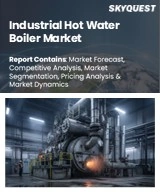
세계의 산업용 온수 보일러 시장 규모는 2024년에 273억 달러로 평가되었으며, 2025년 282억 8,000만 달러에서 2033년까지 375억 3,000만 달러로 성장할 전망입니다. 예측 기간(2026-2033년) 동안 CAGR은 3.6%로 예측됩니다.
식품 가공, 화학, 제약 등의 분야에서의 수요 증가와 에너지 효율 기준 강화에 힘입어 세계 산업용 온수 보일러 시장은 괄목할 만한 성장을 거듭하고 있습니다. 신흥 경제국의 급속한 도시화와 산업화가 시장 보급을 촉진하는 한편, 저배출 보일러 기술로의 전환은 지속가능성에 대한 노력을 강화하고 있습니다. 구식 시스템에서 재생에너지 통합 솔루션으로의 전환이 시장 확대를 더욱 가속화하고 있습니다. 또한, 에너지 절약 기술에 대한 정부의 강력한 지원책과 비용 효율적인 난방 옵션의 추구는 성장을 촉진하고 있습니다. 지역 난방 시스템에 대한 투자와 다양한 제조 분야에서 탄소발자국에 대한 인식이 높아짐에 따라 첨단 난방 솔루션의 필요성이 강조되고 있습니다.
세계 산업용 온수 보일러 시장 촉진요인
경제 성장과 재생에너지 솔루션에 대한 관심이 높아지면서 산업용 온수 보일러의 수요 증가에 크게 기여하고 있습니다. 이 보일러의 현대적인 디자인은 기존 모델보다 효율을 높이는 데 중점을 두었습니다. 에너지 효율은 많은 산업에서 중요한 과제로 떠오르고 있으며, 전력 비용 절감과 탄소 배출량 최소화를 위한 노력을 추진하고 있습니다. 기업들은 난방 요구 사항을 충족시킬 뿐만 아니라 환경 지속가능성 목표에 부합하는 최첨단 기술 채택을 점점 더 우선시하고 있으며, 이는 현대의 에너지 수요에 부응하는 형태로 산업용 온수 보일러 시장의 확대와 진화를 더욱 가속화하고 있습니다.
세계 산업용 온수 보일러 시장 억제요인
전 세계 산업용 온수 보일러 시장은 특히 고효율 및 재생에너지 통합형과 같은 첨단 시스템의 보급을 방해하는 막대한 초기 투자 요구 사항으로 인해 어려움을 겪고 있습니다. 대기업은 기존 보일러에서 응축식, 전기식, 수소 대응 시스템 등 최신 솔루션으로 전환할 수 있는 자금을 확보할 수 있는 반면, 중소기업은 한정된 자금으로 인해 어려움을 겪는 경우가 많습니다. 이러한 재정적 장벽은 중소기업의 난방 기술 업그레이드를 제한하여 전체 시장의 성장과 산업 전반에 걸쳐 보다 지속가능한 난방 솔루션의 도입을 저해하고 있습니다. 높은 비용은 이 분야의 경쟁 상황에 영향을 미치는 중요한 장벽이 되고 있습니다.
세계 산업용 온수 보일러 시장 동향
세계 산업용 온수 보일러 시장은 지속가능성 목표와 규제 지원 강화를 배경으로 재생에너지원의 통합을 향한 큰 전환점을 맞이하고 있습니다. 산업 분야에서는 열 및 전력 시스템 강화를 목적으로 바이오매스 연소, 태양열 입력 등 하이브리드 기술 도입이 확대되고 있습니다. 탄소 중립에 대한 관심이 높아지면서 화석연료로부터의 탈피가 진행되고 있으며, 폐열회수시스템, 수소대응보일러 등의 혁신기술이 이러한 변화에 중요한 역할을 하고 있습니다. 이러한 발전은 운영 효율을 향상시킬 뿐만 아니라 탄소 배출량 감축을 위한 세계 노력에 부합하여 시장을 보다 지속가능한 미래로 이끌고 있습니다.
자주 묻는 질문
목차
소개
- 조사 목적
- 시장 정의와 범위
조사 방법
- 조사 과정
- 2차와 1차 데이터 방법
- 시장 규모 추정 방법
주요 요약
- 세계 시장 전망
- 주요 시장 하이라이트
- 부문별 개요
- 경쟁 환경 개요
시장 역학과 전망
- 거시경제 지표
- 성장 촉진요인과 기회
- 성장 억제요인과 과제
- 공급측 동향
- 수요측 동향
- Porters 분석과 영향
주요 시장 인사이트
- 핵심성공요인
- 시장에 영향을 미치는 요인
- 주요 투자 기회
- 생태계 매핑
- 시장 매력 지수(2025년)
- PESTEL 분석
- 밸류체인 분석
- 가격 분석
- 사례 연구
- 규제 상황
- 기술 평가
- 규제 상황
세계의 산업용 온수 보일러 시장 규모 : 연료 유형별 & CAGR(2026-2033년)
- 천연가스
- 석유
- 전기식/전력 구동식
- 바이오매스/재생 연료
- 기타
세계의 산업용 온수 보일러 시장 규모 : 기술별 & CAGR(2026-2033년)
- 응축식 온수 보일러
- 비응축식 온수 보일러
- 화관식
- 수관식
- 통합형/스마트 보일러
세계의 산업용 온수 보일러 시장 규모 : 용량별 & CAGR(2026-2033년)
- 500,000 BTU/hr미만
- 500,000-2,000,000 BTU/hr
- 2,000,000-5,000,000 BTU/hr
- 5,000,000 BTU/hr
- 기타 용량 범위
세계의 산업용 온수 보일러 시장 규모 : 용도별 & CAGR(2026-2033년)
- 식품 및 음료 가공
- 제약·화학
- 섬유·의류
- 제지·펄프
- 유틸리티·공공시설용
세계의 산업용 온수 보일러 시장 규모 : 지역별 & CAGR(2026-2033년)
- 북미
- 미국
- 캐나다
- 유럽
- 독일
- 스페인
- 프랑스
- 영국
- 이탈리아
- 기타 유럽
- 아시아태평양
- 중국
- 인도
- 일본
- 한국
- 기타 아시아태평양
- 라틴아메리카
- 멕시코
- 브라질
- 기타 라틴아메리카
- 중동 및 아프리카
- GCC 국가
- 남아프리카공화국
- 기타 중동 및 아프리카
경쟁 정보
- 상위 5개사의 비교
- 주요 기업의 시장 포지셔닝(2025년)
- 주요 시장 기업이 채용한 전략
- 최근의 시장 동향
- 기업의 시장 점유율 분석(2025년)
- 주요 기업 개요
- 기업 상세
- 제품 포트폴리오 분석
- 기업 부문별 점유율 분석
- 매출 전년비 비교(2023-2025년)
주요 기업 개요
- Bosch Industriekessel
- Fulton Boiler Works
- Cleaver Brooks
- Miura Co., Ltd.
- Hurst Boiler & Welding Co.
- Thermax Ltd.
- Babcock Wanson
- Cochran Ltd.
- Hoval AG
- HKB Boilers
- Ecotherm Austria GmbH
- PARAT Halvorsen AS
- Thermodyne Boilers
- Thermon Group
- ACV
- KOSPEL
- Danstoker A/S
- Indeck Power Equipment Company
- Johnston Boiler Company
- Viessmann Group
결론과 제안
KSM 26.02.09Global Industrial Hot Water Boiler Market size was valued at USD 27.3 billion in 2024 and is poised to grow from USD 28.28 billion in 2025 to USD 37.53 billion by 2033, growing at a CAGR of 3.6% during the forecast period (2026-2033).
The global industrial hot water boiler market is experiencing significant growth, driven by rising demand from sectors such as food processing, chemicals, and pharmaceuticals, along with growing energy efficiency standards. Rapid urbanization and industrialization in emerging economies have bolstered market adoption, while the shift toward low-emission boiler technologies enhances sustainability efforts. The transition from outdated systems to renewables-integrated solutions is further propelling market expansion. Additionally, robust government incentives for energy-efficient technologies, coupled with the pursuit of cost-effective heating options, are fostering growth. Investments in district heating systems and heightened awareness of carbon footprints across various manufacturing sectors are also pivotal, emphasizing the need for advanced heating solutions.
Top-down and bottom-up approaches were used to estimate and validate the size of the Global Industrial Hot Water Boiler market and to estimate the size of various other dependent submarkets. The research methodology used to estimate the market size includes the following details: The key players in the market were identified through secondary research, and their market shares in the respective regions were determined through primary and secondary research. This entire procedure includes the study of the annual and financial reports of the top market players and extensive interviews for key insights from industry leaders such as CEOs, VPs, directors, and marketing executives. All percentage shares split, and breakdowns were determined using secondary sources and verified through Primary sources. All possible parameters that affect the markets covered in this research study have been accounted for, viewed in extensive detail, verified through primary research, and analyzed to get the final quantitative and qualitative data.
Global Industrial Hot Water Boiler Market Segments Analysis
Global Industrial Hot Water Boiler Market is segmented by Fuel Type, Technology, Capacity, Application and region. Based on Fuel Type, the market is segmented into Natural Gas, Oil, Electric / Electric-Powered, Biomass / Renewable Fuel and Others. Based on Technology, the market is segmented into Condensing Hot Water Boilers, Non-Condensing Hot Water Boilers, Fire-Tube, Water-Tube and Integrated / Smart Boilers. Based on Capacity, the market is segmented into < 500,000 BTU/hr, 500,000 - 2,000,000 BTU/hr, > 2,000,000 - 5,000,000 BTU/hr, > 5,000,000 BTU/hr and Other Capacity Ranges. Based on Application, the market is segmented into Food & Beverage Processing, Pharmaceuticals & Chemicals, Textiles & Apparel, Paper & Pulp and Utilities & Institutional. Based on region, the market is segmented into North America, Europe, Asia Pacific, Latin America and Middle East & Africa.
Driver of the Global Industrial Hot Water Boiler Market
The growth of the economy and the heightened interest in renewable energy solutions have significantly contributed to the increasing demand for industrial hot water boilers. Contemporary designs of these boilers focus on enhanced efficiency, surpassing that of older models. Energy efficiency has emerged as a critical concern for numerous industries, driving initiatives to lower electricity expenses and minimize carbon emissions. Companies are increasingly prioritizing the adoption of cutting-edge technologies that not only meet their heating requirements but also align with environmental sustainability goals, further propelling the industrial hot water boiler market's expansion and evolution in response to modern energy demands.
Restraints in the Global Industrial Hot Water Boiler Market
The Global Industrial Hot Water Boiler market faces challenges due to significant initial investment requirements that hinder the widespread adoption of advanced systems, particularly high-efficiency or renewable-integrated options. While larger industries may have the financial capacity to transition from traditional boilers to more modern solutions such as condensing, electric, or hydrogen-ready systems, smaller businesses often struggle with limited cash flow. This financial barrier restricts SMEs from upgrading their heating technologies, ultimately impeding overall market growth and the adoption of more sustainable heating solutions across the industry. The high costs create a significant obstacle that affects the competitive landscape in this sector.
Market Trends of the Global Industrial Hot Water Boiler Market
The Global Industrial Hot Water Boiler market is experiencing a significant shift towards the integration of renewable energy sources, driven by sustainability goals and increasing regulatory support. Industries are increasingly adopting hybrid technologies, such as biomass combustion and solar-thermal inputs, to enhance their heat and power systems. The growing emphasis on carbon neutrality is prompting a departure from fossil fuels, with innovations like waste-heat recovery systems and hydrogen-ready boilers playing pivotal roles in this transformation. These advancements not only support operational efficiency but also align with global efforts to reduce carbon emissions, positioning the market towards a more sustainable future.
Table of Contents
Introduction
- Objectives of the Study
- Market Definition & Scope
Research Methodology
- Research Process
- Secondary & Primary Data Methods
- Market Size Estimation Methods
Executive Summary
- Global Market Outlook
- Key Market Highlights
- Segmental Overview
- Competition Overview
Market Dynamics & Outlook
- Macro-Economic Indicators
- Drivers & Opportunities
- Restraints & Challenges
- Supply Side Trends
- Demand Side Trends
- Porters Analysis & Impact
- Competitive Rivalry
- Threat of Substitute
- Bargaining Power of Buyers
- Threat of New Entrants
- Bargaining Power of Suppliers
Key Market Insights
- Key Success Factors
- Market Impacting Factors
- Top Investment Pockets
- Ecosystem Mapping
- Market Attractiveness Index, 2025
- PESTEL Analysis
- Value Chain Analysis
- Pricing Analysis
- Case Studies
- Regulatory Landscape
- Technology Assessment
- Technology Assessment
- Regulatory Landscape
Global Industrial Hot Water Boiler Market Size by Fuel Type & CAGR (2026-2033)
- Market Overview
- Natural Gas
- Oil
- Electric / Electric-Powered
- Biomass / Renewable Fuel
- Others
Global Industrial Hot Water Boiler Market Size by Technology & CAGR (2026-2033)
- Market Overview
- Condensing Hot Water Boilers
- Non-Condensing Hot Water Boilers
- Fire-Tube
- Water-Tube
- Integrated / Smart Boilers
Global Industrial Hot Water Boiler Market Size by Capacity & CAGR (2026-2033)
- Market Overview
- < 500,000 BTU/hr
- 500,000 - 2,000,000 BTU/hr
- 2,000,000 - 5,000,000 BTU/hr
- 5,000,000 BTU/hr
- Other Capacity Ranges
Global Industrial Hot Water Boiler Market Size by Application & CAGR (2026-2033)
- Market Overview
- Food & Beverage Processing
- Pharmaceuticals & Chemicals
- Textiles & Apparel
- Paper & Pulp
- Utilities & Institutional
Global Industrial Hot Water Boiler Market Size & CAGR (2026-2033)
- North America (Fuel Type, Technology, Capacity, Application)
- US
- Canada
- Europe (Fuel Type, Technology, Capacity, Application)
- Germany
- Spain
- France
- UK
- Italy
- Rest of Europe
- Asia Pacific (Fuel Type, Technology, Capacity, Application)
- China
- India
- Japan
- South Korea
- Rest of Asia-Pacific
- Latin America (Fuel Type, Technology, Capacity, Application)
- Mexico
- Brazil
- Rest of Latin America
- Middle East & Africa (Fuel Type, Technology, Capacity, Application)
- GCC Countries
- South Africa
- Rest of Middle East & Africa
Competitive Intelligence
- Top 5 Player Comparison
- Market Positioning of Key Players, 2025
- Strategies Adopted by Key Market Players
- Recent Developments in the Market
- Company Market Share Analysis, 2025
- Company Profiles of All Key Players
- Company Details
- Product Portfolio Analysis
- Company's Segmental Share Analysis
- Revenue Y-O-Y Comparison (2023-2025)
Key Company Profiles
- Bosch Industriekessel
- Company Overview
- Business Segment Overview
- Financial Updates
- Key Developments
- Fulton Boiler Works
- Company Overview
- Business Segment Overview
- Financial Updates
- Key Developments
- Cleaver Brooks
- Company Overview
- Business Segment Overview
- Financial Updates
- Key Developments
- Miura Co., Ltd.
- Company Overview
- Business Segment Overview
- Financial Updates
- Key Developments
- Hurst Boiler & Welding Co.
- Company Overview
- Business Segment Overview
- Financial Updates
- Key Developments
- Thermax Ltd.
- Company Overview
- Business Segment Overview
- Financial Updates
- Key Developments
- Babcock Wanson
- Company Overview
- Business Segment Overview
- Financial Updates
- Key Developments
- Cochran Ltd.
- Company Overview
- Business Segment Overview
- Financial Updates
- Key Developments
- Hoval AG
- Company Overview
- Business Segment Overview
- Financial Updates
- Key Developments
- HKB Boilers
- Company Overview
- Business Segment Overview
- Financial Updates
- Key Developments
- Ecotherm Austria GmbH
- Company Overview
- Business Segment Overview
- Financial Updates
- Key Developments
- PARAT Halvorsen AS
- Company Overview
- Business Segment Overview
- Financial Updates
- Key Developments
- Thermodyne Boilers
- Company Overview
- Business Segment Overview
- Financial Updates
- Key Developments
- Thermon Group
- Company Overview
- Business Segment Overview
- Financial Updates
- Key Developments
- ACV
- Company Overview
- Business Segment Overview
- Financial Updates
- Key Developments
- KOSPEL
- Company Overview
- Business Segment Overview
- Financial Updates
- Key Developments
- Danstoker A/S
- Company Overview
- Business Segment Overview
- Financial Updates
- Key Developments
- Indeck Power Equipment Company
- Company Overview
- Business Segment Overview
- Financial Updates
- Key Developments
- Johnston Boiler Company
- Company Overview
- Business Segment Overview
- Financial Updates
- Key Developments
- Viessmann Group
- Company Overview
- Business Segment Overview
- Financial Updates
- Key Developments