|
시장보고서
상품코드
1964272
전자 필터 시장 규모, 점유율 및 성장 분석 : 제품 유형별, 여과 기술별, 필터 재료별, 용도별, 최종 이용 산업별, 유통 채널별, 지역별 - 업계 예측(2026-2033년)Electronic Filters Market Size, Share, and Growth Analysis, By Product Type (Air Filters, Gas Filters), By Filtration Technology, By Filter Material, By Application, By End-Use Industry, By Distribution Channel, By Region - Industry Forecast 2026-2033 |
||||||

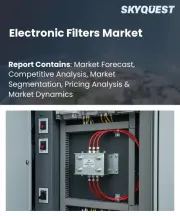
세계의 전자 필터 시장 규모는 2024년에 43억 달러로 평가되었고, 2025년 46억 7,000만 달러에서 2033년까지 89억 6,000만 달러로 성장할 전망입니다. 또한 예측 기간(2026-2033년) CAGR은 8.5%를 나타낼 것으로 예측됩니다.
세계 전자 필터 시장의 성장은 주로 무선 통신 및 신호 처리 수요 급증으로 인해 고도의 주파수 선택성 부품에 대한 수요가 증가하고 있습니다. 이러한 필터는 대역폭 이용 효율과 신호의 선명도를 향상시키기 위해 스마트폰에서 레이더 시스템에 이르기까지 다양한 기기에서 매우 중요한 역할을 합니다. 전통적인 LC 네트워크와 기계식 공진기에서 현대식 표면 탄성파(SAW), 세라믹, MEMS 필터로의 전환은 이러한 진화를 반영하고 있으며, 특히 5G 및 자동차 레이더와 같은 응용 분야에서 두드러지게 나타납니다. 소형화 필터에 대한 수요는 웨어러블 기기, 산업용 센서 등 소형 고성능 솔루션이 필수적인 사물인터넷(IoT) 분야와 점점 더 밀접한 관련이 있습니다. 이러한 추세는 첨단 기술의 채택을 촉진하고 특수 소재 및 통합 모듈 설계 공급업체에게 광범위한 기회를 제공합니다.
세계 전자 필터 시장을 이끄는 요인
차세대 무선 네트워크에 대한 수요 증가는 신호의 무결성과 선택성을 보장하면서 추가 주파수 대역과 더 높은 주파수를 관리할 수 있는 첨단 전자 필터에 대한 수요를 크게 견인하고 있습니다. 네트워크 아키텍처가 점점 더 복잡해지고 스펙트럼 활용이 심화됨에 따라 시스템 설계자들은 대역외 제거 성능 향상, 삽입 손실 감소, 다양한 온도 및 부하 조건에서 신뢰할 수 있는 성능을 제공하는 필터의 도입을 모색하고 있습니다. 이러한 추세는 공급업체들이 소형의 고성능 필터 솔루션을 개발하도록 독려하고 있으며, 소비자 및 산업 분야 모두에서 변화하는 연결성 요구에 대응하기 위해 재료 및 조사 방법론의 혁신을 촉진하고 있습니다.
세계 전자 필터 시장 성장 억제요인
광대역 동작에 대한 수요와 엄격한 스펙트럼 규제의 영향으로 필터 설계가 점점 더 복잡해짐에 따라 세계 전자 필터 시장은 큰 제약에 직면해 있습니다. 설계자들은 종종 선택성, 삽입 손실, 선형성, 크기와 같은 주요 특성에서 어려운 트레이드오프에 직면하여 프로토타이핑 프로세스가 길어지고 전문 지식이 필요한 경우가 많습니다. 이러한 상황은 개발 위험을 높이고, 소규모 공급업체에게 큰 장벽이 되어 결국 혁신적인 제품 시장 출시 속도를 제한하고 있습니다. 그 결과, 많은 구매자가 업그레이드보다 기존 레거시 부품을 선택하기 때문에 업계의 급속한 성장을 저해하고 있습니다.
세계 전자 필터 시장 동향
세계 전자 필터 시장에서는 고주파 연결 솔루션의 통합을 특징으로 하는 두드러진 추세가 관찰되고 있습니다. 무선 생태계의 확장은 고주파수 대역에서 효율적으로 작동하고 넓은 대역폭을 지원할 수 있는 고급 필터에 대한 수요를 촉진하여 고밀도 배포 환경에서 원활한 공존을 보장합니다. 제조업체들은 재구성 가능한 아키텍처, 낮은 삽입 손실, 엄격한 선택성과 같은 혁신을 우선시하고 있으며, 이를 통해 확장 가능한 네트워크 아키텍처와 새로운 서비스를 지원할 수 있습니다. 필터 벤더와 플랫폼 통합업체 간의 협업을 통해 성능 향상 설계를 촉진하고 시장 출시 시간을 단축하는 한편, 범용성이 높은 필터 모듈을 채택하여 인프라, 사용자 장비, 산업용 연결 용도 등 다양한 분야로의 도입을 촉진하고 있습니다. 도입이 촉진되고 있습니다.
자주 묻는 질문
목차
서론
조사 방법
주요 요약
시장 역학과 전망
주요 시장 인사이트
세계의 전자 필터 시장 규모 : 제품 유형별&CAGR(2026-2033)
세계의 전자 필터 시장 규모 : 여과 기술별&CAGR(2026-2033)
세계의 전자 필터 시장 규모 : 필터 재료별&CAGR(2026-2033)
세계의 전자 필터 시장 규모 : 용도별&CAGR(2026-2033)
세계의 전자 필터 시장 규모 : 최종 이용 산업별&CAGR(2026-2033)
세계의 전자 필터 시장 규모 : 유통 채널별&CAGR(2026-2033)
세계의 전자 필터 시장 규모&CAGR(2026-2033)
경쟁 정보
주요 기업 개요
결론과 제안
LSH 26.03.20Global Electronic Filters Market size was valued at USD 4.3 Billion in 2024 and is poised to grow from USD 4.67 Billion in 2025 to USD 8.96 Billion by 2033, growing at a CAGR of 8.5% during the forecast period (2026-2033).
The global electronic filters market is primarily propelled by the surge in wireless communication and signal processing requirements, necessitating advanced frequency selective components. These filters are crucial for a range of devices, from smartphones to radar systems, as they enhance bandwidth usage and signal clarity. Transitioning from traditional LC networks and mechanical resonators to modern surface acoustic wave, ceramic, and MEMS filters reflects this evolution, particularly evident in applications like 5G and automotive radar. The demand for miniaturized filters is increasingly linked to the Internet of Things (IoT), where compact, high-performance solutions are essential for devices such as wearables and industrial sensors. This trend promotes the incorporation of cutting-edge technologies, thus presenting vast opportunities for suppliers in specialized materials and integrated module designs.
Top-down and bottom-up approaches were used to estimate and validate the size of the Global Electronic Filters market and to estimate the size of various other dependent submarkets. The research methodology used to estimate the market size includes the following details: The key players in the market were identified through secondary research, and their market shares in the respective regions were determined through primary and secondary research. This entire procedure includes the study of the annual and financial reports of the top market players and extensive interviews for key insights from industry leaders such as CEOs, VPs, directors, and marketing executives. All percentage shares split, and breakdowns were determined using secondary sources and verified through Primary sources. All possible parameters that affect the markets covered in this research study have been accounted for, viewed in extensive detail, verified through primary research, and analyzed to get the final quantitative and qualitative data.
Global Electronic Filters Market Segments Analysis
Global electronic filters market is segmented by product type, filtration technology, filter material, application, end-use industry, distribution channel and region. Based on product type, the market is segmented into Air Filters, Gas Filters, Liquid Filters and Other Product Types. Based on filtration technology, the market is segmented into Mechanical Filtration, Adsorption Filtration, Depth Filtration, Membrane Filtration, Electrostatic Filtration and Other Filtration Technologies. Based on filter material, the market is segmented into Polypropylene (PP), Polytetrafluoroethylene (PTFE), Nylon, Polyethersulfone (PES), Cellulose, Ceramic, Glass Fiber, Stainless Steel / Metals and Other Filter Materials. Based on application, the market is segmented into Cleanroom Environments, Photolithography, Wet Etching and Cleaning Processes, Chemical Vapor Deposition (CVD) and Physical Vapor Deposition (PVD), Gas Delivery Systems, Water Purification Process and Other Applications. Based on end-use industry, the market is segmented into Consumer Electronics, Semiconductor, Telecommunications Equipment, Industrial Electronics and Other End-Use Industries. Based on distribution channel, the market is segmented into Online and Offline. Based on region, the market is segmented into North America, Europe, Asia Pacific, Latin America and Middle East & Africa.
Driver of the Global Electronic Filters Market
The growing need for next-generation wireless networks significantly drives the demand for advanced electronic filters capable of managing additional frequency bands and higher frequencies while ensuring signal integrity and selectivity. As network architectures become increasingly complex and spectrum utilization intensifies, system designers are looking for filters that offer enhanced out-of-band rejection, lower insertion loss, and reliable performance across varying temperatures and loads. This trend motivates suppliers to create compact, high-performance filter solutions and stimulates innovation in materials and design methodologies to meet the changing connectivity demands across both consumer and industrial sectors.
Restraints in the Global Electronic Filters Market
The global electronic filters market encounters significant constraints due to the escalating complexity of filter design, which is influenced by the demand for wideband operation and strict spectral regulations. Designers are often presented with challenging trade-offs regarding key attributes such as selectivity, insertion loss, linearity, and size, leading to prolonged prototyping processes and necessitating specialized knowledge. These conditions heighten development risks and establish substantial barriers for smaller suppliers, ultimately restricting the speed at which innovative products are introduced to the market. Consequently, many buyers opt for established legacy components over upgrades, thereby impeding swift industry growth.
Market Trends of the Global Electronic Filters Market
The Global Electronic Filters market is witnessing a notable trend characterized by the integration of high-frequency connectivity solutions. The expansion of wireless ecosystems is fueling the demand for advanced filters that can operate efficiently at elevated spectrum bands and accommodate broader bandwidths, ensuring seamless coexistence in densely populated deployments. Manufacturers prioritize innovations like reconfigurable architectures, low insertion loss, and stringent selectivity, which enable scalable network architectures and the support of emerging services. Collaborative efforts between filter vendors and platform integrators are driving performance-enhancing designs and reducing time to market, while the adoption of versatile filter modules facilitates deployment across a wide range of infrastructure, user equipment, and industrial connectivity applications.
Table of Contents
Introduction
- Objectives of the Study
- Market Definition & Scope
Research Methodology
- Research Process
- Secondary & Primary Data Methods
- Market Size Estimation Methods
Executive Summary
- Global Market Outlook
- Key Market Highlights
- Segmental Overview
- Competition Overview
Market Dynamics & Outlook
- Macro-Economic Indicators
- Drivers & Opportunities
- Restraints & Challenges
- Supply Side Trends
- Demand Side Trends
- Porters Analysis & Impact
- Competitive Rivalry
- Threat of Substitute
- Bargaining Power of Buyers
- Threat of New Entrants
- Bargaining Power of Suppliers
Key Market Insights
- Key Success Factors
- Market Impacting Factors
- Top Investment Pockets
- Ecosystem Mapping
- Market Attractiveness Index 2025
- PESTEL Analysis
- Regulatory Landscape
Global Electronic Filters Market Size by Product Type & CAGR (2026-2033)
- Market Overview
- Air Filters
- High-Efficiency Particulate Air (HEPA) Filters
- Ultra-Low Penetration Air (ULPA) Filters
- Other Air Filters
- Gas Filters
- Particulate Filters
- In-Line Filters
- Other Gas Filters
- Liquid Filters
- Depth Filters
- Membrane Filters
- Cartridge Filters
- Bag Filters
- String Wound Filters
- Pleated Filters
- Other Product Types
Global Electronic Filters Market Size by Filtration Technology & CAGR (2026-2033)
- Market Overview
- Mechanical Filtration
- Adsorption Filtration
- Depth Filtration
- Membrane Filtration
- Electrostatic Filtration
- Other Filtration Technologies
Global Electronic Filters Market Size by Filter Material & CAGR (2026-2033)
- Market Overview
- Polypropylene (PP)
- Polytetrafluoroethylene (PTFE)
- Nylon
- Polyethersulfone (PES)
- Cellulose
- Ceramic
- Glass Fiber
- Stainless Steel / Metals
- Other Filter Materials
Global Electronic Filters Market Size by Application & CAGR (2026-2033)
- Market Overview
- Cleanroom Environments
- Photolithography
- Wet Etching and Cleaning Processes
- Chemical Vapor Deposition (CVD) and Physical Vapor Deposition (PVD)
- Gas Delivery Systems
- Water Purification Process
- Other Applications
Global Electronic Filters Market Size by End-Use Industry & CAGR (2026-2033)
- Market Overview
- Consumer Electronics
- Semiconductor
- Telecommunications Equipment
- Industrial Electronics
- Other End-Use Industries
Global Electronic Filters Market Size by Distribution Channel & CAGR (2026-2033)
- Market Overview
- Online
- Offline
Global Electronic Filters Market Size & CAGR (2026-2033)
- North America (Product Type, Filtration Technology, Filter Material, Application, End-Use Industry, Distribution Channel)
- US
- Canada
- Europe (Product Type, Filtration Technology, Filter Material, Application, End-Use Industry, Distribution Channel)
- Germany
- Spain
- France
- UK
- Italy
- Rest of Europe
- Asia Pacific (Product Type, Filtration Technology, Filter Material, Application, End-Use Industry, Distribution Channel)
- China
- India
- Japan
- South Korea
- Rest of Asia-Pacific
- Latin America (Product Type, Filtration Technology, Filter Material, Application, End-Use Industry, Distribution Channel)
- Mexico
- Brazil
- Rest of Latin America
- Middle East & Africa (Product Type, Filtration Technology, Filter Material, Application, End-Use Industry, Distribution Channel)
- GCC Countries
- South Africa
- Rest of Middle East & Africa
Competitive Intelligence
- Top 5 Player Comparison
- Market Positioning of Key Players, 2025
- Strategies Adopted by Key Market Players
- Recent Developments in the Market
- Company Market Share Analysis, 2025
- Company Profiles of All Key Players
- Company Details
- Product Portfolio Analysis
- Company's Segmental Share Analysis
- Revenue Y-O-Y Comparison (2023-2025)
Key Company Profiles
- Pall Corporation
- Company Overview
- Business Segment Overview
- Financial Updates
- Key Developments
- Entegris
- Company Overview
- Business Segment Overview
- Financial Updates
- Key Developments
- 3M
- Company Overview
- Business Segment Overview
- Financial Updates
- Key Developments
- Cobetter
- Company Overview
- Business Segment Overview
- Financial Updates
- Key Developments
- Parker Hannifin Corp
- Company Overview
- Business Segment Overview
- Financial Updates
- Key Developments
- Donaldson Company, Inc.
- Company Overview
- Business Segment Overview
- Financial Updates
- Key Developments
- Mott
- Company Overview
- Business Segment Overview
- Financial Updates
- Key Developments
- Porvair plc
- Company Overview
- Business Segment Overview
- Financial Updates
- Key Developments
- MANN+HUMMEL
- Company Overview
- Business Segment Overview
- Financial Updates
- Key Developments
- Critical Process Filtration, Inc.
- Company Overview
- Business Segment Overview
- Financial Updates
- Key Developments
- Camfil
- Company Overview
- Business Segment Overview
- Financial Updates
- Key Developments
- Pullner Filters
- Company Overview
- Business Segment Overview
- Financial Updates
- Key Developments
- W.L. Gore & Associates, Inc.
- Company Overview
- Business Segment Overview
- Financial Updates
- Key Developments
- Graver Technologies
- Company Overview
- Business Segment Overview
- Financial Updates
- Key Developments
- Hongtek Filtration Co., Ltd.
- Company Overview
- Business Segment Overview
- Financial Updates
- Key Developments
- Freudenberg Filtration Technologies GmbH & Co. KG
- Company Overview
- Business Segment Overview
- Financial Updates
- Key Developments
- Fil-Trek Corporation
- Company Overview
- Business Segment Overview
- Financial Updates
- Key Developments
- Guangzhou KLC Cleantech Co., Ltd.
- Company Overview
- Business Segment Overview
- Financial Updates
- Key Developments
- Dyna Filters Private Limited
- Company Overview
- Business Segment Overview
- Financial Updates
- Key Developments
- Valin Corporation
- Company Overview
- Business Segment Overview
- Financial Updates
- Key Developments