|
시장보고서
상품코드
2048624
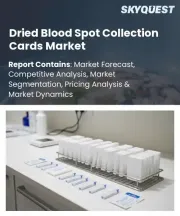
건조 혈반(DBS) 수집 카드 시장 규모, 점유율 및 성장 분석 : 제품 유형별, 용도별, 검체 유형별, 최종사용자별, 유통 채널별, 지역별 - 업계 예측(2026-2033년)Dried Blood Spot Collection Cards Market Size, Share, and Growth Analysis, By Product Type (Whatman/Cellulose-Based Cards, FTA Cards), By Application, By Sample Type, By End User, By Distribution Channel, By Region - Industry Forecast 2026-2033 |
||||||

세계의 건조 혈반(DBS) 수집 카드 시장 규모는 2024년 2억 4,580만 달러, 2025년 2억 5,268만 달러에서 2033년까지 3억 1,515만 달러로 확대되어 예측 기간(2026-2033년)에 CAGR 2.8%를 보일 전망입니다.
건조 혈반(DBS) 채취 카드 시장은 주로 검체 채취의 분산화라는 확대 추세에 영향을 받고 있습니다. 이는 기존 정맥 채혈에 비해 비용 절감, 물류 효율화, 생물학적 안전성 향상을 가져옵니다. 소량의 혈액을 채취, 운송 및 보관할 수 있도록 설계된 이 카드는 특히 원격지에서 신생아 선별 검사 및 치료 약물 모니터링과 같은 임상 검사에 필수적인 역할을 합니다. 가스리 검사 카드에서 표준화된 제품으로 진화하면서, 특히 자원이 제한된 지역에서 그 보급이 확대되고 있습니다. 또한, 고감도 검사를 보장하는 탄탄한 분석 및 규제적 검증을 통해 임상의와 규제 당국의 신뢰도를 높여 시장에 이익을 가져다주고 있습니다. 그 결과, 제조 효율성 향상과 전략적 산업 협력은 원격 의료와 중저소득 국가에서 큰 기회를 창출하고 있습니다.
세계 건조 혈반(DBS) 수집 카드 시장의 성장 요인
세계 건조 혈반(DBS) 채취 카드 시장은 저침습적 샘플링 기술의 채택과 원격 진단 기술의 발전으로 인해 크게 견인되고 있습니다. DBS는 놀랍도록 사용하기 쉽고, 의료 서비스가 부족한 사람들의 접근성을 향상시키며, 의료진이 기존의 실험실 환경의 제약을 뛰어넘어 환자를 효과적으로 모니터링할 수 있게 해줍니다. DBS 검체의 본질적인 장기 보존성과 간소화된 운송 프로세스는 검체 채취에 따른 물류 문제를 줄여줍니다. 이러한 장점은 도입 과정을 용이하게 할 뿐만 아니라 검사실과 임상의에게 DBS를 바람직한 선택으로 만들어 검사 프로그램 및 종단적 연구의 확장을 촉진하고 있습니다.
세계 건식 혈액 반점 채혈 카드 시장 성장 억제요인
세계 건조 혈반(DBS) 수집 카드 시장은 지역별로 상이한 규제 체계와 검증 기준을 둘러싼 불확실성으로 인해 심각한 문제에 직면해 있습니다. 이러한 불확실성으로 인해 제조업체와 최종 사용자는 다양한 규제 당국의 승인 수준 차이로 인해 어려움을 겪고 있으며, 이는 이러한 수집 카드의 채택을 제한하고 있습니다. 각 조직은 자사 기기가 기존 시료 유형과 동등하다는 것을 입증할 의무가 있으며, 이는 승인 절차를 복잡하게 만들고 시장 진입을 지연시키고 있습니다. 이러한 분열은 임상 실험실과 의료 시스템에서 위험에 대한 인식을 높이고, 신중한 도입과 인프라 및 협력에 대한 자금 부족을 초래하여 궁극적으로 이 시장의 성장 잠재력을 저해할 수 있습니다.
세계 건식 혈액 반점 채혈 카드 시장 동향
세계 건식 채혈 카드 시장은 환자 중심의 의료 솔루션에 대한 수요에 힘입어 분산형 검사 도입에 대한 뚜렷한 추세를 보이고 있습니다. 이해관계자들이 사용하기 쉬운 디자인과 견고한 운송 능력을 우선시하는 가운데, 채집 카드는 전통적인 임상 현장 이외의 진단 프로세스를 촉진하는 데 필수적인 도구가 되고 있습니다. 이러한 변화는 보다 효율적인 검진, 만성질환 관리 및 지역사회 기반 데이터 수집을 가능하게 합니다. 각 제조업체들은 특정 채취 요구에 맞는 제품 혁신과 유통 채널 강화를 통해 이러한 움직임에 대응하고 있습니다. 그 결과, 의료 서비스 제공업체와 공중 보건 이니셔티브는 이 카드를 활용하여 의료 접근성과 연속성을 개선하고 보다 종합적이고 효과적인 의료 환경 구축을 촉진하고 있습니다.
자주 묻는 질문
목차
서론
조사 방법
주요 요약
시장 역학과 전망
주요 시장 인사이트
세계의 건조 혈반(DBS) 수집 카드 시장 규모 : 제품 유형별
세계의 건조 혈반(DBS) 수집 카드 시장 규모 : 용도별
세계의 건조 혈반(DBS) 수집 카드 시장 규모 : 샘플 유형별
세계의 건조 혈반(DBS) 수집 카드 시장 규모 : 최종사용자별
세계의 건조 혈반(DBS) 수집 카드 시장 규모 : 유통 채널별
세계의 건조 혈반(DBS) 수집 카드 시장 규모 : 지역별
경쟁 정보
주요 기업 개요
결론과 제안
LSH 26.06.09Global Dried Blood Spot Collection Cards Market size was valued at USD 245.8 Million in 2024 and is poised to grow from USD 252.68 Million in 2025 to USD 315.15 Million by 2033, growing at a CAGR of 2.8% during the forecast period (2026-2033).
The dried blood spot (DBS) collection cards market is primarily influenced by the growing trend towards decentralized specimen collection, which offers cost reductions, streamlined logistics, and enhanced biosafety compared to traditional venous sampling. These cards, designed to collect, transport, and store small volumes of blood, are essential for laboratory analyses, particularly in newborn screening and therapeutic drug monitoring in remote settings. Their evolution from Guthrie test cards to standardized products has broadened their acceptance, especially in resource-limited areas. Additionally, the market benefits from robust analytical and regulatory validation that ensures high-sensitivity assays, fostering confidence among clinicians and regulators. As a result, increased manufacturing efficiencies and strategic industry collaborations are creating significant opportunities in telemedicine and low- to middle-income countries.
Top-down and bottom-up approaches were used to estimate and validate the size of the Global Dried Blood Spot Collection Cards market and to estimate the size of various other dependent submarkets. The research methodology used to estimate the market size includes the following details: The key players in the market were identified through secondary research, and their market shares in the respective regions were determined through primary and secondary research. This entire procedure includes the study of the annual and financial reports of the top market players and extensive interviews for key insights from industry leaders such as CEOs, VPs, directors, and marketing executives. All percentage shares split, and breakdowns were determined using secondary sources and verified through Primary sources. All possible parameters that affect the markets covered in this research study have been accounted for, viewed in extensive detail, verified through primary research, and analyzed to get the final quantitative and qualitative data.
Global Dried Blood Spot Collection Cards Market Segments Analysis
Global dried blood spot collection cards market is segmented by product type, application, sample type, end user, distribution channel and region. Based on product type, the market is segmented into Whatman/cellulose-based cards, FTA cards, protein saver cards, specialized DBS cards and others. Based on application, the market is segmented into newborn screening, infectious disease testing, therapeutic drug monitoring, genetic & genomic testing, toxicology testing, clinical research & biobanking, veterinary diagnostics and others. Based on sample type, the market is segmented into whole blood collection, plasma separation collection, serum spot collection and multi-analyte sample collection. Based on end user, the market is segmented into hospitals & diagnostic laboratories, research & academic institutes, pharmaceutical & biotechnology companies, public health & government organizations, contract research organizations (CROs) and home care & remote sampling users. Based on distribution channel, the market is segmented into direct sales, distributors & dealers and online sales. Based on region, the market is segmented into North America, Europe, Asia Pacific, Latin America and Middle East & Africa.
Driver of the Global Dried Blood Spot Collection Cards Market
The global market for Dried Blood Spot (DBS) collection cards is being significantly propelled by the adoption of minimally invasive sampling techniques and the advancement of remote diagnostic technologies. DBS offers remarkable ease of use, which enhances accessibility for underserved populations and enables healthcare providers to monitor patients effectively beyond the limitations of traditional laboratory settings. The inherent longer stability of DBS samples and their simplified transport process alleviate logistical challenges associated with specimen collection. These benefits not only ease the implementation process but also render DBS a desirable option for laboratories and clinicians, thereby fostering the expansion of testing programmes and longitudinal research studies.
Restraints in the Global Dried Blood Spot Collection Cards Market
The Global Dried Blood Spot Collection Cards market faces significant challenges due to uncertainty surrounding regulatory frameworks and validation standards across different regions. This hesitance leads to limited adoption of these collection cards, as manufacturers and end users grapple with varying acceptance levels from diverse regulatory bodies. Organizations are tasked with demonstrating the equivalency of their devices to traditional sample types, which complicates the approval process and slows market entry. Such fragmentation heightens perceived risk among clinical laboratories and healthcare systems, resulting in cautious adoption and insufficient funding for infrastructure and collaborations, ultimately stunting the growth potential of this market.
Market Trends of the Global Dried Blood Spot Collection Cards Market
The Global Dried Blood Spot Collection Cards market is witnessing a notable trend towards decentralized testing adoption, driven by the demand for patient-centered healthcare solutions. As healthcare stakeholders prioritize user-friendly designs and robust transport capabilities, collection cards are becoming essential tools for facilitating diagnostic processes outside traditional clinical settings. This shift enables more efficient screening, chronic disease management, and community-based data collection. Manufacturers are responding by innovating products and enhancing distribution channels tailored to specific collection needs. Consequently, healthcare providers and public health initiatives leverage these cards to improve access and continuity of care, fostering a more inclusive and effective healthcare landscape.
Table of Contents
Introduction
- Objectives of the Study
- Market Definition & Scope
Research Methodology
- Research Process
- Secondary & Primary Data Methods
- Market Size Estimation Methods
Executive Summary
- Global Market Outlook
- Key Market Highlights
- Segmental Overview
- Competition Overview
Market Dynamics & Outlook
- Macro-Economic Indicators
- Drivers & Opportunities
- Restraints & Challenges
- Supply Side Trends
- Demand Side Trends
- Porters Analysis & Impact
- Competitive Rivalry
- Threat of Substitute
- Bargaining Power of Buyers
- Threat of New Entrants
- Bargaining Power of Suppliers
Key Market Insights
- Key Success Factors
- Market Impacting Factors
- Top Investment Pockets
- Ecosystem Mapping
- Market Attractiveness Index 2025
- PESTEL Analysis
- Regulatory Landscape
Global Dried Blood Spot Collection Cards Market Size by Product Type & CAGR (2026-2033)
- Market Overview
- Whatman/Cellulose-Based Cards
- FTA Cards
- Protein Saver Cards
- Specialized DBS Cards
- Others
Global Dried Blood Spot Collection Cards Market Size by Application & CAGR (2026-2033)
- Market Overview
- Newborn Screening
- Infectious Disease Testing
- Therapeutic Drug Monitoring
- Genetic & Genomic Testing
- Toxicology Testing
- Clinical Research & Biobanking
- Veterinary Diagnostics
- Others
Global Dried Blood Spot Collection Cards Market Size by Sample Type & CAGR (2026-2033)
- Market Overview
- Whole Blood Collection
- Plasma Separation Collection
- Serum Spot Collection
- Multi-Analyte Sample Collection
Global Dried Blood Spot Collection Cards Market Size by End User & CAGR (2026-2033)
- Market Overview
- Hospitals & Diagnostic Laboratories
- Research & Academic Institutes
- Pharmaceutical & Biotechnology Companies
- Public Health & Government Organizations
- Contract Research Organizations (CROs)
- Home Care & Remote Sampling Users
Global Dried Blood Spot Collection Cards Market Size by Distribution Channel & CAGR (2026-2033)
- Market Overview
- Direct Sales
- Distributors & Dealers
- Online Sales
Global Dried Blood Spot Collection Cards Market Size & CAGR (2026-2033)
- North America (Product Type, Application, Sample Type, End User, Distribution Channel)
- US
- Canada
- Europe (Product Type, Application, Sample Type, End User, Distribution Channel)
- Germany
- Spain
- France
- UK
- Italy
- Rest of Europe
- Asia Pacific (Product Type, Application, Sample Type, End User, Distribution Channel)
- China
- India
- Japan
- South Korea
- Rest of Asia-Pacific
- Latin America (Product Type, Application, Sample Type, End User, Distribution Channel)
- Mexico
- Brazil
- Rest of Latin America
- Middle East & Africa (Product Type, Application, Sample Type, End User, Distribution Channel)
- GCC Countries
- South Africa
- Rest of Middle East & Africa
Competitive Intelligence
- Top 5 Player Comparison
- Market Positioning of Key Players, 2025
- Strategies Adopted by Key Market Players
- Recent Developments in the Market
- Company Market Share Analysis, 2025
- Company Profiles of All Key Players
- Company Details
- Product Portfolio Analysis
- Company's Segmental Share Analysis
- Revenue Y-O-Y Comparison (2023-2025)
Key Company Profiles
- QIAGEN
- Company Overview
- Business Segment Overview
- Financial Updates
- Key Developments
- Ahlstrom
- Company Overview
- Business Segment Overview
- Financial Updates
- Key Developments
- Eastern Business Forms
- Company Overview
- Business Segment Overview
- Financial Updates
- Key Developments
- PerkinElmer
- Company Overview
- Business Segment Overview
- Financial Updates
- Key Developments
- Roche Diagnostics
- Company Overview
- Business Segment Overview
- Financial Updates
- Key Developments
- Shimadzu Corporation
- Company Overview
- Business Segment Overview
- Financial Updates
- Key Developments
- ARCHIMEDlife
- Company Overview
- Business Segment Overview
- Financial Updates
- Key Developments
- CENTOGENE
- Company Overview
- Business Segment Overview
- Financial Updates
- Key Developments
- Pall Corporation
- Company Overview
- Business Segment Overview
- Financial Updates
- Key Developments
- GenTegra
- Company Overview
- Business Segment Overview
- Financial Updates
- Key Developments
- Lipomic Healthcare
- Company Overview
- Business Segment Overview
- Financial Updates
- Key Developments
- Surgeine Healthcare
- Company Overview
- Business Segment Overview
- Financial Updates
- Key Developments
- Synergy Medical Systems
- Company Overview
- Business Segment Overview
- Financial Updates
- Key Developments
- Thomas Scientific
- Company Overview
- Business Segment Overview
- Financial Updates
- Key Developments
- CAMAG
- Company Overview
- Business Segment Overview
- Financial Updates
- Key Developments
- Capitainer
- Company Overview
- Business Segment Overview
- Financial Updates
- Key Developments
- Spot On Sciences
- Company Overview
- Business Segment Overview
- Financial Updates
- Key Developments
- Neoteryx
- Company Overview
- Business Segment Overview
- Financial Updates
- Key Developments
- Cerba Research
- Company Overview
- Business Segment Overview
- Financial Updates
- Key Developments
- Trajan Scientific and Medical
- Company Overview
- Business Segment Overview
- Financial Updates
- Key Developments