|
시장보고서
상품코드
2091378
방송용 스위처 시장 규모, 점유율, 성장 분석 : 제품 유형별, 해상도별, 용도별, 도입 형태별, 최종사용자별, 판매 채널별, 지역별 - 업계 예측(2026-2033년)Broadcast Switcher Market Size, Share, and Growth Analysis, By Product Type, By Resolution (HD Switchers, 4K UHD Switchers), By Application, By Deployment Type, By End User, By Sales Channel, By Region - Industry Forecast 2026-2033 |
||||||

세계의 방송용 스위처 시장 규모는 2024년에 12억 4,260만 달러로 평가되었으며, 2025년 13억 3,704만 달러에서 2033년까지 24억 239만 달러로 확대되어 예측 기간(2026-2033년) 동안 CAGR 7.6%로 성장할 것으로 전망됩니다.
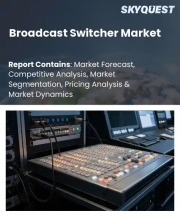
세계 방송용 스위처 시장은 TV 생방송 및 스트리밍에서 영상 소스의 선택, 믹싱, 라우팅에 필요한 하드웨어 및 소프트웨어를 아우르며, 다양한 시청자에게 고해상도 콘텐츠를 전달하는 데 있어 매우 중요한 역할을 하고 있습니다. 업계가 아날로그에서 IP 기반 워크플로로 전환되는 가운데, 초고해상도(UHD) 및 HDR 포맷에 대한 수요가 증가함에 따라, 첨단 라우팅 솔루션과 더 높은 대역폭에 대한 필요성이 대두되고 있습니다. 모듈형 스위처에서 AI를 활용한 장면 감지 등의 혁신 기술과 클라우드 네이티브 제작 파이프라인의 부상으로 인해, 기존 방송사 및 디지털 퍼스트 플랫폼에서의 도입이 확대되고 있습니다. 이러한 가상화 처리로의 전환은 설비 투자를 절감할 뿐만 아니라 확장성을 높이는 결과로 이어지며, 소규모 콘텐츠 제작자를 대상으로 한 구독 모델이나 API를 활용한 맞춤형 서비스와 같은 새로운 기회를 창출하여, 궁극적으로 시장의 잠재력을 확대하게 될 것입니다.
세계 방송용 스위처 시장의 성장요인
세계 방송용 스위처 시장은 스포츠, 뉴스, 엔터테인먼트 등 다양한 분야의 생중계 확대에 힘입어 크게 성장하고 있습니다. 이러한 급증에 따라, 신뢰성이 높은 실시간 신호 라우팅과 원활한 채널 전환이 필수적입니다. 고성능 방송용 스위처를 통해 운영자는 지연을 최소화하면서 여러 영상 소스를 효율적으로 관리할 수 있으며, 시청자에게 완벽한 시청 경험을 보장합니다. 고화질이며 끊김 없는 스트리밍에 대한 기대가 높아지는 가운데, 방송 사업자들은 다양한 포맷을 지원하고 신속한 제작 워크플로우를 가능하게 하는 범용성이 높은 스위칭 솔루션에 투자하고 있습니다. 이러한 투자는 혁신적인 클라우드 기반 제작 환경과의 통합도 촉진하고 있으며, 현대 방송에서 스위처 기술이 수행하는 중요한 역할을 부각시키고 있습니다.
세계 방송용 스위처 시장의 제약요인
세계 방송용 스위처 시장은 첨단 방송용 스위처 시스템에 필요한 막대한 초기 투자로 인해 큰 제약에 직면해 있습니다. 소규모 방송사나 신흥 시장에 진출하는 방송사들에게는 이러한 비용이 장벽이 되어, 최신 기술에 대한 투자를 주저하게 만드는 요인이 되고 있습니다. 하드웨어 조달, 신규 시스템 통합 및 인력 교육에 수반되는 비용은 재정적 문제를 야기하여, 조직이 업그레이드를 미루거나 구형 장비를 계속 사용하게 되는 원인이 되는 경우가 많습니다. 이러한 경제적 장벽은 특히 예산이 제한된 지역에서 시장 침투를 저해하고, 첨단 스위처 솔루션의 도입을 지연시키는 결과를 초래하고 있습니다. 따라서 많은 사업자들은 시스템 전체에 대한 종합적인 업그레이드 대신 단계적인 개선을 선택하고 있으며, 이는 결국 시장의 성장 잠재력을 제한하게 됩니다.
세계 방송용 스위처 시장의 동향
세계 방송용 스위처 시장에서는 방송 사업자들이 콘텐츠 전송을 최적화하기 위해 고도화된 알고리즘을 점점 더 많이 활용함에 따라, AI를 활용한 콘텐츠 오케스트레이션으로의 큰 전환이 나타나고 있습니다. 이 기술의 통합을 통해 실시간 라우팅 결정이 자동화되어, 생방송, 사전 녹화된 부문, 인터랙티브 그래픽 간에 원활한 전환이 가능해지며, 운영 효율이 향상됩니다. 각 제조사는 하드웨어 플랫폼에 기계 학습 모듈을 통합함으로써, 전 세계 방송 규격을 준수하면서도 프로그램 변화에 신속하게 대응할 수 있는 적응형 신호 경로를 구현하고 있습니다. 그 결과, 맞춤형 콘텐츠 제공을 통해 시청자의 참여도가 높아지고 있으며, 끊임없이 진화하는 미디어 환경 속에서 지능형 방송 솔루션에 대한 꾸준한 추세가 나타나고 있습니다.
자주 묻는 질문
목차
소개
조사 방법
주요 요약
시장 역학과 전망
주요 시장 인사이트
세계의 방송용 스위처 시장 규모 : 제품 유형별
세계의 방송용 스위처 시장 규모 : 해상도별
세계의 방송용 스위처 시장 규모 : 용도별
세계의 방송용 스위처 시장 규모 : 전개 방식별
세계의 방송용 스위처 시장 규모 : 최종사용자별
세계의 방송용 스위처 시장 규모 : 판매 채널별
세계의 방송용 스위처 시장 규모 : 지역별
경쟁 정보
주요 기업 개요
결론과 제안
KSM 26.07.22Global Broadcast Switcher Market size was valued at USD 1242.6 Million in 2024 and is poised to grow from USD 1337.04 Million in 2025 to USD 2402.39 Million by 2033, growing at a CAGR of 7.6% during the forecast period (2026-2033).
The global broadcast switcher market encompasses the hardware and software necessary for selecting, mixing, and routing video sources for live television and streaming, playing a crucial role in delivering high-definition content to diverse audiences. As the industry transitions from analog to IP-based workflows, the increased demand for ultra-high-definition and HDR formats drives the need for advanced routing solutions and higher bandwidth. Innovations such as AI-assisted scene detection in modular switchers, along with the rise of cloud-native production pipelines, have expanded adoption among traditional broadcasters and digital-first platforms. This movement towards virtualized processing not only decreases capital expenses but also enhances scalability, opening new opportunities for subscription models and API-driven customization that cater to smaller content creators, ultimately broadening market potential.
Top-down and bottom-up approaches were used to estimate and validate the size of the Global Broadcast Switcher market and to estimate the size of various other dependent submarkets. The research methodology used to estimate the market size includes the following details: The key players in the market were identified through secondary research, and their market shares in the respective regions were determined through primary and secondary research. This entire procedure includes the study of the annual and financial reports of the top market players and extensive interviews for key insights from industry leaders such as CEOs, VPs, directors, and marketing executives. All percentage shares split, and breakdowns were determined using secondary sources and verified through Primary sources. All possible parameters that affect the markets covered in this research study have been accounted for, viewed in extensive detail, verified through primary research, and analyzed to get the final quantitative and qualitative data.
Global Broadcast Switcher Market Segments Analysis
Global broadcast switcher market is segmented by product type, resolution, application, deployment type, end user, sales channel and region. Based on product type, the market is segmented into Production Switchers, Routing Switchers, Master Control Switchers and Others. Based on resolution, the market is segmented into HD Switchers, 4K UHD Switchers and 8K Switchers. Based on application, the market is segmented into Television Broadcasting, Live Event Production, Sports Broadcasting and Others. Based on deployment type, the market is segmented into Fixed Studio Installations and Mobile Production Installations. Based on end user, the market is segmented into Broadcasters, Production Companies, Houses of Worship and Others. Based on sales channel, the market is segmented into Direct Sales, System Integrators and Others. Based on region, the market is segmented into North America, Europe, Asia Pacific, Latin America and Middle East & Africa.
Driver of the Global Broadcast Switcher Market
The Global Broadcast Switcher market is significantly driven by the increasing expansion of live event coverage across various sectors, such as sports, news, and entertainment. This surge necessitates reliable and real-time signal routing as well as seamless channel switching. Advanced broadcast switchers empower operators to efficiently manage multiple video sources with minimal latency, ensuring a flawless viewing experience for audiences. With a growing expectation for high-definition and uninterrupted streaming, broadcasters are investing in versatile switching solutions that accommodate diverse formats and enable rapid production workflows. These investments also promote integration with innovative cloud-based production environments, highlighting the critical role of switcher technology in modern broadcasting.
Restraints in the Global Broadcast Switcher Market
The Global Broadcast Switcher market faces significant restraints due to the high initial investment required for advanced broadcast switcher systems. Smaller broadcasters and those entering emerging markets may find these costs prohibitive, deterring them from investing in the latest technology. The expenses associated with acquiring hardware, integrating new systems, and training personnel create financial challenges that often lead organizations to delay upgrades or continue using outdated equipment. This economic barrier restricts market penetration, particularly in regions with constrained budgets, and results in a slower adoption of sophisticated switching solutions. Many operators therefore choose to pursue incremental improvements rather than comprehensive system upgrades, ultimately limiting the market's growth potential.
Market Trends of the Global Broadcast Switcher Market
The Global Broadcast Switcher market is witnessing a significant shift towards AI-driven content orchestration, as broadcasters increasingly leverage sophisticated algorithms to tailor their content delivery. This technological integration enhances operational efficiency by automating real-time routing decisions, allowing for fluid transitions between live feeds, pre-recorded segments, and interactive graphics. By embedding machine-learning modules within hardware platforms, manufacturers are enabling adaptive signal pathways that quickly respond to program dynamics while ensuring compliance with global broadcast standards. As a result, viewer engagement is heightened through personalized content streams, indicating a robust trend towards intelligent broadcasting solutions in an ever-evolving media landscape.
Table of Contents
Introduction
- Objectives of the Study
- Market Definition & Scope
Research Methodology
- Research Process
- Secondary & Primary Data Methods
- Market Size Estimation Methods
Executive Summary
- Global Market Outlook
- Key Market Highlights
- Segmental Overview
- Competition Overview
Market Dynamics & Outlook
- Macro-Economic Indicators
- Drivers & Opportunities
- Restraints & Challenges
- Supply Side Trends
- Demand Side Trends
- Porters Analysis & Impact
- Competitive Rivalry
- Threat of Substitute
- Bargaining Power of Buyers
- Threat of New Entrants
- Bargaining Power of Suppliers
Key Market Insights
- Key Success Factors
- Market Impacting Factors
- Top Investment Pockets
- Ecosystem Mapping
- Market Attractiveness Index 2025
- PESTEL Analysis
- Regulatory Landscape
Global Broadcast Switcher Market Size by Product Type & CAGR (2026-2033)
- Market Overview
- Production Switchers
- Routing Switchers
- Master Control Switchers
- Others
Global Broadcast Switcher Market Size by Resolution & CAGR (2026-2033)
- Market Overview
- HD Switchers
- 4K UHD Switchers
- 8K Switchers
Global Broadcast Switcher Market Size by Application & CAGR (2026-2033)
- Market Overview
- Television Broadcasting
- Live Event Production
- Sports Broadcasting
- Others
Global Broadcast Switcher Market Size by Deployment Type & CAGR (2026-2033)
- Market Overview
- Fixed Studio Installations
- Mobile Production Installations
Global Broadcast Switcher Market Size by End User & CAGR (2026-2033)
- Market Overview
- Broadcasters
- Production Companies
- Houses of Worship
- Others
Global Broadcast Switcher Market Size by Sales Channel & CAGR (2026-2033)
- Market Overview
- Direct Sales
- System Integrators
- Others
Global Broadcast Switcher Market Size & CAGR (2026-2033)
- North America (Product Type, Resolution, Application, Deployment Type, End User, Sales Channel)
- US
- Canada
- Europe (Product Type, Resolution, Application, Deployment Type, End User, Sales Channel)
- Germany
- Spain
- France
- UK
- Italy
- Rest of Europe
- Asia Pacific (Product Type, Resolution, Application, Deployment Type, End User, Sales Channel)
- China
- India
- Japan
- South Korea
- Rest of Asia-Pacific
- Latin America (Product Type, Resolution, Application, Deployment Type, End User, Sales Channel)
- Mexico
- Brazil
- Rest of Latin America
- Middle East & Africa (Product Type, Resolution, Application, Deployment Type, End User, Sales Channel)
- GCC Countries
- South Africa
- Rest of Middle East & Africa
Competitive Intelligence
- Top 5 Player Comparison
- Market Positioning of Key Players, 2025
- Strategies Adopted by Key Market Players
- Recent Developments in the Market
- Company Market Share Analysis, 2025
- Company Profiles of All Key Players
- Company Details
- Product Portfolio Analysis
- Company's Segmental Share Analysis
- Revenue Y-O-Y Comparison (2023-2025)
Key Company Profiles
- Blackmagic Design Pty Ltd.
- Company Overview
- Business Segment Overview
- Financial Updates
- Key Developments
- Ross Video Ltd.
- Company Overview
- Business Segment Overview
- Financial Updates
- Key Developments
- Grass Valley Canada
- Company Overview
- Business Segment Overview
- Financial Updates
- Key Developments
- Sony Group Corporation
- Company Overview
- Business Segment Overview
- Financial Updates
- Key Developments
- Panasonic Entertainment & Communication Co., Ltd.
- Company Overview
- Business Segment Overview
- Financial Updates
- Key Developments
- For-A Company Limited
- Company Overview
- Business Segment Overview
- Financial Updates
- Key Developments
- Evertz Microsystems Ltd.
- Company Overview
- Business Segment Overview
- Financial Updates
- Key Developments
- Imagine Communications Corp.
- Company Overview
- Business Segment Overview
- Financial Updates
- Key Developments
- Broadcast Pix, Inc.
- Company Overview
- Business Segment Overview
- Financial Updates
- Key Developments
- NewTek, Inc.
- Company Overview
- Business Segment Overview
- Financial Updates
- Key Developments
- AJA Video Systems, Inc.
- Company Overview
- Business Segment Overview
- Financial Updates
- Key Developments
- Datavideo Technologies Co., Ltd.
- Company Overview
- Business Segment Overview
- Financial Updates
- Key Developments
- Utah Scientific, Inc.
- Company Overview
- Business Segment Overview
- Financial Updates
- Key Developments
- Riedel Communications GmbH & Co. KG
- Company Overview
- Business Segment Overview
- Financial Updates
- Key Developments
- GVG Kula Systems
- Company Overview
- Business Segment Overview
- Financial Updates
- Key Developments
- Vizrt Group AS
- Company Overview
- Business Segment Overview
- Financial Updates
- Key Developments
- Leader Electronics Corporation
- Company Overview
- Business Segment Overview
- Financial Updates
- Key Developments
- Ikegami Tsushinki Co., Ltd.
- Company Overview
- Business Segment Overview
- Financial Updates
- Key Developments
- Cobalt Digital Inc.
- Company Overview
- Business Segment Overview
- Financial Updates
- Key Developments
- Nevion AS
- Company Overview
- Business Segment Overview
- Financial Updates
- Key Developments