|
시장보고서
상품코드
2119988
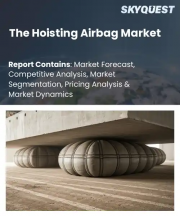
호이스트용 에어백 시장 규모, 점유율, 성장 분석 : 제품 유형별, 소재별, 용도별, 최종사용자별, 용량별, 지역별 - 업계 예측(2026-2033년)The Hoisting Airbag Market Size, Share, and Growth Analysis, By Product Type (Cylindrical Hoisting Airbags, Pillow Hoisting Airbags), By Material, By Application, By End User, By Capacity, By Region - Industry Forecast 2026-2033 |
||||||

세계의 호이스트용 에어백 시장 규모는 2024년에 4억 8,620만 달러로 평가되며, 2025년 5억 1,634만 달러에서 2033년까지 8억 3,548만 달러로 확대하며, 예측 기간(2026-2033년)에 CAGR 6.2%로 성장할 것으로 전망되고 있습니다.
전 세계 호이스트용 에어백 시장은 규제 강화와 인프라 프로젝트 증가를 배경으로 상당한 성장을 달성하고 있습니다. 추락 방지 필요성이 높아지는 가운데, 공공사업체와 도급업체들은 기존의 로프 시스템에서 팽창식 솔루션으로 전환하고 있습니다. 예를 들어 브라질의 전력 회사는 고압 송전선에 접근할 때 에어백을 활용하고 있으며, 이를 통해 작업자의 작업 시간을 40% 단축하고 있습니다. 또한 멕시코만 해양 시추 시설에서는 비계를 설치하지 않고도 협소한 공간에 접근하기 위해 에어백이 활용되고 있습니다. 이러한 수요 증가에 따라 각 제조사들은 하중 센서 등 첨단 기능을 제품에 탑재하고 있습니다. 이는 보험 비용을 절감할 뿐만 아니라, 특히 급속한 도시화가 진행 중인 아시아 지역에서 큰 성장 기회를 가져다주고 있습니다.
전 세계 호이스트용 에어백 시장의 성장 요인
전 세계 호이스트용 에어백 시장은 주로 주택, 상업, 인프라 개발의 급증에 의해 견인되고 있으며, 이로 인해 효과적인 자재 운반 솔루션에 대한 수요가 높아지고 있습니다. 호이스트용 에어백은 무거운 물체를 신속하고 안전하게 들어 올릴 수 있다는 점에서 점점 더 높이 평가받고 있으며, 가동 중단 시간을 최소화하면서 성능 향상을 목표로 하는 프로젝트 관리자들의 절실한 우려에 부응하고 있습니다. 이러한 전문가들이 업무 효율을 최적화할 수 있는 신뢰할 수 있는 방법을 모색함에 따라 호이스트용 에어백에 대한 수요는 계속해서 증가하고 있으며, 이는 시장의 전반적인 성장에 크게 기여하고 있습니다. 이러한 추세는 현대 개발 프로젝트에서 혁신적인 리프팅 솔루션이 수행하는 중요한 역할을 부각시키고 있습니다.
전 세계 호이스트용 에어백 시장의 제약 요인
호이스트용 에어백 도입에 따른 높은 비용은 많은 중소규모 도급업체들에게 큰 장벽이 되고 있습니다. 이는 그들의 자금 배분이 주로 설비 투자보다는 당면한 프로젝트 경비에 중점을 두고 있기 때문입니다. 이러한 자금적 제약으로 인해 이들 기업은 기존의 리프팅 방법에 의존할 수밖에 없는데, 이러한 방법은 비용은 저렴하지만 많은 경우 운영상의 위험이 높아지는 경향이 있습니다. 그 결과, 첨단 리프팅 솔루션에 대한 투자를 주저하는 태도가 특히 건설 회사가 예산 제약에 직면한 지역에서 시장 확장을 저해하며, 궁극적으로 업계내 호이스트용 에어백의 잠재적 보급과 성장을 제한하게 됩니다.
세계의 호이스트용 에어백 시장 동향
전 세계 호이스트용 에어백 시장에서는 에어백 하우징 및 구조 부품 제조에 첨단 복합재료와 고강도 합금 등 경량 소재를 채택하는 뚜렷한 추세가 나타나고 있습니다. 이러한 변화는 안전 장비의 총 중량을 줄일 뿐만 아니라, 내구성과 안전 기준을 유지하면서 크레인 및 고소 작업차의 적재 능력을 향상시킵니다. 경량 소재로의 전환은 운영 효율 최적화와 에너지 소비 최소화라는 업계의 목표와 부합합니다. 또한 인체공학적 설계의 개선은 작업자의 편의성 향상에 기여하고 있으며, 시장에서 기능성과 사용자 경험 모두를 우선시하는 혁신적인 솔루션으로의 명확한 전환이 두드러지고 있습니다.
자주 묻는 질문
목차
서론
조사 방법
개요
시장 역학과 전망
주요 시장 인사이트
세계의 호이스트용 에어백 시장 규모 : 제품 유형별
세계의 호이스트용 에어백 시장 규모 : 소재별
세계의 호이스트용 에어백 시장 규모 : 용도별
세계의 호이스트용 에어백 시장 규모 : 최종사용자별
세계의 호이스트용 에어백 시장 규모 : 용량별
세계의 호이스트용 에어백 시장 규모 : 지역별
경쟁 정보
주요 기업 개요
결론과 제안
KSA 26.08.28Global Hoisting Airbag Market size was valued at USD 486.2 Million in 2024 and is poised to grow from USD 516.34 Million in 2025 to USD 835.48 Million by 2033, growing at a CAGR of 6.2% during the forecast period (2026-2033).
The global hoisting airbag market is witnessing significant growth driven by heightened regulations and an increase in infrastructure projects. As the necessity for fall protection arises, utilities and contractors are transitioning from traditional rope systems to inflatable solutions. Brazilian electric utilities, for instance, are leveraging airbags to reach high voltage lines, thereby reducing crew working time by 40%. Additionally, offshore rigs in the Gulf of Mexico are utilizing airbags to access confined spaces without the need for scaffolding. This rising demand encourages manufacturers to incorporate advanced features like load sensors, which not only lower insurance costs but also present substantial growth opportunities, especially in rapidly urbanizing regions of Asia.
Top-down and bottom-up approaches were used to estimate and validate the size of the Global Hoisting Airbag market and to estimate the size of various other dependent submarkets. The research methodology used to estimate the market size includes the following details: The key players in the market were identified through secondary research, and their market shares in the respective regions were determined through primary and secondary research. This entire procedure includes the study of the annual and financial reports of the top market players and extensive interviews for key insights from industry leaders such as CEOs, VPs, directors, and marketing executives. All percentage shares split, and breakdowns were determined using secondary sources and verified through Primary sources. All possible parameters that affect the markets covered in this research study have been accounted for, viewed in extensive detail, verified through primary research, and analyzed to get the final quantitative and qualitative data.
Global Hoisting Airbag Market Segments Analysis
Global the hoisting airbag market is segmented by product type, material, application, end user, capacity and region. Based on product type, the market is segmented into Cylindrical Hoisting Airbags, Pillow Hoisting Airbags and High-Pressure Hoisting Airbags. Based on material, the market is segmented into Natural Rubber, Synthetic Rubber and Reinforced Composite Rubber. Based on application, the market is segmented into Heavy Equipment Lifting, Shipbuilding & Marine, Construction and Industrial Maintenance. Based on end user, the market is segmented into Construction Companies, Shipyards, Industrial Facilities and Emergency Rescue Services. Based on capacity, the market is segmented into Up to 50 Tons, 51-100 Tons and Above 100 Tons. Based on region, the market is segmented into North America, Europe, Asia Pacific, Latin America and Middle East & Africa.
Driver of the Global Hoisting Airbag Market
The global hoisting airbag market is primarily driven by the surge in residential, commercial, and infrastructure development, which creates a growing need for effective material handling solutions. Hoisting airbags are increasingly valued for their ability to lift heavy objects quickly and safely, addressing the pressing concerns of project managers who aim to enhance performance while minimizing downtime. As these professionals seek reliable methods to optimize operational efficiency, the demand for hoisting airbags continues to rise, significantly contributing to the overall growth of the market. This trend highlights the important role that innovative lifting solutions play in modern development projects.
Restraints in the Global Hoisting Airbag Market
The high cost associated with acquiring hoisting airbags serves as a significant barrier for many small and medium-sized contractors, as their financial allocations are primarily focused on immediate project expenses rather than equipment investments. This financial rigidity forces these companies to rely on traditional lifting methods, which, while less expensive, often come with heightened operational risks. As a result, this reluctance to invest in advanced hoisting solutions restricts market expansion, particularly in regions where construction firms grapple with budget constraints, ultimately limiting the potential adoption and growth of hoisting airbags in the industry.
Market Trends of the Global Hoisting Airbag Market
The Global Hoisting Airbag market is experiencing a notable trend towards the adoption of lightweight materials, such as advanced composites and strong alloys, in the manufacturing of airbag housings and structural components. This shift not only reduces the overall weight of safety equipment but also enhances payload capacity for cranes and aerial lift platforms, all while maintaining durability and safety standards. The move towards lighter materials aligns with industry goals of optimizing operational efficiency and minimizing energy consumption. Furthermore, improved ergonomics contribute to greater comfort for operators, highlighting a clear shift towards innovative solutions that prioritize both functionality and user experience in the market.
Table of Contents
Introduction
- Objectives of the Study
- Market Definition & Scope
Research Methodology
- Research Process
- Secondary & Primary Data Methods
- Market Size Estimation Methods
Executive Summary
- Global Market Outlook
- Key Market Highlights
- Segmental Overview
- Competition Overview
Market Dynamics & Outlook
- Macro-Economic Indicators
- Drivers & Opportunities
- Restraints & Challenges
- Supply Side Trends
- Demand Side Trends
- Porters Analysis & Impact
- Competitive Rivalry
- Threat of Substitute
- Bargaining Power of Buyers
- Threat of New Entrants
- Bargaining Power of Suppliers
Key Market Insights
- Key Success Factors
- Market Impacting Factors
- Top Investment Pockets
- Ecosystem Mapping
- Market Attractiveness Index 2025
- PESTEL Analysis
- Regulatory Landscape
Global The Hoisting Airbag Market Size by Product Type & CAGR (2026-2033)
- Market Overview
- Cylindrical Hoisting Airbags
- Pillow Hoisting Airbags
- High-Pressure Hoisting Airbags
Global The Hoisting Airbag Market Size by Material & CAGR (2026-2033)
- Market Overview
- Natural Rubber
- Synthetic Rubber
- Reinforced Composite Rubber
Global The Hoisting Airbag Market Size by Application & CAGR (2026-2033)
- Market Overview
- Heavy Equipment Lifting
- Shipbuilding & Marine
- Construction
- Industrial Maintenance
Global The Hoisting Airbag Market Size by End User & CAGR (2026-2033)
- Market Overview
- Construction Companies
- Shipyards
- Industrial Facilities
- Emergency Rescue Services
Global The Hoisting Airbag Market Size by Capacity & CAGR (2026-2033)
- Market Overview
- Up to 50 Tons
- 51-100 Tons
- Above 100 Tons
Global The Hoisting Airbag Market Size & CAGR (2026-2033)
- North America (Product Type, Material, Application, End User, Capacity)
- US
- Canada
- Europe (Product Type, Material, Application, End User, Capacity)
- Germany
- Spain
- France
- UK
- Italy
- Rest of Europe
- Asia Pacific (Product Type, Material, Application, End User, Capacity)
- China
- India
- Japan
- South Korea
- Rest of Asia-Pacific
- Latin America (Product Type, Material, Application, End User, Capacity)
- Mexico
- Brazil
- Rest of Latin America
- Middle East & Africa (Product Type, Material, Application, End User, Capacity)
- GCC Countries
- South Africa
- Rest of Middle East & Africa
Competitive Intelligence
- Top 5 Player Comparison
- Market Positioning of Key Players, 2025
- Strategies Adopted by Key Market Players
- Recent Developments in the Market
- Company Market Share Analysis, 2025
- Company Profiles of All Key Players
- Company Details
- Product Portfolio Analysis
- Company's Segmental Share Analysis
- Revenue Y-O-Y Comparison (2023-2025)
Key Company Profiles
- Qingdao Evergreen Maritime Co., Ltd.
- Company Overview
- Business Segment Overview
- Financial Updates
- Key Developments
- Qingdao Luhang Marine Airbag and Fender Co., Ltd.
- Company Overview
- Business Segment Overview
- Financial Updates
- Key Developments
- Qingdao Taihong Marine Supplies Co., Ltd.
- Company Overview
- Business Segment Overview
- Financial Updates
- Key Developments
- Qingdao Huahai Environmental Protection Industry Co., Ltd.
- Company Overview
- Business Segment Overview
- Financial Updates
- Key Developments
- Doowin Marine
- Company Overview
- Business Segment Overview
- Financial Updates
- Key Developments
- Shandong Nanhai Airbag Engineering Co., Ltd.
- Company Overview
- Business Segment Overview
- Financial Updates
- Key Developments
- Qingdao Jerryborg Marine Machinery Co., Ltd.
- Company Overview
- Business Segment Overview
- Financial Updates
- Key Developments
- Yokohama Rubber Co., Ltd.
- Company Overview
- Business Segment Overview
- Financial Updates
- Key Developments
- Trelleborg AB
- Company Overview
- Business Segment Overview
- Financial Updates
- Key Developments
- ShibataFenderTeam AG
- Company Overview
- Business Segment Overview
- Financial Updates
- Key Developments
- Pneumatic Scale Angelus
- Company Overview
- Business Segment Overview
- Financial Updates
- Key Developments
- JIER Marine Rubber Airbag Co., Ltd.
- Company Overview
- Business Segment Overview
- Financial Updates
- Key Developments
- Qingdao Henger Shipping Supply Co., Ltd.
- Company Overview
- Business Segment Overview
- Financial Updates
- Key Developments
- Max Groups Marine
- Company Overview
- Business Segment Overview
- Financial Updates
- Key Developments
- Zhiyou Marine Equipment Co., Ltd.
- Company Overview
- Business Segment Overview
- Financial Updates
- Key Developments
- Qingdao Florescence Co., Ltd.
- Company Overview
- Business Segment Overview
- Financial Updates
- Key Developments
- Qingdao Seashore Industrial Co., Ltd.
- Company Overview
- Business Segment Overview
- Financial Updates
- Key Developments
- Jiangsu Hengsheng Marine Equipment Co., Ltd.
- Company Overview
- Business Segment Overview
- Financial Updates
- Key Developments
- Bridgestone Corporation
- Company Overview
- Business Segment Overview
- Financial Updates
- Key Developments
- Qingdao Hongruntong Marine Equipment Co., Ltd.
- Company Overview
- Business Segment Overview
- Financial Updates
- Key Developments


