|
시장보고서
상품코드
1462756
곤충성장조절제 시장 예측(-2030년) : 유형별, 곤충 유형별, 형태별, 대상 작물별, 용도별, 지역별 세계 분석Insect Growth Regulator Market Forecasts to 2030 - Global Analysis By Type, Insect Type, Form, Target Crop, Application and By Geography |
||||||

세계의 곤충성장조절제 시장 규모는 2023년에 10억 5,400만 달러에 달하며, 예측 기간 중 CAGR 8.2%로 성장하며, 2030년에는 18억 2,500만 달러에 달할 것으로 예측되고 있습니다.
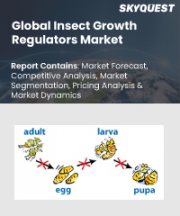
곤충성장조절제(IGR)는 청소년 호르몬의 작용을 모방하거나 억제하여 해충의 성장과 발달을 억제하는 살충제의 일종으로, 탈피 과정을 억제하여 유충이 성충이 되는 것을 막거나 생존 가능한 성충의 출현을 억제하는 등 다양한 해충을 방제하는 종합적인 해충 관리 전략에 널리 사용되고 있습니다. 환경의 다양한 해충을 방제하는 종합적인 해충 관리 전략에 널리 사용되고 있습니다.
농업 활동 증가
세계 인구 증가와 식습관의 변화에 따라 식량 생산에 대한 수요가 증가함에 따라 농업 활동은 더욱 확대되고 강화되고 있으며, IGR은 해충의 개체군을 표적화하여 해충의 피해를 최소화하고 환경에 미치는 영향을 줄이면서 기존 살충제에 대한 대안이 될 수 있습니다. 대안이 될 수 있습니다. 또한 종합적인 접근 방식으로 여러 해충 방제 전략을 사용하는 종합적 해충 관리(IPM)의 채택은 IGR에 대한 수요를 더욱 증가시키고 있습니다.
높은 비용
IGR은 표적 해충 방제, 환경 부하 감소 등 많은 이점을 제공하지만, 농가에 따라 초기 투자 및 지속적인 살포 비용이 높을 수 있으며, IGR의 비용에는 제품 개발, 제조, 등록, 유통 등 다양한 요소가 포함될 수 있습니다. 또한 생육 기간 중 반복적으로 살포해야 하기 때문에 전체 비용이 증가하여 시장 확대가 제한될 수 있습니다.
조사 및 기술 발전
IGR 부문의 지속적인 연구와 기술 발전은 보다 효과적이고 표적화된 제품 개발로 이어지고 있습니다. 연구의 발전은 곤충의 생물학 및 생리학에 대한 이해를 높이고 IGR이 표적으로 삼을 수 있는 특정 생애 단계와 과정에 대한 인사이트을 제공했습니다. 또한 기술의 발전으로 IGR의 제형과 전달 메커니즘이 개선되어 보다 사용하기 쉽고 효율적으로 사용할 수 있게 되었습니다. 따라서 이러한 연구와 기술 발전은 시장 수요를 가속화하는 중요한 요인이 되고 있습니다.
규제상 과제
새로운 IGR 제품의 등록 및 승인 절차는 복잡하고 시간이 오래 걸리기 때문에 제조업체는 당국이 정한 엄격한 규제 요건을 충족해야 합니다. 제조업체는 종합적인 연구를 수행하고 IGR 제품의 안전성, 유효성 및 환경 영향에 대한 과학적 증거를 제공해야 합니다. 그러나 이러한 데이터 수집 과정은 비용과 시간이 많이 소요되며, 특히 경영 자원이 부족한 중소기업에게는 큰 부담이 될 수 있습니다. 이러한 규제 요건을 충족하는 것은 제조업체, 특히 중소기업에게 큰 도전이 될 수 있으며, 이로 인해 새로운 IGR 제품 시장 출시가 지연될 수 있습니다.
COVID-19의 영향
COVID-19는 곤충성장조절제(IGR) 시장에 큰 영향을 미쳤습니다. 초기에는 공급망의 혼란과 물류 문제로 인해 IGR 제품의 수급과 유통에 어려움을 겪었습니다. 또한 팬데믹으로 인한 경기 침체는 농가의 재정적 제약으로 이어졌고, 일부 농가는 IGR보다 필수적인 투입물을 우선시하거나 전체 농업 지출을 삭감하기도 했습니다.
키틴 합성 억제제 부문은 예측 기간 중 가장 큰 시장으로 성장할 것으로 예상됩니다.
키틴 합성 억제제 부문은 선택적 작용 방식과 기존 살충제에 비해 비표적 생물과 환경에 미치는 영향이 적다는 점에서 가장 큰 점유율을 차지할 것으로 추정되며, CSI는 흰점박이꽃무지, 애벌레 및 다양한 농업 해충을 포함한 광범위한 해충 방제에 효과적인 대안을 제공하고 내성 발생의 위험을 최소화합니다. 내성 발생의 위험도 최소화할 수 있습니다. 또한 CSI는 종합적 해충 관리(IPM) 접근법과 호환성을 보여 생물학적 방제제, 문화 관행 및 기타 해충 관리 전술과 함께 종합적인 해충 방제 전략에 통합될 수 있습니다.
예측 기간 중 농업 부문의 CAGR이 가장 높을 것으로 예상됩니다.
농업 부문은 예측 기간 중 유리한 성장을 보일 것으로 예상됩니다. 이 화학물질은 곤충의 호르몬 시스템을 표적으로 삼아 곤충의 발육을 억제하고 탈피와 변태를 억제합니다. 기존 살충제와는 달리 선택성이 높고, 유익한 생물과 환경에 대한 위험을 최소화합니다. 또한 모기, 파리, 농작물 해충과 같은 해충을 퇴치하기 위한 종합적인 해충 관리 전략에 일반적으로 사용됩니다. 곤충의 성장과 번식을 방해함으로써 IGR은 생태계에 미치는 영향을 최소화하면서 농업에 효과적이고 지속가능한 해충 방제 솔루션을 제공합니다.
가장 큰 점유율을 차지하는 지역
아시아태평양은 다양한 농업 관행, 기후 조건, 해충 압력으로 인해 예측 기간 중 가장 큰 시장 점유율을 차지했습니다. 환경 지속가능성에 대한 인식이 높아지면서 보다 안전하고 친환경적인 해충 관리 대안으로 전환하고 있으며, 이는 IGR의 채택을 촉진하고 있습니다. 또한 화학 농약 사용을 최소화하면서 농업 생산성을 향상시키려는 정부의 구상은 시장 성장을 더욱 촉진하고 있습니다.
CAGR이 가장 높은 지역 :
북미는 예측 기간 중 수익성 높은 성장을 보일 것으로 예상됩니다. 이 지역은 옥수수, 콩, 면화, 과일과 같은 주요 작물을 포함한 대규모 농업 운영으로 인해 작물 손실을 줄이기 위한 효과적인 해충 관리 솔루션에 대한 요구가 증가하고 있습니다. 또한 전통적인 화학 농약이 환경과 건강에 미치는 영향에 대한 우려와 함께 해충의 확산이 증가함에 따라 IGR과 같은 안전하고 지속가능한 대안으로의 전환이 가속화되고 있습니다.
목차
제1장 주요 요약
제2장 서문
- 개요
- 이해관계자
- 조사 범위
- 조사 방법
- 데이터 마이닝
- 데이터 분석
- 데이터 검증
- 조사 어프로치
- 조사 정보원
- 1차 조사 정보원
- 2차 조사 정보원
- 전제조건
제3장 시장 동향 분석
- 촉진요인
- 억제요인
- 기회
- 위협
- 용도 분석
- 신흥 시장
- COVID-19의 영향
제4장 Porter's Five Forces 분석
- 공급 기업의 교섭력
- 구매자의 교섭력
- 대체품의 위협
- 신규 진출업체의 위협
- 경쟁 기업간 경쟁 관계
제5장 세계의 곤충성장조절제 시장 : 유형별
- 유충호르몬 유사체 및 모방체
- 항소년 호르몬제
- 키틴 합성 저해제
- 에크디손 길항제
- 기타 유형
제6장 세계의 곤충성장조절제 시장 : 곤충 유형별
- 나비목
- 갑충목
- 쌍시목
- 반시목
- 기타 곤충 유형
제7장 세계의 곤충성장조절제 시장 : 형태별
- 액체
- 에어로졸
- 베이트제
제8장 세계의 곤충성장조절제 시장 : 대상 작물별
- 곡류·곡물
- 지방종자·두류
- 과일·채소
- 기타 대상 작물
제9장 세계의 곤충성장조절제 시장 : 용도별
- 가축
- 주택
- 농업
- 원예 작물
- 밭작물
- 잔디·관상식물
- 상업
- 기타 용도
제10장 세계의 곤충성장조절제 시장 : 지역별
- 북미
- 미국
- 캐나다
- 멕시코
- 유럽
- 독일
- 영국
- 이탈리아
- 프랑스
- 스페인
- 기타 유럽
- 아시아태평양
- 일본
- 중국
- 인도
- 호주
- 뉴질랜드
- 한국
- 기타 아시아태평양
- 남미
- 아르헨티나
- 브라질
- 칠레
- 기타 남미
- 중동 및 아프리카
- 사우디아라비아
- 아랍에미리트
- 카타르
- 남아프리카공화국
- 기타 중동 및 아프리카
제11장 주요 발전
- 계약, 파트너십, 협업, 합병사업
- 인수합병
- 신제품 발매
- 사업 확대
- 기타 주요 전략
제12장 기업 프로파일링
- Sumitomo Chemical Co., Ltd.
- DowDupont Inc.
- Adama Agricultural Solutions Ltd.
- Nufarm Limited
- BASF SE
- Bayer AG
- Central Life Sciences
- Syngenta AG
- OHP Inc.
- HELM Agro US, Inc.
- Russell IPM
- Nufarm
- Valent U.S.A. LLC
- McLaughlin Gormley King Co., Inc.
- Control Solutions, Inc.
- Central Garden & Pet Company
According to Stratistics MRC, the Global Insect Growth Regulator Market is accounted for $1054 million in 2023 and is expected to reach $1825 million by 2030 growing at a CAGR of 8.2% during the forecast period. Insect growth regulators (IGRs) are a class of insecticides that disrupt the growth and development of insect pests by mimicking or inhibiting the action of juvenile hormones. IGRs interfere with the molting process, preventing larvae from reaching maturity or inhibiting the emergence of viable adults. IGRs are widely used in integrated pest management strategies to control a variety of insect pests in agricultural, urban, and veterinary settings.
Market Dynamics:
Driver:
Rise in agricultural activities
As global populations expand and dietary preferences evolve, there is an increasing demand for food production, driving agricultural activities to expand and intensify. IGRs offer a viable alternative to conventional pesticides, as they provide targeted control over pest populations while minimizing harm to beneficial organisms and reducing environmental impact. Moreover, the adoption of integrated pest management (IPM) practices, which emphasize the use of multiple pest control strategies in a holistic approach, further drives the demand for IGRs.
Restraint:
High cost
While IGRs offer numerous benefits, including targeted pest control and reduced environmental impact, their initial investment and ongoing application expenses can be prohibitive for some farmers. The cost of IGRs encompasses various factors, including product development, manufacturing, registration, and distribution. Additionally, the need for repeated applications throughout the growing season can contribute to the overall expense, which limits market expansion.
Opportunity:
Advancements in research and technology
Ongoing research and technological advancements in the field of IGRs have led to the development of more effective and targeted products. Advancements in research have led to a better understanding of insect biology and physiology, providing insights into the specific life stages and processes that can be targeted by IGRs. Furthermore, technological advancements have improved the formulation and delivery mechanisms of IGRs, making them more user-friendly and efficient. Therefore, these advancements in research and technology are significant factors in accelerating market demand.
Threat:
Regulatory challenges
The registration and approval process for new IGR products can be complex and time-consuming, requiring manufacturers to meet stringent regulatory requirements set by authorities. Manufacturers need to conduct comprehensive studies and provide scientific evidence on the safety, efficacy, and environmental impact of their IGR products. However, this data collection process can be expensive and time-consuming, particularly for smaller companies with limited resources. Meeting these regulatory requirements can pose challenges for manufacturers, particularly smaller companies, and result in delays in bringing new IGR products to the market.
Covid-19 Impact
The COVID-19 pandemic had a significant impact on the insect growth regulator (IGR) market. Initially, disruptions in supply chains and logistical challenges hampered the availability and distribution of IGR products. Furthermore, the economic downturn caused by the pandemic led to financial constraints among farmers, prompting some to prioritize essential inputs over IGRs or reduce their overall agricultural expenditures.
The chitin synthesis inhibitors segment is expected to be the largest during the forecast period
The chitin synthesis inhibitors segment is estimated to hold the largest share, due to their selective mode of action and reduced impact on non-target organisms and the environment compared to traditional insecticides. They offer an effective alternative for controlling a wide range of insect pests, including beetles, caterpillars, and various agricultural pests, while minimizing the risk of resistance development. Furthermore, CSIs demonstrate compatibility with integrated pest management (IPM) approaches, allowing for their integration into holistic pest control strategies alongside biological control agents, cultural practices, and other pest management tactics.
The agriculture segment is expected to have the highest CAGR during the forecast period
The agriculture segment is anticipated to have lucrative growth during the forecast period. These chemicals disrupt the development of insects by targeting their hormonal systems, inhibiting molting or metamorphosis. Unlike traditional insecticides, they are more selective, posing minimal risk to beneficial organisms and the environment. Moreover, they're commonly used in integrated pest management strategies to control pests like mosquitoes, flies, and agricultural crop pests. By interfering with insect growth and reproduction, IGRs offer effective, sustainable pest control solutions in agriculture while minimizing ecological impacts.
Region with largest share:
Asia Pacific commanded the largest market share during the extrapolated period characterized by a diverse landscape of agricultural practices, climatic conditions, and pest pressures. Increasing awareness regarding environmental sustainability propels the shift towards safer and eco-friendly pest management alternatives, favouring IGRs' uptake. Moreover, government initiatives aimed at enhancing agricultural productivity while minimizing chemical pesticide usage further stimulate market growth.
Region with highest CAGR:
North America is expected to witness profitable growth over the projection period. The region's large-scale agricultural operations, including major crops like corn, soybeans, cotton, and fruits, create a substantial need for effective pest management solutions to mitigate crop losses. Furthermore, the increasing prevalence of insect pests, coupled with concerns over the environmental and health impacts of traditional chemical pesticides, has fuelled the shift towards safer and more sustainable alternatives like IGRs.
Key players in the market
Some of the key players in the Insect Growth Regulator Market include Sumitomo Chemical Co., Ltd., DowDupont Inc., Adama Agricultural Solutions Ltd., Nufarm Limited, BASF SE, Bayer AG, Central Life Sciences, Syngenta AG, OHP Inc., HELM Agro US, Inc., Russell IPM, Nufarm, Valent U.S.A. LLC, McLaughlin Gormley King Co., Inc., Control Solutions, Inc. and Central Garden & Pet Company.
Key Developments:
In February 2024, Syngenta AG and Lavie Bio Ltd., a subsidiary of Evogene Ltd. and a leading ag-biologicals company, announced an agreement for the discovery and development of new biological insecticidal solutions.
In July 2023, Sumitomo Chemical Co., Ltd and Ginkgo Bioworks announced a new program to develop functional chemicals with synthetic biology and expand upon the companies' existing bio manufacturing partnership.
In September 2022, BASF announces innovation partnership with RiKarbon on emollients derived from bio-waste, partnership builds on successful R&D activities of RiKarbon Inc. for new green emollients from bio-waste for personal care formulations
Types Covered:
- Juvenile Hormone Analogs and Mimics
- Anti-Juvenile Hormone Agents
- Chitin Synthesis Inhibitors
- Ecdysone Antagonists
- Other Types
Insect Types Covered:
- Lepidoptera
- Coleoptera
- Diptera
- Hemiptera
- Other Insect Types
Forms Covered:
- Liquid
- Aerosol
- Bait
Target Crops Covered:
- Cereals & Grains
- Oilseeds & Pulses
- Fruits & Vegetables
- Other Target Crops
Applications Covered:
- Livestock
- Residential
- Agriculture
- Commercial
- Other Applications
Regions Covered:
- North America
- US
- Canada
- Mexico
- Europe
- Germany
- UK
- Italy
- France
- Spain
- Rest of Europe
- Asia Pacific
- Japan
- China
- India
- Australia
- New Zealand
- South Korea
- Rest of Asia Pacific
- South America
- Argentina
- Brazil
- Chile
- Rest of South America
- Middle East & Africa
- Saudi Arabia
- UAE
- Qatar
- South Africa
- Rest of Middle East & Africa
What our report offers:
- Market share assessments for the regional and country-level segments
- Strategic recommendations for the new entrants
- Covers Market data for the years 2021, 2022, 2023, 2026, and 2030
- Market Trends (Drivers, Constraints, Opportunities, Threats, Challenges, Investment Opportunities, and recommendations)
- Strategic recommendations in key business segments based on the market estimations
- Competitive landscaping mapping the key common trends
- Company profiling with detailed strategies, financials, and recent developments
- Supply chain trends mapping the latest technological advancements
Free Customization Offerings:
All the customers of this report will be entitled to receive one of the following free customization options:
- Company Profiling
- Comprehensive profiling of additional market players (up to 3)
- SWOT Analysis of key players (up to 3)
- Regional Segmentation
- Market estimations, Forecasts and CAGR of any prominent country as per the client's interest (Note: Depends on feasibility check)
- Competitive Benchmarking
- Benchmarking of key players based on product portfolio, geographical presence, and strategic alliances
Table of Contents
1 Executive Summary
2 Preface
- 2.1 Abstract
- 2.2 Stake Holders
- 2.3 Research Scope
- 2.4 Research Methodology
- 2.4.1 Data Mining
- 2.4.2 Data Analysis
- 2.4.3 Data Validation
- 2.4.4 Research Approach
- 2.5 Research Sources
- 2.5.1 Primary Research Sources
- 2.5.2 Secondary Research Sources
- 2.5.3 Assumptions
3 Market Trend Analysis
- 3.1 Introduction
- 3.2 Drivers
- 3.3 Restraints
- 3.4 Opportunities
- 3.5 Threats
- 3.6 Application Analysis
- 3.7 Emerging Markets
- 3.8 Impact of Covid-19
4 Porters Five Force Analysis
- 4.1 Bargaining power of suppliers
- 4.2 Bargaining power of buyers
- 4.3 Threat of substitutes
- 4.4 Threat of new entrants
- 4.5 Competitive rivalry
5 Global Insect Growth Regulator Market, By Type
- 5.1 Introduction
- 5.2 Juvenile Hormone Analogs and Mimics
- 5.3 Anti-Juvenile Hormone Agents
- 5.4 Chitin Synthesis Inhibitors
- 5.5 Ecdysone Antagonists
- 5.6 Other Types
6 Global Insect Growth Regulator Market, By Insect Type
- 6.1 Introduction
- 6.2 Lepidoptera
- 6.3 Coleoptera
- 6.4 Diptera
- 6.5 Hemiptera
- 6.6 Other Insect Types
7 Global Insect Growth Regulator Market, By Form
- 7.1 Introduction
- 7.2 Liquid
- 7.3 Aerosol
- 7.4 Bait
8 Global Insect Growth Regulator Market, By Target Crop
- 8.1 Introduction
- 8.2 Cereals & Grains
- 8.3 Oilseeds & Pulses
- 8.4 Fruits & Vegetables
- 8.5 Other Target Crops
9 Global Insect Growth Regulator Market, By Application
- 9.1 Introduction
- 9.2 Livestock
- 9.3 Residential
- 9.4 Agriculture
- 9.4.1 Horticultural Crops
- 9.4.2 Field Crops
- 9.4.3 Turf & Ornamentals
- 9.5 Commercial
- 9.6 Other Applications
10 Global Insect Growth Regulator Market, By Geography
- 10.1 Introduction
- 10.2 North America
- 10.2.1 US
- 10.2.2 Canada
- 10.2.3 Mexico
- 10.3 Europe
- 10.3.1 Germany
- 10.3.2 UK
- 10.3.3 Italy
- 10.3.4 France
- 10.3.5 Spain
- 10.3.6 Rest of Europe
- 10.4 Asia Pacific
- 10.4.1 Japan
- 10.4.2 China
- 10.4.3 India
- 10.4.4 Australia
- 10.4.5 New Zealand
- 10.4.6 South Korea
- 10.4.7 Rest of Asia Pacific
- 10.5 South America
- 10.5.1 Argentina
- 10.5.2 Brazil
- 10.5.3 Chile
- 10.5.4 Rest of South America
- 10.6 Middle East & Africa
- 10.6.1 Saudi Arabia
- 10.6.2 UAE
- 10.6.3 Qatar
- 10.6.4 South Africa
- 10.6.5 Rest of Middle East & Africa
11 Key Developments
- 11.1 Agreements, Partnerships, Collaborations and Joint Ventures
- 11.2 Acquisitions & Mergers
- 11.3 New Product Launch
- 11.4 Expansions
- 11.5 Other Key Strategies
12 Company Profiling
- 12.1 Sumitomo Chemical Co., Ltd.
- 12.2 DowDupont Inc.
- 12.3 Adama Agricultural Solutions Ltd.
- 12.4 Nufarm Limited
- 12.5 BASF SE
- 12.6 Bayer AG
- 12.7 Central Life Sciences
- 12.8 Syngenta AG
- 12.9 OHP Inc.
- 12.10 HELM Agro US, Inc.
- 12.11 Russell IPM
- 12.12 Nufarm
- 12.13 Valent U.S.A. LLC
- 12.14 McLaughlin Gormley King Co., Inc.
- 12.15 Control Solutions, Inc.
- 12.16 Central Garden & Pet Company