|
시장보고서
상품코드
1569743
플로우 배터리 예측(-2030년) : 유형별, 재료별, 축전 용량별, 용도별, 지역별 분석Flow Battery Market Forecasts to 2030 - Global Analysis By Type (Redox Flow Battery and Hybrid Flow Battery), Material, Storage Capacity, Application and By Geography |
||||||

Stratistics MRC에 따르면 세계 플로우 배터리 시장은 2024년 2억 9,062만 달러로, 예측 기간 동안 CAGR은 24.2%로 성장하여 2030년까지는 8억 2,829만 달러에 이를 것으로 예측됩니다.
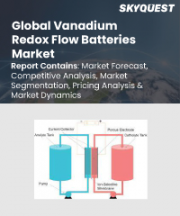
플로우 배터리는 충전식 배터리의 일종이며, 별도의 탱크에 수용된 액체 전해질 용액에 에너지가 저장됩니다. 이러한 전해액은 셀 스택을 통해 펌프로 전달되어 전기화학 반응을 일으켜 전기를 발생시킵니다. 탱크나 셀 스택의 크기를 크게 함으로써 쉽게 스케일 업할 수 있기 때문에 에너지 저장 용량에 유연성이 있습니다. 사이클 수명이 길고 응답 속도가 빠르며 재생 가능 에너지 통합 및 송전망 안정화 등 대규모 에너지 저장 용도에 적합하다고 알려져 있습니다.
Global Landscape of Renewable Energy Finance 2023의 보고서에 따르면 에너지 전환 기술에 대한 세계 투자는 2022년 1조 3,000억 달러에 달했습니다.
태양광 발전과 풍력 발전의 통합 확대
플로우 배터리는 피크시에 발생하는 잉여 에너지를 저장하고, 발전량이 저하되었을 때 방출하는 효과적인 솔루션을 제공하여 안정적이고 신뢰할 수 있는 에너지 공급을 보장합니다. 이 기능은 재생 가능 에너지의 그리드에 대한 통합을 강화하여 보다 실행 가능하고 효율적으로 만듭니다. 신재생에너지 저장에 대한 수요가 높아짐에 따라 확장성과 사이클 수명이 긴 플로우 배터리는 매력적인 선택이 되어 시장의 성장과 보급을 촉진합니다.
복잡성과 유지보수
플로우 배터리의 복잡성과 유지보수의 어려움은 전해질 탱크, 펌프, 셀 스택 등 여러 부품을 포함한 복잡한 설계로 인해 발생합니다. 이러한 시스템의 정기적 인 모니터링 및 유지 관리는 특히 대규모 설치의 경우 효율적인 작동을 보장하는 데 필수적입니다. 부식성이 있는 전해액의 취급과 관리는 복잡성에 박차를 가하고 있습니다. 이러한 요인은 운영 비용을 증가시키고 특히 소규모 애플리케이션과 비용에 중점을 둔 애플리케이션에 대한 확산을 방해하기 때문에 시장 성장을 방해합니다.
송전망 근대화에 대한 대처
송전망의 현대화 구상은 송전망의 신뢰성, 효율, 유연성을 향상시키기 위해 첨단 에너지 저장 기술의 통합을 촉진하는 것입니다. 송전망이 더 높은 재생 가능 에너지 비율을 수용하도록 전환하는 동안, 플로우 배터리는 태양광 및 풍력으로부터의 변동하는 에너지 공급을 안정화하는데 중요한 역할을 합니다. 장기간에 걸쳐 에너지를 저장·방전하는 그 능력은 피크 수요 관리를 지원하고, 변속기의 혼잡을 완화하고, 에너지 안보를 강화합니다. 또한 정부 정책과 스마트 그리드에 대한 투자는 에너지 시스템을 분산시키고 보다 깨끗한 발전을 가능하게 하는 솔루션으로 플로우 배터리를 채택하도록 장려하고 있습니다.
높은 초기 비용
플로우 배터리의 초기 비용은 전해질에 사용되는 고가의 재료(바나듐 등), 시스템 설계의 복잡성, 탱크, 펌프, 셀 스택 등의 대규모 인프라가 필요하기 때문입니다. 이러한 비용은 전통적인 배터리를 상당히 능가하기 때문에 플로우 배터리는 소규모 용도에 그다지 매력적이지 않습니다. 또한, 초기 비용이 높기 때문에 플로우 배터리 기술은 리튬 이온 배터리와 같은 보다 확립된 저비용 대체품과 경쟁하기 어려워 시장 성장을 방해하고 있습니다.
COVID-19의 영향
COVID-19의 대유행은 공급망을 늦추고, 제조를 늦추고, 프로젝트의 설치를 방해함으로써 플로우 배터리 시장을 혼란시켰습니다. 재생가능 에너지와 대규모 에너지 저장과 같은 주요 부문은 규제와 재정적 불확실성으로 인해 일시적인 후퇴에 직면했습니다. 그러나 팬데믹은 특히 탄력적 인 그리드와 재생 가능 에너지의 통합으로 인해 신뢰할 수있는 에너지 저장 솔루션에 대한 관심을 높였습니다. 유행 전후 회복은 보다 깨끗한 에너지와 장기적인 에너지 안보를 요구하는 세계의 움직임에 힘입어 플로우 배터리 기술에 대한 투자를 가속화하고 있습니다.
예측 기간 동안 바나듐 부문이 최대가 될 전망
바나듐 부문이 가장 큰 시장 점유율을 차지할 것으로 추정됩니다. 바나듐 플로우 배터리(VFB)는 다른 산화 상태의 바나듐 이온을 사용하여 에너지를 저장 및 방출하는 첨단 에너지 저장 시스템입니다. 긴 사이클 수명, 확장성, 안전성으로 알려진 VFB는 그리드 에너지 저장 및 재생 가능 에너지 통합과 같은 대규모 용도에 이상적입니다. VFB는 높은 에너지 효율, 빠른 응답 시간, 열화 없이 장기간 방전하는 능력을 제공합니다.
예측기간 동안 에너지 및 전력 분야가 가장 높은 CAGR이 예상됩니다.
에너지 및 전력 분야는 예측 기간 동안 가장 높은 CAGR이 예상됩니다. 플로우 배터리는 신뢰성이 높고 장시간의 에너지 저장 솔루션을 제공함으로써 에너지 및 전력 분야에서 인기를 끌고 있습니다. 대량의 에너지를 장기간 저장할 수 있는 플로우 배터리는 태양광이나 풍력 등의 재생 가능 에너지를 그리드에 통합하는데 이상적입니다. 그 확장성, 긴 사이클 수명, 안전성에 의해 발전·배전 네트워크에 있어서 유틸리티 규모의 에너지 저장에 적합한 선택지가 되고 있습니다.
최대 점유율을 차지하는 지역:
아시아태평양은 신재생에너지, 송전망 현대화, 에너지저장 솔루션에 대한 투자 증가로 예측기간 동안 최대 시장 점유율을 차지할 것으로 예상됩니다. 중국, 일본, 한국과 같은 국가들은 대규모 신재생에너지 통합과 에너지안전을 위해 플로우 배터리를 활용하여 주도하고 있습니다. 정부의 인센티브와 청정에너지 정책에 뒷받침된 이 지역의 지속가능성에 대한 추진은 유틸리티, 산업 용도, 마이크로그리드 등의 분야에서 플로우 배터리의 채용을 촉진하고, 아시아태평양을 플로우 배터리의 전개 그리고 혁신의 중요한 허브로 자리매김하고 있습니다.
CAGR이 가장 높은 지역:
북미는 신재생에너지 통합과 그리드 안정성에 대한 수요 증가로 예측기간 동안 가장 높은 CAGR을 나타낼 것으로 예측됩니다. 미국과 캐나다는 주요 도입국이며 대규모 에너지 저장 프로젝트에 주력함으로써 그리드의 회복력을 높이고 풍력과 햇빛과 같은 간헐적 인 재생 가능 에너지를 지원합니다. 청정에너지 목표와 세제우대조치 등의 정부정책이 유틸리티, 산업, 상업의 각 분야에서 플로우 배터리의 도입을 가속화하고 있습니다. 시장은 또한 에너지 저장 기술의 진보의 혜택을 누리고 있으며, 미래의 에너지 수요를 충족시키기 위해 장기 저장 솔루션을 홍보하고 있습니다.
무료 주문을 받아서 만드는 서비스:
이 보고서를 구독하는 고객은 다음 무료 맞춤설정 옵션 중 하나를 사용할 수 있습니다.
- 기업 프로파일
- 추가 시장 기업의 종합적 프로파일링(3개사까지)
- 주요 기업의 SWOT 분석(3개사까지)
- 지역 세분화
- 고객의 관심에 응한 주요국 시장 추계·예측·CAGR(주: 타당성 확인에 따름)
- 경쟁 벤치마킹
- 제품 포트폴리오, 지리적 존재, 전략적 제휴에 기반한 주요 기업 벤치마킹
목차
제1장 주요 요약
제2장 서문
- 개요
- 이해관계자
- 조사 범위
- 조사 방법
- 데이터 마이닝
- 데이터 분석
- 데이터 검증
- 조사 접근
- 조사 정보원
- 1차 조사 정보원
- 2차 조사 정보원
- 전제조건
제3장 시장 동향 분석
- 성장 촉진요인
- 억제요인
- 기회
- 위협
- 용도 분석
- 신흥 시장
- COVID-19의 영향
제4장 Porter's Five Forces 분석
- 공급기업의 협상력
- 구매자의 협상력
- 대체품의 위협
- 신규 진입업자의 위협
- 경쟁 기업간 경쟁 관계
제5장 세계의 플로우 배터리 시장 : 유형별
- 산화환원 플로우 배터리
- 하이브리드 플로우 배터리
제6장 세계의 플로우 배터리 시장 : 재료별
- 바나듐
- 아연 브롬
- 철 크롬
- 기타 재료
제7장 세계의 플로우 배터리 시장 : 축전 용량별
- 소규모(100kW 이하)
- 중규모(100-500kW)
- 대규모(500kW 이상)
제8장 세계의 플로우 배터리 시장 : 용도별
- 에너지 및 전력
- 상업 및 공업(C&I)
- 자동차
- 통신
- 방어 및 군사
- 기타 용도
제9장 세계의 플로우 배터리 시장 : 지역별
- 북미
- 미국
- 캐나다
- 멕시코
- 유럽
- 독일
- 영국
- 이탈리아
- 프랑스
- 스페인
- 기타 유럽
- 아시아태평양
- 일본
- 중국
- 인도
- 호주
- 뉴질랜드
- 한국
- 기타 아시아태평양
- 남미
- 아르헨티나
- 브라질
- 칠레
- 기타 남미
- 중동 및 아프리카
- 사우디아라비아
- 아랍에미리트(UAE)
- 카타르
- 남아프리카
- 기타 중동 및 아프리카
제10장 주요 발전
- 계약, 파트너십, 협업, 합작 투자
- 인수와 합병
- 신제품 발매
- 사업 확대
- 기타 주요 전략
제11장 기업 프로파일링
- Siemens
- General Electric Vernova Inc.
- Honeywell
- ABB Limited
- Redflow Limited
- Delectrick Systems
- Primus Power
- Vionx Energy Corporation
- Sumitomo Electric Industries, Ltd.
- Largo Clean Energy
- Invinity Energy Systems
- H2, Inc.
- UniEnergy Technologies
- JenaBatteries GmbH
- Lockheed Martin Corporation
- Schmid Group
- CMBlu Energy AG
- Gildemeister Energy Solutions
- EnSync Energy Systems
- CellCube
According to Stratistics MRC, the Global Flow Battery Market is accounted for $290.62 million in 2024 and is expected to reach $828.29 million by 2030 growing at a CAGR of 24.2% during the forecast period. A flow battery is a type of rechargeable battery where energy is stored in liquid electrolyte solutions contained in separate tanks. These electrolytes are pumped through a cell stack, where electrochemical reactions occur to generate electricity. They can be scaled easily by increasing the size of the tanks and cell stacks, offering flexibility in energy storage capacity. They are known for their long cycle life, rapid response times, and suitability for large-scale energy storage applications, such as renewable energy integration and grid stabilization.
According to the Global Landscape of Renewable Energy Finance 2023 report, the global investment in energy transition technologies reached USD 1.3 trillion in 2022.
Market Dynamics:
Driver:
Growing integration of solar and wind power
Flow batteries provide an effective solution for storing excess energy generated during peak production periods and releasing it when generation is low, ensuring a stable and reliable energy supply. This capability enhances the integration of renewables into the grid, making them more viable and efficient. As the demand for renewable energy storage increases, flow batteries, with their scalability and long cycle life, become an attractive option, driving market growth and adoption.
Restraint:
Complexity and maintenance
The complexity and maintenance challenges in flow batteries arise from their intricate design, which involves multiple components like electrolyte tanks, pumps, and cell stacks. Regular monitoring and upkeep of these systems are essential to ensure efficient operation, especially for large-scale installations. Handling and managing the electrolytes, which can be corrosive, add to the complexity. These factors increase operational costs and deter widespread adoption, particularly for smaller-scale or cost-sensitive applications, thereby hampering market growth.
Opportunity:
Grid modernization initiatives
Grid modernization initiatives promote the integration of advanced energy storage technologies to improve grid reliability, efficiency, and flexibility. As grids transition to accommodate higher shares of renewable energy, flow batteries play a key role in stabilizing fluctuating energy supply from solar and wind sources. Their ability to store and discharge energy over long periods supports peak demand management, reduces transmission congestion, and enhances energy security. Additionally, government policies and investments in smart grids encourage the adoption of flow batteries as a solution for decentralizing energy systems and enabling cleaner power generation.
Threat:
High initial costs
High initial costs in flow batteries arise from the expensive materials used for electrolytes (like vanadium), the complexity of the system's design, and the large infrastructure required, including tanks, pumps, and cell stacks. These costs significantly exceed those of conventional batteries, making flow batteries less attractive for smaller-scale applications. Additionally, high upfront costs make it harder for flow battery technologies to compete with more established, lower-cost alternatives like lithium-ion batteries, hampering market growth.
Covid-19 Impact
The covid-19 pandemic disrupted the flow battery market by delaying supply chains, slowing manufacturing, and hindering project installations. Key sectors like renewable energy and large-scale energy storage faced temporary setbacks due to restrictions and financial uncertainties. However, the pandemic also heightened the focus on reliable energy storage solutions, particularly for resilient grids and renewable integration. Post-pandemic recovery has accelerated investments in flow battery technology, driven by a global push for cleaner energy and long-term energy security.
The vanadium segment is expected to be the largest during the forecast period
The vanadium segment is estimated to capture the largest market share. Vanadium flow batteries (VFBs) are advanced energy storage systems that use vanadium ions in different oxidation states to store and release energy. Known for their long cycle life, scalability, and safety, VFBs are ideal for large-scale applications like grid energy storage and renewable integration. They offer high energy efficiency, quick response times, and the ability to discharge for extended periods without degradation.
The energy & power segment is expected to have the highest CAGR during the forecast period
The energy & power segment is anticipated to witness the highest CAGR during the forecast period. Flow batteries are gaining traction in the energy and power sector, offering reliable, and long-duration energy storage solutions. Their ability to store large amounts of energy for extended periods makes them ideal for integrating renewable sources like solar and wind into the grid. Their scalability, long cycle life, and safety features make them a preferred choice for utility-scale energy storage in power generation and distribution networks.
Region with largest share:
Asia Pacific is expected to have the largest market share during the forecast period driven by growing investments in renewable energy, grid modernization, and energy storage solutions. Countries like China, Japan, and South Korea are leading the charge, leveraging flow batteries for large-scale renewable integration and energy security. The region's push toward sustainability, supported by government incentives and clean energy policies, is fostering the adoption of flow batteries in sectors like utilities, industrial applications, and microgrids, positioning Asia-Pacific as a crucial hub for flow battery deployment and innovation.
Region with highest CAGR:
North America is projected to witness the highest CAGR over the forecast period, owing to increasing demand for renewable energy integration and grid stability. The U.S. and Canada are leading adopters, focusing on large-scale energy storage projects to enhance grid resilience and support intermittent renewable sources like wind and solar. Government policies, such as clean energy targets and tax incentives, are accelerating the deployment of flow batteries across utility, industrial, and commercial sectors. The market is also benefiting from advancements in energy storage technology, promoting long-duration storage solutions to meet future energy demands.
Key players in the market
Some of the key players profiled in the Flow Battery Market include Siemens, General Electric Vernova Inc., Honeywell, ABB Limited, Redflow Limited, Delectrick Systems, Primus Power, Vionx Energy Corporation, Sumitomo Electric Industries, Ltd., Largo Clean Energy, Invinity Energy Systems, H2, Inc., UniEnergy Technologies, JenaBatteries GmbH, Lockheed Martin Corporation, Schmid Group, CMBlu Energy AG, Gildemeister Energy Solutions, EnSync Energy Systems, CellCube.
Key Developments:
In September 2024, Indian battery manufacturer Delectrick Systems has launched a new 10MWh vanadium flow battery-based energy storage system (ESS) to support large-scale and utility-scale projects. The 2MW/10MWh 5-hour duration system aims to support large-scale developers by granting a product that provides around 200MWh per acre.
In September 2024, GE Vernova Inc. launched its advanced containerized solution for Battery Enabled Energy Storage (BESS) - the RESTORE DC Block - which offers enhanced safety, efficiency, flexibility, and long-term performance.
Types Covered:
- Redox Flow Battery
- Hybrid Flow Battery
Materials Covered:
- Vanadium
- Zinc-Bromine
- Iron-Chromium
- Other Materials
Storage Capacities Covered:
- Small-scale (Up to 100 kW)
- Medium-scale (100 kW to 500 kW)
- Large-scale (Above 500 kW)
Applications Covered:
- Energy & Power
- Commercial & Industrial (C&I)
- Automotive
- Telecommunications
- Defense & Military
- Other Applications
Regions Covered:
- North America
- US
- Canada
- Mexico
- Europe
- Germany
- UK
- Italy
- France
- Spain
- Rest of Europe
- Asia Pacific
- Japan
- China
- India
- Australia
- New Zealand
- South Korea
- Rest of Asia Pacific
- South America
- Argentina
- Brazil
- Chile
- Rest of South America
- Middle East & Africa
- Saudi Arabia
- UAE
- Qatar
- South Africa
- Rest of Middle East & Africa
What our report offers:
- Market share assessments for the regional and country-level segments
- Strategic recommendations for the new entrants
- Covers Market data for the years 2022, 2023, 2024, 2026, and 2030
- Market Trends (Drivers, Constraints, Opportunities, Threats, Challenges, Investment Opportunities, and recommendations)
- Strategic recommendations in key business segments based on the market estimations
- Competitive landscaping mapping the key common trends
- Company profiling with detailed strategies, financials, and recent developments
- Supply chain trends mapping the latest technological advancements
Free Customization Offerings:
All the customers of this report will be entitled to receive one of the following free customization options:
- Company Profiling
- Comprehensive profiling of additional market players (up to 3)
- SWOT Analysis of key players (up to 3)
- Regional Segmentation
- Market estimations, Forecasts and CAGR of any prominent country as per the client's interest (Note: Depends on feasibility check)
- Competitive Benchmarking
- Benchmarking of key players based on product portfolio, geographical presence, and strategic alliances
Table of Contents
1 Executive Summary
2 Preface
- 2.1 Abstract
- 2.2 Stake Holders
- 2.3 Research Scope
- 2.4 Research Methodology
- 2.4.1 Data Mining
- 2.4.2 Data Analysis
- 2.4.3 Data Validation
- 2.4.4 Research Approach
- 2.5 Research Sources
- 2.5.1 Primary Research Sources
- 2.5.2 Secondary Research Sources
- 2.5.3 Assumptions
3 Market Trend Analysis
- 3.1 Introduction
- 3.2 Drivers
- 3.3 Restraints
- 3.4 Opportunities
- 3.5 Threats
- 3.6 Application Analysis
- 3.7 Emerging Markets
- 3.8 Impact of Covid-19
4 Porters Five Force Analysis
- 4.1 Bargaining power of suppliers
- 4.2 Bargaining power of buyers
- 4.3 Threat of substitutes
- 4.4 Threat of new entrants
- 4.5 Competitive rivalry
5 Global Flow Battery Market, By Type
- 5.1 Introduction
- 5.2 Redox Flow Battery
- 5.3 Hybrid Flow Battery
6 Global Flow Battery Market, By Material
- 6.1 Introduction
- 6.2 Vanadium
- 6.3 Zinc-Bromine
- 6.4 Iron-Chromium
- 6.5 Other Materials
7 Global Flow Battery Market, By Storage Capacity
- 7.1 Introduction
- 7.2 Small-scale (Up to 100 kW)
- 7.3 Medium-scale (100 kW to 500 kW)
- 7.4 Large-scale (Above 500 kW)
8 Global Flow Battery Market, By Application
- 8.1 Introduction
- 8.2 Energy & Power
- 8.3 Commercial & Industrial (C&I)
- 8.4 Automotive
- 8.5 Telecommunications
- 8.6 Defense & Military
- 8.7 Other Applications
9 Global Flow Battery Market, By Geography
- 9.1 Introduction
- 9.2 North America
- 9.2.1 US
- 9.2.2 Canada
- 9.2.3 Mexico
- 9.3 Europe
- 9.3.1 Germany
- 9.3.2 UK
- 9.3.3 Italy
- 9.3.4 France
- 9.3.5 Spain
- 9.3.6 Rest of Europe
- 9.4 Asia Pacific
- 9.4.1 Japan
- 9.4.2 China
- 9.4.3 India
- 9.4.4 Australia
- 9.4.5 New Zealand
- 9.4.6 South Korea
- 9.4.7 Rest of Asia Pacific
- 9.5 South America
- 9.5.1 Argentina
- 9.5.2 Brazil
- 9.5.3 Chile
- 9.5.4 Rest of South America
- 9.6 Middle East & Africa
- 9.6.1 Saudi Arabia
- 9.6.2 UAE
- 9.6.3 Qatar
- 9.6.4 South Africa
- 9.6.5 Rest of Middle East & Africa
10 Key Developments
- 10.1 Agreements, Partnerships, Collaborations and Joint Ventures
- 10.2 Acquisitions & Mergers
- 10.3 New Product Launch
- 10.4 Expansions
- 10.5 Other Key Strategies
11 Company Profiling
- 11.1 Siemens
- 11.2 General Electric Vernova Inc.
- 11.3 Honeywell
- 11.4 ABB Limited
- 11.5 Redflow Limited
- 11.6 Delectrick Systems
- 11.7 Primus Power
- 11.8 Vionx Energy Corporation
- 11.9 Sumitomo Electric Industries, Ltd.
- 11.10 Largo Clean Energy
- 11.11 Invinity Energy Systems
- 11.12 H2, Inc.
- 11.13 UniEnergy Technologies
- 11.14 JenaBatteries GmbH
- 11.15 Lockheed Martin Corporation
- 11.16 Schmid Group
- 11.17 CMBlu Energy AG
- 11.18 Gildemeister Energy Solutions
- 11.19 EnSync Energy Systems
- 11.20 CellCube