|
시장보고서
상품코드
1959968
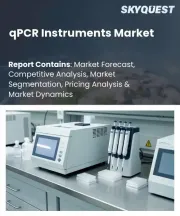
qPCR 기기 시장 - 세계 산업 규모, 점유율, 동향, 기회, 예측 : 시험 유형별, 지역별&경쟁(2021-2031년)qPCR Instruments Market- Global Industry Size, Share, Trends, Opportunity, and Forecast, Segmented By Test Type, By Region & Competition, 2021-2031F |
||||||

세계의 qPCR 기기 시장은 2025년 12억 9,000만 달러에서 2031년까지 19억 4,000만 달러로 성장하고, CAGR 7.04%를 나타낼 것으로 예측됩니다.
본 시장은 열 사이클과 형광 검출을 통합한 고급 분석 플랫폼으로 구성되어 있으며, 핵산을 실시간으로 증폭 및 정량화하여 생명과학 연구 및 임상 진단에 중요한 역할을 하고 있습니다. 이러한 성장을 견인하는 주요 요인으로는 고감도 및 신속한 분자 검사 능력을 필요로 하는 유전성 질환 및 감염성 질환의 전 세계 발생률 증가를 들 수 있습니다. 또한, 유전체 연구에 대한 지속적인 투자와 개인 맞춤형 의료 프로토콜의 광범위한 채택은 이러한 정밀 진단 도구에 대한 지속적인 수요를 뒷받침하는 중요한 축으로 작용하여 일시적인 기술 변화를 넘어 관련성을 보장합니다.
| 시장 개요 | |
|---|---|
| 예측 기간 | 2027-2031년 |
| 시장 규모 : 2025년 | 12억 9,000만 달러 |
| 시장 규모 : 2031년 | 19억 4,000만 달러 |
| CAGR : 2026-2031년 | 7.04% |
| 가장 성장이 빠른 부문 | GeneXpert |
| 최대 시장 | 북미 |
그러나 체외진단제제에 대한 규제 환경이 엄격해짐에 따라 시장은 큰 장벽에 직면해 있습니다. 이에 따라, 장비 제조업체는 무거운 컴플라이언스 책임이 부과되고 있습니다. 이러한 복잡한 요구사항은 특히 전문적 응용 분야에서 운영 비용 증가와 제품 출시 지연을 초래하는 경우가 많습니다. MedTech Europe에 따르면, 2024년 체외진단 제조업체의 26.6%가 이러한 자원을 필요로 하는 표준으로 인해 체외진단 제조업체의 5% 미만을 새로운 규제 프레임워크로 전환할 의향이 있는 것으로 나타났습니다. 결과적으로 이러한 규제 장벽은 혁신적인 검사 솔루션에 대한 접근을 제한하고 더 넓은 시장 성장을 저해할 수 있는 중대한 도전이 되고 있습니다.
시장 성장 촉진요인
세계적으로 감염성 및 유전성 질환의 부담이 증가함에 따라 qPCR 장비의 도입을 촉진하는 주요 요인이 되고 있으며, 정밀하고 신속한 분자진단 플랫폼의 필요성이 증가하고 있습니다. 병원균의 진화와 만성 유전성 질환의 유병률 증가에 따라 임상 실험실은 환자 치료에 필수적인 고감도 검출 및 정량화를 위해 실시간 PCR에 크게 의존하고 있습니다. 세계보건기구(WHO)가 2025년 11월에 업데이트한 '결핵에 관한 주요 사실'에 따르면, 2024년에는 전 세계적으로 약 1,070만 명이 결핵에 감염될 것으로 추정되며, 강력한 진단 인프라 구축의 시급성을 강조하고 있습니다. 이러한 심각한 질병 부담은 적시에 감지하고 효과적인 발병 억제를 보장하기 위해 qPCR 시스템의 지속적인 조달을 필요로 하며, 현대 의학에서 이 기술의 중요성을 확고히 하고 있습니다.
동시에 생명과학 연구에 대한 공공 및 민간 자금의 대폭적인 증가는 차세대 유전체 기술의 발전을 촉진하고 있습니다. 업계 선도 기업들은 시장의 효율성 향상 요구에 직접적으로 대응하기 위해 장비의 자동화, 처리 능력 및 다중화 기능 향상을 위한 연구개발에 많은 투자를 하고 있습니다. 써모피셔 사이언티픽의 2025년 10월에 발표한 '2025년 3분기 실적 보고서'에 따르면, 2025년 9월 30일에 마감된 회계연도의 연구개발비는 총 14억 1,000만 달러에 달하고, 혁신에 대한 지속적인 재정적 노력을 보여주었습니다. 이러한 투자는 시장의 활력을 뒷받침하고 있으며, 경기 변동에도 불구하고 주요 기업들이 견조한 수익을 유지하고 있는 것을 보면 알 수 있습니다. 예를 들어, QIAGEN은 2025년 11월 '2025년 3분기 결산'에서 2025년 9월 30일까지 12개월간 20억 7,000만 달러의 매출을 기록했다고 보고하여 분자 검사 솔루션에 대한 지속적인 수요를 뒷받침하고 있습니다.
시장의 과제
세계 qPCR 기기 시장의 확대는 체외진단을 규제하는 엄격한 법규에 의해 크게 저해되고 있습니다. 이러한 복잡한 컴플라이언스 환경은 제조업체에 막대한 운영상의 부담을 주고 있으며, 기기 인증을 받기 위해서는 방대한 기술 문서와 엄격한 임상 증거를 요구하고 있습니다. 기업은 이러한 높은 기준을 충족시키기 위해 자본과 인력을 재분배해야 하기 때문에 차세대 qPCR 플랫폼의 연구개발에 투입할 수 있는 자원이 줄어들 수밖에 없습니다. 그 결과, 첨단 진단 도구의 출시가 연기되고, 컴플라이언스 비용이 높거나 승인 일정이 불투명한 시장 진입을 주저하는 제조업체들이 점점 더 많아지고 있습니다.
이러한 규제 장벽이 미치는 구체적인 영향은 주요 업계 기업들 시장 진입에 대한 전략적 선택에 반영되어 있습니다. MedTech Europe에 따르면, 2024년 주요 체외진단 제조업체들이 초기 제품 출시의 주요 지역으로 유럽연합(EU)을 선택하는 비율이 이전 규제 체계에 비해 40% 감소할 것으로 예상했습니다. 이러한 추세는 컴플라이언스의 어려움이 신기술의 상용화를 적극적으로 저해하고 있음을 보여줍니다. 이러한 규제는 제품 혁신의 속도를 늦추고 시장 진입 장벽을 만들어 새로운 솔루션의 가용성을 직접적으로 제한하여 qPCR 장비 부문 전체의 성장을 저해하고 있습니다.
시장 동향
각 제조업체들은 응급실, 진료소, 야외 환경 등에서의 분산형 검사를 촉진하기 위해 컴팩트하고 배터리로 구동되는 휴대용 qPCR 장비의 개발을 적극적으로 추진하고 있습니다. 이러한 소형화 추세에 따라 의료진은 진료 현장에서 고도의 분자진단을 실시할 수 있게 되었으며, 기존 중앙집중형 검사실에 비해 결과 보고까지의 시간을 대폭 단축할 수 있게 되었습니다. 이러한 효율화된 시스템의 급속한 보급은 비검사실 환경을 위해 특별히 설계된 플랫폼에 대한 수요 증가로 나타나고 있습니다. 2025년 9월에 발표된 바이오메리외의 '2025 회계연도 상반기 실적 보고서'에 따르면, SPOTFIRE Point-of-Care 시스템의 유기적 매출은 전년 대비 143% 증가하여, 접근 가능한 환자 주변 검사 옵션으로 업계가 강력하게 전환하고 있음을 강조합니다.
동시에 복잡한 병원체 패널과 같은 여러 표적을 단일 반응으로 식별할 필요가 있기 때문에 고다중 다중화 기능이 눈에 띄게 증가했습니다. 검사실에서는 귀중한 환자 검체를 절약하고 진단 효율을 높이기 위해 다수의 채널을 동시에 분석할 수 있는 장비를 선호하고 있으며, 기본적인 단일 표적 분석법을 넘어 진화하고 있습니다. 이러한 종합적인 증후군 검사에 대한 요구는 기업들이 보다 광범위한 검출 메뉴와 높은 채널 수를 통합하여 제품 포트폴리오를 변화시키고 있습니다. 2025년 11월 발표된 QIAGEN의 '2025년 3분기 실적'에 따르면, QIAstat-Dx 증후군 검사 플랫폼의 매출은 환율 변동 영향을 제외하고 11% 증가하여 워크플로우의 생산성을 최적화하는 첨단 다중화 기술에 대한 시장의 강력한 지지를 보여주었습니다. 을 보여주고 있습니다.
자주 묻는 질문
목차
제1장 개요
제2장 조사 방법
제3장 주요 요약
제4장 고객의 소리
제5장 세계의 qPCR 기기 시장 전망
제6장 북미의 qPCR 기기 시장 전망
제7장 유럽의 qPCR 기기 시장 전망
제8장 아시아태평양의 qPCR 기기 시장 전망
제9장 중동 및 아프리카의 qPCR 기기 시장 전망
제10장 남미의 qPCR 기기 시장 전망
제11장 시장 역학
제12장 시장 동향과 발전
제13장 세계의 qPCR 기기 시장 : SWOT 분석
제14장 Porter의 Five Forces 분석
제15장 경쟁 구도
제16장 전략적 제안
제17장 회사 소개 및 면책조항
LSH 26.03.18The Global qPCR Instruments Market is projected to expand from USD 1.29 Billion in 2025 to USD 1.94 Billion by 2031, registering a CAGR of 7.04%. This market consists of sophisticated analytical platforms that integrate thermal cycling with fluorescence detection to amplify and quantify nucleic acids in real-time, serving essential roles in life sciences research and clinical diagnostics. Key factors fueling this growth include the rising global incidence of genetic disorders and infectious diseases, which require high-sensitivity, rapid molecular testing capabilities. Additionally, sustained investment in genomic research and the broader adoption of personalized medicine protocols act as vital pillars supporting the ongoing demand for these precise diagnostic tools, ensuring their relevance beyond temporary technological shifts.
| Market Overview | |
|---|---|
| Forecast Period | 2027-2031 |
| Market Size 2025 | USD 1.29 Billion |
| Market Size 2031 | USD 1.94 Billion |
| CAGR 2026-2031 | 7.04% |
| Fastest Growing Segment | GeneXpert |
| Largest Market | North America |
However, the market encounters substantial obstacles due to an increasingly strict regulatory environment for in vitro diagnostics, which imposes heavy compliance responsibilities on device manufacturers. These complex requirements often increase operational costs and postpone product launches, particularly affecting specialized applications. According to MedTech Europe, in 2024, 26.6% of in vitro diagnostic manufacturers intended to transition less than 5% of their orphan device portfolios to the new regulatory framework because of these resource-demanding standards. Consequently, such regulatory barriers pose a significant challenge that threatens to limit the accessibility of innovative testing solutions and impede broader market growth.
Market Driver
The increasing global burden of infectious diseases and genetic disorders acts as a major catalyst for the adoption of qPCR instruments, driving the need for precise and rapid molecular diagnostic platforms. As pathogens evolve and the prevalence of chronic genetic conditions grows, clinical laboratories depend heavily on real-time PCR for sensitive detection and quantification essential to patient care. According to the World Health Organization's 'Tuberculosis Key Facts' update in November 2025, an estimated 10.7 million people contracted tuberculosis globally in 2024, highlighting the urgent requirement for strong diagnostic infrastructure. This significant disease burden ensures the continued procurement of qPCR systems to guarantee timely detection and effective outbreak control, cementing the technology's importance in modern healthcare.
Simultaneously, substantial increases in public and private funding for life sciences research are stimulating the advancement of next-generation genomic technologies. Industry leaders are investing heavily in research and development to improve instrument automation, throughput, and multiplexing capabilities, directly responding to market needs for greater efficiency. According to Thermo Fisher Scientific's 'Third Quarter 2025 Earnings Release' in October 2025, R&D expenses for the year ending September 30, 2025, totaled $1.41 billion, demonstrating a sustained financial dedication to innovation. This investment supports market vitality, as shown by major players maintaining robust revenues despite economic volatility; for instance, QIAGEN reported in its 'Q3 2025 Results' in November 2025 that revenue for the twelve months ending September 30, 2025, reached $2.07 billion, underscoring persistent demand for molecular testing solutions.
Market Challenge
The expansion of the Global qPCR Instruments Market is heavily hindered by stringent regulatory frameworks governing in vitro diagnostics. This complicated compliance landscape places significant operational demands on manufacturers, necessitating extensive technical documentation and rigorous clinical evidence to achieve device certification. As companies are compelled to reallocate capital and staff to meet these elevated standards, resources meant for the research and development of next-generation qPCR platforms are inevitably diminished. As a result, the launch of advanced diagnostic tools is postponed, and manufacturers are increasingly reluctant to enter markets characterized by high compliance costs or uncertain approval timelines.
The tangible effect of these regulatory obstacles is reflected in the strategic choices major industry players make regarding market entry. According to MedTech Europe, in 2024, large in vitro diagnostic manufacturers indicated a 40% decrease in selecting the European Union as their primary region for initial product launches compared to earlier regulatory systems. This pattern illustrates how compliance difficulties actively deter the commercialization of new technologies. By retarding the speed of product innovation and establishing barriers to market access, these regulations directly limit the availability of novel solutions and suppress the overall growth of the qPCR instruments sector.
Market Trends
Manufacturers are actively pursuing the development of compact, battery-powered, and portable qPCR devices to facilitate decentralized testing in emergency departments, clinics, and field settings. This trend toward miniaturization permits healthcare professionals to perform advanced molecular diagnostics at the point of care, thereby drastically shortening turnaround times relative to conventional centralized laboratories. The swift uptake of these streamlined systems is demonstrated by the rising demand for platforms engineered specifically for non-laboratory contexts. According to bioMerieux's 'First-Half 2025 Financial Results' in September 2025, organic sales for the SPOTFIRE point-of-care system rose by 143% over the prior year, emphasizing the sector's strong shift toward accessible, near-patient testing options.
At the same time, there is a marked increase in high-multiplicity multiplexing capabilities, spurred by the essential need to identify multiple targets, such as complex pathogen panels, within a single reaction. Laboratories are favoring instruments capable of analyzing numerous channels simultaneously to conserve precious patient samples and enhance diagnostic efficiency, advancing beyond basic single-target assays. This requirement for comprehensive syndromic testing is transforming product portfolios as companies incorporate broader detection menus and higher channel counts. According to QIAGEN's 'Q3 2025 Results' in November 2025, sales of the QIAstat-Dx syndromic testing platform increased by 11% at constant exchange rates, indicating a robust market preference for advanced multiplexing technologies that optimize workflow productivity.
Key Market Players
- Thermo Fisher Scientific, Inc.
- F. Hoffmann-La Roche Ltd.
- AstraZeneca Inc.
- Bio-Rad Laboratories, Inc.
- Danaher Corporation
- QIAGEN N.V.
- Agilent Technologies, Inc.
- Abbott Laboratories Inc.
- Azure Biosystems Inc.
- Bio Molecular Systems Pty Ltd
Report Scope
In this report, the Global qPCR Instruments Market has been segmented into the following categories, in addition to the industry trends which have also been detailed below:
qPCR Instruments Market, By Test Type
- 7500
- QuantStudio Dx
- QuantStudio 5
- ViiA 7 Dx
- One Step/One
- Step Plus
- LightCycler 2.0
- Cobas 4800
- CFX96
- SmartCycler
- GeneXpert
- Rotor-Gene Q 5Plex HRM System
- Rotor-Gene Q
- BIOFIRE FILMARRAY SYSTEMS
- BMS Mic System
qPCR Instruments Market, By Region
- North America
- United States
- Canada
- Mexico
- Europe
- France
- United Kingdom
- Italy
- Germany
- Spain
- Asia Pacific
- China
- India
- Japan
- Australia
- South Korea
- South America
- Brazil
- Argentina
- Colombia
- Middle East & Africa
- South Africa
- Saudi Arabia
- UAE
Competitive Landscape
Company Profiles: Detailed analysis of the major companies present in the Global qPCR Instruments Market.
Available Customizations:
Global qPCR Instruments Market report with the given market data, TechSci Research offers customizations according to a company's specific needs. The following customization options are available for the report:
Company Information
- Detailed analysis and profiling of additional market players (up to five).
Table of Contents
1. Product Overview
- 1.1. Market Definition
- 1.2. Scope of the Market
- 1.2.1. Markets Covered
- 1.2.2. Years Considered for Study
- 1.2.3. Key Market Segmentations
2. Research Methodology
- 2.1. Objective of the Study
- 2.2. Baseline Methodology
- 2.3. Key Industry Partners
- 2.4. Major Association and Secondary Sources
- 2.5. Forecasting Methodology
- 2.6. Data Triangulation & Validation
- 2.7. Assumptions and Limitations
3. Executive Summary
- 3.1. Overview of the Market
- 3.2. Overview of Key Market Segmentations
- 3.3. Overview of Key Market Players
- 3.4. Overview of Key Regions/Countries
- 3.5. Overview of Market Drivers, Challenges, Trends
4. Voice of Customer
5. Global qPCR Instruments Market Outlook
- 5.1. Market Size & Forecast
- 5.1.1. By Value
- 5.2. Market Share & Forecast
- 5.2.1. By Test Type (7500, QuantStudio Dx, QuantStudio 5, ViiA 7 Dx, One Step/One, Step Plus, LightCycler 2.0, Cobas 4800, CFX96, SmartCycler, GeneXpert, Rotor-Gene Q 5Plex HRM System, Rotor-Gene Q, BIOFIRE FILMARRAY SYSTEMS, BMS Mic System)
- 5.2.2. By Region
- 5.2.3. By Company (2025)
- 5.3. Market Map
6. North America qPCR Instruments Market Outlook
- 6.1. Market Size & Forecast
- 6.1.1. By Value
- 6.2. Market Share & Forecast
- 6.2.1. By Test Type
- 6.2.2. By Country
- 6.3. North America: Country Analysis
- 6.3.1. United States qPCR Instruments Market Outlook
- 6.3.1.1. Market Size & Forecast
- 6.3.1.1.1. By Value
- 6.3.1.2. Market Share & Forecast
- 6.3.1.2.1. By Test Type
- 6.3.1.1. Market Size & Forecast
- 6.3.2. Canada qPCR Instruments Market Outlook
- 6.3.2.1. Market Size & Forecast
- 6.3.2.1.1. By Value
- 6.3.2.2. Market Share & Forecast
- 6.3.2.2.1. By Test Type
- 6.3.2.1. Market Size & Forecast
- 6.3.3. Mexico qPCR Instruments Market Outlook
- 6.3.3.1. Market Size & Forecast
- 6.3.3.1.1. By Value
- 6.3.3.2. Market Share & Forecast
- 6.3.3.2.1. By Test Type
- 6.3.3.1. Market Size & Forecast
- 6.3.1. United States qPCR Instruments Market Outlook
7. Europe qPCR Instruments Market Outlook
- 7.1. Market Size & Forecast
- 7.1.1. By Value
- 7.2. Market Share & Forecast
- 7.2.1. By Test Type
- 7.2.2. By Country
- 7.3. Europe: Country Analysis
- 7.3.1. Germany qPCR Instruments Market Outlook
- 7.3.1.1. Market Size & Forecast
- 7.3.1.1.1. By Value
- 7.3.1.2. Market Share & Forecast
- 7.3.1.2.1. By Test Type
- 7.3.1.1. Market Size & Forecast
- 7.3.2. France qPCR Instruments Market Outlook
- 7.3.2.1. Market Size & Forecast
- 7.3.2.1.1. By Value
- 7.3.2.2. Market Share & Forecast
- 7.3.2.2.1. By Test Type
- 7.3.2.1. Market Size & Forecast
- 7.3.3. United Kingdom qPCR Instruments Market Outlook
- 7.3.3.1. Market Size & Forecast
- 7.3.3.1.1. By Value
- 7.3.3.2. Market Share & Forecast
- 7.3.3.2.1. By Test Type
- 7.3.3.1. Market Size & Forecast
- 7.3.4. Italy qPCR Instruments Market Outlook
- 7.3.4.1. Market Size & Forecast
- 7.3.4.1.1. By Value
- 7.3.4.2. Market Share & Forecast
- 7.3.4.2.1. By Test Type
- 7.3.4.1. Market Size & Forecast
- 7.3.5. Spain qPCR Instruments Market Outlook
- 7.3.5.1. Market Size & Forecast
- 7.3.5.1.1. By Value
- 7.3.5.2. Market Share & Forecast
- 7.3.5.2.1. By Test Type
- 7.3.5.1. Market Size & Forecast
- 7.3.1. Germany qPCR Instruments Market Outlook
8. Asia Pacific qPCR Instruments Market Outlook
- 8.1. Market Size & Forecast
- 8.1.1. By Value
- 8.2. Market Share & Forecast
- 8.2.1. By Test Type
- 8.2.2. By Country
- 8.3. Asia Pacific: Country Analysis
- 8.3.1. China qPCR Instruments Market Outlook
- 8.3.1.1. Market Size & Forecast
- 8.3.1.1.1. By Value
- 8.3.1.2. Market Share & Forecast
- 8.3.1.2.1. By Test Type
- 8.3.1.1. Market Size & Forecast
- 8.3.2. India qPCR Instruments Market Outlook
- 8.3.2.1. Market Size & Forecast
- 8.3.2.1.1. By Value
- 8.3.2.2. Market Share & Forecast
- 8.3.2.2.1. By Test Type
- 8.3.2.1. Market Size & Forecast
- 8.3.3. Japan qPCR Instruments Market Outlook
- 8.3.3.1. Market Size & Forecast
- 8.3.3.1.1. By Value
- 8.3.3.2. Market Share & Forecast
- 8.3.3.2.1. By Test Type
- 8.3.3.1. Market Size & Forecast
- 8.3.4. South Korea qPCR Instruments Market Outlook
- 8.3.4.1. Market Size & Forecast
- 8.3.4.1.1. By Value
- 8.3.4.2. Market Share & Forecast
- 8.3.4.2.1. By Test Type
- 8.3.4.1. Market Size & Forecast
- 8.3.5. Australia qPCR Instruments Market Outlook
- 8.3.5.1. Market Size & Forecast
- 8.3.5.1.1. By Value
- 8.3.5.2. Market Share & Forecast
- 8.3.5.2.1. By Test Type
- 8.3.5.1. Market Size & Forecast
- 8.3.1. China qPCR Instruments Market Outlook
9. Middle East & Africa qPCR Instruments Market Outlook
- 9.1. Market Size & Forecast
- 9.1.1. By Value
- 9.2. Market Share & Forecast
- 9.2.1. By Test Type
- 9.2.2. By Country
- 9.3. Middle East & Africa: Country Analysis
- 9.3.1. Saudi Arabia qPCR Instruments Market Outlook
- 9.3.1.1. Market Size & Forecast
- 9.3.1.1.1. By Value
- 9.3.1.2. Market Share & Forecast
- 9.3.1.2.1. By Test Type
- 9.3.1.1. Market Size & Forecast
- 9.3.2. UAE qPCR Instruments Market Outlook
- 9.3.2.1. Market Size & Forecast
- 9.3.2.1.1. By Value
- 9.3.2.2. Market Share & Forecast
- 9.3.2.2.1. By Test Type
- 9.3.2.1. Market Size & Forecast
- 9.3.3. South Africa qPCR Instruments Market Outlook
- 9.3.3.1. Market Size & Forecast
- 9.3.3.1.1. By Value
- 9.3.3.2. Market Share & Forecast
- 9.3.3.2.1. By Test Type
- 9.3.3.1. Market Size & Forecast
- 9.3.1. Saudi Arabia qPCR Instruments Market Outlook
10. South America qPCR Instruments Market Outlook
- 10.1. Market Size & Forecast
- 10.1.1. By Value
- 10.2. Market Share & Forecast
- 10.2.1. By Test Type
- 10.2.2. By Country
- 10.3. South America: Country Analysis
- 10.3.1. Brazil qPCR Instruments Market Outlook
- 10.3.1.1. Market Size & Forecast
- 10.3.1.1.1. By Value
- 10.3.1.2. Market Share & Forecast
- 10.3.1.2.1. By Test Type
- 10.3.1.1. Market Size & Forecast
- 10.3.2. Colombia qPCR Instruments Market Outlook
- 10.3.2.1. Market Size & Forecast
- 10.3.2.1.1. By Value
- 10.3.2.2. Market Share & Forecast
- 10.3.2.2.1. By Test Type
- 10.3.2.1. Market Size & Forecast
- 10.3.3. Argentina qPCR Instruments Market Outlook
- 10.3.3.1. Market Size & Forecast
- 10.3.3.1.1. By Value
- 10.3.3.2. Market Share & Forecast
- 10.3.3.2.1. By Test Type
- 10.3.3.1. Market Size & Forecast
- 10.3.1. Brazil qPCR Instruments Market Outlook
11. Market Dynamics
- 11.1. Drivers
- 11.2. Challenges
12. Market Trends & Developments
- 12.1. Merger & Acquisition (If Any)
- 12.2. Product Launches (If Any)
- 12.3. Recent Developments
13. Global qPCR Instruments Market: SWOT Analysis
14. Porter's Five Forces Analysis
- 14.1. Competition in the Industry
- 14.2. Potential of New Entrants
- 14.3. Power of Suppliers
- 14.4. Power of Customers
- 14.5. Threat of Substitute Products
15. Competitive Landscape
- 15.1. Thermo Fisher Scientific, Inc.
- 15.1.1. Business Overview
- 15.1.2. Products & Services
- 15.1.3. Recent Developments
- 15.1.4. Key Personnel
- 15.1.5. SWOT Analysis
- 15.2. F. Hoffmann-La Roche Ltd.
- 15.3. AstraZeneca Inc.
- 15.4. Bio-Rad Laboratories, Inc.
- 15.5. Danaher Corporation
- 15.6. QIAGEN N.V.
- 15.7. Agilent Technologies, Inc.
- 15.8. Abbott Laboratories Inc.
- 15.9. Azure Biosystems Inc.
- 15.10. Bio Molecular Systems Pty Ltd