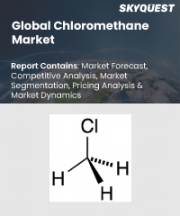
|
시장보고서
상품코드
1624940
염화메틸렌 시장 : 용도별, 최종 사용자별, 지역별(2024-2031년)Methylene Chloride Market By Application (Paint Remover, Pharmaceuticals, Chemical Processing, Foam Manufacturing, Metal Cleaning), End-User (Pharmaceuticals, Chemicals, Metals and Metallurgy), & Region for 2024-2031 |
||||||

염화메틸렌 시장 평가, 2024-2031년
디클로로메탄(DCM)으로 알려진 염화메틸렌은 많은 분야에서 광범위한 용도가 있기 때문에 수요가 높습니다. 광범위한 유기 분자를 용해시키는 능력이 있기 때문에 의약품 및 의료 제품의 제조에 세계의 인구 증가와 만성 질환의 빈도 증가를 배경으로 한 제약 업계의 대두에 의해 효율적인 용제에 대한 수요가 높아져, 염화메틸렌 생산량은 2024년에 9억 6,326만 달러, 2031년에는 13억 3,562만 달러에 이를 전망입니다.
이 시장 확대에는 도시화, 산업화, 인프라 투자 증가가 박차를 가하고 있습니다. 포장에 널리 사용되는 폴리 우레탄 발포체 폼 제조에 이 화합물이 사용됨에 따라 시장 수요가 증가하고 있습니다. 2024년부터 2031년까지 연평균 복합 성장률(CAGR) 4.60%로 시장이 성장함에 따라 다양한 산업용도에서 지속적인 사용이 보장됩니다.
염화메틸렌 시장 정의/개요
염화메틸렌 또는 디클로로메탄(DCM)은 무색의 휘발성 액체이며 부드럽고 쾌적한 냄새가납니다. 염화 메틸렌은 다양한 물질을 용해시키는 능력이 있기 때문에 다양한 산업용도로 널리 이용되고 있습니다.
디클로로메탄(DCM)으로 알려진 염화메틸렌은 그 용매 특성으로부터 폭넓은 용도가 있습니다.주된 용도의 하나는 제조업이나 도료 산업으로, 우수한 도료 박리제·제거제로서 기능합니다. 을 용해하는 능력이 있기 때문에 이 용도에 최적입니다.
그린케미스트리와 지속가능한 실천의 진보는 염화메틸렌의 향후 사용에도 영향을 미칠 것으로 예상됩니다. 바이오 솔벤트와 새로운 화학 공정을 조사하면 환경 및 건강에 미치는 영향을 억제하면서 염화메틸렌의 성능을 유지하거나 향상시키는 실행 가능한 대체 물질이 생길 때 예상됩니다.
제약 산업에서 염화 메틸렌의 사용 증가는 염화 메틸렌 시장을 견인합니까?
제약 산업에서 염화 메틸렌의 사용 증가는 염화 메틸렌 시장의 주요 촉진요인입니다. 보고서에 따르면 미국에서는 제약사업이 염화메틸렌의 약 25%를 소비하고 있습니다.
제네릭 의약품 제조의 대두와 제약 업계의 연구개발 중시의 고조는 염화메틸렌 시장의 큰 촉진요인이 되고 있습니다. 80-90%를 차지하고 있어 다수의 대히트 제품의 특허가 끊어지면 제조가 증가합니다. 이 추세는 제네릭 의약품 제조에 널리 사용되는 염화메틸렌 수요를 높일 것으로 예상됩니다. 투자가 매년 3.5% 증가하고 2022년까지 1,810억 달러에 이를 것으로 예측했습니다.
염화메틸렌의 건강 피해는 염화메틸렌 시장을 방해합니까?
염화메틸렌의 건강 피해는 시장 확대의 큰 장벽이 됩니다.(CDC)에 따르면, 염화 메틸렌에 대한 노출은 두통, 현기증, 메스꺼움, 극단적인 경우 간과 신장에 장해를 일으킬 가능성이 있습니다. 노동안전위생국(OSHA)에 따르면 1980년부터 2018년 사이에 욕조를 닦아내는 동안 염화메틸렌에 노출된 결과 적어도 64명의 근로자가 사망했습니다. 이러한 건강에 대한 우려로 규제 당국에 의한 감시가 강화되어 다양한 용도로의 사용이 제한되게 되었습니다.
환경보호청(EPA)은 염화메틸렌과 관련된 위험성을 줄이기 위한 이니셔티브를 취해 왔습니다. 이 판단은 염화메틸렌가 특정 사용 조건 하에서 사람의 건강에 불합리한 위험을 초래한다고 판단합니다. 또한 유럽 화학 물질청(ECHA)은 염화 메틸렌을 발암 가능성의 높은 우려 화학 물질(SVHC)로 지정하고 있습니다. 우려는 산업계에 안전한 대체품을 요구하도록 촉구하고 염화메틸렌 시장 개척을 제한하는 것으로 보입니다.
목차
제1장 세계의 염화메틸렌 시장 : 소개
- 시장 개요
- 조사 범위
- 전제조건
제2장 주요 요약
제3장 VERIFIED MARKET RESEARCH의 조사 방법
- 데이터 마이닝
- 밸리데이션
- 1차 자료
- 데이터 소스 일람
제4장 세계의 염화메틸렌 시장 전망
- 개요
- 시장 역학
- 성장 촉진요인
- 억제요인
- 기회
- Porter's Five Forces 모델
- 밸류체인 분석
제5장 세계의 염화메틸렌 시장 : 용도별
- 개요
- 도료 제거제
- 의약품
- 화학처리
- 폼 제조
- 금속 세척
- 기타
제6장 세계의 염화메틸렌 시장 : 지역별
- 개요
- 북미
- 미국
- 캐나다
- 멕시코
- 유럽
- 독일
- 영국
- 프랑스
- 기타 유럽
- 아시아태평양
- 중국
- 일본
- 인도
- 기타 아시아태평양
- 세계 기타 지역
- 라틴아메리카
- 중동
제7장 세계의 염화메틸렌 시장 : 경쟁 구도
- 개요
- 각사 시장 랭킹
- 주요 개발 전략
제8장 기업 프로파일
- Shin-Etsu Chemical Co., Ltd.
- Occidental Petroleum Corporation
- Dow
- AkzoNobel NV
- Kem One
- Olin Corporation
- PPG industries, Inc.
- LOTTE Fine chemical
- Gujrat Alkalies and Chemicals Limited.
- Eastman Chemical Company
제9장 부록
- 관련 조사
Methylene Chloride Market Valuation - 2024-2031
Methylene chloride, often known as dichloromethane (DCM) is in high demand due to its wide range of applications in numerous sectors. One of the key factors driving this demand is its usage as a solvent in pharmaceutical manufacturing. The capacity of methylene chloride to dissolve a wide spectrum of organic molecules makes it invaluable in medication and medical product manufacturing. Furthermore, the rise of the pharmaceutical industry driven by an increasing worldwide population and the increased frequency of chronic diseases has increased the demand for efficient solvents boosting methylene chloride production by enabling the market to surpass a revenue of USD 963.26 Million valued in 2024 and reach a valuation of around USD 1335.62 Million by 2031.
This expansion has been spurred by urbanization, industrialization, and increased investments in infrastructure. As a result, the demand for methylene chloride has increased in cycles with the growth of these industries. Furthermore, the compound's application in manufacturing foam-blowing agents for polyurethane foams widely employed in insulation and packaging increases market demand. Despite worries about its environmental and health effects, regulatory agencies have enforced strict limitations to reduce dangers assuring its ongoing use in a variety of industrial uses by enabling the market to grow at aCAGR of 4.60% from 2024 to 2031.
Methylene Chloride Market: Definition/ Overview
Methylene chloride, or dichloromethane (DCM) is a colorless, volatile liquid with a mildly pleasant scent. It is an organic solvent which means that it can dissolve other compounds and form solutions. Methylene chloride is widely utilized in a variety of industrial applications because of its ability to dissolve a wide range of materials. It is a halogenated hydrocarbon which means it has carbon, hydrogen, and chlorine atoms.
Methylene chloride often known as dichloromethane (DCM) has a wide range of applications due to its solvent characteristics. One of its key applications is in the manufacturing and paint industries where it acts as an excellent paint stripper and remover. Its ability to dissolve a diverse spectrum of chemicals makes it perfect for this use. When applied on a surface, methylene chloride penetrates the paint layers and breaks down the bonds making the paint easy to scrape off.
Advances in green chemistry and sustainable practices are anticipated to have an impact on methylene chloride's future use. As enterprises strive for more ecologically friendly solutions, there will be a determined attempt to replace methylene chloride with less harmful materials. Research into bio-based solvents and new chemical processes is expected to produce viable replacements that retain or even improve methylene chloride's performance features while lowering environmental and health consequences.
What's inside a VMR industry report?
Our reports include actionable data and forward-looking analysis that help you craft pitches, create business plans, build presentations and write proposals.
Will the Increasing Use of Methylene Chloride in the Pharmaceutical Industry Drive the Methylene Chloride Market?
The increasing use of methylene chloride in the pharmaceutical industry is a major driver of the methylene chloride market. This solvent is essential for a variety of pharmaceutical operations including drug formulation, extraction, and reaction medium. According to a report from the United States Environmental Protection Agency (EPA), the pharmaceutical business consumes around 25% of methylene chloride in the United States. This widespread use is primarily owing to methylene chloride's ability to extract and purify active pharmaceutical ingredients (APIs).
The rise of generic medicine manufacture as well as the pharmaceutical industry's increased emphasis on research and development are significant drivers of the methylene chloride market. The World Health Organization (WHO) estimates that generics account for 80-90% of all medications marketed globally with manufacturing anticipated to increase when numerous blockbuster product patents expire. This trend is projected to enhance demand for methylene chloride which is widely used in generic medication manufacture. Furthermore, the National Institutes of Health (NIH) estimates a 3.5% yearly rise in global pharmaceutical R&D investment which will reach USD 181 Billion by 2022.
Will the Health Effects of Methylene Chloride Hamper the Methylene Chloride Market?
The health hazards of methylene chloride constitute considerable barriers to the market's expansion. The US National Institute for Occupational Safety and Health (NIOSH) classifies methylene chloride commonly known as dichloromethane as a possible occupational carcinogen. According to the Centers for Disease Control and Prevention (CDC), methylene chloride exposure can result in headaches, dizziness, nausea, and, in extreme cases, liver and kidney damage. According to the Occupational Safety and Health Administration (OSHA), at least 64 workers died between 1980 and 2018 as a result of methylene chloride exposure during bathtub refinishing operations. These health concerns have prompted increased regulatory scrutiny and limitations on its use in a variety of applications.
The Environmental Protection Agency (EPA) has taken initiatives to reduce the dangers connected with methylene chloride. In 2019, the EPA prohibited the retail sale of methylene chloride as a consumer paint and coating remover agent. This judgment was based on a risk assessment that determined that methylene chloride causes unreasonable hazards to human health under specific conditions of usage. The European Chemicals Agency (ECHA) has also designated methylene chloride as a chemical of very high concern (SVHC) due to its carcinogenic potential. These regulatory efforts and health concerns are likely to encourage industries to seek safer alternatives, thereby limiting market development for methylene chloride.
Category-Wise Acumens
Will Versatility and Cost-Effectiveness of Methylene Chloride Drive Growth in the Application Segment?
Methylene chloride is most commonly used in paint removers because of its excellent ability to dissolve and strip various coatings and paints. This compound's strong solvent qualities make it ideal for removing paint from surfaces such as wood, metal, and stone. Its ability to penetrate and break down numerous layers of paint in a short period while inflicting minimal damage to the underlying surface has solidified its position as the preferred solvent in the paint removal business.
Methylene chloride's flexibility and cost-effectiveness contribute to its dominant position in the paint remover market. It can be used in a variety of formulations such as gels, liquids, and sprays making it suitable for a wide range of application methods and surfaces. This versatility combined with its low cost compared to other solvents makes it a popular choice for both large-scale industrial applications and smaller, do-it-yourself projects. However, its continued dominance is threatened by governmental constraints designed to reduce health concerns. Because of its toxicity and probable carcinogenic consequences, the United States Environmental Protection Agency (EPA) and other regulatory organizations have put limitations and bans on the sale of methylene chloride-based paint strippers to consumers.
Will the Quality Standards and the Need for Precise Chemical Reactions Drive the End User Segment?
The pharmaceutical industry is the primary end user driven by its vital role as a solvent in the manufacture of numerous drugs. Because of its ability to dissolve a wide spectrum of organic molecules, methylene chloride is extremely useful in pharmaceutical manufacturing. It is used to extract and purify active pharmaceutical ingredients (APIs) which aids in the manufacturing of high-purity medications. This compound's volatility and low boiling point allow for fast recovery and recycling in manufacturing processes making it cost-effective for pharmaceutical businesses. Furthermore, the solvent qualities of methylene chloride are vital in the production of antibiotics, steroids, and vitamins all of which are in high demand around the world. The pharmaceutical industry's continuing growth is spurred by the increasing frequency of chronic diseases, aging populations, and the constant need for new and effective
The pharmaceutical industry's strict quality standards and the need for exact chemical reactions reinforce methylene chloride's supremacy. The compound's stability and compatibility with numerous chemical processes make it essential for reaching the required purity and potency in pharmaceuticals. Regulatory regulations, while tight, have not completely prevented its usage in pharmaceuticals due to a dearth of comparably effective alternatives. This regulatory balance enables pharmaceutical companies to continue using methylene chloride for efficient drug manufacture while following safety standards to reduce health hazards.
Country/Region-wise Acumens
Will Expansion of Construction Activities Drive the Market in the Asia Pacific Region?
The increase in construction activities in the Asia Pacific region is a major driver of the methylene chloride market. This trend is primarily driven by growing urbanization, population expansion, and increased infrastructural investment throughout the region. The construction sector's expansion in Asia Pacific is particularly remarkable with some countries seeing significant development. For example, the Asian Development Bank predicts that infrastructure investments in the region will total USD 1.7 Trillion each year between 2016 and 2030. China, a significant regional participant had its construction industry expand by 2.5% in 2020 despite the global pandemic, according to the National Bureau of Statistics of China.
GlobalData predicts that India's construction industry will develop at a CAGR of 7.1% between 2023 and 2026. These numbers highlight the rapid expansion of construction activity which drives the need for methylene chloride. The solvent is commonly utilized in construction applications such as paint removal, adhesives, and foam blowing for insulation materials. The Japan Paint Manufacturers Association estimated a 3.2% growth in paint and coating production in 2021 implying rising demand for associated chemicals such as methylene chloride. Additionally, the Australian Bureau of Statistics reported a 2.4% increase in construction work completed in the December quarter of 2021 indicating sustained expansion in the sector.
Will the Stringent Regulatory Framework and Environmental Policies Drive the Market in the North American Region?
The strict regulatory framework and environmental laws are pushing the methylene chloride market in North America with the United States leading the way. This is mostly due to an increased emphasis on worker safety and environmental preservation which has resulted in increasingly stringent laws governing the use of methylene chloride in a variety of industries.
The US Environmental Protection Agency (EPA) has been at the forefront of these regulatory initiatives. In 2019, the EPA prohibited the use of methylene chloride in consumer paint and coating remover solutions citing significant health concerns. According to the EPA, this prohibition is estimated to prevent more than 40 deaths from acute methylene chloride exposure each year.
Furthermore, the California Air Resources Board (CARB) has imposed higher volatile organic compound (VOC) regulations affecting the usage of methylene chloride in a variety of applications. As a result of these laws, the market has shifted to alternate solvents and technologies. According to the US Department of Labor, industries are progressively using safer replacements or altering procedures to decrease their exposure to methylene chloride. For example, the furniture stripping sector which was historically a significant user of methylene chloride has reduced its use by 70% since stronger controls were implemented. Furthermore, the National Institute for Occupational Safety and Health (NIOSH) reports a 35% decrease in methylene chloride-related occupational occurrences over the past decade illustrating the effectiveness of these regulatory measures in enhancing worker safety.
Competitive Landscape
The Methylene Chloride Market is a dynamic and competitive space, characterized by a diverse range of players vying for market share. These players are on the run for solidifying their presence through the adoption of strategic plans such as collaborations, mergers, acquisitions, and political support. The organizations are focusing on innovating their product line to serve the vast population in diverse regions.
Some of the prominent players operating in the methylene chloride market include:
AkzoNobel N.V.
Dow Chemical Company
Eastman Chemical Company
Ercros S.A.
Gujarat Alkalies & Chemicals Ltd.
Ineos Group
KEM ONE
LOTTE Fine chemical
Occidental Petroleum Corporation
Olin Corporation
PPG Industries, Inc.
Shin-Etsu Chemical Co. Ltd.
Solvay S.A.
Tokuyama Corporation
MC Chemicals Ltd
Others
Latest Developments
In July 2022, Eco Safety bought Soy Technologies to develop its biobased coatings and methylene chloride alternatives.
In December 2022, Ardena stated that its manufacturing capacity at the Pamplona location in Spain would be upgraded. The upgrades will allow the facility to manufacture utilizing a variety of organic solvents, such as dichloromethane (commonly known as methylene chloride) and chloroform, handle a wider range of moisture-sensitive compounds, and increase yields.
TABLE OF CONTENTS
1 INTRODUCTION OF GLOBAL METHYLENE CHLORIDE
- 1.1 Overview of the Market
- 1.2 Scope of Report
- 1.3 Assumptions
2 EXECUTIVE SUMMARY
3 RESEARCH METHODOLOGY OF VERIFIED MARKET RESEARCH
- 3.1 Data Mining
- 3.2 Validation
- 3.3 Primary Interviews
- 3.4 List of Data Sources
4 GLOBAL METHYLENE CHLORIDE OUTLOOK
- 4.1 Overview
- 4.2 Market Dynamics
- 4.2.1 Drivers
- 4.2.2 Restraints
- 4.2.3 Opportunities
- 4.3 Porters Five Force Model
- 4.4 Value Chain Analysis
5 GLOBAL METHYLENE CHLORIDE, BY APPLICATION
- 5.1 Overview
- 5.2 Paint Remover
- 5.3 Pharmaceuticals
- 5.4 Chemical Processing
- 5.5 Foam Manufacturing
- 5.6 Metal Cleaning
- 5.7 Others
6 GLOBAL METHYLENE CHLORIDE, BY GEOGRAPHY
- 6.1 Overview
- 6.2 North America
- 6.2.1 U.S.
- 6.2.2 Canada
- 6.2.3 Mexico
- 6.3 Europe
- 6.3.1 Germany
- 6.3.2 U.K.
- 6.3.3 France
- 6.3.4 Rest of Europe
- 6.4 Asia Pacific
- 6.4.1 China
- 6.4.2 Japan
- 6.4.3 India
- 6.4.4 Rest of Asia Pacific
- 6.5 Rest of the World
- 6.5.1 Latin America
- 6.5.2 Middle East
7 GLOBAL METHYLENE CHLORIDE COMPETITIVE LANDSCAPE
- 7.1 Overview
- 7.2 Company Market Ranking
- 7.3 Key Development Strategies
8 COMPANY PROFILES
- 8.1 Shin-Etsu Chemical Co., Ltd.
- 8.1.1 Overview
- 8.1.2 Financial Performance
- 8.1.3 Product Outlook
- 8.1.4 Key Developments
- 8.2 Occidental Petroleum Corporation
- 8.2.1 Overview
- 8.2.2 Financial Performance
- 8.2.3 Product Outlook
- 8.2.4 Key Developments
- 8.3 Dow
- 8.3.1 Overview
- 8.3.2 Financial Performance
- 8.3.3 Product Outlook
- 8.3.4 Key Developments
- 8.4 AkzoNobel N.V.
- 8.4.1 Overview
- 8.4.2 Financial Performance
- 8.4.3 Product Outlook
- 8.4.4 Key Developments
- 8.5 Kem One
- 8.5.1 Overview
- 8.5.2 Financial Performance
- 8.5.3 Product Outlook
- 8.5.4 Key Developments
- 8.6 Olin Corporation
- 8.6.1 Overview
- 8.6.2 Financial Performance
- 8.6.3 Product Outlook
- 8.6.4 Key Developments
- 8.7 PPG industries, Inc.
- 8.7.1 Overview
- 8.7.2 Financial Performance
- 8.7.3 Product Outlook
- 8.7.4 Key Developments
- 8.8 LOTTE Fine chemical
- 8.8.1 Overview
- 8.8.2 Financial Performance
- 8.8.3 Product Outlook
- 8.8.4 Key Developments
- 8.9 Gujrat Alkalies and Chemicals Limited.
- 8.9.1 Overview
- 8.9.2 Financial Performance
- 8.9.3 Product Outlook
- 8.9.4 Key Developments
- 8.10 Eastman Chemical Company
- 8.10.1 Overview
- 8.10.2 Financial Performance
- 8.10.3 Product Outlook
- 8.10.4 Key Developments
9 Appendix
- 9.1 Related Research