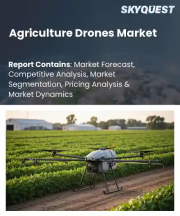
|
시장보고서
상품코드
2023459
농업용 드론 시장 분석 및 예측(-2035년) : 유형, 제품 유형, 서비스, 기술, 구성부품, 용도, 프로세스, 도입, 최종사용자, 솔루션Agricultural Drones Market Analysis and Forecast to 2035: Type, Product, Services, Technology, Component, Application, Process, Deployment, End User, Solutions |
||||||

세계의 농업용 드론 시장은 2025년 27억 달러에서 2035년까지 399억 달러로 성장하며, CAGR은 30.7%에 달할 것으로 예측됩니다. 이러한 성장은 정밀농업의 보급 확대, 드론 기술의 발전, 작물 수확량 향상과 비용 절감을 위한 효율적인 농업 솔루션에 대한 수요 증가에 힘입어 성장세를 보이고 있습니다. 농업용 드론 시장은 적당히 통합된 구조를 특징으로 하며, 주요 부문인 하드웨어(드론)가 시장 점유율의 약 55%를 차지하고, 소프트웨어 및 서비스가 45%를 차지합니다. 주요 용도는 작물 모니터링, 토양 분석, 관개 관리 등입니다. 정밀농업의 발전과 효율적인 농장 관리 솔루션에 대한 수요에 힘입어 시장에서 드론의 도입이 꾸준히 증가하고 있습니다.
경쟁구도는 글로벌 기업과 지역 기업이 혼재되어 있으며, DJI, Parrot, AeroVironment 등 주요 기업이 시장을 주도하고 있습니다. 드론의 기능 강화를 위해 AI와 머신러닝에 많은 투자가 이루어지고 있으며, 혁신이 활발하게 이루어지고 있습니다. 각 사가 기술력과 사업영역의 확장을 위해 인수합병과 전략적 제휴가 활발히 이루어지고 있습니다. 또한 최종사용자의 의사결정 과정을 강화하는 측면에서 드론을 IoT 및 데이터 분석 플랫폼과 통합하는 추세도 눈에 띕니다.
농업용 드론 시장에서 '유형' 부문은 주로 고정익, 회전익, 하이브리드 드론으로 분류됩니다. 회전익 드론은 기동성과 호버링 능력으로 시장을 독점하고 있으며, 살포 및 모니터링 등 정밀농업 업무에 적합합니다. 고정익 드론은 비행시간이 길기 때문에 대규모 측량이나 매핑에 선호되고 있습니다. 하이브리드형은 두 가지 유형의 장점을 결합하여 다양한 농업용도에 대응할 수 있는 다용도성을 제공하므로 주목받고 있습니다.
'기술' 부문에는 하드웨어, 소프트웨어, 서비스가 포함되며, 하드웨어가 주요 하위 부문으로 분류됩니다. 이는 데이터 수집 및 분석을 향상시키는 센서와 GPS 시스템의 개선 등 드론 기술의 지속적인 발전으로 인한 것입니다. 소프트웨어 솔루션도 중요하며, 데이터 처리와 농가에 실용적인 지식을 제공할 수 있는 소프트웨어 솔루션도 중요합니다. 농업 경영자들이 농법 최적화를 위해 드론 운영과 데이터 분석을 외부에 의뢰하는 사례가 늘어나면서 서비스 부문이 확대되고 있습니다.
'용도'는 작물 모니터링, 토양 분석, 관개 관리, 정밀농업을 포괄하는 주요 부문입니다. 작물 모니터링은 드론이 작물의 건강 상태와 성장 패턴에 대한 실시간 데이터를 제공하여 적시에 개입할 수 있도록 함으로써 시장을 주도하고 있습니다. 또한 드론이 투입물의 표적 살포가 용이해져 낭비를 줄이고 수확량을 향상시키는 정밀농업도 중요한 촉진요인이 되고 있습니다. 효율적인 자원 관리와 지속가능한 농업 관행에 대한 요구가 증가함에 따라 모든 응용 분야에서 수요가 증가하고 있습니다.
'최종사용자' 부문에서는 대규모 상업용 농장과 농업 협동조합이 농업용 드론의 주요 사용자가 되고 있습니다. 이들 조직은 규모의 경제의 혜택을 누리고 있으며, 첨단 드론 기술에 투자할 수 있는 자원을 보유하고 있습니다. 중소규모 농장에서도 비용 효율적인 솔루션의 보급과 생산성 향상에 대한 필요성에 힘입어 드론 도입이 확대되고 있습니다. 스마트 농업 및 농업 분야에서의 기술 도입을 촉진하기 위한 정부의 노력은 다양한 최종사용자 카테고리에서 시장의 성장을 더욱 촉진하고 있습니다.
'부품' 부문에는 프레임, 추진 시스템, 카메라, 내비게이션 시스템, 배터리 등이 포함되며, 그 중 카메라와 내비게이션 시스템이 가장 중요한 부품으로 꼽힙니다. 고해상도 카메라와 첨단 영상 기술은 정확한 데이터 수집 및 분석에 필수적이며, 신뢰할 수 있는 내비게이션 시스템은 정확한 비행 경로와 데이터의 정확성을 보장합니다. 배터리 기술의 혁신은 비행시간 연장과 운영 효율성 향상으로 이어지기 때문에 매우 중요합니다. 가볍고 내구성이 뛰어난 소재의 개발이 진행되어 드론 부품의 성능과 수명이 향상되고 있습니다.
지역별 개요
북미: 북미의 농업용 드론 시장은 첨단 기술 도입과 정밀농업에 대한 막대한 투자에 힘입어 매우 성숙한 시장입니다. 미국이 주요 시장을 차지하고 있으며, 대규모 농업 경영에서 수확량과 효율성을 향상시키기 위해 드론이 널리 활용되고 있습니다. 캐나다도 정부의 스마트 농업 기술 추진 노력에 힘입어 괄목할 만한 성장을 보이고 있습니다.
유럽: 유럽의 시장 성숙도는 중간 정도이며, 독일, 프랑스, 네덜란드 등의 국가에서 농업용 드론 도입이 진행되고 있습니다. 수요는 이 지역의 지속가능한 농업 관행에 대한 강조와 농업 생산성을 최적화해야 할 필요성에 의해 주도되고 있습니다. 공동농업정책(CAP)도 농업에 대한 기술 통합을 더욱 촉진하고 있습니다.
아시아태평양: 아시아태평양에서는 중국과 인도의 광활한 농지를 배경으로 농업용 드론 시장이 빠르게 성장하고 있습니다. 이들 국가는 식량안보 문제를 해결하고 작물 관리를 개선하기 위해 드론 기술에 투자하고 있습니다. 일본과 한국도 정밀농업을 위한 첨단 기술을 활용하여 크게 기여하고 있습니다.
라틴아메리카: 라틴아메리카 시장은 신흥 단계에 있으며, 브라질과 아르헨티나가 농업용 드론 도입을 주도하고 있습니다. 이들 국가들은 대규모 농업 경영에서 작물 수확량과 효율성 향상에 초점을 맞추고 있습니다. 이 지역의 농산물 수출은 드론 기술을 포함한 혁신적인 농업 솔루션에 대한 수요를 촉진하고 있습니다.
중동 및 아프리카: 중동 및 아프리카의 농업용 드론 시장은 초기 단계에 있으며, 남아프리카와 이스라엘이 눈에 띄게 기여하고 있습니다. 이 지역에서는 농업 생산성 향상과 물 부족 문제 해결에 중점을 두고 있으며, 이로 인해 드론 기술에 대한 관심이 높아지고 있습니다. 정부 주도의 노력과 기술 제공업체와의 제휴는 시장 성장을 촉진할 것으로 예상됩니다.
주요 동향 및 촉진요인
AI와 머신러닝의 통합
농업용 드론 시장에서는 데이터 분석 능력을 강화하기 위해 인공지능(AI)과 머신러닝의 활용이 점점 더 활발해지고 있습니다. 이러한 기술을 통해 드론은 밭에서 수집한 방대한 데이터를 처리할 수 있으며, 농가에 작물의 건강 상태, 해충 발생 상황, 최적의 관개 일정에 대한 실용적인 정보를 제공할 수 있습니다. 농업의 과제를 실시간으로 예측하고 대응할 수 있는 능력이 AI 탑재 드론의 도입을 촉진하고 있습니다. 이는 기존 방식으로는 구현할 수 없는 정확성과 효율성을 제공하기 위함입니다.
규제 지원 및 프레임워크
세계 각국 정부는 농업 분야에서 드론의 안전하고 효율적인 활용을 촉진하기 위해 지원적인 규제 프레임워크를 마련하고 있습니다. 당국은 안전 기준과 프라이버시 보호를 포함한 드론 운용에 대한 명확한 가이드라인을 설정함으로써 농가의 광범위한 드론 도입을 촉진하고 있습니다. 이러한 규제적 지원은 기업이 새로운 드론 기술을 개발 및 배포할 수 있는 안정적인 환경을 제공하고, 진입장벽을 낮추고 시장내 혁신을 촉진하는 데 있으며, 매우 중요합니다.
센서 기술의 발전
최근 센서 기술의 발전으로 농업용 드론의 능력이 크게 향상되었습니다. 고해상도 카메라, 다중 스펙트럼 센서 및 열화상 기술이 드론에 탑재되어 작물의 상태를 상세하게 모니터링할 수 있습니다. 이 센서는 식물의 건강 상태, 토양 수분 수준, 영양 부족에 대한 중요한 데이터를 제공하여 농가가 자원 배분 및 작물 관리에 대한 정보에 입각한 의사결정을 내릴 수 있도록 돕습니다. 그 결과, 수율 향상과 폐기물 감소로 이어집니다.
정밀농업 보급 확대
정밀농업의 보급은 농업용 드론 시장의 주요 성장 요인입니다. 농가는 물, 비료, 농약 등 투입물을 최적화하고, 밭마다 작물 관리를 수행하기 위해 드론을 점점 더 많이 활용하고 있습니다. 이러한 타겟팅된 접근 방식은 생산성을 높일 뿐만 아니라 환경에 미치는 영향을 최소화하고 지속가능한 농업 관행을 향한 업계 전반의 추세와도 부합합니다. 정밀농업이 주류로 자리 잡으면서 드론 기술에 대한 수요는 증가할 것으로 예상됩니다.
서비스형 드론(Drone-as-a-Service, DaaS) 모델 확장
서비스형 드론(Drone-as-a-Service, DaaS) 비즈니스 모델의 등장은 첨단 드론 기술을 농가가 보다 쉽게 이용할 수 있도록 함으로써 농업용 드론 시장을 변화시키고 있습니다. 이러한 서비스 모델을 통해 농가는 장비에 대한 막대한 초기 투자 없이도 드론의 기능을 활용할 수 있습니다. 드론 운영을 전문 서비스 제공업체에 위탁함으로써 농가는 전문가의 데이터 분석과 지식을 활용할 수 있고, 첨단 기술의 혜택을 누리면서 본업인 농업 활동에 집중할 수 있습니다.
목차
제1장 개요
제2장 시장 하이라이트
제3장 시장 역학
제4장 부문 분석
제5장 지역별 분석
제6장 시장 전략
제7장 경쟁 정보
제8장 기업 개요
제9장 Global Insight Services 소개
KSA 26.05.14The global agricultural drones market is projected to grow from $2.7 billion in 2025 to $39.9 billion by 2035, at a compound annual growth rate (CAGR) of 30.7%. Growth is driven by increasing adoption of precision agriculture, advancements in drone technology, and rising demand for efficient farming solutions to enhance crop yields and reduce costs. The Agricultural Drones Market is characterized by a moderately consolidated structure, with key segments including hardware (drones) accounting for approximately 55% of the market share, followed by software and services at 45%. Leading applications encompass crop monitoring, soil analysis, and irrigation management. The market is witnessing a steady increase in drone installations, driven by advancements in precision agriculture and the need for efficient farm management solutions.
The competitive landscape features a mix of global and regional players, with major companies such as DJI, Parrot, and AeroVironment leading the market. Innovation is high, with significant investments in AI and machine learning to enhance drone capabilities. Mergers and acquisitions, as well as strategic partnerships, are prevalent as companies aim to expand their technological capabilities and geographic reach. The trend towards integrating drones with IoT and data analytics platforms is also notable, as it enhances decision-making processes for end-users.
| Market Segmentation | |
|---|---|
| Type | Fixed-wing Drones, Rotary Blade Drones, Hybrid Drones, Others |
| Product | Hardware, Software, Others |
| Services | Data Processing Services, Maintenance & Support, Training & Consulting, Others |
| Technology | Autonomous Drones, Semi-autonomous Drones, Remote Operated Drones, Others |
| Component | Cameras, Sensors, GPS, Batteries, Motors, Others |
| Application | Crop Monitoring, Soil & Field Analysis, Planting, Irrigation Management, Spraying, Others |
| Process | Data Collection, Data Analysis, Data Management, Others |
| Deployment | Cloud-based, On-premises, Others |
| End User | Farmers, Agricultural Cooperatives, Research Institutions, Others |
| Solutions | Precision Agriculture, Smart Farming Solutions, Others |
In the Agricultural Drones Market, the 'Type' segment is primarily divided into fixed-wing, rotary-wing, and hybrid drones. Rotary-wing drones dominate due to their maneuverability and ability to hover, making them ideal for precision agriculture tasks such as spraying and monitoring. Fixed-wing drones are preferred for large-scale surveying and mapping due to their longer flight times. The hybrid segment is gaining traction as it combines the benefits of both types, offering versatility for various agricultural applications.
The 'Technology' segment includes hardware, software, and services, with hardware being the predominant subsegment. This is driven by the continuous advancements in drone technology, such as improved sensors and GPS systems, which enhance data collection and analysis. Software solutions are also critical, enabling data processing and actionable insights for farmers. The services subsegment is expanding as more agricultural businesses seek outsourced drone operations and data analytics to optimize their farming practices.
'Application' is a key segment, encompassing crop monitoring, soil analysis, irrigation management, and precision agriculture. Crop monitoring leads the market, as drones provide real-time data on crop health and growth patterns, enabling timely interventions. Precision agriculture is also a significant driver, as drones facilitate targeted application of inputs, reducing waste and improving yield. The growing need for efficient resource management and sustainable farming practices is propelling demand across all application areas.
In the 'End User' segment, large-scale commercial farms and agricultural cooperatives are the primary users of agricultural drones. These entities benefit from economies of scale and have the resources to invest in advanced drone technologies. Small and medium-sized farms are increasingly adopting drones, driven by the availability of cost-effective solutions and the need to enhance productivity. Government initiatives promoting smart farming and technological adoption in agriculture are further supporting market growth across diverse end-user categories.
The 'Component' segment includes frames, propulsion systems, cameras, navigation systems, and batteries, with cameras and navigation systems being the most critical components. High-resolution cameras and advanced imaging technologies are essential for accurate data collection and analysis, while reliable navigation systems ensure precise flight paths and data accuracy. Innovations in battery technology are also crucial, as they extend flight times and improve operational efficiency. The ongoing development of lightweight and durable materials is enhancing the performance and longevity of drone components.
Geographical Overview
North America: The agricultural drones market in North America is highly mature, driven by advanced technological adoption and significant investment in precision agriculture. The United States is the primary contributor, with extensive use of drones in large-scale farming operations to enhance yield and efficiency. Canada also shows notable growth, supported by government initiatives promoting smart farming technologies.
Europe: Europe exhibits moderate market maturity, with increasing adoption of agricultural drones in countries like Germany, France, and the Netherlands. The demand is driven by the region's focus on sustainable farming practices and the need to optimize agricultural productivity. The Common Agricultural Policy (CAP) further supports technological integration in farming.
Asia-Pacific: The Asia-Pacific region is experiencing rapid growth in the agricultural drones market, propelled by the vast agricultural landscapes of China and India. These countries are investing in drone technology to address food security challenges and improve crop management. Japan and South Korea also contribute significantly, leveraging advanced technology for precision agriculture.
Latin America: The market in Latin America is emerging, with Brazil and Argentina leading the adoption of agricultural drones. These countries are focusing on enhancing crop yield and efficiency in large-scale farming operations. The region's agricultural exports drive the demand for innovative farming solutions, including drone technology.
Middle East & Africa: The agricultural drones market in the Middle East & Africa is in the nascent stage, with South Africa and Israel being notable contributors. The region's focus on improving agricultural productivity and addressing water scarcity issues is driving interest in drone technology. Government initiatives and partnerships with technology providers are expected to boost market growth.
Key Trends and Drivers
Integration of AI and Machine Learning
The agricultural drones market is increasingly leveraging artificial intelligence (AI) and machine learning to enhance data analytics capabilities. These technologies enable drones to process vast amounts of data collected from fields, providing farmers with actionable insights into crop health, pest infestations, and optimal irrigation schedules. The ability to predict and respond to agricultural challenges in real-time is driving the adoption of AI-powered drones, as they offer precision and efficiency that traditional methods cannot match.
Regulatory Support and Frameworks
Governments worldwide are establishing supportive regulatory frameworks that facilitate the safe and efficient use of drones in agriculture. By setting clear guidelines for drone operations, including safety standards and privacy considerations, authorities are encouraging wider adoption among farmers. This regulatory support is crucial in reducing barriers to entry and fostering innovation within the market, as it provides a stable environment for companies to develop and deploy new drone technologies.
Advancements in Sensor Technology
Recent advancements in sensor technology are significantly enhancing the capabilities of agricultural drones. High-resolution cameras, multispectral sensors, and thermal imaging technologies are being integrated into drones, allowing for detailed monitoring of crop conditions. These sensors provide critical data on plant health, soil moisture levels, and nutrient deficiencies, enabling farmers to make informed decisions about resource allocation and crop management, ultimately leading to improved yields and reduced waste.
Rising Adoption of Precision Agriculture
The adoption of precision agriculture practices is a major growth driver for the agricultural drones market. Farmers are increasingly utilizing drones to implement site-specific crop management, which optimizes inputs such as water, fertilizers, and pesticides. This targeted approach not only enhances productivity but also minimizes environmental impact, aligning with the broader industry trend towards sustainable farming practices. As precision agriculture becomes more mainstream, the demand for drone technology is expected to rise.
Expansion of Drone-as-a-Service (DaaS) Models
The emergence of Drone-as-a-Service (DaaS) business models is transforming the agricultural drones market by making advanced drone technology more accessible to farmers. These service models allow farmers to leverage drone capabilities without the need for significant upfront investment in equipment. By outsourcing drone operations to specialized service providers, farmers can benefit from expert data analysis and insights, enabling them to focus on core farming activities while still reaping the benefits of cutting-edge technology.
Research Scope
- Estimates and forecasts the overall market size across type, application, and region.
- Provides detailed information and key takeaways on qualitative and quantitative trends, dynamics, business framework, competitive landscape, and company profiling.
- Identifies factors influencing market growth and challenges, opportunities, drivers, and restraints.
- Identifies factors that could limit company participation in international markets to help calibrate market share expectations and growth rates.
- Evaluates key development strategies like acquisitions, product launches, mergers, collaborations, business expansions, agreements, partnerships, and R&D activities.
- Analyzes smaller market segments strategically, focusing on their potential, growth patterns, and impact on the overall market.
- Outlines the competitive landscape, assessing business and corporate strategies to monitor and dissect competitive advancements.
Our research scope provides comprehensive market data, insights, and analysis across a variety of critical areas. We cover Local Market Analysis, assessing consumer demographics, purchasing behaviors, and market size within specific regions to identify growth opportunities. Our Local Competition Review offers a detailed evaluation of competitors, including their strengths, weaknesses, and market positioning. We also conduct Local Regulatory Reviews to ensure businesses comply with relevant laws and regulations. Industry Analysis provides an in-depth look at market dynamics, key players, and trends. Additionally, we offer Cross-Segmental Analysis to identify synergies between different market segments, as well as Production-Consumption and Demand-Supply Analysis to optimize supply chain efficiency. Our Import-Export Analysis helps businesses navigate global trade environments by evaluating trade flows and policies. These insights empower clients to make informed strategic decisions, mitigate risks, and capitalize on market opportunities.
TABLE OF CONTENTS
1 Executive Summary
- 1.1 Market Size and Forecast
- 1.2 Market Overview
- 1.3 Market Snapshot
- 1.4 Regional Snapshot
- 1.5 Strategic Recommendations
- 1.6 Analyst Notes
2 Market Highlights
- 2.1 Key Market Highlights by Type
- 2.2 Key Market Highlights by Product
- 2.3 Key Market Highlights by Services
- 2.4 Key Market Highlights by Technology
- 2.5 Key Market Highlights by Component
- 2.6 Key Market Highlights by Application
- 2.7 Key Market Highlights by Process
- 2.8 Key Market Highlights by Deployment
- 2.9 Key Market Highlights by End User
- 2.10 Key Market Highlights by Solutions
3 Market Dynamics
- 3.1 Macroeconomic Analysis
- 3.2 Market Trends
- 3.3 Market Drivers
- 3.4 Market Opportunities
- 3.5 Market Restraints
- 3.6 CAGR Growth Analysis
- 3.7 Impact Analysis
- 3.8 Emerging Markets
- 3.9 Technology Roadmap
- 3.10 Strategic Frameworks
- 3.10.1 PORTER's 5 Forces Model
- 3.10.2 ANSOFF Matrix
- 3.10.3 4P's Model
- 3.10.4 PESTEL Analysis
4 Segment Analysis
- 4.1 Market Size & Forecast by Type (2020-2035)
- 4.1.1 Fixed-wing Drones
- 4.1.2 Rotary Blade Drones
- 4.1.3 Hybrid Drones
- 4.1.4 Others
- 4.2 Market Size & Forecast by Product (2020-2035)
- 4.2.1 Hardware
- 4.2.2 Software
- 4.2.3 Others
- 4.3 Market Size & Forecast by Services (2020-2035)
- 4.3.1 Data Processing Services
- 4.3.2 Maintenance & Support
- 4.3.3 Training & Consulting
- 4.3.4 Others
- 4.4 Market Size & Forecast by Technology (2020-2035)
- 4.4.1 Autonomous Drones
- 4.4.2 Semi-autonomous Drones
- 4.4.3 Remote Operated Drones
- 4.4.4 Others
- 4.5 Market Size & Forecast by Component (2020-2035)
- 4.5.1 Cameras
- 4.5.2 Sensors
- 4.5.3 GPS
- 4.5.4 Batteries
- 4.5.5 Motors
- 4.5.6 Others
- 4.6 Market Size & Forecast by Application (2020-2035)
- 4.6.1 Crop Monitoring
- 4.6.2 Soil & Field Analysis
- 4.6.3 Planting
- 4.6.4 Irrigation Management
- 4.6.5 Spraying
- 4.6.6 Others
- 4.7 Market Size & Forecast by Process (2020-2035)
- 4.7.1 Data Collection
- 4.7.2 Data Analysis
- 4.7.3 Data Management
- 4.7.4 Others
- 4.8 Market Size & Forecast by Deployment (2020-2035)
- 4.8.1 Cloud-based
- 4.8.2 On-premises
- 4.8.3 Others
- 4.9 Market Size & Forecast by End User (2020-2035)
- 4.9.1 Farmers
- 4.9.2 Agricultural Cooperatives
- 4.9.3 Research Institutions
- 4.9.4 Others
- 4.10 Market Size & Forecast by Solutions (2020-2035)
- 4.10.1 Precision Agriculture
- 4.10.2 Smart Farming Solutions
- 4.10.3 Others
5 Regional Analysis
- 5.1 Global Market Overview
- 5.2 North America Market Size (2020-2035)
- 5.2.1 United States
- 5.2.1.1 Type
- 5.2.1.2 Product
- 5.2.1.3 Services
- 5.2.1.4 Technology
- 5.2.1.5 Component
- 5.2.1.6 Application
- 5.2.1.7 Process
- 5.2.1.8 Deployment
- 5.2.1.9 End User
- 5.2.1.10 Solutions
- 5.2.2 Canada
- 5.2.2.1 Type
- 5.2.2.2 Product
- 5.2.2.3 Services
- 5.2.2.4 Technology
- 5.2.2.5 Component
- 5.2.2.6 Application
- 5.2.2.7 Process
- 5.2.2.8 Deployment
- 5.2.2.9 End User
- 5.2.2.10 Solutions
- 5.2.3 Mexico
- 5.2.3.1 Type
- 5.2.3.2 Product
- 5.2.3.3 Services
- 5.2.3.4 Technology
- 5.2.3.5 Component
- 5.2.3.6 Application
- 5.2.3.7 Process
- 5.2.3.8 Deployment
- 5.2.3.9 End User
- 5.2.3.10 Solutions
- 5.2.1 United States
- 5.3 Latin America Market Size (2020-2035)
- 5.3.1 Brazil
- 5.3.1.1 Type
- 5.3.1.2 Product
- 5.3.1.3 Services
- 5.3.1.4 Technology
- 5.3.1.5 Component
- 5.3.1.6 Application
- 5.3.1.7 Process
- 5.3.1.8 Deployment
- 5.3.1.9 End User
- 5.3.1.10 Solutions
- 5.3.2 Argentina
- 5.3.2.1 Type
- 5.3.2.2 Product
- 5.3.2.3 Services
- 5.3.2.4 Technology
- 5.3.2.5 Component
- 5.3.2.6 Application
- 5.3.2.7 Process
- 5.3.2.8 Deployment
- 5.3.2.9 End User
- 5.3.2.10 Solutions
- 5.3.3 Rest of Latin America
- 5.3.3.1 Type
- 5.3.3.2 Product
- 5.3.3.3 Services
- 5.3.3.4 Technology
- 5.3.3.5 Component
- 5.3.3.6 Application
- 5.3.3.7 Process
- 5.3.3.8 Deployment
- 5.3.3.9 End User
- 5.3.3.10 Solutions
- 5.3.1 Brazil
- 5.4 Asia-Pacific Market Size (2020-2035)
- 5.4.1 China
- 5.4.1.1 Type
- 5.4.1.2 Product
- 5.4.1.3 Services
- 5.4.1.4 Technology
- 5.4.1.5 Component
- 5.4.1.6 Application
- 5.4.1.7 Process
- 5.4.1.8 Deployment
- 5.4.1.9 End User
- 5.4.1.10 Solutions
- 5.4.2 India
- 5.4.2.1 Type
- 5.4.2.2 Product
- 5.4.2.3 Services
- 5.4.2.4 Technology
- 5.4.2.5 Component
- 5.4.2.6 Application
- 5.4.2.7 Process
- 5.4.2.8 Deployment
- 5.4.2.9 End User
- 5.4.2.10 Solutions
- 5.4.3 South Korea
- 5.4.3.1 Type
- 5.4.3.2 Product
- 5.4.3.3 Services
- 5.4.3.4 Technology
- 5.4.3.5 Component
- 5.4.3.6 Application
- 5.4.3.7 Process
- 5.4.3.8 Deployment
- 5.4.3.9 End User
- 5.4.3.10 Solutions
- 5.4.4 Japan
- 5.4.4.1 Type
- 5.4.4.2 Product
- 5.4.4.3 Services
- 5.4.4.4 Technology
- 5.4.4.5 Component
- 5.4.4.6 Application
- 5.4.4.7 Process
- 5.4.4.8 Deployment
- 5.4.4.9 End User
- 5.4.4.10 Solutions
- 5.4.5 Australia
- 5.4.5.1 Type
- 5.4.5.2 Product
- 5.4.5.3 Services
- 5.4.5.4 Technology
- 5.4.5.5 Component
- 5.4.5.6 Application
- 5.4.5.7 Process
- 5.4.5.8 Deployment
- 5.4.5.9 End User
- 5.4.5.10 Solutions
- 5.4.6 Taiwan
- 5.4.6.1 Type
- 5.4.6.2 Product
- 5.4.6.3 Services
- 5.4.6.4 Technology
- 5.4.6.5 Component
- 5.4.6.6 Application
- 5.4.6.7 Process
- 5.4.6.8 Deployment
- 5.4.6.9 End User
- 5.4.6.10 Solutions
- 5.4.7 Rest of APAC
- 5.4.7.1 Type
- 5.4.7.2 Product
- 5.4.7.3 Services
- 5.4.7.4 Technology
- 5.4.7.5 Component
- 5.4.7.6 Application
- 5.4.7.7 Process
- 5.4.7.8 Deployment
- 5.4.7.9 End User
- 5.4.7.10 Solutions
- 5.4.1 China
- 5.5 Europe Market Size (2020-2035)
- 5.5.1 Germany
- 5.5.1.1 Type
- 5.5.1.2 Product
- 5.5.1.3 Services
- 5.5.1.4 Technology
- 5.5.1.5 Component
- 5.5.1.6 Application
- 5.5.1.7 Process
- 5.5.1.8 Deployment
- 5.5.1.9 End User
- 5.5.1.10 Solutions
- 5.5.2 France
- 5.5.2.1 Type
- 5.5.2.2 Product
- 5.5.2.3 Services
- 5.5.2.4 Technology
- 5.5.2.5 Component
- 5.5.2.6 Application
- 5.5.2.7 Process
- 5.5.2.8 Deployment
- 5.5.2.9 End User
- 5.5.2.10 Solutions
- 5.5.3 United Kingdom
- 5.5.3.1 Type
- 5.5.3.2 Product
- 5.5.3.3 Services
- 5.5.3.4 Technology
- 5.5.3.5 Component
- 5.5.3.6 Application
- 5.5.3.7 Process
- 5.5.3.8 Deployment
- 5.5.3.9 End User
- 5.5.3.10 Solutions
- 5.5.4 Spain
- 5.5.4.1 Type
- 5.5.4.2 Product
- 5.5.4.3 Services
- 5.5.4.4 Technology
- 5.5.4.5 Component
- 5.5.4.6 Application
- 5.5.4.7 Process
- 5.5.4.8 Deployment
- 5.5.4.9 End User
- 5.5.4.10 Solutions
- 5.5.5 Italy
- 5.5.5.1 Type
- 5.5.5.2 Product
- 5.5.5.3 Services
- 5.5.5.4 Technology
- 5.5.5.5 Component
- 5.5.5.6 Application
- 5.5.5.7 Process
- 5.5.5.8 Deployment
- 5.5.5.9 End User
- 5.5.5.10 Solutions
- 5.5.6 Rest of Europe
- 5.5.6.1 Type
- 5.5.6.2 Product
- 5.5.6.3 Services
- 5.5.6.4 Technology
- 5.5.6.5 Component
- 5.5.6.6 Application
- 5.5.6.7 Process
- 5.5.6.8 Deployment
- 5.5.6.9 End User
- 5.5.6.10 Solutions
- 5.5.1 Germany
- 5.6 Middle East & Africa Market Size (2020-2035)
- 5.6.1 Saudi Arabia
- 5.6.1.1 Type
- 5.6.1.2 Product
- 5.6.1.3 Services
- 5.6.1.4 Technology
- 5.6.1.5 Component
- 5.6.1.6 Application
- 5.6.1.7 Process
- 5.6.1.8 Deployment
- 5.6.1.9 End User
- 5.6.1.10 Solutions
- 5.6.2 United Arab Emirates
- 5.6.2.1 Type
- 5.6.2.2 Product
- 5.6.2.3 Services
- 5.6.2.4 Technology
- 5.6.2.5 Component
- 5.6.2.6 Application
- 5.6.2.7 Process
- 5.6.2.8 Deployment
- 5.6.2.9 End User
- 5.6.2.10 Solutions
- 5.6.3 South Africa
- 5.6.3.1 Type
- 5.6.3.2 Product
- 5.6.3.3 Services
- 5.6.3.4 Technology
- 5.6.3.5 Component
- 5.6.3.6 Application
- 5.6.3.7 Process
- 5.6.3.8 Deployment
- 5.6.3.9 End User
- 5.6.3.10 Solutions
- 5.6.4 Sub-Saharan Africa
- 5.6.4.1 Type
- 5.6.4.2 Product
- 5.6.4.3 Services
- 5.6.4.4 Technology
- 5.6.4.5 Component
- 5.6.4.6 Application
- 5.6.4.7 Process
- 5.6.4.8 Deployment
- 5.6.4.9 End User
- 5.6.4.10 Solutions
- 5.6.5 Rest of MEA
- 5.6.5.1 Type
- 5.6.5.2 Product
- 5.6.5.3 Services
- 5.6.5.4 Technology
- 5.6.5.5 Component
- 5.6.5.6 Application
- 5.6.5.7 Process
- 5.6.5.8 Deployment
- 5.6.5.9 End User
- 5.6.5.10 Solutions
- 5.6.1 Saudi Arabia
6 Market Strategy
- 6.1 Demand-Supply Gap Analysis
- 6.2 Trade & Logistics Constraints
- 6.3 Price-Cost-Margin Trends
- 6.4 Market Penetration
- 6.5 Consumer Analysis
- 6.6 Regulatory Snapshot
7 Competitive Intelligence
- 7.1 Market Positioning
- 7.2 Market Share
- 7.3 Competition Benchmarking
- 7.4 Top Company Strategies
8 Company Profiles
- 8.1 DJI
- 8.1.1 Overview
- 8.1.2 Product Summary
- 8.1.3 Financial Performance
- 8.1.4 SWOT Analysis
- 8.2 Parrot
- 8.2.1 Overview
- 8.2.2 Product Summary
- 8.2.3 Financial Performance
- 8.2.4 SWOT Analysis
- 8.3 Yamaha Motor
- 8.3.1 Overview
- 8.3.2 Product Summary
- 8.3.3 Financial Performance
- 8.3.4 SWOT Analysis
- 8.4 PrecisionHawk
- 8.4.1 Overview
- 8.4.2 Product Summary
- 8.4.3 Financial Performance
- 8.4.4 SWOT Analysis
- 8.5 Trimble
- 8.5.1 Overview
- 8.5.2 Product Summary
- 8.5.3 Financial Performance
- 8.5.4 SWOT Analysis
- 8.6 AeroVironment
- 8.6.1 Overview
- 8.6.2 Product Summary
- 8.6.3 Financial Performance
- 8.6.4 SWOT Analysis
- 8.7 senseFly
- 8.7.1 Overview
- 8.7.2 Product Summary
- 8.7.3 Financial Performance
- 8.7.4 SWOT Analysis
- 8.8 AgEagle Aerial Systems
- 8.8.1 Overview
- 8.8.2 Product Summary
- 8.8.3 Financial Performance
- 8.8.4 SWOT Analysis
- 8.9 Delair
- 8.9.1 Overview
- 8.9.2 Product Summary
- 8.9.3 Financial Performance
- 8.9.4 SWOT Analysis
- 8.10 Sentera
- 8.10.1 Overview
- 8.10.2 Product Summary
- 8.10.3 Financial Performance
- 8.10.4 SWOT Analysis
- 8.11 DroneDeploy
- 8.11.1 Overview
- 8.11.2 Product Summary
- 8.11.3 Financial Performance
- 8.11.4 SWOT Analysis
- 8.12 Skycatch
- 8.12.1 Overview
- 8.12.2 Product Summary
- 8.12.3 Financial Performance
- 8.12.4 SWOT Analysis
- 8.13 Kespry
- 8.13.1 Overview
- 8.13.2 Product Summary
- 8.13.3 Financial Performance
- 8.13.4 SWOT Analysis
- 8.14 Raptor Maps
- 8.14.1 Overview
- 8.14.2 Product Summary
- 8.14.3 Financial Performance
- 8.14.4 SWOT Analysis
- 8.15 XAG
- 8.15.1 Overview
- 8.15.2 Product Summary
- 8.15.3 Financial Performance
- 8.15.4 SWOT Analysis
- 8.16 Microdrones
- 8.16.1 Overview
- 8.16.2 Product Summary
- 8.16.3 Financial Performance
- 8.16.4 SWOT Analysis
- 8.17 Insitu
- 8.17.1 Overview
- 8.17.2 Product Summary
- 8.17.3 Financial Performance
- 8.17.4 SWOT Analysis
- 8.18 Autel Robotics
- 8.18.1 Overview
- 8.18.2 Product Summary
- 8.18.3 Financial Performance
- 8.18.4 SWOT Analysis
- 8.19 FLIR Systems
- 8.19.1 Overview
- 8.19.2 Product Summary
- 8.19.3 Financial Performance
- 8.19.4 SWOT Analysis
- 8.20 Terra Drone
- 8.20.1 Overview
- 8.20.2 Product Summary
- 8.20.3 Financial Performance
- 8.20.4 SWOT Analysis
9 About Us
- 9.1 About Us
- 9.2 Research Methodology
- 9.3 Research Workflow
- 9.4 Consulting Services
- 9.5 Our Clients
- 9.6 Client Testimonials
- 9.7 Contact Us