|
시장보고서
상품코드
1876567
오메가 3 지방산 시장 기회, 성장 촉진요인, 업계 동향 분석 및 예측(2025-2034년)Omega-3 Fatty Acids Market Opportunity, Growth Drivers, Industry Trend Analysis, and Forecast 2025 - 2034 |
||||||

세계의 오메가 3 지방산 시장은 2024년 32억 달러로 평가되었으며, 2034년까지 연평균 복합 성장률(CAGR) 3.6%를 나타내 48억 달러에 이를 것으로 예측됩니다.

오메가 3 지방산의 건강 효과를 강조하는 과학 연구의 축적이 시장 성장의 주요 추진력이 되고 있습니다. EPA 및 DHA에 대한 심사 조사는 40,000건 이상에 이르며, 그 중에는 심혈관·뇌·눈의 건강에 대한 호영향을 확인한 수천건의 임상시험도 포함되어 있습니다. 이러한 지식에 의해 소비자의 인지도는 계속 높아지고 있습니다. 예방 의학과 영양에 대한 일반 의식 증가가 특히 심장과인지 기능의 건강을 목표로 오메가 3 보충제 수요를 뒷받침하고 있습니다. 식음료 제조업체가 베이커리 제품, 유제품, 음료 등의 일상품에 오메가 3 성분을 배합하는 움직임이 퍼지는 가운데, 기능성 식품이나 강화 식품에 대한 관심의 고조가 시장을 한층 더 추진하고 있습니다. 보충제에만 의존하지 않고, 일상 영양 섭취에 오메가 3를 도입하는 경향이 강해짐으로써, 시장 응용 범위가 확대되어, 지역을 불문하고 장기적인 성장 전망이 지지되고 있습니다.
| 시장 범위 | |
|---|---|
| 시작 연도 | 2024년 |
| 예측 기간 | 2025-2034년 |
| 시작 가치 | 32억 달러 |
| 예측 금액 | 48억 달러 |
| CAGR | 3.6% |
조류 유래 오메가 3 부문은 지속 가능하고 식물 유래 원료에 대한 소비자의 강한 관심으로 2034년까지 연평균 복합 성장률(CAGR) 3.9%를 나타낼 것으로 예측됩니다. 미세조류 배양 기술의 급속한 진보와 환경 문제에 대한 인식이 높아지면서이 카테고리의 매력을 높일 수 있습니다. 조류유는 EPA 및 DHA의 보다 깨끗하고 고농도공급원을 제공하여 복용량을 줄일 수 있으며, 기존의 해양 유래 오메가 3 제품에 자주 수반되는 어취 등의 문제를 해소합니다. 이 장점으로 인해 식물 유래 대체품은 영양 보충제와 강화 식품 모두에서 더 큰 지지를 얻고 있습니다.
2024년에는 종합적인 건강유지와 만성질환 예방을 목적으로 한 오메가 3 제품에 대한 소비자의 높은 수용성을 반영하여 일반용 건강식품·영양보조식품이 24%의 점유율을 차지했습니다. 이러한 범주는 소매점과 온라인 채널을 통한 높은 가용성으로 계속 혜택을 받고 있지만, 다른 제네릭 제품 간의 임상적 효능은 여전히 변동을 보입니다. 기능성 식품 및 강화 식품은 시장의 약 16%를 차지하고 있으며, 제조업체가 영양가가 높고 편리한 선택을 요구하는 소비자의 요구에 부응하기 때문에 음료, 베이커리 제품, 유제품에 오메가 3를 배합하는 제품 혁신이 지속적으로 이루어지고 있는 것이 배경에 있습니다.
미국의 오메가 3 지방산 시장은 2024년에 7억 8,130만 달러로 평가되었으며 2034년까지 11억 달러에 이를 것으로 예측됩니다. 북미는 성숙한 시장 환경을 특징으로 하며, 확립된 보충제 소비 습관과 건강·웰빙 효과에 대한 소비자의 의식의 고조가 현저합니다. 미국은 지역 시장을 선도하고 북미 매출의 약 83%를 차지하고 있습니다. 이는 광범위한 소매 유통망, 소비자용 직접 마케팅, 의료 전문가의 추천에 의해 지원되고 있습니다. 미국의 규제 상황은 안정을 유지하고 오메가 3 원료에 대한 FDA(미국 식품의약품국)의 감시와 GRAS(일반적으로 안전하다고 인정됨) 인증을 통해 소비자의 신뢰가 강화되고 있습니다.
세계의 오메가 3 지방산 시장의 주요 기업으로는 DSM-Firmenich, BASF SE, Croda International, Aker BioMarine, Archer Daniels Midland, Cargill, Corbion, Omega Protein Corporation, Epax, KD Pharma Group 등이 있습니다. 오메가 3 지방산 시장의 주요 기업은 시장에서의 지위 강화와 세계 전개 확대를 위한 전략적 이니셔티브를 추진하고 있습니다. 많은 기업들이 해양 자원에 대한 의존도를 줄이기 위해 조류 유래 오메가 3 생산에 투자하여 지속 가능한 조달에 주력하고 있습니다. 또한 고급 정제 기술에 의한 제품 품질 향상과 다양한 소비자 요구에 부응하기 위한 EPA/DHA 농도 수준의 최적화도 진행하고 있습니다. 전략적 합병, 인수 및 제휴를 통해 주요 제조업체는 공급 네트워크를 확대하고 새로운 지역 시장에 진출하고 있습니다.
자주 묻는 질문
목차
제1장 조사 방법과 범위
제2장 주요 요약
제3장 업계 인사이트
- 생태계 분석
- 공급자의 상황
- 이익률
- 각 단계에서의 부가가치
- 밸류체인에 영향을 주는 요인
- 파괴적 혁신
- 업계에 미치는 영향요인
- 성장 촉진요인
- 업계의 잠재적 위험 및 과제
- 시장 기회
- 성장 가능성 분석
- 규제 상황
- 북미
- 유럽
- 아시아태평양
- 라틴아메리카
- 중동 및 아프리카
- Porter's Five Forces 분석
- PESTEL 분석
- 가격 동향
- 지역별
- 향후 시장 동향
- 기술과 혁신 동향
- 현재의 기술 동향
- 신흥기술
- 특허 상황
- 무역 통계(HS코드)(참고 : 무역 통계는 주요 국가에서만 제공됨)
- 주요 수입국
- 주요 수출국
- 지속가능성과 환경면
- 지속가능한 대처
- 폐기물 감축 전략
- 생산에 있어서 에너지 효율
- 환경에 배려한 대처
- 탄소발자국에 관한 고려 사항
제4장 경쟁 구도
- 서론
- 기업의 시장 점유율 분석
- 지역별
- 북미
- 유럽
- 아시아태평양
- 라틴아메리카
- 중동 및 아프리카
- 지역별
- 기업 매트릭스 분석
- 주요 시장 기업의 경쟁 분석
- 경쟁 포지셔닝 매트릭스
- 주요 발전
- 인수 및 합병
- 파트너십 및 협업
- 신제품 발매
- 사업 확장 계획
제5장 시장 규모와 예측 : 제품 유형별(2021-2034년)
- 주요 동향
- 해양 유래 오메가 3
- 어유
- 농축 어유
- 크릴 오일 및 인지질 형태
- 기타
- 조류 유래 오메가 3
- 미세조류 오일
- 발효 유래 EPA 및 DHA
- 식물성 오메가 3(ALA)
- 아마씨유
- 치아씨유
- 기타
- 처방전 오메가 3 의약품
- 농축 및 정제 형태
제6장 시장 규모와 예측 : 용도별(2021-2034년)
- 주요 동향
- 심혈관 건강
- 1차 예방 제품
- 2차 예방 제형
- 혈압 관리
- 부정맥 예방
- 고중성지방혈증 치료
- 중증 고중성지방혈증
- 중등도 고중성지방혈증
- 일반 웰니스 및 식이 보조제
- 일상 영양
- 뇌 건강 및 인지 기능
- 눈 건강 및 시력 지원
- 관절 건강 및 염증
- 기능성 식품 및 강화
- 유제품
- 제빵 및 제과
- 음료 강화
- 육류 및 가금류
- 영유아 및 산모 영양
- 영유아용 조제분유
- 산전 및 산후 보충제
- 소아 영양 제품
- 동물 사료 및 양식업
- 양식 사료
- 반려동물 사료
- 가축 사료
제7장 시장 규모와 예측 : 최종 용도 산업별(2021-2034년)
- 주요 동향
- 제약 업계
- 기능석 식품 및 건강 보조 식품 산업
- 식품 및 음료 산업
- 동물 사료 산업
제8장 시장 규모와 예측 : 지역별(2021-2034년)
- 주요 동향
- 북미
- 미국
- 캐나다
- 유럽
- 영국
- 독일
- 프랑스
- 이탈리아
- 스페인
- 기타 유럽
- 아시아태평양
- 중국
- 인도
- 일본
- 한국
- 호주
- 기타 아시아태평양
- 라틴아메리카
- 브라질
- 멕시코
- 아르헨티나
- 기타 라틴아메리카
- 중동 및 아프리카
- 남아프리카
- 사우디아라비아
- 아랍에미리트(UAE)
- 기타 중동 및 아프리카
제9장 기업 프로파일
- DSM-Firmenich
- BASF SE
- Croda International
- Aker BioMarine
- Archer Daniels Midland
- Cargill
- Corbion
- Omega Protein Corporation
- Epax
- KD Pharma Group
- Polaris Nutritional Lipids
- Solutex
- Veramaris
- Yield10 Bioscience
- AlgaeCytes
- Fermentalg
- Qualitas Health
The Global Omega-3 Fatty Acids Market was valued at USD 3.2 billion in 2024 and is estimated to grow at a CAGR of 3.6% to reach USD 4.8 billion by 2034.
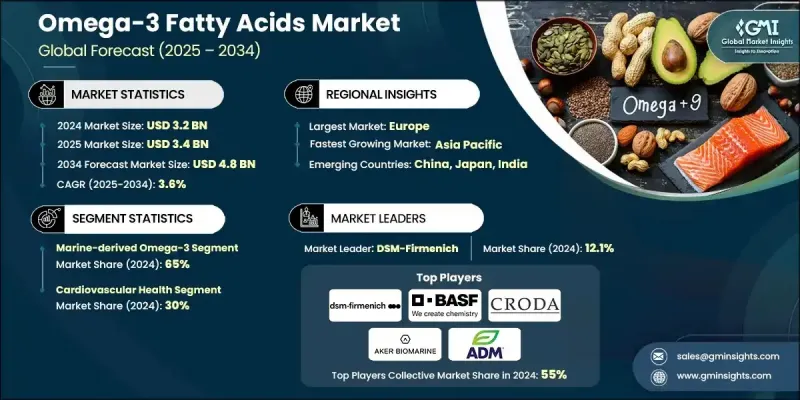
The expanding body of scientific research highlighting the health advantages of omega-3 fatty acids is a major driver of market growth. With over 40,000 peer-reviewed studies on EPA and DHA, including thousands of clinical trials confirming their positive effects on cardiovascular, brain, and eye health, consumer awareness continues to rise. Increasing public awareness of preventive health and nutrition is fueling demand for omega-3 supplements, particularly those targeting heart and cognitive health. The broader interest in functional and fortified food products further propels the market, as food and beverage manufacturers integrate omega-3 ingredients into everyday items such as baked goods, dairy, and beverages. The move toward incorporating omega-3 into daily nutrition rather than relying solely on dietary supplements is expanding market applications and supporting long-term growth prospects across regions.
| Market Scope | |
|---|---|
| Start Year | 2024 |
| Forecast Year | 2025-2034 |
| Start Value | $3.2 Billion |
| Forecast Value | $4.8 Billion |
| CAGR | 3.6% |
The algal-derived omega-3 segment is expected to grow at a CAGR of 3.9% through 2034, driven by strong consumer interest in sustainable and plant-based sources. The rapid advancement of microalgae cultivation technologies and increasing awareness of environmental concerns have boosted this category's appeal. Algal oil offers a cleaner and more concentrated source of EPA and DHA, enabling smaller doses and eliminating issues such as the fishy odor often associated with traditional marine-based omega-3 products. This advantage is helping plant-based alternatives gain greater traction in both dietary supplements and fortified food formulations.
In 2024, the general wellness and dietary supplements held a 24% share, reflecting strong consumer acceptance of omega-3 products for maintaining overall health and preventing chronic conditions. These categories continue to benefit from high accessibility through retail and online channels, although the clinical efficacy among different generic products remains variable. Functional foods and fortification represented around 16% of the market, supported by ongoing product innovation as manufacturers incorporate omega-3 into beverages, bakery items, and dairy products to meet consumer demand for nutritious and convenient options.
United States Omega-3 Fatty Acids Market was valued at USD 781.3 million in 2024 and is projected to reach USD 1.1 billion by 2034. North America represents a mature market environment, characterized by well-established supplement consumption habits and heightened consumer awareness of health and wellness benefits. The United States leads the regional market, holding around 83% of North American sales, supported by extensive retail distribution, direct-to-consumer marketing, and medical professional recommendations. The regulatory landscape in the U.S. remains stable, and consumer confidence is reinforced through FDA oversight and GRAS (Generally Recognized as Safe) certifications for omega-3 ingredients.
Key participants in the Global Omega-3 Fatty Acids Market include DSM-Firmenich, BASF SE, Croda International, Aker BioMarine, Archer Daniels Midland, Cargill, Corbion, Omega Protein Corporation, Epax, and KD Pharma Group. Leading players in the Omega-3 Fatty Acids Market are pursuing strategic initiatives to strengthen their market positions and expand global reach. Many are focusing on sustainable sourcing by investing in algal-based omega-3 production to reduce dependence on marine resources. Companies are also enhancing product quality through advanced purification technologies and optimizing EPA/DHA concentration levels to meet diverse consumer needs. Strategic mergers, acquisitions, and partnerships are helping major manufacturers expand supply networks and enter new regional markets.
Table of Contents
Chapter 1 Methodology & Scope
- 1.1 Market scope and definition
- 1.2 Research design
- 1.2.1 Research approach
- 1.2.2 Data collection methods
- 1.3 Data mining sources
- 1.3.1 Global
- 1.3.2 Regional/Country
- 1.4 Base estimates and calculations
- 1.4.1 Base year calculation
- 1.4.2 Key trends for market estimation
- 1.5 Primary research and validation
- 1.5.1 Primary sources
- 1.6 Forecast model
- 1.7 Research assumptions and limitations
Chapter 2 Executive Summary
- 2.1 Industry 3600 synopsis
- 2.2 Key market trends
- 2.2.1 Product Type
- 2.2.2 Application
- 2.2.3 End Use Industry
- 2.3 TAM analysis, 2025-2034
- 2.4 CXO perspectives: Strategic imperatives
- 2.4.1 Executive decision points
- 2.4.2 Critical success factors
- 2.5 Outlook and strategic recommendations
Chapter 3 Industry Insights
- 3.1 Industry ecosystem analysis
- 3.1.1 Supplier landscape
- 3.1.2 Profit margin
- 3.1.3 Value addition at each stage
- 3.1.4 Factor affecting the value chain
- 3.1.5 Disruptions
- 3.2 Industry impact forces
- 3.2.1 Growth drivers
- 3.2.2 Industry pitfalls and challenges
- 3.2.3 Market opportunities
- 3.3 Growth potential analysis
- 3.4 Regulatory landscape
- 3.4.1 North America
- 3.4.2 Europe
- 3.4.3 Asia Pacific
- 3.4.4 Latin America
- 3.4.5 Middle East & Africa
- 3.5 Porter's analysis
- 3.6 PESTEL analysis
- 3.7 Price trends
- 3.7.1 By region
- 3.8 Future market trends
- 3.9 Technology and innovation landscape
- 3.9.1 Current technological trends
- 3.9.2 Emerging technologies
- 3.10 Patent landscape
- 3.11 Trade statistics (HS code) (Note: the trade statistics will be provided for key countries only)
- 3.11.1 Major importing countries
- 3.11.2 Major exporting countries
- 3.12 Sustainability and environmental aspects
- 3.12.1 Sustainable practices
- 3.12.2 Waste reduction strategies
- 3.12.3 Energy efficiency in production
- 3.12.4 Eco-friendly initiatives
- 3.13 Carbon footprint considerations
Chapter 4 Competitive Landscape, 2024
- 4.1 Introduction
- 4.2 Company market share analysis
- 4.2.1 By region
- 4.2.1.1 North America
- 4.2.1.2 Europe
- 4.2.1.3 Asia Pacific
- 4.2.1.4 Latin America
- 4.2.1.5 Middle East & Africa
- 4.2.1 By region
- 4.3 Company matrix analysis
- 4.4 Competitive analysis of major market players
- 4.5 Competitive positioning matrix
- 4.6 Key developments
- 4.6.1 Mergers & acquisitions
- 4.6.2 Partnerships & collaborations
- 4.6.3 New product launches
- 4.6.4 Expansion plans
Chapter 5 Market Size and Forecast, By Product Type, 2021-2034 (USD Billion, Kilo Tons)
- 5.1 Key trends
- 5.2 Marine-derived omega-3
- 5.2.1 Fish oil
- 5.2.2 Concentrated fish oil
- 5.2.3 Krill oil & phospholipid forms
- 5.2.4 Others
- 5.3 Algal-derived omega-3
- 5.3.1 Microalgae oil
- 5.3.2 Fermentation-derived EPA & DHA
- 5.4 Plant-based omega-3 (ALA)
- 5.4.1 Flaxseed oil
- 5.4.2 Chia seed oil
- 5.4.3 Others
- 5.5 Prescription omega-3 drugs
- 5.6 Concentrated & purified forms
Chapter 6 Market Size and Forecast, By Application, 2021-2034 (USD Billion, Kilo Tons)
- 6.1 Key trends
- 6.2 Cardiovascular health
- 6.2.1 Primary prevention products
- 6.2.2 Secondary prevention formulations
- 6.2.3 Blood pressure management
- 6.2.4 Arrhythmia prevention
- 6.3 Hypertriglyceridemia treatment
- 6.3.1 Severe hypertriglyceridemia
- 6.3.2 Moderate hypertriglyceridemia
- 6.4 General wellness & dietary supplements
- 6.4.1 Daily nutrition
- 6.4.2 Brain health & cognitive function
- 6.4.3 Eye health & vision support
- 6.4.4 Joint health & inflammation
- 6.5 Functional foods & fortification
- 6.5.1 Dairy product
- 6.5.2 Bakery & confectionery
- 6.5.3 Beverage fortification
- 6.5.4 Meat & poultry
- 6.6 Infant & maternal nutrition
- 6.6.1 Infant formula applications
- 6.6.2 Prenatal & postnatal supplements
- 6.6.3 Pediatric nutrition products
- 6.7 Animal feed & aquaculture
- 6.7.1 Aquaculture feed
- 6.7.2 Pet food
- 6.7.3 Livestock feed
Chapter 7 Market Size and Forecast, By End Use Industry, 2021-2034 (USD Billion, Kilo Tons)
- 7.1 Key trends
- 7.2 Pharmaceutical industry
- 7.3 Nutraceutical & dietary supplement industry
- 7.4 Food & beverage industry
- 7.5 Animal feed industry
Chapter 8 Market Size and Forecast, By Region, 2021-2034 (USD Billion, Kilo Tons)
- 8.1 Key trends
- 8.2 North America
- 8.2.1 U.S.
- 8.2.2 Canada
- 8.3 Europe
- 8.3.1 UK
- 8.3.2 Germany
- 8.3.3 France
- 8.3.4 Italy
- 8.3.5 Spain
- 8.3.6 Rest of Europe
- 8.4 Asia Pacific
- 8.4.1 China
- 8.4.2 India
- 8.4.3 Japan
- 8.4.4 South Korea
- 8.4.5 Australia
- 8.4.6 Rest of Asia Pacific
- 8.5 Latin America
- 8.5.1 Brazil
- 8.5.2 Mexico
- 8.5.3 Argentina
- 8.5.4 Rest of Latin America
- 8.6 Middle East & Africa
- 8.6.1 South Africa
- 8.6.2 Saudi Arabia
- 8.6.3 UAE
- 8.6.4 Rest of Middle East & Africa
Chapter 9 Company Profiles
- 9.1 DSM-Firmenich
- 9.2 BASF SE
- 9.3 Croda International
- 9.4 Aker BioMarine
- 9.5 Archer Daniels Midland
- 9.6 Cargill
- 9.7 Corbion
- 9.8 Omega Protein Corporation
- 9.9 Epax
- 9.10 KD Pharma Group
- 9.11 Polaris Nutritional Lipids
- 9.12 Solutex
- 9.13 Veramaris
- 9.14 Yield10 Bioscience
- 9.15 AlgaeCytes
- 9.16 Fermentalg
- 9.17 Qualitas Health