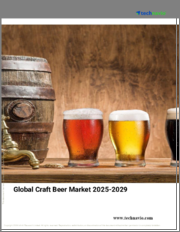
|
시장보고서
상품코드
2025009
크라프트 맥주 시장 규모, 점유율, 동향 및 예측 : 제품 유형, 연령층, 유통 채널, 지역별(2026-2034년)Craft Beer Market Size, Share, Trends and Forecast by Product Type, Age Group, Distribution Channel, and Region, 2026-2034 |
||||||

2025년의 세계 크라프트 맥주 시장 규모는 1,551억 달러로 평가되었습니다. 향후에 대해 IMARC Group은 2034년까지 시장 규모가 3,345억 달러에 달하며, 2026-2034년에 CAGR 8.65%를 기록할 것으로 예측하고 있습니다. 현재 유럽이 시장을 주도하고 있으며, 2025년에는 38.1% 이상의 시장 점유율을 차지하고 있습니다. 이 시장은 주로 독특하고 풍미 있는 맥주에 대한 소비자의 선호도 증가, 지역 양조 및 수제 음료에 대한 수요 증가, 맥주 관광의 인기 증가, 밀레니얼 세대와 건강 지향적 소비자를 겨냥한 혁신적인 마케팅 전략에 의해 주도되고 있습니다.
개성 있고 풍미가 풍부한 음료에 대한 소비자의 취향 변화가 크라프트 맥주 시장을 주도하고 있으며, 그 결과 장인정신으로 양조된 지역 생산 제품에 대한 수요가 증가하고 있습니다. 프리미엄 맥주 경험에 대한 관심이 높아지면서 밀레니얼 세대와 젊은 층을 타깃으로 한 소량 생산 수제 맥주에 대한 수요 증가의 원동력이 되고 있습니다. 건강을 중시하는 소비자들도 시장을 형성하고 있으며, 저칼로리 및 유기농 수제 맥주에 매력을 느끼고 있습니다. 현지 양조장과 독특한 시음 경험에 초점을 맞춘 맥주 관광은 시장의 범위를 더욱 확장하고 있습니다. 스토리텔링, 소셜미디어 참여, 지역 기업과의 협업 등 혁신적인 마케팅 전략도 브랜드 인지도와 고객 충성도를 높이는 데 일조하고 있습니다. 가처분 소득의 증가와 다양한 맥주 스타일에 대한 인식이 높아지면서 전 세계에서 수제맥주 시장의 성장세를 확고히 하고 있습니다.
미국은 크라프트 맥주의 주요 지역 시장으로 부상하고 있습니다. 이 시장은 독특한 맛과 원료를 사용한 개성 있고 고품질의 음료에 대한 수요 증가에 영향을 받고 있습니다. 소비자들이 지역 전통에 따른 진정한 경험을 추구하면서 현지에서 양조된 제품이나 장인정신이 깃든 제품에 대한 관심이 높아져 수요가 증가하고 있습니다. 밀레니얼 세대와 그보다 젊은 세대는 혁신적인 브랜딩과 개인화된 상품 제공으로 시장 성장을 주도하고 있습니다. 또한 수제맥주의 사교적 특성으로 인해 인기가 높아지고 있는 맥주 관광과 축제는 양조장이 최종 소비자와 직접 소통할 수 있는 기회를 제공하고 있습니다. 저칼로리, 유기농, 무글루텐 제품 등의 동향이 시장을 형성하고 있으며, 이는 음료 산업의 이 분야에 더 많은 영향을 미치고 있습니다.
수제맥주 시장 동향:
장인정신과 독특한 맛에 대한 소비자 선호도 증가
소비자의 취향이 장인정신과 개성 있는 맛으로 바뀌면서 수제맥주 시장의 전망은 더욱 밝아지고 있습니다. 이는 크라프트 맥주 업계의 주요 동향 중 하나입니다. 이러한 변화는 대량 생산 맥주의 획일적인 맛에 대한 반응이며, 수제 맥주는 IPA, 스타우트, 사워 등 다양한 맛과 장르를 제공함으로써 다양한 취향에 부응하고 있습니다. 미국 브루어스 협회(Brewers Association)에 따르면 도시 지역의 수제 맥주는 중동의 견고한 주류 판매의 혜택을 누리고 있습니다. 두바이 면세 주류 매출은 2022년 2억 8,000만 달러(매출의 16%)에 달할 것으로 예상되며, UAE의 30% 주류세 폐지는 ACI(국제공항협의회) 세계 5위인 두바이 국제공항의 여객 수 증가와 함께 현지 시장의 경쟁을 더욱 치열하게 만들고 있습니다. 활성화하고 있습니다. 고급 현지산 원료를 사용하여 이러한 맥주의 매력을 높이고, 소비자가 먹는 음식의 산지와 품질에 대한 관심이 높아진 것을 반영합니다. 일반 맥주에 비해 밀레니얼 세대와 Z세대 소비자들은 특히 이 동향에 매력을 느끼고 있습니다. 그들은 새롭고 다양한 맛을 시도하고 싶어하며, 제품 소비를 보다 독특하고 진정한 경험으로 여기는 경우가 많기 때문입니다.
수제맥주 양조장과 브루어리 펍이 눈에 띄게 늘어났습니다.
크라프트 맥주 시장의 주요 비즈니스 기회 중 하나는 전 세계에서 양조장 펍과 소규모 양조장의 수가 눈에 띄게 증가하고 있다는 점입니다. 이러한 소규모 시설의 성장으로 맥주 애호가들의 커뮤니티가 더욱 활성화되고 연결성이 강화되고 있습니다. 전미양조협회(Brewers Association)에 따르면 2023년에는 마이크로 양조장과 양조장 펍의 수가 사상 최고치를 기록할 것으로 예상되며, 마이크로 양조장 2,071개, 양조장 펍 3,467개, 탭룸이 있는 양조장 3,900개, 지역밀착형 크라프트 양조장이 245개에 달했습니다. 마이크로 양조장과 양조장 펍은 양조 실험과 혁신을 위한 독특한 환경을 제공합니다. 많은 지역에서는 소규모 양조 사업을 장려하는 지원적인 정부 법률이 있으며, 이는 성장에 기여하고 있습니다. 양조자와 양조 과정을 직접 접함으로써 제품의 매력을 높이고, 보다 충실한 경험을 선사할 수 있습니다. 또한 양조 과정을 직접 눈으로 보고 양조자와 직접 교류할 수 있는 이러한 장소를 방문하는 경험 자체가 제품의 매력을 더하고 있습니다. 이 요인이 크라프트 맥주 시장의 통계적 성장으로 이어지고 있습니다.
높아지는 건강 의식과 저알코올 음료에 대한 수요 증가
시장의 또 다른 주요 촉진요인은 건강과 웰빙에 대한 관심의 증가입니다. 크라프트 브루어들은 이러한 요구에 민첩하게 대응하여 맛의 깊이를 잃지 않으면서도 더 건강한 선택을 할 수 있는 다양한 '라이트' 맥주를 생산하고 있습니다. 또한 건강을 생각하면서도 맛에 타협하지 않으려는 소비자층으로 인해 장인이 양조하는 무알코올 맥주에 대한 수요도 증가하고 있습니다. 보고서에 따르면 흡연율 감소와 음주량 감소를 배경으로 2024-2025년까지 건강 의식은 0.5% 상승하고, 지수는 111.4포인트에 달할 것으로 예측됩니다. 이에 따라 웰빙 동향에 따라 무알코올, 저알코올 제품을 선택하는 소비자들이 늘어나면서 수제 맥주를 선호하게 되었습니다. 이러한 건강지향적인 변화가 시장을 주도하고 있습니다. 이로 인해 그동안 건강상의 이유로 맥주를 기피하던 소비자층까지 끌어들이고 있습니다. 이러한 움직임으로 시장은 새로운 소비자층을 끌어들일 수 있게 되었고, 수제맥주 시장의 성장을 더욱 가속화하고 있습니다.
목차
제1장 서문
제2장 조사 범위와 조사 방법
제3장 개요
제4장 서론
제5장 세계의 크라프트 맥주 시장
제6장 시장 내역 : 제품 유형별
제7장 시장 내역 : 연령층별
제8장 시장 내역 : 유통 채널별
제9장 시장 내역 : 지역별
제10장 SWOT 분석
제11장 밸류체인 분석
제12장 Porters Five Forces 분석
제13장 가격 분석
제14장 경쟁 구도
KSA 26.05.19The global craft beer market size was valued at USD 155.1 Billion in 2025. Looking forward, IMARC Group estimates the market to reach USD 334.5 Billion by 2034, exhibiting a CAGR of 8.65% from 2026-2034. Europe currently dominates the market, holding a market share of over 38.1% in 2025. The market is primarily driven by the rising consumer preference for unique, flavorful beers, increasing demand for locally brewed and artisanal beverages, growing popularity of beer tourism, and innovative marketing strategies targeting millennials and health-conscious consumers.
Evolving consumer preferences for distinctive and flavorful beverages are driving the craft beer market, thus increasing demand for artisanal and locally brewed products. Growing interest in premium beer experiences has been the impetus for increasing demand for small-batch, handcrafted brews, targeting millennials and younger demographics. Healthy consumers are also shaping the market, as they are attracted to low-calorie and organic craft beers. Beer tourism, which focuses on local breweries and unique tasting experiences, is further expanding market reach. Innovative marketing strategies, such as storytelling, social media engagement, and collaborations with local businesses, are also enhancing brand visibility and customer loyalty. Rising disposable incomes and a growing appreciation for diverse beer styles are solidifying the craft beer market's growth on a global scale.
The United States has emerged as a key regional market for craft beer. The market is influenced by the growing demand for distinctive, high-quality beverages with flavors and ingredients that are unique. Interest in locally brewed and artisanal products has increased demand, as consumers seek authentic experiences that align with regional traditions. Millennials and younger generations are driving market growth due to innovative branding and personalized offerings. Also, beer tourism and festivals, the growing popularity of which are due to the social nature of craft beer, give opportunities for breweries to communicate directly with the end consumer. Trends like low-calorie, organic, and gluten-free products are shaping the market, further influencing this segment of the beverage industry.
CRAFT BEER MARKET TRENDS:
Increasing consumer preference for artisanal and unique flavors
The craft beer market outlook is expanding due to shifting customer preferences for artisanal and distinctive flavors. It is one of the major craft beer industry trends. This change is a response to the homogenized flavors of mass-produced beers; these beers offer a wide range of flavors and genres, such as IPAs, stouts, and sours, to suit a wide variety of palates. According to the Brewers Association, urban craft beer benefits from the Middle East's robust beverage alcohol sales, with Dubai Duty Free liquor generating USD 280 Million in 2022 (16% of sales) and UAE's 30% alcohol tax removal fuelling local market competition amidst growing passenger traffic at Dubai International, ranked 5th globally by ACI. The use of premium and locally obtained ingredients adds to the allure of these beers and speaks to consumers' growing concern about the provenance and quality of the food they eat. When compared to typical beer options, millennials, and Gen Z consumers are especially drawn to this trend since they are eager to try out new and varied flavor profiles and frequently see the product's consumption as a more unique and genuine experience.
Considerable growth in the number of microbreweries and brewpubs
A major craft beer market business opportunity is the considerable growth in the number of brewpubs and microbreweries around the globe. Due to the growth of these small-scale establishments, the beer enthusiast community has become more active and connected. According to the Brewers Association, in 2023, the number of microbreweries and brewpubs were recorded high, reaching 2,071 microbreweries, 3,467 brewpubs, 3,900 taproom breweries, and 245 regional craft breweries. Microbreweries and brewpubs provide a distinctive setting for brewing experiments and innovations. Many areas have supportive government laws that promote small-scale brewing enterprises, contributing to this growth. interact with brewers and the brewing process, which enhances the product's appeal and creates a more comprehensive experience. In addition, the whole experience of visiting these places, where customers can watch the brewing process in action and interact with brewers directly, adds to the product's appeal. This factor is leading to an improvement in the craft beer market statistics.
Rising health consciousness and demand for low-alcohol options
Another key driver of the market is the growing emphasis on health and well-being. Craft brewers have responded to this need with agility, creating a wide range of 'light' beers that offer healthier options without sacrificing flavor depth. The artisanal non-alcoholic beers are also witnessing an increase in demand due to the consumers who care about their health but can't compromise on taste. According to reports, health consciousness is projected to rise by 0.5% to 111.4 index points in 2024-25, driven by reduced smoking rates and lower alcohol consumption, favoring craft beer as consumers increasingly opt for no- and low-alcohol options aligned with wellness trends. This shift toward healthier options is driving the market. This attracts consumers who might have otherwise avoided beer consumption due to health concerns. This development has allowed the market to tap into a new consumer base, further fueling the craft beer market growth.
CRAFT BEER INDUSTRY SEGMENTATION:
Analysis by Product Type:
- Ales
- Lagers
- Others
In 2025, lagers dominate the market with 48.1% share. Due to their broad appeal and ease of access, lagers constitute yet another noteworthy market category. Lagers are popular with a wide range of customers. They have a milder and smoother flavor profile than ales due to the lower temperature fermentation procedure. Pilsners and helles are two of the sub-types in this category that come in a variety of flavors to suit a wide range of consumer tastes.
A sizable section of the market is dominated by ales. They are renowned for their complex and deep flavors. This category features IPAs, stouts, and porters, among other kinds. Each has a unique flavor and aroma. Ales' fermentation process, which takes place at higher temperatures, adds to the depth and diversity of their flavors. The ale market is especially well-liked by beer connoisseurs who value artisanal and distinctive beer experiences.
Analysis by Age Group:
- 21-35 Years Old
- 40-54 Years Old
- 55 Years and Above
21-35 year old age group leads the market with around 51.6% of market share in 2025. People aged 21 to 35, who are drawn to flavors that are distinctive and varied. This group, which includes early Gen Zers and the latter half of Millennials, exhibits a significant taste for artisanal and specialty beers. They are more willing to try out new flavors and varieties, such as experimental brews and IPAs. Furthermore, social media and trends have a big impact on this group, which makes them more open to new product releases and marketing initiatives.
However, the 40-54 age group, which makes up a sizable share of the market, is frequently distinguished by more sophisticated and discriminating tastes. This group, which is mostly made up of Gen Xers, flavors quality over quantity and typically has more disposable cash. They will probably enjoy classic, well-made beers, and they will probably be especially interested in real, regional breweries. This market is particularly drawn to well-known craft brands with a solid name and legacy because they frequently appreciate the craftsmanship and background of the brew.
Moreover, the market for those 55 years of age and above is expanding within the sector. Their selections are also heavily influenced by their health, with a preference for lighter, lower-alcohol, and maybe healthier options.
Analysis by Distribution Channel:
- On-Trade
- Off-Trade
On trade leads the market with 64.7% of market share in 2025. The on-trade distribution channel, which includes places like brewpubs, restaurants, taverns, and pubs. Customers place high importance on the social component of drinking this type of artisanal beer, which is the reason for its supremacy. Through the on-trade route, customers can sample a range of products, frequently under the guidance of experienced staff members or, in the case of brewpubs, directly from the brewers. They showcase rare or limited-edition beers to satisfy customers' cravings for uncommon and exciting experiences. Customers are drawn in by this engaging experience as well as the social atmosphere of these businesses, especially the younger people.
In contrast, a sizable portion of the industry is represented by the off-trade distribution channel, which includes retail establishments like supermarkets, liquor stores, and internet platforms. Customers who want the ease of using the product at home or in private settings may find this channel appealing. Furthermore, the increased availability of products in mainstream retail stores and the emergence of e-commerce sites that specialize in beer delivery are driving growth in the off-trade industry. This market includes people who want to buy these type of beers as gifts or who would rather consume them in the comfort of their own homes.
Regional Analysis:
- North America
- United States
- Canada
- Asia Pacific
- China
- Japan
- India
- South Korea
- Australia
- Indonesia
- Others
- Europe
- Germany
- France
- United Kingdom
- Italy
- Spain
- Russia
- Others
- Latin America
- Brazil
- Mexico
- Others
- Middle East and Africa
In 2025, Europe accounted for the largest market share of over 38.1%. According to the report, Europe with a long history of brewing and a strong beer culture, notably in nations like Germany, Belgium, and the UK, Europe has the most market share. The region offers a vast array of varieties, from traditional ales and lagers to experimental brews, and is characterized by a fusion of modern innovation and old brewing processes. Craft beer is a vital component of the gastronomic and cultural experience, which is driving the market in addition to high domestic demand. Rapid urbanization, a burgeoning middle class with good income, and fast economic expansion within the Asia Pacific region provides a positive outlook for the market. An increase in microbreweries and a growing interest in craft beer culture, especially in countries like China, Japan, and Australia, are providing a thrust to the market further. The market is well-established and growing in North America, especially in the United States and Canada, though at a steadier and more mature rate. This region is known for its innovative brewing techniques and many craft beer styles. It has a strong culture of microbreweries and brewpubs. The market has high consumer awareness and appreciation for craft beer. There is also a particular emphasis on local and artisanal brews. The market in Latin America is in a phase of rapid growth. It is driven by increasing economic development and the influence of global beer trends. Countries including Brazil, Mexico, and Argentina are witnessing a rise in the number of craft breweries. They also have a growing consumer base keen on exploring diverse and locally produced beers. Despite being relatively modest, the Middle East and Africa market has room to grow. Premium and imported craft beers are in high demand in these markets, and consumers' curiosity in trying out new flavors and varieties of beer is only increasing. The Middle East and Africa market is expected to grow gradually, concentrating on specialized customer niches and adopting focused marketing techniques.
Key Regional Takeaways:
UNITED STATES CRAFT BEER MARKET ANALYSIS
In 2025, the United States accounts for 86.85% of the craft beer market in North America. The emergence of locally crafted beverages has sparked significant consumer interest, fueled by a desire for distinctive, high-quality items in the US. Independent breweries are gaining from this transformation, as increasing numbers of people appreciate unique flavours and artisanal production techniques over mass-manufactured alternatives. The flourishing trend of pairing food with drinks has additionally enhanced consumption, particularly as craft selections frequently enhance gourmet and farm-to-table dining experiences. According to the research commissioned by the Beer Institute, two-thirds of drinkers in the country which is equivalent to 66%, opted for beer in the past three months. Moreover, younger consumers are gravitating toward these beverages due to their innovation and sustainability initiatives, including eco-friendly packaging and locally sourced ingredients. According to reports, a recent survey indicates that 43% of U. S. consumers view environmental impact as essential in packaging, though price, quality, and convenience remain the predominant factors influencing purchase choices. Significantly, 4-7% are prepared to pay more than 10% extra for eco-friendly alternatives like compostable and plant-based packaging. Preferences for sustainable packaging differ across demographics, which reveals opportunities for customized strategies amid evolving post-COVID priorities.
ASIA PACIFIC CRAFT BEER MARKET ANALYSIS
The rising disposable incomes of the middle class is driving the expansion of craft beer segment in the Asia Pacific. Urbanization is playing a key role in increasing awareness and access to premium beverages. New marketing strategies, such as interactive tasting events and collaborations with restaurants further boosting brand visibility. Changing consumer preferences, especially toward international and artisanal products, are opening doors for local brewers to tap into global trends. Health-conscious buyers are showing a growing interest in low-alcohol options. For instance, a study in 2020 revealed that over 40% of Indian beer drinkers aged 25 to 34 prefer low or no-alcohol beers, reflecting an increasing focus on health. Concerns about health (48%) and avoiding hangovers (31%) are key factors behind this shift, paving the way for low-calorie and gluten-free options. Craft beer, favored by 45% of Indian consumers, is capitalizing on this demand with high-quality, low-alcohol offerings and creative packaging. Further, government policies supporting small businesses are indirectly benefiting the industry by providing incentives for local manufacturers. Using locally sourced ingredients has allowed companies to manufacture their products to specific consumer tastes, creating appeal across different age groups.
EUROPE CRAFT BEER MARKET ANALYSIS
An established tradition in this field continues to draw enthusiasts looking for artisanal alternatives to mass-produced drinks in the Europe. Local creators are utilizing heritage recipes to develop premium options that resonate with buyers. Increasing interest in culinary experiences, such as pairing drinks with meals, is boosting the charm of these products. The growth of small-scale festivals and tasting tours is aiding in connecting brewers directly with customers, strengthening loyalty. A rising emphasis on sustainability, including reusable packaging and eco-friendly methods, aligns with the environmentally conscious demographic. Digital sales platforms are providing brewers entry to global markets, while collaborations with retail chains are broadening their reach. According to The International Trade Administration, U. S. Department of Commerce, Germany's e-commerce market, which was valued at USD 141. 2 Billion in 2022 with an 11% growth rate, showcases 80% penetration, influenced by 62. 4 Million online users (2020) predicted to rise to 68. 4 Million by 2025. Known for food and beverages, e-commerce supports craft beer through convenience, home delivery, and Germany's quality-focused online purchasing behaviors, utilizing platforms like Amazon and social media. Regulatory backing in various regions is encouraging innovation, and permitting experimentation with new techniques and ingredients.
LATIN AMERICA CRAFT BEER MARKET ANALYSIS
The craft beer sector is experiencing growth driven by evolving consumer preferences and a desire for locally produced drinks. The lively cultural background of the area offers abundant inspiration for flavours, attracting a younger demographic. Urban centres are observing an increase in specialized venues and tasting events, generating interest and promoting exploration. Reports indicate that Brazil's population of 212. 3 Million, with 91% (192. 9 Million) residing in urban settings, creates a concentrated consumer market for craft beer. Urban development stimulates the demand for niche beverages, bolstered by the country's median age of 34. 4, which aligns with the young, experimental target audience of the craft beer industry. This active urban populace enhances the growth potential for craft beer. Social media initiatives and collaborations with food festivals are enhancing exposure for new brands. The growth of distribution channels, including partnerships with larger beverage distributors, is improving access to artisanal choices.
MIDDLE EAST AND AFRICA CRAFT BEER MARKET ANALYSIS
A rising market is developing in reaction to the increasing demand for unique and premium beverages among city professionals in the region. Local manufacturers are investigating non-alcoholic options to meet cultural tastes, expanding their appeal. For example, in September 2023, urban craft beer gains from the Middle East's strong beverage alcohol sales, as Dubai Duty Free liquor brought in USD 280 Million in 2022 (16% of sales), and the UAE's removal of a 30% alcohol tax is boosting local market competition amid rising passenger traffic at Dubai International, which is ranked 5th globally by ACI. The incorporation of traditional ingredients introduces a regional character, drawing interest from both local and international buyers. E-commerce platforms are enabling direct access to specialized offerings, while partnerships with restaurants and cafes are increasing visibility. The sector is thriving on tourism-driven demand, with travellers in search of unique products that showcase local craftsmanship.
COMPETITIVE LANDSCAPE:
To capitalize on changing consumer preferences, unique beer styles, flavors, and packages are being developed by the companies. This includes low-alcohol and gluten-free beers, as well as organic options, to better service health-conscious buyers. Furthermore, craft breweries are gaining value for authenticity, local heritage, and storytelling to build strong brand identities and connect emotionally with consumers. In addition, most breweries are increasing their geographical reach with the help of distributorships and retailer partnerships, thus they can reach wider markets globally and locally. Furthermore, to cater for the environmentally friendly consumers, breweries turn to sustainable practices such as producing renewable energy, eco-friendly packaging, and reducing water consumption for production. The large companies are also buying small highly performing craft breweries for differentiating their products and increased market share.
The report provides a comprehensive analysis of the competitive landscape in the craft beer market with detailed profiles of all major companies, including:
- Bell's Brewery
- D.G. Yuengling & Son, Inc.
- Dogfish Head Craft Brewery
- Duvel Moortgat
- Minhas Craft Brewery
- New Belgium Brewing Company
- Oskar Blues Brewery
- Sierra Nevada Brewing Co.
- Stone Brewing
- The Boston Beer Company
- The Gambrinus Company
Table of Contents
1 Preface
2 Scope and Methodology
- 2.1 Objectives of the Study
- 2.2 Stakeholders
- 2.3 Data Sources
- 2.3.1 Primary Sources
- 2.3.2 Secondary Sources
- 2.4 Market Estimation
- 2.4.1 Bottom-Up Approach
- 2.4.2 Top-Down Approach
- 2.5 Forecasting Methodology
3 Executive Summary
4 Introduction
- 4.1 Overview
- 4.2 Key Industry Trends
5 Global Craft Beer Market
- 5.1 Market Overview
- 5.2 Market Performance
- 5.3 Impact of COVID-19
- 5.4 Market Forecast
6 Market Breakup by Product Type
- 6.1 Ales
- 6.1.1 Market Trends
- 6.1.2 Market Forecast
- 6.2 Lagers
- 6.2.1 Market Trends
- 6.2.2 Market Forecast
- 6.3 Others
- 6.3.1 Market Trends
- 6.3.2 Market Forecast
7 Market Breakup by Age Group
- 7.1 21-35 Years Old
- 7.1.1 Market Trends
- 7.1.2 Market Forecast
- 7.2 40-54 Years Old
- 7.2.1 Market Trends
- 7.2.2 Market Forecast
- 7.3 55 Years and Above
- 7.3.1 Market Trends
- 7.3.2 Market Forecast
8 Market Breakup by Distribution Channel
- 8.1 On-Trade
- 8.1.1 Market Trends
- 8.1.2 Market Forecast
- 8.2 Off-Trade
- 8.2.1 Market Trends
- 8.2.2 Market Forecast
9 Market Breakup by Region
- 9.1 North America
- 9.1.1 United States
- 9.1.1.1 Market Trends
- 9.1.1.2 Market Forecast
- 9.1.2 Canada
- 9.1.2.1 Market Trends
- 9.1.2.2 Market Forecast
- 9.1.1 United States
- 9.2 Asia-Pacific
- 9.2.1 China
- 9.2.1.1 Market Trends
- 9.2.1.2 Market Forecast
- 9.2.2 Japan
- 9.2.2.1 Market Trends
- 9.2.2.2 Market Forecast
- 9.2.3 India
- 9.2.3.1 Market Trends
- 9.2.3.2 Market Forecast
- 9.2.4 South Korea
- 9.2.4.1 Market Trends
- 9.2.4.2 Market Forecast
- 9.2.5 Australia
- 9.2.5.1 Market Trends
- 9.2.5.2 Market Forecast
- 9.2.6 Indonesia
- 9.2.6.1 Market Trends
- 9.2.6.2 Market Forecast
- 9.2.7 Others
- 9.2.7.1 Market Trends
- 9.2.7.2 Market Forecast
- 9.2.1 China
- 9.3 Europe
- 9.3.1 Germany
- 9.3.1.1 Market Trends
- 9.3.1.2 Market Forecast
- 9.3.2 France
- 9.3.2.1 Market Trends
- 9.3.2.2 Market Forecast
- 9.3.3 United Kingdom
- 9.3.3.1 Market Trends
- 9.3.3.2 Market Forecast
- 9.3.4 Italy
- 9.3.4.1 Market Trends
- 9.3.4.2 Market Forecast
- 9.3.5 Spain
- 9.3.5.1 Market Trends
- 9.3.5.2 Market Forecast
- 9.3.6 Russia
- 9.3.6.1 Market Trends
- 9.3.6.2 Market Forecast
- 9.3.7 Others
- 9.3.7.1 Market Trends
- 9.3.7.2 Market Forecast
- 9.3.1 Germany
- 9.4 Latin America
- 9.4.1 Brazil
- 9.4.1.1 Market Trends
- 9.4.1.2 Market Forecast
- 9.4.2 Mexico
- 9.4.2.1 Market Trends
- 9.4.2.2 Market Forecast
- 9.4.3 Others
- 9.4.3.1 Market Trends
- 9.4.3.2 Market Forecast
- 9.4.1 Brazil
- 9.5 Middle East and Africa
- 9.5.1 Market Trends
- 9.5.2 Market Breakup by Country
- 9.5.3 Market Forecast
10 SWOT Analysis
- 10.1 Overview
- 10.2 Strengths
- 10.3 Weaknesses
- 10.4 Opportunities
- 10.5 Threats
11 Value Chain Analysis
12 Porters Five Forces Analysis
- 12.1 Overview
- 12.2 Bargaining Power of Buyers
- 12.3 Bargaining Power of Suppliers
- 12.4 Degree of Competition
- 12.5 Threat of New Entrants
- 12.6 Threat of Substitutes
13 Price Analysis
14 Competitive Landscape
- 14.1 Market Structure
- 14.2 Key Players
- 14.3 Profiles of Key Players
- 14.3.1 Bell's Brewery
- 14.3.1.1 Company Overview
- 14.3.1.2 Product Portfolio
- 14.3.2 D.G. Yuengling & Son, Inc.
- 14.3.2.1 Company Overview
- 14.3.2.2 Product Portfolio
- 14.3.3 Dogfish Head Craft Brewery
- 14.3.3.1 Company Overview
- 14.3.3.2 Product Portfolio
- 14.3.3.3 Financials
- 14.3.3.4 SWOT Analysis
- 14.3.4 Duvel Moortgat
- 14.3.4.1 Company Overview
- 14.3.4.2 Product Portfolio
- 14.3.5 Minhas Craft Brewery
- 14.3.5.1 Company Overview
- 14.3.5.2 Product Portfolio
- 14.3.5.3 Financials
- 14.3.5.4 SWOT Analysis
- 14.3.6 New Belgium Brewing Company
- 14.3.6.1 Company Overview
- 14.3.6.2 Product Portfolio
- 14.3.7 Oskar Blues Brewery
- 14.3.7.1 Company Overview
- 14.3.7.2 Product Portfolio
- 14.3.8 Sierra Nevada Brewing Co.
- 14.3.8.1 Company Overview
- 14.3.8.2 Product Portfolio
- 14.3.9 Stone Brewing
- 14.3.9.1 Company Overview
- 14.3.9.2 Product Portfolio
- 14.3.10 The Boston Beer Company
- 14.3.10.1 Company Overview
- 14.3.10.2 Product Portfolio
- 14.3.10.3 Financials
- 14.3.10.4 SWOT Analysis
- 14.3.11 The Gambrinus Company
- 14.3.11.1 Company Overview
- 14.3.11.2 Product Portfolio
- 14.3.11.3 Financials
- 14.3.11.4 SWOT Analysis
- 14.3.1 Bell's Brewery