
|
시장보고서
상품코드
1937315
아프리카의 폐기물 관리 : 시장 점유율 분석, 업계 동향과 통계, 성장 예측(2026-2031년)Africa Waste Management - Market Share Analysis, Industry Trends & Statistics, Growth Forecasts (2026 - 2031) |
||||||
 Mordor Intelligence
2026년 아프리카 폐기물 관리 시장 규모는 467억 7,000만 달러로 추정되며, 2025년 441억 1,000만 달러에서 성장하여 2031년에는 627억 3,000만 달러에 달할 것으로 예측됩니다.
2026년부터 2031년까지 CAGR 6.04%로 성장할 것으로 예상됩니다.
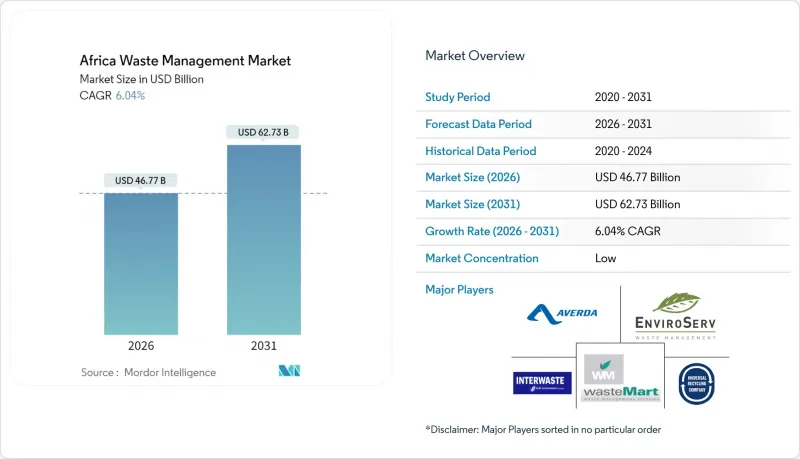
급속한 도시화로 인해 전례 없는 양의 폐기물이 가뜩이나 열악한 지자체 시스템에 유입되면서 민간 부문의 수거, 처리, 재활용 솔루션에 대한 수요가 증가하고 있습니다. 정부가 생산자책임재활용제도(EPR) 확대 시행을 앞두고 투자자들의 관심이 높아지고 있습니다. 한편, 기술 기업들은 AI를 활용한 경로 최적화를 도입하여 수집 효율을 높이고 있습니다. 폐기물 에너지화(WtE) 사업자는 기후변화 대응 자금 지원을 확보하고 있으나, 그 외의 대규모 처리시설에 대해서는 여전히 자금 공백이 존재합니다. 경쟁은 여전히 분산되어 있지만, 컴플라이언스 비용의 상승으로 인해 비공식 수집업체를 공식적인 가치사슬에 통합할 수 있는 사업자가 유리한 입장에 서게 되었습니다.
아프리카 폐기물 관리 시장 동향과 인사이트
도시 인구 증가가 도시 쓰레기 발생량 증가를 주도합니다.
아프리카 도시 지역에서는 연간 약 2,200만 명의 신규 거주자가 증가하면서 가정 내 소비와 일일 폐기물 유출량이 증가하고 있습니다. 라고스 시에서만 하루 13,000-14,000톤의 폐기물이 발생하지만, 공식적인 재활용으로 전환되는 비율은 0.37%에 불과해 심각한 인프라 부족을 드러내고 있습니다. 수거차량의 확충을 따라잡지 못해 지자체는 업무의 외주화, 중계소 및 자원회수시설에 대한 민간투자를 촉진하고 있습니다. 도시 폐기물의 집중 처리는 톤당 처리 비용을 낮추고, 폐기물 에너지화(WtE) 및 선별 플랜트의 프로젝트 경제성을 향상시킵니다. 따라서 인구통계학적 추세로 볼 때, 2030년 이후에도 일반폐기물(MSW)은 아프리카 폐기물 관리 시장의 근간을 이룰 것으로 보입니다.
정부의 재활용 목표 상향 조정 및 EPR 프레임워크 추진
케냐의 2024년 EPR 규정은 생산자에게 폐기물 회수 및 재활용에 대한 자금 부담을 의무화하고 있으며, 이는 남아프리카공화국의 '국가환경관리폐기물법'에 근거한 의무적 제도를 반영하고 있습니다. 이집트에서는 비공식 폐기물 수거업체와 허가받은 가공업체를 연결하는 지속가능한 재활용 이니셔티브를 통해 생계를 유지하면서 재료의 품질을 향상시키고 있습니다. 컴플라이언스 비용으로 인해 재활용은 자발적 프로그램에서 법적 의무로 전환되고 있으며, 브랜드 소유자는 인증된 사업자와 장기적인 서비스 계약을 체결해야 하는 상황입니다. 이러한 의무화로 인해 플라스틱, 금속, 전자폐기물 재활용 시설의 원료 공급량이 꾸준히 증가하여 아프리카 폐기물 관리 시장 전체의 수익을 뒷받침하고 있습니다.
매립 규제 및 집행의 취약성
동아프리카 폐기물의 90% 이상이 여전히 야적장에 버려져 지하수를 위협하는 메탄가스와 침출수를 배출하고 있습니다. 아디스아바바의 레피(Lepi) 매립장만 해도 무검사 폐기물이 반입되는 반면, 아디스아바바의 공식적인 폐기물 수거율은 65%에 불과합니다. 규제 집행이 미흡하여 무허가 운반업자가 게이트 수수료를 회피함으로써 규제를 준수하는 사업자를 가격적으로 압박하여 설계된 매립지의 경제성을 훼손하고 있습니다. 통일된 검사 체계가 마련되지 않아 지방정부는 운영비용을 회수할 수 없고, 오염자 부담 원칙을 집행할 수 없으며, 아프리카 폐기물 관리 시장 전체에서 폐기물 처리 인프라의 현대화가 지연되고 있습니다.
부문 분석
2025년, 도시로의 인구 이동에 따른 가정 내 소비 증가로 인해 주택 폐기물은 아프리카 폐기물 관리 시장의 60.45%를 차지했습니다. 한편, 상업용 폐기물량은 쇼핑몰 및 사무실 확장으로 인해 정기적인 수거 및 안전한 문서 파기에 대한 수요가 증가하면서 8.52%의 CAGR로 증가할 것으로 예상됩니다. 소매 체인은 EPR(확대 생산자책임재활용제도)에 따른 회수 의무를 이행하기 위해 다년 계약을 체결하여 통합 서비스 사업자에게 예측 가능한 처리량을 제공합니다. 산업폐기물 발생업체들은 특히 남아프리카공화국에서 강화되는 유해 폐기물 규제에 직면하여 허가된 처리 파트너에 대한 의존도를 높이고 있습니다. 의료 폐기물도 의료투자 증가에 따라 증가 추세에 있으며, 인증된 소각업체에게 고수익의 틈새시장을 형성하고 있습니다.
아프리카 폐기물 관리 시장은 다양한 원료 공급원의 혜택을 받고 있습니다. 인프라 예산 증가에 따라 건설 및 철거 폐기물이 증가하는 반면, 도시 주변 지역에서는 농업 잔재물이 바이오가스화 기회를 제공하고 있습니다. 베올리아가 여러 아프리카 국가에서 운영하고 있는 다원화 서비스 모델은 주거용과 상업용 계약을 결합하여 처리량과 고수익 특수 폐기물의 균형을 맞추는 가치를 입증하고 있습니다. 비공식 네트워크는 플라스틱 수거에 있어 여전히 중요하지만, 표준화된 안전 교육과 모바일 결제를 통한 투명성을 제공하는 프랜차이즈 방식을 통해 공식적인 집적업체가 이를 흡수하기 시작했습니다.
아프리카 폐기물 관리 보고서는 발생원별(주거, 상업, 산업, 산업, 의료 등), 서비스 유형별(수집, 운송, 선별 및 분류 등), 폐기물 종류별(일반 폐기물, 산업 유해 폐기물, 전자폐기물, 플라스틱 등), 지역별(나이지리아, 남아프리카공화국, 이집트, 케냐, 기타 아프리카 국가) 로 분류되어 있습니다. 시장 예측은 금액 기준(USD)으로 제공됩니다.
기타 특전:
- 엑셀 형식의 시장 예측(ME) 시트
- 애널리스트의 3개월간 지원
자주 묻는 질문
목차
제1장 소개
제2장 조사 방법
제3장 주요 요약
제4장 시장 구도
제5장 시장 규모와 성장 예측(금액, 단위 : 10억 달러)
제6장 경쟁 구도
제7장 시장 기회와 향후 전망
KSM 26.03.05The Africa Waste Management Market size in 2026 is estimated at USD 46.77 billion, growing from 2025 value of USD 44.11 billion with 2031 projections showing USD 62.73 billion, growing at 6.04% CAGR over 2026-2031.
Rapid urbanization funnels unprecedented waste volumes into already-strained municipal systems, creating space for private-sector collection, treatment, and recycling solutions. Investor appetite grows as governments adopt extended producer responsibility (EPR) rules, while technology firms deploy AI-enabled route optimization to raise collection efficiencies. Waste-to-energy (WtE) developers are securing climate-finance backing, yet capital gaps persist for other large-scale treatment assets. Competition remains fragmented, but rising compliance costs favor operators able to integrate informal collectors into formal value chains.
Africa Waste Management Market Trends and Insights
Rising Urban Population Driving Municipal Solid Waste Volumes
Africa's cities gain roughly 22 million new residents every year, elevating household consumption and daily waste flows. Lagos alone generates 13,000-14,000 tons of refuse each day, yet formal recycling diverts just 0.37%, underscoring severe infrastructure gaps. Collection fleets struggle to keep pace, prompting municipalities to outsource operations and invite private investment in transfer stations and material-recovery facilities. Concentrated urban waste streams lower per-ton processing costs, improving project economics for WtE and sorting plants. Demographic trends will therefore keep municipal solid waste (MSW) the anchor of the Africa waste management market well beyond 2030.
Government Push for Higher Recycling Targets & EPR Frameworks
Kenya's 2024 EPR regulations oblige producers to finance end-of-life collection and recycling, mirroring South Africa's mandatory schemes under the National Environmental Management Waste Act. Egypt has rolled out a sustainable recycling initiative that links informal pickers to licensed processors, raising material quality while preserving livelihoods. Compliance costs are shifting recycling from voluntary programs to legally enforced obligations, pushing brand owners to sign long-term service contracts with certified operators. These mandates steadily enlarge feedstock volumes for plastic, metal, and e-waste recycling facilities, bolstering revenues across the Africa waste management market.
Weak Landfill Regulation & Enforcement
More than 90% of East Africa's waste still winds up in open dumps, releasing methane and leachate that threaten groundwater. Addis Ababa's Repi site alone receives wastes unchecked, yet only 65% of the city's refuse is formally collected. Non-enforcement allows unlicensed haulers to undercut compliant operators by dodging gate fees, eroding the economics of engineered landfills. Without uniform inspection regimes, municipalities cannot recover operating costs or enforce polluter-pays principles, delaying modernization of disposal infrastructure across the Africa waste management market.
Other drivers and restraints analyzed in the detailed report include:
- Growing Investor Interest in Waste-to-Energy Projects
- Digitized Collection & Route-Optimization Platforms
- Capital Scarcity for Large-Scale Treatment Assets
For complete list of drivers and restraints, kindly check the Table Of Contents.
Segment Analysis
Residential streams secured 60.45% of the Africa waste management market share in 2025 as household consumption grew alongside urban migration. Commercial volumes, however, are projected to post an 8.52% CAGR, fueled by mall and office expansion that heightens demand for scheduled pickups and secure document destruction. Retail chains sign multi-year contracts to meet EPR take-back obligations, adding predictable tonnage for integrated service providers. Industrial generators confront tighter hazardous-waste regulations, particularly in South Africa, pushing them toward licensed disposal partners. Medical waste also rises with increased healthcare investment, creating a high-margin niche for certified incineration firms.
The Africa waste management market benefits from diverse feedstocks: construction and demolition debris escalates as infrastructure budgets climb, while agricultural residues present biogas opportunities in peri-urban zones. Veolia's multi-source service model across several African countries showcases the value of bundling residential and commercial contracts to balance volume with higher-yield specialty waste. Informal networks remain pivotal for plastics retrieval, yet formalized aggregators are beginning to absorb them via franchise schemes that deliver standardized safety training and mobile-payment transparency.
The Africa Waste Management Report is Segmented by Source (Residential, Commercial, Industrial, Medical, and More), by Service Type (Collection, Transportation, Sorting & Segregation, and More), by Waste Type (Municipal Solid, Industrial Hazardous, E-Waste, Plastic, and More), and by Geography (Nigeria, South Africa, Egypt, Kenya, Rest of Africa). The Market Forecasts are Provided in Terms of Value (USD).
List of Companies Covered in this Report:
- Averda
- EnviroServ
- Interwaste
- WasteMart
- Universal Recycling Company
- Desco
- PETCO
- The Glass Recycling Company
- Oricol Environmental Services
- WeCyclers
- The Waste Group
- SA Waste
- Veolia Africa
- SUEZ Recycling & Recovery Africa
- Biffa South Africa
- Mr Green Africa
- TakaTaka Solutions
- EcoPost
- Stericycle (MedWaste Africa)
- Dangote Recycling
Additional Benefits:
- The market estimate (ME) sheet in Excel format
- 3 months of analyst support
TABLE OF CONTENTS
1 Introduction
- 1.1 Study Assumptions & Market Definition
- 1.2 Scope of the Study
2 Research Methodology
3 Executive Summary
4 Market Landscape
- 4.1 Market Overview
- 4.2 Market Drivers
- 4.2.1 Rising urban population driving municipal solid waste volumes
- 4.2.2 Government push for higher recycling targets & EPR frameworks
- 4.2.3 Growing investor interest in waste-to-energy (WtE) projects
- 4.2.4 Digitised collection & route-optimisation platforms
- 4.2.5 Off-grid micro-pyrolysis for plastics-to-fuel in remote mines
- 4.3 Market Restraints
- 4.3.1 Weak landfill regulation & enforcement
- 4.3.2 Capital scarcity for large-scale treatment assets
- 4.3.3 Informal sector lock-in that deters formal private investment
- 4.3.4 Climate-linked insurance gaps for WtE plants
- 4.4 Value / Supply-Chain Analysis
- 4.5 Regulatory Landscape
- 4.6 Technological Outlook
- 4.7 Industry Attractiveness - Porter's Five Force Analysis
- 4.7.1 Threat of New Entrants
- 4.7.2 Bargaining Power of Suppliers
- 4.7.3 Bargaining Power of Buyers
- 4.7.4 Threat of Substitutes
- 4.7.5 Intensity of Competitive Rivalry
- 4.8 Logistics Infrastructure Insights
- 4.9 Startup & Innovation Spotlight
5 Market Size & Growth Forecasts (Value, In USD Billion)
- 5.1 By Source
- 5.1.1 Residential
- 5.1.2 Commercial (retail, office, etc.)
- 5.1.3 Industrial
- 5.1.4 Medical (Health and Pharmaceutical)
- 5.1.5 Construction & Demolition
- 5.1.6 Others (institutional, agricultural, etc)
- 5.2 By Service Type
- 5.2.1 Collection, Transportation, Sorting & Segregation
- 5.2.2 Disposal / Treatment
- 5.2.2.1 Landfill
- 5.2.2.2 Recycling & Resource Recovery
- 5.2.2.3 Incineration & Waste-to-Energy
- 5.2.2.4 Others (Chemical Treatment, Composting, etc.)
- 5.2.3 Others (Consulting, Audit & Training, etc.)
- 5.3 By Waste Type
- 5.3.1 Municipal Solid Waste
- 5.3.2 Industrial Hazardous Waste
- 5.3.3 E-waste
- 5.3.4 Plastic Waste
- 5.3.5 Biomedical Waste
- 5.3.6 Construction & Demolition Waste
- 5.3.7 Agricultural Waste
- 5.3.8 Other Specialized Waste (radio active, etc)
- 5.4 By Geography
- 5.4.1 Nigeria
- 5.4.2 South Africa
- 5.4.3 Egypt
- 5.4.4 Kenya
- 5.4.5 Rest of Africa
6 Competitive Landscape
- 6.1 Market Concentration
- 6.2 Strategic Moves
- 6.3 Market Share Analysis
- 6.4 Company Profiles (includes Global level Overview, Market level overview, Core Segments, Financials as available, Strategic Information, Products & Services, and Recent Developments)
- 6.4.1 Averda
- 6.4.2 EnviroServ
- 6.4.3 Interwaste
- 6.4.4 WasteMart
- 6.4.5 Universal Recycling Company
- 6.4.6 Desco
- 6.4.7 PETCO
- 6.4.8 The Glass Recycling Company
- 6.4.9 Oricol Environmental Services
- 6.4.10 WeCyclers
- 6.4.11 The Waste Group
- 6.4.12 SA Waste
- 6.4.13 Veolia Africa
- 6.4.14 SUEZ Recycling & Recovery Africa
- 6.4.15 Biffa South Africa
- 6.4.16 Mr Green Africa
- 6.4.17 TakaTaka Solutions
- 6.4.18 EcoPost
- 6.4.19 Stericycle (MedWaste Africa)
- 6.4.20 Dangote Recycling
7 Market Opportunities & Future Outlook
- 7.1 White-space & Unmet-need Assessment