

|
시장보고서
상품코드
2072700
미국의 성선 생식선 기질 종양 시장 : 시장 점유율 분석, 업계 동향 및 통계, 성장 예측(2026-2031년)US Sex Cord Gonadal Stromal Tumor - Market Share Analysis, Industry Trends & Statistics, Growth Forecasts (2026 - 2031) |
||||||
 Mordor Intelligence
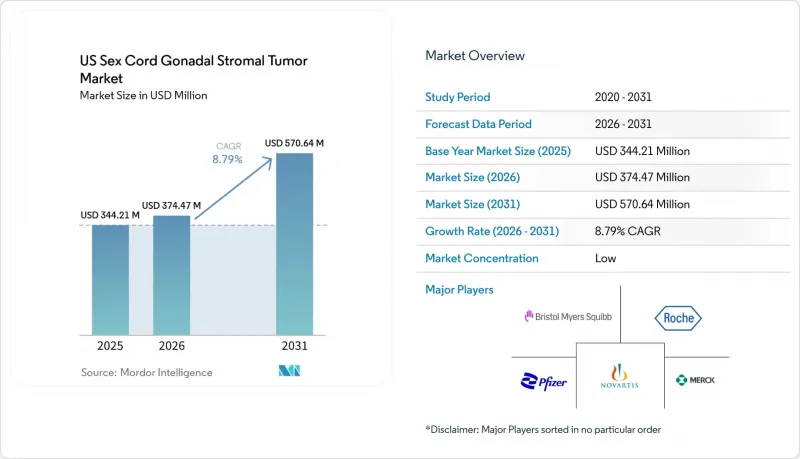
Mordor Intelligence에 의하면, 미국의 성선 생식선 기질 종양 시장 규모는 2025년 3억 4,421만 달러로 평가되었고, 2026년 3억 7,447만 달러로 추정되고, 2031년까지 5억 7,064만 달러로 확대될 것으로 예측되며, 2026-2031년 연평균 복합 성장률(CAGR)은 8.79%를 나타낼 전망입니다.
본 보고서는 종양 유형별(성인 과립막세포종, 청소년 과립막세포종, 셀트리-라이디히 세포종, 테코마, 섬유종 및 섬유테코마, 스테로이드세포종, 기타 생식선 종양), 제품 유형별(진단 및 치료), 최종 사용자별(병원, 전문 암 센터, 외래수술센터(ASC), 진단 검사 기관, 학술 기관)로 분류되어 있습니다. 시장 전망은 금액(달러) 기준으로 제시되어 있습니다.
미국의 성선 생식선 기질 종양 시장 동향 및 인사이트
희귀질환인 난소 성선 생식선 기질 종양에 대한 FDA 승인 치료법의 접근성 확대
FDA는 2025년 5월, KRAS 변이를 가진 재발성 저악성도 장액성 난소암 환자를 대상으로, 아부토메티닙과 데파크티닙을 병용하는 Verastem의 'Avmapki Fakzynja Co-Pack'을 승인했습니다. 이번 승인은 정밀 종양학의 가능성을 부각시킨 동시에, 호르몬 민감성 난소 종양 치료에 있어 선례를 마련했습니다. 이는 틈새 시장이자 분자 수준에서 정의된 부문라 하더라도 규제 당국의 승인을 받아 7년간 희귀질환 치료제(오펀 드럭) 독점권을 확보할 수 있음을 보여줍니다. FDA의 '실시간 종양학 리뷰'는 경쟁이 여전히 제한적인 미국의 성선 생식선 기질 종양 시장에서 FOXL2, DICER1, NOTCH1 등의 바이오마커 주도형 전략을 뒷받침하고 있습니다.
바이오마커를 기반으로 한 환자 선별 확대
바이오마커 검사를 통해 미국 성선 생식선 기질 종양 시장의 환자 기반이 확대되고 있습니다. UCSF Health 및 Mayo Clinic Laboratories와 같은 의료 기관에서는 표준화된 워크플로우를 통해 FOXL2 C402G 검사를 제공하고 있으며, 이를 통해 치료 계획을 신속하게 수립하고 신뢰성 높은 경과 관찰이 가능해졌습니다. 2025년에 발표된 연구에 따르면, FOXL2 변이형 순환 종양 DNA가 성인 과립막세포종에서 수술 후 질병 진행을 예측할 수 있는 것으로 나타났습니다. 또 다른 연구에서는 DICER1 변이를 가진 셀트리-라이디히 세포종양이 증식 활성이 높고 예후가 불량하다는 점이 강조되었으며, 진단 시 유전자형 분석의 중요성이 밝혀졌습니다. 이러한 발전으로 인해 진단 정확도가 향상되었으며, 지속적인 수익원이 창출되고 있습니다.
대상 환자 수가 극히 적으며, 재발이 후기 단계에서 나타나는 경향이 있습니다.
미국의 성선 생식선 기질 종양 시장은 환자 수가 적고, 연간 신규 환자 수가 고작 1,500-2,000건에 그치기 때문에 제약에 직면해 있습니다. 성인의 과립막세포종은 진단 후 수년 후에 재발하는 경우가 많으며, 수요가 장기간에 걸쳐 분산되기 때문에 상황은 더욱 복잡합니다. 『Journal of Ovarian Research』의 2024년 조사에 따르면, 재발률은 6-48%이며, 사망 사례의 50-80%는 재발 후에 발생하고 있습니다. 치료의 집중도는 재발한 소수의 사례로 한정되어 있으며, 시장 성장을 제한하는 요인은 치료법의 보급보다는 오히려 질병의 역학적 특성에 기인합니다.
부문별 분석
2025년, 성인 그레인울라 세포종은 미국 성선 간질 종양 시장의 59.6%를 차지했습니다. 청소년기 과립막세포종 시장은 2031년까지 연평균 성장률(CAGR) 9.88%로 성장할 것으로 전망됩니다. 성인형 종양은 그 임상적 유병률과 장기적인 재발 경향으로 인해 수익의 상당 부분을 차지하고 있으며, 이로 인해 장기간에 걸친 경과 관찰과 치료가 필요합니다. CDK4/6 억제제를 이용한 병용 요법은 재발한 성인 과립막세포종의 후기 치료 옵션으로 주목받고 있으며, 연구 결과 부분 반응률 27.3%, 병세 안정률 54.5%가 보고되었습니다. 청소년기 과립막세포종은 DICER1에 초점을 맞춘 소아용 프로그램이 증가함에 따라 시장 규모가 더욱 빠르게 확대되고 있습니다. 한편, 셀트리-라이디히 세포종은 TERT 및 TP53의 변이가 예후 불량을 나타내기 때문에 진단상 중요성이 커지고 있습니다. 테코마, 섬유종/섬유성 테코마 및 스테로이드세포종은 안정적인 수요를 유지하고 있으며, 분자적 특징이 규명됨에 따라 향후 발전이 기대됩니다.
기타 혜택 :
- 엑셀 형식 시장 예측(ME) 시트
- 3개월간의 애널리스트 지원
자주 묻는 질문
목차
제1장 서론
제2장 조사 방법
제3장 주요 요약
제4장 시장 구도
제5장 시장 규모 및 성장 예측
제6장 경쟁 구도
제7장 시장 기회 및 향후 전망
AJY 26.07.03According to Mordor Intelligence, the US sex cord gonadal stromal tumor market size is projected to expand from USD 344.21 million in 2025 and USD 374.47 million in 2026 to USD 570.64 million by 2031, registering a CAGR of 8.79% between 2026 to 2031.
This report is Segmented by Tumor Type (Adult Granulosa Cell, Juvenile Granulosa Cell, Sertoli-Leydig Cell, Thecoma, Fibroma and Fibrothecoma, Steroid Cell, and Other Sex Cord Tumors), Product Type (Diagnosis and Treatment), and End User (Hospitals, Specialty Cancer Centers, Ambulatory Surgical Centers, Diagnostic Laboratories, and Academic Institutes). Market Forecasts are in Terms of Value (USD).
US Sex Cord Gonadal Stromal Tumor Market Trends and Insights
Rising FDA-Backed Treatment Access for Rare Ovarian Sex Cord-Stromal Tumors
The FDA approved Verastem's Avmapki Fakzynja Co-Pack in May 2025, combining avutometinib and defactinib for KRAS-mutated recurrent low-grade serous ovarian cancer. This approval highlights the potential of precision oncology and sets a precedent for hormone-sensitive ovarian tumor treatments. It demonstrates that niche, molecularly defined segments can achieve regulatory approval and secure 7-year Orphan Drug exclusivity. The FDA's Real-Time Oncology Review is encouraging biomarker-driven strategies like FOXL2, DICER1, and NOTCH1 in the United States sex cord gonadal stromal tumor market, where competition remains limited.
Expanding Biomarker-Driven Patient Identification
Biomarker testing is broadening the patient base in the United States sex cord gonadal stromal tumor market. Institutions like UCSF Health and Mayo Clinic Laboratories now offer FOXL2 C402G testing through standardized workflows, enabling faster treatment planning and reliable monitoring. A 2025 study showed FOXL2-mutant circulating tumor DNA predicts post-operative disease progression in adult granulosa cell tumors. Another study highlighted that DICER1-mutant Sertoli-Leydig cell tumors have higher proliferative activity and worse prognosis, emphasizing the importance of genotyping at diagnosis. These advancements enhance diagnostic accuracy and create recurring revenue streams.
Very Small Eligible Patient Pool and Late Recurrence Patterns
The United States market for sex cord gonadal stromal tumors faces constraints due to a small patient base, with only 1,500-2,000 new cases annually. Adult granulosa cell tumors add complexity as recurrences often occur years after diagnosis, spreading demand over an extended timeline. A 2024 study in the Journal of Ovarian Research reported recurrence rates of 6-48%, with 50-80% of fatal cases occurring after relapse. Treatment intensity is concentrated on a small recurrent subset, limiting market growth more by disease epidemiology than treatment adoption.
Other drivers and restraints analyzed in the detailed report include:
- Growing Clinical Use of Surgery Plus Systemic Therapy
- Increasing Trial Activity in Low-Grade Serous and Granulosa Cell Tumors
- High Dependence on Expert Pathology and Molecular Confirmation
For complete list of drivers and restraints, kindly check the Table Of Contents.
Segment Analysis
In 2025, adult granulosa cell tumors accounted for 59.6% of the United States sex cord gonadal stromal tumor market. Juvenile granulosa cell tumors are projected to grow at a 9.88% CAGR through 2031. Adult-type tumors dominate revenue due to their clinical prevalence and long-term recurrence, which drives extended surveillance and treatment. CDK4/6 inhibitor combinations are gaining traction as a later-line option for recurrent adult granulosa cell tumors, with studies showing partial response rates of 27.3% and stable disease rates of 54.5%. Juvenile granulosa cell tumors are expanding faster due to increased DICER1-focused pediatric programs, while Sertoli-Leydig cell tumors are becoming diagnostically significant with TERT and TP53 mutations indicating a less favorable prognosis. Thecomas, fibroma/fibrothecomas, and steroid cell tumors maintain stable demand, with potential for future advancements as molecular features are clarified.
Complete Report Scope:
- By Tumor Type
- Adult Granulosa Cell Tumor
- Juvenile Granulosa Cell Tumor
- Sertoli-Leydig Cell Tumor
- Thecoma
- Fibroma and Fibrothecoma
- Steroid Cell Tumor
- Other Sex Cord Gonadal Stromal Tumors
- By Product Type
- Diagnosis
- Imaging
- Histopathology
- Immunohistochemistry
- Molecular Testing
- Tumor Marker Testing
- Treatment
- Surgery
- Chemotherapy
- Hormonal Therapy
- Targeted Therapy
- Immunotherapy
- Radiation Therapy
- Diagnosis
- By End User
- Hospitals
- Specialty Cancer Centers
- Ambulatory Surgical Centers
- Diagnostic Laboratories
- Academic and Research Institutes
List of Companies Covered in this Report:
- Abbvie
- Amgen
- AstraZeneca
- Bayer
- Biocon Biologics Inc.
- Bristol-Myers Squibb
- Eisai
- Eli Lilly and Company
- Roche
- Genentech
- GlaxoSmithKline
- Hikma Pharmaceuticals
- Merck
- Novartis
- Pfizer
- Sanofi
- Sun Pharmaceuticals Industries
- Takeda Pharmaceuticals
- Teva Pharmaceutical Industries
- Verastem, Inc.
Additional Benefits:
- The market estimate (ME) sheet in Excel format
- 3 months of analyst support
TABLE OF CONTENTS
1 INTRODUCTION
- 1.1 Study Assumptions and Market Definition
- 1.2 Scope of the Study
2 RESEARCH METHODOLOGY
3 EXECUTIVE SUMMARY
4 MARKET LANDSCAPE
- 4.1 Market Overview
- 4.2 Market Drivers
- 4.2.1 Rising FDA-Backed Treatment Access for Rare Ovarian Subtypes
- 4.2.2 Expanding Biomarker-Driven Patient Identification
- 4.2.3 Growing Clinical Use of Surgery Plus Systemic Therapy Pathways
- 4.2.4 Increasing Trial Activity in Low-Grade Serous and Granulosa Cell Disease
- 4.2.5 Improved Referral Networks to Sarcoma and Gynecologic Oncology Centers
- 4.2.6 Wider Adoption of Oral Targeted and Hormonal Regimens
- 4.3 Market Restraints
- 4.3.1 Very Small Eligible Patient Pool and Late Recurrence Pattern
- 4.3.2 High Dependence on Expert Pathology and Molecular Confirmation
- 4.3.3 Limited Label-Specific Commercial Products for Most Subtypes
- 4.3.4 Reimbursement Friction for Off-Label Hormonal and Targeted Use
- 4.4 Value Chain and Supply Chain Analysis
- 4.5 Regulatory Landscape
- 4.6 Technological Outlook
- 4.7 Porter's Five Forces Analysis
- 4.7.1 Bargaining Power of Suppliers
- 4.7.2 Bargaining Power of Buyers
- 4.7.3 Threat of New Entrants
- 4.7.4 Threat of Substitutes
- 4.7.5 Competitive Rivalry
5 MARKET SIZE AND GROWTH FORECASTS (VALUE, USD)
- 5.1 By Tumor Type
- 5.1.1 Adult Granulosa Cell Tumor
- 5.1.2 Juvenile Granulosa Cell Tumor
- 5.1.3 Sertoli-Leydig Cell Tumor
- 5.1.4 Thecoma
- 5.1.5 Fibroma and Fibrothecoma
- 5.1.6 Steroid Cell Tumor
- 5.1.7 Other Sex Cord Gonadal Stromal Tumors
- 5.2 By Product Type
- 5.2.1 Diagnosis
- 5.2.1.1 Imaging
- 5.2.1.2 Histopathology
- 5.2.1.3 Immunohistochemistry
- 5.2.1.4 Molecular Testing
- 5.2.1.5 Tumor Marker Testing
- 5.2.2 Treatment
- 5.2.2.1 Surgery
- 5.2.2.2 Chemotherapy
- 5.2.2.3 Hormonal Therapy
- 5.2.2.4 Targeted Therapy
- 5.2.2.5 Immunotherapy
- 5.2.2.6 Radiation Therapy
- 5.2.1 Diagnosis
- 5.3 By End User
- 5.3.1 Hospitals
- 5.3.2 Specialty Cancer Centers
- 5.3.3 Ambulatory Surgical Centers
- 5.3.4 Diagnostic Laboratories
- 5.3.5 Academic and Research Institutes
6 COMPETITIVE LANDSCAPE
- 6.1 Market Concentration
- 6.2 Market Share Analysis
- 6.3 Company Profiles (includes Global Level Overview, Market Level Overview, Core Segments, Financials as available, Strategic Information, Market Rank/Share, Products and Services, Recent Developments)
- 6.3.1 AbbVie Inc.
- 6.3.2 Amgen Inc.
- 6.3.3 AstraZeneca PLC
- 6.3.4 Bayer AG
- 6.3.5 Biocon Biologics Inc.
- 6.3.6 Bristol-Myers Squibb Company
- 6.3.7 Eisai Co., Ltd.
- 6.3.8 Eli Lilly and Company
- 6.3.9 F. Hoffmann-La Roche AG
- 6.3.10 Genentech, Inc.
- 6.3.11 GSK plc
- 6.3.12 Hikma Pharmaceuticals PLC
- 6.3.13 Merck & Co., Inc.
- 6.3.14 Novartis AG
- 6.3.15 Pfizer Inc.
- 6.3.16 Sanofi S.A.
- 6.3.17 Sun Pharmaceutical Industries Limited
- 6.3.18 Takeda Pharmaceutical Company Limited
- 6.3.19 Teva Pharmaceutical Industries Limited
- 6.3.20 Verastem, Inc.
7 MARKET OPPORTUNITIES AND FUTURE OUTLOOK
- 7.1 White-Space and Unmet-Need Assessment


