|
시장보고서
상품코드
2073115
동남아시아의 그린 IT 소프트웨어 및 클라우드 지속가능성 시장 : 점유율 분석, 업계 동향과 통계, 성장 예측(2026-2031년)Southeast Asia Green IT Software and Cloud Sustainability - Market Share Analysis, Industry Trends & Statistics, Growth Forecasts (2026 - 2031) |
||||||
 Mordor Intelligence
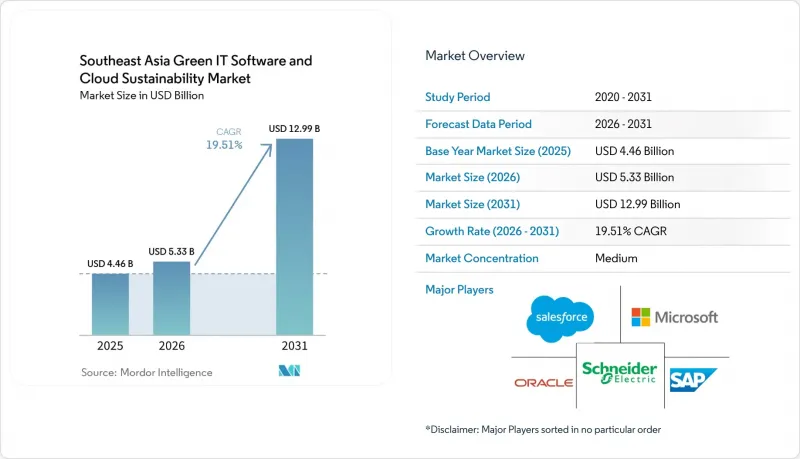
Mordor Intelligence에 의하면, 동남아시아 그린 IT 소프트웨어 및 클라우드 지속가능성 시장 규모는 2025년에 44억 6,000만 달러로 평가되었고 2026년 53억 3,000만 달러에서 2031년까지 129억 9,000만 달러에 이를 것으로 예측되며, 예측 기간(2026-2031년) CAGR은 19.51%를 나타낼 전망입니다.
본 보고서는 솔루션별(에너지 효율이 높은 인프라, 지속 가능한 클라우드 플랫폼 등), 도입 모델별(클라우드 기반, On-Premise), 조직 규모별(대기업, 중소기업), 최종 사용자별(은행 및 금융 서비스·보험 등) 및 지역별로 분류되어 있습니다. 시장 전망치는 금액(달러)으로 표시되어 있습니다.
동남아시아 그린 IT 소프트웨어 및 클라우드 지속가능성 시장 동향과 인사이트
가속화되는 기업의 클라우드 현대화
동남아시아의 그린 IT 소프트웨어 및 클라우드 지속가능성 시장은 기업들이 레거시 시스템을 단일 환경에서 성능과 지속가능성을 관리하는 플랫폼으로 대체하는 추세에 힘입어, 기업의 클라우드 현대화로부터 직접적인 추진력을 얻고 있습니다. 이러한 교체 주기가 중요한 이유는 기업이 레거시 인프라를 확장하는 것이 아니라 워크로드를 재구축할 때, 친환경 소프트웨어나 클라우드 지속가능성 도구를 도입하기가 쉬워지기 때문입니다. 말레이시아의 ‘디지털 생태계 가속화" 인센티브 체계에서는 데이터센터에 대한 투자 지원과 최소 한 가지의 친환경 기술 도입이 연계되어 있으며, 이를 통해 지속 가능한 도입 기준이 새로운 디지털 용량 결정에 밀접하게 반영되도록 되어 있습니다. "2025년에 말레이시아 중소기업을 대상으로 실시된 조사에 따르면, 체계적인 IT 역량과 클라우드 아키텍처에 대한 이해 심화가 기업의 실적 향상으로 이어지는 것으로 밝혀졌으며, 클라우드 도입 준비는 기술적인 문제일 뿐만 아니라 조직적인 과제이기도 함을 시사하고 있습니다. 이러한 추세는 소프트웨어를 단독으로 판매하는 것이 아니라, 교육, 아키텍처 지원, 보고서 작성 도구를 패키지로 제공할 수 있는 공급업체를 뒷받침하고 있습니다. 침몰 비용을 과거의 일로 만드는 기업이 늘어남에 따라, 동남아시아의 클라우드 지속가능성 시장에서는 ‘클라우드 퍼스트’ 도입과 관련해 초기 단계의 구매가 계속해서 가속화될 것으로 전망됩니다.
다국적 기업 고객들로부터의 탄소 보고에 대한 압력
동남아시아의 그린 IT 소프트웨어 및 클라우드 지속가능성 시장은 고객 주도의 보고 압박에 의해서도 형성되고 있습니다. 이는 대규모 구매자들이 현재 공급업체들에게 공식 공개 자료에 검증 및 재사용이 가능한 탄소 데이터를 제공할 것을 기대하고 있기 때문입니다. 2025년 7월 Zevero가 싱가포르의 Tai Sin Electric과 제휴한 사례는 증권거래소와 관련된 기후 변화 공시 요건이 이미 상장 기업 차원의 소프트웨어 선정에 영향을 미치고 있음을 보여주었습니다. 이러한 유형 수요는 독립적인 지속가능성 활동으로서가 아니라 조달, 자금 조달, 시장 진입에 관한 의사결정에 반영되어 있기 때문에 미루기 어렵습니다. 베트남의 수출 제조업체들은 탄소 투명성이 외부 고객의 요구 사항 및 해외 무역 조건과 점점 더 밀접하게 연결되어 있기 때문에 이러한 압박을 더욱 직접적으로 받고 있습니다. 싱가포르의 Gprnt 플랫폼은 Ant International과 미쓰비시 UFJ 은행으로부터 462만 달러의 시드 자금을 유치하여 2025년 5월에 출범했습니다. 이 플랫폼은 정부의 공공요금 데이터를 활용하여 기업의 지속가능성 지표 생성을 자동화함으로써, 중소기업의 보고 부담을 줄이고 있습니다. 대기업들은 보고 요건을 Tier 1 및 Tier 2 공급업체에 하도급으로 맡기는 경우가 많기 때문에 이러한 구조는 동남아시아의 친환경 정보기술·소프트웨어 및 클라우드 지속가능성 시장에서 보다 광범위한 구매자 기반을 형성하고 있습니다.
기존 IT 환경에서 전환하는 데 드는 높은 비용
동남아시아의 그린 IT 소프트웨어 및 클라우드 지속가능성 시장은 레거시 환경에서 전환하는 데 드는 비용이 높기 때문에 여전히 실질적인 성장 둔화를 겪고 있습니다. 많은 기업은 첨단 지속가능성 도구를 효과적으로 활용하기 전에, 핵심 시스템을 현대화해야 하기 때문입니다. 전환 프로그램이 몇 분기 동안 진행되면서 초기 투자보다 늦게 비용 절감 효과가 나타나는 경우, 해당 지출에 대한 승인을 얻기 어려운 것이 현실입니다. 『Cogent Business and Management』지의 2025년 조사에 따르면, 개발도상국 시장의 기관들에서 클라우드 전환은 기술적, 조직적, 문화적 장벽으로 인해 종종 지연되고 있으며, 이는 해당 지역의 규제 대상 부문 및 자산 집약적 부문 전반에서 나타나는 경향과 일치합니다. 이 문제는 여전히 맞춤형 On-Premise 시스템에 의존하고 있는 기업, 데이터 환경이 분산되어 있는 기업, 그리고 기술, 재무, 운영 부서 간에 책임 소재가 분산되어 있는 기업에서 특히 두드러집니다. 구매자가 새로운 도구의 규정 준수상 가치를 인정하더라도, 이를 위한 인프라 구축 작업으로 인해 조달 결정이 예산 주기 한 번 분량만큼 지연될 수 있습니다. 그 결과, 동남아시아의 그린 IT 소프트웨어 및 클라우드 지속가능성 시장은 클라우드 전환이 이미 진행 중인 지역에서는 급속히 성장하는 반면, 레거시 시스템 교체가 여전히 최우선 과제로 남아 있는 지역에서는 성장세가 둔화되고 있습니다.
부문별 분석
2025년, 동남아시아의 그린 IT 소프트웨어 및 클라우드 지속가능성 시장에서 “에너지 효율이 높은 인프라”는 55.39%를 차지하며, 해당 지역에서 가장 큰 솔루션 카테고리가 되었습니다. 이러한 우위는 서버 최적화, 냉각 소프트웨어, 워크로드 관리와 같은 항목들이 보다 광범위한 카본 플랫폼보다 승인받기 쉬웠기 때문에 투자의 첫 단계로서 역할을 수행했음을 반영합니다. 또한, 이 부문은 특히 신규 용량 증설이 보다 엄격한 운영 효율성 요건과 연계되어 있는 시장에서 지역별 데이터센터 확장의 혜택도 누렸습니다. 싱가포르의 ‘그린 데이터센터 로드맵”에서는 데이터센터용량 확충을 위해 최소 300MW를 목표로 삼았으며, 또한 친환경 에너지를 도입할 수 있는 사업자를 위해 200MW를 확보함으로써, 에너지 성능을 향상시키는 소프트웨어에 대한 수요가 견조한 추세를 보였습니다. 실제로 많은 구매자들이 보다 상세한 보고서 작성이나 탄소 관리 단계로 넘어가기 전에, 이 솔루션 카테고리를 통해 동남아시아의 그린 IT 소프트웨어 및 클라우드 지속가능성 시장에 진출했습니다.
탄소 관리 솔루션 시장은 2031년까지 연평균 성장률(CAGR) 20.56%로 확대될 것으로 예상되며, 동남아시아의 그린 IT 소프트웨어 및 클라우드 지속가능성 시장에서 가장 빠르게 성장하고 있는 솔루션 분야입니다. 수요가 확대되고 있는 배경에는 구매자들이 더 이상 단순한 효율성 향상뿐만 아니라, 실시간 가시화, 자동화된 정보 공개, 감사 가능한 배출량 기록을 요구하고 있기 때문입니다. 이러한 변화는 상장 기업, 수출 제조업체, 그리고 사업 전반 및 파트너에 이르는 범위에 대한 추적 강화를 요구하는 공급망 측의 보고 압박과 관련이 있습니다. 또한, 아세안(ASEAN) 촉매형 그린 파이낸스 기금이 공동 대출을 통한 그린 인프라 자금으로 10억 달러 이상을 조달함에 따라 자금 조달 환경도 개선되고 있으며, 지속가능성과 연계된 디지털 지출을 뒷받침할 여건이 점차 갖춰지고 있습니다. 지속 가능한 클라우드 플랫폼, 친환경 소프트웨어 도구, 자산 수명 주기 관리 용도의 중요성도 커지고 있지만, 동남아시아의 친환경 IT 소프트웨어 및 클라우드 지속가능성 시장이 성숙해짐에 따라 탄소 관리와 기업의 워크플로우를 연계할 수 있는 벤더들이 여전히 우위를 점하고 있습니다.
2025년, 클라우드 기반 솔루션은 동남아시아의 그린 IT 소프트웨어 및 클라우드 지속가능성 시장에서 68.47%의 점유율을 차지했으며, 이 지역 전체에서 호스팅형 서비스가 확실히 주도하고 있는 것으로 나타났습니다. 지속가능성 모니터링에는 대개 통합된 데이터 수집, 확장 가능한 분석 기능, 그리고 다수의 거점에 걸친 손쉬운 업데이트가 필요하기 때문에 이러한 형식은 소프트웨어 범주에 적합합니다. 또한, 구독 모델은 대규모 현지 인프라의 필요성을 줄이고 도입 기간을 단축하기 때문에 많은 구매자가 소프트웨어를 조달하는 방식과도 부합합니다. 따라서 동남아시아의 그린 IT 소프트웨어 및 클라우드 지속가능성 시장에서는 신속한 도입과 여러 국가에 걸친 유연한 보고서 작성을 요구하는 부문에서 ‘클라우드 퍼스트’ 전략이 주류를 이루고 있습니다. 운영 대시보드와 감사 요건을 결합하는 구매자가 늘어남에 따라, 클라우드를 통한 제공은 대부분의 신규 도입 사례에서 여전히 가장 간단한 출발점이 되고 있습니다.
한편, 은행이나 정부 기관, 그 밖의 기밀성이 높은 환경에서는 데이터 주권과 내부 통제가 여전히 기술 선정의 결정 요인으로 작용하고 있기 때문에 On-Premise 환경의 중요성은 계속해서 유지되고 있습니다. 이러한 도입은 모든 워크로드를 한꺼번에 퍼블릭 클라우드로 이전하지 않고도 에너지 및 탄소 배출량을 모니터링하고자 하는 기업들에게 종종 가교 역할을 수행하고 있습니다. 2025년 6월에 서명된 베트남의 제1121/QD-TTg호 결정은 클라우드 컴퓨팅 개발을 위한 국가 행동 계획을 승인하고, 친환경적이고 안전하며 고성능의 데이터센터 인프라 구축을 요구했습니다. 이를 통해 전환 경로가 달라도 지속가능성 요건이 계속해서 중요하게 여겨질 것임이 보장됩니다. 즉, 하이브리드 환경 전반에 걸쳐 보고서를 작성할 수 있는 벤더일수록, 복잡한 지역 규모의 프로젝트를 수주할 가능성이 높아집니다. 앞으로 동남아시아의 클라우드 지속가능성 시장에서는 고객에게 개별 도구의 관리를 강요하는 대신, 단일 보고 체계 하에서 클라우드와 On-Premise 양쪽의 워크로드를 모두 처리할 수 있는 공급업체가 우위를 점할 가능성이 높습니다.
기타 혜택:
- 엑셀 형식 시장 예측(ME) 시트
- 3개월간의 애널리스트 지원
자주 묻는 질문
목차
제1장 서론
제2장 조사 방법
제3장 주요 요약
제4장 시장 구도
제5장 시장 규모와 성장 예측
제6장 경쟁 구도
제7장 시장 기회와 향후 전망
JHS 26.07.09According to Mordor Intelligence, the southeast asia green IT software and Cloud Sustainability Market size was valued at USD 4.46 billion in 2025 and estimated to grow from USD 5.33 billion in 2026 to reach USD 12.99 billion by 2031, at a CAGR of 19.51% during the forecast period (2026-2031).
This report is Segmented by Solution (Energy-Efficient Infrastructure, Sustainable Cloud Platforms, and More), Deployment Model (Cloud-Based, and On-Premises), Organization Size (Large Enterprises, and Small and Medium Enterprises), End User (Banking, Financial Services, and Insurance, and More), and Geography. The Market Forecasts are Provided in Terms of Value (USD).
Southeast Asia Green IT Software and Cloud Sustainability Market Trends and Insights
Accelerated Enterprise Cloud Modernization
The Southeast Asia Green IT Software and Cloud Sustainability Market is receiving direct support from enterprise cloud modernization, as buyers replace legacy systems with platforms that manage performance and sustainability in a single environment. This replacement cycle matters because green software and cloud sustainability tools are easier to adopt when companies rebuild workloads rather than extending legacy infrastructure. Malaysia's Digital Ecosystem Acceleration incentive framework links data center investment support to the adoption of at least 1 green technology, which keeps sustainable deployment criteria close to new digital capacity decisions. A 2025 study on Malaysian SMEs found that structured IT competencies and a better understanding of cloud architecture improved firm performance, indicating that cloud readiness is not only a technical issue but also an organizational one. The same pattern supports vendors that can package training, architecture support, and reporting tools together rather than selling software in isolation. As more firms leave sunk investments behind, the Southeast Asia Cloud Sustainability Market should continue to see faster early-stage buying in cloud-first deployments.
Carbon Reporting Pressure From Multinational Customers
The Southeast Asia Green IT Software and Cloud Sustainability Market is also being shaped by customer-led reporting pressure because large buyers now expect suppliers to provide carbon data that can be reviewed and reused in formal disclosures. Zevero's July 2025 partnership with Tai Sin Electric in Singapore showed how exchange-linked climate disclosure requirements were already influencing software selection at the listed company level. This type of demand is harder to postpone because it sits within procurement, financing, and market access decisions rather than standing apart as a separate sustainability exercise. Vietnam's export manufacturers face this pressure more directly because carbon transparency is increasingly tied to external customer requirements and overseas trade conditions. Singapore's Gprnt platform launched in May 2025 with USD 4.62 million in seed funding from Ant International and MUFG Bank, and it used government utility data to automate the generation of sustainability metrics for businesses, reducing reporting friction for smaller firms. That structure creates a broader buyer base for the Southeast Asia Green Information Technology Software and Cloud Sustainability Market, as large enterprises often pass down reporting expectations to tier-1 and tier-2 suppliers.
High Transition Cost From Legacy IT Environments
The Southeast Asia Green IT Software and Cloud Sustainability Market still faces a real slowdown due to the high cost of migrating from legacy environments, as many firms must modernize core systems before they can use advanced sustainability tools effectively. That spending is hard to approve when migration programs span several quarters and savings accrue later than the initial capital outlay. A 2025 study in Cogent Business and Management found that cloud migration in developing-market institutions is often slowed by technical, organizational, and cultural barriers, which aligns with the pattern seen across regulated and asset-heavy sectors in the region. This problem is strongest in firms that still rely on custom on-premises systems, fragmented data estates, and separate ownership between technology, finance, and operations. Even when buyers accept the compliance value of new tools, the prerequisite infrastructure work can delay procurement decisions by a full budget cycle. As a result, the Southeast Asia Green IT Software and Cloud Sustainability Market grows faster where cloud migration is already underway and more slowly where legacy replacement still dominates the agenda.
Other drivers and restraints analyzed in the detailed report include:
- Renewable-Powered Data Center Procurement
- Green Software Engineering Adoption
- Limited Green Software Standards and Measurement Consistency
For complete list of drivers and restraints, kindly check the Table Of Contents.
Segment Analysis
Energy-Efficient Infrastructure accounted for 55.39% of the Southeast Asia Green IT Software and Cloud Sustainability Market in 2025, making it the largest solution category in the region. This lead reflected its role as the first layer of spending because server optimization, cooling software, and workload management are usually easier to approve than broader carbon platforms. The segment also benefited from regional data center expansion, especially in markets where new capacity is being linked to stricter operating efficiency requirements. Singapore's Green Data Center Roadmap targeted at least 300MW of additional data center capacity and reserved another 200MW for operators that can deploy green energy, which kept demand firm for software that improves energy performance. In practice, many buyers entered the Southeast Asia Green IT Software and Cloud Sustainability Market through this solution category before moving into deeper reporting and carbon management layers.
Carbon Management Solutions is projected to expand at a 20.56% CAGR through 2031, which makes it the fastest-growing solution area in the Southeast Asia Green IT Software and Cloud Sustainability Market. Demand is widening because buyers now want real-time visibility, automated disclosures, and auditable emissions records, not just efficiency gains. This shift is tied to reporting pressure from listed companies, export manufacturers, and supply chains that need better scope tracking across operations and partners. Financing conditions are also improving because the ASEAN Catalytic Green Finance Facility has mobilized more than USD 1 billion in co-financed green infrastructure loans, which supports a broader environment for sustainability-linked digital spending. Sustainable cloud platforms, green software tools, and asset lifecycle applications are also gaining relevance, but vendors that can connect carbon management with enterprise workflows still hold a stronger position as the Southeast Asia Green Information Technology Software and Cloud Sustainability Market matures.
Cloud-Based held 68.47% of the Southeast Asia Green IT Software and Cloud Sustainability Market share in 2025, demonstrating a clear lead in hosted delivery across the region. This format fits the software category because sustainability monitoring often needs centralized data collection, scalable analytics, and easier updates across many sites. It also aligns with how many buyers procure software, since subscription models reduce the need for extensive local infrastructure and shorten deployment timelines. The Southeast Asia Green IT Software and Cloud Sustainability Market has therefore leaned toward cloud-first rollouts in sectors that want faster implementation and more flexible reporting across several countries. As more buyers combine operational dashboards with audit needs, cloud delivery remains the simpler starting point for most new deployments.
On-Premises continued to matter in banking, government, and other sensitive environments where data sovereignty and internal control still shape technology choices. These deployments often act as a bridge for firms that want energy and carbon monitoring without moving all workloads to the public cloud at once. Vietnam's Decision 1121/QD-TTg, signed in June 2025, approved a national action program for cloud computing development and called for green, safe, and high-performance data center infrastructure, ensuring sustainability requirements remain relevant even when migration paths differ. That means vendors able to report across hybrid estates have a better chance of winning complex regional accounts. Over time, the Southeast Asia Cloud Sustainability Market is likely to favor providers that can handle both cloud and on-premises workloads under a single reporting structure, rather than forcing customers to manage separate tools.
Complete Report Scope:
- By Solution
- Energy-Efficient Infrastructure
- Sustainable Cloud Platforms
- Green Software Solutions
- Carbon Management Solutions
- Other Solutions
- By Deployment Model
- Cloud-Based
- On-Premises
- By Organization Size
- Large Enterprises
- Small and Medium Enterprises
- By End User
- Information Technology and Telecom
- Banking, Financial Services, and Insurance
- Healthcare and Life Sciences
- Manufacturing
- Government and Public Sector
- Energy and Utilities
- Retail and E-Commerce
- Other End Users
- By Geography
- Singapore
- Indonesia
- Malaysia
- Thailand
- Vietnam
- Philippines
- Rest of Southeast Asia
List of Companies Covered in this Report:
- Accenture PLC
- Alibaba Cloud Computing Ltd.
- Amazon Web Services, Inc.
- Cisco Systems, Inc.
- Dell Technologies Inc.
- Google LLC
- Hewlett Packard Enterprise Development LP
- IBM Corporation
- Infosys Limited
- Microsoft Corporation
- Oracle Corporation
- Salesforce, Inc.
- SAP SE
- Schneider Electric SE
- ServiceNow, Inc.
- Tencent Cloud Computing (Beijing) Co., Ltd.
- Wipro Limited
- Fujitsu Limited
- Hitachi, Ltd.
- Equinix, Inc.
Additional Benefits:
- The market estimate (ME) sheet in Excel format
- 3 months of analyst support
TABLE OF CONTENTS
1 INTRODUCTION
- 1.1 Study Assumptions and Market Definition
- 1.2 Scope of the Study
2 RESEARCH METHODOLOGY
3 EXECUTIVE SUMMARY
4 MARKET LANDSCAPE
- 4.1 Market Overview
- 4.2 Market Drivers
- 4.2.1 Accelerated Enterprise Cloud Modernization
- 4.2.2 Carbon Reporting Pressure From Multinational Customers
- 4.2.3 Renewable-Powered Data Center Procurement
- 4.2.4 Green Software Engineering Adoption
- 4.2.5 AI-Based Energy Optimization in IT Operations
- 4.2.6 Government-Funded Digital Sustainability Programs
- 4.3 Market Restraints
- 4.3.1 High Transition Cost From Legacy IT Environments
- 4.3.2 Limited Green Software Standards and Measurement Consistency
- 4.3.3 Split Incentives Between IT, Finance, and Sustainability Teams
- 4.3.4 Shortage of Specialized Green Cloud and Sustainability Skills
- 4.4 Industry Value Chain Analysis
- 4.5 Regulatory Landscape
- 4.6 Technological Outlook
- 4.7 Impact of Macroeconomic Factors on the Market
- 4.8 Porter's Five Forces Analysis
- 4.8.1 Threat of New Entrants
- 4.8.2 Bargaining Power of Suppliers
- 4.8.3 Bargaining Power of Buyers
- 4.8.4 Threat of Substitutes
- 4.8.5 Competitive Rivalry
5 MARKET SIZE AND GROWTH FORECASTS (VALUE)
- 5.1 By Solution
- 5.1.1 Energy-Efficient Infrastructure
- 5.1.2 Sustainable Cloud Platforms
- 5.1.3 Green Software Solutions
- 5.1.4 Carbon Management Solutions
- 5.1.5 Other Solutions
- 5.2 By Deployment Model
- 5.2.1 Cloud-Based
- 5.2.2 On-Premises
- 5.3 By Organization Size
- 5.3.1 Large Enterprises
- 5.3.2 Small and Medium Enterprises
- 5.4 By End User
- 5.4.1 Information Technology and Telecom
- 5.4.2 Banking, Financial Services, and Insurance
- 5.4.3 Healthcare and Life Sciences
- 5.4.4 Manufacturing
- 5.4.5 Government and Public Sector
- 5.4.6 Energy and Utilities
- 5.4.7 Retail and E-Commerce
- 5.4.8 Other End Users
- 5.5 By Geography
- 5.5.1 Singapore
- 5.5.2 Indonesia
- 5.5.3 Malaysia
- 5.5.4 Thailand
- 5.5.5 Vietnam
- 5.5.6 Philippines
- 5.5.7 Rest of Southeast Asia
6 COMPETITIVE LANDSCAPE
- 6.1 Market Concentration
- 6.2 Strategic Moves
- 6.3 Market Share Analysis
- 6.4 Company Profiles (includes Global Level Overview, Market Level Overview, Core Segments, Financials as available, Strategic Information, Market Rank/Share, Products and Services, Recent Developments)
- 6.4.1 Accenture PLC
- 6.4.2 Alibaba Cloud Computing Ltd.
- 6.4.3 Amazon Web Services, Inc.
- 6.4.4 Cisco Systems, Inc.
- 6.4.5 Dell Technologies Inc.
- 6.4.6 Google LLC
- 6.4.7 Hewlett Packard Enterprise Development LP
- 6.4.8 IBM Corporation
- 6.4.9 Infosys Limited
- 6.4.10 Microsoft Corporation
- 6.4.11 Oracle Corporation
- 6.4.12 Salesforce, Inc.
- 6.4.13 SAP SE
- 6.4.14 Schneider Electric SE
- 6.4.15 ServiceNow, Inc.
- 6.4.16 Tencent Cloud Computing (Beijing) Co., Ltd.
- 6.4.17 Wipro Limited
- 6.4.18 Fujitsu Limited
- 6.4.19 Hitachi, Ltd.
- 6.4.20 Equinix, Inc.
7 MARKET OPPORTUNITIES AND FUTURE OUTLOOK
- 7.1 White-Space and Unmet-Need Assessment