

|
시장보고서
상품코드
2097352
E-Commerce 반품 및 역물류용 포장 시장 : 시장 점유율 분석, 산업 동향 및 통계 데이터, 성장 예측(2025-2030년)E-commerce Returns And Reverse-Logistics Packaging - Market Share Analysis, Industry Trends & Statistics, Growth Forecasts (2025 - 2030) |
||||||
 Mordor Intelligence
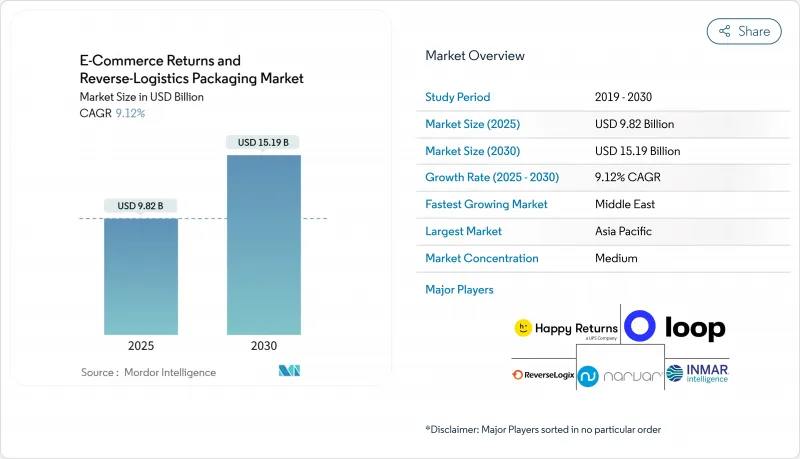
Mordor Intelligence에 의하면, E-Commerce 반품 및 역물류용 포장 시장 규모는 2025년에 98억 2,000만 달러로 평가되었고, 2030년까지 151억 9,000만 달러에 이를 것으로 예측되며, CAGR은 9.12%를 보일 전망입니다.
본 보고서는 포장재별(골판지 상자, 종이 우편물 및 봉투, 플라스틱 메일러 등), 반품 방법별(선불 라벨을 이용한 택배 수거 등), 최종 이용 산업별(패션 및 의류 등), 판매 채널별(마켓플레이스 판매자 등), 지역별(북미 등)로 분류되어 있습니다. 시장 전망은 금액(달러) 기준으로 제시되어 있습니다.
세계의 E-Commerce 반품 및 역물류용 포장 시장 동향 및 인사이트
증가하는 옴니채널 반품률
패션 업계에서는 반품률이 30%를 초과하고, 가전제품에서는 15%에 달하며, 여러 접점을 거치는 배송 과정을 견딜 수 있는 전용 포장재에 대한 수요가 지속되고 있습니다. ‘온라인 구매 및 매장 반품’ 모델에서는 신속한 검품이 가능한 포장 형태가 요구됩니다. 또한, EU 디지털 서비스법에 기반한 디지털 추적 규정에 따라 설계에 영향을 미치는 문서화 부담이 증가하고 있습니다. 적응성이 높은 포장재를 도입한 소매업체는 취급 시 발생하는 손상을 최소화하고, 재고 보충을 신속화하며, 고객 만족도를 높이고 있습니다.
무료 반품을 의무화하는 법규의 확대
프랑스의 폐기물 감축법이나 캘리포니아주에서 제안된 법안에 따라 반품 배송비 부담이 소비자로부터 소매업체로 이전됨에 따라, 각 브랜드는 비용, 보호 성능, 지속가능성 측면에서 포장을 재설계할 수밖에 없게 되었습니다. 규정 준수 체계는 인증된 생분해성 소재에 대한 수요를 촉진하는 동시에, 운임 할증료를 절감할 수 있는 적절한 크기의 솔루션을 제공합니다.
신흥 시장의 재활용 인프라 분산
인도 및 라틴아메리카 일부 지역에서는 지역별 재활용 역량에 편차가 있어, 브랜드들은 여러 가지 포장 변형을 유지할 수밖에 없으며, 이로 인해 재고 관리 및 규정 준수의 복잡성이 증가하고 있습니다. 이러한 장벽으로 인해 재사용 가능한 포장 및 첨단 포장의 대규모 도입이 저해되고 있습니다.
부문별 분석
2024년, 골판지 상자는 E-Commerce 반품 및 역물류용 포장 시장에서 48.31%의 점유율을 유지했으며, 대량 주문 처리를 뒷받침하는 핵심적인 역할을 수행하고 있습니다. 골판지 솔루션과 관련된 E-Commerce 반품 및 역물류용 포장 시장 규모는 운송 중 대형 전자기기나 가정용품을 보호하는 견고한 구조 덕분에 여전히 견조한 성장세를 유지하고 있습니다. 그러나 재사용형 메일러와 토트백은 연평균 성장률(CAGR) 11.29%를 기록하며, 브랜드들이 배송 1건당 평생 비용 절감으로 전환하고 있음을 보여줍니다. AI를 활용한 적정 크기 조정 기계는 불필요한 여유 공간을 줄이고, 부피 중량에 따른 할증 요금을 낮춤으로써 골판지 상자의 효율성을 더욱 높이고 있습니다.
구독 서비스의 확대에 따라, 20회 이상의 사용 주기를 견딜 수 있도록 설계된 내구성이 뛰어난 섬유, 폴리머, 코팅지의 채택이 가속화되고 있습니다. Loop사의 프로그램에서는 일회용 방식에 비해 약 60%의 비용 절감 효과가 입증되어, 소매업체들은 일회용 골판지 상자에 대한 투자를 반품이 가능한 토트백의 공유 재고로 전환하도록 권장받고 있습니다. 재사용 가능한 우편 봉투 내부의 완충재에는 현재 재활용 소재가 포함되어 있어, EU 규제 당국이 추진하는 순환 경제 목표에 부합하고 있습니다.
2024년에는 수거점 및 택배 창구가 반품의 42.94%를 처리하며, 기존 소매 거점을 활용해 지원형 서비스를 제공했습니다. 자동 보관함 시스템은 24시간 이용 가능성과 인건비 효율화를 바탕으로 연평균 성장률(CAGR) 10.37%로 확대되고 있습니다. 반품용 보관함은 유인 카운터에 비해 제곱피트당 거래 처리량이 40% 더 많아, 셀프 서비스 모델의 확장성을 입증하고 있습니다.
택배를 통한 수거는 고급 전자기기나 대형 상품에서 여전히 중요한 역할을 하고 있지만, 인건비 급등으로 인해 이익률은 압박받고 있습니다. 모바일 QR 코드 도입으로 비접촉 방식의 수령이 가능해져, 대기 시간 단축과 추적 정확도 향상이 도모되고 있습니다. 도시 지역의 인구 밀도가 높아지는 가운데, 대중교통 역에 설치된 마이크로 허브형 보관함은 라스트 마일 구간의 배출량을 줄이고, 통근 경로에 보관함 네트워크를 확대함으로써 편의성을 경쟁상의 차별화 요인으로 강화하고 있습니다.
지역별 분석
아시아태평양은 중국의 전자상거래 시장 규모와 순환형 포장에 관한 지침을 배경으로, 2024년에는 38.34%의 점유율로 E-Commerce 반품 및 역물류용 포장 시장을 주도했습니다. 일본과 한국의 정부 인센티브에 힘입어 AI를 활용한 최적화가 가속화되고 있으며, 지역 제조업체들은 비용 경쟁력이 있는 원자재와 고속 가공 라인의 혜택을 누리고 있습니다. 인도의 온라인 소매 시장의 급속한 성장은 경제적인 우편용 포장재에 대한 수요를 부추기고 있지만, 재활용 시설이 미비하여 첨단 바이오 복합 소재의 보급은 더딘 상황입니다.
북미는 성숙한 주문 처리 인프라와 클라우드 기반 포장 분석의 조기 도입으로 인해 계속해서 혁신의 거점으로 자리 잡고 있습니다. 캘리포니아주의 엄격한 폐기물 감축 규제는 고품질 생분해성 제품 개발을 촉진하고 있는 반면, 캐나다의 확대 생산자 책임(EPR) 체계는 재사용 가능한 시범 프로그램을 뒷받침하고 있습니다. 멕시코의 국경 간 무역 증가에 따라, 이중 언어 표시 및 통관 요건을 충족하는 반송용 양식이 필요해졌으며, 이로 인해 운송업체와 포장 가공업체 간의 협력이 강화되고 있습니다.
유럽에서는 명확한 재사용 및 재활용 가능성 기준을 부과하는 EU의 순환 경제 행동 계획을 통해 지속가능성 분야의 리더십이 확고해지고 있습니다. 독일의 보증금 환불 제도가 설계 지침을 형성하고 있으며, 브렉시트 이후 영국의 정책은 국가별 규정 준수 표시에 대한 틈새 수요를 창출하고 있습니다. 중동은 디지털 상거래의 확대와 환경 관리를 결합한 걸프 국가들의 ‘비전 2030’이라는 야심찬 목표에 힘입어, 지역별 가장 높은 연평균 성장률(CAGR) 10.15%로 성장을 지속하고, 있습니다. 사우디아라비아와 아랍에미리트(UAE)에서는 고부가가치 소매 포지셔닝에 부합하는 스마트 로커 및 명품용 재사용 가능 포장재 시범 사업이 진행되고 있습니다.
기타 혜택 :
- Excel 형식 시장 예측(ME) 시트
- 3개월간의 애널리스트 지원
자주 묻는 질문
목차
제1장 서론
제2장 분석 방법
제3장 주요 요약
제4장 시장 구도
제5장 시장 규모 및 성장률 예측
제6장 경쟁 구도
제7장 시장 기회 및 향후 전망
AJY 26.08.07According to Mordor Intelligence, the e-commerce returns and reverse-Logistics packaging market size reached USD 9.82 billion in 2025 and is forecast to touch USD 15.19 billion by 2030, reflecting a 9.12% CAGR.
This report is Segmented by Packaging Material (Corrugated Boxes, Paper Mailers and Envelopes, Poly Mailers, and More), Return Method (Pre-Paid Label Courier Pickup, and More), End-Use Industry (Fashion and Apparel, and More), Channel (Marketplace Sellers, and More), and Geography (North America, and More). The Market Forecasts are Provided in Terms of Value (USD).
Global E-commerce Returns And Reverse-Logistics Packaging Market Trends and Insights
Rising Omni-Channel Return Rates
Return rates surpass 30% in fashion and 15% in consumer electronics, creating persistent demand for specialized packaging that endures multi-touchpoint journeys. Buy-online-return-in-store models require formats that allow quick inspection, while digital tracking rules under the EU Digital Services Act add documentation layers that shape design. Retailers equipped with adaptable packaging minimize handling damage, accelerate restocking, and elevate customer satisfaction.
Growth of Legislation Mandating Free Returns
France's anti-waste law and California's proposed statutes transfer return shipping costs from consumers to retailers, forcing brands to re-engineer packaging for cost, protection, and sustainability. Compliance frameworks drive demand for certified biodegradable materials and provide right-sized solutions that reduce freight surcharges.
Fragmented Recycling Infrastructure in Emerging Markets
Uneven regional capabilities in India and parts of Latin America compel brands to maintain multiple packaging variants, raising inventory and compliance complexity. This barrier slows scalable deployment of reusable or advanced bio-based formats.
Other drivers and restraints analyzed in the detailed report include:
- Brand Differentiation via Sustainable Return Packaging
- Expansion of AI-Driven Right-Size Packaging Systems
- High Volatility in Recycled Fibre Prices
For complete list of drivers and restraints, kindly check the Table Of Contents.
Segment Analysis
Corrugated boxes retained a 48.31% share of the e-commerce returns and reverse logistics packaging market in 2024, serving as the backbone of high-volume fulfillment. The e-commerce returns and reverse logistics packaging market size tied to corrugated solutions remains resilient because rigid structures safeguard large electronics and household goods during transit. Yet, reusable mailers and totes post an 11.29% CAGR, underscoring a brand migration toward lower lifetime costs per shipment. AI-enabled right-sizing machinery further enhances corrugated efficiency by trimming excess void and lowering dimensional weight penalties.
Growing subscription services accelerate the adoption of durable textiles, polymers, and coated papers engineered for 20 or more cycles. Loop's program validates cost savings of nearly 60% over one-way formats, enticing retailers to shift capital from single-use corrugated to pooled inventories of return-ready totes. Protective cushioning inside reusable mailers now incorporates recycled content, aligning with circular economy goals championed by EU regulators.
Drop-off stores and parcel shops handled 42.94% of returns in 2024, utilizing their existing retail footprints to provide assisted service. Automated locker systems grow at a 10.37% CAGR, driven by 24-hour access and labor cost efficiency. Return lockers process 40% more transactions per square foot than staffed counters, validating the scalability of self-service models.
Courier pick-up remains relevant for premium electronics and bulky goods, yet labor inflation narrows margins. The integration of mobile QR codes enables contactless handovers, which shorten queue times and improve tracking precision. As urban density rises, micro-hub lockers embedded in transit stations reduce final-mile emissions and extend locker coverage to commute corridors, reinforcing convenience as a competitive differentiator.
Complete Report Scope:
- By Packaging Material
- Corrugated Boxes
- Paper Mailers and Envelopes
- Poly Mailers
- Reusable Mailers and Totes
- Protective Inner Packaging
- By Return Method
- Pre-Paid Label Courier Pickup
- Drop-Off Store / Parcel Shop
- Locker / Kiosk Returns
- Carrier Pick-Up on Demand
- By End-User Industry
- Fashion and Apparel
- Consumer Electronics
- Beauty and Personal Care
- Home and Living
- Grocery and FMCG
- Other End-User Industries
- By Channel
- Marketplace Sellers
- Direct-to-Consumer Brands
- Subscription Commerce
- Rental and Resale Platforms
- By Geography
- North America
- United States
- Canada
- Mexico
- South America
- Brazil
- Argentina
- Rest of South America
- Europe
- Germany
- United Kingdom
- France
- Italy
- Spain
- Russia
- Rest of Europe
- Asia-Pacific
- China
- Japan
- India
- South Korea
- South-East Asia
- Rest of Asia-Pacific
- Middle East and Africa
- Middle East
- Saudi Arabia
- United Arab Emirates
- Turkey
- Rest of Middle East
- Africa
- South Africa
- Nigeria
- Rest of Africa
- Middle East
- North America
Geography Analysis
Asia-Pacific led the E-commerce Returns And Reverse-Logistics Packaging Market with a 38.34% share in 2024 on the back of China's e-commerce scale and circular-packaging directives. Government incentives in Japan and South Korea accelerate AI-enabled optimization, and regional manufacturers benefit from cost-competitive raw materials and high-speed converting lines. India's rapid online retail growth fuels demand for economical mailers, but patchy recycling facilities slow the uptake of advanced bio-composites.
North America remains an innovation hub thanks to mature fulfillment infrastructure and early adoption of cloud-based packaging analytics. California's stringent waste-reduction rules stimulate the development of premium biodegradable options, while extended producer responsibility frameworks in Canada encourage reusable pilot programs. Mexico's rising cross-border trade requires bilingual labeling and customs-compliant return forms, thereby deepening collaboration between carriers and packaging converters.
Europe embeds sustainability leadership via the EU circular-economy action plan, which imposes explicit reuse and recyclability thresholds. Germany's deposit-refund regimes shape design guidelines, and post-Brexit United Kingdom policies create niche demand for country-specific compliance labeling. The Middle East posts the fastest regional CAGR at 10.15%, underpinned by the Gulf states' Vision 2030 ambitions, which couple digital-commerce expansion with environmental stewardship. Saudi Arabia and the United Arab Emirates are piloting smart lockers and luxury-grade reusable packaging that aligns with their high-value retail positioning.
- Happy Returns LLC (UPS)
- Xariable, Inc. (dba Loop Returns)
- Narvar, Inc.
- ReverseLogix Corp.
- Inmar, Inc.
- ReBound Returns
- ZigZag Global Ltd
- Returnly (Affirm, Inc.)
- Doddle Ltd
- Boxzooka Efulfillment LLC
- Sendcloud B.V.
- ShipBob, Inc.
- ReturnGo Technologies / ReturnGo Ltd
- Reverse Logistics Group / Reverse Logistics GmbH
- PFSweb, Inc.
- PAACK LOGISTICS IBERIA, S.L.
- Boomerang Returns
- Kenco Group
- FedEx Supply Chain (formerly GENCO)
- DHL Supply Chain
- UPS Supply Chain Solutions
- Original RePack Oy / Plan B From Outer Space Oy
- Recommerce Group
- Returnalyze, Inc.
- ShipMonk, Inc.
Additional Benefits:
- The market estimate (ME) sheet in Excel format
- 3 months of analyst support
TABLE OF CONTENTS
1 INTRODUCTION
- 1.1 Study Assumptions and Market Definition
- 1.2 Scope of the Study
2 RESEARCH METHODOLOGY
3 EXECUTIVE SUMMARY
4 MARKET LANDSCAPE
- 4.1 Market Overview
- 4.2 Market Drivers
- 4.2.1 Rising Omni-Channel Return Rates
- 4.2.2 Growth of Legislation Mandating Free Returns
- 4.2.3 Brand Differentiation via Sustainable Return Packaging
- 4.2.4 Expansion of AI-Driven Right-Size Packaging Systems
- 4.2.5 Implementation of Digital ID / QR for Reverse Logistics
- 4.2.6 Circular-Economy Goals of Major Retailers
- 4.3 Market Restraints
- 4.3.1 Fragmented Recycling Infrastructure in Emerging Markets
- 4.3.2 High Volatility in Recycled Fibre Prices
- 4.3.3 Reverse-Logistics Cost Inflation Outpacing Outbound Rates
- 4.3.4 Consumer Fatigue toward Re-Packing Complexity
- 4.4 Industry Value Chain Analysis
- 4.5 Regulatory Landscape
- 4.6 Impact of Macroeconomic Factors
- 4.7 Technological Outlook
- 4.8 Porter's Five Forces Analysis
- 4.8.1 Threat of New Entrants
- 4.8.2 Threat of Substitutes
- 4.8.3 Bargaining Power of Suppliers
- 4.8.4 Bargaining Power of Buyers
- 4.8.5 Industry Rivalry
5 MARKET SIZE AND GROWTH FORECASTS (VALUE)
- 5.1 By Packaging Material
- 5.1.1 Corrugated Boxes
- 5.1.2 Paper Mailers and Envelopes
- 5.1.3 Poly Mailers
- 5.1.4 Reusable Mailers and Totes
- 5.1.5 Protective Inner Packaging
- 5.2 By Return Method
- 5.2.1 Pre-Paid Label Courier Pickup
- 5.2.2 Drop-Off Store / Parcel Shop
- 5.2.3 Locker / Kiosk Returns
- 5.2.4 Carrier Pick-Up on Demand
- 5.3 By End-User Industry
- 5.3.1 Fashion and Apparel
- 5.3.2 Consumer Electronics
- 5.3.3 Beauty and Personal Care
- 5.3.4 Home and Living
- 5.3.5 Grocery and FMCG
- 5.3.6 Other End-User Industries
- 5.4 By Channel
- 5.4.1 Marketplace Sellers
- 5.4.2 Direct-to-Consumer Brands
- 5.4.3 Subscription Commerce
- 5.4.4 Rental and Resale Platforms
- 5.5 By Geography
- 5.5.1 North America
- 5.5.1.1 United States
- 5.5.1.2 Canada
- 5.5.1.3 Mexico
- 5.5.2 South America
- 5.5.2.1 Brazil
- 5.5.2.2 Argentina
- 5.5.2.3 Rest of South America
- 5.5.3 Europe
- 5.5.3.1 Germany
- 5.5.3.2 United Kingdom
- 5.5.3.3 France
- 5.5.3.4 Italy
- 5.5.3.5 Spain
- 5.5.3.6 Russia
- 5.5.3.7 Rest of Europe
- 5.5.4 Asia-Pacific
- 5.5.4.1 China
- 5.5.4.2 Japan
- 5.5.4.3 India
- 5.5.4.4 South Korea
- 5.5.4.5 South-East Asia
- 5.5.4.6 Rest of Asia-Pacific
- 5.5.5 Middle East and Africa
- 5.5.5.1 Middle East
- 5.5.5.1.1 Saudi Arabia
- 5.5.5.1.2 United Arab Emirates
- 5.5.5.1.3 Turkey
- 5.5.5.1.4 Rest of Middle East
- 5.5.5.2 Africa
- 5.5.5.2.1 South Africa
- 5.5.5.2.2 Nigeria
- 5.5.5.2.3 Rest of Africa
- 5.5.5.1 Middle East
- 5.5.1 North America
6 COMPETITIVE LANDSCAPE
- 6.1 Market Concentration
- 6.2 Strategic Moves
- 6.3 Market Share Analysis
- 6.4 Company Profiles (includes Global level Overview, Market level overview, Core Segments, Financials as available, Strategic Information, Market Rank/Share for key companies, Products and Services, and Recent Developments)
- 6.4.1 Happy Returns LLC (UPS)
- 6.4.2 Xariable, Inc. (dba Loop Returns)
- 6.4.3 Narvar, Inc.
- 6.4.4 ReverseLogix Corp.
- 6.4.5 Inmar, Inc.
- 6.4.6 ReBound Returns
- 6.4.7 ZigZag Global Ltd
- 6.4.8 Returnly (Affirm, Inc.)
- 6.4.9 Doddle Ltd
- 6.4.10 Boxzooka Efulfillment LLC
- 6.4.11 Sendcloud B.V.
- 6.4.12 ShipBob, Inc.
- 6.4.13 ReturnGo Technologies / ReturnGo Ltd
- 6.4.14 Reverse Logistics Group / Reverse Logistics GmbH
- 6.4.15 PFSweb, Inc.
- 6.4.16 PAACK LOGISTICS IBERIA, S.L.
- 6.4.17 Boomerang Returns
- 6.4.18 Kenco Group
- 6.4.19 FedEx Supply Chain (formerly GENCO)
- 6.4.20 DHL Supply Chain
- 6.4.21 UPS Supply Chain Solutions
- 6.4.22 Original RePack Oy / Plan B From Outer Space Oy
- 6.4.23 Recommerce Group
- 6.4.24 Returnalyze, Inc.
- 6.4.25 ShipMonk, Inc.
7 MARKET OPPORTUNITIES AND FUTURE OUTLOOK
- 7.1 White-space and unmet-need assessment


