

|
시장보고서
상품코드
2100757
북미의 액체 수소 시장 : 점유율 분석, 업계 동향 및 통계, 성장 예측(2026-2031년)North America Liquid Hydrogen - Market Share Analysis, Industry Trends & Statistics, Growth Forecasts (2026 - 2031) |
||||||
 Mordor Intelligence
Mordor Intelligence에 의하면, 북미 액체 수소 시장은 2026년에 136.79 킬로톤을 기록해, 2031년까지 224.23 킬로톤에 이르고, CAGR 10.39%를 나타낼 것으로 예측됩니다.
이러한 전망은 연방 정부의 인센티브와 탈탄소화 목표에 힘입어 항공우주 부문을 넘어 운송 및 산업 부문으로 활용이 확대되고 있다는 점에서 시장 규모의 잠재력을 여실히 보여주고 있습니다.
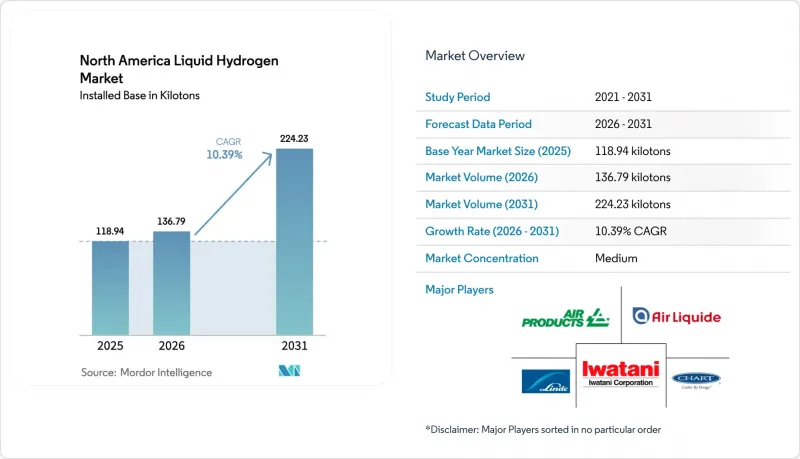
본 보고서는 유통 형태(극저온 탱크 및 고압 튜브 트레일러), 용도(자동차, 항공우주(우주 공간 포함), 산업, 선박, 발전 및 에너지 저장, 기타 용도), 지역(미국, 캐나다, 멕시코)별로 분류되어 있습니다. 시장 규모와 전망은 킬로톤 단위로 표시되어 있습니다.
북미 액체 수소 시장 동향과 인사이트
미국 에너지부(DOE)의 자금 지원을 받은 수소 허브가 액화 투자를 가속화
2023년에 70억 달러의 연방 보조금을 확보한 7개 지역 청정 수소 허브는 하루 50-100톤 규모의 액화 플랜트를 건설 중이며, 단위 비용을 Kg당 2.50달러 이하로 억제하는 동시에 에어프로덕츠(Air Products)사, 에어 리퀴드(Air Liquide)사 및 기타 프로젝트 후원사로부터 민간 투자를 유치하고 있습니다. 운송, 산업, 전력 분야 고객들 간에 체결된 공동 구매 계약을 통해 이용 위험이 경감되고, 개발 사업자는 장기 차입금을 확보할 수 있게 되어 프로젝트 회수 기간이 10년을 대폭 밑도는 수준으로 단축되었습니다. 걸프 코스트와 캘리포니아 허브에서는 항만 및 파이프라인 인프라와 연계된 액화 블록 건설이 이미 착공된 반면, 태평양 연안 북서부 허브에서는 항공우주 부문 및 국경 간 수출을 위해 재생에너지를 활용한 전해 및 극저온 저장을 결합하고 있습니다. 또한, 지역별 특화를 통해 생산 채널도 최적화됩니다. 천연가스나 이산화탄소 격리가 풍부한 지역에서는 ‘블루 프로젝트’가, 풍력이나 태양광이 가장 저렴한 지역에서는 ‘그린 프로젝트’가 전개되어 자본 배분이 최적화됩니다. 그 결과 형성되는 인프라의 격자 구조는 생산, 저장, 유통의 연속적인 네트워크를 지탱하는 기반이 되어, 공급 비용 절감과 초기 틈새 시장을 넘어선 보급 가속화가 기대되고 있습니다.
I-80 및 I-5 회랑을 따라 진행되는 클래스 8 연료전지 트럭 실증 사업 확대
캘리포니아주의 ‘첨단 청정 차량(Advanced Clean Fleets)’ 규정에 따르면 2024년 이후 신규 드레이지용 트럭은 제로 배출이어야 하며, 이에 따라 차량 운영 사업자들은 적재량 감소 없이 500-600마일의 주행 거리를 실현하는 액체 수소 트럭을 다년간에 걸쳐 발주하고 있습니다. 현대, 니콜라, 볼보 등 3사는 2024년 이후 총 200대 이상의 대형 연료전지 트랙터를 도입하고 있으며, 현장에서 기화·압축되는 극저온 연료를 공급하는 충전소 네트워크 확장이 이를 뒷받침하고 있습니다. 캘리포니아주 에너지위원회의 1억 5,000만 달러 규모 보조금 프로그램은 충전소 설비 투자 비용의 최대 50%를 지원하여, 이용이 확대되는 과정에서 소매업체가 감당해야 할 위험을 경감시키고 있습니다. 차량 운영 사업자들은 장거리 노선에서 배터리식 전기 트럭에 비해 빠른 연료 보급 시간과 노선 유연성을 주요 장점으로 꼽고 있습니다. 충전소 밀도가 높아짐에 따라 자동차 제조업체들은 2028년까지 총 소유 비용(TCO) 기준 디젤 차량과의 비용 균형이 달성될 것으로 예측하고 있으며, 이는 서부 및 산악 지대 각 주에서 더 광범위한 보급을 촉진할 것입니다.
일일 3톤 이하 저장 시스템에서의 높은 보일오프 손실
소형 저장 탱크는 표면적 대 부피 비율이 불리하기 때문에 일일 벤트량이 1.5%-3.0%로 증가합니다. 이는 하루 1톤을 사용하는 이용자에게 150-300달러의 제품 손실에 해당하며, 회수용 압축기나 능동형 극저온 냉각 장치 등 비용이 많이 드는 대책이 필요합니다. NFPA 2의 배치 규정에 따라 밀집된 산업 단지 내 설치는 더욱 복잡해지고 있습니다. 이는 벤트 스택이 발화원으로부터 최소 25피트 떨어져 있어야 하기 때문입니다. 그러나 보일오프 제로(Boil-off Zero) 시범 프로젝트가 해결책이 될 전망이지만, 0.5-100만 달러에 달하는 가격대 때문에 도입은 미션 크리티컬한 항공우주 프로그램으로 한정되어 있습니다. 비용이 낮아질 때까지는 높은 벤트량으로 인해 소규모 사용자의 사업 타당성이 훼손되어, 세분화된 산업 틈새 시장에서의 보급이 둔화될 것입니다.
부문 분석
튜브 트레일러는 적재량은 적지만 초기 투자 비용이 적고 인허가 취득도 신속하기 때문에 극저온 탱커보다 빠르게 보급되고 있습니다. 이 부문은 2026-2031년까지 연평균 성장률(CAGR) 11.6%를 나타낼 것으로 예측되며, 트레일러의 자중을 40% 줄여주는 유형 4 복합재 실린더의 도입으로 인해, 200마일 이하의 운송 노선에서 극저온 운송과의 납품 비용 차이가 15% 이하로 축소될 것으로 전망됩니다. 극저온 탱크는 여전히 대용량 운송 노선에서 주류를 이루고 있습니다. 이는 1대의 탱커가 최대 5t(튜브 트레일러 약 8대 분량)을 운송할 수 있어 장거리 운송에서 더 높은 가동률을 실현하기 위함이며, 항공우주 산업 및 정유시설 고객에게 있어 핵심을 이루고 있습니다. 물류 사업자들은 운전기사 부족을 보완하고 드롭 앤 훅(하역·연결) 주기를 최적화하기 위해 10번 주간 고속도로에서 자율 주행 컨보이 실증 실험을 진행하고 있습니다. 이 전략을 통해 극저온 탱크 차량 편대가 액체 수소 시장에서 규모의 우위를 더욱 확대할 것으로 예측됩니다.
튜브 트레일러의 도입은 하루에 불과 100-300kg만 소비하는 차량 운영업체나, 현장에 기화 장치를 도입함으로써 초기 비용이 높아지는 전자기기·식품 가공 산업계에서 지지를 얻고 있습니다. 유통업체들은 트레일러와 이동식 펌프 스키드를 세트로 판매하고 있으며, 이를 통해 고객은 저장 탱크에 대한 설비 투자를 완전히 피할 수 있습니다. 이 ‘가스-어-서비스(Gas-as-a-Service)’ 모델은 전환 장벽을 낮추고, 경기 변동에 민감한 항공우주 부문 수요로부터 수요를 분산시키는 역할을 하고 있습니다. 예측 기간 동안 경량 실린더 및 대용량 압축기에 대한 공급망 투자를 통해 자산 회전율이 더욱 향상되고, 중규모 수요라는 ‘스위트 스팟’을 겨냥하는 판매업체의 수익성이 개선될 전망입니다.
기타 혜택
- 엑셀 형식 시장 예측(ME) 시트
- 3개월간의 애널리스트 지원
자주 묻는 질문
목차
제1장 서론
제2장 조사 방법
제3장 주요 요약
제4장 시장 구도
제5장 시장 규모와 성장 예측
제6장 경쟁 구도
제7장 시장 기회와 향후 전망
JHS 26.08.11According to Mordor Intelligence, the liquid hydrogen market in North America measured 136.79 kilotons in 2026 and is projected to reach 224.23 kilotons by 2031, growing at a 10.39% CAGR; this outlook underscores the market size potential as federal incentives and decarbonization targets widen use beyond aerospace into transport and industrial segments.
This report is Segmented by Distribution (Cryogenic Tank and High-Pressure Tube Trailers), Application (Automotive, Aerospace-Including Outer Space, Industrial, Marine, Power Generation and Energy Storage, and Other Applications), and Geography (United States, Canada, and Mexico). The Market Sizes and Forecasts are Provided in Terms of Volume (Kilo Tons).
North America Liquid Hydrogen Market Trends and Insights
DOE-Funded Hydrogen Hubs Accelerate Liquefaction Investment
Seven regional clean hydrogen hubs awarded USD 7 billion in federal grants during 2023 are underwriting 50- to 100-ton-per-day liquefaction trains that reach sub-USD 2.50-per-kilogram unit costs and crowd-in private commitments from Air Products, Air Liquide, and other project sponsors. Off-take contracts pooled across transport, industrial, and power customers de-risk utilization and enable developers to secure long-term debt, shortening project payback windows to well under ten years. Gulf Coast and California hubs have already broken ground on liquefaction blocks tied to port and pipeline infrastructure, while the Pacific Northwest hub combines renewable electrolysis with cryogenic storage for aerospace and cross-border exports. Regional specialization also aligns production pathways, blue projects where natural gas and sequestration are abundant, green projects where wind or solar is cheapest, optimizing capital allocation. The resulting infrastructure lattice is expected to anchor contiguous networks of production, storage, and distribution that lower delivered costs and accelerate adoption beyond early niches.
Scale-Up of Class-8 Fuel-Cell Truck Pilots Along I-80 & I-5 Corridors
California's Advanced Clean Fleets regulation requires new drayage trucks to be zero-emission from 2024 onward, prompting fleet operators to place multi-year orders for liquid hydrogen trucks that deliver 500- to 600-mile range without payload penalties. Hyundai, Nikola, and Volvo have collectively deployed more than 200 heavy-duty fuel-cell tractors since 2024, supported by a growing network of refueling stations dispensing cryogenic fuel that is vaporized and compressed on site. The California Energy Commission's USD 150 million grant program covers up to 50% of station capex, lowering retailer risk during utilization ramp-up. Fleet operators cite rapid fueling times and route flexibility as principal advantages over battery-electric trucks on long-haul lanes. As station density improves, original equipment manufacturers anticipate cost parity with diesel on a total-cost-of-ownership basis by 2028, catalyzing broader adoption across Western and Mountain states.
High Boil-Off Losses for below 3 t/Day Storage Systems
Small storage tanks exhibit unfavorable surface-area-to-volume ratios that raise daily venting to 1.5%-3.0%, translating into USD 150-USD 300 lost product for a 1 t/day user and imposing costly mitigation requirements such as recovery compressors or active cryocoolers. NFPA 2 spacing rules further complicate installations in dense industrial parks, as vent stacks must lie at least 25 ft from ignition sources. However, zero-boil-off pilots promise relief, their USD 0.5-1.0 million price point reserves adoption for mission-critical aerospace programs. Until costs fall, high venting erodes the business case for small-scale users, slowing penetration in fragmented industrial niches.
Other drivers and restraints analyzed in the detailed report include:
- Federal 45V/45Q Tax Credits Compress Payback Periods for CCUS-Based LH2
- Emergence of "Cold Ironing" Mandates at West-Coast Ports
- Limited Availability of Cryogenic Tanker Manufacturing Capacity
For complete list of drivers and restraints, kindly check the Table Of Contents.
Segment Analysis
Tube trailers, although smaller in payload, are scaling faster than cryogenic tankers thanks to lower capital outlay and faster permitting. The segment is projected to post an 11.6% CAGR between 2026 and 2031, narrowing delivered-cost differentials with cryogenic supply to below 15% on hauls shorter than 200 miles, aided by Type 4 composite cylinders that shave trailer tare weight by 40%. Cryogenic tanks still dominate heavy-volume lanes because a single tanker carries up to 5 t, equivalent to roughly eight tube trailer loads, and achieves better utilization over long distances, making it the backbone for aerospace and refinery customers. Logistics operators are experimenting with autonomous convoys on Interstate 10 to offset driver shortages and optimize drop-and-hook cycles, a strategy expected to extend liquid hydrogen market size leadership for cryogenic fleets.
Tube trailer adoption is resonating among fleet operators that consume only 100-300 kg per day and among electronics and food processors, where on-site vaporizers inflate upfront costs. Distributors bundle trailers with mobile pumping skids, enabling customers to avoid storage tank capex entirely. This "gas-as-a-service" model reduces switching friction and diversifies demand away from cyclical aerospace volumes. Over the forecast horizon, supply chain investments in lightweight cylinders and high-capacity compressors will further improve asset turns, lifting profitability for distributors that target the mid-volume sweet spot.
Complete Report Scope:
- By Distribution
- Cryogenic Tank
- High-pressure Tube Trailers
- By Application
- Automotive
- Aerospace (Including Outer Space)
- Industrial
- Marine
- Power Generation and Energy Storage
- Other Applications
- By Geography
- United States
- Canada
- Mexico
List of Companies Covered in this Report:
- Air Liquide S.A.
- Air Products and Chemicals, Inc.
- Linde plc
- Air Water Inc.
- Iwatani Corporation
- Messer Group GmbH
- Engie SA
- Chart Industries Inc.
- Universal Industrial Gases, Inc.
- Plug Power Inc.
- Hexagon Composites ASA
- Kawasaki Heavy Industries, Ltd.
- Cryostar SAS
- INOX India Ltd (INOXCVA)
- Taylor-Wharton
- Gardner Cryogenics
- FIBA Technologies Inc.
- Wessington Cryogenics
- VRV S.p.A.
- Hylium Industries Inc.
- CIMC ENRIC Holdings Ltd.
Additional Benefits:
- The market estimate (ME) sheet in Excel format
- 3 months of analyst support
TABLE OF CONTENTS
1 Introduction
- 1.1 Study Assumptions & Market Definition
- 1.2 Scope of the Study
2 Research Methodology
3 Executive Summary
4 Market Landscape
- 4.1 Market Overview
- 4.2 Market Drivers
- 4.2.1 DOE-funded hydrogen hubs accelerate liquefaction investment
- 4.2.2 Scale-up of Class-8 fuel-cell truck pilots along I-80 & I-5 corridors
- 4.2.3 Federal 45V/45Q tax credits compress payback periods for CCUS-based LH?
- 4.2.4 Emergence of "cold ironing" mandates at West-Coast ports
- 4.2.5 Super-insulated micro-bulk tanks enabling LH2 deliveries to SME sites
- 4.3 Market Restraints
- 4.3.1 High boil-off losses for <3-t/day storage systems
- 4.3.2 Limited availability of cryogenic tanker manufacturing capacity
- 4.3.3 County-level hazmat restrictions on LH? trucking routes
- 4.4 Supply-Chain Analysis
- 4.5 Regulatory Landscape
- 4.6 Technological Outlook
- 4.7 Porter's Five Forces
- 4.7.1 Bargaining Power of Suppliers
- 4.7.2 Bargaining Power of Consumers
- 4.7.3 Threat of New Entrants
- 4.7.4 Threat of Substitute Products & Services
- 4.7.5 Intensity of Competitive Rivalry
5 Market Size & Growth Forecasts
- 5.1 By Distribution
- 5.1.1 Cryogenic Tank
- 5.1.2 High-pressure Tube Trailers
- 5.2 By Application
- 5.2.1 Automotive
- 5.2.2 Aerospace (Including Outer Space)
- 5.2.3 Industrial
- 5.2.4 Marine
- 5.2.5 Power Generation and Energy Storage
- 5.2.6 Other Applications
- 5.3 By Geography
- 5.3.1 United States
- 5.3.2 Canada
- 5.3.3 Mexico
6 Competitive Landscape
- 6.1 Market Concentration
- 6.2 Strategic Moves
- 6.3 Market Share Analysis
- 6.4 Company Profiles (includes Global level Overview, Market level overview, Core Segments, Financials as available, Strategic Information, Market Rank/Share for key companies, Products & Services, and Recent Developments)
- 6.4.1 Air Liquide S.A.
- 6.4.2 Air Products and Chemicals, Inc.
- 6.4.3 Linde plc
- 6.4.4 Air Water Inc.
- 6.4.5 Iwatani Corporation
- 6.4.6 Messer Group GmbH
- 6.4.7 Engie SA
- 6.4.8 Chart Industries Inc.
- 6.4.9 Universal Industrial Gases, Inc.
- 6.4.10 Plug Power Inc.
- 6.4.11 Hexagon Composites ASA
- 6.4.12 Kawasaki Heavy Industries, Ltd.
- 6.4.13 Cryostar SAS
- 6.4.14 INOX India Ltd (INOXCVA)
- 6.4.15 Taylor-Wharton
- 6.4.16 Gardner Cryogenics
- 6.4.17 FIBA Technologies Inc.
- 6.4.18 Wessington Cryogenics
- 6.4.19 VRV S.p.A.
- 6.4.20 Hylium Industries Inc.
- 6.4.21 CIMC ENRIC Holdings Ltd.
7 Market Opportunities & Future Outlook
- 7.1 White-space & Unmet-Need Assessment


