

|
시장보고서
상품코드
2113246
미국의 석유 및 가스 업스트림 시장 : 시장 점유율 분석, 업계 동향과 통계, 성장 예측(2026-2031년)United States Oil And Gas Upstream - Market Share Analysis, Industry Trends & Statistics, Growth Forecasts (2026 - 2031) |
||||||
 Mordor Intelligence
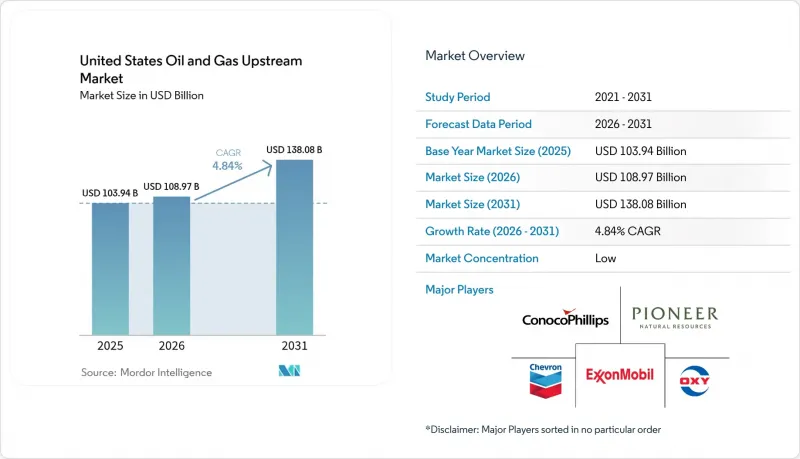
Mordor Intelligence에 의하면, 미국의 석유 및 가스 업스트림 시장 규모는 2025년 1,039억 4,000만 달러에서 2026년에는 1,089억 7,000만 달러로 확대되어 2026-2031년 CAGR 4.84%로 성장을 지속하고, 2031년에는 1,380억 8,000만 달러에 달할 것으로 예측됩니다.
본 보고서는 운영 지역(육상 및 해상), 자원 유형(석유 및 가스), 유정 유형(전통형 및 비전통형), 서비스(탐사, 개발·생산, 해체)별로 분류되어 있습니다. 시장 규모 및 전망은 금액(달러)으로 표시되어 있습니다.
미국 석유 및 가스 업스트림 시장 동향 및 인사이트
디지털 시추 분석을 통한 비용 최적화
디지털 시추 분석은 주로 시추 주기 단축과 시추 중 사고 최소화를 통해 시추 비용을 10-15% 절감합니다. SLB사의 ‘Neuro’ 플랫폼은 초당 1,000개의 데이터 포인트를 처리하여 퍼미안 분지에서 시추 시간을 20% 단축했습니다. 할리버튼(Halliburton)의 ‘LOGIX’ 시스템은 최근 시추공에서 95%의 자동 시추를 실현하여, 스푸드(Spud)에서 TD까지의 총 시간을 30% 단축했습니다. Corva사의 클라우드 기반 대시보드는 스틱 슬립이나 차동 스티킹과 같은 위험을 몇 시간 전에 예측하여 예기치 않은 가동 중단 시간을 30% 줄입니다. 알고리즘이 매번의 시추 작업에서 학습함에 따라 성능 향상은 누적적으로 진행되어 손익분기점을 낮추게 됩니다. 이 접근 방식은 독자적인 플랫폼에 선행 투자를 하는 대신, 구독 방식으로 소프트웨어를 임대할 수 있게 된 중소규모의 운영업체에게 특히 매력적입니다.
퍼미안 분지의 수평 셰일 시추 확대
퍼미안 분지의 장거리 수평 시추는 수직 시추에 비해 초기 생산량이 30-40% 더 높으며, 2024년 하반기에는 가동 중인 시추 장비 수가 315대를 넘어 미국 전체의 60%를 차지했습니다. 주요 광구에서의 평균 수평 시추 길이는 이미 10,000피트를 넘어섰으며, 다층 구획의 완공으로 인해 겹쳐진 층에서의 회수율이 향상되고 있습니다. 패드 시추를 통해 지표면에 미치는 영향이 경감되며, 단일 우물 패드에 비해 우물당 비용이 15-20% 절감됩니다. 또한, 퍼미안 분지의 기업들은 성숙한 수송 및 처리 네트워크의 혜택을 받고 있어, 이로 인해 수거 비용이 절감되고 플레어링도 최소화되고 있습니다. 네트워크 효과로 인해 추가 자본이 유입되면서, 단기 사이클 공급에서 이 분지의 우위가 더욱 강화되고 있습니다.
원유 가격 변동과 자본 규율에 대한 압박
2024년 원유 가격은 배럴당 70-85달러 사이에서 변동했으며, 각 생산사는 손익분기점을 배럴당 45달러 수준으로 유지하는 한편, WTI가 배럴당 65달러 아래로 떨어졌을 때는 시추 장비 가동 대수를 줄였습니다. 종합 대기업들은 경기 침체기에 할인된 서비스 요금을 확정함으로써 이익을 창출하고 있는 반면, 독립 기업들은 프로젝트를 연기하는 경우가 많아 그 결과 활동량이 15-20% 감소했습니다. 계약된 시추 장비, 현물 가격의 프래킹 스프레드, 사용량 기반 물 공급 서비스와 같은 변동비 구조가 현금 흐름 보호에 기여하고 있습니다. 더 견고한 대차대조표와 더 두터운 헤지 포지션은 경쟁 우위를 가져다주며, 경쟁사들이 시장에서 철수하는 가운데 시장 점유율 확대를 가능하게 합니다. 이처럼 지속적인 변동성은 업계 재편과 자본 규율을 강화하여 단기적인 생산량 증가를 억제하게 됩니다.
부문별 분석
2025년 기준, 미국 석유 및 가스 업스트림 시장 중 육상 사업이 74.18%를 차지하고 있으며, 이는 확립된 인프라, 신속한 사이클 타임, 그리고 유리한 비용 구조를 반영한 것입니다. 그러나 멕시코만의 위험이 감소한 심해 유전들이 개발 단계에 접어들면서, 해양 부문은 2031년까지 연평균 성장률(CAGR) 5.66%로 더욱 강력한 성장을 보일 것으로 예측됩니다. 해상 프로젝트는 초기 투자 비용이 높지만, 감산 곡선이 완만하고 생산 정점 기간이 긴 특징을 가지고 있어, 이러한 특성이 장기적인 관점을 가진 자본을 유치하고 있습니다. 셰브론의 ‘앵커’와 BP의 ‘타이바’가 그 대표적인 예로, 둘 다 하루 7만 5,000배럴의 최대 생산량을 가정하여 설계되었으며, 관리 압력 시추 기술을 채택함으로써 염층 하부의 위험을 줄이고 있습니다.
해양 분야의 성장은 공급의 다양성을 높이고, 미국 석유 및 가스 업스트림 시장의 전반적인 감산율을 완화합니다. 서비스 제공업체들은 고압 라이저 시스템, 실시간 지층 평가, 자동화된 유정 완성 스트링을 도입하여 개발 일정을 10-12% 단축하고 있습니다. 2024년 멕시코만에서 임대권 판매를 통해 3억 8,200만 달러의 자금이 조달됨에 따라, 각 운영사들은 경쟁이 비교적 완화된 상황에서 유리한 조건으로 광구를 확보했습니다. 이러한 노력은 현재 10년을 넘어 지속될 것으로 예상되는 생산의 선순환을 뒷받침할 것입니다.
천연가스는 2025년 생산량의 54.12%를 차지하며, 연평균 성장률(CAGR) 5.17%를 나타낼 것으로 예측되는데, 이는 미국 석유 및 가스 업스트림 시장 내 자원 중 가장 높은 성장률입니다. 애팔래치아 지역의 풍부한 드라이 가스와 퍼미안 분지의 유정에서 생산되는 수반 가스는 확대되는 LNG 수요와 국내 전력 수요를 뒷받침하며, 다양한 수익 창출 경로를 제공합니다. 텍사스주 서부 및 루이지애나주의 파이프라인 병목 현상 해소와 처리 플랜트 증설로 인해 플레어링이 감소하고, 고품질 가스의 액화 성분이 더 많이 회수됨에 따라 유정의 경제성이 향상되고 있습니다.
원유 생산량은 여전히 상당한 수준을 유지하고 있으나, OPEC+의 협력 조치와 정유시설의 처리 능력 제약으로 인해 성장에는 역풍이 불고 있습니다. 그럼에도 불구하고, 수반 가스는 원유 중심의 유정의 종합 수익률을 끌어올리고 있습니다. 미국의 석유 및 가스 업스트림 산업에서는 원유, 콘덴세이트, 가스, NGL(천연가스액)로 구성된 ‘에너지 패키지’의 판매가 확대되고 있으며, 이를 통해 시장 변동에 대한 수익원의 최적화가 도모되고 있습니다.
기타 혜택:
- 엑셀 형식 시장 예측(ME) 시트
- 3개월간 애널리스트 지원
자주 묻는 질문
목차
제1장 서론
제2장 조사 방법
제3장 주요 요약
제4장 시장 구도
제5장 시장 규모와 성장 예측
제6장 경쟁 구도
제7장 시장 기회와 향후 전망
LSH 26.08.24According to Mordor Intelligence, the United States oil and gas upstream market size is expected to grow from USD 103.94 billion in 2025 to USD 108.97 billion in 2026 and is forecast to reach USD 138.08 billion by 2031 at 4.84% CAGR over 2026-2031.
This report is Segmented by Location of Deployment (Onshore and Offshore), Resource Type (Crude Oil and Natural Gas), Well Type (Conventional and Unconventional), and Service (Exploration, Development and Production, and Decommissioning). The Market Sizes and Forecasts are Provided in Terms of Value (USD).
United States Oil And Gas Upstream Market Trends and Insights
Cost Optimization Through Digital Drilling Analytics
Digital drilling analytics reduce well costs by 10-15%, primarily by shortening drilling cycles and minimizing downhole incidents. SLB's Neuro platform processes 1,000 data points per second and has reduced drilling time by 20% in the Permian Basin. Halliburton's LOGIX system has logged 95% automated drilling on recent wells, cutting total spud-to-TD time by 30%. Corva's cloud-hosted dashboard predicts stick-slip, differential sticking, and other hazards hours in advance, lowering unexpected downtime by 30%. As algorithms learn from every run, performance gains become cumulative, pushing breakevens downward. The approach is especially attractive to smaller operators that can now lease software on a subscription basis rather than invest upfront in proprietary platforms.
Proliferation of Horizontal Shale Drilling in the Permian Basin
Extended-reach horizontals in the Permian yield initial production 30-40% higher than vertical counterparts, and active rigs topped 315 units-60% of the U.S. total-in late 2024. Average lateral lengths in core acreage already exceed 10,000 ft, with multi-zone completions improving recovery across stacked benches. Pad drilling reduces surface disturbance and trims per-well costs by 15-20% compared to single-well pads. Permian firms also benefit from mature transport and processing grids, which lower gathering costs and minimize flaring. Network effects entice additional capital, reinforcing the basin's lead in short-cycle supply.
Crude-Price Volatility & Capital-Discipline Pressures
Oil prices fluctuated between USD 70 and USD 85/bbl in 2024, prompting producers to maintain breakevens near USD 45/bbl and to reduce their rig fleets when WTI dipped below USD 65/bbl. Integrated majors capitalize on downturns by locking in discounted service rates, whereas independents often defer projects, resulting in a 15-20% reduction in activity. Variable cost structures-such as contracted rigs, spot frac spreads, and pay-as-you-go water services-help protect cash flow. Larger balance sheets and greater hedging depth confer a competitive advantage, enabling market share gains while weaker peers retreat. Continuous volatility thus reinforces consolidation and capital discipline, curbing near-term volume growth.
Other drivers and restraints analyzed in the detailed report include:
- Rising LNG-Export Infrastructure Boosting Gas Drilling
- Inflation Reduction Act CCS Incentives Accelerating EOR Projects
- ESG-Driven Divestment & Financing Constraints
For complete list of drivers and restraints, kindly check the Table Of Contents.
Segment Analysis
Onshore operations accounted for 74.18% of the US oil and gas upstream market in 2025, reflecting established infrastructure, rapid cycle times, and favorable cost profiles. Yet, the offshore segment is forecast to log a stronger 5.66% CAGR through 2031, as de-risked deepwater fields in the Gulf of Mexico move into development. Offshore projects involve higher upfront capital but generate flatter decline curves and longer plateau production, traits that attract patient capital. Chevron's Anchor and BP's Tiber are emblematic, each designed for 75,000 bbl/d peak output with managed-pressure drilling that trims subsalt risk.
Offshore growth bolsters supply diversity and tempers overall decline rates in the US oil and gas upstream market. Service providers are rolling out high-pressure riser systems, real-time formation evaluation, and automated well-completion strings that compress development schedules by 10-12%. As Gulf of Mexico lease sales raised USD 382 million in 2024, operators secured acreage at favorable terms amid muted competition. These commitments underpin a production up-cycle likely to endure beyond the current decade.
Natural gas held 54.12% of 2025 output and is projected to grow at a 5.17% CAGR, the fastest among resources in the US oil and gas upstream market. Abundant Appalachian dry gas and associated gas from Permian oil wells feed expanding LNG and domestic power demand, presenting multiple monetization avenues. Pipeline debottlenecks and processing plant additions in West Texas and Louisiana reduce flaring and capture more rich-gas liquids, improving well economics.
Crude oil volumes, while still substantial, face growth headwinds from OPEC+ coordination and refinery capacity constraints. Nonetheless, associated gas elevates the composite return of oil-weighted wells. The US oil and gas upstream industry is increasingly selling "energy packages" consisting of oil, condensate, gas, and NGLs, thereby optimizing revenue streams against market fluctuations.
Complete Report Scope:
- By Location of Deployment
- Onshore
- Offshore
- By Resource Type
- Crude Oil
- Natural Gas
- By Well Type
- Conventional
- Unconventional
- By Service
- Exploration
- Development and Production
- Decomissioning
List of Companies Covered in this Report:
- Exxon Mobil Corporation
- Chevron Corporation
- ConocoPhillips
- Occidental Petroleum Corporation
- Pioneer Natural Resources Company
- Devon Energy Corporation
- EOG Resources Inc.
- BP plc
- Shell plc
- Hess Corporation
- Marathon Oil Corporation
- Continental Resources Inc.
- Chesapeake Energy Corporation
- EQT Corporation
- Diamondback Energy Inc.
- Coterra Energy Inc.
- APA Corporation
- Murphy Oil Corporation
- Talos Energy Inc.
- Matador Resources Company
Additional Benefits:
- The market estimate (ME) sheet in Excel format
- 3 months of analyst support
TABLE OF CONTENTS
1 Introduction
- 1.1 Study Assumptions & Market Definition
- 1.2 Scope of the Study
2 Research Methodology
3 Executive Summary
4 Market Landscape
- 4.1 Market Overview
- 4.2 Market Drivers
- 4.2.1 Cost optimisation through digital drilling analytics
- 4.2.2 Proliferation of horizontal shale drilling in Permian Basin
- 4.2.3 Rising LNG-export infrastructure boosting gas drilling
- 4.2.4 Inflation Reduction Act CCS incentives accelerating EOR projects
- 4.2.5 Re-fracking of mature shale wells extending field life
- 4.2.6 De-risked deep-water plays in Gulf of Mexico post-2024 lease sales
- 4.3 Market Restraints
- 4.3.1 Crude-price volatility & capital-discipline pressures
- 4.3.2 Federal leasing restrictions on public lands
- 4.3.3 ESG-driven divestment & financing constraints
- 4.3.4 Skilled-labour shortages in advanced drilling ops
- 4.4 Supply-Chain Analysis
- 4.5 Regulatory Landscape
- 4.6 Technological Outlook
- 4.7 Crude-Oil Production & Consumption Outlook
- 4.8 Natural-Gas Production & Consumption Outlook
- 4.9 Unconventional Resources CAPEX Outlook (tight oil, oil sands, deep-water)
- 4.10 Porter's Five Forces
- 4.10.1 Threat of New Entrants
- 4.10.2 Bargaining Power of Suppliers
- 4.10.3 Bargaining Power of Buyers
- 4.10.4 Threat of Substitutes
- 4.10.5 Industry Rivalry
- 4.11 PESTLE Analysis
5 Market Size & Growth Forecast
- 5.1 By Location of Deployment
- 5.1.1 Onshore
- 5.1.2 Offshore
- 5.2 By Resource Type
- 5.2.1 Crude Oil
- 5.2.2 Natural Gas
- 5.3 By Well Type
- 5.3.1 Conventional
- 5.3.2 Unconventional
- 5.4 By Service
- 5.4.1 Exploration
- 5.4.2 Development and Production
- 5.4.3 Decomissioning
6 Competitive Landscape
- 6.1 Market Concentration
- 6.2 Strategic Moves (M&A, Partnerships, PPAs)
- 6.3 Market Share Analysis (Market Rank/Share for key companies)
- 6.4 Company Profiles (includes Global level Overview, Market level overview, Core Segments, Financials as available, Strategic Information, Products & Services, and Recent Developments)
- 6.4.1 Exxon Mobil Corporation
- 6.4.2 Chevron Corporation
- 6.4.3 ConocoPhillips
- 6.4.4 Occidental Petroleum Corporation
- 6.4.5 Pioneer Natural Resources Company
- 6.4.6 Devon Energy Corporation
- 6.4.7 EOG Resources Inc.
- 6.4.8 BP plc
- 6.4.9 Shell plc
- 6.4.10 Hess Corporation
- 6.4.11 Marathon Oil Corporation
- 6.4.12 Continental Resources Inc.
- 6.4.13 Chesapeake Energy Corporation
- 6.4.14 EQT Corporation
- 6.4.15 Diamondback Energy Inc.
- 6.4.16 Coterra Energy Inc.
- 6.4.17 APA Corporation
- 6.4.18 Murphy Oil Corporation
- 6.4.19 Talos Energy Inc.
- 6.4.20 Matador Resources Company
7 Market Opportunities & Future Outlook
- 7.1 White-space & Unmet-need Assessment


