

|
시장보고서
상품코드
2113355
북미의 첨단 상처 관리 : 시장 점유율 분석, 업계 동향과 통계, 성장 예측(2026-2031년)North America Advanced Wound Care Management - Market Share Analysis, Industry Trends & Statistics, Growth Forecasts (2026 - 2031) |
||||||
 Mordor Intelligence
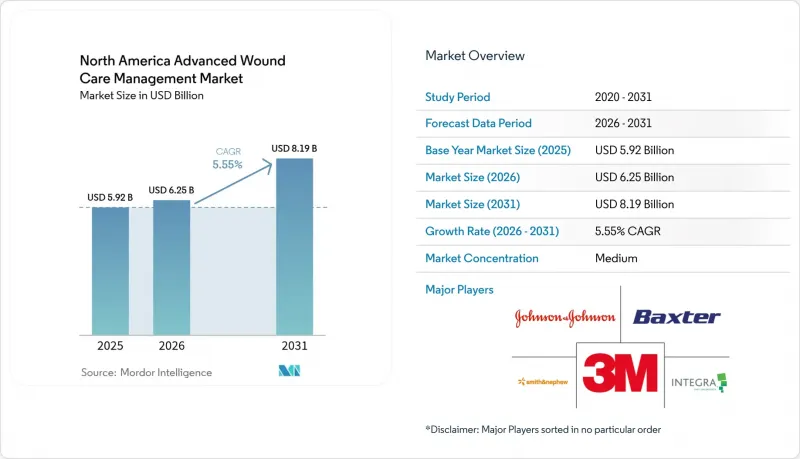
Mordor Intelligence에 따르면 북미의 첨단 상처 관리 시장 규모는 2025년에 59억 2,000만 달러로 평가되며, 2026년 62억 5,000만 달러에서 2031년까지 81억 9,000만 달러에 달할 것으로 예측되며, 예측 기간(2026-2031년) 동안 CAGR은 5.55%가 될 전망입니다.
본 보고서는 제품별(습윤 상처 관리 등), 상처 유형별(만성 상처 및 급성 상처), 최종사용자별(병원·진료소 등), 구매 형태별(처방약 및 일반의약품), 지역별(미국, 캐나다, 멕시코)로 분류되어 있습니다. 시장 예측은 금액(달러)으로 표시되어 있습니다.
북미의 첨단 상처 관리 시장 동향 및 인사이트
만성 상처 발생률 증가
당뇨병성 족부궤양, 욕창, 정맥성 하퇴 궤양 등의 만성 상처는 2024년 치료 구성의 61.54%를 차지하고 있으며, 이는 북미의 첨단 상처 관리 시장 전체에 걸쳐 고령화, 비만, 당뇨병이 복합적으로 미치는 영향을 반영합니다. 2024년, 미국의 당뇨병 진단 건수는 3,800만 건을 넘어섰습니다. 임상 문헌에 따르면, 당뇨병 환자의 최대 15%가 일생 동안 발 궤양을 앓게 되며, 그중 상당수가 고도의 치료적 개입 없이는 절단까지 이르게 된다고 합니다. 욕창은 병원 및 장기 요양 시설에서 수백만 명의 미국인에게 영향을 미치고 있으며, 이는 고위험 환경에서 첨단 상처 피복재 및 음압 요법에 대한 수요를 촉진하고 있습니다. 치유되지 않는 상처의 대부분에는 생물막 형성이 관여하고 있으며, 이는 북미의 고도 상처 관리 시장에서 항균 기술 및 생물막 파괴 기술의 필요성을 뒷받침하고 있습니다. 멕시코의 공중보건 데이터에 따르면, 당뇨병과 관련된 하지 합병증의 부담이 증가하고 있으며, 이는 새로운 진료 체계의 정비와 고도 상처 관리에 초점을 맞춘 보조금 제도의 도입으로 이어지고 있습니다. FDA의 510(k) 프로그램은 2024년에도 계속해서 상처 접촉재 및 항균 드레싱의 승인을 진행하고 있으며, 이는 제품의 갱신 주기와 임상 현장에서의 채택을 촉진하고 있습니다.
고령 인구 증가
북미에서는 65세 이상 인구가 확대되고 있으며, 이로 인해 욕창, 수술 후 치유 지연, 그리고 상처 치유를 복잡하게 만드는 다중 질환 유병률이 높아지고 있습니다. 이러한 요인들은 북미의 고도 상처 관리 시장에서 주요 과제로 대두되고 있습니다. 2030년까지 미국의 베이비붐 세대 전원이 메디케어 수급 자격을 취득하게 되어, 상처 위험이 높고 첨단 치료법에 대한 수요가 지속될 7,300만 명의 수혜자층이 형성될 전망입니다. 캐나다 역시 유사한 고령화 추세를 보이고 있으며, 2030년까지 고령자가 인구의 약 4분의 1을 차지할 것으로 예측됩니다. 이에 따라 재택 간호 모델과 주정부 주도의 원격의료가 강화되며, 전문의에 대한 접근성이 확대되고 있습니다. 이러한 인구통계학적 변화는 자가 접착성 폼이나 제거하지 않고도 육안으로 상태를 확인할 수 있는 투명 필름 등, 간병인의 부담을 줄여주는 의료기기 및 드레싱에 대한 수요를 촉진하고 있습니다. 멕시코에서는 2020년 이후 60세 이상 인구가 급속히 증가하고 있으며, 가족들은 만성 상처 관리를 위해 OTC(일반의약품) 채널이나 민간 간병 서비스에 의존하는 경향이 있는데, 이는 관찰된 OTC 판매량 및 성장 추세와 일치합니다. 사전 승인이나 임상 기준과 같은 지불 주체의 규제가 치료 장소나 제품 선택에 영향을 미치고 있으며, 그 결과 병원에서는 첨단 생물학적 제제가 사용되는 반면, 외래 진료에서는 보습성 드레싱이 기본으로 사용되는 양극화가 발생하고 있습니다.
고급 상처 치료 제품의 높은 비용
생체 공학에 의한 피부 대체재나 세포성 동종 이식편의 가격은 1회 적용당 800달러에서 2,500달러이며, 이는 일부 보험 프로그램에서 합병증이 없는 상처에 대해 1회 치료당 지급하는 금액을 초과하는 경우가 있어 환자 채택을 제한하고 있습니다. 메디케어 파트 B의 20% 본인 부담률로 인해 정가가 높은 경우, 1회 치료당 본인 부담액이 500달러에 달할 수 있으며, 그 결과 일부 사례에서는 표준 습윤 드레싱으로 전환되고 있습니다. 각 제조사에 따르면, 사전 승인 거부나 본인 부담금의 부담이 구매 시점에서 구매 포기로 이어지고 있으며, 이로 인해 고가의 바이오 제품의 보급이 지연되고 있습니다. 입원 환자를 대상으로 하는 DRG(진단 관련 그룹) 지불 제도 하의 병원은 고정된 상환액과 바이오 제품 사용 간의 균형을 맞춰야 하며, 그 결과 고위험 사례에 대한 선택적 도입이 진행되어 저비용 폼이나 알지네이트 드레싱의 사용량이 많이 확보되고 있습니다. 멕시코에서는 민간 클리닉이 가격에 민감한 중산층을 고객으로 삼고 있으며, 고성능 드레싱 하나만으로도 가구 소득의 상당 부분을 차지할 가능성이 있기 때문에 이중 구조의 제품 구성이 선호되고 있습니다. 미국 병원의 가격 투명화 조치로 인해 피부 대체술 비용에 큰 편차가 있는 것으로 밝혀졌으나, 임상적 긴급성이나 의뢰 패턴에 따라 환자에 의한 가격 비교는 제한적인 수준에 머물고 있습니다.
부문 분석
2005년, 북미의 첨단 상처 관리 시장에서 습윤 상처 관리는 45.1%의 점유율을 차지했습니다. 여기에는 널리 채택된 프로토콜에 따라 습윤 치유 환경을 지원하는 폼, 하이드로콜로이드, 필름,알지네이트, 하이드로겔, 콜라겐 등의 형태가 포함됩니다. 이 하위 부문에서는 재택 및 장기 요양 환경에서 발생하는 정맥성 하지 궤양이나 욕창 치료에 있어, 흡수성과 사용 편의성이 높이 평가되는 폼 드레싱이 주도적인 위치를 차지하고 있으며, 이것이 재구매를 뒷받침하고 있습니다. 하이드로콜로이드 및 알지네이트 드레싱은 중등도에서 다량의 삼출액이 있는 경우에 사용되며, 반면 필름은 육안 확인이 가능하고 간호 시간을 단축시켜 주는 2차 피복재로 자주 사용됩니다. 북미의 고급 상처 치료 시장에서는 치료 기간 단축으로 인해 총 치료비가 절감됨에 따라, 보험사가 바이오의약품을 지원하고 있어, 능동적 상처 치료 시장은 2001년까지 연평균 7.6%의 성장률이 예상됩니다. 병원의 감염 관리 팀은 비은계 항균제를 점차 약물 목록에 추가하고 있으며, 이로 인해 바이오필름이 부착된 상처에 대한 치료 선택의 폭이 넓어지고 있습니다. 각 제조사는 외래 진료 현장에서의 재고 관리 및 선정을 간소화하기 위해 테두리가 있는 폼에 항균층을 통합하고 있습니다. 콜라겐 드레싱은 힘줄이나 뼈가 노출된 경우 틈새 수요를 충족시키고 있지만, 단위당 비용이 높고 착용 시간에 제약이 있어 일반 의료 현장에서의 보급은 제한적입니다. 접촉 재료의 규제 승인을 위해서는 ISO 1099에 기반한 생체적합성 및 다양한 의료 현장에서의 일상적인 사용을 뒷받침하는 안전성 데이터가 요구됩니다. 캐나다 보건부가 생세포나 재조합 인자를 포함하는 클래스 III 제품을 감독할 때는 시판 후 보고 의무가 추가로 부과되는데, 이는 미국에 비해 캐나다에서의 시장 출시를 지연시키는 요인이 될 수 있습니다. 일반화된 습윤 드레싱과 부가가치가 더 높은 능동적 치료법 간의 성장 격차로 인해, 기존 기업들은 사내 브랜드 계약이나 GPO(그룹 구매 조직)와의 제휴로 전략을 전환하고 있는 반면, 신생 기업들은 동료 심사를 거친 근거와 가치 분석을 중시하고 있습니다. 의료 제공자가 목표 기간 내에 상처를 치유할 수 있는 치료법을 환자에게 적절하게 매칭함에 따라, 이 제품의 동향은 북미의 고도 상처 관리 업계에서 카테고리 구성을 지속적으로 재편해 나갈 것입니다.
2025년에는 만성 상처가 임상 활동의 61.02%를 차지했습니다. 이는 일관된 습윤 관리와 하중 경감이 필요한 당뇨병성 족부궤양, 욕창, 정맥성 궤양의 치료 주기가 장기화되고 있음을 반영합니다. 당뇨병성 족부궤양은 치유 후에도 빈번하게 재발하기 때문에 북미의 첨단 상처 관리 시장에서는 보존적 치료가 효과를 보이지 않을 경우, 폼 드레싱이나 생물학적 제제의 선택적 사용에 대한 수요가 지속되고 있습니다. 요양 시설 및 재택 노인 환자의 욕창은 실리콘 테두리 폼이나 체위 변경 프로토콜의 안정적인 사용을 이끌어내고 있으며, 이는 재택 의료의 확대와 맥을 같이하고 있습니다. 정맥성 및 동맥성 궤양의 경우, 항균 드레싱을 병용한 압박요법이 요구되고 있으며, 이는 혈관 질환 진료를 위한 패키지형 서비스의 수요를 견인하고 있습니다. 북미의 고도 상처 관리 업계에서는 상처 봉합까지 걸리는 시간을 단축하기 위해 만성 상처의 생물막 제어에 대한 노력이 점점 더 강화되고 있습니다.
급성 상처의 점유율은 0.5%로 작지만, 외래 수술 건수의 증가와 합병증을 경감하기 위한 음압상처치료의 보급 확대를 반영하여 2001년까지 연평균 6.9%의 성장이 예상됩니다. 수술 후 합병증은 여전히 건당 비용이 막대하기 때문에 예방적 항균제나 휴대용 음압 시스템의 도입이 점점 더 중요시되고 있습니다. 화상 치료에서는 전문 시설에서 상피화를 촉진하는 생체공학 기반의 진피 대체재나 콜라겐 스캐폴드가 채택되고 있습니다. 외상으로 인한 손상은 산업 및 건설 활동이 활발한 지역에서 간헐적인 수요를 창출하고 있으며, 이는 응급의료서비스(EMS) 및 응급 진료에서 지혈용 드레싱의 재고 확보를 뒷받침하고 있습니다. 규제 측면에서는 상처 치유에 영향을 미치는 외과용 메시 및 임플란트에 대한 지속적인 모니터링이 이루어지고 있으며, 일부 주에서 의무화된 인력 배치 기준은 수술 후 합병증의 조기 발견을 뒷받침하고 있습니다.
기타 혜택:
- 엑셀 형식의 시장 예측(ME) 시트
- 3개월간의 애널리스트 지원
자주 묻는 질문
목차
제1장 소개
제2장 조사 방법
제3장 주요 요약
제4장 시장 구도
제5장 시장 규모와 성장 예측
제6장 경쟁 구도
제7장 시장 기회와 향후 전망
KSM 26.08.25According to Mordor Intelligence, the North America advanced wound care management market size was valued at USD 5.92 billion in 2025 and estimated to grow from USD 6.25 billion in 2026 to reach USD 8.19 billion by 2031, at a CAGR of 5.55% during the forecast period (2026-2031).
This report is Segmented by Product (Moist Wound Care, and More), Wound Type (Chronic Wounds and Acute Wounds), End User (Hospitals & Clinics, and More), Mode of Purchase (Rx and OTC), and Geography (United States, Canada, and Mexico). Market Forecasts are Provided in Terms of Value (USD).
North America Advanced Wound Care Management Market Trends and Insights
Rising Incidence of Chronic Wounds
Chronic wounds such as diabetic foot ulcers, pressure ulcers, and venous leg ulcers represented 61.54% of the 2024 treatment mix, reflecting the combined effects of aging, obesity, and diabetes across the North America advanced wound care management market. Diagnosed diabetes cases in the United States exceeded 38 million in 2024, and clinical literature indicates that up to 15% of people with diabetes develop foot ulcers over their lifetime, with a sizeable subset progressing to amputation without advanced intervention. Pressure ulcers affect millions of Americans in hospitals and long-term care, which reinforces demand for advanced dressings and negative-pressure therapies in high-risk settings. Biofilm formation is implicated in a large share of non-healing wounds, which strengthens the case for antimicrobial and biofilm-disruption technologies in the North America advanced wound care management market. Mexico's public health data show a rising burden of diabetes-related lower-extremity complications, which has triggered new clinic capacity and targeted subsidies for advanced wound management. The FDA's 510(k) program continued to clear wound-contact materials and antimicrobial dressings in 2024, supporting product refresh cycles and clinical adoption.
Growing Geriatric Population
The 65-plus cohort in North America is expanding, which increases the prevalence of pressure ulcers, delayed surgical healing, and multi-morbidity that complicates wound closure in the North America advanced wound care management market. By 2030 all U.S. baby boomers will be Medicare-eligible, creating a 73 million beneficiary pool with elevated wound risk and sustained demand for advanced therapies. Canada faces a similar aging profile with seniors projected to comprise about one quarter of the population by 2030, which is reinforcing home-based models and provincial telehealth to extend specialist access. This demographic shift favors devices and dressings that reduce caregiver burden, such as self-adherent foams and transparent films that enable visual checks without removal. Mexico's 60-plus population has grown quickly since 2020, and families are leaning on OTC channels and private nursing for chronic-wound care, aligning with observed OTC volume and growth. Payer controls like prior authorization and clinical criteria are shaping site-of-care and product choice, which creates a split between hospital use of advanced biologics and outpatient default to moisture-retentive dressings.
High Cost of Advanced Wound Care Products
Bioengineered skin substitutes and cellular allografts are priced from USD 800 to USD 2,500 per application, which can exceed episode payments for uncomplicated wounds in several coverage programs and limit patient uptake. Medicare's 20% Part B coinsurance means out-of-pocket amounts can reach USD 500 per treatment when list prices are high, which redirects some cases to standard moist dressings. Manufacturers have reported that prior-authorization denials and copay burdens lead to abandonment at the point of sale, which slows adoption of premium biologics. Hospitals under inpatient DRG payments must balance biologic use against fixed reimbursements, which drives selective deployment for high-risk cases and preserves volume for lower-cost foams and alginates. In Mexico, private clinics serve a price-sensitive middle-income segment where a single advanced dressing can be a significant share of household income, which supports a two-tier product mix. U.S. hospital price transparency has revealed wide variation in charges for skin-substitute procedures, yet patient shopping is limited by clinical urgency and referral patterns.
Other drivers and restraints analyzed in the detailed report include:
- Technological Advancements in Wound Care Products
- Increasing Healthcare Expenditure
- Stringent Regulatory Approvals
For complete list of drivers and restraints, kindly check the Table Of Contents.
Segment Analysis
Moist wound care held 45.1% of the North America advanced wound care management market share in 05, spanning foam, hydrocolloid, film, alginate, hydrogel, and collagen formats that support a moist healing environment under widely used protocols. Foam dressings lead within this subsegment due to absorbency and ease of use for venous leg ulcers and pressure injuries in home and long-term care, which sustains repeat purchasing. Hydrocolloid and alginate dressings are used for moderate to heavy exudate, while films often serve as secondary covers that reduce nursing time by allowing visual checks. Active wound care is projected to grow at 7.6% through 01 as payers support biologics where total episode costs fall with faster closure in the North America advanced wound care management market. Hospital infection-control teams are gradually adding non-silver antimicrobials to formularies, which broadens options for biofilm-laden wounds. Manufacturers are integrating antimicrobial layers into bordered foams to simplify stocking and selection in ambulatory settings. Collagen dressings fill a niche when tendon or bone is exposed, but higher per-unit costs and wear-time constraints limit broader use in generalist settings. Regulatory clearances for contact materials require biocompatibility per ISO 1099 and safety data that support routine use in diverse care settings. Health Canada's oversight of Class III products that include live cells or recombinant factors adds post-market reporting that can slow Canadian access compared with the United States. The growth gap between commoditized moist dressings and higher-value active therapies is steering incumbent strategies toward private-label contracts and GPO partnerships while challengers lean on peer-reviewed evidence and value analyses. This product dynamic will continue to reshape category mix in the North America advanced wound care management industry as providers match patients to interventions that close wounds within target windows.
Chronic wounds accounted for 61.02% of clinical activity in 2025, reflecting extended care cycles for diabetic foot ulcers, pressure injuries, and venous ulcers that require consistent moisture management and offloading. Diabetic foot ulcers recur frequently after closure, which sustains demand for foam dressings and selective use of biologics when conservative therapy stalls in the North America advanced wound care management market. Pressure injuries in skilled-nursing and home-bound seniors generate steady use of silicone-bordered foams and repositioning protocols, which aligns with the rise of home healthcare. Venous and arterial ulcers prompt use of compression with antimicrobial dressings, which drives bundled offerings for vascular practices. The North America advanced wound care management industry increasingly targets biofilm control within chronic wounds to accelerate time to closure.
Acute wounds held a smaller 05 share but are forecast to grow at 6.9% through 01, reflecting expanding ambulatory surgery volumes and greater adoption of negative-pressure incisional therapy to reduce complications. Surgical-site events still impose heavy costs per episode, which strengthens the case for prophylactic antimicrobials and portable negative-pressure systems. Burn care is adopting bioengineered dermal substitutes and collagen scaffolds that speed re-epithelialization in specialized centers. Traumatic injuries create episodic demand in regions with higher industrial or construction activity, which supports inventory of hemostatic dressings in EMS and urgent care. Oversight includes ongoing surveillance for surgical meshes and implants that influence wound healing, while mandated staffing ratios in some states support early identification of post-operative complications.
Complete Report Scope:
- By Product
- Moist Wound Care
- Foam Dressings
- Hydrocolloid Dressings
- Film Dressings
- Alginate Dressings
- Hydrogel Dressings
- Collagen Dressings
- Other Advanced Dressings
- Antimicrobial Wound Care
- Silver
- Non-silver
- Active Wound Care
- Biomaterials
- Skin-substitute
- Growth Factors
- Moist Wound Care
- By Wound Type
- Chronic Wounds
- Diabetic Foot Ulcer
- Pressure Ulcer
- Venous & Arterial Ulcer
- Other Chronic Wounds
- Acute Wounds
- Surgical Wounds
- Burns
- Traumatic & Other Acute Wounds
- Chronic Wounds
- By End User
- Hospitals & Clinics
- Ambulatory Surgical Centers (ASCs)
- Home Healthcare Settings
- Long-Term Care & Skilled Nursing Facilities
- Specialty Wound Care Centers
- By Mode of Purchase
- Prescription-based (Rx)
- Over-the-Counter (OTC)
- By Country
- United States
- Canada
- Mexico
List of Companies Covered in this Report:
- 3M
- Advancis Medical
- Axio Biosolutions
- B. Braun
- Baxter
- Beckton Dickinson
- Cardinal Health
- Coloplast
- Convatec
- Derma Sciences (An Integra Brand)
- Essity (Leukoplast)
- Hollister
- Integra LifeSciences
- Johnson & Johnson
- Medline Industries
- Medtronic
- MiMedx Group Inc.
- Molnlycke Health Care
- Organogenesis
- Smiths Group
- Triad Life Sciences
- Urgo Medical
Additional Benefits:
- The market estimate (ME) sheet in Excel format
- 3 months of analyst support
TABLE OF CONTENTS
1 Introduction
- 1.1 Study Assumptions & Market Definition
- 1.2 Scope of the Study
2 Research Methodology
3 Executive Summary
4 Market Landscape
- 4.1 Market Overview
- 4.2 Market Drivers
- 4.2.1 Rising Incidence of Chronic Wounds
- 4.2.2 Growing Geriatric Population
- 4.2.3 Technological Advancements in Wound Care Products
- 4.2.4 Increasing Healthcare Expenditure
- 4.2.5 Rising Awareness and Prevention Programs
- 4.2.6 Strategic Collaborations and Partnerships
- 4.3 Market Restraints
- 4.3.1 High Cost of Advanced Wound Care Products
- 4.3.2 Stringent Regulatory Approvals
- 4.3.3 Limited Reimbursement Policies
- 4.3.4 Lack of Skilled Healthcare Professionals
- 4.4 Value / Supply-Chain Analysis
- 4.5 Regulatory Landscape
- 4.6 Technological Outlook
- 4.7 Porter's Five Forces
- 4.7.1 Bargaining Power of Suppliers
- 4.7.2 Bargaining Power of Buyers
- 4.7.3 Threat of New Entrants
- 4.7.4 Threat of Substitutes
- 4.7.5 Intensity of Competitive Rivalry
5 Market Size & Growth Forecasts (Value, USD)
- 5.1 By Product
- 5.1.1 Moist Wound Care
- 5.1.1.1 Foam Dressings
- 5.1.1.2 Hydrocolloid Dressings
- 5.1.1.3 Film Dressings
- 5.1.1.4 Alginate Dressings
- 5.1.1.5 Hydrogel Dressings
- 5.1.1.6 Collagen Dressings
- 5.1.1.7 Other Advanced Dressings
- 5.1.2 Antimicrobial Wound Care
- 5.1.2.1 Silver
- 5.1.2.2 Non-silver
- 5.1.3 Active Wound Care
- 5.1.3.1 Biomaterials
- 5.1.3.2 Skin-substitute
- 5.1.3.3 Growth Factors
- 5.1.1 Moist Wound Care
- 5.2 By Wound Type
- 5.2.1 Chronic Wounds
- 5.2.1.1 Diabetic Foot Ulcer
- 5.2.1.2 Pressure Ulcer
- 5.2.1.3 Venous & Arterial Ulcer
- 5.2.1.4 Other Chronic Wounds
- 5.2.2 Acute Wounds
- 5.2.2.1 Surgical Wounds
- 5.2.2.2 Burns
- 5.2.2.3 Traumatic & Other Acute Wounds
- 5.2.1 Chronic Wounds
- 5.3 By End User
- 5.3.1 Hospitals & Clinics
- 5.3.2 Ambulatory Surgical Centers (ASCs)
- 5.3.3 Home Healthcare Settings
- 5.3.4 Long-Term Care & Skilled Nursing Facilities
- 5.3.5 Specialty Wound Care Centers
- 5.4 By Mode of Purchase
- 5.4.1 Prescription-based (Rx)
- 5.4.2 Over-the-Counter (OTC)
- 5.5 By Country
- 5.5.1 United States
- 5.5.2 Canada
- 5.5.3 Mexico
6 Competitive Landscape
- 6.1 Market Concentration
- 6.2 Market Share Analysis
- 6.3 Company Profiles (includes Global level Overview, Market level overview, Core Business Segments, Financials, Headcount, Key Information, Market Rank, Market Share, Products and Services, and analysis of Recent Developments)
- 6.3.1 3M
- 6.3.2 Advancis Medical
- 6.3.3 Axio Biosolutions
- 6.3.4 B. Braun Melsungen AG
- 6.3.5 Baxter International Inc.
- 6.3.6 Becton, Dickinson and Company
- 6.3.7 Cardinal Health
- 6.3.8 Coloplast A/S
- 6.3.9 ConvaTec Group PLC
- 6.3.10 Derma Sciences (An Integra Brand)
- 6.3.11 Essity (Leukoplast)
- 6.3.12 Hollister Incorporated
- 6.3.13 Integra LifeSciences
- 6.3.14 Johnson & Johnson (Ethicon)
- 6.3.15 Medline Industries LP
- 6.3.16 Medtronic plc
- 6.3.17 MiMedx Group Inc.
- 6.3.18 Molnlycke Health Care AB
- 6.3.19 Organogenesis Holdings Inc.
- 6.3.20 Smith & Nephew plc
- 6.3.21 Triad Life Sciences
- 6.3.22 Urgo Medical
7 Market Opportunities & Future Outlook
- 7.1 White-space & Unmet-Need Assessment


