

|
시장보고서
상품코드
2116046
유럽의 생분해성 플라스틱 포장 : 시장 점유율 분석, 업계 동향과 통계, 성장 예측(2026-2031년)Europe Biodegradable Plastic Packaging - Market Share Analysis, Industry Trends & Statistics, Growth Forecasts (2026 - 2031) |
||||||
 Mordor Intelligence
Mordor Intelligence에 따르면 유럽의 생분해성 플라스틱 포장 시장 규모는 2025년 7억 2,000만 달러에서 2026년에는 8억 5,340만 달러로 확대되고, 2026년부터 2031년까지 CAGR 18.53%를 기록하며 2031년에는 19억 9,000만 달러에 달할 것으로 예측됩니다.
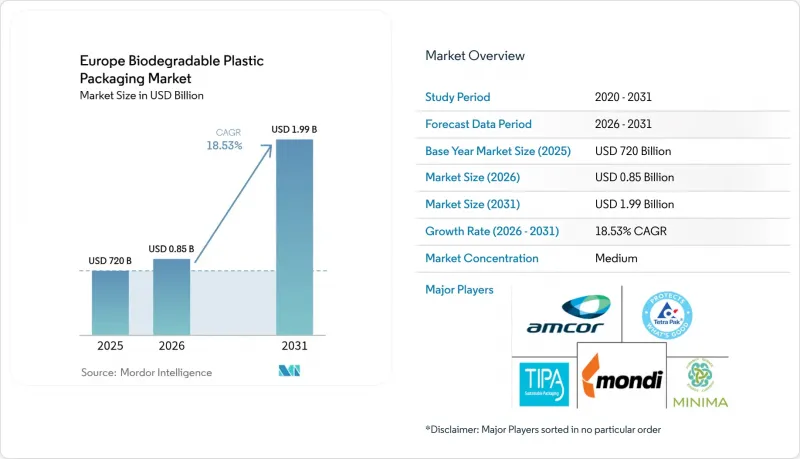
본 보고서는 소재 유형(전분 블렌드, PLA, PBAT 등), 포장 유형(경질, 연질), 제품 유형(필름·랩, 파우치·백,트레이·용기, 병·저 등), 최종사용자 산업(음료, 외식 산업, 제약, 퍼스널케어·홈케어 등), 및 국가별로 분류되어 있습니다. 시장 예측은 금액(달러) 기준으로 제시되어 있습니다.
유럽 생분해성 플라스틱 포장 시장의 동향 및 인사이트
EU의 엄격한 일회용 플라스틱 및 포장 폐기물 규제
2026년 PPWR(플라스틱 포장 폐기물 규정) 시행 시한에 따라, 퇴비화 가능한 소재의 사용 사례가 티백, 과일 라벨, 초경량 캐리어백으로 한정됨에 따라, 범위는 좁지만 대량 수요가 예상되는 수요 채널이 생겨나고 있습니다. 적용 범위가 명확해짐에 따라 투자 위험이 완화되었고, 각 변환 업체들은 일률적인 대체재에 의존하기보다는 특정된 틈새 시장에 생산능력을 집중하고 있습니다. 독일은 1인당 EPR(생산자 책임) 수수료를 통해 이러한 움직임을 뒷받침하고 있으며, 규제의 의도를 즉각적인 비용 인센티브로 전환하고 있습니다. 정책과 공장 가동 시작의 동기화, 예를 들어 2024년 8월에 정격 생산량에 도달한 프랑스 노르망디 PLA 생산 라인 등은 시장의 불확실성을 줄이는 민관 협력의 좋은 사례입니다. 브랜드 소유자들은 현재 다년간의 공급 계약에 규정 준수 조항을 포함시켜 수거량을 확보하는 동시에 상용화 주기를 가속화하고 있습니다.
지속가능한 포장 솔루션에 대한 소비자 선호도 증가
유럽 쇼핑객의 73%가 생분해성 제품을 적극적으로 찾고 있으며, 북유럽 국가에서는 프리미엄 가격을 지불할 의향이 가장 높은 것으로 나타났습니다. 소비자의 인식은 일반적인 ‘친환경’ 메시지에서 소재별 지식으로 진화하고 있으며, 각 브랜드는 ISO 및 EN 규격을 바탕으로 주장을 뒷받침해야 합니다. 프리미엄 브랜드들은 우선 고소득 지역에서 생분해성 포장을 도입한 뒤, 비용 곡선이 하락함에 따라 가격에 민감한 남유럽 시장으로 확장을 넓혀가고 있습니다. 플라스틱 사용량을 최대 97%까지 줄인 네슬레의 종이 포장재는 브랜드 가치를 활용하여 대규모 확대에 앞서 새로운 소재를 시험적으로 도입한 좋은 사례입니다. 인식이 높아짐에 따라 표시의 정확성과 제3자 기관의 인증은 단순한 선택적 증명 요소가 아니라 구매의 주요 결정 요인이 되고 있습니다.
기존 플라스틱과 비교한 생분해성 폴리머의 높은 생산 비용
PLA는 화석 유래 플라스틱의 벤치마크 가격의 2-3배, PHA는 5-7배 수준에서 계속 거래되고 있으며, 이는 발효 공정의 복잡성과 특수 원료의 물류 사정을 반영한 것입니다. 전 세계 바이오플라스틱의 명목 생산능력은 2024년 247만 톤에서 2029년까지 573만 톤으로 증가할 것으로 예상되지만, 락티드 및 PHA 단량체의 공급망이 아직 성숙 단계에 이르지 못해 단위 비용은 여전히 높은 수준을 유지하고 있습니다. 탄소세나 플라스틱 과세로 인해 이러한 가격 차이는 축소될 가능성이 있지만, 이러한 재정 조치의 시행 시기나 일관성에 대해서는 여전히 불투명한 상황입니다. 따라서 각 제조사들은 성능상의 우위를 통해 가격 차이를 정당화할 수 있는, 해상에서 폐기 가능한 제품이나 높은 차단성을 지닌 스낵용 파우치와 같은 프리미엄 틈새 시장에 주력하고 있습니다.
부문 분석
2025년, PLA는 유럽 생분해성 플라스틱 포장 시장 규모의 64.78%를 차지했습니다. 이는 지역 공급 안정성을 높이는 노르망디(Normandy)사의 새로운 PLA 생산 라인에 힘입은 결과입니다. PHA는 연평균 성장률(CAGR) 21.71%로 급성장하고 있으며, 해안 지역의 외식 산업에서 수산양식 제품에 이르기까지 해양 환경에 노출되는 포장재의 대표적인 선택지로 간주되고 있습니다. 비용 측면의 과제는 크지만, 폐기물 규제가 엄격해지고 있는 발트해 및 북해 시장에서는 조기 도입 기업들이 규제 준수를 보장하기 위해 높은 가격을 감수하고 있습니다. PBAT 및 PBS의 유럽 생분해성 플라스틱 포장 시장 점유율은 여전히 소규모이지만, 이러한 폴리에스터는 특정 사용 사례를 개척하고 있으며, 전자는 전분 기반의 유연한 혼합 소재로, 후자는 경질이며 높은 차단성을 지닌 트레이에 사용되고 있습니다.
성장 경로는 엇갈리고 있습니다. PLA 공급업체는 규모 확대를 통한 비용 절감을 우선시하며, 전자레인지용 레토르트 식품을 위해 내열성이 높은 폴리머를 추가하고 있는 반면, PHA 개발 기업들은 의료용 흡수성 소재 등 기능적인 미개척 분야를 추구하고 있습니다. 각 브랜드가 공급업체 다각화 프로그램을 시행함에 따라 PLA와 PHA의 이중 조달이 점점 더 보편화되고 있으며, 원료 공급 변동에 대한 내성을 확보하고 있습니다.
2025년 유럽 생분해성 플라스틱 포장 시장 규모 중 유연 포장이 57.91%를 차지하며, 연평균 성장률(CAGR)은 18.86%를 기록하고 있습니다. 두께가 얇아짐에 따라 수지 사용량이 감소하여, PPWR의 경량화 목표에 부합하고 있습니다. HolyGrail 2.0을 활용한 워터마크 기술의 파일럿 테스트에서는 퇴비화 가능한 필름이 MRF(재활용 선별 시설)의 처리 속도에서도 식별 가능함이 확인되어, 선별 과정에서 중요한 과제가 해소되었습니다. 경질 용기는 발전 속도가 더딘 편이지만, 바이오 PET 및 PEF 분야에서 혁신이 진행되고 있습니다. 아반티움(Avantium)사의 네덜란드 공장이 2024년 10월에 가동을 시작함에 따라, 프리미엄 음료 브랜드는 차단 성능을 저해하지 않으면서 소재를 전환할 수 있게 되었습니다.
경질 플라스틱 솔루션 개발 기업들은 다층 구조의 단순화에 주력하고 있으며, 캡, 라벨, 밀봉부가 퇴비를 오염시키지 않고 함께 분해되거나 기계적으로 제거될 수 있도록 하고 있습니다. 열성형이 가능한 PLA 등급의 등장으로 인해 디트레이 및 블리스터 팩에 대한 적용 범위가 확대되면서, 유럽의 생분해성 플라스틱 포장 시장 규모를 더욱 끌어올리고 있습니다.
기타 혜택:
- 엑셀 형식의 시장 예측(ME) 시트
- 3개월간의 애널리스트 지원
자주 묻는 질문
목차
제1장 소개
제2장 조사 방법
제3장 주요 요약
제4장 시장 구도
제5장 시장 규모와 성장 예측
제6장 경쟁 구도
제7장 시장 기회와 향후 전망
KSM 26.08.26According to Mordor Intelligence, the Europe biodegradable plastic packaging market size is expected to grow from USD 720 million in 2025 to USD 853.4 million in 2026 and is forecast to reach USD 1.99 billion by 2031 at 18.53% CAGR over 2026-2031.
This report is Segmented by Material Type (Starch Blends, PLA, PBAT, and More), Packaging Type (Rigid, and Flexible), Product Type (Films and Wraps, Pouches and Bags, Trays and Containers, Bottles and Jars, and More), End-User Industry (Beverages, Foodservice, Pharmaceutical, Personal Care and Home Care, and More), and Country. The Market Forecasts are Provided in Terms of Value (USD).
Europe Biodegradable Plastic Packaging Market Trends and Insights
Stringent EU Single-Use Plastics and Packaging Waste Regulations
The 2026 PPWR deadline creates narrow but high-volume demand channels by limiting mandatory compostable use cases to tea bags, fruit labels, and ultra-light carrier bags. Clarity on scope reduces investment risk, prompting converters to commit capacity to identified niches rather than resorting to blanket substitution. Germany amplifies the signal through its per-capita EPR fee, translating regulatory intent into immediate cost incentives. Synchronization of policy and plant start-ups, such as France's Normandy PLA line reaching nameplate output in August 2024, illustrates public-private coordination that lowers market uncertainty. Brand owners now embed compliance clauses in multiyear supply contracts, locking in offtake and accelerating commercialization cycles.
Rising Consumer Preference for Sustainable Packaging Solutions
Seventy-three percent of European shoppers actively seek biodegradable options, with Nordics showing the highest willingness to pay premiums. The consumer shift has evolved from generic eco-friendly messaging to material-specific literacy, pushing brands to substantiate claims under ISO and EN standards. Premium labels initially roll out biodegradable formats in high-income regions, then scale to price-sensitive southern markets as the cost curve falls. Nestle's paper-based wrappers, which cut plastic by up to 97%, exemplify how brand equity is leveraged to trial new substrates before mass rollout. As awareness grows, labeling accuracy and third-party certification become core purchase triggers rather than optional proof points.
Higher Production Costs of Biodegradable Polymers Versus Conventional Plastics
PLA continues to trade at 2-3X and PHA at 5-7X fossil plastic benchmarks, reflecting fermentation complexity and specialized feedstock logistics. Although global bioplastic nameplate capacity is expected to rise from 2.47 million tonnes in 2024 to 5.73 million tonnes by 2029, unit costs remain sticky because lactide and PHA monomer supply chains are still maturing. Carbon taxes or plastic levies could narrow the delta, yet the timing and uniformity of such fiscal tools remain uncertain. Producers therefore focus on premium niches, such as marine-throwable items and high-barrier snack pouches, where performance advantages justify price gaps.
Other drivers and restraints analyzed in the detailed report include:
- Corporate Sustainability Commitments Among FMCG and Retail Brands
- Expansion of Composting and Biowaste Collection Infrastructure
- Limited Industrial Composting Capacity Across EU Member States
For complete list of drivers and restraints, kindly check the Table Of Contents.
Segment Analysis
PLA delivered 64.78% of the Europe biodegradable plastic packaging market size in 2025, supported by Normandy's new PLA line that adds regional supply security. PHA is accelerating at a 21.71% CAGR and is viewed as the go-to option for marine-exposed packaging, from coastal foodservice to aquaculture products. The cost challenge is higher, yet early adopters accept a premium to secure jurisdictional compliance in Baltic and North Sea markets that are tightening litter rules. The European biodegradable plastic packaging market share for PBAT and PBS remains modest; however, these polyesters carve out specific use cases, with the former in starch-based flexible blends and the latter in rigid, high-barrier trays.
Growth pathways diverge: PLA suppliers prioritize cost-down through scale, adding polymers with higher heat stability for microwaveable ready meals, whereas PHA developers pursue functional white spaces, such as medical absorbables. As brands implement supplier diversification programs, dual-sourcing between PLA and PHA has become increasingly common, ensuring resilience against fluctuations in feedstock supply.
Flexible packs contributed 57.91% to the Europe biodegradable plastic packaging market size in 2025 and are tracking a 18.86% CAGR. Their thinner gauge reduces resin need, aligning with PPWR's weight-reduction targets. HolyGrail 2.0's watermark pilots confirm that compostable films can be recognized at MRF speed, clearing a critical sortation hurdle. Rigid formats lag but innovate in bio-PET and PEF: Avantium's Dutch plant went online in October 2024, enabling premium beverage brands to switch without sacrificing barrier performance.
Developers of rigid solutions focus on multilayer simplification, allowing caps, labels, and closures to co-degrade or be mechanically removed without contaminating the compost. The emergence of thermoformable PLA grades is expanding application scope into deli trays and blister packs, adding incremental volume to the Europe biodegradable plastic packaging market.
Complete Report Scope:
- By Material Type
- Starch Blends
- Polylactic Acid (PLA)
- Polybutylene Adipate Terephthalate (PBAT)
- Polybutylene Succinate (PBS)
- Polyhydroxyalkanoates (PHA)
- Other Material Types
- By Packaging Type
- Rigid Packaging
- Flexible Packaging
- By Product Type
- Films and Wraps
- Pouches and Bags
- Trays and Containers
- Bottles and Jars
- Other Product Types
- By End-User Industry
- Food
- Beverages
- Foodservice
- Pharmaceutical
- Personal Care and Home Care
- Other End-User Industries
- By Country
- United Kingdom
- Germany
- France
- Italy
- Spain
- Rest of Europe
List of Companies Covered in this Report:
- Tetra Pak International SA
- Amcor plc
- Mondi plc
- NatureWorks LLC
- BASF SE
- Taghleef Industries Inc.
- Sealed Air Corporation
- Huhtamaki Oyj
- Novamont S.p.A.
- Constantia Flexibles GmbH
- Biogreen Global Ltd.
- Minima Technology Co. Ltd.
- Tipa-Corp Ltd.
- Roquette Freres SAS
- Avantium N.V.
- Arkema SA
- Futerro SA
- Thyssenkrupp Uhde GmbH
- DuPont de Nemours Inc.
- FKuR Kunststoff GmbH
- BIOTEC Biologische Naturverpackungen GmbH & Co. KG
Additional Benefits:
- The market estimate (ME) sheet in Excel format
- 3 months of analyst support
TABLE OF CONTENTS
1 INTRODUCTION
- 1.1 Study Assumptions and Market Definition
- 1.2 Scope of the Study
2 RESEARCH METHODOLOGY
3 EXECUTIVE SUMMARY
4 MARKET LANDSCAPE
- 4.1 Market Overview
- 4.2 Market Drivers
- 4.2.1 Stringent EU Single-Use Plastics and Packaging Waste Regulations
- 4.2.2 Rising Consumer Preference for Sustainable Packaging Solutions
- 4.2.3 Corporate Sustainability Commitments Among FMCG and Retail Brands
- 4.2.4 Expansion of Composting and Biowaste Collection Infrastructure
- 4.2.5 Beverage Brand Shift From Glass to Bio-PET/PEF Bottles to Cut Freight Emissions
- 4.2.6 Convergence of Digital Watermarking With Compostable Films for Smart Sorting
- 4.3 Market Restraints
- 4.3.1 Higher Production Costs of Biodegradable Polymers Versus Conventional Plastics
- 4.3.2 Limited Industrial Composting Capacity Across EU Member States
- 4.3.3 Risk of Feedstock Competition With Food Chain Amid CAP Reforms
- 4.3.4 Residual Microplastics From Incompletely Digested PLA in Anaerobic Digesters
- 4.4 Impact of Macroeconomic Factors on the Market
- 4.5 Industry Value Chain Analysis
- 4.6 Regulatory Landscape
- 4.7 Technological Outlook
- 4.8 Porter's Five Forces Analysis
- 4.8.1 Threat of Competitive Rivalry
- 4.8.2 Bargaining Power of Buyers
- 4.8.3 Threat of New Entry
- 4.8.4 Threat of Substitution
- 4.8.5 Bargaining Power of Suppliers
5 MARKET SIZE AND GROWTH FORECASTS (VALUE)
- 5.1 By Material Type
- 5.1.1 Starch Blends
- 5.1.2 Polylactic Acid (PLA)
- 5.1.3 Polybutylene Adipate Terephthalate (PBAT)
- 5.1.4 Polybutylene Succinate (PBS)
- 5.1.5 Polyhydroxyalkanoates (PHA)
- 5.1.6 Other Material Types
- 5.2 By Packaging Type
- 5.2.1 Rigid Packaging
- 5.2.2 Flexible Packaging
- 5.3 By Product Type
- 5.3.1 Films and Wraps
- 5.3.2 Pouches and Bags
- 5.3.3 Trays and Containers
- 5.3.4 Bottles and Jars
- 5.3.5 Other Product Types
- 5.4 By End-User Industry
- 5.4.1 Food
- 5.4.2 Beverages
- 5.4.3 Foodservice
- 5.4.4 Pharmaceutical
- 5.4.5 Personal Care and Home Care
- 5.4.6 Other End-User Industries
- 5.5 By Country
- 5.5.1 United Kingdom
- 5.5.2 Germany
- 5.5.3 France
- 5.5.4 Italy
- 5.5.5 Spain
- 5.5.6 Rest of Europe
6 COMPETITIVE LANDSCAPE
- 6.1 Market Concentration
- 6.2 Strategic Moves
- 6.3 Market Share Analysis
- 6.4 Company Profiles (includes Global Level Overview, Market Level Overview, Core Segments, Financials as available, Strategic Information, Market Rank/Share for Key Companies, Products and Services, and Recent Developments)
- 6.4.1 Tetra Pak International SA
- 6.4.2 Amcor plc
- 6.4.3 Mondi plc
- 6.4.4 NatureWorks LLC
- 6.4.5 BASF SE
- 6.4.6 Taghleef Industries Inc.
- 6.4.7 Sealed Air Corporation
- 6.4.8 Huhtamaki Oyj
- 6.4.9 Novamont S.p.A.
- 6.4.10 Constantia Flexibles GmbH
- 6.4.11 Biogreen Global Ltd.
- 6.4.12 Minima Technology Co. Ltd.
- 6.4.13 Tipa-Corp Ltd.
- 6.4.14 Roquette Freres SAS
- 6.4.15 Avantium N.V.
- 6.4.16 Arkema SA
- 6.4.17 Futerro SA
- 6.4.18 Thyssenkrupp Uhde GmbH
- 6.4.19 DuPont de Nemours Inc.
- 6.4.20 FKuR Kunststoff GmbH
- 6.4.21 BIOTEC Biologische Naturverpackungen GmbH & Co. KG
7 MARKET OPPORTUNITIES AND FUTURE OUTLOOK
- 7.1 White-space and Unmet-Need Assessment


