

|
시장보고서
상품코드
2116640
중동 및 아프리카의 항공기 MRO 시장 : 점유율 분석, 업계 동향과 통계, 성장 예측(2026-2031년)Middle East And Africa Aircraft MRO - Market Share Analysis, Industry Trends & Statistics, Growth Forecasts (2026 - 2031) |
||||||
 Mordor Intelligence
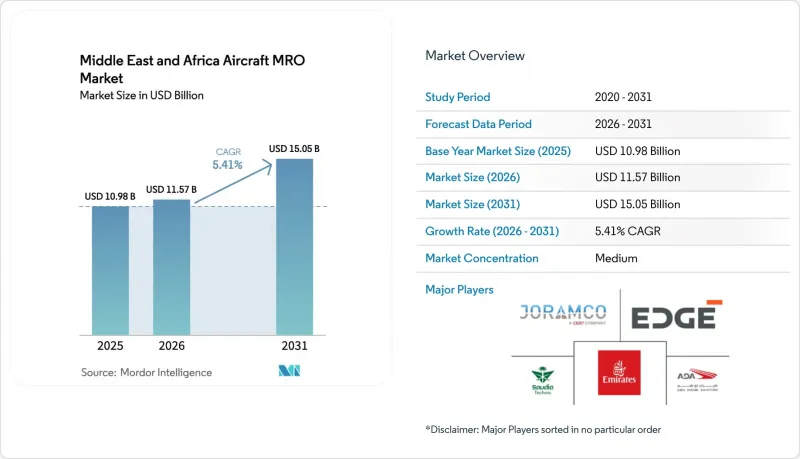
Mordor Intelligence에 의하면, 중동 및 아프리카의 항공기 MRO 시장 규모는 2025년에 109억 8,000만 달러로 평가되었고 2026년 115억 7,000만 달러에서 2031년까지 150억 5,000만 달러에 이를 것으로 예측되며, 예측 기간(2026-2031년) CAGR은 5.41%를 나타낼 전망입니다.
본 보고서는 MRO 유형(기체 MRO, 엔진 MRO, 부품 및 개조 MRO, 라인 정비), 항공 분야(상용 항공, 군용 항공, 일반 항공, 무인 항공기), 유지보수 제공업체 유형(항공사 직영 MRO, 기타), 지역(중동 및 아프리카)별로 분류되어 있습니다. 시장 전망은 금액(달러)으로 표시되어 있습니다.
중동 및 아프리카 항공기 MRO 시장 동향 및 인사이트
걸프 및 아프리카 국적 항공사의 기종 갱신 프로그램
걸프 및 아프리카 항공사들은 A320neo, 737 MAX, 777X, A350 기종으로의 기체 갱신을 추진하고 있으며, 이에 따라 LEAP-1A, GEnx, Trent XWB 엔진의 초기 운용 기간 동안 정비 공장으로의 입고가 급증하고 있습니다. GE 에어로스페이스는 차세대 정비 수요에 대응하기 위해 두바이와 도하의 테스트 셀 업그레이드에 1,000만 달러를 투자했습니다. 새로운 기종은 연료비 절감으로 이어지지만, 운영 비용 보장을 유지하기 위해서는 OEM이 정한 정비 주기를 더욱 엄격하게 준수해야 합니다. 오버홀 일정을 조기에 확보한 항공사는 운항 신뢰성 측면에서 우위를 점할 수 있기 때문에 경쟁사들도 수년 앞까지 예약을 잡는 추세입니다. 그 결과 발생하는 수요의 앞당김으로 인해, 엔진 정비 수익 증가세는 전 세계 기체 수의 확대 속도를 능가하는 속도로 가속화되고 있습니다.
GCC 및 북아프리카 전역의 저비용 항공사(LCC) 확대
플라이두바이, 에어 아라비아, 자질라 에어웨이즈는 하루 11비행시간을 초과하는 높은 가동률을 보이는 협폭기 기종을 운항하고 있으며, 이로 인해 A-체크 주기가 단축되고 라인 정비 수요가 증가하고 있습니다. 플라이두바이가 두바이 월드 센트럴에 개설한 1억 9,000만 달러 규모의 시설에는 협폭기 전용 추가 정비 베이가 마련되어 있어, 6-8시간 내에 항공기 정비를 완료함으로써 스케줄에 미치는 영향을 최소화하고 있습니다. 사프란(Safran)사의 카사블랑카에 위치한 LEAP 정비 공장은 북아프리카의 LCC를 위해 이 모델을 반영하고 있어, 각 항공사는 유럽행 페리 비행을 피할 수 있게 되었습니다. 변동비형 정비 계획, 부품 풀링, 시간 단위 계약은 LCC의 현금 흐름 특성에 부합하며, 대규모 점검을 통해 발생한 수익을 지역 허브로 재투자하고 있습니다. LCC 특유의 짧은 예약 기간이라는 특징은 다음 날 반환을 보장할 수 있는 정비 업체에 유리하게 작용하여, GCC 및 북아프리카 전역에서 라인 정비 처리량을 증가시키고 있습니다.
숙련된 정비 기술자 부족과 인재 정착의 과제
보잉(Boeing)사의 예측에 따르면, 아프리카에서는 2042년까지 2만 2,000명의 신규 자격을 갖춘 정비사가 필요할 것으로 전망되지만, 현재 이 지역 내의 양성 프로그램에서는 연간 500명 미만의 엔지니어만 배출되고 있습니다. 걸프 지역의 정비 거점은 EASA Part-66 및 FAA 자격을 보유한 인재를 두고 현지 항공사와 직접 경쟁하고 있으며, 그 결과 기본급이 두 자릿수 비율로 상승하여 MRO의 영업 이익률이 압박받고 있습니다. 비자 요건과 주거비가 외국인 직원 채용을 더욱 제약하고 있는 한편, 항공사 간의 인재 영입 경쟁으로 인해 아랍에미리트(UAE)의 프리존에서는 직원 이직률이 15%를 초과하고 있습니다. 또한, 인력 확충이 지연됨에 따라 암만의 조람코(Joramco) 5개 라인 확장 사례와 같이 새로운 격납고가 충분히 활용되지 못할 위험이 있습니다. 이러한 인력 부족은 적절한 처리 능력을 저하시키고, 항공기 MRO 시장 전체의 예측 연평균 성장률(CAGR)을 0.9포인트 끌어내리고 있습니다.
부문 분석
엔진 정비는 가장 큰 부문을 차지하며, 2025년에는 항공기 MRO 시장 점유율의 37.02%를 차지했습니다. 그러나 온윙 보어스코프 검사 및 이동식 수리에 힘입은 라인 정비는 2031년까지 연평균 성장률(CAGR) 6.05%를 기록하며 다른 모든 부문을 능가하는 성장이 예상됩니다. 라인 서비스에 기인한 항공기 MRO 시장 규모는 2025년에 29억 4,000만 달러에 달하며, 신속한 턴어라운드를 우선시하는 GCC(걸프협력회의) 회원국의 LCC(저비용 항공사) 기종에 힘입어 2031년까지 41억 9,000만 달러에 달할 것으로 예측됩니다. 각 서비스 제공업체들은 가동 중단 시간을 단축하기 위해 휴대용 검사 셀, 엔진 세척 장비, 이동식 보어스코프 세트에 투자하고 있으며, GE 에어로스페이스와 루프트한자 테크닉이 두바이와 도하의 허브 공항에서 이를 도입하는 데 앞장서고 있습니다. 주기가 빠른 나로우드기 기종은 A-체크 및 시정 작업에 대한 수요를 증가시키고 있으며, 이는 MRO 사업자에게 격납고가 아닌 공항 램프 구역에 기술자를 배치할 유인을 제공합니다.
라인 정비의 확대는 부품 조달에도 파급되고 있습니다. 이동식 엔진 정비 팀은 액세서리 기어박스 누유, 블리드 밸브 고장, 즉시 예비 부품이 필요한 핫 섹션의 경미한 결함을 빈번히 지적하고 있습니다. 사프란 랜딩 시스템즈가 곧 개설할 예정인 동아프리카 사무소는 랜딩 기어 정비에 사용되는 예측 유지보수형 부품 공급을 제공하는 것을 목표로 하고 있습니다. 지속적인 라인 정비 활동으로 인해 정비 공장에 입고되는 간격이 단축되고 있어, 서비스 제공업체는 처리 능력과 자원 부담 간의 균형을 맞추어야 하는 상황에 직면해 있습니다. 엔진 MRO는 여전히 자본 집약적이며, CFM56 및 LEAP 엔진의 완전 오버홀 비용은 1회 입고당 200만-400만 달러에 달할 전망입니다. 따라서 항공사는 앞으로도 인증된 검사 셀과 OEM 라이선스를 보유한 시설에 대규모 정비를 계속 위탁할 것으로 보입니다. 이러한 구조적 차이로 인해 두 부문은 공존하며, 항공기 MRO 시장에서 각각 독자적인 가치 기반을 확립하고 있습니다.
기타 혜택
- 엑셀 형식 시장 예측(ME) 시트
- 3개월간의 애널리스트 지원
자주 묻는 질문
목차
제1장 서론
제2장 조사 방법
제3장 개요
제4장 시장 구도
제5장 시장 규모와 성장 예측
제6장 경쟁 구도
제7장 시장 기회와 향후 전망
JHS 26.09.01According to Mordor Intelligence, the Middle East and Africa aircraft MRO market size was valued at USD 10.98 billion in 2025 and estimated to grow from USD 11.57 billion in 2026 to reach USD 15.05 billion by 2031, at a CAGR of 5.41% during the forecast period (2026-2031).
This report is Segmented by MRO Type (Airframe MRO, Engine MRO, Component and Modifications MRO, and Line Maintenance), Aviation (Commercial Aviation, Military Aviation, General Aviation, and Unmanned Aerial Vehicles), Maintenance Provider Type (Airline In-House MRO and More), and Geography (Middle East and Africa). The Market Forecasts are Provided in Terms of Value (USD).
Middle East And Africa Aircraft MRO Market Trends and Insights
Fleet Renewal Programs by Gulf and African Flag Carriers
Gulf and African airlines are re-equipping with A320neo, 737 MAX, 777X, and A350 aircraft, driving a surge in early-life engine shop visits for LEAP-1A, GEnx, and Trent XWB powerplants. GE Aerospace invested USD 10 million in test-cell upgrades in Dubai and Doha to meet the next-generation workload. Younger fleets deliver fuel savings but demand tighter adherence to OEM restoration intervals to safeguard operating-cost guarantees. Carriers that secure overhaul slots early gain dispatch reliability advantages, prompting competitors to book capacity years in advance. The resulting front-loaded demand accelerates engine-service revenue growth faster than global fleet expansion.
Expansion of Low-Cost Carriers Across the GCC and North Africa
Flydubai, Air Arabia, and Jazeera Airways operate high-utilization narrow-body fleets exceeding 11 flight hours daily, compressing A-check cycles and amplifying demand for line maintenance. Flydubai's USD 190 million facility at Dubai World Central opened extra narrow-body bays that turn aircraft in 6 to 8 hours, keeping schedule disruptions low. Safran's Casablanca LEAP shop mirrors this model for North-African LCCs, allowing operators to avoid ferry flights to Europe. Variable-cost maintenance plans, component pooling, and pay-by-the-hour contracts align with the LCC's cash-flow profile and redirect heavy-check revenue to regional hubs. The short booking horizons characteristic of LCCs benefit providers able to guarantee overnight returns, raising line-service volume across the GCC and North Africa.
Shortage of Skilled Maintenance Technicians and Retention Challenges
Boeing projects that Africa will require 22,000 new licensed technicians by 2042, yet current regional training pipelines graduate fewer than 500 engineers annually. Gulf shops compete directly with their host airlines for EASA Part-66 and FAA-licensed talent, driving up base salaries by double digits and compressing MRO operating margins. Visa requirements and housing costs further constrain expatriate hiring, while poaching between carriers raises staff turnover rates above 15% in UAE free zones, and delays in workforce scale-up risk underutilizing new hangars, such as Joramco's five-line expansion in Amman. The talent gap lowers adequate capacity, subtracting 0.9 percentage points from forecast CAGR across the aircraft MRO market.
Other drivers and restraints analyzed in the detailed report include:
- Increasing Adoption of OEM Power-by-the-Hour Service Agreements
- Defense Localization Initiatives Supporting Domestic Engine MRO Capabilities
- Geopolitical Instability Disrupting Engine-Parts and Material Supply Chains
For complete list of drivers and restraints, kindly check the Table Of Contents.
Segment Analysis
Engine work represented the single-largest pool, capturing 37.02% of the aircraft MRO market share in 2025. Yet line maintenance, buoyed by on-wing borescope inspections and mobile repairs, is projected to outpace every other segment at a 6.05% CAGR to 2031. The aircraft MRO market size attributable to line services reached USD 2.94 billion in 2025 and is forecast to reach USD 4.19 billion by 2031, aided by GCC LCC fleets that prioritize rapid turnarounds. Providers invest in portable test cells, engine wash rigs, and mobile borescope suites to shrink downtime windows, with GE Aerospace and Lufthansa Technik leading deployment across Dubai and Doha hubs. High-cycle narrowbody fleets amplify demand for A-checks and corrective tasks, incentivizing MROs to base technicians across airport ramps rather than in hangar bays.
Line maintenance growth cascades through component provisioning; mobile engine teams often flag accessory gearbox leaks, bleed-valve failures, and minor hot-section distress that need immediate spares. Safran Landing Systems' forthcoming East Africa office aims to provide predictive parts supply for landing gear interventions. Continuous line activity compresses shop-visit intervals, prompting providers to balance throughput against resource strain. Engine MRO remains capital-intensive; CFM56 and LEAP complete overhauls range from USD 2 to 4 million per shop visit. Therefore, operators will continue to assign deep maintenance to facilities with certified test cells and OEM licenses. These structural differences ensure both segments coexist, each anchoring distinct value pools within the aircraft MRO market.
Complete Report Scope:
- By MRO Type
- Airframe MRO
- Engine MRO
- Component and Modifications MRO
- Line Maintenance
- By Aviation
- Commercial Aviation
- Narrowbody
- Widebody
- Regional Jets
- Military Aviation
- Combat
- Transport
- Special Mission
- Helicopters
- General Aviation
- Business Jets
- Commercial Helicopters
- Unmanned Aerial Vehicles
- Commercial Aviation
- By Maintenance Provider Type
- Airline In-house MRO
- Independent Third-Party MRO
- OEM-Affiliated MRO
- By Geography
- Middle East
- Saudi Arabia
- United Arab Emirates
- Qatar
- Turkey
- Rest of Middle East
- Africa
- Sourth Africa
- Egypt
- Rest of Africa
- Middle East
List of Companies Covered in this Report:
- Emirates Engineering
- Abu Dhabi Aviation
- Saudia Technic (SAEI)
- EDGE Group PJSC
- Joramco
- Lufthansa Technik AG
- General Aerospace (General Electric Company)
- Safran SA
- RTX Corporation
- Rolls-Royce Plc
- Sanad
- Turkish Technic Inc.
- Ethiopian Airlines
- South African Airways
- Qatar Airways
- AJW Group
Additional Benefits:
- The market estimate (ME) sheet in Excel format
- 3 months of analyst support
TABLE OF CONTENTS
1 INTRODUCTION
- 1.1 Study Assumptions and Market Definition
- 1.2 Scope of the Study
2 RESEARCH METHODOLOGY
3 EXECUTIVE SUMMARY
4 MARKET LANDSCAPE
- 4.1 Market Overview
- 4.2 Market Drivers
- 4.2.1 Fleet renewal programs by Gulf and African flag carriers
- 4.2.2 Expansion of low-cost carriers across the GCC and North Africa
- 4.2.3 Increasing adoption of OEM power-by-the-hour service agreements
- 4.2.4 Defense localization initiatives supporting domestic engine MRO capabilities
- 4.2.5 Growth of on-wing and mobile engine MRO service offerings
- 4.2.6 Adoption of predictive maintenance analytics by regional MRO hubs
- 4.3 Market Restraints
- 4.3.1 Shortage of skilled maintenance technicians and retention challenges
- 4.3.2 Geopolitical instability affecting engine parts and material supply chains
- 4.3.3 Limited harmonisation of Part-145 maintenance standards across Africa
- 4.3.4 Extended customs clearance timelines for engine components in non-GCC markets
- 4.4 Value Chain Analysis
- 4.5 Regulatory Landscape
- 4.6 Technological Outlook
- 4.7 Porter's Five Forces Analysis
- 4.7.1 Threat of New Entrants
- 4.7.2 Bargaining Power of Buyers
- 4.7.3 Bargaining Power of Suppliers
- 4.7.4 Threat of Substitutes
- 4.7.5 Intensity of Competitive Rivalry
5 MARKET SIZE AND GROWTH FORECASTS (VALUE)
- 5.1 By MRO Type
- 5.1.1 Airframe MRO
- 5.1.2 Engine MRO
- 5.1.3 Component and Modifications MRO
- 5.1.4 Line Maintenance
- 5.2 By Aviation
- 5.2.1 Commercial Aviation
- 5.2.1.1 Narrowbody
- 5.2.1.2 Widebody
- 5.2.1.3 Regional Jets
- 5.2.2 Military Aviation
- 5.2.2.1 Combat
- 5.2.2.2 Transport
- 5.2.2.3 Special Mission
- 5.2.2.4 Helicopters
- 5.2.3 General Aviation
- 5.2.3.1 Business Jets
- 5.2.3.2 Commercial Helicopters
- 5.2.4 Unmanned Aerial Vehicles
- 5.2.1 Commercial Aviation
- 5.3 By Maintenance Provider Type
- 5.3.1 Airline In-house MRO
- 5.3.2 Independent Third-Party MRO
- 5.3.3 OEM-Affiliated MRO
- 5.4 By Geography
- 5.4.1 Middle East
- 5.4.1.1 Saudi Arabia
- 5.4.1.2 United Arab Emirates
- 5.4.1.3 Qatar
- 5.4.1.4 Turkey
- 5.4.1.5 Rest of Middle East
- 5.4.2 Africa
- 5.4.2.1 Sourth Africa
- 5.4.2.2 Egypt
- 5.4.2.3 Rest of Africa
- 5.4.1 Middle East
6 COMPETITIVE LANDSCAPE
- 6.1 Market Concentration
- 6.2 Strategic Moves
- 6.3 Market Share Analysis
- 6.4 Company Profiles (includes Global level Overview, Market level overview, Core Segments, Financials as available, Strategic Information, Market Rank/Share for key companies, Products and Services, and Recent Developments)
- 6.4.1 Emirates Engineering
- 6.4.2 Abu Dhabi Aviation
- 6.4.3 Saudia Technic (SAEI)
- 6.4.4 EDGE Group PJSC
- 6.4.5 Joramco
- 6.4.6 Lufthansa Technik AG
- 6.4.7 General Aerospace (General Electric Company)
- 6.4.8 Safran SA
- 6.4.9 RTX Corporation
- 6.4.10 Rolls-Royce Plc
- 6.4.11 Sanad
- 6.4.12 Turkish Technic Inc.
- 6.4.13 Ethiopian Airlines
- 6.4.14 South African Airways
- 6.4.15 Qatar Airways
- 6.4.16 AJW Group
7 MARKET OPPORTUNITIES AND FUTURE OUTLOOK
- 7.1 White-space and Unmet-Need Assessment


