

|
시장보고서
상품코드
2116663
영국의 렌터카 시장 : 점유율 분석, 업계 동향과 통계, 성장 예측(2026-2031년)United Kingdom Car Rentals - Market Share Analysis, Industry Trends & Statistics, Growth Forecasts (2026 - 2031) |
||||||
 Mordor Intelligence
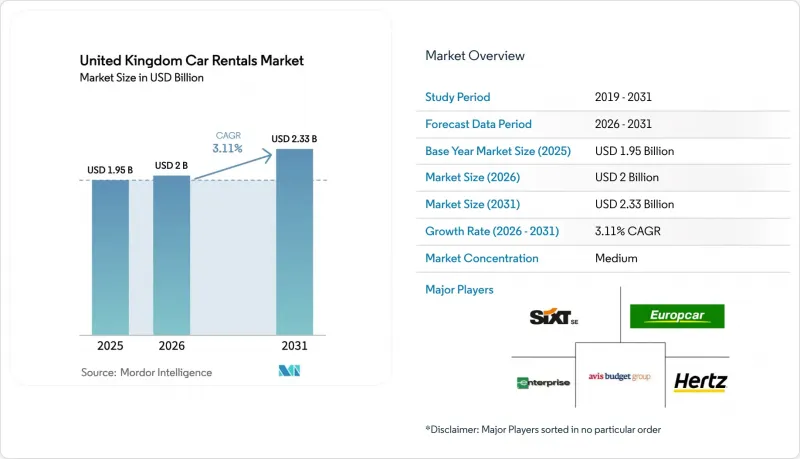
Mordor Intelligence에 의하면, 영국의 렌터카 시장 규모는 2025년 19억 5,000만 달러에서 2026년에는 20억 달러로 확대되어 2026-2031년까지 CAGR 3.11%로 성장을 지속하여, 2031년에는 23억 3,000만 달러에 이를 것으로 예측됩니다.
본 보고서는 대여 기간(단기 및 장기), 예약 유형(온라인 및 오프라인), 용도(레저·관광 및 비즈니스·기업),차량 등급(저가형, 스탠다드, 프리미엄·럭셔리), 구동 방식(내연기관, 하이브리드, 순수 전기차), 최종 사용자(개인 및 기타), 예약 채널(공항 및 기타), 그리고 지역별로 분류되어 있습니다. 시장 전망은 금액(달러)으로 제시되어 있습니다.
영국 렌터카 시장 동향 및 인사이트
디지털 우선 소비자 경험과 모바일 예약의 급증
여행 서비스 모바일 앱 다운로드 수는 웹사이트 트래픽이 감소하는 상황에서도 증가했습니다. 이러한 추세로 인해 렌터카 사업자들은 인지도를 유지하기 위해 네이티브 앱에 대한 투자를 우선시하게 되었습니다. 온라인 플랫폼은 영국 렌터카 시장에서 큰 점유율을 차지하고 있으며 꾸준히 성장하고 있습니다. 그러나 그 영향력은 단순히 거래를 원활하게 하는 데 그치지 않습니다. 당일 예약의 인기가 높아짐에 따라 평균 예약 리드타임이 단축되었고, 실시간 차량 배차 도구의 중요성이 부각되고 있습니다. 공항 외곽이나 도심에 위치한 지점들은 이러한 변화의 혜택을 누리고 있습니다. 현재 위치 기반 검색에서는 브랜드 충성도보다 근접성이 우선시되고 있기 때문입니다. 독립 사업자들은 즉석 방문 고객 수요를 활용하는 한편, 세계 체인점들은 항공사의 수익 관리 방식과 유사한 알고리즘 주도형 가격 전략에 주력하고 있습니다. 이러한 전략적 전환으로 인해 IT 지출이 증가하는 동시에, 이용률 향상을 통해 차량 1대당 수익도 증가하고 있습니다.
전기차 지원형 정부 인센티브와 제로배출차 도입 의무화
무공해 차량 도입 의무는 향후 몇 년 동안 신차 판매에서 배터리식 전기차(BEV)의 채택을 대폭 확대하는 것을 목표로 하고 있습니다. 배터리식 전기차는 현재 렌터카 차량 전체에서 차지하는 비중은 작지만, 영국 렌터카 시장에서 가장 빠른 성장세를 보이고 있습니다. 공공 충전 인프라는 대폭 확충되고 있으며, 증가하는 수요에 대응하기 위해 급속 충전기 설치도 진행되고 있습니다. 그러나 많은 사업자가 충전 설비의 이용 가능성이나 고객의 기술에 대한 익숙하지 않음을 보급 확대의 주요 장벽으로 꼽고 있어, 과제는 여전히 남아 있습니다. OEM과의 제휴는 이러한 과제 해결에 기여하고 있습니다. 예를 들어, SIXT와 Stellantis의 제휴를 통해 첨단 텔레매틱스를 탑재한 배터리식 전기차의 안정적인 공급이 확보될 뿐만 아니라, 렌터카의 전체 수명 주기에 걸친 충전 인프라 관련 비용을 분담하고 있습니다. 또한, 정부가 모든 부처의 차량을 무공해 차량으로 전환하겠다는 방침을 제시한 것은 안정적인 정책 환경을 보여주며, 민간 부문 이해관계자들의 불확실성을 완화하는 데 일조하고 있습니다.
신차 공급 부족에 따른 차량 운용 비용 상승
영국의 신차 등록 대수는 꾸준한 증가세를 보이고 있으며, 가까운 미래에 더욱 증가할 것으로 예측됩니다. 플릿 및 법인용 판매 대수도 현저하게 증가하고 있어, 이는 시장 공급 부족에 기여하고 있습니다. 반도체 부족은 개선되는 추세이지만, 여전히 납기 지연을 초래하고 있어 렌터카 업체들은 할당량을 확보하기 위해 추가 비용을 부담할 수밖에 없는 상황입니다. 대량 생산되는 경제형 차량에 비해 프리미엄 차종의 입수는 비교적 용이하며, 이는 공항 거점에 주력하는 사업자에게 유리합니다. 그러나 낮은 이익률의 회전율에 의존하는 독립 운영업체들에게는 이러한 격차가 과제로 대두되고 있습니다. 차량 노후화에 따라 유지비가 증가하고 고객 만족도가 저하되므로, 효과적인 가격 조정이 제한되고 있습니다.
부문 분석
단기 렌탈이 수익의 대부분을 차지하며, 2025년에는 73.30%를 차지했지만, 비용에 민감한 여행객들이 자유 재량에 따른 여행을 자제함에 따라 그 성장세는 둔화되고 있습니다. 장기 렌탈과 구독형 렌탈은 연평균 성장률(CAGR) 12.67%로 성장하고 있으며, 보험 및 정비 서비스가 포함된 혜택을 누리면서 차량 구매를 미루는 운전자들에게 지지를 받고 있습니다. 영국 렌터카 시장에서 구독형 서비스 시장 규모는 사업자의 설비 투자를 줄여주는 OEM(원천 제조업체)의 금융 지원을 원동력으로, 낮은 수준에서 급격히 확대될 것으로 예측됩니다. 구독용 차량은 ADAS(첨단 운전자 보조 시스템)를 탑재한 신차인 경우가 많아, 이를 통해 다소 높은 요금 책정이 정당화될 뿐만 아니라 기업용 안전성 및 규정 준수 지표 향상에도 기여하고 있습니다. 사업자는 자산 풀을 적절히 분할하여 주행 거리가 많은 경제형 차량을 단기 렌탈 채널에서 순환시키고, 최신 모델 차량을 구독형 고객을 위해 확보함으로써 잔존 가치를 극대화하고 있습니다. 자본 집약도 증가는 예측 가능한 월별 수익과 낮은 해지율에 의해 상쇄되고 있습니다.
이러한 선호도의 변화는 모빌리티의 구조적 동향을 반영하고 있습니다. 도시 지역의 젊은 층은 소유보다는 온디맨드 이용을 점점 더 중요시하게 되었으며, 기업들은 자사 차량을 확대하지 않고도 프로젝트 기반 업무를 처리하기 위해 구독 서비스를 활용하고 있습니다. 따라서 영국의 렌터카 시장은 사업자에게 변동 위험을 완화해 주는 두 가지 수요 요인의 혜택을 받고 있습니다. 각 사업자는 주행 거리 변동과 옵션 서비스를 고려한 가격 책정 알고리즘을 지속적으로 개선하고 있으며, 구독 계약 기간 전반에 걸친 이익률 전망이 개선되고 있습니다. 자동차 제조업체들이 소비자 직접 판매(D2C) 시범 사업을 확대하는 가운데, 렌터카 업체들은 브랜드 인지도와 전국적인 서비스망을 활용하여 경쟁 우위를 유지하고 있습니다.
온라인 예약은 2025년 매출의 67.50%를 차지하며 연평균 성장률(CAGR) 10.81%로 확대되고 있으며, 소비자들이 편의성과 가격 비교를 중시함에 따라 오프라인 채널을 앞지르는 추세를 보이고 있습니다. 디지털 성장에서 가장 큰 비중을 차지하는 것은 모바일 앱이며, 다운로드 수가 전년 대비 6.3% 증가한 것이 그 원동력이 되고 있습니다. 당일 예약 증가로 차량 계획 리드타임이 단축되면서, 실시간 재고 관리에 대한 투자가 더욱 확대되고 있습니다. 영국 렌터카 시장에서 오프라인 방식의 점유율은 계속해서 하락 추세를 보이고 있지만, 특히 공항이나 개별 청구 체계가 필요한 법인용 여정에서는 여전히 중요한 위치를 차지하고 있습니다.
어그리게이터는 중소기업의 인지도 제고에 기여하는 한편, 가격 결정권을 약화시키고 있습니다. 반면, 세계 체인은 가격 비교 쇼핑을 제한하기 위해 로열티 회원을 자사 앱으로 유도하고 있습니다. 공항 외 거점은 부동산 비용이 낮은 점을 바탕으로, 그 비용 절감분을 동적인 가격 할인에 활용하여 가격에 민감한 레저 여행객을 유치하고 있습니다. 영국 렌터카 시장에서 온라인 채널이 차지하는 규모는 2030년까지 15억 달러를 넘어설 것으로 예측되며, 디지털 기능의 전략적 가치는 더욱 높아질 전망입니다. 각 업체들은 AI 챗봇을 활용한 안내형 예약 검수 시스템 도입을 추진하고 있지만, 고객이 차량 등급을 비교할 수 있는 시각적 인터페이스로의 도입에는 아직 이르지 못하고 있습니다.
2025년에는 국내 관광 및 국제 인바운드 수요에 힘입어 레저 부문이 매출 점유율 55.70%를 유지했습니다. 그러나 주의 의무 준수 및 철도망 혼란을 배경으로, 비즈니스용 렌터카는 연평균 성장률(CAGR) 9.63%로 더 빠르게 성장하고 있습니다. 고용주들은 주행 거리, 배기가스, 운전자의 행동을 추적하기 위해 전문적으로 관리되는 차량 함대가 필수적이라고 생각합니다. 렌터카는 100마일을 초과하면 비용 대비 효율이 높아지는데, 이는 런던, 맨체스터, 버밍엄 간 도시 간 이동에서 표준 기준치입니다. 철도 파업은 이러한 추세를 강화하여 여행객들을 도로 교통 수단으로 이동시키고 있습니다.
레저 수요는 여전히 계절적 영향을 받으며, 7월부터 8월의 휴가 시즌에 정점을 이룹니다. 콘월, 스노도니아, 하이랜드 지역은 며칠간의 렌트를 선호하는 국내 여행객을 끌어들이고 있어, 사업자들에게는 차량 배정에 어려움이 발생하고 있습니다. 영국의 렌터카 시장은 경기 변동 위험을 완화하는 다양한 수요원의 혜택을 받고 있습니다. 고객 세분화를 통해 세밀한 마케팅이 가능해집니다. 디지털 캠페인에서는 레저 이용객을 대상으로 조기 예약 할인을 제공하는 한편, 계정 관리자는 몇 달 전부터 일괄 예약을 계획하는 기업의 여행 부서와 협력하고 있습니다.
기타 혜택
- 엑셀 형식 시장 예측(ME) 시트
- 3개월간의 애널리스트 지원
자주 묻는 질문
목차
제1장 서론
제2장 조사 방법
제3장 개요
제4장 시장 구도
제5장 시장 규모와 성장 예측
제6장 경쟁 구도
제7장 시장 기회와 향후 전망
JHS 26.09.01According to Mordor Intelligence, the United Kingdom car rental market size is expected to grow from USD 1.95 billion in 2025 to USD 2 billion in 2026 and is forecast to reach USD 2.33 billion by 2031 at a 3.11% CAGR over 2026-2031.
This report is Segmented by Rental Duration (Short-Term and Long-Term), Booking Type (Online and Offline), Application (Leisure/Tourism and Business/Corporate), Vehicle Class (Economy, Standard, and Premium / Luxury), Propulsion Type (ICE, Hybrid, and BEV), End-User (Individual and More), Booking Channel (Airport and More), and Geography. Market Forecasts are Provided in Terms of Value (USD).
United Kingdom Car Rentals Market Trends and Insights
Digital-first Consumer Journey and Mobile Booking Boom
Mobile app downloads for travel services experienced growth, even as website traffic declined. This trend encouraged rental operators to prioritize investments in native apps to sustain their visibility. Online platforms hold a significant share of the UK's car rental market and continue to grow steadily. However, their influence extends beyond just facilitating transactions. Same-day reservations have become increasingly popular, reducing the average booking lead time and emphasizing the importance of real-time fleet allocation tools. Locations situated off-airport and in downtown areas benefit from this shift, as location-based searches now favor proximity over brand loyalty. Independent operators are capitalizing on walk-in demand, while global chains are focusing on algorithm-driven pricing strategies that resemble those used by airlines in yield management practices. This strategic shift is driving higher IT expenditures while simultaneously increasing revenue per available car through improved utilization.
EV-Friendly Government Incentives and Zero-Emission Fleet Mandates
The Zero Emission Vehicle mandate aims to significantly increase the adoption of battery-electric vehicles in new car sales over the coming years. Battery-electric vehicles, while currently a small portion of rental fleets, are experiencing the fastest growth within the United Kingdom's car rental market. Public charging infrastructure has seen substantial expansion, including the addition of rapid charging units to support the growing demand. However, challenges persist, as many operators identify charging availability and customer unfamiliarity with the technology as key obstacles to broader adoption. Collaborations with original equipment manufacturers are helping to address these issues. For example, a partnership between SIXT and Stellantis ensures a consistent supply of battery-electric models equipped with advanced telematics, while also sharing the costs associated with charging infrastructure throughout the rental lifecycle. Additionally, the government's commitment to transitioning all departmental fleets to zero-emission vehicles demonstrates a stable policy environment, which helps reduce uncertainties for private-sector stakeholders.
Tight New-car Supply Inflating Fleet Costs
New-car registrations in the United Kingdom have shown steady growth, with expectations of further increases in the near future . Fleet and business volumes have experienced a notable increase, contributing to a tighter market supply. Although semiconductor shortages have improved, they continue to cause delays in delivery times, prompting rental companies to incur additional costs for securing allocations. Premium vehicle models are more readily available compared to high-volume economy cars, which benefits operators focused on airport locations. However, independent operators, who depend on low-margin turnover, face challenges due to this disparity. As vehicle fleets age, maintenance expenses increase, and customer satisfaction declines, which limits the ability to adjust pricing effectively.
Other drivers and restraints analyzed in the detailed report include:
- Post-Pandemic Domestic Leisure Travel Surge
- Growth of Subscription-Based Flex-Rent Models
- Used-Car Price Volatility Depressing Residual Values
For complete list of drivers and restraints, kindly check the Table Of Contents.
Segment Analysis
Short-term hires dominated revenue, accounting for 73.30% in 2025, yet face slowing growth as cost-conscious travelers reduce discretionary trips. Long-term and subscription rentals, growing at a 12.67% CAGR, appeal to drivers who are delaying ownership while enjoying bundled insurance and maintenance. The United Kingdom car rental market size for subscriptions is projected to rise sharply from a modest base, driven by OEM financing that reduces operator capital expenditures. Subscription fleets feature newer cars with advanced driver-assistance systems that justify premium fees and enhance safety and compliance metrics for corporates. Operators split their asset pools accordingly, cycling high-mileage economy units through short-term channels and reserving late-model inventory for subscription customers to maximize residual values. Heightened capital intensity is offset by predictable monthly revenue and lower churn rates.
The preference shift reflects trends in structural mobility. Younger urban residents increasingly value on-demand access over ownership, and corporates use subscriptions to cover project-based assignments without expanding company fleets. The United Kingdom car rental market, therefore, benefits from dual demand drivers that mitigate volatility for operators. Providers continue to refine pricing algorithms to account for mileage variability and optional services, improving margin visibility across the subscription term. As OEMs expand direct-to-consumer pilots, rental companies leverage brand recognition and nationwide service footprints to maintain a competitive edge.
Online reservations accounted for 67.50% of 2025 revenue and are advancing at a 10.81% CAGR, outpacing offline channels as consumers prioritize convenience and price comparison. Mobile apps capture the largest share of digital growth, driven by a 6.3% year-over-year increase in downloads. Same-day bookings compress fleet-planning windows, prompting deeper investment in real-time inventory management. The United Kingdom car rental market share captured by offline methods continues to decline, yet remains significant, particularly at airports and for corporate itineraries that require bespoke billing arrangements.
Aggregators help smaller firms gain exposure but erode pricing control, whereas global chains funnel loyalty members into proprietary apps to limit comparison shopping. Off-airport sites, backed by lower real estate costs, channel savings into dynamic price discounts that attract cost-sensitive leisure travelers. The United Kingdom car rental market size allocated to online channels is projected to exceed USD 1.50 billion by 2030, magnifying the strategic value of digital capabilities. Operators experiment with AI chatbots for guided reservations, though uptake lags visual interfaces where customers compare vehicle classes.
Leisure retained 55.70% revenue share in 2025, fueled by domestic tourism and international inbound traffic. However, business rentals are growing faster at a 9.63% CAGR, driven by duty-of-care compliance and rail network disruption. Employers view professionally managed fleets as essential for tracking mileage, emissions, and driver behavior. Rentals become cost-effective beyond 100 miles, a standard threshold for inter-city trips between London, Manchester, and Birmingham. Rail strikes reinforce this preference, reallocating travelers to road-based modes.
Leisure demand remains seasonally influential, peaking during July-August holiday periods. Cornwall, Snowdonia, and the Highlands attract staycationers who prefer multi-day hires, creating vehicle allocation challenges for operators. The United Kingdom car rental market benefits from diversified demand streams that mitigate cyclical risk. Customer segmentation enables tailored marketing: digital campaigns target leisure users with early-booking discounts, while account managers service corporate travel departments that schedule block reservations months in advance.
Complete Report Scope:
- By Rental Duration
- Short-Term (Less than 30 days)
- Long-Term/Subscription (More than 30 days)
- By Booking Type
- Online
- Offline
- By Application
- Leisure / Tourism
- Business / Corporate
- By Vehicle Class
- Economy
- Standard
- Premium / Luxury
- By Propulsion Type
- Internal-Combustion Engine (ICE)
- Hybrid
- Battery Electric Vehicle (BEV)
- By End-User
- Individual
- Corporate and Institutional
- By Booking Channel
- Airport
- Off-Airport / Downtown
- Rail and Mobility Hubs
- By Geography
- England
- Scotland
- Wales
- Northern Ireland
List of Companies Covered in this Report:
- Avis Budget Group
- Enterprise Holdings
- Europcar Mobility Group
- The Hertz Corporation
- SIXT SE
- Drivalia
- Green Motion
- Arnold Clark Car and Van Rental
- Easirent
- Practical Car and Van Rental
- U-Drive
- Virtuo
- Getaround (UK)
- Turo
Additional Benefits:
- The market estimate (ME) sheet in Excel format
- 3 months of analyst support
TABLE OF CONTENTS
1 Introduction
- 1.1 Study Assumptions and Market Definition
- 1.2 Scope of the Study
2 Research Methodology
3 Executive Summary
4 Market Landscape
- 4.1 Market Overview
- 4.2 Market Drivers
- 4.2.1 Digital-First Consumer Journey and Mobile Booking Boom
- 4.2.2 Post-Pandemic Domestic Leisure Travel Surge
- 4.2.3 Corporate Duty-Of-Care Policies Favoring Rentals Over Public Transport
- 4.2.4 EV-Friendly Government Incentives and Zero-Emission Fleet Mandates
- 4.2.5 Growth Of Subscription-Based "Flex-Rent" Models
- 4.2.6 OEM-Backed Captive Rental Programs Targeting Over-Supply Inventory
- 4.3 Market Restraints
- 4.3.1 Tight New-Car Supply Inflating Fleet Costs
- 4.3.2 Used-Car Price Volatility Depressing Residual Values
- 4.3.3 Patchy National Public-Charge Network Slowing EV Fleet Roll-Out
- 4.3.4 Stricter VAT Compliance on Cross-Border Rentals
- 4.4 Value / Supply-Chain Analysis
- 4.5 Regulatory Landscape
- 4.6 Technological Outlook
- 4.7 Porter's Five Forces
- 4.7.1 Threat of New Entrants
- 4.7.2 Bargaining Power of Buyers/Consumers
- 4.7.3 Bargaining Power of Suppliers
- 4.7.4 Threat of Substitute Products
- 4.7.5 Intensity of Competitive Rivalry
5 Market Size and Growth Forecasts (Value, USD Million)
- 5.1 By Rental Duration
- 5.1.1 Short-Term (Less than 30 days)
- 5.1.2 Long-Term/Subscription (More than 30 days)
- 5.2 By Booking Type
- 5.2.1 Online
- 5.2.2 Offline
- 5.3 By Application
- 5.3.1 Leisure / Tourism
- 5.3.2 Business / Corporate
- 5.4 By Vehicle Class
- 5.4.1 Economy
- 5.4.2 Standard
- 5.4.3 Premium / Luxury
- 5.5 By Propulsion Type
- 5.5.1 Internal-Combustion Engine (ICE)
- 5.5.2 Hybrid
- 5.5.3 Battery Electric Vehicle (BEV)
- 5.6 By End-User
- 5.6.1 Individual
- 5.6.2 Corporate and Institutional
- 5.7 By Booking Channel
- 5.7.1 Airport
- 5.7.2 Off-Airport / Downtown
- 5.7.3 Rail and Mobility Hubs
- 5.8 By Geography
- 5.8.1 England
- 5.8.2 Scotland
- 5.8.3 Wales
- 5.8.4 Northern Ireland
6 Competitive Landscape
- 6.1 Market Concentration
- 6.2 Strategic Moves
- 6.3 Market Share Analysis
- 6.4 Company Profiles (includes Global level Overview, Market level overview, Core Segments, Financials as available, Strategic Information, Market Rank/Share for key companies, Products and Services, and Recent Developments)
- 6.4.1 Avis Budget Group
- 6.4.2 Enterprise Holdings
- 6.4.3 Europcar Mobility Group
- 6.4.4 The Hertz Corporation
- 6.4.5 SIXT SE
- 6.4.6 Drivalia
- 6.4.7 Green Motion
- 6.4.8 Arnold Clark Car and Van Rental
- 6.4.9 Easirent
- 6.4.10 Practical Car and Van Rental
- 6.4.11 U-Drive
- 6.4.12 Virtuo
- 6.4.13 Getaround (UK)
- 6.4.14 Turo
7 Market Opportunities and Future Outlook
- 7.1 White-space and Unmet-Need Assessment


