

|
시장보고서
상품코드
2119611
베트남의 경구 항당뇨병약 시장 : 점유율 분석, 업계 동향과 통계, 성장 예측(2026-2031년)Vietnam Oral Anti-Diabetic Drug - Market Share Analysis, Industry Trends & Statistics, Growth Forecasts (2026 - 2031) |
||||||
 Mordor Intelligence
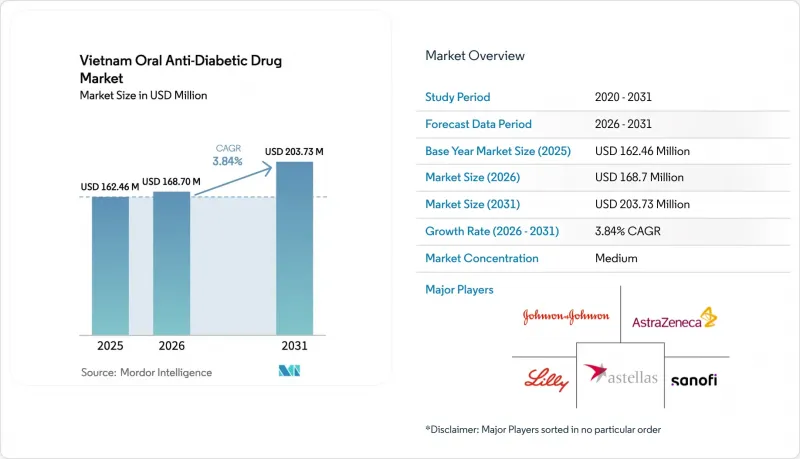
Mordor Intelligence에 의하면, 2026년 베트남의 경구 항당뇨병약 시장 규모는 1억 6,870만 달러로 추정되고 있어 2025년 1억 6,246만 달러에서 확대해, 2031년에는 2억 373만 달러에 이를 것으로 예측됩니다.
2026년부터 2031년까지 연평균 성장률(CAGR) 3.84%로 성장할 것으로 전망됩니다.
본 보고서는 약물 분류별(비구아나이드계, 설포닐우레아계, 메글리티니드계, 티아졸리딘디온계, α-글루코시다제 억제제, DPP-4 억제제, SGLT-2 억제제, 기타),연령대(성인, 소아, 고령자), 당뇨병 유형(제1형, 제2형), 유통 채널(병원 약국, 소매 약국, 온라인 약국)별로 분류되어 있습니다. 시장 전망은 금액(달러) 기준으로 제시되어 있습니다.
베트남 경구용 항당뇨병약 시장 동향 및 인사이트
2형 당뇨병 유병률 증가
도시화와 식생활의 변화가 대사증후군을 촉진하는 가운데, 베트남의 당뇨병 부담은 점점 더 심각해지고 있습니다. 예측에 따르면, 2045년까지 유병률은 21.1% 상대적으로 상승할 것이며, 베트남은 중소득 국가 중 가장 빠르게 성장하는 당뇨병 시장 중 하나가 될 전망입니다. 임신성 당뇨병은 임신의 22.8%에 영향을 미치고 있으며, 향후 만성 치료에 대한 수요를 창출하고 있습니다. 가공식품 소비로 인해 도시 지역의 식단에서 평균 혈당 부하가 증가하고 있으며, 특히 계속 확대되고 있는 중산층에서 이러한 경향이 두드러집니다. 발병 연령의 하향화로 인해 평생 약물 복용 기간이 길어지고 있으며, 또한 영양실조 대책으로 시행되고 있는 쌀 영양 강화 프로그램이 의도치 않게 고혈당 부하 섭취를 조장하고 있을 가능성이 있습니다. 이러한 요인들이 복합적으로 작용하여 베트남의 경구 항당뇨병약 시장의 장기적인 수요를 뒷받침하고 있습니다.
국민건강보험의 보상 범위 확대
2025년 7월에 시행될 개정 건강보험법에 따라 취약 계층에 대한 급여율이 100%로 인상되고, 의뢰서 요건이 철폐됨에 따라 전문의에게 직접 진료를 받을 수 있게 됩니다. 보험 가입률은 90%이지만 본인 부담률은 43%에 달하므로, 보험 적용 범위 확대는 최신 치료법에 대한 경제적 장벽을 대폭 낮출 것입니다. 호치민시 보험 당국은 유효 성분이 중복되는 고가 제품에 대한 재검토를 진행 중이며, 이는 비용 관리 강화가 시사됩니다. 그럼에도 불구하고, 보험 적용 규정의 명확화는 투자자들에게 불확실성을 줄여줄 것이며, 베트남의 경구용 항당뇨병약 시장 전반에서 제네릭 의약품 및 부가가치가 높은 복합제의 보급을 촉진할 것입니다.
특정 경구 항당뇨병약(OAD) 군의 안전성 및 부작용 프로파일
다제 병용은 고령 당뇨병 환자의 7.8%에 영향을 미치며, 유해 사건의 위험을 높이고 있습니다. 미공개 비구아나이드계 약물이 혼입된 한약으로 인한 치명적인 젖산산증 사례는 규제상의 미비점을 드러내어 국민들의 우려를 높였습니다. 설포닐우레아 계열 약물과 관련된 저혈당은 즉각적인 의료 지원을 받을 수 없는 환경에서 여전히 장벽으로 작용하고 있습니다. 당뇨병성 족부 감염증의 내성 양상은 더 광범위한 내성 문제를 부각시키고 있습니다. 그 결과, 처방 의사는 안전성 프로파일이 높은 신약으로 전환하고 있으며, 베트남의 경구용 항당뇨병약 시장에서 기존 부문의 성장이 억제되고 있습니다.
부문 분석
메트포르민이 1차 선택 약제로서의 입지를 공고히 하고 있는 덕분에, 2025년에는 비구아나이드 계열 약물이 베트남 경구 항당뇨병약 시장 점유율의 38.42%를 차지했습니다. 신장 및 심혈관에 유익한 효과가 입증된 SGLT-2 억제제는 연평균 성장률(CAGR) 4.47%를 나타낼 것으로 예측되어 가장 빠르게 성장하는 부문이 될 전망입니다. 설포닐우레아계 약물은 저혈당 위험이 성장을 억제하고 있음에도 불구하고, 비용에 민감한 환자들에게는 여전히 중요한 선택지로 남아 있습니다. DPP-4 억제제는 하루 1회 투여라는 장점 덕분에 도시 지역에서 인기가 높아지고 있습니다. 아스트라제네카가 FPT Long Chau와 제휴하여 다파글리플로진의 상담 서비스를 확대하고 있는 것은 다국적 기업이 현지 체인점을 활용하고 있음을 보여줍니다. 이 부문의 다양화는 베트남 경구용 항당뇨병약 시장에서 치료법에 대한 선호도가 변화하고 있음을 시사합니다.
2025년 초 만성 신장병에 대한 다파글리플로진의 FDA 승인이 이루어짐에 따라, 해당 약물의 대상 환자층이 확대되었습니다. 한편, 시타글립틴·메트포르민 복합제의 국내 승인은 현지 개발 역량이 강화되고 있음을 여실히 보여줍니다. 티아졸리딘디온 계열 약물은 안전성 우려로 인해 시장 점유율이 하락하고 있는 반면, 메글리티니드 계열 약물은 식사 시간에 유연하게 대응할 수 있는 투여 방식 덕분에 틈새 시장에서 입지를 유지하고 있습니다. 차세대 복합제를 포함한 ‘기타’ 부문은 규제 절차가 합리화됨에 따라 추가적인 혁신의 가능성을 시사하고 있습니다.
2025년에는 성인층이 매출의 68.31%를 차지했지만, 고령층은 4.54%라는 가장 높은 연평균 성장률(CAGR)을 기록하며 베트남의 고령화 사회로의 전환을 반영하고 있습니다. 다제 병용 및 동반 질환으로 인해 투여법의 간소화가 요구되고 있으며, 이는 고정 용량 복합제에 대한 수요를 뒷받침하고 있습니다. 머크 헬스케어 베트남과 롱차우가 진행하는 지역 검진 프로그램은 고령층에 대한 배려를 강조하고 있습니다.
환자의 40.8%가 한약을 병용하고 있어 약물 안전 감시가 복잡해지고 있으며, 이에 따라 교육 및 모니터링의 필요성이 더욱 커지고 있습니다. 2025년 9월까지 전국적으로 전자건강기록(EMR)이 도입됨에 따라, 모니터링 체계와 복약 순응도가 개선되어 고령자 돌봄을 위한 베트남 경구용 항당뇨병약 시장의 성장을 뒷받침할 것입니다.
기타 혜택:
- 엑셀 형식 시장 예측(ME) 시트
- 3개월간 애널리스트 지원
자주 묻는 질문
목차
제1장 서론
제2장 조사 방법
제3장 개요
제4장 시장 구도
제5장 시장 규모와 성장 예측
제6장 경쟁 구도
제7장 시장 기회와 향후 전망
JHS 26.09.03According to Mordor Intelligence, the Vietnam oral anti-diabetic drug market size in 2026 is estimated at USD 168.7 million, growing from 2025 value of USD 162.46 million with 2031 projections showing USD 203.73 million, growing at 3.84% CAGR over 2026-2031.
This report is Segmented by Drug Class (Biguanides, Sulfonylureas, Meglitinides, Thiazolidinediones, Alpha-Glucosidase Inhibitors, DPP-4 Inhibitors, SGLT-2 Inhibitors, Others), Age Group (Adults, Pediatric, Geriatric), Diabetes Type (Type 1, Type 2), and Distribution Channel (Hospital Pharmacies, Retail Pharmacies, Online Pharmacies). The Market Forecasts are Provided in Terms of Value (USD).
Vietnam Oral Anti-Diabetic Drug Market Trends and Insights
Rising Prevalence of Type-2 Diabetes
Vietnam's diabetes burden continues to intensify as urbanization and dietary change drive metabolic syndrome. Projections indicate a 21.1% relative rise in prevalence by 2045, making Vietnam one of the fastest-growing diabetes markets among middle-income countries . Gestational diabetes affects 22.8% of pregnancies, creating future demand for chronic therapy. Processed-food consumption raises average glycemic load in urban diets, especially among the expanding middle class. Earlier onset of disease lengthens lifetime drug use, and rice-fortification programs aimed at malnutrition may unintentionally sustain high glycemic intake. Together these factors underpin long-run demand in the Vietnam oral anti-diabetic drug market.
Expansion of National Health-Insurance Reimbursement
The amended Health Insurance Law effective July 2025 increases coverage to 100% for vulnerable groups and removes referral barriers, enabling direct specialist access. With 90% insurance penetration but 43% out-of-pocket spending, reimbursement expansion meaningfully lowers financial hurdles for modern therapies. Ho Chi Minh City's insurance authority is reviewing high-priced products with duplicative active ingredients, signaling tougher cost controls. Nevertheless, clearer reimbursement rules reduce uncertainty for investors and favor uptake of generics and value-added combinations across the Vietnam oral anti-diabetic drug market.
Safety & Side-Effect Profile of Certain OAD Classes
Polypharmacy affects 7.8% of older diabetes patients, heightening adverse-event risk. Fatal lactic acidosis from herbal products adulterated with undisclosed biguanides exposed regulatory gaps and raised public concern. Sulfonylurea-linked hypoglycemia remains a barrier in settings lacking immediate medical support. Resistance patterns in diabetic-foot infections underscore broader tolerability issues . Consequently, prescribers shift toward newer drugs with safer profiles, restraining expansion of legacy segments in the Vietnam oral anti-diabetic drug market.
Other drivers and restraints analyzed in the detailed report include:
- Growing Urban Middle-Class Healthcare Spending
- Launch of Novel Fixed-Dose Combination OADs
- Competitive Uptake of GLP-1 RAs & Insulin
For complete list of drivers and restraints, kindly check the Table Of Contents.
Segment Analysis
Biguanides held 38.42% of Vietnam oral anti-diabetic drug market share in 2025 due to metformin's entrenched first-line status. SGLT-2 inhibitors, supported by renal-cardio benefits, are forecast to post a 4.47% CAGR, making them the fastest riser. Sulfonylureas remain relevant for cost-sensitive patients, though hypoglycemia risks curb growth. DPP-4 inhibitors gain urban popularity for once-daily dosing. AstraZeneca's partnership with FPT Long Chau to broaden dapagliflozin counseling shows multinationals leveraging domestic chains. The segment's diversification demonstrates evolving therapeutic preferences within the Vietnam oral anti-diabetic drug market.
Early 2025 FDA approval of dapagliflozin for chronic kidney disease enlarges its addressable base, while domestic approvals of sitagliptin-metformin blends highlight growing local capability. Thiazolidinediones lose ground amid safety scrutiny, whereas meglitinides preserve a niche in flexible meal-time dosing. The "others" category, including next-generation combinations, signals further innovation potential as regulatory pathways streamline.
Adults commanded 68.31% revenue in 2025, yet the geriatric cohort posts the highest 4.54% CAGR, echoing Vietnam's transition toward an aging society. Polypharmacy and comorbidities require simplified regimens, spurring demand for fixed-dose combinations. Community screening programs by Merck Healthcare Vietnam and Long Chau underscore attention to older populations.
Herbal co-usage by 40.8% of patients complicates pharmacovigilance, reinforcing the need for education and monitoring. National EMR deployment by September 2025 will improve oversight and adherence, supporting growth in the Vietnam oral anti-diabetic drug market size for geriatric care.
Complete Report Scope:
- By Drug Class
- Biguanides
- Sulfonylureas
- Meglitinides
- Thiazolidinediones
- Alpha-Glucosidase Inhibitors
- DPP-4 Inhibitors
- SGLT-2 Inhibitors
- Others
- By Age Group
- Adults
- Pediatric
- Geriatric
- By Diabetes Type
- Type 1 Diabetes
- Type 2 Diabetes
- By Distribution Channel
- Hospital Pharmacies
- Retail Pharmacies
- Online Pharmacies
List of Companies Covered in this Report:
- Takeda Pharmaceuticals
- Novo Nordisk
- Pfizer
- Eli Lilly and Company
- Johnson & Johnson
- Astellas Pharma
- Boehringer Ingelheim
- Merck
- AstraZeneca
- Bristol-Myers Squibb
- Novartis
- Sanofi
- Daiichi-Sankyo
- GlaxoSmithKline
- Abbott Laboratories
- DHG Pharma (Hau Giang)
- Domesco
- Traphaco
- Mekophar
- OPC Pharma
Additional Benefits:
- The market estimate (ME) sheet in Excel format
- 3 months of analyst support
TABLE OF CONTENTS
1 Introduction
- 1.1 Study Assumptions & Market Definition
- 1.2 Scope of the Study
2 Research Methodology
3 Executive Summary
4 Market Landscape
- 4.1 Market Overview
- 4.2 Market Drivers
- 4.2.1 Rising Prevalence of Type-2 Diabetes
- 4.2.2 Expansion Of National Health-Insurance Reimbursement
- 4.2.3 Growing Urban Middle-Class Healthcare Spending
- 4.2.4 Launch Of Novel Fixed-Dose Combination OADs
- 4.2.5 Employer-Sponsored Diabetes Screening Programs
- 4.2.6 Rice-Fortification Policy Sustaining Glycaemic Load
- 4.3 Market Restraints
- 4.3.1 Safety & Side-Effect Profile of Certain OAD Classes
- 4.3.2 Competitive Uptake Of GLP-1 Ras & Insulin
- 4.3.3 MOH Price-Control Ceilings on Reimbursed Drugs
- 4.3.4 Rising Use of Traditional Herbal Alternatives
- 4.4 Regulatory Landscape
- 4.5 Porters Five Forces Analysis
- 4.5.1 Bargaining Power of Suppliers
- 4.5.2 Bargaining Power of Consumers
- 4.5.3 Threat of New Entrants
- 4.5.4 Threat of Substitutes
- 4.5.5 Intensity of Competitive Rivalry
5 Market Size & Growth Forecasts (Value, USD)
- 5.1 By Drug Class
- 5.1.1 Biguanides
- 5.1.2 Sulfonylureas
- 5.1.3 Meglitinides
- 5.1.4 Thiazolidinediones
- 5.1.5 Alpha-Glucosidase Inhibitors
- 5.1.6 DPP-4 Inhibitors
- 5.1.7 SGLT-2 Inhibitors
- 5.1.8 Others
- 5.2 By Age Group
- 5.2.1 Adults
- 5.2.2 Pediatric
- 5.2.3 Geriatric
- 5.3 By Diabetes Type
- 5.3.1 Type 1 Diabetes
- 5.3.2 Type 2 Diabetes
- 5.4 By Distribution Channel
- 5.4.1 Hospital Pharmacies
- 5.4.2 Retail Pharmacies
- 5.4.3 Online Pharmacies
6 Competitive Landscape
- 6.1 Market Concentration
- 6.2 Market Share Analysis
- 6.3 Company Profiles (includes Global level Overview, Market level overview, Core Segments, Financials as available, Strategic Information, Market Rank/Share for key companies, Products & Services, and Recent Developments)
- 6.3.1 Takeda
- 6.3.2 Novo Nordisk
- 6.3.3 Pfizer
- 6.3.4 Eli Lilly
- 6.3.5 Johnson & Johnson
- 6.3.6 Astellas
- 6.3.7 Boehringer Ingelheim
- 6.3.8 Merck & Co.
- 6.3.9 AstraZeneca
- 6.3.10 Bristol Myers Squibb
- 6.3.11 Novartis
- 6.3.12 Sanofi
- 6.3.13 Daiichi-Sankyo
- 6.3.14 GSK
- 6.3.15 Abbott
- 6.3.16 DHG Pharma (Hau Giang)
- 6.3.17 Domesco
- 6.3.18 Traphaco
- 6.3.19 Mekophar
- 6.3.20 OPC Pharma
7 Market Opportunities & Future Outlook
- 7.1 White-space & Unmet-Need Assessment


