|
시장보고서
상품코드
2120699
영국의 동물 의료 : 시장 점유율 분석, 업계 동향과 통계, 성장 예측(2026-2031년)United Kingdom Veterinary Healthcare - Market Share Analysis, Industry Trends & Statistics, Growth Forecasts (2026 - 2031) |
||||||
 Mordor Intelligence
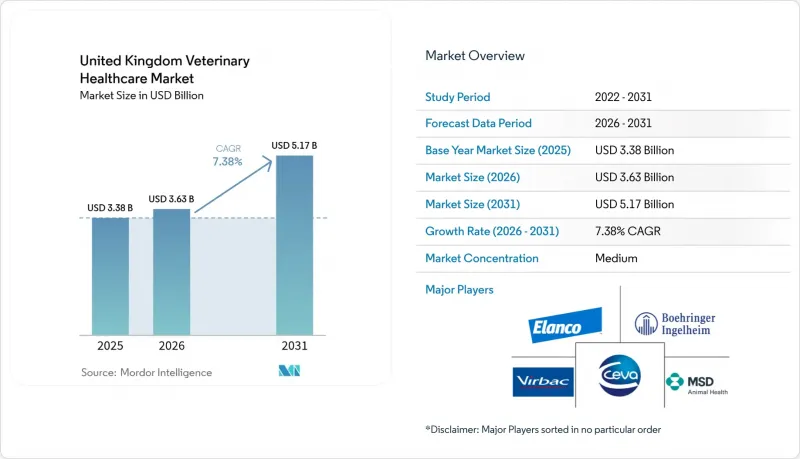
영국의 동물 의료 시장 규모는 2025년에 33억 8,000만 달러로 평가되며, 2026년 36억 3,000만 달러에서 2031년까지 51억 7,000만 달러에 달할 것으로 예측되며, 예측 기간(2026-2031년) 동안 CAGR은 7.38%가 될 전망입니다.
본 보고서는 제품 유형별(치료제 및 진단제), 동물 종별(개·고양이, 말, 기타), 투여 경로별(경구, 비경구, 외용, 기타 투여 경로), 그리고 최종사용자별(동물병원·진료소, 기타)로 분류되어 있습니다. 시장 전망은 금액(달러) 기준으로 제시되어 있습니다.
영국 동물 의료 시장의 동향 및 인사이트
수의학 치료제 및 진단제 분야의 기술 발전
Zoetis사의 ‘Vetscan Imagyst’와 같은 AI 탑재 플랫폼을 통해 현재는 몇 분 만에 병원 내에서 세포 검사를 수행할 수 있게 되어, 제한된 임상 의사의 시간을 부가가치가 더 높은 업무에 할애할 수 있게 되었을 뿐만 아니라, 진단 오류 발생률도 감소하고 있습니다. 휴대용 적외선 열화상 카메라와 웨어러블 센서를 통해 가축을 지속적으로 모니터링할 수 있게 되었으며, 조기 경보를 발령함으로써 무리 전체의 손실을 억제하고 있습니다. 병원 내 장비와 연동된 통합형 원격의료 포털은 하이브리드 워크플로우를 촉진하고, 지방 커뮤니티로의 서비스 제공 범위를 확대하고 있습니다. IDEXX사의 ‘inVue’ 분석기는 모듈식 생화학, 혈액학, 소변 검사 스테이션을 통해 실험실 전체의 기능을 카운터 위 공간에 집약하여, 내원 당일에 치료 방침을 결정할 수 있게 해줍니다. MSD사의 ‘BRAVECTO’ 씹어 먹는 정제와 같은 장시간 작용형 구충제는 투여 간격을 12주로 연장하여 반려인의 복약 순응도를 높이는 동시에 항생제 사용을 억제하고 있습니다.
증가하는 반려동물 사육 수와 지출
2024년, 영국에서는 1,720만 가구가 반려동물을 키우고 있으며, 개와 고양이의 수는 매년 150만 마리씩 증가하고 있습니다. 반려인은 반려동물을 가족의 일원으로 대하고 있으며, 과거에는 인간 의료에 국한되었던 종양학, 정형외과, 행동학 관련 서비스에 대한 수요가 높아지고 있습니다. 현재 성묘 입양자의 27%를 남성이 차지하고 있으며, 이는 여성의 18%를 상회합니다. 이에 따라 제품 및 서비스 선호도는 기술을 활용한 편의성으로 이동하고 있습니다. 고령 반려동물은 만성 질환 관리가 필요해짐에 따라, 한 마리당 평생 지출액이 증가하고 있습니다. 팬데믹으로 인한 봉쇄 기간 동안 형성된 정서적 유대감이 고품질 진단 검사에 대한 투자 의지를 뒷받침하고 있으며, 이는 단순한 수량 증가를 넘어선 수익 확대의 원동력이 되고 있습니다.
급등하는 수의학 서비스 및 제품 비용
수의 의료의 평균 청구액은 2014년 이후 60% 상승하여 경제적 부담의 장벽이 높아졌고, 이는 일부 반려인이 치료를 미루는 요인이 되고 있습니다. 도그스 트러스트(Dogs Trust)의 보고서에 따르면, 반려인들은 예산 제약과 선택적 치료의 타당성을 저울질하고 있으며, 이는 수요의 탄력성을 시사하며 전반적인 성장을 둔화시킬 가능성이 있습니다. 동물병원 직원의 40%가 수익 목표가 진료상의 판단에 영향을 미치고 있다고 밝혔으며, 이는 CMA(경쟁시장청)의 면밀한 조사를 불러오고 있습니다. IDEXX사는 2024년에 가치 상승에도 불구하고 내원 빈도가 2.1% 감소했다고 지적하며, 예방 의료 분야의 높은 가격 민감도가 부각되고 있습니다.
부문별 분석
2025년, 치료제 부문은 영국 동물 의료 시장 점유율의 59.78%를 차지하며, 백신, 구충제, 항감염제에 대한 꾸준한 수요를 반영하고 있습니다. 진단약 부문은 현장 진단 기기 및 AI 분석을 통해 검체 채취부터 치료까지의 과정이 단축됨에 따라 연평균 성장률(CAGR) 7.59%로 성장하고 있습니다. 현재 면역진단이 수익의 대부분을 차지하고 있지만, 내성 프로파일링을 위한 분자 검사도 급속히 확대되고 있습니다. 휴대용 초음파 진단 기기와 디지털 X선 촬영이 1차 진료에 정착하여 타 병원으로의 의뢰를 대체하는 동시에 부가 진료 수가의 창출로 이어지고 있습니다. 치료 분야에서는 바이오 보안에 대한 인식이 높아짐에 따라 백신 접종률이 가속화되고 있는 반면, 항균제를 포함한 사료 첨가제는 규제상의 역풍에 직면해 있어, 제조사들은 정밀 영양학에 기반한 대체품으로의 전환을 강요받고 있습니다.
진단 분야에 대한 투자는 약물의 과다 사용을 억제하고 치료 성과를 향상시키는 근거 기반 프로토콜과 부합하며, 이를 통해 소모품의 지속적인 수익 기반이 더욱 공고해지고 있습니다. AI 플랫폼은 세포진단 슬라이드를 8분 이내에 분류하여 암 치료에서 당일 개입을 가능하게 하고 있습니다. 진료 그룹의 통합이 진행됨에 따라 분석 기기의 일괄 조달로 검사 단가가 하락하여, 중규모 진료소에서도 고도의 검사에 대한 접근성이 확대되고 있습니다.
2025년 영국의 동물 의료 시장 규모 중 개와 고양이가 44.86%를 차지했습니다. 이는 정기 진료, 응급 진료, 전문 진료를 필요로 하는 1,350만 마리의 개와 1,250만 마리의 고양이에 의해 뒷받침된 결과입니다. 가금류 분야는 엄격한 조류인플루엔자 감시로 인해 상업용 가금류 군에 대한 수의학적 감독이 강화됨에 따라 연평균 성장률(CAGR) 7.93%로 확대될 것으로 예측됩니다. 말에 대한 수요는 스포츠 및 레저 활동으로서의 승마에 힘입어 안정적인 추세를 보이고 있습니다. 한편, 반추동물의 건강 관리 프로그램은 기후 변화에 대한 적응이 요구되는 가운데 그 기세를 더하고 있습니다. 양돈 사업자들은 최신 추적 시스템을 도입하고 있지만, 아프리카 돼지열병에 대한 경계감으로 인해 수의사가 발급하는 증명서 건수는 여전히 높은 수준을 유지하고 있습니다.
반려동물의 ‘인간화’가 진행됨에 따라 화학요법, MRI 검사, 행동 요법의 도입이 촉진되어 1회 내원당 평균 지출액이 증가하고 있습니다. 가금류 생산자는 생물안전 거버넌스에 수의사를 포함시켜 질병 발생으로 인한 가동 중단 비용을 절감하고 있습니다. 2024년에 발생한 H5N1형 인플루엔자 바이러스의 양에 대한 종간 감염은, 다양한 품종에 걸친 감시 체계의 필요성이 높아지고 있음을 여실히 보여주고 있습니다.
기타 혜택:
- 엑셀 형식의 시장 예측(ME) 시트
- 3개월간의 애널리스트 지원
자주 묻는 질문
목차
제1장 소개
제2장 조사 방법
제3장 주요 요약
제4장 시장 구도
제5장 시장 규모와 성장 예측
제6장 시장 규모와 성장 예측
제7장 경쟁 구도
제8장 시장 기회와 향후 전망
KSM 26.09.02According to Mordor Intelligence, the United Kingdom veterinary healthcare market size was valued at USD 3.38 billion in 2025 and estimated to grow from USD 3.63 billion in 2026 to reach USD 5.17 billion by 2031, at a CAGR of 7.38% during the forecast period (2026-2031).
This report is Segmented by Product (Therapeutics and Diagnostics), Animal Type (Dogs & Cats, Horses, and More), Route of Administration (Oral, Parenteral, Topical, and Other Route of Administrations), and End User (Veterinary Hospitals & Clinics, and More). The Market Forecasts are Provided in Terms of Value (USD).
United Kingdom Veterinary Healthcare Market Trends and Insights
Technological Advancements In Veterinary Therapeutics and Diagnostics
AI-enabled platforms such as Zoetis' Vetscan Imagyst now provide on-site cytology in minutes, freeing scarce clinicians for higher-value tasks and reducing diagnostic error rates. Portable infrared thermography and wearable sensors extend continuous monitoring for livestock, triggering early alerts that curb herd-level losses. Integrated telemedicine portals tethered to in-clinic devices foster hybrid workflows that expand reach into rural communities. IDEXX's inVue analyzer shows how modular chemistry, hematology and urinalysis stations compress full laboratory capability into countertop space, enabling same-visit treatment decisions. Long-acting parasiticides such as MSD's BRAVECTO chewable extend dose intervals to 12 weeks, reinforcing owner compliance while moderating antimicrobial use.
Growing Companion Animal Ownership and Expenditure
Seventeen-point-two million UK households housed a pet in 2024, with the dog and cat population growing by 1.5 million annually. Owners treat animals as family members, elevating demand for oncology, orthopedic and behavioral services once confined to human medicine. Men now account for 27% of adult-cat adoptions versus 18% for women, shifting product and service preferences toward technology-driven convenience. Aged pets require chronic disease management, extending lifetime spend per animal. Emotional capital forged during pandemic lockdowns sustains willingness to finance premium diagnostics, fueling revenue beyond pure volume growth.
Escalating Cost of Veterinary Services and Products
Average veterinary invoices have climbed 60% since 2014, amplifying affordability barriers that push some owners to postpone treatments. The Dogs Trust reports clients weighing elective care against budget constraints, signaling elastic demand that could temper overall growth. Forty percent of clinic employees say revenue targets sway clinical decisions, fueling CMA scrutiny. IDEXX noted a 2.1% dip in visit frequency in 2024 despite value gains, highlighting price sensitivity in preventive care segments.
Other drivers and restraints analyzed in the detailed report include:
- Rising Livestock Health Management Needs Amid Zoonotic Risks
- Expansion Of Corporate Veterinary Practice Networks
- Limited Availability of Skilled Veterinary Professionals
For complete list of drivers and restraints, kindly check the Table Of Contents.
Segment Analysis
Therapeutics generated 59.78% of United Kingdom veterinary healthcare market share in 2025, reflecting entrenched demand for vaccines, parasiticides and anti-infectives. Diagnostics is growing at a 7.59% CAGR as point-of-care devices and AI analytics shorten the path from sample to therapy. Immunodiagnostics dominate revenue today, while molecular assays scale rapidly for resistance profiling. Portable ultrasound and digital radiography embed in primary care, replacing referrals and unlocking ancillary fees. Within therapeutics, vaccine uptake accelerates on heightened biosecurity awareness, whereas antimicrobial-laden feed additives face regulatory headwinds, nudging manufacturers toward precision nutrition alternatives.
Investment in diagnostics aligns with evidence-based protocols that lower drug overuse and improve outcomes, further anchoring recurring consumables revenue. AI platforms classify cytology slides in under eight minutes, enabling same-day oncology interventions. As practice groups aggregate, bulk procurement of analyzers lowers per-test costs, widening access to advanced assays even in mid-tier clinics.
Dogs and cats accounted for 44.86% of United Kingdom veterinary healthcare market size in 2025, supported by 13.5 million dogs and 12.5 million cats needing routine, emergency and specialty care. Poultry is projected to expand at an 7.93% CAGR as stringent avian influenza surveillance heightens veterinary oversight across commercial flocks. Equine demand remains stable, fueled by sports and leisure riding, while ruminant health programs gain traction under climate-adaptation pressures. Swine operators adopt modern traceability, yet African swine fever vigilance keeps veterinary certification volumes high.
Pet humanization drives uptake of chemotherapy, MRI scans and behavioral therapies, elevating average spend per visit. Poultry producers embed veterinarians in biosecurity governance, reducing downtime costs from disease outbreaks. Cross-species H5N1 transmission to sheep in 2024 underlines growing need for multi-species surveillance frameworks.
Complete Report Scope:
- By Product
- Therapeutics
- Vaccines
- Parasiticides
- Anti-Infectives
- Medical Feed Additives
- Other Therapeutics
- Diagnostics
- Immunodiagnostic Tests
- Molecular Diagnostics
- Diagnostic Imaging
- Clinical Chemistry
- Other Diagnostics
- Therapeutics
- By Animal Type
- Dogs & Cats
- Horses
- Ruminants
- Swine
- Poultry
- Other Animal Types
List of Companies Covered in this Report:
- Zoetis
- MSD Animal Health
- Boehringer Ingelheim
- Elanco
- Virbac
- Vetoquinol
- Ceva Sante Animale
- Covetrus
- ECO Animal Health Group
- KRKA UK
- TVM UK
- Dechra Pharmaceuticals
- Pets at Home Vet Group
- CVS Group plc
- IDEXX
- Norbrook Laboratories
- Parnell Pharma
- Abaxis UK (Zoetis)
- Henry Schein Animal Health
- MiLab (Lab Services)
Additional Benefits:
- The market estimate (ME) sheet in Excel format
- 3 months of analyst support
TABLE OF CONTENTS
1 Introduction
- 1.1 Study Assumptions & Market Definition
- 1.2 Scope of the Study
2 Research Methodology
3 Executive Summary
4 Market Landscape
- 4.1 Market Overview
- 4.2 Market Drivers
- 4.2.1 Technological Advancements in Veterinary Therapeutics and Diagnostics
- 4.2.2 Growing Companion Animal Ownership and Expenditure
- 4.2.3 Rising Livestock Health Management Needs Amid Zoonotic Risks
- 4.2.4 Expansion of Corporate Veterinary Practice Networks
- 4.2.5 Increasing Adoption of Pet Insurance And Wellness Plans
- 4.2.6 Government and Regulatory Support for One-Health Initiatives
- 4.3 Market Restraints
- 4.3.1 Escalating Cost of Veterinary Services and Products
- 4.3.2 Limited Availability of Skilled Veterinary Professionals
- 4.3.3 Prevalence of Counterfeit and Sub-Standard Medicines
- 4.3.4 Market Consolidation Impacting Supplier Bargaining Power
- 4.4 Regulatory Landscape
- 4.5 Porter's Five Forces Analysis
- 4.5.1 Bargaining Power Of Suppliers
- 4.5.2 Bargaining Power Of Buyers/Consumers
- 4.5.3 Threat Of New Entrants
- 4.5.4 Threat Of Substitute Products
- 4.5.5 Intensity Of Competitive Rivalry
5 Market Size & Growth Forecasts (Value, USD)
- 5.1 By Product
- 5.1.1 Therapeutics
- 5.1.1.1 Vaccines
- 5.1.1.2 Parasiticides
- 5.1.1.3 Anti-Infectives
- 5.1.1.4 Medical Feed Additives
- 5.1.1.5 Other Therapeutics
- 5.1.2 Diagnostics
- 5.1.2.1 Immunodiagnostic Tests
- 5.1.2.2 Molecular Diagnostics
- 5.1.2.3 Diagnostic Imaging
- 5.1.2.4 Clinical Chemistry
- 5.1.2.5 Other Diagnostics
- 5.1.1 Therapeutics
- 5.2 By Animal Type
- 5.2.1 Dogs & Cats
- 5.2.2 Horses
- 5.2.3 Ruminants
- 5.2.4 Swine
- 5.2.5 Poultry
- 5.2.6 Other Animal Types
6 Market Size & Growth Forecasts (Value, USD)
- 6.1 By Product
- 6.1.1 Therapeutics
- 6.1.1.1 Vaccines
- 6.1.1.2 Parasiticides
- 6.1.1.3 Anti-Infectives
- 6.1.1.4 Medical Feed Additives
- 6.1.1.5 Other Therapeutics
- 6.1.2 Diagnostics
- 6.1.2.1 Immunodiagnostic Tests
- 6.1.2.2 Molecular Diagnostics
- 6.1.2.3 Diagnostic Imaging
- 6.1.2.4 Clinical Chemistry
- 6.1.2.5 Other Diagnostics
- 6.1.1 Therapeutics
- 6.2 By Animal Type
- 6.2.1 Dogs & Cats
- 6.2.2 Horses
- 6.2.3 Ruminants
- 6.2.4 Swine
- 6.2.5 Poultry
- 6.2.6 Other Animal Types
- 6.3 By Route Of Administration
- 6.3.1 Oral
- 6.3.2 Parenteral
- 6.3.3 Topical
- 6.3.4 Other Route of Administrations
- 6.4 By End User
- 6.4.1 Veterinary Hospitals & Clinics
- 6.4.2 Reference Laboratories
- 6.4.3 Point-Of-Care / In-House Testing Settings
- 6.4.4 Academic & Research Institutes
7 Competitive Landscape
- 7.1 Market Concentration
- 7.2 Market Share Analysis
- 7.3 Company Profiles (includes Global level Overview, Market level overview, Core Segments, Financials as available, Strategic Information, Market Rank/Share, Products & Services, Recent Developments)
- 7.3.1 Zoetis Inc.
- 7.3.2 MSD Animal Health
- 7.3.3 Boehringer Ingelheim
- 7.3.4 Elanco Animal Health
- 7.3.5 Virbac Corporation
- 7.3.6 Vetoquinol
- 7.3.7 Ceva Sante Animale
- 7.3.8 Covetrus
- 7.3.9 ECO Animal Health Group
- 7.3.10 KRKA UK Ltd
- 7.3.11 TVM UK
- 7.3.12 Dechra Pharmaceuticals
- 7.3.13 Pets at Home Vet Group
- 7.3.14 CVS Group plc
- 7.3.15 IDEXX Laboratories
- 7.3.16 Norbrook Laboratories
- 7.3.17 Parnell Pharma
- 7.3.18 Abaxis UK (Zoetis)
- 7.3.19 Henry Schein Animal Health
- 7.3.20 MiLab (Lab Services)
8 Market Opportunities & Future Outlook
- 8.1 White-space & Unmet-need Assessment