

|
시장보고서
상품코드
2154721
남미의 혈당 모니터링 : 시장 점유율 분석, 업계 동향과 통계, 성장 예측(2026-2031년)South America Blood Glucose Monitoring - Market Share Analysis, Industry Trends & Statistics, Growth Forecasts (2026 - 2031) |
||||||
 Mordor Intelligence
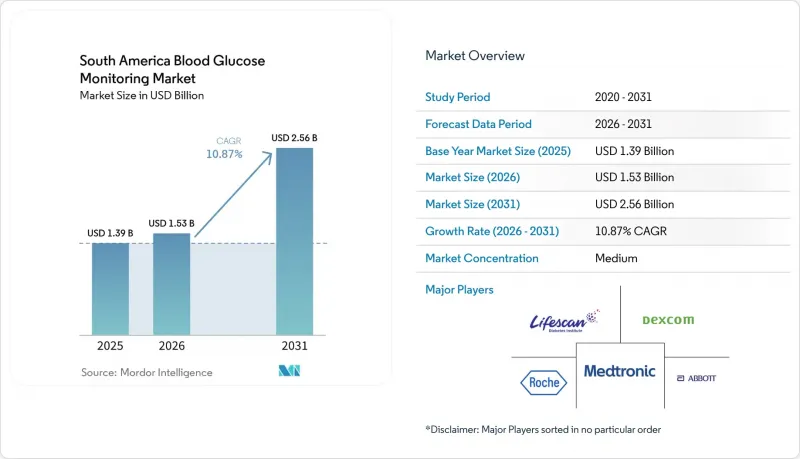
에 따르면 남미의 혈당치 측정 시장 규모는 2025년에 13억 9,000만 달러로 평가되며, 2026년 15억 3,000만 달러에서 2031년까지 25억 6,000만 달러에 달할 것으로 예측되며, 예측 기간(2026-2031년) 동안 CAGR은 10.87%가 될 전망입니다.
남미 혈당 모니터링 시장의 동향 및 인사이트
당뇨병 부담 증가와 미진단 환자 증가
남미의 혈당 모니터링 시장은 해당 지역의 당뇨병 부담 증가에 힘입어 성장하고 있습니다. 남미 및 중남미에서는 2024년 기준 3,540만 명의 당뇨병 환자가 확인되었으며, 이 수치는 2050년까지 46% 증가하여 5,200만 명에 달할 것으로 예측됩니다. 2025년 국제당뇨병연맹(IDF)의 분석에 따르면, 2024년 기준 전 세계 성인 당뇨병 환자의 42.8%가 미진단 상태였으며, 그 수는 2억 5,170만 명에 달했습니다. 또한, 범미보건기구(PAHO)는 2025년 보고서에서 아메리카 대륙에서 4,300만 명이 당뇨병 치료를 받지 못하는 상황에 처해 있다고 지적하며, 임상적 필요와 치료 접근성 사이에 큰 격차가 있음을 부각시켰습니다.
공중보건 분야의 조달 및 필수 기술에 대한 접근성 확대
공공 조달을 통해 남미의 혈당 측정 시장은 민간 소매 수요의 범위를 넘어 확장되고 있습니다. 브라질의 전국적인 보험 환급 제도는 주 및 지방 자치 단체의 프로그램이 지역 내 측정 기술에 대한 접근성을 확대하는 데 방해가 되지 않았습니다. 이러한 구조를 통해 여러 구매 채널이 생겨나며, 더욱 탄탄한 수요 기반이 뒷받침되고 있습니다. 공급업체는 지역별 제품 사양, 구매 수량, 계약 기간, 등록 요건 및 정확도 요건을 충족해야 합니다.
높은 본인 부담금과 불균일한 보험 적용
기기의 높은 비용은, 특히 공적 보험 적용이 미비한 지역에서 당뇨병 모니터링 제품에 대한 접근을 여전히 제한하고 있습니다. 이로 인해 민간 보험이나 지역 프로그램의 혜택을 받는 사용자와 공적 의료 제도에 의존하는 사용자 간에 격차가 발생하고 있습니다. 소득 계층과 지역을 아우르는 보험 적용 범위 확대 속도는 남미의 혈당 모니터링 시장에 영향을 미치고 있습니다. 브라질의 SUS(브라질 공적 의료 제도)에서 실시간 CGM에 관한 협의는 여전히 중요하며, 국가 차원의 결정에 따라 많은 1형 당뇨병 환자가 이를 이용할 수 있게 될 가능성이 있습니다. 보험 적용이 더욱 일관성 있게 이루어질 때까지는 저비용 자가 측정 기기나 공적 배포 프로그램이 계속해서 중요할 것입니다.
부문 분석
2025년, 자가 혈당 측정 기기는 지역 수요의 53.01%를 차지했습니다. 혈당 측정기, 테스트 스트립, 란셋은 가격이 저렴하고 공공 의료 및 재택 간호 현장에서 널리 사용되고 있기 때문에 이 부문은 여전히 필수적입니다. 테스트 스트립과 란셋은 환자의 정기적인 재구매를 통해 지속적인 수익을 창출하는 반면, 기존의 혈당 측정기는 새로 진단받은 환자에게 여전히 일반적인 도입 수단으로 자리 잡고 있습니다. 병원, 진료소, 공공 프로그램에서 상당한 도입 실적이 있으며, 2025년 브라질에서 실시된 실세계 연구에 따르면, 플래시 혈당 모니터링 사용자가 기존 모니터링 사용자보다 혈당 조절이 더 양호한 것으로 나타났습니다. 합리적인 가격과 접근성이 중요한 결정 요인이 되는 상황에서는 SMBG(자가 혈당 측정)가 앞으로도 중요한 역할을 계속할 것입니다.
연속 혈당 모니터링(CGM) 기기는 2026년부터 2031년까지 연평균 성장률(CAGR) 12.67%로 성장할 것으로 예측됩니다. 이 범주에는 더 빈번한 혈당 정보를 제공하는 센서와 수신기·송신기 장치가 포함되며, 보험 환급 제도, 제품의 접근성, 임상 현장의 도입에 의해 뒷받침되고 있습니다. 2025년 라틴아메리카의 합의문에서는 정확도 및 시판 후 조사와 관련된 고려 사항을 포함하여 CGM 시스템 평가에 관한 12가지 권고 사항이 제시되었습니다. 제품의 정확성, 안전성, 환자 지원, 현지 교육 및 고객 서비스는 공급업체 선정의 중요한 기준이 되고 있습니다. 이러한 임상적 및 정책적 진전은 CGM 시장의 성장을 뒷받침하는 한편, 저사양 제품에 대한 진입 장벽을 높일 것으로 예상됩니다.
2025년 현재, 2형 당뇨병은 지역 수요의 85.30%를 차지하고 있으며, 2031년까지 연평균 성장률(CAGR) 14.34%로 성장할 것으로 예측됩니다. 이 환자군은 가장 큰 사용자층을 차지하고 있으며, 인슐린 치료가 더욱 집중화됨에 따라 연속 모니터링의 도입이 점점 더 확대되고 있습니다. 정기적인 혈당 측정과 소모품 보충이 남미의 2형 당뇨병 혈당 모니터링 시장 규모를 뒷받침하고 있습니다. 폰티피시아 유니버시다드 하베리아나가 2025년에 실시한 연구에 따르면, 2형 당뇨병 외래 진료를 위한 디지털 생태계 덕분에 3개월 동안 HbA1c 중앙값이 9.1%에서 7.0%로 감소한 것으로 보고되었습니다. 이러한 성과는 체계적인 모니터링에 대한 보험사의 평가를 뒷받침하여, 이 환자 그룹에 대한 보험 적용 범위 확대로 이어질 가능성이 있습니다.
1형 당뇨병 환자는 환자 수가 적지만, 지속 혈당 모니터링에 대한 임상적 필요성이 매우 높습니다. 칠레의 보험 적용 결정과 현재 진행 중인 브라질의 재검토를 통해, 1형 당뇨병은 공공 CGM(지속 혈당 모니터링)에 관한 논의의 중심에 자리 잡고 있습니다. 칠레의 GES(일반 의료 서비스) 체계에서는 18세 미만의 적격자 및 1형 당뇨병을 앓고 있는 임산부에 대한 접근성이 공식적으로 규정되어 있습니다. 임신성 당뇨병 및 기타 환자 범주의 경우, 집중적인 모니터링, 전문의의 감독, 그리고 소아 및 임산부 치료에 적합한 제품이 필요합니다. 이러한 임상 경로에서 기기를 안전하게 사용하기 위해서는 여전히 신뢰할 수 있는 교육과 사후 관리가 필수적입니다.
기타 혜택:
- 엑셀 형식의 시장 예측(ME) 시트
- 3개월간의 애널리스트 지원
자주 묻는 질문
목차
제1장 소개
- 조사 가정과 시장 정의
- 조사 범위
제2장 조사 방법
제3장 주요 요약
제4장 시장 구도
- 시장 개요
- 시장 성장 촉진요인
- 시장 성장 억제요인
- 가치 및 공급망 분석
- 규제 상황
- 기술 전망
- Porter's Five Forces 분석
제5장 시장 규모와 성장 예측
- 디바이스 유형별
- 환자 유형별
- 최종사용자별
- 유통 채널별
- 지역별
- 브라질
- 아르헨티나
- 콜롬비아
- 칠레
- 페루
- 기타 남미 국가
제6장 경쟁 구도
- 시장 집중도
- 시장 점유율 분석
- 기업 개요
- Abbott Laboratories
- ACON Laboratories, Inc.
- AgaMatrix, Inc.
- ARKRAY, Inc.
- Ascensia Diabetes Care Holdings AG
- Bionime Corporation
- DexCom, Inc.
- F. Hoffmann-La Roche Ltd
- Insulet Corporation
- i-SENS, Inc.
- LifeScan, Inc.
- MEDISANA GmbH
- Medtronic plc
- Nipro Corporation
- Nova Biomedical Corporation
- Rossmax International Ltd.
- Senseonics, Inc.
- Tandem Diabetes Care, Inc.
- Trividia Health, Inc.
- Ypsomed Holding AG
제7장 시장 기회와 향후 전망
KSM 26.10.29According to Mordor Intelligence, the South America blood glucose monitoring market size was valued at USD 1.39 billion in 2025 and is estimated to grow from USD 1.53 billion in 2026 to reach USD 2.56 billion by 2031, at a CAGR of 10.87% during the forecast period (2026-2031).
South America Blood Glucose Monitoring Market Trends and Insights
Rising Diabetes Burden and Undiagnosed Population
The South American blood glucose monitoring market is supported by the region's growing diabetes burden. South and Central America recorded 35.4 million people with diabetes in 2024, and this figure is projected to increase by 46% to 52 million by 2050. The 2025 IDF analysis reported that 42.8% of adults with diabetes worldwide were undiagnosed in 2024, representing 251.7 million people. PAHO reported in 2025 that 43 million people in the Americas lacked access to diabetes treatment, highlighting the gap between clinical need and access.
Expansion of Public Health Procurement and Essential Technology Access
Public procurement is expanding the South American blood glucose monitoring market beyond private retail demand. Brazil's national reimbursement position did not prevent state and municipal programs from expanding local access to monitoring technologies. This structure creates multiple purchasing channels and supports a more resilient demand base. Suppliers must meet location-specific product specifications, purchasing volumes, contract periods, registration, and accuracy requirements.
High Out of Pocket Cost and Uneven Insurance Coverage
High device costs continue to limit access to diabetes monitoring products, particularly where public coverage remains unavailable. This creates disparities between users covered by private insurance or local programs and those relying on public healthcare systems. The pace of coverage expansion across income groups and geographies influences the South American blood glucose monitoring market. Brazil's consultation on real-time CGM in SUS remains significant, as a national decision could expand access for a large population of patients with Type 1 diabetes. Until coverage becomes more consistent, lower-cost self-monitoring devices and public dispensing programs will remain important.
Other drivers and restraints analyzed in the detailed report include:
- Increasing CGM Reimbursement and Health Benefit Inclusion
- Pharmacy Led and Direct to Consumer Sensor Adoption
- Import Dependence, Currency Volatility, and Tender Price Pressure
For complete list of drivers and restraints, kindly check the Table Of Contents.
Segment Analysis
Self-monitoring blood glucose devices held 53.01% of regional demand in 2025. The segment remains essential because glucometers, test strips, and lancets are affordable and widely used across public healthcare and home-care settings. Test strips and lancets generate recurring revenue through regular patient replenishment, while conventional glucometers remain a common entry point for newly diagnosed patients. Hospitals, clinics, and public programs maintain substantial installed bases, and a 2025 real-world study in Brazil found better glycemic control among flash glucose monitoring users than traditional monitoring users. SMBG will remain relevant where affordability and access are key decision factors.
Continuous glucose monitoring devices are forecast to grow at a 12.67% CAGR from 2026 to 2031. The category includes sensors and receiver or transmitter units that provide more frequent glucose information, supported by reimbursement activity, product availability, and clinical adoption. The 2025 Latin American consensus set out 12 recommendations for evaluating CGM systems, including accuracy and post-market surveillance considerations. Product accuracy, safety, patient support, local training, and customer service are becoming key supplier selection criteria. These clinical and policy developments are expected to support CGM market growth while creating higher entry barriers for lower-specification products.
Type 2 diabetes accounted for 85.30% of regional demand in 2025 and is projected to grow at a 14.34% CAGR through 2031. This patient group represents the largest user base and is increasingly adopting continuous monitoring as insulin therapy becomes more intensive. Routine glucose assessment and consumable replenishment support the South American blood glucose monitoring market size for Type 2 diabetes. A 2025 study from Pontificia Universidad Javeriana reported that a digital ecosystem for ambulatory Type 2 diabetes care reduced median HbA1c from 9.1% to 7.0% over three months. Such outcomes support payer assessments of structured monitoring and may expand reimbursement eligibility for this patient group.
Type 1 diabetes patients represent a smaller population but have a strong clinical need for continuous glucose monitoring. Coverage decisions in Chile and the ongoing Brazilian review have placed Type 1 diabetes at the center of public CGM discussions. Chile's GES framework has formalized access for eligible people under 18 and pregnant women with Type 1 diabetes. Gestational diabetes and other patient categories require intensive monitoring, specialist oversight, and products suited to pediatric and pregnancy care. Reliable education and follow-up remain critical for safe device use across these clinical pathways.
Complete Report Scope:
- By Device Type
- Self-Monitoring Blood Glucose Devices
- Glucometer Devices
- Test Strips
- Lancets and Lancing Devices
- Continuous Glucose Monitoring Devices
- Sensors
- Receivers and Transmitters
- Self-Monitoring Blood Glucose Devices
- By Patient Type
- Type 1 Diabetes
- Type 2 Diabetes
- Gestational Diabetes and others
- By End User
- Home Care
- Hospitals and Clinics
- Diagnostic Laboratories
- Others
- By Distribution Channel
- Institutional Procurement
- Retail Pharmacies
- E-Commerce and Direct-to-Consumer
- By Geography
- Brazil
- Argentina
- Colombia
- Chile
- Peru
- Rest of South America
List of Companies Covered in this Report:
- Abbott Laboratories
- Acon Laboratories
- AgaMatrix, Inc.
- Arkray
- Ascensia Diabetes Care Holdings AG
- Bionime
- Dexcom
- Roche
- Insulet
- I-Sens
- Lifescan
- MEDISANA GmbH
- Medtronic
- Nipro
- Nova Biomedical
- Rossmax
- Senseonics, Inc.
- Tandem Diabetes Care
- Trividia Health, Inc.
- Ypsomed
Additional Benefits:
- The market estimate (ME) sheet in Excel format
- 3 months of analyst support
TABLE OF CONTENTS
1 INTRODUCTION
- 1.1 Study Assumptions and Market Definition
- 1.2 Scope of the Study
2 RESEARCH METHODOLOGY
3 EXECUTIVE SUMMARY
4 MARKET LANDSCAPE
- 4.1 Market Overview
- 4.2 Market Drivers
- 4.2.1 Rising Diabetes Burden and Undiagnosed Population
- 4.2.2 Expansion of Public-Health Procurement and Essential-Technology Access
- 4.2.3 Increasing CGM Reimbursement and Health-Benefit Inclusion
- 4.2.4 Pharmacy-Led and Direct-to-Consumer Sensor Adoption
- 4.2.5 Remote Diabetes Management and Connected Care
- 4.2.6 Local Distributor and Specialist-Clinic Networks
- 4.3 Market Restraints
- 4.3.1 High Out-of-Pocket Cost and Uneven Insurance Coverage
- 4.3.2 Import Dependence, Currency Volatility, and Tender Price Pressure
- 4.3.3 Fragmented Regulatory and Reimbursement Pathways
- 4.3.4 Limited Interoperability, Training, and Data-Connectivity Infrastructure
- 4.4 Value/Supply-Chain Analysis
- 4.5 Regulatory Landscape
- 4.6 Technological Outlook
- 4.7 Porter's Five Forces Analysis
- 4.7.1 Threat of New Entrants
- 4.7.2 Bargaining Power of Suppliers
- 4.7.3 Bargaining Power of Buyers
- 4.7.4 Threat of Substitutes
- 4.7.5 Competitive Rivalry
5 MARKET SIZE AND GROWTH FORECASTS (VALUE, USD)
- 5.1 By Device Type
- 5.1.1 Self-Monitoring Blood Glucose Devices
- 5.1.1.1 Glucometer Devices
- 5.1.1.2 Test Strips
- 5.1.1.3 Lancets and Lancing Devices
- 5.1.2 Continuous Glucose Monitoring Devices
- 5.1.2.1 Sensors
- 5.1.2.2 Receivers and Transmitters
- 5.1.1 Self-Monitoring Blood Glucose Devices
- 5.2 By Patient Type
- 5.2.1 Type 1 Diabetes
- 5.2.2 Type 2 Diabetes
- 5.2.3 Gestational Diabetes and others
- 5.3 By End User
- 5.3.1 Home Care
- 5.3.2 Hospitals and Clinics
- 5.3.3 Diagnostic Laboratories
- 5.3.4 Others
- 5.4 By Distribution Channel
- 5.4.1 Institutional Procurement
- 5.4.2 Retail Pharmacies
- 5.4.3 E-Commerce and Direct-to-Consumer
- 5.5 By Geography
- 5.5.1 Brazil
- 5.5.2 Argentina
- 5.5.3 Colombia
- 5.5.4 Chile
- 5.5.5 Peru
- 5.5.6 Rest of South America
6 COMPETITIVE LANDSCAPE
- 6.1 Market Concentration
- 6.2 Market Share Analysis
- 6.3 Company Profiles (includes Global Level Overview, Market Level Overview, Core Segments, Financials as available, Strategic Information, Market Rank/Share, Products and Services, Recent Developments)
- 6.3.1 Abbott Laboratories
- 6.3.2 ACON Laboratories, Inc.
- 6.3.3 AgaMatrix, Inc.
- 6.3.4 ARKRAY, Inc.
- 6.3.5 Ascensia Diabetes Care Holdings AG
- 6.3.6 Bionime Corporation
- 6.3.7 DexCom, Inc.
- 6.3.8 F. Hoffmann-La Roche Ltd
- 6.3.9 Insulet Corporation
- 6.3.10 i-SENS, Inc.
- 6.3.11 LifeScan, Inc.
- 6.3.12 MEDISANA GmbH
- 6.3.13 Medtronic plc
- 6.3.14 Nipro Corporation
- 6.3.15 Nova Biomedical Corporation
- 6.3.16 Rossmax International Ltd.
- 6.3.17 Senseonics, Inc.
- 6.3.18 Tandem Diabetes Care, Inc.
- 6.3.19 Trividia Health, Inc.
- 6.3.20 Ypsomed Holding AG
7 MARKET OPPORTUNITIES AND FUTURE OUTLOOK
- 7.1 White-Space and Unmet-Need Assessment


