|
시장보고서
상품코드
1681024
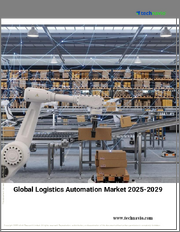
물류 자동화 시장(2025-2035년)Global Logistics Automation Market 2025-2035 |
||||||

물류 자동화 시장 규모는 예측기간(2025년-2035년)에 12.9%의 연평균 복합 성장률(CAGR)를 나타낼 것으로 예상됩니다. 총 수익은 2024년 329억 달러에 달했고, 2035년 1,243억 3,000만 달러로 증가할 것으로 예측되고 있습니다. 최근 자동화는 물류를 포함한 다양한 산업에 걸쳐 중요한 인에이블러가 되고 있으며, 그 주된 이유는 급속히 확대하는 전자상거래와 소매 퀵커머스 부문, 노동력 확보 및 유지보수와 관련된 세계 장애 증가, 복잡하고 위험한 물류활동에 자동화 기술을 채용하는 방향으로의 산업 시프트의 고조 비교적 전반적인 물류 산업은 자율 로봇과 무인 항공기 기반 솔루션의 통합과 고급 스마트 제조 업체에 대한 투자 등 여러 개발을 경험했으며, 자동화 솔루션을 통한 물류 인프라의 구축과 개발의 중요성이 커지고 있음을 보여줍니다.
세계 공급망 역학은 지역을 넘어 물류 사업 확대, 국경을 넘어선 규제, 여러 이해관계자 참여, 운송 문제, 공급망 혼란 증가 등으로 인해 어려운 상황에 처해 있습니다. 원활한 물류 운영을 방해하는 요인이 증가함에 따라 기업과 물류 및 공급자는 원활한 국경을 넘는 무역 실현, 재고 관리 최적화, 운송 과제에 대한 더 나은 대응, 물류 및 리스크 완화, 고객 경험 향상 등 자동화 된 물류 솔루션을 비즈니스 워크 플로우에 통합 할 필요가 있습니다. 또한 물류에 특화된 솔루션 제공업체의 도입과 확장은 생산성과 이익을 높이고 의사결정의 기초를 강화하는 자동화 기술을 도입하는 데 도움이 됩니다. 예를 들어, 2024년 7월 Rapyuta Robotics Inc.는 미국 시장에 자동 보관 및 검색 시스템(ASRS)을 도입했습니다. 이 시스템은 일본에서도 실적이 있어, 멀티 에이전트 제휴, 모듈 설계, 유연한 확장성을 특징으로 하고, 피킹이나 재고의 효율적인 보관 등 업무의 생산성을 향상시켰습니다.
최근 전자상거래 산업은 물류 시장 전체의 성장에 크게 기여하고 있습니다. 전자상거래 기업 지역 간의 급속한 확대, 소비자 구매 패턴의 온라인 채널로의 전환, 시장 기업의 옴니채널 유통 접근법 채택 증가로 인해 그 기여도 앞으로도 확대될 것으로 예상됩니다. 전자상거래에서는 자동 분류 시스템, 인공지능을 활용한 운송 관리 소프트웨어, 상품 관리를 위한 로봇 솔루션 등 다양한 유형의 자동화 기술이 받아들여져 성장 궤도가 확장되고 있습니다. 또한, 당일 또는 10분 이내에 배송을 제공하는 빠른 상거래의 이점과 반품 기능의 유연성은 엄청난 수요와 생산성 향상에 대응하기 위한 고급 자동화 메커니즘의 통합을 촉진하고 있습니다. 예를 들어 국제무역국에 따르면 세계 B2B 전자상거래 시장은 2026년 36조 달러에 이를 것으로 예상되고 있으며, 아시아태평양이 약 80%를 차지할 것으로 보입니다. 또한 라틴아메리카와 중동에서도 성장이 예상됩니다. 2020년 이후 B2B 기업의 90% 이상이 가상 판매로 전환하고 있지만 한국과 일본 소비자는 여전히 기존 상거래를 지지하고 있습니다. 게다가 B2C 전자상거래 분야는 2027년까지 5조 5,000억 달러에 달하고, 패션과 가전이 리더로, 바이오헬스 의약품이 성장 리더입니다. E-Commerce의 성장에 가장 기여하는 것은 인도로, 2023년부터 2027년까지의 CAGR은 14.1%입니다.
본 보고서에서는 세계의 물류 자동화 시장에 대해 조사했으며, 시장 개요와 함께 제공 제품별, 물류유형별, 조직유형별, 기술별, 최종사용자업계별, 지역별 동향, 시장 진출기업 프로파일 등의 정보를 제공합니다.
목차
제1장 보고서 요약
제2장 시장 개요와 인사이트
제3장 시장의 결정 요인
- 시장 성장 촉진요인
- 시장의 문제점과 과제
- 시장 기회
제4장 경쟁 구도
- 경쟁력 대시보드- 물류 자동화 시장의 수익과 제조업체별 점유율
- 물류 자동화 제품 비교 분석
- 시장의 주요 참가 기업의 랭킹 매트릭스
- 주요 기업 분석
- ABB Group
- Honeywell International Inc.
- IBM Corp.
- Business StrategyOracle Corp.
- SAP SE
- 시장 진출기업에 의한 주요 성공 전략
- 합병과 인수
- 제품 발매
- 파트너십과 협업
제5장 세계의 물류 자동화 시장의 매출 분석(100만 달러), 제공 제품별
- 자동화 시스템
- 자동화 소프트웨어
제6장 세계의 물류 자동화 시장 매출 분석(100만 달러), 물류 유형별
- 인바운드 물류
- 아웃바운드 물류
- 역물류
제7장 세계의 물류 자동화 시장의 매출 분석(100만 달러), 조직 유형별
- 중소기업
- 대기업
제8장 세계 물류 자동화 시장 매출 분석(100만 달러), 기술별
- 로봇식 공정 자동화(RPA)
- 인공지능(AI)과 분석
- 사물인터넷(IoT) 플랫폼
- 빅데이터
- 블록체인
제9장 세계 물류 자동화 시장 매출 분석(100만 달러), 최종 사용자 업계별
- 제조업
- 헬스케어 및 의약품
- 음식
- 자동차
- 제3자물류(3PL)
- 금속 및 기계
- 전자상거래와 소매
- 기타
제10장 지역 분석
- 북미
- 유럽
- 아시아태평양
- 기타 지역
제11장 기업 프로파일
- ABB Group
- BEUMER Group
- Dematic Group
- Falcon Autotech Pvt Ltd.
- Honeywell International Inc.
- IBM Corp.
- JR Automation(Hitachi)
- Jungheinrich AG
- Kardex Holding AG
- KNAPP AG
- Korber AG
- KUKA AG
- Manhattan Associates, Inc.
- Murata Machinery, Ltd.
- Mecalux, SA
- Omron Corp
- Oracle Corp
- Samsung SDS Co., Ltd.
- SAP SE
- SEER Robotics Europe GmbH
- SSI SCHAFER GmbH & Co KG
- Toshiba Infrastructure Systems & Solutions Corp.
- Toyota Material Handling International AB
- Zebra Technologies Corp.
Logistics Automation Market Size, Share, and Trends Analysis Report by Offerings (Automated Systems and Automated Software), by Deployment (Cloud-Based, and On-Premise), by Logistic Type (Inbound Logistics (Production Logistics, and Procurement Logistics), Outbound Logistics, and Reverse Logistics), by Technology (RPA, AI and Analytics, IoT Platform, Big Data, and Blockchain), by Organization Type (SMEs, and Large Enterprises), and by End-User Industry (Manufacturing, Healthcare and Pharmaceuticals, Automotive, Third-Party Logistics, Metal and Machinery, Food and Beverage, E-Commerce and Retail, and Others), Forecast Period (2025-2035)
Industry Overview
The logistics automation market is anticipated to grow at a CAGR of 12.9% during the forecast period (2025-2035) with total revenue projected to increase from $32.9 billion in 2024 to $124.33 billion in 2035. In recent years, automation has been a key enabler across diverse industries, including logistics, which is majorly owing to rapidly expanding e-commerce and retail quick commerce sectors, increasing global obstacles relating to labor availability and maintenance, and a growing industrial shift towards adopting automation technologies in complex and unsafe logistical activities. Relatively, the overall logistics industry is additionally experiencing several developments, such as the incorporation of autonomous robots and drone-based solutions and investments in advanced and smart manufacturing hubs, showcasing the growing prominence of the deployment and development of logistical infrastructure with automated solutions.
Market Dynamics
Increasing Complexity in Supply Chain
The global supply chain dynamics is experiencing difficulties owing to expanding logistic business across geographies, cross-border regulations, involvement of several stakeholders, transportation issues, and increasing supply chain disruptions. The growing impediments to smooth logistical operation are gradually stimulating companies and logistic providers to integrate automated logistical solutions into the business workflow, to deliver seamless cross-border trade, optimize inventory management, better respond to transportation challenges, mitigate logistical risks, and enhance customer experience. Furthermore, the introduction and expansion of specialized solution providers for logistics are helping in the inclusion of automation technologies to raise productivity and profits and enhance the basis of decision-making. For instance, in July 2024, Rapyuta Robotics Inc. introduced its Automated Storage and Retrieval Systems (ASRS) in the US market. The system has been proven in Japan and features multi-agent coordination, a modular design, and flexible scalability, which improved the productivity of operations for picking and efficient storage of inventories.
Expansion of E-Commerce Industry
In recent years, the e-commerce industry has become a prominent contributor to the growth of the overall logistics market. Its contribution is anticipated to extend in the future owing to the rapid expansion of e-commerce companies across geographies, shifting consumer buying patterns towards online channels, and increasing adoption of omnichannel distribution approaches by market players. The growth trajectory is augmented by the acceptance of different types of automation technologies in e-commerce, which include automated sorting systems, transport management software enabled by artificial intelligence, and robotic solutions for goods management. Additionally, the dominance of quick commerce for providing same-day or 10-minute deliveries and flexibility in the return feature are together facilitating the incorporation of advanced and automated mechanisms to cater to the enormous demands and enhanced productivity. For instance, according to the International Trade Administration, the global B2B e-commerce market is anticipated to reach $36 trillion in 2026, when APAC will be about 80% of the portion. Growth is additionally visible in Latin America and the Middle East. Since 2020, over 90% of B2B companies have transitioned to virtual sales, although South Korean and Japanese consumers still favor traditional commerce. Further, the B2C e-commerce segment will reach $5.5 trillion by 2027, with fashion and consumer electronics as leaders, and BioHealth pharmaceuticals being the growth leader. India will be the biggest contributor to e-commerce growth, with a CAGR of 14.1% from 2023 to 2027.
Market Segmentation
- Based on the offerings, the market is segmented into automated systems (robotic systems, storage solutions, AIDC, conveyors and sorters, and drones) automated software (transport management systems, WMS, order management software, and deployment (cloud-based, and on-premise).
- Based on the logistics type, the market is segmented into inbound logistics (production logistics, and procurement logistics), outbound logistics, and reverse logistics.
- Based on the organization type, the market is segmented into SMEs and large enterprises.
- Based on the technology, the market is segmented into Robotic Process Automation (RPA), Artificial Intelligence (AI) and analytics, Internet of Things (IoT) platform, big data, and blockchain.
- Based on the end-user industry, the market is segmented into manufacturing, healthcare and pharmaceuticals, food and beverage, automotive, third-party logistics provider (3PL), metal and machinery, e-commerce and retail, and others.
The Automation Software Segment is Projected to Hold a Considerable Market Share
The automation software segment dominates the market owing to the development of smarter and autonomous systems, the integration of advanced technologies such as AI, ML, and robotics, and the growing emphasis by market players on digitizing logistical workflow. Further, the software market has been a key enabler for small organizations in integrating and deploying automation solutions at low cost, resulting in rapid innovations across the automation software space. For instance, EliteX unveiled its transportation ERP software. It is an all-in-one solution that integrates fleet management, telematics, maintenance, inventory, and more.
Outbound Logistics Segment is Projected to Exponentially Gain Market Share
Outbound logistics is projected to lead the market owing to the expanding e-commerce market, increase in innovative offerings by logistical providers, and extension in the geographical footprint of businesses. Further, advancement in outbound delivery techniques such as autonomous drones and the growing popularity of quick commerce is expected to drive segmental growth during the forecast period.
Regional Outlook
The global logistic automation market is further divided by geography, including North America (the US and Canada), Europe (the UK, Germany, France, Italy, Spain, Russia, and the Rest of Europe), Asia-Pacific (India, China, Japan, South Korea, Australia and New Zealand, ASEAN Countries, and the Rest of Asia-Pacific), and the Rest of the World (the Middle East and Africa, and Latin America)
North America Holds the Highest Share in the Global Logistics Automation Market
North America is leading the logistics automation market, attributed to various factors, such as growing investment in automation technologies, including robotics and AI-based software, a matured market for utilization of automated technologies in logistical workflow, the presence of major automated software and hardware providers, including IBM, SAP, and others, and developed infrastructure for seamless transformation of logistical automation. Further, the region is additionally recording increased collaboration among market players for a better transition into logistical automation. For instance, in April 2024, MODE Global, a multi-brand 3PL platform, entered into a partnership with Transporeon, a Trimble Company. The collaboration will utilize autonomous procurement by Transporeon to automate the tendering of both spot and dedicated freight. Under the collaboration, Transporeon's Transportation Management Platform will be white-labeled and customized for MODE, creating the MODE Global Marketplace.
Asia-Pacific is the Fastest Growing Region in the Global Logistics Automation Market
Asia-Pacific is the fastest-growing region in the global market for logistics automation, supported by regional shifts towards adopting automation technology in the logistics sector, increasing labor acquisition costs, rapid expansion in the quick commerce industry, and substantial investment and support by state-owned organizations for developing domestic manufacturing industries with automation technologies. Further, the regional countries including Singapore, India, Thailand, and Malaysia account for major logistical hubs in global commerce and trade, necessitating regional players to automate logistical workflow to meet future demand. For instance, OMRON opened the first automation center for logistics in Singapore, serving Southeast Asia and Oceania. The center is OMRON's second in Singapore, sixth in APAC, and thirty-eighth globally. The center will focus on developing solutions for the Robotics Middleware Framework (RMF) to enable multi-robot systems to collaborate with human workers in warehouses, autonomously handling and storing goods.
Market Players Outlook
The major companies operating in the global logistic automation market include ABB Group, IBM Corp., Honeywell International Inc., Oracle Corp., and SAP SE, among others. Market players are leveraging partnerships, collaborations, mergers and acquisition strategies for business expansion and innovative product development to maintain the market positioning.
Recent Developments
- In October 2024, Vanderlande partnered with Hai Robotics to integrate Hai's Automated Case-Handling Mobile Robot (ACR) systems into its Tote AV portfolio in North America. The collaboration enhances Vanderlande's ADAPTO Automated Storage and Retrieval System (AS/RS), providing warehouses with advanced, fully automated solutions for case and tote handling, improving storage density and throughput for high-performance fulfillment operations.
- In December 2023, Yusen Logistics (Americas) Inc. collaborated with Pickle Robot Company to deploy Pickle Unload systems at its trans-loading operation in Long Beach, California. The partnership will reduce labor for employees, improve service reliability, and introduce the latest robotic automation to warehouse operations to enhance warehouse efficiency and serve customers better.
- In November 2023, Emtec Digital, a subsidiary of Emtec Inc., introduced OptimateIQ, a cloud-based platform for boosting supply chain and logistics efficiency. The platform provides services such as Automation-as-a-Service, Copilot, and Conversation-as-a-Service to enhance appointment scheduling and carrier onboarding, offering unique, fully managed support to T&L leaders.
The Report Covers:
- Market value data analysis of 2024 and forecast to 2035.
- Annualized market revenues ($ million) for each market segment.
- Country-wise analysis of major geographical regions.
- Key companies operating in the global logistic automation market. Based on the availability of data, information related to new products, and relevant news is also available in the report.
- Analysis of business strategies by identifying the key market segments positioned for strong growth in the future.
- Analysis of market-entry and market expansion strategies.
- Competitive strategies by identifying 'who-stands-where' in the market.
Table of Contents
1. Report Summary
- Current Industry Analysis and Growth Potential Outlook
- Global Logistics Automation Market Sales Analysis - Offerings| Logistic Type | Organization Type| Technology | End-User Industry ($ Million)
- Logistics Automation Market Sales Performance of Top Countries
- 1.1. Research Methodology
- Primary Research Approach
- Secondary Research Approach
- 1.2. Market Snapshot
2. Market Overview and Insights
- 2.1. Scope of the Study
- 2.2. Analyst Insight & Current Market Trends
- 2.2.1. Key Logistics Automation Industry Trends
- 2.2.2. Market Recommendations
- 2.3. Porter's Five Forces Analysis for the Logistics Automation Market
- 2.3.1. Competitive Rivalry
- 2.3.2. Threat of New Entrants
- 2.3.3. Bargaining Power of Suppliers
- 2.3.4. Bargaining Power of Buyers
- 2.3.5. Threat of Substitutes
3. Market Determinants
- 3.1. Market Drivers
- 3.1.1. Drivers For Global Logistics Automation Market: Impact Analysis
- 3.2. Market Pain Points and Challenges
- 3.2.1. Restraints For Global Logistics Automation Market: Impact Analysis
- 3.3. Market Opportunities
4. Competitive Landscape
- 4.1. Competitive Dashboard - Logistics Automation Market Revenue and Share by Manufacturers
- Logistics Automation Product Comparison Analysis
- Top Market Player Ranking Matrix
- 4.2. Key Company Analysis
- 4.2.1. ABB Group
- 4.2.1.1. Overview
- 4.2.1.2. Product Portfolio
- 4.2.1.3. Financial Analysis (Subject to Data Availability)
- 4.2.1.4. SWOT Analysis
- 4.2.1.5. Business Strategy
- 4.2.2. Honeywell International Inc.
- 4.2.2.1. Overview
- 4.2.2.2. Product Portfolio
- 4.2.2.3. Financial Analysis (Subject to Data Availability)
- 4.2.2.4. SWOT Analysis
- 4.2.2.5. Business Strategy
- 4.2.3. IBM Corp.
- 4.2.3.1. Overview
- 4.2.3.2. Product Portfolio
- 4.2.3.3. Financial Analysis (Subject to Data Availability)
- 4.2.3.4. SWOT Analysis
- 4.2.4. Business StrategyOracle Corp.
- 4.2.4.1. Overview
- 4.2.4.2. Product Portfolio
- 4.2.4.3. Financial Analysis (Subject to Data Availability)
- 4.2.4.4. SWOT Analysis
- 4.2.4.5. Business Strategy
- 4.2.5. SAP SE
- 4.2.5.1. Overview
- 4.2.5.2. Product Portfolio
- 4.2.5.3. Financial Analysis (Subject to Data Availability)
- 4.2.5.4. SWOT Analysis
- 4.2.5.5. Business Strategy
- 4.2.1. ABB Group
- 4.3. Top Winning Strategies by Market Players
- 4.3.1. Merger and Acquisition
- 4.3.2. Product Launch
- 4.3.3. Partnership And Collaboration
5. Global Logistics Automation Market Sales Analysis by Offering ($ Million)
- 5.1. Automated Systems
- 5.1.1. Robotic Systems
- 5.1.2. Storage Solutions
- 5.1.3. Automatic Identification & Data Collection (AIDC)
- 5.1.4. Conveyors & Sorters
- 5.1.5. Drones
- 5.2. Automated Software
- 5.2.1. Transport Management Systems
- 5.2.2. Warehouse Management Systems (WMS)
- 5.2.3. Order Management Software
- 5.2.4. Deployment
- 5.2.4.1. Cloud-Based
- 5.2.4.2. On-Premise
6. Global Logistics Automation Market Sales Analysis by Logistics Type ($ Million)
- 6.1. Inbound Logistics
- 6.1.1. Production Logistics
- 6.1.2. Procurement Logistics
- 6.2. Outbound Logistics
- 6.3. Reverse Logistics
7. Global Logistics Automation Market Sales Analysis by Organization Type ($ Million)
- 7.1. Small & Medium Enterprise (SMEs)
- 7.2. Large Enterprises
8. Global Logistics Automation Market Sales Analysis by Technology ($ Million)
- 8.1. Robotic Process Automation (RPA)
- 8.2. Artificial Intelligence (AI) & Analytics
- 8.3. Internet of Things (IoT) Platform
- 8.4. Big Data
- 8.5. Blockchain
9. Global Logistics Automation Market Sales Analysis by End-User Industry ($ Million)
- 9.1. Manufacturing
- 9.2. Healthcare & Pharmaceuticals
- 9.3. Food & Beverage
- 9.4. Automotive
- 9.5. Third-Party Logistics (3PL)
- 9.6. Metal & Machinery
- 9.7. E-commerce & Retail
- 9.8. Others
10. Regional Analysis
- 10.1. North American Logistics Automation Market Sales Analysis - Offerings| Logistic Type | Organization Type| Technology | End-User Industry| Country ($ Million)
- Macroeconomic Factors for North America
- 10.1.1. United States
- 10.1.2. Canada
- 10.2. European Logistics Automation Market Sales Analysis Offerings| Logistic Type | Organization Type| Technology | End-User Industry | Country ($ Million)
- Macroeconomic Factors for North America
- 10.2.1. UK
- 10.2.2. Germany
- 10.2.3. Italy
- 10.2.4. Spain
- 10.2.5. France
- 10.2.6. Russia
- 10.2.7. Rest of Europe
- 10.3. Asia-Pacific Logistics Automation Market Sales Analysis - Offerings| Logistic Type | Organization Type| Technology | End-User Industry | Country ($ Million)
- Macroeconomic Factors for Asia-Pacific
- 10.3.1. China
- 10.3.2. Japan
- 10.3.3. South Korea
- 10.3.4. India
- 10.3.5. Australia & New Zealand
- 10.3.6. ASEAN Countries (Thailand, Indonesia, Vietnam, Singapore, And Other)
- 10.3.7. Rest of Asia-Pacific
- 10.4. Rest of the World Logistics Automation Market Sales Analysis - Offerings| Logistic Type | Organization Type| Technology | End-User Industry | Country ($ Million)
- Macroeconomic Factors for the Rest of the World
- 10.4.1. Latin America
- 10.4.2. Middle East and Africa
11. Company Profiles
- 11.1. ABB Group
- 11.1.1. Quick Facts
- 11.1.2. Company Overview
- 11.1.3. Product Portfolio
- 11.1.4. Business Strategies
- 11.2. BEUMER Group
- 11.2.1. Quick Facts
- 11.2.2. Company Overview
- 11.2.3. Product Portfolio
- 11.2.4. Business Strategies
- 11.3. Dematic Group
- 11.3.1. Quick Facts
- 11.3.2. Company Overview
- 11.3.3. Product Portfolio
- 11.3.4. Business Strategies
- 11.4. Falcon Autotech Pvt Ltd.
- 11.4.1. Quick Facts
- 11.4.2. Company Overview
- 11.4.3. Product Portfolio
- 11.4.4. Business Strategies
- 11.5. Honeywell International Inc.
- 11.5.1. Quick Facts
- 11.5.2. Company Overview
- 11.5.3. Product Portfolio
- 11.5.4. Business Strategies
- 11.6. IBM Corp.
- 11.6.1. Quick Facts
- 11.6.2. Company Overview
- 11.6.3. Product Portfolio
- 11.6.4. Business Strategies
- 11.7. JR Automation (Hitachi)
- 11.7.1. Quick Facts
- 11.7.2. Company Overview
- 11.7.3. Product Portfolio
- 11.7.4. Business Strategies
- 11.8. Jungheinrich AG
- 11.8.1. Quick Facts
- 11.8.2. Company Overview
- 11.8.3. Product Portfolio
- 11.8.4. Business Strategies
- 11.9. Kardex Holding AG
- 11.9.1. Quick Facts
- 11.9.2. Company Overview
- 11.9.3. Product Portfolio
- 11.9.4. Business Strategies
- 11.10. KNAPP AG
- 11.10.1. Quick Facts
- 11.10.2. Company Overview
- 11.10.3. Product Portfolio
- 11.10.4. Business Strategies
- 11.11. Korber AG
- 11.11.1. Quick Facts
- 11.11.2. Company Overview
- 11.11.3. Product Portfolio
- 11.11.4. Business Strategies
- 11.12. KUKA AG
- 11.12.1. Quick Facts
- 11.12.2. Company Overview
- 11.12.3. Product Portfolio
- 11.12.4. Business Strategies
- 11.13. Manhattan Associates, Inc.
- 11.13.1. Quick Facts
- 11.13.2. Company Overview
- 11.13.3. Product Portfolio
- 11.13.4. Business Strategies
- 11.14. Murata Machinery, Ltd.
- 11.14.1. Quick Facts
- 11.14.2. Company Overview
- 11.14.3. Product Portfolio
- 11.14.4. Business Strategies
- 11.15. Mecalux, S.A.
- 11.15.1. Quick Facts
- 11.15.2. Company Overview
- 11.15.3. Product Portfolio
- 11.15.4. Business Strategies
- 11.16. Omron Corp
- 11.16.1. Quick Facts
- 11.16.2. Company Overview
- 11.16.3. Product Portfolio
- 11.16.4. Business Strategies
- 11.17. Oracle Corp
- 11.17.1. Quick Facts
- 11.17.2. Company Overview
- 11.17.3. Product Portfolio
- 11.17.4. Business Strategies
- 11.18. Samsung SDS Co., Ltd.
- 11.18.1. Quick Facts
- 11.18.2. Company Overview
- 11.18.3. Product Portfolio
- 11.18.4. Business Strategies
- 11.19. SAP SE
- 11.19.1. Quick Facts
- 11.19.2. Company Overview
- 11.19.3. Product Portfolio
- 11.19.4. Business Strategies
- 11.20. SEER Robotics Europe GmbH
- 11.20.1. Quick Facts
- 11.20.2. Company Overview
- 11.20.3. Product Portfolio
- 11.20.4. Business Strategies
- 11.21. SSI SCHAFER GmbH & Co KG
- 11.21.1. Quick Facts
- 11.21.2. Company Overview
- 11.21.3. Product Portfolio
- 11.21.4. Business Strategies
- 11.22. Toshiba Infrastructure Systems & Solutions Corp.
- 11.22.1. Quick Facts
- 11.22.2. Company Overview
- 11.22.3. Product Portfolio
- 11.22.4. Business Strategies
- 11.23. Toyota Material Handling International AB
- 11.23.1. Quick Facts
- 11.23.2. Company Overview
- 11.23.3. Product Portfolio
- 11.23.4. Business Strategies
- 11.24. Zebra Technologies Corp.
- 11.24.1. Quick Facts
- 11.24.2. Company Overview
- 11.24.3. Product Portfolio
- 11.24.4. Business Strategies