|
시장보고서
상품코드
2102576
플렉서블 파이프 시장 규모, 점유율 및 성장 분석 : 제품 유형별, 원재료별, 용도별, 기능별, 최종사용자별, 지역별 - 업계 예측(2026-2033년)Flexible Pipe Market Size, Share, and Growth Analysis, By Product Type, By Raw Material, By Application, By Function, By End User, By Region - Industry Forecast 2026-2033 |
||||||

세계의 플렉서블 파이프 시장 규모는 2024년에 84억 5,000만 달러로 평가되며, 2025년 88억 6,000만 달러에서 2033년까지 129억 1,000만 달러로 확대하며, 예측 기간(2026-2033년)에 CAGR 4.82%로 성장할 것으로 전망되고 있습니다.
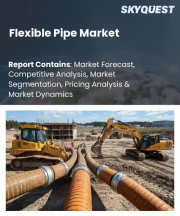
전 세계 플렉서블 파이프 시장에는 강화 폴리머, 섬유, 금속 편조재로 만들어진 파이프라인이 포함되어 있으며, 험준한 지형에서도 석유, 가스, 물의 수송을 가능하게 하고 있습니다. 이러한 시스템은 기존의 경질 파이프 사용이 현실적이지 않은 산악 지대나 해상 환경에서 배관 경로에 대한 해결책을 제공하는 동시에, 설치 시간과 자본 비용을 절감할 수 있다는 점에서 점점 더 높이 평가받고 있습니다. 에너지 통합의 진전에 따라 플렉서블 파이프의 도입이 더욱 촉진되고 있으며, 해상 풍력발전소 등의 재생 가능 에너지 시설에서 열팽창이나 동적인 움직임에 대응할 수 있게 되었습니다. 또한 AI를 활용한 예측 유지보수는 실시간 데이터를 활용하여 고장을 예측함으로써 가동 중지 시간을 최소화하고 자산의 수명을 연장하여 이 분야에 혁신을 가져오고 있습니다. 이러한 진보에 힘입어 제조사들은 혁신적인 소재에 대한 투자를 확대하고 있으며, 이는 시장 확대와 변화하는 규제 준수를 지원하고 있습니다.
전 세계 플렉서블 파이프 시장의 성장 요인
해상 석유 및 가스전의 증가와 심해·초심해 프로젝트에 대한 투자 확대는 가혹한 해저 환경을 효과적으로 통과하고 고압 환경을 견딜 수 있는 플렉서블 파이프 솔루션에 대한 수요를 크게 부추기고 있습니다. 이러한 개발에는 뛰어난 내식성, 설치 시의 적응성, 그리고 수명 주기 비용 절감을 모두 갖춘 파이프라인이 필수적이며, 그 결과 사업자들은 기존의 강성 파이프보다 플렉서블 파이프 기술을 우선시하고 있습니다. 그 결과, 세계 시장은 꾸준한 성장을 달성하고 있으며, 각 공급업체는 지역별 프로젝트 수요와 성능 기준에 대응하기 위해 생산 능력 확충을 추진하고 있습니다.
세계 플렉서블 파이프 시장의 제약 요인
전 세계 플렉서블 파이프 시장은 제조에 사용되는 고급 폴리머 및 강화 복합재료로 인한 높은 비용으로 인해 현저한 제약을 겪고 있습니다. 이러한 재료비 급등은 프로젝트 예산에 막대한 재정적 압박을 가하고 있으며, 특히 시장에 새로 진입하는 기업에게 영향을 미치고 있습니다. 그 결과, 개발업체들은 플렉서블 파이프 사용을 연기하거나 축소하고, 대신 기존의 대체재를 선택하는 경우가 많아 시장의 성장을 저해하고 있습니다. 또한 높은 비용은 소규모 제조업체의 시장 진입을 가로막아 경쟁을 제한하고, 시장 확대를 더욱 저해하고 있습니다. 또한 이러한 자재 조달에 긴 리드타임이 소요되는 점도 예산 초과 요인 중 하나이며, 이해관계자들은 보다 확립되고 비용 대비 효율이 높은 배관 솔루션을 우선시하고 있습니다.
세계의 플렉서블 파이프 시장 동향
전 세계 플렉서블 파이프 시장에서는 내구성, 내열성, 내식성을 높이는 첨단 폴리머 및 복합 라이너를 특징으로 하는 스마트 소재의 통합을 향한 뚜렷한 추세가 나타나고 있습니다. 이러한 혁신적인 접근 방식은 수명 연장과 유지보수 수요 감소를 촉진하고 있으며, 이는 운영 효율성을 추구하는 고객에게 매우 중요합니다. 각 제조사는 소재 개발 혁신 기업과의 협력을 강화하여, 자가 복구 기능이나 실시간 응력 감지 섬유와 같은 기능을 플렉서블 파이프 구조에 통합하고 있습니다. 이러한 진보를 통해 해저, 해양 및 가혹한 육상 환경에서의 적용 범위가 대폭 확대되는 동시에, 에너지 인프라 전반에 걸친 교체 주기 단축 및 가동 중단 시간 최소화를 통해 지속가능성에 대한 우려에도 대응하고 있습니다.
자주 묻는 질문
목차
서론
조사 방법
개요
시장 역학과 전망
주요 시장 인사이트
세계의 플렉서블 파이프 시장 규모 : 제품 유형별
세계의 플렉서블 파이프 시장 규모 : 원재료별
세계의 플렉서블 파이프 시장 규모 : 용도별
세계의 플렉서블 파이프 시장 규모 : 기능별
세계의 플렉서블 파이프 시장 규모 : 최종사용자별
세계의 플렉서블 파이프 시장 규모 : 지역별
경쟁 정보
주요 기업 개요
결론과 제안
KSA 26.08.05Global Flexible Pipe Market size was valued at USD 8.45 Billion in 2024 and is poised to grow from USD 8.86 Billion in 2025 to USD 12.91 Billion by 2033, growing at a CAGR of 4.82% during the forecast period (2026-2033).
The global flexible pipe market encompasses pipelines crafted from reinforced polymers, textiles, and metal braids, enabling the transportation of oil, gas, and water across challenging terrains. These systems are increasingly valued for their ability to decrease installation time and capital costs while providing routing solutions in mountainous or offshore environments where traditional rigid pipes are impractical. The rise in energy integration is fostering greater adoption of flexible pipes, allowing for thermal expansion and dynamic movement in renewable energy installations like offshore wind farms. Additionally, AI-driven predictive maintenance is transforming the sector by leveraging real-time data to anticipate failures, thereby minimizing downtime and extending asset longevity. These advancements are prompting manufacturers to invest in innovative materials, boosting market expansion and compliance with evolving regulations.
Top-down and bottom-up approaches were used to estimate and validate the size of the Global Flexible Pipe market and to estimate the size of various other dependent submarkets. The research methodology used to estimate the market size includes the following details: The key players in the market were identified through secondary research, and their market shares in the respective regions were determined through primary and secondary research. This entire procedure includes the study of the annual and financial reports of the top market players and extensive interviews for key insights from industry leaders such as CEOs, VPs, directors, and marketing executives. All percentage shares split, and breakdowns were determined using secondary sources and verified through Primary sources. All possible parameters that affect the markets covered in this research study have been accounted for, viewed in extensive detail, verified through primary research, and analyzed to get the final quantitative and qualitative data.
Global Flexible Pipe Market Segments Analysis
Global flexible pipe market is segmented by product type, raw material, application, function, end user and region. Based on product type, the market is segmented into Unbonded Flexible Pipe and Bonded Flexible Pipe. Based on raw material, the market is segmented into High-Density Polyethylene (HDPE), Polyamide (PA), Polyvinylidene Fluoride (PVDF) and Other Materials. Based on application, the market is segmented into Offshore and Onshore. Based on function, the market is segmented into Production Lines, Injection Lines, Gas Lift Lines, Water Injection Lines, Export & Transfer Lines and Others. Based on end user, the market is segmented into Oil & Gas, Chemical & Petrochemical, Water & Wastewater, Mining and Others. Based on region, the market is segmented into North America, Europe, Asia Pacific, Latin America and Middle East & Africa.
Driver of the Global Flexible Pipe Market
The growing array of offshore oil and gas fields and heightened investment in deepwater and ultra-deepwater projects are significantly fueling the demand for flexible pipe solutions that can effectively navigate challenging seabed conditions and endure high-pressure environments. Such developments necessitate pipelines that exhibit exceptional corrosion resistance, adaptability in installation, and reduced lifecycle expenses, leading operators to prefer flexible pipe technologies over traditional rigid options. As a result, the global market is witnessing consistent growth, prompting suppliers to enhance their capacities to align with project demands and performance standards across various regions.
Restraints in the Global Flexible Pipe Market
The Global Flexible Pipe market faces notable constraints due to the high costs associated with premium polymers and reinforced composites utilized in production. These elevated material expenses create substantial financial pressures on project budgets, particularly affecting new entrants in the market. As a result, developers often opt to postpone or reduce their use of flexible pipes, leaning instead towards traditional alternatives, which hinders market growth. Additionally, the high costs discourage smaller manufacturers from joining the market, limiting competition and further impeding expansion. Long lead times for procuring these materials also contribute to budget overruns, causing stakeholders to prioritize more established, cost-effective piping solutions.
Market Trends of the Global Flexible Pipe Market
The Global Flexible Pipe market is witnessing a significant trend towards the integration of smart materials, characterized by advanced polymers and composite liners that enhance durability, temperature resistance, and corrosion protection. This innovative approach is driving longer service life and reduced maintenance needs, which are pivotal for clients seeking operational efficiency. Manufacturers are increasingly collaborating with material innovators to incorporate features like self-healing capabilities and real-time stress-sensing fibers into flexible pipe structures. Such advancements significantly broaden application scope in subsea, offshore, and challenging onshore environments, while addressing sustainability concerns through decreased replacement cycles and minimized downtime across energy infrastructures.
Table of Contents
Introduction
- Objectives of the Study
- Market Definition & Scope
Research Methodology
- Research Process
- Secondary & Primary Data Methods
- Market Size Estimation Methods
Executive Summary
- Global Market Outlook
- Key Market Highlights
- Segmental Overview
- Competition Overview
Market Dynamics & Outlook
- Macro-Economic Indicators
- Drivers & Opportunities
- Restraints & Challenges
- Supply Side Trends
- Demand Side Trends
- Porters Analysis & Impact
- Competitive Rivalry
- Threat of Substitute
- Bargaining Power of Buyers
- Threat of New Entrants
- Bargaining Power of Suppliers
Key Market Insights
- Key Success Factors
- Market Impacting Factors
- Top Investment Pockets
- Ecosystem Mapping
- Market Attractiveness Index 2025
- PESTEL Analysis
- Regulatory Landscape
Global Flexible Pipe Market Size by Product Type & CAGR (2026-2033)
- Market Overview
- Unbonded Flexible Pipe
- Bonded Flexible Pipe
Global Flexible Pipe Market Size by Raw Material & CAGR (2026-2033)
- Market Overview
- High-Density Polyethylene (HDPE)
- Polyamide (PA)
- Polyvinylidene Fluoride (PVDF)
- Other Materials
Global Flexible Pipe Market Size by Application & CAGR (2026-2033)
- Market Overview
- Offshore
- Onshore
Global Flexible Pipe Market Size by Function & CAGR (2026-2033)
- Market Overview
- Production Lines
- Injection Lines
- Gas Lift Lines
- Water Injection Lines
- Export & Transfer Lines
- Others
Global Flexible Pipe Market Size by End User & CAGR (2026-2033)
- Market Overview
- Oil & Gas
- Chemical & Petrochemical
- Water & Wastewater
- Mining
- Others
Global Flexible Pipe Market Size & CAGR (2026-2033)
- North America (Product Type, Raw Material, Application, Function, End User)
- US
- Canada
- Europe (Product Type, Raw Material, Application, Function, End User)
- Germany
- Spain
- France
- UK
- Italy
- Rest of Europe
- Asia Pacific (Product Type, Raw Material, Application, Function, End User)
- China
- India
- Japan
- South Korea
- Rest of Asia-Pacific
- Latin America (Product Type, Raw Material, Application, Function, End User)
- Mexico
- Brazil
- Rest of Latin America
- Middle East & Africa (Product Type, Raw Material, Application, Function, End User)
- GCC Countries
- South Africa
- Rest of Middle East & Africa
Competitive Intelligence
- Top 5 Player Comparison
- Market Positioning of Key Players, 2025
- Strategies Adopted by Key Market Players
- Recent Developments in the Market
- Company Market Share Analysis, 2025
- Company Profiles of All Key Players
- Company Details
- Product Portfolio Analysis
- Company's Segmental Share Analysis
- Revenue Y-O-Y Comparison (2023-2025)
Key Company Profiles
- TechnipFMC plc
- Company Overview
- Business Segment Overview
- Financial Updates
- Key Developments
- Baker Hughes Company
- Company Overview
- Business Segment Overview
- Financial Updates
- Key Developments
- National Oilwell Varco Inc
- Company Overview
- Business Segment Overview
- Financial Updates
- Key Developments
- NOV Inc
- Company Overview
- Business Segment Overview
- Financial Updates
- Key Developments
- Prysmian S p A
- Company Overview
- Business Segment Overview
- Financial Updates
- Key Developments
- Pipelife International GmbH
- Company Overview
- Business Segment Overview
- Financial Updates
- Key Developments
- Wienerberger AG
- Company Overview
- Business Segment Overview
- Financial Updates
- Key Developments
- Strohm
- Company Overview
- Business Segment Overview
- Financial Updates
- Key Developments
- Magma Global Limited
- Company Overview
- Business Segment Overview
- Financial Updates
- Key Developments
- Shawcor Ltd
- Company Overview
- Business Segment Overview
- Financial Updates
- Key Developments
- Mattr Corp
- Company Overview
- Business Segment Overview
- Financial Updates
- Key Developments
- SoluForce BV
- Company Overview
- Business Segment Overview
- Financial Updates
- Key Developments
- FlexSteel Pipeline Technologies Inc
- Company Overview
- Business Segment Overview
- Financial Updates
- Key Developments
- Airborne Oil & Gas
- Company Overview
- Business Segment Overview
- Financial Updates
- Key Developments
- DeepFlex Inc
- Company Overview
- Business Segment Overview
- Financial Updates
- Key Developments
- ContiTech AG
- Company Overview
- Business Segment Overview
- Financial Updates
- Key Developments
- Continental AG
- Company Overview
- Business Segment Overview
- Financial Updates
- Key Developments
- Brugg Pipes
- Company Overview
- Business Segment Overview
- Financial Updates
- Key Developments
- Flexpipe Systems Inc
- Company Overview
- Business Segment Overview
- Financial Updates
- Key Developments
- Polyflow LLC
- Company Overview
- Business Segment Overview
- Financial Updates
- Key Developments