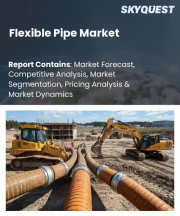
|
시장보고서
상품코드
1948689
플렉서블 파이프 시장 - 세계 산업 규모, 점유율, 동향, 기회, 예측 : 원재료별, 용도별, 지역별&경쟁(2021-2031년)Flexible Pipe Market - Global Industry Size, Share, Trends, Opportunity, and Forecast Segmented By Raw Material (High-density Polyethylene, Polyamides, Polyvinylidene Fluoride), By Application (Offshore and Onshore), By Region & Competition, 2021-2031F |
||||||

세계의 플렉서블 파이프 시장은 2025년 23억 1,000만 달러에서 2031년까지 31억 4,000만 달러로 성장하고, 예측 기간 중 연평균 복합 성장률(CAGR)은 5.25%로 예측되고 있습니다.
이 파이프는 금속과 열가소성 수지의 여러 층으로 설계된 특수 도관이며, 해저 수원과 지상 시설 간의 유체 수송에 중요한 역할을 담당하고 있습니다. 시장 성장은 주로 심해 석유 및 가스 탐사 활동 증가에 의해 주도되고 있습니다. 플렉서블 파이프가 본래 가지고 있는 동적 성능은 부유식 생산 시스템에서 필수적인 요소입니다. 또한, 경질 파이프라인에 비해 설치 비용 효율성과 릴에 감아 빠르게 전개할 수 있는 물류적 이점으로 인해 경제적 매력이 높아져 유전 개발에서 효과적인 솔루션으로 자리매김하고 있습니다.
| 시장 개요 | |
|---|---|
| 예측 기간 | 2027-2031년 |
| 시장 규모 : 2025년 | 23억 1,000만 달러 |
| 시장 규모 : 2031년 | 31억 4,000만 달러 |
| CAGR : 2026-2031년 | 5.25% |
| 가장 성장이 빠른 부문 | 해상 |
| 최대 시장 | 북미 |
그러나 고압 환경에서의 자산 보호와 관련하여 가스 침투로 인한 환형 공간 내 부식 위험 등 업계는 심각한 문제에 직면해 있습니다. 이러한 기술적 문제로 인해 고가의 재료 업그레이드와 엄격한 모니터링 프로토콜이 필요한 경우가 많으며, 이는 프로젝트 예산에 부담을 줄 수 있습니다. 이러한 복잡한 상황에도 불구하고 해저 인프라에 대한 수요는 꾸준히 증가하고 있습니다. '세계 수중 허브'에 따르면, 2024년 영국의 수중 산업 가치는 12억 파운드 증가하여 총 92억 파운드에 달할 것으로 예상했습니다. 이는 운영상의 어려움 속에서도 이 부문의 회복력을 입증하는 것입니다.
시장 성장 촉진요인
플렉서블 파이프 분야의 주요 촉진요인은 전 세계 해양 시추 활동의 현저한 증가와 해저 인프라에 대한 투자 확대입니다. 에너지 기업들이 더 깊은 바다로 진출함에 따라, 해저 갱구와 부유식 생산 설비를 연결하는 다용도 도관 시스템에 대한 수요가 증가하고 있습니다. 동적 해양력에 대한 저항력과 빠른 해저 타이백을 가능하게 하는 특성으로 인해 자본 집약적인 프로젝트에서 플렉서블 파이프가 점점 더 선호되는 추세입니다. 이는 경직된 파이프라인에 비해 분명한 물류적 이점을 제공합니다. 이러한 산업 활동의 확대는 주요 계약자의 견조한 재무 실적에서도 알 수 있습니다. 테크닙 FMC(2024년 7월 발표)에 따르면, 2분기 해저 관련 수주 총액은 28억 달러에 달하고, 해양 개발 단계의 강한 추진력을 보여주었습니다.
동시에 가혹한 해양 환경에서의 내식성 솔루션에 대한 수요가 증가함에 따라 첨단 소재의 채택이 촉진되고 있습니다. 이산화탄소 등 고농도 오염물질이 포함된 저류층에서 탄화수소를 채굴하는 사업자는 자산 건전성 위험에 직면하고 있으며, 특수 열가소성 수지 및 복합재 층을 갖춘 파이프가 요구되고 있습니다. 이러한 기술적으로 우수한 내식성 설계에 대한 수요는 대규모 상업적 계약으로 이어지고 있습니다. Baker Hughes(2024년 10월)에 따르면, 이 회사는 프리솔트 층의 응력 부식 균열을 견딜 수 있도록 설계된 77km의 플렉서블 파이프 시스템 공급 계약을 체결하였습니다. 국제에너지기구(IEA)가 2024년 전 세계 업스트림 석유 및 가스 투자 규모를 5,700억 달러로 예측한 것처럼, 이러한 내성 인프라에 대한 집중은 보다 광범위한 시장 동향과 일치하며, 이러한 고급 기술 개발을 뒷받침하는 기반이 되고 있습니다.
시장의 과제
세계 플렉서블 파이프 시장은 고압 환경에서의 자산 건전성, 특히 침투 가스로 인한 환형 공간 부식의 위험성이라는 중대한 문제에 직면해 있습니다. 이러한 기술적 문제로 인해 사업자는 고장을 피하기 위해 내식성이 뛰어난 고급 소재와 엄격한 감시 체계에 많은 자본을 투입할 수밖에 없습니다. 이러한 요구사항은 심해 프로젝트의 초기 자본 지출과 지속적인 운영 비용을 크게 증가시킵니다. 그 결과, 수익성이 낮은 유전의 경제성이 위협받고, 플렉서블 파이프 솔루션을 채택할 예정이었던 신규 개발이 연기되거나 중단되어 시장 확대를 직접적으로 저해하고 있습니다.
또한, 이러한 건전성 관리 책임에 따른 재정적 부담은 신규 인프라 투자에서 중요한 자금을 전용하는 결과를 초래할 수 있습니다. 해저 자산의 수명주기 및 수명 종료 단계 관리에 소요되는 막대한 비용은 이러한 제약을 더욱 부각시키고 있습니다. 'Offshore Energies UK'에 따르면, 2024년 해양 인프라 해체 비용은 23억 파운드에 달할 것으로 예측됩니다. 기존 노후화된 자산을 유지보수하는 데 많은 자원이 투입되면서 신규 플렉서블 파이프 설치에 투입할 수 있는 예산이 제한되어 시장의 성장 궤도를 효과적으로 방해하고 있습니다.
시장 동향
수소 운송을 위한 유연한 파이프라인 솔루션의 개발은 사업자들이 세계 에너지 전환에 대응하는 인프라를 추구하면서 시장 상황을 빠르게 변화시키고 있습니다. 기존 탄화수소와 달리 수소 분자는 작고 침투성이 매우 약하기 때문에 기존의 강철 소재보다 기술적으로 우수한 특수 열가소성 복합재료가 필요합니다. 이러한 기술적 진보는 해양 그린수소 생산 및 운송 요건을 계기로 시험 단계에서 상업적 도입으로 전환되고 있습니다. 이러한 추세를 뒷받침하는 사례로, 스트롬(2024년 8월)은 토탈에너지(Total Energy)로부터 브라질 프리솔트 분지의 해상 프로젝트에 수소와 이산화탄소 수송을 위해 특별히 설계된 열가소성 복합 파이프(TCP) 플로우라인을 공급하는 계약을 체결했습니다.
또한, 고압 고온(HPHT) 비접착식 파이프 설계의 발전은 지속적인 추세로, 표준 도관의 용량을 초과하는 환경 조건이 존재하는 초심해 저류층에 대한 지속적인 진출이 이를 촉진하고 있습니다. 각 제조업체는 강화 장갑층과 가스 차폐 기술을 갖춘 첨단 비접착식 플렉서블 파이프를 설계하여 가혹한 정수압 및 내부 유체 응력 하에서 무결성을 유지합니다. 이러한 기술적으로 견고하고 높은 사양의 자산에 대한 집중은 국영 에너지 기업의 대규모 자본 투자로 입증되고 있습니다. 예를 들어, TechnipFMC(2024년 7월)에 따르면, 이 회사는 페트로브라스(Petrobras)로부터 브라질 해안의 까다로운 프리솔트 유전에서 수압 주입 및 가스 리프트 용도의 플렉서블 파이프 시스템을 공급하기 위해 미화 2억 5,000만 달러에서 5억 달러에 달하는 중요한 계약을 체결했습니다. 계약을 체결하였습니다.
자주 묻는 질문
목차
제1장 개요
제2장 조사 방법
제3장 주요 요약
제4장 고객의 소리
제5장 세계의 플렉서블 파이프 시장 전망
제6장 북미의 플렉서블 파이프 시장 전망
제7장 유럽의 플렉서블 파이프 시장 전망
제8장 아시아태평양의 플렉서블 파이프 시장 전망
제9장 중동 및 아프리카의 플렉서블 파이프 시장 전망
제10장 남미의 플렉서블 파이프 시장 전망
제11장 시장 역학
제12장 시장 동향과 발전
제13장 세계의 플렉서블 파이프 시장 : SWOT 분석
제14장 Porter의 Five Forces 분석
제15장 경쟁 구도
제16장 전략적 제안
제17장 회사 소개 및 면책조항
LSH 26.03.12The Global Flexible Pipe Market is projected to expand from a valuation of USD 2.31 Billion in 2025 to USD 3.14 Billion by 2031, reflecting a CAGR of 5.25% over the forecast period. These pipes are specialized conduits engineered with multiple layers of metallic and thermoplastic materials, serving a critical role in transporting fluids between subsea wellheads and surface facilities. Market growth is primarily driven by increasing activities in deepwater oil and gas exploration, where the inherent dynamic capabilities of flexible pipes make them essential for floating production systems. Furthermore, their economic appeal is bolstered by installation cost efficiencies relative to rigid pipelines and the logistical advantage of spooling pipes onto reels for rapid deployment, positioning them as effective solutions for field development.
| Market Overview | |
|---|---|
| Forecast Period | 2027-2031 |
| Market Size 2025 | USD 2.31 Billion |
| Market Size 2031 | USD 3.14 Billion |
| CAGR 2026-2031 | 5.25% |
| Fastest Growing Segment | Offshore |
| Largest Market | North America |
However, the industry encounters significant hurdles regarding asset integrity in high-pressure environments, specifically the risk of corrosion within the annular space due to gas permeation. This technical challenge often necessitates costly material upgrades and strict monitoring protocols, which can place a strain on project budgets. Despite these complexities, the demand for subsea infrastructure remains robust; according to the 'Global Underwater Hub', in '2024', the value of the United Kingdom's underwater industry increased by 1.2 billion pounds to reach a total of 9.2 billion pounds, underscoring the resilience of the sector amidst operational difficulties.
Market Driver
A primary catalyst for the flexible pipe sector is the significant rise in global offshore drilling activities and investments in subsea infrastructure. As energy companies extend their reach into deeper waters, the demand has intensified for versatile conduit systems capable of linking subsea wellheads to floating production units. Flexible pipes are increasingly preferred for these capital-intensive projects due to their resilience against dynamic ocean forces and their ability to facilitate rapid subsea tie-backs, offering clear logistical benefits over rigid pipeline alternatives. This upswing in industrial activity is evidenced by the strong financial results of key contractors; according to TechnipFMC, July 2024, the firm reported inbound subsea orders totaling USD 2.8 billion in the second quarter, indicating strong momentum in offshore development phases.
Simultaneously, the escalating need for corrosion-resistant solutions in harsh marine environments is propelling the adoption of advanced materials. Operators extracting hydrocarbons from reservoirs containing high levels of contaminants, such as carbon dioxide, face asset integrity risks that require pipes with specialized thermoplastic and composite layers. This demand for technically superior, corrosion-proof designs is leading to significant commercial contracts. According to Baker Hughes, October 2024, the company secured an agreement to provide 77 kilometers of flexible pipe systems designed to withstand stress-induced corrosion cracking in pre-salt fields. This emphasis on resilient infrastructure is consistent with broader market movements, as according to the International Energy Agency, in 2024, global upstream oil and gas investment was expected to reach USD 570 billion, underpinning the deployment of these high-grade technologies.
Market Challenge
The Global Flexible Pipe Market contends with a critical obstacle regarding the integrity of assets in high-pressure environments, particularly the danger of annular space corrosion resulting from permeated gases. This technical issue compels operators to direct significant capital toward premium, corrosion-resistant materials and rigorous monitoring schedules to avert failure. Such requirements substantially increase both initial capital expenditures and continuing operational costs for deepwater initiatives. Consequently, the economic feasibility of marginal fields is jeopardized, leading operators to postpone or cancel new developments that would otherwise employ flexible pipe solutions, which directly hinders market expansion.
Furthermore, the financial burden associated with these integrity management responsibilities diverts crucial funding away from new infrastructure investments. The considerable expense involved in managing the lifecycle and end-of-life stages of subsea assets highlights this constraint. According to 'Offshore Energies UK', in '2024', the projected expenditure for decommissioning offshore infrastructure amounted to 2.3 billion pounds. This substantial allocation of resources toward maintaining existing and aging assets restricts the budget available for new flexible pipe installations, effectively impeding the broader growth trajectory of the market.
Market Trends
The development of flexible pipeline solutions for hydrogen transport is rapidly transforming the market landscape as operators pursue infrastructure compatible with the global energy transition. Unlike traditional hydrocarbons, hydrogen molecules are small and highly susceptible to permeation, creating a need for specialized thermoplastic composite materials that offer technical superiority over conventional steel options. This technological advancement is transitioning from testing phases to commercial implementation, spurred by the requirements for offshore green hydrogen generation and transport. Validating this trend, according to Strohm, August 2024, the firm won a contract from TotalEnergies to provide Thermoplastic Composite Pipe (TCP) flowlines explicitly engineered to transport hydrogen and carbon dioxide for an offshore initiative in the Brazilian pre-salt basin.
Additionally, the advancement of high-pressure high-temperature (HPHT) unbonded pipe designs continues to be a prevailing trend, driven by the ongoing expansion into ultra-deepwater reservoirs where environmental conditions surpass the capabilities of standard conduits. Manufacturers are designing sophisticated unbonded flexible pipes featuring reinforced armor layers and gas-shielding technologies to preserve integrity under severe hydrostatic pressure and internal fluid stress. This dedication to technically robust, high-specification assets is demonstrated by major capital investments from national energy companies. For example, according to TechnipFMC, July 2024, the company received a significant contract valued between USD 250 million and USD 500 million from Petrobras to deliver flexible pipe systems for water injection and gas lift applications in the demanding pre-salt fields offshore Brazil.
Key Market Players
- National Oilwell Varco
- TechnipFMC PLC
- The Prysmian Group
- GE Oil & Gas Corporation
- Shawcor Ltd
- SoulForce
- Airborne Oil & Gas BV
- Magma Global Ltd
- ContiTech AG
- Chevron Phillips Chemical Company LLC
Report Scope
In this report, the Global Flexible Pipe Market has been segmented into the following categories, in addition to the industry trends which have also been detailed below:
Flexible Pipe Market, By Raw Material
- High-density Polyethylene
- Polyamides
- Polyvinylidene Fluoride
Flexible Pipe Market, By Application
- Offshore
- Onshore
Flexible Pipe Market, By Region
- North America
- United States
- Canada
- Mexico
- Europe
- France
- United Kingdom
- Italy
- Germany
- Spain
- Asia Pacific
- China
- India
- Japan
- Australia
- South Korea
- South America
- Brazil
- Argentina
- Colombia
- Middle East & Africa
- South Africa
- Saudi Arabia
- UAE
Competitive Landscape
Company Profiles: Detailed analysis of the major companies present in the Global Flexible Pipe Market.
Available Customizations:
Global Flexible Pipe Market report with the given market data, TechSci Research offers customizations according to a company's specific needs. The following customization options are available for the report:
Company Information
- Detailed analysis and profiling of additional market players (up to five).
Table of Contents
1. Product Overview
- 1.1. Market Definition
- 1.2. Scope of the Market
- 1.2.1. Markets Covered
- 1.2.2. Years Considered for Study
- 1.2.3. Key Market Segmentations
2. Research Methodology
- 2.1. Objective of the Study
- 2.2. Baseline Methodology
- 2.3. Key Industry Partners
- 2.4. Major Association and Secondary Sources
- 2.5. Forecasting Methodology
- 2.6. Data Triangulation & Validation
- 2.7. Assumptions and Limitations
3. Executive Summary
- 3.1. Overview of the Market
- 3.2. Overview of Key Market Segmentations
- 3.3. Overview of Key Market Players
- 3.4. Overview of Key Regions/Countries
- 3.5. Overview of Market Drivers, Challenges, Trends
4. Voice of Customer
5. Global Flexible Pipe Market Outlook
- 5.1. Market Size & Forecast
- 5.1.1. By Value
- 5.2. Market Share & Forecast
- 5.2.1. By Raw Material (High-density Polyethylene, Polyamides, Polyvinylidene Fluoride)
- 5.2.2. By Application (Offshore and Onshore)
- 5.2.3. By Region
- 5.2.4. By Company (2025)
- 5.3. Market Map
6. North America Flexible Pipe Market Outlook
- 6.1. Market Size & Forecast
- 6.1.1. By Value
- 6.2. Market Share & Forecast
- 6.2.1. By Raw Material
- 6.2.2. By Application
- 6.2.3. By Country
- 6.3. North America: Country Analysis
- 6.3.1. United States Flexible Pipe Market Outlook
- 6.3.1.1. Market Size & Forecast
- 6.3.1.1.1. By Value
- 6.3.1.2. Market Share & Forecast
- 6.3.1.2.1. By Raw Material
- 6.3.1.2.2. By Application
- 6.3.1.1. Market Size & Forecast
- 6.3.2. Canada Flexible Pipe Market Outlook
- 6.3.2.1. Market Size & Forecast
- 6.3.2.1.1. By Value
- 6.3.2.2. Market Share & Forecast
- 6.3.2.2.1. By Raw Material
- 6.3.2.2.2. By Application
- 6.3.2.1. Market Size & Forecast
- 6.3.3. Mexico Flexible Pipe Market Outlook
- 6.3.3.1. Market Size & Forecast
- 6.3.3.1.1. By Value
- 6.3.3.2. Market Share & Forecast
- 6.3.3.2.1. By Raw Material
- 6.3.3.2.2. By Application
- 6.3.3.1. Market Size & Forecast
- 6.3.1. United States Flexible Pipe Market Outlook
7. Europe Flexible Pipe Market Outlook
- 7.1. Market Size & Forecast
- 7.1.1. By Value
- 7.2. Market Share & Forecast
- 7.2.1. By Raw Material
- 7.2.2. By Application
- 7.2.3. By Country
- 7.3. Europe: Country Analysis
- 7.3.1. Germany Flexible Pipe Market Outlook
- 7.3.1.1. Market Size & Forecast
- 7.3.1.1.1. By Value
- 7.3.1.2. Market Share & Forecast
- 7.3.1.2.1. By Raw Material
- 7.3.1.2.2. By Application
- 7.3.1.1. Market Size & Forecast
- 7.3.2. France Flexible Pipe Market Outlook
- 7.3.2.1. Market Size & Forecast
- 7.3.2.1.1. By Value
- 7.3.2.2. Market Share & Forecast
- 7.3.2.2.1. By Raw Material
- 7.3.2.2.2. By Application
- 7.3.2.1. Market Size & Forecast
- 7.3.3. United Kingdom Flexible Pipe Market Outlook
- 7.3.3.1. Market Size & Forecast
- 7.3.3.1.1. By Value
- 7.3.3.2. Market Share & Forecast
- 7.3.3.2.1. By Raw Material
- 7.3.3.2.2. By Application
- 7.3.3.1. Market Size & Forecast
- 7.3.4. Italy Flexible Pipe Market Outlook
- 7.3.4.1. Market Size & Forecast
- 7.3.4.1.1. By Value
- 7.3.4.2. Market Share & Forecast
- 7.3.4.2.1. By Raw Material
- 7.3.4.2.2. By Application
- 7.3.4.1. Market Size & Forecast
- 7.3.5. Spain Flexible Pipe Market Outlook
- 7.3.5.1. Market Size & Forecast
- 7.3.5.1.1. By Value
- 7.3.5.2. Market Share & Forecast
- 7.3.5.2.1. By Raw Material
- 7.3.5.2.2. By Application
- 7.3.5.1. Market Size & Forecast
- 7.3.1. Germany Flexible Pipe Market Outlook
8. Asia Pacific Flexible Pipe Market Outlook
- 8.1. Market Size & Forecast
- 8.1.1. By Value
- 8.2. Market Share & Forecast
- 8.2.1. By Raw Material
- 8.2.2. By Application
- 8.2.3. By Country
- 8.3. Asia Pacific: Country Analysis
- 8.3.1. China Flexible Pipe Market Outlook
- 8.3.1.1. Market Size & Forecast
- 8.3.1.1.1. By Value
- 8.3.1.2. Market Share & Forecast
- 8.3.1.2.1. By Raw Material
- 8.3.1.2.2. By Application
- 8.3.1.1. Market Size & Forecast
- 8.3.2. India Flexible Pipe Market Outlook
- 8.3.2.1. Market Size & Forecast
- 8.3.2.1.1. By Value
- 8.3.2.2. Market Share & Forecast
- 8.3.2.2.1. By Raw Material
- 8.3.2.2.2. By Application
- 8.3.2.1. Market Size & Forecast
- 8.3.3. Japan Flexible Pipe Market Outlook
- 8.3.3.1. Market Size & Forecast
- 8.3.3.1.1. By Value
- 8.3.3.2. Market Share & Forecast
- 8.3.3.2.1. By Raw Material
- 8.3.3.2.2. By Application
- 8.3.3.1. Market Size & Forecast
- 8.3.4. South Korea Flexible Pipe Market Outlook
- 8.3.4.1. Market Size & Forecast
- 8.3.4.1.1. By Value
- 8.3.4.2. Market Share & Forecast
- 8.3.4.2.1. By Raw Material
- 8.3.4.2.2. By Application
- 8.3.4.1. Market Size & Forecast
- 8.3.5. Australia Flexible Pipe Market Outlook
- 8.3.5.1. Market Size & Forecast
- 8.3.5.1.1. By Value
- 8.3.5.2. Market Share & Forecast
- 8.3.5.2.1. By Raw Material
- 8.3.5.2.2. By Application
- 8.3.5.1. Market Size & Forecast
- 8.3.1. China Flexible Pipe Market Outlook
9. Middle East & Africa Flexible Pipe Market Outlook
- 9.1. Market Size & Forecast
- 9.1.1. By Value
- 9.2. Market Share & Forecast
- 9.2.1. By Raw Material
- 9.2.2. By Application
- 9.2.3. By Country
- 9.3. Middle East & Africa: Country Analysis
- 9.3.1. Saudi Arabia Flexible Pipe Market Outlook
- 9.3.1.1. Market Size & Forecast
- 9.3.1.1.1. By Value
- 9.3.1.2. Market Share & Forecast
- 9.3.1.2.1. By Raw Material
- 9.3.1.2.2. By Application
- 9.3.1.1. Market Size & Forecast
- 9.3.2. UAE Flexible Pipe Market Outlook
- 9.3.2.1. Market Size & Forecast
- 9.3.2.1.1. By Value
- 9.3.2.2. Market Share & Forecast
- 9.3.2.2.1. By Raw Material
- 9.3.2.2.2. By Application
- 9.3.2.1. Market Size & Forecast
- 9.3.3. South Africa Flexible Pipe Market Outlook
- 9.3.3.1. Market Size & Forecast
- 9.3.3.1.1. By Value
- 9.3.3.2. Market Share & Forecast
- 9.3.3.2.1. By Raw Material
- 9.3.3.2.2. By Application
- 9.3.3.1. Market Size & Forecast
- 9.3.1. Saudi Arabia Flexible Pipe Market Outlook
10. South America Flexible Pipe Market Outlook
- 10.1. Market Size & Forecast
- 10.1.1. By Value
- 10.2. Market Share & Forecast
- 10.2.1. By Raw Material
- 10.2.2. By Application
- 10.2.3. By Country
- 10.3. South America: Country Analysis
- 10.3.1. Brazil Flexible Pipe Market Outlook
- 10.3.1.1. Market Size & Forecast
- 10.3.1.1.1. By Value
- 10.3.1.2. Market Share & Forecast
- 10.3.1.2.1. By Raw Material
- 10.3.1.2.2. By Application
- 10.3.1.1. Market Size & Forecast
- 10.3.2. Colombia Flexible Pipe Market Outlook
- 10.3.2.1. Market Size & Forecast
- 10.3.2.1.1. By Value
- 10.3.2.2. Market Share & Forecast
- 10.3.2.2.1. By Raw Material
- 10.3.2.2.2. By Application
- 10.3.2.1. Market Size & Forecast
- 10.3.3. Argentina Flexible Pipe Market Outlook
- 10.3.3.1. Market Size & Forecast
- 10.3.3.1.1. By Value
- 10.3.3.2. Market Share & Forecast
- 10.3.3.2.1. By Raw Material
- 10.3.3.2.2. By Application
- 10.3.3.1. Market Size & Forecast
- 10.3.1. Brazil Flexible Pipe Market Outlook
11. Market Dynamics
- 11.1. Drivers
- 11.2. Challenges
12. Market Trends & Developments
- 12.1. Merger & Acquisition (If Any)
- 12.2. Product Launches (If Any)
- 12.3. Recent Developments
13. Global Flexible Pipe Market: SWOT Analysis
14. Porter's Five Forces Analysis
- 14.1. Competition in the Industry
- 14.2. Potential of New Entrants
- 14.3. Power of Suppliers
- 14.4. Power of Customers
- 14.5. Threat of Substitute Products
15. Competitive Landscape
- 15.1. National Oilwell Varco
- 15.1.1. Business Overview
- 15.1.2. Products & Services
- 15.1.3. Recent Developments
- 15.1.4. Key Personnel
- 15.1.5. SWOT Analysis
- 15.2. TechnipFMC PLC
- 15.3. The Prysmian Group
- 15.4. GE Oil & Gas Corporation
- 15.5. Shawcor Ltd
- 15.6. SoulForce
- 15.7. Airborne Oil & Gas BV
- 15.8. Magma Global Ltd
- 15.9. ContiTech AG
- 15.10. Chevron Phillips Chemical Company LLC