|
시장보고서
상품코드
2121009
냉동식품용 컨베이어 시스템 시장 규모, 점유율 및 성장 분석 : 컨베이어 유형별, 용도별, 식품 유형별, 최종사용자별, 지역별 - 업계 예측(2026-2033년)Frozen Food Conveyor System Market Size, Share, and Growth Analysis, By Conveyor Type (Belt Conveyors, Modular Belt Conveyors), By Application, By Food Type, By End User, By Region - Industry Forecast 2026-2033 |
||||||

세계의 냉동식품용 컨베이어 시스템 시장 규모는 2024년에 1,000만 달러로 평가되며, 2025년 1,012만 달러에서 2033년까지 1,114만 달러로 확대할 전망이며, 예측 기간(2026-2033년)에 CAGR 1.2%로 성장할 것으로 전망되고 있습니다.
전 세계 냉동식품용 컨베이어 시스템 시장은 온도에 민감한 제품의 효율적이고 신뢰할 수 있는 이송, 분류, 포장에 대한 수요에 힘입어 성장하고 있습니다. 업계의 발전에 따라 수작업 처리에서 자동화된 스테인리스강 모듈식 컨베이어로 전환됨에 따라 업무 효율이 대폭 향상되었을 뿐만 아니라 비용 절감도 실현되었습니다. 이러한 전환을 통해 기업은 제품 손실을 최소화하고 처리 능력을 최적화할 수 있게 되었습니다. 이는 주요 가공업체들의 도입 사례가 성공을 거두고 있다는 점에서도 분명합니다. 또한 첨단 센서 기반 제어 시스템의 도입이 업계에 혁명을 일으키고 있으며, 실시간 온도 모니터링을 통해 부패를 방지하고 규정 준수를 확실하게 보장할 수 있게 되었습니다. 사물인터넷(IoT) 기술을 활용하는 기업은 컨베이어 속도를 동적으로 조절하여 최적의 조건을 유지함으로써 생산성을 더욱 향상시킬 수 있습니다. 이러한 발전은 투자 및 설비 현대화를 촉진할 뿐만 아니라, 시장에서 예측 유지보수 계약의 기회도 창출하고 있습니다.
전 세계 냉동식품 컨베이어 시스템 시장의 성장 요인
전 세계 냉동식품용 컨베이어 시스템 시장은 유통 기한이 길고 편리하며 영양가가 높은 식품에 대한 소비자 수요 증가에 힘입어 성장하고 있으며, 이에 따라 식품 제조업체들은 냉동 가공 라인 도입을 추진하고 있습니다. 이러한 추세에 따라 저온 환경에서도 작동하면서 제품의 품질을 유지하도록 설계된 첨단 컨베이어 시스템에 대한 투자가 필요해지고 있습니다. 소매업체들이 고객의 기호에 맞춰 냉동식품 코너를 확충함에 따라 제조업체들은 생산량 증가에 대응할 수 있는 확장성이 높고 신뢰성이 뛰어난 설비를 점점 더 요구하고 있으며, 이는 시장 성장을 더욱 지원하고 있습니다. 소비자의 기호와 공급망 최적화가 맞물리면서, 혁신적인 냉동식품용 컨베이어 기술 도입을 향한 지속적인 움직임이 촉진되고 있습니다.
전 세계 냉동식품용 컨베이어 시스템 시장의 제약 요인
전 세계 냉동식품용 컨베이어 시스템 시장은 주로 특수 기계, 냉동 시스템 및 필요한 통합 서비스에 막대한 초기 투자가 필요하다는 점 때문에 큰 제약에 직면해 있습니다. 많은 중소규모 생산자들은 예산 제약으로 인해 이러한 대규모 프로젝트에 대한 자금 조달 능력이 제한되어 있습니다. 또한 대규모 설비 투자에 수반되는 것으로 간주되는 재정적 위험이 적시 의사결정을 방해하여, 기업이 자동화 노력을 지연하거나 규모를 축소하는 원인이 되는 경우가 많습니다. 그 결과, 이러한 높은 비용 장벽이 특히 자금 조달 수단이 제한된 지역에서 시장 성장을 저해하고 있으며, 주요 기업은 시스템의 전면적인 갱신보다는 단계적인 업그레이드를 고려하게 되었습니다.
전 세계 냉동식품용 컨베이어 시스템 시장 동향
전 세계 냉동식품용 컨베이어 시스템 시장에서는 제조업체들이 업무 효율과 적응성을 높이기 위해 노력하는 가운데, 자동화 중심의 모듈화로 큰 전환이 진행되고 있습니다. 이러한 동향은 다양한 제품 크기와 변동하는 생산 수요에 대응하기 위해 신속하게 재구성할 수 있는 유연한 컨베이어 아키텍처의 도입을 특징으로 하며, 이를 통해 전환에 따른 가동 중단 시간을 최소화할 수 있습니다. 플러그 앤 플레이 방식의 구성 요소와 표준화된 제어 시스템의 등장으로, 냉동식품 가공업체는 콜드 체인 전반에 걸쳐 엄격한 위생 기준과 신뢰성 기준을 준수하면서 새로운 제품 라인을 효율적으로 도입할 수 있게 되었습니다. 이러한 모듈식 접근 방식은 린(Lean) 생산 원칙을 지원할 뿐만 아니라, 단계적인 생산 능력 확대를 촉진하고 전 세계 규제 요건을 준수할 수 있도록 보장합니다.
자주 묻는 질문
목차
서론
조사 방법
개요
시장 역학과 전망
주요 시장 인사이트
세계의 냉동식품용 컨베이어 시스템 시장 규모 : 컨베이어 유형별
세계의 냉동식품용 컨베이어 시스템 시장 규모 : 용도별
세계의 냉동식품용 컨베이어 시스템 시장 규모 : 식품 유형별
세계의 냉동식품용 컨베이어 시스템 시장 규모 : 최종사용자별
세계의 냉동식품용 컨베이어 시스템 시장 규모 : 지역별
경쟁 정보
주요 기업 개요
결론과 제안
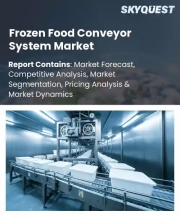
KSA 26.08.31Global Frozen Food Conveyor System Market size was valued at USD 10.0 Million in 2024 and is poised to grow from USD 10.12 Million in 2025 to USD 11.14 Million by 2033, growing at a CAGR of 1.2% during the forecast period (2026-2033).
The global market for frozen food conveyor systems is driven by the need for efficient and reliable transportation, sorting, and packaging of temperature-sensitive products. As the industry evolves, the shift from manual handling to automated stainless-steel modular conveyors has significantly enhanced operational efficiency while reducing costs. This transition has allowed businesses to minimize product loss and optimize throughput, exemplified by successful implementations by leading processors. Furthermore, the integration of advanced sensor-based controls is revolutionizing the sector, enabling real-time temperature monitoring to prevent spoilage and ensure compliance. Companies leveraging Internet-of-Things technology can dynamically adjust conveyor speeds to maintain optimal conditions, further enhancing productivity. These developments not only encourage investment and modernization but also create opportunities for predictive maintenance contracts in the market.
Top-down and bottom-up approaches were used to estimate and validate the size of the Global Frozen Food Conveyor System market and to estimate the size of various other dependent submarkets. The research methodology used to estimate the market size includes the following details: The key players in the market were identified through secondary research, and their market shares in the respective regions were determined through primary and secondary research. This entire procedure includes the study of the annual and financial reports of the top market players and extensive interviews for key insights from industry leaders such as CEOs, VPs, directors, and marketing executives. All percentage shares split, and breakdowns were determined using secondary sources and verified through Primary sources. All possible parameters that affect the markets covered in this research study have been accounted for, viewed in extensive detail, verified through primary research, and analyzed to get the final quantitative and qualitative data.
Global Frozen Food Conveyor System Market Segments Analysis
Global frozen food conveyor system market is segmented by conveyor type, application, food type, end user and region. Based on conveyor type, the market is segmented into Belt Conveyors, Modular Belt Conveyors, Roller Conveyors, Spiral Conveyors, Vibratory Conveyors and Other Conveyor Systems. Based on application, the market is segmented into Processing, Freezing, Packaging and Storage & Distribution. Based on food type, the market is segmented into Meat, Poultry & Seafood, Fruits & Vegetables, Bakery Products, Ready Meals, Dairy Products and Other Frozen Foods. Based on end user, the market is segmented into Food Processing Companies, Cold Storage Facilities and Frozen Food Manufacturers. Based on region, the market is segmented into North America, Europe, Asia Pacific, Latin America and Middle East & Africa.
Driver of the Global Frozen Food Conveyor System Market
The Global Frozen Food Conveyor System market is driven by a growing consumer demand for convenient and nutritious food options that offer prolonged shelf life, leading food manufacturers to implement frozen processing lines. This trend necessitates investment in advanced conveyor systems designed to preserve product quality while functioning under low-temperature conditions. As retailers enhance their frozen food sections to align with customer preferences, manufacturers increasingly seek scalable and dependable equipment to accommodate larger production volumes, further propelling market growth. The convergence of consumer preferences and supply chain optimization fosters a continuous drive for the adoption of innovative frozen food conveyor technologies.
Restraints in the Global Frozen Food Conveyor System Market
The Global Frozen Food Conveyor System market faces significant constraints primarily due to the high initial investment required for specialized machinery, refrigeration systems, and necessary integration services. Many small and medium-sized producers encounter budget limitations that restrict their capacity to fund these extensive projects. Additionally, the perceived financial risks associated with investing in large-scale equipment can hinder timely decision-making, often causing businesses to either delay or reduce their automation efforts. As a result, these elevated cost barriers can inhibit market growth, particularly in areas with limited access to financing, leading companies to consider gradual upgrades instead of complete system overhauls.
Market Trends of the Global Frozen Food Conveyor System Market
The Global Frozen Food Conveyor System market is experiencing a significant shift towards automation-driven modularity as manufacturers seek to enhance operational efficiency and adaptability. This trend is characterized by the adoption of flexible conveyor architectures that can be swiftly reconfigured to meet diverse product dimensions and fluctuating production demands, thereby minimizing changeover downtime. The emergence of plug-and-play components and standardized controls enables frozen food processors to efficiently introduce new product lines while adhering to strict hygiene and reliability standards throughout the cold chain. This modular approach not only supports lean production principles but also facilitates incremental capacity expansion, ensuring compliance with global regulatory requirements.
Table of Contents
Introduction
- Objectives of the Study
- Market Definition & Scope
Research Methodology
- Research Process
- Secondary & Primary Data Methods
- Market Size Estimation Methods
Executive Summary
- Global Market Outlook
- Key Market Highlights
- Segmental Overview
- Competition Overview
Market Dynamics & Outlook
- Macro-Economic Indicators
- Drivers & Opportunities
- Restraints & Challenges
- Supply Side Trends
- Demand Side Trends
- Porters Analysis & Impact
- Competitive Rivalry
- Threat of Substitute
- Bargaining Power of Buyers
- Threat of New Entrants
- Bargaining Power of Suppliers
Key Market Insights
- Key Success Factors
- Market Impacting Factors
- Top Investment Pockets
- Ecosystem Mapping
- Market Attractiveness Index 2025
- PESTEL Analysis
- Regulatory Landscape
Global Frozen Food Conveyor System Market Size by Conveyor Type & CAGR (2026-2033)
- Market Overview
- Belt Conveyors
- Modular Belt Conveyors
- Roller Conveyors
- Spiral Conveyors
- Vibratory Conveyors
- Other Conveyor Systems
Global Frozen Food Conveyor System Market Size by Application & CAGR (2026-2033)
- Market Overview
- Processing
- Freezing
- Packaging
- Storage & Distribution
Global Frozen Food Conveyor System Market Size by Food Type & CAGR (2026-2033)
- Market Overview
- Meat
- Poultry & Seafood
- Fruits & Vegetables
- Bakery Products
- Ready Meals
- Dairy Products
- Other Frozen Foods
Global Frozen Food Conveyor System Market Size by End User & CAGR (2026-2033)
- Market Overview
- Food Processing Companies
- Cold Storage Facilities
- Frozen Food Manufacturers
Global Frozen Food Conveyor System Market Size & CAGR (2026-2033)
- North America (Conveyor Type, Application, Food Type, End User)
- US
- Canada
- Europe (Conveyor Type, Application, Food Type, End User)
- Germany
- Spain
- France
- UK
- Italy
- Rest of Europe
- Asia Pacific (Conveyor Type, Application, Food Type, End User)
- China
- India
- Japan
- South Korea
- Rest of Asia-Pacific
- Latin America (Conveyor Type, Application, Food Type, End User)
- Mexico
- Brazil
- Rest of Latin America
- Middle East & Africa (Conveyor Type, Application, Food Type, End User)
- GCC Countries
- South Africa
- Rest of Middle East & Africa
Competitive Intelligence
- Top 5 Player Comparison
- Market Positioning of Key Players, 2025
- Strategies Adopted by Key Market Players
- Recent Developments in the Market
- Company Market Share Analysis, 2025
- Company Profiles of All Key Players
- Company Details
- Product Portfolio Analysis
- Company's Segmental Share Analysis
- Revenue Y-O-Y Comparison (2023-2025)
Key Company Profiles
- Interroll Holding AG
- Company Overview
- Business Segment Overview
- Financial Updates
- Key Developments
- Daifuku Co., Ltd.
- Company Overview
- Business Segment Overview
- Financial Updates
- Key Developments
- Dorner Mfg. Corp.
- Company Overview
- Business Segment Overview
- Financial Updates
- Key Developments
- FlexLink AB
- Company Overview
- Business Segment Overview
- Financial Updates
- Key Developments
- Regal Rexnord Corporation
- Company Overview
- Business Segment Overview
- Financial Updates
- Key Developments
- Intralox, L.L.C.
- Company Overview
- Business Segment Overview
- Financial Updates
- Key Developments
- Wire Belt Company of America
- Company Overview
- Business Segment Overview
- Financial Updates
- Key Developments
- Dynamic Conveyor Corporation
- Company Overview
- Business Segment Overview
- Financial Updates
- Key Developments
- Ashworth Bros., Inc.
- Company Overview
- Business Segment Overview
- Financial Updates
- Key Developments
- SpanTech LLC
- Company Overview
- Business Segment Overview
- Financial Updates
- Key Developments
- FMH Conveyors LLC
- Company Overview
- Business Segment Overview
- Financial Updates
- Key Developments
- SSI SCHAEFER Group
- Company Overview
- Business Segment Overview
- Financial Updates
- Key Developments
- Mecalux, S.A.
- Company Overview
- Business Segment Overview
- Financial Updates
- Key Developments
- BEUMER Group GmbH & Co. KG
- Company Overview
- Business Segment Overview
- Financial Updates
- Key Developments
- TGW Logistics Group GmbH
- Company Overview
- Business Segment Overview
- Financial Updates
- Key Developments
- Bastian Solutions, LLC
- Company Overview
- Business Segment Overview
- Financial Updates
- Key Developments
- Nercon Engineering & Manufacturing, Inc.
- Company Overview
- Business Segment Overview
- Financial Updates
- Key Developments
- Montech AG
- Company Overview
- Business Segment Overview
- Financial Updates
- Key Developments
- Conveyor Units Limited
- Company Overview
- Business Segment Overview
- Financial Updates
- Key Developments
- Apollo Group B.V.
- Company Overview
- Business Segment Overview
- Financial Updates
- Key Developments