

|
시장보고서
상품코드
2099809
미국의 생분해성 방출 조절 비료 시장 : 시장 점유율 분석, 업계 동향 및 통계, 성장 예측(2026-2031년)United States Biodegradable Controlled-Release Fertilizer - Market Share Analysis, Industry Trends & Statistics, Growth Forecasts (2026 - 2031) |
||||||
 Mordor Intelligence
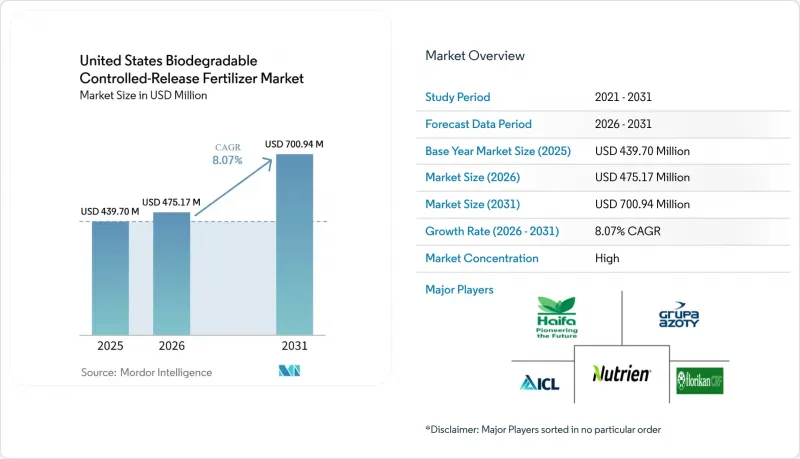
Mordor Intelligence에 의하면, 미국의 생분해성 방출 조절 비료 시장 규모는 2025년에 4억 3,970만 달러로 평가되었고, 2026년 4억 7,520만 달러에서 2031년까지 7억 90만 달러에 이를 것으로 예측되며, 예측 기간 CAGR은 8.1%로 성장이 전망됩니다(2026-2031년).
본 보고서는 작물 유형별(곡물, 콩류·유지종자, 상업용 작물, 과일 및 채소, 잔디 및 관상용 식물)별로 분류되어 있습니다. 시장 전망은 금액(달러) 및 수량(메트릭 톤)으로 제시되어 있습니다.
미국의 생분해성 방출 조절 비료 시장 동향 및 인사이트
연작 농업에서의 정밀 농업 도입 확대
가변 시비 시스템 및 센서를 통한 영양분 배분으로 인해, 미국의 생분해성 방출 조절 비료 시장은 주류 곡물 재배에서 점점 더 중요한 위치를 차지하고 있습니다. 주요 상품 작물 사이에서 정밀 농업 기술의 도입이 대폭 확대되면서, 데이터 기반의 영양 관리를 뒷받침하는 견고한 도입 기반이 형성되고 있습니다. 방출 조절 비료는 한 번의 작업으로 시비를 완료하는 전략과 잘 부합하며, 시비 중복을 줄이고 낭비를 최소화하며 시비 시기의 정확도를 높이는 데 도움이 됩니다. 이러한 적합성은 무경운 재배나 작업 횟수를 줄이는 시스템에서 특히 유용하며, 이러한 시스템에서 생산자들은 밭에 반복적으로 비료를 시비하지 않고도 시즌 내내 안정적인 영양 공급을 원합니다. 또한 정밀 가이던스는 일반적으로 비효율성이 가장 높은 밭 가장자리에서의 비료 손실을 억제하는 데에도 도움이 되며, 관리가 철저한 농장에서도 방출 조절 제품의 가치를 쉽게 입증할 수 있게 해줍니다. 옥수수나 대두 재배 체계에서 정밀 농업이 더욱 널리 채택됨에 따라, 소매업체들은 방출 조절 비료를 틈새 제품이나 특수한 솔루션으로 포지셔닝하기보다는 표준 시비 프로그램에 통합하는 경향이 강해지고 있습니다.
주 정부의 유출 규제 강화로 영양소 손실 대책이 엄격해짐
각 주의 영양소 유출 규제로 인해, 미국의 생분해성 방출 조절 비료 시장은 순수하게 농업학적 판단에 기반한 자발적인 개선이라기보다는 규제 준수와 밀접하게 연계된 카테고리로 변화하고 있습니다. 아이오와주는 2025년 2월 ‘영양분 감축 전략’을 개정하여, 현지 상황에 따라 질소 시비를 최적화할 수 있는 보다 공식적인 체계를 생산자들에게 제공했습니다. 정책 업데이트와 주 정부 프로그램을 통해 질소 이용을 최적화하기 위한 체계가 명확해지는 한편, 인센티브 기반 이니셔티브로 인해 효율성 향상 제품 도입의 경제적 이점이 커지고 있습니다. 이러한 조치들은 생산자들이 영양분 시비 관행을 환경 성능 기준에 부합하도록 유도하고 있습니다. 동시에 유역 지역에 대해 영양염류 감축 목표 달성을 요구하는 압력이 지속됨에 따라, 침출 및 유출을 억제하는 솔루션의 필요성이 더욱 높아지고 있습니다. 지역 규제는 농업용 및 비농업용을 불문하고 사용되는 비료의 방출 조절 질소 함량에 대한 최소 요건을 규정함으로써 이러한 추세를 더욱 강화하고 있습니다. 이러한 정책들은 특정 제품 유형을 의무화하지는 않지만, 일관되게 영양분 이용 효율 향상을 중시하며 기존 시비 방법에 대한 의존도를 낮추고 있습니다. 그 결과, 규제 강화는 미국 내 생분해성 방출 조절 비료 시장의 확산을 뒷받침하는 단기적인 주요 촉진요인으로 계속 작용하고 있습니다.
기존 요소와의 가격 차이
미국 생분해성 방출 조절 비료 시장의 가장 큰 장벽은 여전히 기존 요소와 비교했을 때의 가격 프리미엄입니다. 공급 차질과 광범위한 지정학적 불확실성으로 인한 질소 비료 비용 상승은 생산자의 예산에 대한 압박을 가중시키고, 투입 비용 상승에 대한 민감도를 높이고 있습니다. 이 문제는 대규모 농업 지역에서 특히 두드러집니다. 이러한 지역에서는 생산자들이 에이커당 수익을 면밀히 평가하며, 모든 투입 자재를 저비용의 범용 비료와 비교 검토하고 있습니다. 방출 조절 제품은 효율 향상, 영양분 손실 감소, 시비 횟수 절감 등의 장점이 있지만, 이러한 장점은 단순한 초기 가격 비교에는 반드시 반영되지 않습니다. 주 및 연방 차원의 인센티브 프로그램은 비용 차이의 일부를 상쇄하는 데 도움이 되지만, 초기 구매 장벽을 완전히 제거할 수는 없습니다. 기존 비료가 더 간편하고 저렴한 선택지로 남아 있는 한, 가격에 대한 거부감이 미국 내 생분해성 방출 조절 비료의 더 광범위한 보급을 계속 제한할 가능성이 높습니다.
부문 분석
2025년에는 곡물 및 시리얼이 시장의 86.9%를 차지했으며, 이 부문은 작물별 기준으로 미국 생분해성 방출 조절 비료 시장에서 가장 큰 점유율을 기록했습니다. 이 부문의 규모는 옥수수의 광대한 재배 면적과, 줄기 작물의 수익성 및 규제 준수에 있어 질소 관리가 수행하는 핵심적인 역할에 기인합니다. 광대한 재배 면적에서 피복 비료의 채택이 소폭 증가하는 것만으로도 전체적으로 판매량의 대폭적인 증가로 이어질 수 있습니다. 또한, 조사에 따르면 방출 조절 질소 비료는 곡물 작물의 영양분 이용 효율과 수확량 향상에 기여하고 있어, 곡물 재배 시스템 전반에 걸친 보급을 촉진하고 있습니다. 콩류 및 유지종자의 경우, 제한된 재배 기간 동안 시비 횟수를 줄일 수 있다는 이점이 있는 반면, 상업용 작물이나 잔디에 시비할 때는 시기와 노동 효율이 극히 중요한 상황에서 보다 일관된 이용 사례가 나타납니다.
과일 및 채소 시장은 2031년까지 연평균 성장률(CAGR) 12.0%를 나타낼 것으로 예측되며, 이는 미국 생분해성 방출 조절 비료 시장에서 가장 성장세가 두드러지는 작물 부문입니다. 이러한 성장은 베리류, 감귤류, 견과류, 신선 채소 분야에서 에이커당 수익성이 높아지고 있음을 반영하며, 이러한 분야에서는 적절한 시비 시기의 가치를 수익으로 전환하기 쉬운 특징이 있습니다. 영양소 공급 시기를 보다 적절하게 관리할 수 있다는 점은 작물 품질 향상과 수익 증대로 직결되므로, 전문 농가에게 있어 고품질 비료 솔루션의 경제적 실현 가능성이 높아집니다. 또한, 이 부문은 지속가능성 목표 및 효율적인 물 이용과도 밀접하게 연관되어 있어, 전문 원예 분야에서의 매력이 높아지고 있습니다. 곡물이 규모 면에서는 여전히 지배적이지만, 과일 및 채소 분야의 높은 성장률은 공급업체에게 줄 재배 작물로 확산이 더욱 진행되기 전에 생분해성 비료의 채택을 확대할 수 있는 수익성 높은 길을 제공합니다.
기타 혜택 :
- 엑셀 형식 시장 예측(ME) 시트
- 3개월간의 애널리스트 지원
자주 묻는 질문
목차
제1장 서론
제2장 조사 방법
제3장 주요 요약
제4장 시장 구도
제5장 시장 규모 및 성장 예측
제6장 경쟁 구도
제7장 시장 기회 및 향후 동향
AJY 26.08.11According to Mordor Intelligence, the United States biodegradable controlled-release fertilizer market size was valued at USD 439.7 million in 2025 and is estimated to grow from USD 475.2 million in 2026 to reach USD 700.9 million by 2031, at a CAGR of 8.1% during the forecast period (2026-2031).
This report is Segmented by Crop Type (Grains and Cereals, Pulses and Oilseeds, Commercial Crops, Fruits and Vegetables, and Turfs and Ornamentals). The Market Forecasts are Provided in Terms of Value (USD) and Volume in (Metric Tons).
United States Biodegradable Controlled-Release Fertilizer Market Trends and Insights
Rising Precision Agriculture Adoption in Row Crop Farming
Variable-rate systems and sensor-guided nutrient placement are making the United States biodegradable controlled-release fertilizer market increasingly relevant to mainstream grain farming. Adoption of precision technologies has expanded significantly across major commodity crops, creating a strong installed base that supports data-driven nutrient management. Controlled-release fertilizers align well with single-pass application strategies, helping reduce overlap, minimize waste, and improve timing accuracy. This alignment is particularly beneficial in no-till and reduced-pass systems, where growers seek season-long nutrient performance without repeated field applications. Precision guidance also helps limit fertilizer loss at field edges, where inefficiencies are typically highest, making the value of controlled-release products easier to justify even in well-managed operations. As precision agriculture becomes more widely adopted in corn and soybean systems, retailers are increasingly integrating controlled-release fertilizers into standard fertility programs rather than positioning them as niche or specialty solutions.
State Runoff Compliance Tightening Nutrient Loss Controls
State nutrient-loss rules are turning the United States biodegradable controlled-release fertilizer market into a more compliance-linked category rather than a purely discretionary agronomic upgrade. Iowa updated its Nutrient Reduction Strategy in February 2025, providing growers with a more formal framework for optimizing nitrogen decisions based on local conditions. Policy updates and state programs are providing clearer frameworks for optimizing nitrogen use, while incentive-based initiatives are improving the economic case for adopting efficiency-enhancing products. These measures are encouraging growers to align nutrient application practices with environmental performance standards. At the same time, continued pressure on watershed regions to meet nutrient reduction targets is reinforcing the need for solutions that limit leaching and runoff. Local regulations are further strengthening this trend by setting minimum requirements for slow-release nitrogen content in fertilizers used across agricultural and non-agricultural applications. While these policies do not mandate specific product types, they consistently favor higher nutrient-use efficiency and reduce reliance on conventional applications. As a result, regulatory tightening remains a key near-term driver supporting adoption in the United States biodegradable controlled-release fertilizer market.
Premium Price Gap Versus Conventional Urea
The biggest barrier in the United States biodegradable controlled-release fertilizer market remains the price premium compared with conventional urea. Rising nitrogen fertilizer costs, driven by supply disruptions and broader geopolitical uncertainties, have increased pressure on grower budgets and heightened sensitivity to higher input costs. This challenge is particularly pronounced in large-scale farming regions, where producers closely evaluate per-acre returns and benchmark all inputs against lower-cost commodity fertilizers. Although controlled-release products offer benefits such as improved efficiency, reduced nutrient loss, and fewer application passes, these advantages are not always reflected in simple upfront price comparisons. While incentive programs at the state and federal levels can help offset some of the cost difference, they do not fully eliminate the initial purchase barrier. As long as conventional fertilizers remain the more straightforward, low-cost option, price resistance is likely to continue limiting broader adoption of biodegradable controlled-release fertilizers in the United States.
Other drivers and restraints analyzed in the detailed report include:
- Biodegradable Coating Commercialization Reduces Price Barriers
- Sun Belt Turf and Ornamental Demand is Expanding Premium Fertilizer Usage
- Imported Resin and Feedstock Dependence
For complete list of drivers and restraints, kindly check the Table Of Contents.
Segment Analysis
Grains and cereals accounted for 86.9% of the market in 2025, which gave this segment the largest United States biodegradable controlled-release fertilizer market share by crop type. The segment's scale is tied to the sheer acreage base of corn and the central role of nitrogen management in row-crop profitability and compliance. Even modest increases in the adoption of coated fertilizer across large crop areas can translate into significant overall volume growth. Research also indicates that controlled-release nitrogen fertilizers improve nutrient-use efficiency and yield performance in cereal crops, supporting broader adoption across grain systems. Pulses and oilseeds benefit from reduced application passes during tight planting windows, while commercial crops and turf applications provide more consistent use cases where timing and labor efficiency are critical.
Fruits and vegetables are projected to grow at a 12.0% CAGR through 2031, which makes them the fastest-growing crop segment in the United States biodegradable controlled-release fertilizer market. That growth reflects stronger per-acre economics in berries, citrus, tree nuts, and fresh vegetables, where the value of better nutrient timing is easier to monetize. The ability to better manage nutrient timing directly translates into improved crop quality and higher returns, making premium fertilizer solutions more economically viable for specialty growers. This segment also aligns closely with sustainability goals and efficient water use, increasing its appeal in professional horticulture. While grains remain dominant in scale, the higher growth rate in fruits and vegetables provides suppliers with a profitable pathway to expand biodegradable fertilizer adoption before wider penetration in row crops.
Complete Report Scope:
- By Crop Type
- Grains and Cereals
- Pulses and Oilseeds
- Commercial Crops
- Fruits and Vegetables
- Turf and Ornamentals
List of Companies Covered in this Report:
- Nutrien Ltd.
- ICL Group Ltd.
- Haifa Group
- Grupa Azoty S.A. (COMPO EXPERT)
- Florikan ESA LLC (Profile Products LLC)
- The Scotts Miracle-Gro Company
- J.R. Simplot Company
- Helena Agri-Enterprises, LLC
- The Mosaic Company
- Koch Fertilizer LLC (Koch Industries, Inc.)
- Timac Agro USA (Groupe Roullier)
- Yara International ASA
- Pursell Fertilizer
- AgroLiquid
- Kingenta Ecological Engineering Group Co. Ltd.
Additional Benefits:
- The market estimate (ME) sheet in Excel format
- 3 months of analyst support
TABLE OF CONTENTS
1 Introduction
- 1.1 Study Assumptions and Market Definition
- 1.2 Scope of the Study
2 Research Methodology
3 Executive Summary
4 Market Landscape
- 4.1 Market Overview
- 4.2 Market Drivers
- 4.2.1 Rising precision agriculture adoption in row crop farming
- 4.2.2 State runoff compliance, tightening nutrient loss controls
- 4.2.3 Biodegradable coating commercialization reduces price barriers
- 4.2.4 Sun Belt turf and ornamental demand is expanding premium fertilizer usage
- 4.2.5 USDA climate-smart incentives supporting nitrogen efficiency
- 4.2.6 Municipal and institutional sustainability procurement is in increasing demand
- 4.3 Market Restraints
- 4.3.1 Premium price gap versus conventional urea
- 4.3.2 Imported resin and feedstock dependence
- 4.3.3 Limited independent grower awareness in the corn belt
- 4.3.4 Return on investment sensitivity under commodity price volatility
- 4.4 Regulatory Landscape
- 4.5 Technological Outlook
- 4.6 Porter's Five Forces Analysis
- 4.6.1 Bargaining Power of Buyers
- 4.6.2 Bargaining Power of Suppliers
- 4.6.3 Threat of New Entrants
- 4.6.4 Threat of Substitutes
- 4.6.5 Intensity of Competitive Rivalry
5 Market Size and Growth Forecasts (Value and Volume)
- 5.1 By Crop Type
- 5.1.1 Grains and Cereals
- 5.1.2 Pulses and Oilseeds
- 5.1.3 Commercial Crops
- 5.1.4 Fruits and Vegetables
- 5.1.5 Turf and Ornamentals
6 Competitive Landscape
- 6.1 Market Concentration
- 6.2 Strategic Moves
- 6.3 Market Share Analysis
- 6.4 Company Profiles (Includes Global Level Overview, Market Level Overview, Core Segments, Financials as Available, Strategic Information, Market Rank/Share, Products and Services, Recent Developments)
- 6.4.1 Nutrien Ltd.
- 6.4.2 ICL Group Ltd.
- 6.4.3 Haifa Group
- 6.4.4 Grupa Azoty S.A. (COMPO EXPERT)
- 6.4.5 Florikan ESA LLC (Profile Products LLC)
- 6.4.6 The Scotts Miracle-Gro Company
- 6.4.7 J.R. Simplot Company
- 6.4.8 Helena Agri-Enterprises, LLC
- 6.4.9 The Mosaic Company
- 6.4.10 Koch Fertilizer LLC (Koch Industries, Inc.)
- 6.4.11 Timac Agro USA (Groupe Roullier)
- 6.4.12 Yara International ASA
- 6.4.13 Pursell Fertilizer
- 6.4.14 AgroLiquid
- 6.4.15 Kingenta Ecological Engineering Group Co. Ltd.


