

|
시장보고서
상품코드
2116328
소매 3PL : 시장 점유율 분석, 업계 동향 및 통계, 성장 예측(2026-2031년)Retail 3PL - Market Share Analysis, Industry Trends & Statistics, Growth Forecasts (2026 - 2031) |
||||||
 Mordor Intelligence
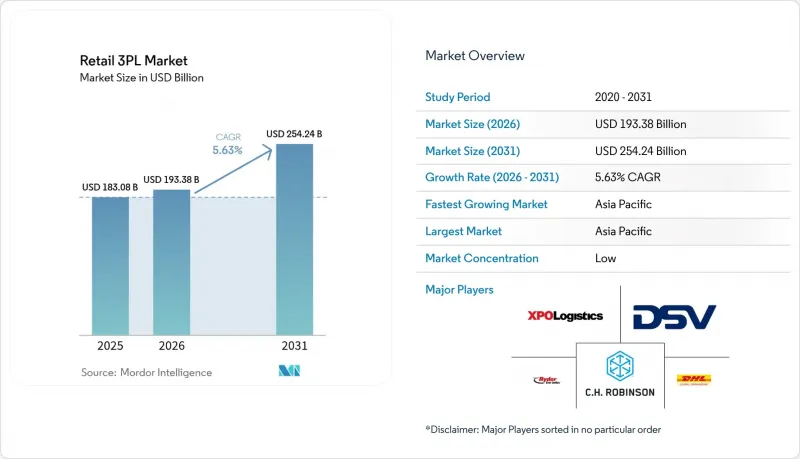
Mordor Intelligence에 의하면, 소매 3PL 시장 규모는 2025년에 1,830억 8,000만 달러로 평가되었습니다. 2026년 1,933억 8,000만 달러에서 성장하여 2031년까지 2,542억 4,000만 달러에 이를 것으로 예상되며, 예측 기간(2026-2031년) CAGR은 5.63%를 나타낼 전망입니다.
본 보고서는 서비스별(국내 운송 관리 등), 제품별(식품 및 음료, 패션·라이프스타일 등), 유통 채널별(슈퍼마켓 및 하이퍼마켓·편의점·백화점, 온라인 등), 물류 모델별(애셋 라이트, 애셋 헤비 등), 지역별(북미, 아시아태평양 등)로 분류되어 있습니다. 시장 전망은 금액(달러) 기준으로 제시되어 있습니다.
세계의 소매 3PL 시장 동향 및 인사이트
온라인 패스트 패션 분야의 반품 급증
온라인 패션 소매 업계에서 ‘반복을 거듭하는 반품 고객’과 관대한 반품 정책의 존재가 창고 워크플로우와 재고 평가에 변동을 초래하고 있습니다. 전미소매협회(NRF)에 따르면, 2024년 소매 업계 전체의 반품 총액은 8,900억 달러에 달하며, 그중에서도 패션 분야가 가장 큰 영향을 받았습니다. 현재 반품에 드는 비용은 초기 판매 가격의 50% 이상을 차지하고 있으며, 소매업체들은 회수 및 재활용을 전문으로 하는 3PL 업체에 이 업무를 위탁하고 있습니다. 기술을 활용한 리버스 로지스틱스 플랫폼에는 벤처 캐피털이 지속적으로 유입되고 있으며, DHL Supply Chain이 2025년 1월 Inmar Supply Chain Solutions를 인수함으로써 북미 최대의 반품 처리 업체로서의 입지를 확고히 했습니다. 자산을 최소화한 3PL은 레거시 네트워크의 제약 없이 클라우드 기반 플랫폼을 도입할 수 있기 때문에 이 틈새 시장에서 빠르게 규모를 확대하고 있으며, 회수율과 사이클 타임의 향상을 실현하고 있습니다.
마이크로 풀필먼트 센터 도입
식료품 체인 및 퀵 커머스 전문 기업들은 도심 지역의 매장 내부 또는 그 옆에 5,000-1만 제곱피트 규모의 자동화 모듈을 설치함으로써 라스트 마일 거리를 단축하고 있습니다. 하이-비(Hy-Vee)는 테이크오프 테크놀로지스(Takeoff Technologies)와 제휴하고 있으며, 아마존은 일부 홀푸드(Whole Foods) 매장에서 풀필(Fulfil)의 로봇 기술을 시범 도입하고 있습니다. 마이크로 풀필먼트 모델은 피킹 거리 단축, 배송 거리 단축, 진열대 재고율 향상을 통해 단위당 경제성을 높입니다. 3PL(제3자 물류) 사업자에게 마이크로 풀필먼트는 자동화 엔지니어링, 유지보수, 신속한 보충 운송을 융합한 새로운 서비스 라인이 됩니다. 조기 도입 기업들의 보고에 따르면, 사이클 타임이 30% 이상 단축되고 생산성이 두 자릿수 증가를 기록했으며, 이 모델은 네트워크 재설계를 확대하는 데 촉매 역할을 하고 있습니다.
인력 부족과 임금 상승
2030년까지 8,500만 명의 노동력 부족이 예상되며, 이는 운영 비용을 상승시키고 이익률을 압박하고 있습니다. 창고 운영 사업자들로부터는 인력 확보가 73% 부족하다는 보고가 있습니다. 처리 능력을 유지하기 위해 3PL 각사는 자율 주행 로봇, 노무 관리 소프트웨어, 그리고 시간당 생산성을 향상시키는 교차 교육 프로그램을 도입하고 있습니다. 그러나 급격한 임금 상승은 여전히 낮은 이익률을 보이는 서비스 분야의 수익성을 잠식하고 있으며, 서비스 제공업체들은 계약 재협상을 강요당하고 추가 비용을 전가할 수밖에 없는 상황에 처해 있습니다.
부문별 분석
소매업체들이 조달처를 다각화하고 마켓플레이스에서의 도달 범위를 확대함에 따라, 국제 운송 관리는 연평균 성장률(CAGR) 6.84%로 성장하고 있으며, 이는 소매 3PL 시장 전체의 성장률을 상회하고 있습니다. 이 서비스 분야는 최적화된 항공 화물 운송, 관세 관리 및 복합 운송 경로에 의존하며, 브랜드가 패션 상품의 리드 타임을 단축하거나 판촉 기간 중 수요가 급증할 때 전자제품 재고를 보충할 수 있도록 지원합니다. UPS는 멕시코와 미국 간 국경을 넘는 특송 운송 역량을 강화하기 위해 에스타페타(Estafeta) 인수를 추진하고 있습니다. 시간 지정 배송에 대한 수요가 증가함에 따라 3PL 기업들은 디지털 화물 마켓플레이스, 지능형 경로 설정, 그리고 탄소 효율이 높은 운송 수단으로의 전환을 통합해야 하는 압박을 받고 있습니다.
국내 운송 관리는 확립된 오프라인 매장 네트워크와 대량 소포 물류를 통해 2025년 매출의 47.40%를 계속 차지했습니다. 아마존은 2024년에 90억 개의 당일 또는 익일 배송 소포를 발송하여 미국 내 140개 대도시권을 커버하며 새로운 서비스 기준을 세웠습니다. 지속적인 네트워크 밀집화, 예측에 기반한 재고 배치, 지역별 분류 센터 설치를 통해 라스트 마일 거리가 단축되고 소포 1개당 비용이 절감되고 있습니다. 국내 서비스에서 소매 3PL 시장 규모는 계속해서 확대될 전망이지만, 국제 물류 흐름이 가속화되고 옴니채널 모델이 종단 간(end-to-end) 커버리지를 요구하게 됨에 따라 그 점유율은 축소될 가능성이 있습니다.
2025년 매출액 중 식품 및 음료가 33.55%를 차지했습니다. 콜드체인 규정 준수, 엄격한 유통기한, 그리고 다온도대 취급에는 전문적인 운송 및 창고 관리가 필수적이며, 이 부문은 안정성과 회복력이 뛰어납니다. 블록체인 시범 프로젝트를 통해 ‘농장에서 식탁까지’의 추적성이 확보되고, 리콜에 소요되는 시간이 단축되며, 폐기물이 감소하고 있습니다. 식료품 소매업체들은 3PL 사업자를 대상으로 시설 인증 취득, IoT 센서 통합, 예측적 품질 저하 분석 도입을 추진하고 있어 기술이 일상 업무에 더욱 깊이 통합되고 있습니다.
패션·라이프스타일 분야는 온라인 판매의 급속한 성장과 반품량 증가를 배경으로 연평균 성장률(CAGR) 6.35%로 가장 빠르게 성장하고 있습니다. 각 브랜드가 급속한 트렌드 변화에 대응하기 위해 프린트, 자수 또는 소량 생산을 사내에서 직접 수행하는 움직임이 확산되면서 수직 통합이 탄력을 받고 있습니다. GXO가 취급하는 반품 상품의 96%가 재고로 재투입되어 이익률을 유지하고 있기 때문에 패션 반품 처리에 특화된 소매 3PL 시장 규모는 확대되고 있습니다. 중고 의류 마켓플레이스를 포함한 순환형 경제 모델에서는 세밀한 등급 분류, 소독, 재판매와 같은 워크플로가 요구되고 있으며, 선진적인 3PL 기업들은 현재 이를 풀필먼트 프로세스에 통합하고 있습니다.
지역별 분석
아시아태평양은 2025년에 37.60%의 점유율로 1위를 차지했으며 연평균 성장률(CAGR) 7.34%로 성장을 지속하고 있습니다. 중국의 165개 전자상거래 시범 구역에서는 통관 지연이 대폭 감소했으며, 인도에서는 모바일 웹 트래픽이 전체 세션 수의 60%를 넘어섬에 따라 옴니채널 도입이 가속화되고 있습니다. 동남아시아의 물류 회랑에서는 스마트 분류 허브 및 보세·면세 단지 투자가 활발해지고 있습니다. 정부의 우대 조치와 중산층의 소비 확대가 소포 처리량의 지속적인 두 자릿수 성장을 뒷받침하고 있으며, 이 지역은 전 세계 3PL 사업자들에게 전략적으로 필수적인 시장이 되었습니다. 아시아태평양의 소매 3PL 시장 규모는 전자제품 수출 및 아시아 역내 크로스보더 전자상거래의 확대에 따라 계속해서 성장하고 있습니다.
북미는 여전히 기술 집약적이고 혁신 주도형입니다. 아마존이 마켓플레이스를 주도하는 한편, XPO는 주요 경쟁사들이 시장에서 철수한 것을 계기로 소량 화물 운송(LTL) 운송 능력을 확대되고 있습니다. 인건비 급등이 자동화 도입을 촉진하고 있으며, Symbotic사는 월마트의 전체 네트워크에 ‘상품에서 사람으로(GTP)’ 시스템을 도입하여 50억 달러 규모의 수주 잔고를 쌓아 올렸습니다. 캘리포니아주의 환경 규제로 인해 전기 드레지 차량의 도입이 촉진되고 있으며, 3PL 기업들은 충전소와 재생 에너지를 활용한 물류 센터에 대한 투자를 추진하고 있습니다.
유럽에서는 탄소 중립을 위한 규제 추진이 진행되고 있으며, 브렉시트 이후 국경을 넘는 소포 운송에 대한 규정 준수 체계 정비도 지속적으로 이루어지고 있습니다. 프로로지스는 옥상 태양광 발전 시설을 대규모로 도입하고 있으며, 주요 운송사들은 화물 운송량이 많은 노선에서 수소 트럭의 시범 운행을 진행하고 있습니다. 도시 지역의 부동산 임대료 급등으로 인해, 입방미터당 이용률을 극대화하는 다층 창고 및 로봇 시스템 도입이 진행되고 있습니다. 남미, 중동 및 아프리카는 규모는 작지만 전자상거래가 급속히 확산되고 있으며, 이에 따라 전 세계 3PL 기업들은 자산 경량형 합작 투자, 현지 파트너십, 그리고 라스트 마일 분야에서의 표적 인수를 추진하고 있습니다.
기타 혜택 :
- 엑셀 형식 시장 예측(ME) 시트
- 3개월간의 애널리스트 지원
자주 묻는 질문
목차
제1장 서론
제2장 조사 방법
제3장 개요
제4장 시장 구도
제5장 시장 규모 및 성장 예측
제6장 경쟁 구도
제7장 시장 기회 및 향후 전망
KTH 26.08.31According to Mordor Intelligence, the retail 3PL market size was valued at USD 183.08 billion in 2025 and estimated to grow from USD 193.38 billion in 2026 to reach USD 254.24 billion by 2031, at a CAGR of 5.63% during the forecast period (2026-2031).
This report is Segmented by Service (Domestic Transportation Management, and More), by Product (Foods and Beverages, Fashion and Lifestyle and More), by Distribution Channel (Super/Hyper/Convenience and Department Stores, Online, and More), by Logistics Model (Asset-Light, Asset Heavy and More) and by Geography (North America, Asia-Pacific and More). The Market Forecasts are Provided in Terms of Value (USD).
Global Retail 3PL Market Trends and Insights
Surge in Online Fast-Fashion Returns
Serial returners and generous return policies in online fashion retail create flux in warehouse workflows and inventory valuation. The National Retail Federation states that total retail returns hit USD 890 billion in 2024, with fashion the most affected segment. Returns now cost more than 50% of the original sales price, prompting retailers to shift the task to 3PLs that specialise in reclamation and refurbishment. Venture capital keeps flowing into technology-enabled reverse-logistics platforms, and DHL Supply Chain's January 2025 acquisition of Inmar Supply Chain Solutions positions it as North America's largest returns processor. Asset-light 3PLs scale swiftly in this niche because they can deploy cloud-based platforms without legacy network constraints, improving recovery rates and cycle time.
Adoption of Micro-Fulfilment Centers
Grocery chains and quick-commerce specialists compress last-mile distances by embedding 5,000-10,000 sq ft automated modules inside or beside urban stores. Hy-Vee partners with Takeoff Technologies, while Amazon pilots Fulfil's robotics at select Whole Foods sites. The micro-fulfilment model trims unit economics: shorter picks, lower delivery miles, and higher on-shelf availability. For 3PLs, micro-fulfilment adds a new service line that blends automation engineering, maintenance, and rapid-replenishment transport. Early adopters report cycle-time reductions exceeding 30% and double-digit productivity gains, making the model a catalyst for wider network redesign.
Labour Shortages & Wage Inflation
A projected 85 million-worker gap by 2030 raises operating costs and compresses margins. Warehouse operators report a 73% labour-availability shortfall. To maintain throughput, 3PLs deploy autonomous mobile robots, labour-management software, and cross-training programs that raise productivity per hour. However, rapid wage escalation still erodes profitability in low-margin service lines, forcing providers to renegotiate contracts and pass through surcharges.
Other drivers and restraints analyzed in the detailed report include:
- Cross-Border E-commerce Platforms Fueling Bonded Warehousing
- Renewable-Energy-Powered Warehouses
- Cyber-security Risk From API-Integrated Networks
For complete list of drivers and restraints, kindly check the Table Of Contents.
Segment Analysis
International Transportation Management accelerates at a 6.84% CAGR, outstripping overall retail 3PL market growth as retailers diversify sourcing and expand marketplace reach. This service line relies on optimised airfreight, duty management, and multimodal routing, helping brands shorten fashion lead times and replenish electronics during promotional spikes. UPS moves to acquire Estafeta to bolster cross-border express capacity between Mexico and the United States. The heightened demand for time-definite delivery pushes 3PLs to integrate digital freight marketplaces, intelligent routing, and carbon-efficient modal shifts.
Domestic Transportation Management still accounts for 47.40% of 2025 revenue, thanks to entrenched brick-and-mortar networks and high-volume parcel flows. Amazon shipped 9 billion same- or next-day packages in 2024, covering 140 US metro areas and setting new service benchmarks. Continuous network densification, predictive inventory placement, and regional sort centres shorten final-mile distance and lower per-parcel cost. The retail 3PL market size for domestic services will continue growing, yet its share may erode as international flows accelerate and omnichannel models demand end-to-end coverage.
Food & Beverages holds 33.55% of the 2025 revenue. Cold-chain compliance, stringent expiry windows, and multi-temperature handling warrant specialised transport and warehousing, making this segment sticky and resilient. Blockchain pilots trace farm-to-fork provenance, cutting recall time and limiting waste. Grocery retailers push 3PLs to certify facilities, integrate IoT sensors, and deploy predictive spoilage analytics, embedding technology deeper into daily operations.
Fashion & Lifestyle grows fastest at 6.35% CAGR, riding booming online sales and high return volumes. Vertical integration gains traction as brands internalise printing, embroidery, or micro-batch manufacturing to meet rapid trend cycles. The retail 3PL market size dedicated to fashion returns processing widens because 96% of returned items handled by GXO re-enter inventory, preserving margin. Circular-economy models, including second-hand apparel marketplaces, demand meticulous grading, sanitising, and re-listing workflows that sophisticated 3PLs now embed into fulfilment logic.
Complete Report Scope:
- By Service
- Domestic Transportation Management
- Roadways
- Railways
- Airways
- Waterways
- International Transportation Management
- Roadways
- Railways
- Airways
- Waterways
- Value-Added Warehousing and Distribution (VAWD)
- Domestic Transportation Management
- By Product
- Foods and Beverages
- Personal and Household Care
- Fashion and Lifestyle (accessories, apparel, footwear)
- Furniture
- Electronics and Household Appliances
- Other Products
- By Distribution Channel
- Super/Hyper/Convenience and Department Stores
- Specialty Stores
- Online
- Other Channels
- By Logistics Model
- Asset-Light (Management-Based)
- Asset-Heavy (Own Fleet and Warehouses)
- Hybrid
- By Region
- North America
- United States
- Canada
- Mexico
- South America
- Brazil
- Argentina
- Chile
- Rest of South America
- Europe
- Germany
- United Kingdom
- France
- Spain
- Italy
- Netherlands
- Russia
- Rest of Europe
- Asia-Pacific
- China
- India
- Japan
- South Korea
- Singapore
- Vietnam
- Indonesia
- Australia
- Rest of Asia-Pacific
- Middle East
- United Arab Emirates
- Saudi Arabia
- Turkey
- Israel
- Rest of Middle East
- Africa
- South Africa
- Egypt
- Nigeria
- Kenya
- Rest of Africa
- North America
Geography Analysis
Asia-Pacific leads with a 37.60% share in 2025 and posts a 7.34% CAGR. China's 165 e-commerce pilot zones slash customs delays, and India's omnichannel adoption gains speed as mobile web traffic tops 60% of total sessions. Southeast Asian logistics corridors attract investment in smart sortation hubs and bonded, duty-free parks. Government incentives and booming middle-class consumption underpin sustained double-digit parcel growth, making the region a strategic imperative for global 3PLs. The retail 3PL market size in Asia-Pacific expands in tandem with electronic-goods exports and intra-Asia cross-border commerce.
North America remains technology-intensive and innovation-driven. Amazon leads the marketplace, while XPO expands less-than-truckload capacity after a major rival exited the market. High labour costs propel automation roll-outs, with Symbotic installing goods-to-person systems across Walmart's network, adding a USD 5 billion backlog. Environmental regulations in California spur electrified drayage fleets, prompting 3PLs to invest in charging depots and renewable-powered distribution centres.
Europe features a regulatory push for carbon neutrality and continues to refine cross-border parcel compliance after Brexit. Prologis deploys rooftop solar at scale, and leading carriers trial hydrogen trucks along dense freight corridors. Escalating property rents in urban zones encourage multi-storey warehousing and robotic systems that maximise cubic utilisation. South America, the Middle East, and Africa remain smaller but show rapid e-commerce uptake, encouraging global 3PLs to pursue asset-light joint ventures, local partnerships, and targeted last-mile acquisitions.
- DHL Supply Chain and Global Forwarding
- XPO Inc.
- DSV A/S
- C.H. Robinson Worldwide
- Ryder Supply Chain Solutions
- GXO Logistics
- Ceva Logistics
- Hellmann Worldwide Logistics
- Kuehne + Nagel
- UPS Supply Chain Solutions
- J.B. Hunt Transport Services
- Hub Group
- Nippon Express
- Kerry Logistics Network
- CJ Logistics
- Expeditors International
- Knight-Swift Transportation
- Geodis
- Agility Logistics
- Penske Logistics
- Aramex
- Dachser Group
- Kintetsu World Express
- SF Express
- Sinotrans
Additional Benefits:
- The market estimate (ME) sheet in Excel format
- 3 months of analyst support
TABLE OF CONTENTS
1 Introduction
- 1.1 Study Assumptions and Market Definition
- 1.2 Scope of the Study
2 Research Methodology
3 Executive Summary
4 Market Landscape
- 4.1 Market Overview
- 4.2 Market Drivers
- 4.2.1 Surge in Online Fast-Fashion Returns Driving Reverse Logistics Demand
- 4.2.2 Adoption of Micro-Fulfilment Centers by Grocery Chains
- 4.2.3 Cross-Border E-commerce Platforms Fueling Bonded Warehousing Needs
- 4.2.4 Renewable-Energy-Powered Warehouses Incentivized in Developed Countries (For e.g. EU Green Deal)
- 4.2.5 Omni-channel Transformation of Big-Box Retailers
- 4.2.6 Near-shoring Warehousing to Mexico for Inflation-led Inventory Rebalancing
- 4.3 Market Restraints
- 4.3.1 Labor Shortages and Wage Inflation
- 4.3.2 Cyber-security Risk From API-integrated Retail-3PL Networks
- 4.3.3 Fragmented Trucking Capacity Impacting SLA Reliability
- 4.3.4 Escalating Warehouse Rents
- 4.4 Value / Supply-Chain Analysis
- 4.5 Government Regulations and Policies
- 4.6 Porter's Five Forces
- 4.6.1 Threat of New Entrants
- 4.6.2 Bargaining Power of Buyers
- 4.6.3 Bargaining Power of Suppliers
- 4.6.4 Threat of Substitutes
- 4.6.5 Intensity of Competitive Rivalry
- 4.7 Pricing Analysis
- 4.8 Industry Policies and Regulations
- 4.9 General Trends in the Warehousing Market
- 4.10 Demand From CEP, Last-Mile, Cold-Chain, etc.
- 4.11 Technological Developments in Logistics industry
- 4.12 Impact of Geopolitical Events on the Market
5 Market Size and Growth Forecasts
- 5.1 By Service
- 5.1.1 Domestic Transportation Management
- 5.1.1.1 Roadways
- 5.1.1.2 Railways
- 5.1.1.3 Airways
- 5.1.1.4 Waterways
- 5.1.2 International Transportation Management
- 5.1.2.1 Roadways
- 5.1.2.2 Railways
- 5.1.2.3 Airways
- 5.1.2.4 Waterways
- 5.1.3 Value-Added Warehousing and Distribution (VAWD)
- 5.1.1 Domestic Transportation Management
- 5.2 By Product
- 5.2.1 Foods and Beverages
- 5.2.2 Personal and Household Care
- 5.2.3 Fashion and Lifestyle (accessories, apparel, footwear)
- 5.2.4 Furniture
- 5.2.5 Electronics and Household Appliances
- 5.2.6 Other Products
- 5.3 By Distribution Channel
- 5.3.1 Super/Hyper/Convenience and Department Stores
- 5.3.2 Specialty Stores
- 5.3.3 Online
- 5.3.4 Other Channels
- 5.4 By Logistics Model
- 5.4.1 Asset-Light (Management-Based)
- 5.4.2 Asset-Heavy (Own Fleet and Warehouses)
- 5.4.3 Hybrid
- 5.5 By Region
- 5.5.1 North America
- 5.5.1.1 United States
- 5.5.1.2 Canada
- 5.5.1.3 Mexico
- 5.5.2 South America
- 5.5.2.1 Brazil
- 5.5.2.2 Argentina
- 5.5.2.3 Chile
- 5.5.2.4 Rest of South America
- 5.5.3 Europe
- 5.5.3.1 Germany
- 5.5.3.2 United Kingdom
- 5.5.3.3 France
- 5.5.3.4 Spain
- 5.5.3.5 Italy
- 5.5.3.6 Netherlands
- 5.5.3.7 Russia
- 5.5.3.8 Rest of Europe
- 5.5.4 Asia-Pacific
- 5.5.4.1 China
- 5.5.4.2 India
- 5.5.4.3 Japan
- 5.5.4.4 South Korea
- 5.5.4.5 Singapore
- 5.5.4.6 Vietnam
- 5.5.4.7 Indonesia
- 5.5.4.8 Australia
- 5.5.4.9 Rest of Asia-Pacific
- 5.5.5 Middle East
- 5.5.5.1 United Arab Emirates
- 5.5.5.2 Saudi Arabia
- 5.5.5.3 Turkey
- 5.5.5.4 Israel
- 5.5.5.5 Rest of Middle East
- 5.5.6 Africa
- 5.5.6.1 South Africa
- 5.5.6.2 Egypt
- 5.5.6.3 Nigeria
- 5.5.6.4 Kenya
- 5.5.6.5 Rest of Africa
- 5.5.1 North America
6 Competitive Landscape
- 6.1 Market Concentration
- 6.2 Strategic Moves
- 6.3 Market Share Analysis
- 6.4 Company Profiles {(includes Global level Overview, Market level Overview, Core Segments, Financials as available, Strategic Information, Market Rank/Share for key companies, Products and Services, and Recent Developments)}
- 6.4.1 DHL Supply Chain and Global Forwarding
- 6.4.2 XPO Inc.
- 6.4.3 DSV A/S
- 6.4.4 C.H. Robinson Worldwide
- 6.4.5 Ryder Supply Chain Solutions
- 6.4.6 GXO Logistics
- 6.4.7 Ceva Logistics
- 6.4.8 Hellmann Worldwide Logistics
- 6.4.9 Kuehne + Nagel
- 6.4.10 UPS Supply Chain Solutions
- 6.4.11 J.B. Hunt Transport Services
- 6.4.12 Hub Group
- 6.4.13 Nippon Express
- 6.4.14 Kerry Logistics Network
- 6.4.15 CJ Logistics
- 6.4.16 Expeditors International
- 6.4.17 Knight-Swift Transportation
- 6.4.18 Geodis
- 6.4.19 Agility Logistics
- 6.4.20 Penske Logistics
- 6.4.21 Aramex
- 6.4.22 Dachser Group
- 6.4.23 Kintetsu World Express
- 6.4.24 SF Express
- 6.4.25 Sinotrans


