

|
시장보고서
상품코드
2107338
엑소좀 요법 시장 : 치료법 유형별, 대상 적응증별, 치료 분야별, 투여 경로별, 지역별 - 동향 및 세계 예측(-2040년)Exosome Therapy Market: Distribution by Type of Therapeutic, Target Indication, Therapeutic Area, Route of Administration and Geography - Trends and Global Forecasts, till 2040 |
||||||

엑소좀 요법 시장 : 개요
세계의 엑소좀 요법 시장 규모는 올해 3,200만 달러에서 2040년까지 14억 500만 달러로 성장하여, 예측 기간 전체에 걸쳐 CAGR 41.1%를 기록할 것으로 추정됩니다.
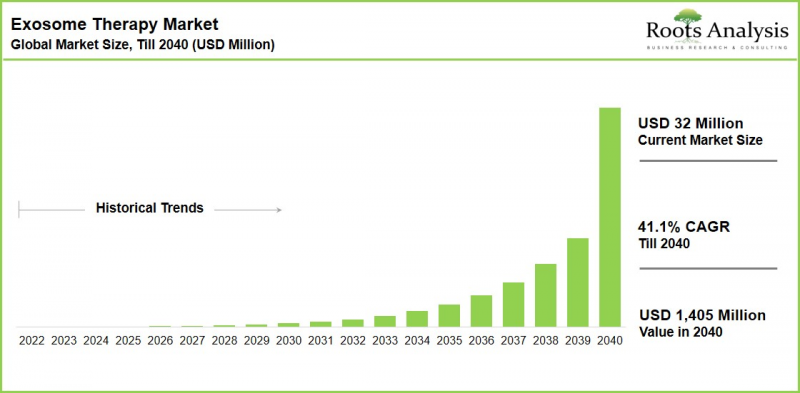
엑소좀 요법 시장 : 성장 및 동향
세포외 소포를 이용한 치료법은 학술적 관심사에서 주목받는 임상 치료법으로 전환되었습니다. 그 매력은 기존의 생물학적 제제와 비교하여 표적 특이성이 높고, 조직 재생이 촉진되며, 전신성 염증이 완화되는 점에 있으며, 이러한 특성으로 인해 산업계의 후원사와 산업계 외 연구 그룹 모두가 적극적인 개발 프로그램에 착수하고 있습니다. 전임상 용도에서 중간엽 줄기세포 유래 엑소좀을 평가한 200건 이상의 발표된 연구를 검토한 결과, 70% 이상의 사례에서 측정 가능한 효과가 보고되었으며, 이 데이터는 해당 분야에 대한 투자자 및 라이선싱 기업의 관심을 지속적으로 뒷받침하는 요인이 되고 있습니다.
시장의 성장세는 COVID-19 팬데믹 이후, 엑소좀 후보 물질을 인간 임상시험 단계로 진행하기 위해 규제 당국의 승인을 요청하는 후원사들의 임상시험용 의약품 신청 건수가 꾸준히 증가함에 따라 더욱 가속화되고 있습니다. 유통업체 및 채널 파트너에게 이는 예상되는 임상 및 상업적 전개에 앞서 시장 내 입지를 확립할 수 있는, 아직 초기 단계이긴 하지만 빠르게 확대되고 있는 호기를 의미합니다.
성장의 원동력 : 시장 확장을 뒷받침하는 요인
엑소좀 요법 시장의 성장은 안과, 피부과, 근골격계 및 직장 질환 분야의 질병 부담 증가에 의해 주도되고 있습니다. 또한, 연구 개발 활동의 확대…… 및 엑소좀 생산·특성 평가 인프라를 위한 정부 자금의 증가도 기여하고 있습니다. 망막 및 안과 분야의 적응증에서 임상적 근거가 축적되고 있는 것을 배경으로, 안구 내 투여가 특히 활발한 투여 경로로 부상하고 있습니다. 제약 업계의 연구개발 투자가 신흥 경제국으로 광범위하게 이동하고 있는 점도 추가적인 추진력을 더할 것으로 예상되며, 예측 기간 동안 유통 및 공급망 파트너의 목표 시장을 확대시킬 것입니다.
시장의 과제 : 진전을 가로막는 중대한 장벽
장기적인 성장 전망은 밝지만, 엑소좀 치료제 개발 기업들은 여전히 기술적 및 상업적 과제에 직면해 있습니다. 치료용 제제의 품질 부족, 세균 오염 위험, 엑소좀 이외의 성분 존재 등이 제조의 일관성을 저해하고 있습니다. 또한, 세포외 소포 고유의 불균일성으로 인해 세포 출처를 초월한 표준화된 정량화 및 특성 평가가 어려워지고 있습니다. 상업적 측면에서는 피험자 모집 및 자금 조달의 제약으로 인해 7개의 파이프라인 후보가 철회된 사례에서 알 수 있듯이, 이 시장을 평가하는 이해관계자들은 자금 조달 위험을 충분히 고려해야 합니다.
엑소좀 요법 시장 : 주요 인사이트
본 보고서는 엑소좀 요법 시장의 현황을 상세히 분석하고, 유통 파트너, 채널 중개업체, 서비스 통합업체를 위한 잠재적 성장 기회를 파악하고 있습니다. 주요 조사 결과는 다음과 같습니다:
- 엑소좀 치료제 파이프라인에는 현재 120건 가까운 치료 후보가 있으며, 그중 40% 이상이 이미 임상 개발 단계에 있습니다. 이는 시장의 상업적 전환점이 표면적인 매출 수치가 시사하는 것보다 더 빨리 다가오고 있음을 보여줍니다.
- EXOMSC-COV19(Dermama Biotech Lab), Dex2(구스타브 루시 연구소), SF-MSC-EX(오스만가지 대학교)를 포함한 7개의 엑소좀 치료제가 현재 임상 개발 후기 단계에 있으며, 라이선싱 및 유통 파트너들에게 단기적인 주목 대상 목록을 형성하고 있습니다.
- 파이프라인 후보의 약 30%는 유방암, 폐암, 대장암, 악성 흑색종 등의 종양학 분야를 대상으로 하고 있으며, 엑소좀은 이미 탄탄한 전문 유통 인프라가 구축된 치료 분야에서 새로운 표적형 약물전달 매개체로 자리매김하고 있습니다.
- 60개 이상의 제약 기업과 학술·연구 기관이 엑소좀 치료제 개발에 적극적으로 나서고 있으며, 이는 규제 대응, 물류, 시장 출시 지원을 제공하는 유통업체에게 매우 적합한, 분산형이며 파트너십 주도형 생태계를 반영하고 있습니다.
- Coya Therapeutics가 2022년에 카네기멜론 대학교와 체결한 엑소좀-폴리머 하이브리드 전달 기술 관련 계약과 같은 전략적 라이선싱 활동은, 플랫폼 기술에 대한 접근성이 개발 기업 간의 차별화 요인으로 부상하고 있음을 보여주며, 투자자와 파트너 모두에게 중요한 실사 지표가 되고 있습니다.
- EVerZom사는 염증성 질환을 표적으로 하는 엑소좀 기반 생물학적 치료제를 추진하고, 파이프라인 프로그램의 임상 개발을 시작하기 위해 자금 조달 라운드에서 1,000만 유로를 조달했습니다.
- 규제 당국별로 규정을 준수하지 않는 엑소좀 제품의 마케팅에 대한 감시가 강화되고 있어, 이 분야의 상업적 타당성을 확보하기 위해서는 IND(신약 임상시험 신청)에 기반한 임상 개발 경로의 중요성이 더욱 커지고 있습니다.
엑소좀 요법 시장 세분화
시장 규모 및 기회 분석은 다음 매개변수를 기반으로 세분화되었습니다:
치료법 유형별
- 동종 유래
- 자가 유래
대상 적응증별
- 퇴행성 반월상 연골 손상
- 영양성 표피 수포증
- 항문 주위 누공
- 색소성 망막염
치료 분야별
- 피부 질환
- 근골격계 질환
- 안과 질환
- 직장 질환
제형별
- 액제
- 에어로졸
투여 경로별
- 누공
- 관절 내
- 안구 내
지역별
- 북미
- 유럽
- 아시아태평양
- 기타 지역
목차
제1장 서문
제2장 주요 요약
제3장 소개
제4장 엑소좀 치료제 : 시장 구도
제5장 엑소좀 요법 : 기업 개요
제6장 엑소좀 요법 : 약제 프로파일
제7장 임상시험 분석
제8장 학술 연구 조성금 분석
제9장 세계의 이벤트 분석
제10장 파트너십과 협력 관계
제11장 자금 조달과 투자 분석
제12장 스타트업 건전성 인덱스
제13장 사례 연구 : 엑소좀 개발 및 제조 기업
제14장 약제 실패 분석
제15장 시장 규모 산출과 기회 분석
제16장 경영진 인사이트
제17장 부록 1 : 표형식 데이터
제18장 부록 2 : 기업 및 조직 리스트
KSM 26.08.13EXOSOME THERAPY MARKET: OVERVIEW
As per Roots Analysis, the global exosome therapy market is estimated to grow from USD 32 million in the current year to USD 1,405 million by 2040, registering a CAGR of 41.1% across the forecast period.
Exosome Therapy Market: Growth and Trends
Extracellular vesicle-based therapeutics have moved from an academic curiosity to a closely watched clinical modality. Their appeal lies in target specificity, enhanced tissue regeneration and reduced systemic inflammation relative to conventional biologics, characteristics that have drawn both industry sponsors and non-industry research groups into active development programs. A review of over 200 published studies evaluating mesenchymal stem cell derived exosomes for preclinical use reported measurable benefit in more than 70% of cases, a data point that continues to anchor investor and licensing interest in the space.
The market growth momentum has been reinforced by a steady rise in investigational new drug filings since the COVID-19 pandemic, as sponsors seek regulatory clearance to move exosome candidates into human trials. For distributors and channel partners, this represents an early but fast-widening window to establish positioning ahead of the anticipated wave of clinical and commercial launches.
Growth Drivers: Factors Fueling Market Expansion
Growth in the exosome therapy market is being driven by rising disease burden across ophthalmic, dermatological, musculoskeletal, and rectal disorders. Further, expanding research and development activity... and increasing government funding directed at exosome production and characterization infrastructure. Intra-ocular administration is emerging as a particularly active route, supported by a growing body of clinical evidence in retinal and ophthalmic indications. The broader shift of pharmaceutical R&D investment toward emerging economies is expected to add further momentum, widening the addressable base for distribution and supply chain partners over the forecast period.
Market Challenges: Critical Barriers Hindering Progress
Despite favorable long-term growth, exosome therapy developers continue to face technical and commercial challenges. Weak therapy preparations, bacterial contamination risk, and the presence of non-exosomal components complicate manufacturing consistency. Further, the inherent heterogeneity of extracellular vesicles makes standardized quantification and characterization difficult across cell sources. On the commercial side, the withdrawal of seven pipeline candidates due to enrolment and funding constraints, illustrate the financing risk that stakeholders evaluating this market need to underwrite.
Exosome Therapy Market: Key Insights
The report delves into the current state of the Exosome Therapy market and identifies potential growth opportunities for distribution partners, channel intermediaries, and service integrators. Some key findings include:
- The exosome therapeutics pipeline presently features close to 120 therapeutic candidates, with more than 40% already in clinical stage development, indicating that the market's commercial inflection point is approaching faster than headline revenue figures suggest.
- Seven exosome therapies, including EXOMSC-COV19 (Dermama Biotech Lab), Dex2 (Gustave Roussy Institute) and SF-MSC-EX (Osmangazi University), are currently in advanced clinical stages, forming a near-term watchlist for licensing and distribution partners.
- Approximately 30% of pipeline candidates target oncology indications, including breast, lung, colon cancer and melanoma, positioning exosomes as an emerging targeted drug delivery vehicle in a therapeutic area that already commands significant specialty distribution infrastructure.
- More than 60 pharmaceutical companies and academic or research institutes are actively engaged in exosome therapeutic development, reflecting a fragmented, partnership-driven ecosystem well suited to distributors offering regulatory, logistics and go-to-market support.
- Strategic in-licensing activity, such as Coya Therapeutics' 2022 agreement with Carnegie Mellon University for exosome-polymer hybrid delivery technology illustrates how platform technology access is becoming a differentiator among developers, an important due-diligence signal for investors and partners alike.
- EVerZom raised EUR 10 million in a funding round to advance exosome-based biotherapies targeting inflammatory diseases and to initiate clinical development of its pipeline programs.
- Regulatory scrutiny increased around non-compliant exosome product marketing, reinforcing the importance of IND-backed clinical development pathways for commercial legitimacy in this space.
Exosome Therapy Market Segments
The market sizing and opportunity analysis has been segmented across the following parameters:
By Type of Therapeutic
- Allogeneic
- Autologous
By Target Disease Indication
- Degenerative Meniscal Injury
- Dystrophic Epidermolysis Bullosa
- Fistula Perianal
- Retinitis Pigmentosa
By Therapeutic Area
- Dermatological Disorders
- Musculoskeletal Disorders
- Ophthalmic Diseases
- Rectal Disorders
By Type of Formulation
- Liquid
- Aerosol
By Route of Administration
- Fistula Tract
- Intra-articular
- Intra-ocular
By Geographical Regions
- North America
- Europe
- Asia-Pacific
- Rest of the World
Exosome Therapy Market: Key Segments
Ophthalmic Diseases Lead the Market
Based on Roots Analysis market assessment, ophthalmic diseases are expected to account for the largest share of therapeutic area revenues. This highest share is supported by a robust clinical pipeline targeting retinal and ocular surface disorders. In addition, the relatively advanced development of intra-ocular delivery platforms, which enable localized administration, improve therapeutic exposure at the target site, and reduce systemic adverse effects, supporting the highest share. Together, these advantages position ophthalmology as one of the most commercially promising applications for exosome-based therapeutics.
Intra-Ocular Route of Administration Dominates the Market
In terms of route of administration, exosome therapeutics designed for intra-ocular delivery are expected to register higher CAGR throughout the forecast period. This is primarily due to the growing focus on ophthalmic disorders, where localized ocular delivery enables higher therapeutic concentrations at the target site while minimizing systemic exposure, making it a well-suited approach for exosome-based therapies.
Oncology Dominates the Market
Based on the Roots Analysis market report, oncology dominates the market. This can be attributed to the growing focus on oncology, with nearly 30% of exosome therapeutics currently under development targeting cancers such as breast cancer, lung cancer, melanoma, and colorectal cancer. This trend reflects the increasing interest in using exosomes as targeted drug delivery vehicles. Although the segment remains in the early stages of clinical development, its robust pipeline highlights strong long-term commercial and partnership opportunities for stakeholders positioned ahead of market maturation.
Asia-Pacific Dominates the Market and Registers Higher CAGR
Based on the proprietary report, Asia-Pacific holds the highest share and is likely to remain dominant in the future. This growth is being driven by increasing investments in regenerative medicine and advanced biologics, a rapidly expanding pipeline of exosome-based therapeutics, and the growing number of clinical trials across China, Japan, South Korea, and India.
Governments across the region are strengthening support for cell and gene therapy innovation through funding initiatives, translational research programs, and evolving regulatory frameworks. These fundings initiatives will accelerate the progression of exosome candidates toward commercialization.
Moreover, the emergence of regional biomanufacturing capabilities and strategic collaborations to scale exosome production is increasing demand for specialized logistics, GMP-compliant manufacturing support, and temperature-controlled distribution networks, positioning Asia-Pacific as a key future hub for exosome therapy development and commercialization.
Example Players in Exosome Therapy Market
- Cellular Biomedicine Group
- Coya Therapeutics
- Curexsys
- EV Therapeutics
- Evox Therapeutics
- ExoCoBio
- ILIAS Biologics
- Rion
- SHIFTBIO
Expert Interview and Industry Insights
The opinions and insights presented in the full study were shaped by discussions with multiple stakeholders across the exosome therapeutics value chain. The research report features detailed transcripts of interviews held with the following industry participants:
- Chief Business Officer, Small Company, US
- Chief Business Officer, Mid-Sized Company, South Korea
- R&D and Innovation Manager, Very Small Company, Portugal
EXOSOME THERAPY MARKET: RESEARCH COVERAGE
- Market Landscape: A detailed assessment of the current pipeline, segmented by phase of development, technology platform, type of payload, derived source, target disease indication, therapeutic area, route of administration, type of therapy, dosing frequency and line of treatment, along with a profile of developer companies by year of establishment, size and headquarters location.
- Company Profiles: In-depth profiles of key exosome therapeutics developers, including company overview, product portfolio and recent developments and future outlook.
- Drug Profiles: Elaborate profiles of the leading exosome therapy candidates in the highest phase of development, including product portfolio and detailed clinical trial information.
- Clinical Trial Analysis: A detailed analysis of completed and ongoing clinical trials by trial status, registration year, sponsor type, study design, patient enrolment, age category, trial location, and geography.
- Academic Grant Analysis: An in-depth analysis of academic grants awarded for exosome therapeutics research since 2017, covering funding institute, support period, purpose of grant, recipient organization, and grant activity code.
- Global Event Analysis: An assessment of global industry events related to exosome therapeutics, by year, platform, region, active organizers, speakers, and participant profile.
- Partnerships and Collaborations: An analysis of research, licensing, manufacturing, product development, and M&A partnerships inked in this space since 2017, by partnership type, technology platform, target indication and geography.
- Funding and Investment Analysis: A detailed analysis of grant, seed, venture capital, IPO, secondary offering, and debt financing instances since 2017, by amount invested, purpose, target indication, therapeutic area, and geography.
- Start-Up Health Indexing: A proprietary Roots Analysis framework assessing start-ups by pipeline strength, pipeline maturity, indication diversity, partnership activity, and financial support.
- Case Study (Exosome Development and Manufacturing Companies): A focused assessment of service providers offering isolation, characterization, purification, engineering, and targeted delivery capabilities, segmented by scale of operation and scalability.
- Drug Failure Analysis: An analysis of exosome therapeutics that were discontinued during clinical development, by target indication, route of administration, sponsor type, and reason for failure.
- Market Sizing and Opportunity Analysis: Year-wise global and regional (North America, Europe, Asia-Pacific, Rest of the World) market projections (2029-2040) segmented by type of therapeutic, target disease indication, therapeutic area, route of administration and leading drug candidates, presented under conservative, base, and optimistic forecast scenarios.
Key Questions Answered in this Report
- What is exosome therapy and how does it compare with conventional biologic modalities?
- What is the current and future size of the exosome therapy market?
- What is the CAGR of the exosome therapy market through 2040?
- Which companies and academic institutes are leading exosome therapeutics development?
- Which target indications and therapeutic areas are expected to generate the most revenue?
- Which route of administration is likely to dominate the market, and why?
- Which region is expected to register the fastest growth, and what is driving it?
- What are the primary technical and financing risks facing exosome therapy developers?
- What opportunities exist for distributors, logistics partners and investors entering this space?
Reasons to Buy this Report
This report is designed to give distributors, channel partners, and investors a decisive analytical edge in a fast-consolidating market. Its core differentiators include:
- Top-Down and Bottom-Up Triangulated Forecasting: Market estimates for Till 2040 are built using a hybrid methodology that cross-validates top-down macro assessments of disease burden and pipeline maturity against bottom-up, candidate-level clinical and commercial data, minimizing forecast bias.
- Comprehensive Database Cover Across 27 Chapters: Comprehensive coverage spanning market sizing, competitive landscape, clinical trial activity, academic grant funding, global events, partnerships, financing, and drug failure analysis, with dedicated regional chapters for North America, Europe, Asia-Pacific, and Rest of the World.
- Primary Research-Backed Insights: Findings are validated through direct interviews with Chief Business Officers and R&D leaders across small and mid-sized exosome developers, ensuring conclusions reflect real operating conditions rather than desk research alone.
- Six-Parameter Actionable Segmentation: Type of therapeutic, target disease indication, therapeutic area, type of formulation, route of administration and geography enable precise opportunity sizing for any go-to-market, licensing, or investment thesis.
- Three-Scenario Forecast Modeling: Conservative, base and optimistic projections account for the funding and clinical-execution risk that has historically affected early-stage exosome developers, supporting more robust investment and partnership decisions.
- Searchable Company and Grant Database: An easily searchable Excel database of all companies, academic institutes, and grant recipients active in exosome therapeutics development, purpose-built for business development and targeted outreach.
Additional Benefits
- Complementary PPT Insights Pack
- Complementary Excel Data Packs for all Analytical Modules in the Report
- 15% Free Content Customization
- Detailed Report Walkthrough Session with Research Team
- Free Updated report if the report is 6-12 months old or older
TABLE OF CONTENTS
1. PREFACE
- 1.1. Scope of the Report
- 1.2 Market Segmentation
- 1.3. Research Methodology
- 1.4. Key Questions Answered
- 1.5. Chapter Outlines
2. EXECUTIVE SUMMARY
3. INTRODUCTION
- 3.1. Overview of Exosomes
- 3.1.1. Types of Extracellular Vesicles
- 3.1.1. Potential Sources of Exosomes
- 3.2. Exosome Biogenesis
- 3.2.1. Exosome Formation and Development Process
- 3.2.2. Secretion of Exosomes
- 3.3. Applications of Exosomes
- 3.4. Mechanism of Exosome Therapy
- 3.4.1. Exosome Drug Therapy
- 3.4.2. Exosome RNAi Therapy
- 3.4.3. Exosome Immunotherapy
- 3.5. Advantages of Exosome Therapy
- 3.6. Risks and Future Perspectives Associated with Exosome Therapeutics
4. EXOSOME THERAPEUTICS: MARKET LANDSCAPE
- 4.1. Analysis Methodology and Key Parameters
- 4.2. Exosome Therapeutics Market Landscape
- 4.2.1. Analysis by Phase of Development
- 4.2.2. Analysis by Technology Platform
- 4.2.3. Analysis by Type of Payload
- 4.2.4. Analysis by Derived Source
- 4.2.5. Analysis by Target Disease Indication(s)
- 4.2.6. Analysis by Therapeutic Area
- 4.2.7. Analysis by Phase of Development and Therapeutic Area
- 4.2.8. Analysis by Therapeutic Area and Route of Administration
- 4.2.9. Analysis by Route of Administration
- 4.2.10 Analysis by Area of Application
- 4.2.11. Analysis by Type of Therapy
- 4.2.12. Analysis by Dosing Frequency
- 4.2.13. Analysis by Type of Therapy (By Method of Composition)
- 4.2.14. Analysis by Line of Treatment
- 4.3. Exosome Therapy Developers
- 4.3.1. Analysis by Year of Establishment
- 4.3.2. Analysis by Company Size
- 4.3.3. Analysis by Location of Headquarters
- 4.3.4. Most Active Players: Analysis by Number of Therapeutics
5. EXOSOME THERAPY: COMPANY PROFILES
- 5.1. Coya Therapeutics
- 5.1.1. Company Overview
- 5.1.2. Product Portfolio
- 5.1.3. Recent Developments and Future Outlook
- 5.2. Evox Therapeutics
- 5.2.1. Company Overview
- 5.2.2. Product Portfolio
- 5.2.3. Recent Developments and Future Outlook
- 5.3. Curexsys
- 5.3.1. Company Overview
- 5.3.2. Product Portfolio
- 5.3.3. Recent Developments and Future Outlook
- 5.4. EV Therapeutics
- 5.4.1. Company Overview
- 5.4.2. Product Portfolio
- 5.4.3. Recent Developments and Future Outlook
- 5.5. SHIFTBIO
- 5.5.1. Company Overview
- 5.5.2. Product Portfolio
- 5.5.3. Recent Developments and Future Outlook
6. EXOSOME THERAPY: DRUG PROFILES
- 6.1. AEGLE Therapeutics
- 6.1.1. Company Overview
- 6.1.2. AGLE-102: Product Portfolio
- 6.1.2.1. AGLE-102: Clinical Trial Information
- 6.1.3. Recent Developments and Future Outlook
- 6.2. AVEM Healthcare
- 6.2.1. Company Overview
- 6.2.2. Ardoxso: Product Portfolio
- 6.2.2.1. Ardoxso: Clinical Trial Information
- 6.2.3. Recent Developments and Future Outlook
- 6.3. Cellular Biomedicine Group
- 6.3.1. Company Overview
- 6.3.2. Financial Information
- 6.3.3. haMPC-Exos: Product Portfolio
- 6.3.3.1. haMPC-Exos: Clinical Trial Information
- 6.3.4. hMSC-Exos: Product Portfolio
- 6.3.4.1. hMSC-Exos: Clinical Trial Information
- 6.3.5. Undisclosed Drug 1: Product Portfolio
- 6.3.5.1. Undisclosed Drug 1: Clinical Trial Information
- 6.3.6. Recent Developments and Future Outlook
- 6.4. OBCTCD24
- 6.4.1. Company Overview
- 6.4.2. CovenD24: Product Portfolio
- 6.4.2.1. CovenD24: Clinical Trial Information
- 6.4.3. Recent Developments and Future Outlook
- 6.5. ReNeuron
- 6.5.1. Company Overview
- 6.5.2. Financial Information
- 6.5.3. Undisclosed Drug 1: Product Portfolio
- 6.5.3.1. Undisclosed Drug 1: Clinical Trial Information
- 6.5.4. Recent Developments and Future Outlook
- 6.6. Stem Cell Medicine
- 6.6.1. Company Overview
- 6.6.2. Undisclosed Drug 1: Product Portfolio
- 6.6.3. Recent Developments and Future Outlook
7. CLINICAL TRIAL ANALYSIS
- 7.1. Analysis Methodology and Key Parameters
- 7.2. Exosome Therapeutics: List of Clinical Trials
- 7.2.1. Analysis by Trial Status
- 7.2.2. Analysis by Trial Registration Year
- 7.2.3. Analysis by Sponsor / Collaborator
- 7.2.4. Analysis by Trial Registration Year and Type of Study
- 7.2.5. Analysis by Trial Registration Year and Trial Status
- 7.2.6. Analysis by Annual Number of Patients Enrolled
- 7.2.7. Analysis by Study Design
- 7.2.8. Analysis by Age Category
- 7.2.9. Analysis by Phase of Development and Trial Status
- 7.2.10. Analysis by Phase of Development and Patients Enrolled
- 7.2.11. Most Active Industry Players: Analysis by Number of Registered Trials
- 7.2.12. Most Active Non-Industry Players: Analysis by Number of Registered Trials
- 7.2.13. Analysis by Trial Location
- 7.2.14. Analysis by Trial Status and Geography
- 7.2.15. Analysis by Trial Status, Patients Enrolled and Geography
8. ACADEMIC GRANT ANALYSIS
- 8.1. Analysis Methodology and Key Parameters
- 8.2. Exosome Therapeutics: List of Academic Grants
- 8.3. Analysis by Year of Grants Awarded
- 8.4. Analysis by Amount Awarded per Year
- 8.5. Analysis by Type of Funding Institute Center
- 8.6. Analysis by Support Period
- 8.7. Analysis by Purpose of Grant
- 8.8. Word Cloud Analysis: Emerging Focus Area
- 8.9. Analysis by Grant Activity Code
- 8.10. Analysis by Location of Recipient Organizations
- 8.11. Popular Recipient Organizations: Analysis by Number of Grants
- 8.12. Popular Recipient Organizations: Analysis by Amount Awarded
- 8.13. Analysis by Type of Recipient Organization
- 8.14. Analysis by Study Section
- 8.15. Analysis by Type of Grant Application
- 8.16. Analysis by Funding Institute Center and Support Year
9. GLOBAL EVENT ANALYSIS
- 9.1. Chapter Overview
- 9.2. Scope and Methodology
- 9.3. List of Global Events Related to Exosomes
- 9.3.1. Analysis by Year of Event
- 9.3.2. Analysis by Event Platform
- 9.3.3. Analysis by Type of Event
- 9.3.4. Analysis by Region
- 9.3.5. Most Active Organizers: Analysis by Number of Events
- 9.3.6. Most Active Speakers: Analysis by Number of Events
- 9.3.7. Most Active Industry Participants: Analysis by Number of Events
- 9.3.8. Most Active Non-Industry Participants: Analysis by Number of Events
- 9.3.9. Analysis by Designation of Participant
- 9.3.10. Analysis by Affiliated Department of Participant
- 9.3.11. Word Cloud Analysis: Evolutionary Trends in Event Agenda / Key Focus Area
10. PARTNERSHIPS AND COLLABORATIONS
- 10.1. Chapter Overview
- 10.2. Partnership Models
- 10.3. Exosome Therapeutics: List of Partnerships and Collaborations
- 10.3.1. Analysis by Year of Partnership
- 10.3.2. Analysis by Type of Partnership
- 10.3.3. Analysis by Year and Type of Partnership
- 10.3.4. Analysis by Company and Type of Partnership
- 10.3.5. Analysis by Type of Technology Platform
- 10.3.6. Analysis by Type of Partner
- 10.3.7. Most Active Players: Analysis by Number of Partnerships
- 10.3.8. Word Cloud Analysis: Emerging Focus Areas
- 10.3.9. Analysis by Target Disease Indication(s)
- 10.3.10. Analysis by Therapeutic Area
- 10.3.11. Analysis by Therapeutic Area and Type of Partnership
- 10.3.12. Regional Distribution of Partnerships
- 10.3.13. Distribution by Geography
11. FUNDING AND INVESTMENT ANALYSIS
- 11.1. Analysis Methodology and Key Parameters
- 11.2. Type of Funding
- 11.3. Exosome Therapeutics: List of Funding Instances
- 11.4. Analysis by Year of Funding
- 11.5. Analysis by Amount Invested
- 11.6. Analysis by Type of Funding
- 11.7. Analysis by Type of Funding and Amount Invested
- 11.8. Analysis by Purpose of Funding
- 11.9. Analysis by Target Disease Indication(s)
- 11.10. Analysis by Therapeutic Area
- 11.11. Most Active Players: Analysis by Number of Funding Instances
- 11.12. Most Active Players: Analysis by Amount Raised
- 11.13. Active Investors: Analysis by Number of Funding Instances
- 11.14. Distribution by Geography
- 11.15. Summary of Funding Activity
12. START-UP HEALTH INDEXING
- 12.1. Analysis Methodology and Key Parameters
- 12.2. Analysis by Pipeline Strength
- 12.3. Analysis by Pipeline Maturity
- 12.4. Analysis by Indication Diversity
- 12.5. Analysis by Number of Partnerships
- 12.6. Analysis by Financial Support
- 12.7. Start-up Health Indexing: Roots Analysis Perspective
- 12.8. Most Active Start-ups
13. CASE STUDY: EXOSOME DEVELOPMENT AND MANUFACTURING COMPANIES
- 13.1. Chapter Overview
- 13.2. Exosome Development and Manufacturing Companies Landscape
- 13.2.1. Analysis by Year of Establishment
- 13.2.2. Analysis by Company Size
- 13.2.3. Analysis by Location of Headquarters
- 13.2.4. Analysis by Location of Headquarters and Company Size
- 13.3. Analysis by Type of Service(s) Offered
- 13.3.1. Analysis by Method of Isolation
- 13.3.2. Analysis by Method of Purification
- 13.3.3. Analysis by Method of Characterization
- 13.3.4. Analysis by Method of Exosome Manufacturing
- 13.3.5. Analysis by Scale of Operation
- 13.3.6. Analysis by Scalability
14. DRUG FAILURE ANALYSIS
- 14.1. Methodology and Key Parameters
- 14.2. Exosome Therapeutics: List of Failed Drug Candidates
- 14.2.1. Analysis by Trial Start and Discontinuation Year
- 14.2.2. Analysis by Trial Status of Discontinuation
- 14.2.3. Analysis by Target Disease Indication(s)
- 14.2.4. Analysis by Route of Administration
- 14.2.5. Analysis by Type of Sponsor
- 14.2.6. Analysis by Reasons for Drug Failure
- 14.2.7. Word Cloud Analysis: Emerging Focus Area
15. MARKET SIZING AND OPPORTUNITY ANALYSIS
- 15.1. Forecast Methodology and Key Assumptions
- 15.2. Global Exosome Therapy Market, Till 2040
- 15.2.1. Exosome Therapy Market for Allogeneic Therapy, Till 2040 (USD Million)
- 15.2.2. Exosome Therapy Market for Autologous Therapy, Till 2040 (USD Million)
- 15.2.3. Exosome Therapy Market for Degenerative Meniscal Injury, 2031-2040 (USD Million)
- 15.2.4. Exosome Therapy Market for Dystrophic Epidermolysis Bullosa, 2030-2040 (USD Million)
- 15.2.5. Exosome Therapy Market for Fistula Perianal, Till 2040 (USD Million)
- 15.2.6. Exosome Therapy Market for Retinitis Pigmentosa, Till 2040 (USD Million)
- 15.2.7. Exosome Therapy Market for Dermatological Disorders, 2030-2040 (USD Million)
- 15.2.8. Exosome Therapy Market for Muscoskeletal Disorders, 2031-2040 (USD Million)
- 15.2.9. Exosome Therapy Market for Ophthalmic Disorders, Till 2040 (USD Million)
- 15.2.10. Exosome Therapy Market for Rectal Disorders, Till 2040 (USD Million)
- 15.2.11. Fistula Tract Exosome Therapy Market, Till 2040 (USD Million)
- 15.2.12. Intra-articular Exosome Therapy Market, 2031-2040 (USD Million)
- 15.2.13. Intra-ocular Exosome Therapy Market, Till 2040 (USD Million)
- 15.2.14. Exosome Therapy Market Geographical Distribution, Till 2040 (USD Million)
- 15.2.15. Erciyes University's Drug: Sales Forecast, Till 2040 (USD Million)
- 15.2.16. Synovial Fluid-Derived Mesenchymal Stem Cells: Sales Forecast, 2031-2040 (USD Million)
- 15.2.17. AGLE-102: Sales Forecast, 2030-2040 (USD Million)
- 15.2.18. Trehan University of Medical Sciences' Drug: Sales Forecast, Till 2040 (USD Million)
- 15.2.19. ReNeuron' Drug: Sales Forecast, Till 2040 (USD Million)
16. EXECUTIVE INSIGHTS
- 16.1. Capricor Therapeutics
- 16.1.1. Company Snapshot
- 16.1.2. Interview Transcript: Chief Business Officer
- 16.2. Exogenus Therapeutics
- 16.2.1. Company Snapshot
- 16.2.2. Interview Transcript: R&D and Innovation Manager
- 16.3. ILIAS Biologics
- 16.3.1. Company Snapshot
- 16.3.2. Interview Transcript: Chief Business Officer


