

|
시장보고서
상품코드
2157032
북미의 광트랜스폰더 : 시장 점유율 분석, 업계 동향과 통계, 성장 예측(2026-2031년)North America Optical Transponder - Market Share Analysis, Industry Trends & Statistics, Growth Forecasts (2026 - 2031) |
||||||
 Mordor Intelligence
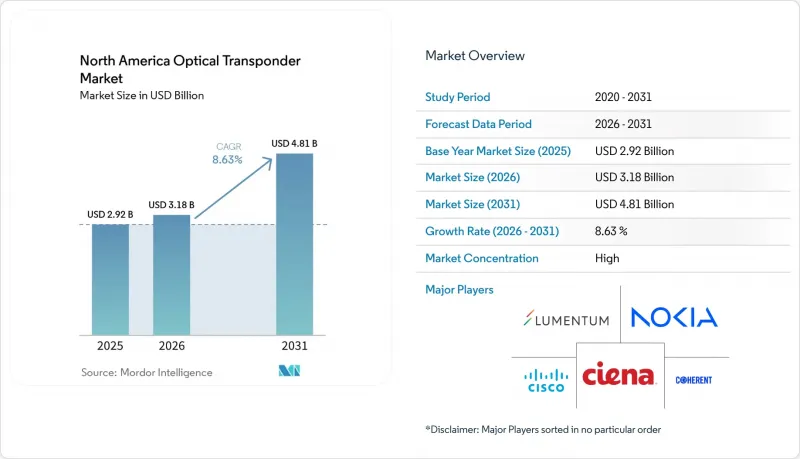
에 따르면 북미의 광트랜스폰더 시장 규모는 2025년에 29억 2,000만 달러로 평가되며, 2026년 31억 8,000만 달러에서 2031년까지 48억 1,000만 달러에 달할 것으로 예측되고 있으며, 예측 기간(2026-2031년)에 CAGR은 8.63%에 달할 전망입니다.
북미 광 트랜스폰더 시장의 동향 및 인사이트
하이퍼스케일러에 의한 AI 및 클라우드 데이터센터 상호 연결 확대
주요 클라우드 사업자들의 AI 인프라 투자가 북미 전역의 광통신 수요를 변화시키고 있습니다. 훈련 클러스터는 대개 여러 캠퍼스에 걸쳐 운영되므로 컴퓨팅 거점 간의 대용량 링크에 대한 수요가 증가하고 있습니다. 이러한 요구 사항으로 인해 엄격한 대역폭 및 도달 거리 요건을 충족할 수 있는 코히어런트 광통신 장비가 유리해지고 있습니다. NVIDIA는 2026년 3월, Coherent Corp.에 20억 달러 규모의 주식 투자를 발표함과 동시에, CPO(CO-PACKAGED OPTICS), 연속파 레이저 및 첨단 네트워크 제품에 대한 다년간의 구매 계약을 체결했습니다. 이러한 프로젝트가 계획 단계에서 건설 단계로 넘어가면, 각 캠퍼스 간 연결에 광통신 용량이 필요하게 되므로 북미의 광 트랜스폰더 시장이 혜택을 볼 것입니다. 또한 직접 조달이 이루어짐에 따라 특히 첨단 코히어런트 모듈의 경우 조기 공급업체 인증이 더욱 중요해질 것입니다.
400G, 800G 및 1.6T 코히어런트 플러그인 방식 업그레이드
개별 트랜스폰더 셸프에서 코히어런트 플러그인 모듈로의 전환으로 인해 네트워크 설계의 선택지가 변화하고 있습니다. 플러그형 모듈은 비트당 비용을 절감하고, 용량을 확장할 때 사업자에게 더 큰 유연성을 제공합니다. OIF는 2024년 말에 800ZR 구현 합의서를 발표했으며, 800G 코히어런트 플러그형 모듈은 2025년 중 시장에 출시되었습니다. Ciena, Marvell, Nokia 각사는 OFC 2026에서 1.6T 코히어런트 제품의 로드맵을 발표했으며, 2027년 말까지 상용화될 전망입니다. 따라서 북미 광 트랜스폰더 시장은 제품 주기가 단축되는 방향으로 전환되고 있으며, 1.6T 인증 획득이 공급업체 선정의 중요한 기준이 되고 있습니다. 또한 Cisco도 AI 데이터센터 네트워크용 Silicon One G300 플랫폼과 함께 1.6T 광 모듈을 발표했습니다.
InP 및 실리콘 포토닉스의 생산 능력 제약
InP 기판은 많은 고성능 광 컴포넌트에 필수적인 소재입니다. 그 공급이 제한되면 코히어런트 모듈이나 CPO(CO-PACKAGED OPTICS)의 생산이 지연될 가능성이 있습니다. AI용 제품에는 첨단 포토닉 부품이 대량으로 사용되므로 이러한 압박은 북미 광 트랜스폰더 시장에도 영향을 미치고 있습니다. 각 제조사는 생산 능력 계획 및 공정 개선을 통해 대응하고 있지만, 첨단 부품의 공급 확대를 신속하게 이루어내는 것은 여전히 어렵습니다. 실리콘 포토닉스를 채택하더라도, 많은 코패키지드 광학 설계에서 InP 레이저의 필요성이 사라지는 것은 아닙니다. 따라서 공급업체는 부품 생산 능력, 인증 일정, 그리고 고객에 대한 납기 약속을 동시에 관리해야 합니다. 그 결과 발생하는 제약으로 인해 벤더나 대규모 광학 장비 구매자에게는 조달 위험이 높아질 가능성이 있습니다.
부문 분석
코히어런트 기술은 2025년에 매출 점유율의 86.21%를 차지할 것으로 예상되며, 2031년까지 연평균 성장률(CAGR) 9.12%로 확대될 전망입니다. 이러한 위상은 100G 이상으로 작동하는 메트로, 장거리 및 데이터센터 상호 연결 네트워크에서의 광범위한 활용을 반영합니다. 코히어런트 처리는 이러한 네트워크의 전송 거리 및 용량 요구 사항을 충족합니다. 북미 광 트랜스폰더 업계에서는 통신사업자가 더 높은 스펙트럼 효율이나 유연한 변조를 필요로 할 때 코히어런트 플랫폼이 채택되고 있습니다. 반면, 비코히어런트 기술은 링크 거리가 짧은 액세스 및 엣지 연결과 기업 캠퍼스에서 여전히 중요한 역할을 하고 있습니다. 이러한 도입 환경에서는 수신기 설계가 단순하고 포트 비용이 낮다는 점이 코히어런트 디지털 신호 처리의 이점을 능가하는 경우가 있습니다.
노키아는 OFC 2026에서 InP 및 실리콘 포토닉스 구성 요소를 활용한 애플리케이션에 최적화된 코히어런트 솔루션을 발표했습니다. 이 회사는 다양한 네트워크 요구 사항에 맞춰 설계된 4가지 새로운 디지털 신호 프로세서 제품군에 대해 설명했습니다. Ciena사의 WaveLogic 6 플랫폼은 단일 캐리어 1.6T 코히어런트 플러그형 및 풀 스펙트럼 트랜스폰더를 지원하도록 설계되었습니다. 또한 노키아는 Aureon 및 t3 Broadband와 공동으로 중서부 데이터센터 회랑에 ICE7 기술을 도입했습니다. 이러한 제품 개발은 코히어런트 기술이 북미 광 트랜스폰더 시장에서 여전히 중심적인 위치를 차지하고 있는 이유를 보여줍니다.
2025년, 북미 광 트랜스폰더 시장에서 100Gbps-400Gbps 부문은 41.67%를 차지했습니다. 이 부문은 캐리어, 메트로 및 5G 전송 네트워크에서 100G, 200G, 400G 코히어런트 시스템의 도입 실적을 반영합니다. 800Gbps를 초과하는 부문은 2031년까지 연평균 성장률(CAGR) 12.45%로 확대될 것으로 예측됩니다. 이 고속 부문은 하이퍼스케일 캠퍼스 간 링크와 2027년 후반부터 예상되는 1.6T 도입의 상용화에 힘입어 성장하고 있습니다. 100Gbps 이하 제품은 단기적으로 완전한 코히어런트로의 업그레이드가 경제적으로 타당하지 않은 레거시 통신사업자 서비스 및 기업 간 링크를 계속해서 지원하고 있습니다.
400Gbps에서 800Gbps 속도 대역은 현재 업그레이드 주기에서 출하량이 가장 많은 부문입니다. OIF의 800ZR 표준 제정은 800G 코히어런트 플러그어블 제품을 위한 공통 프레임워크 확립에 기여했습니다. 이러한 제품은 용량과 도입 유연성이 중요한 새로운 데이터센터 간 상호 연결(DCI) 구축에 사용되고 있습니다. 시스코는 스케일-어크로스 및 장거리 데이터센터 연결을 위해 ‘Open Transport 3000 시리즈’와 1.6T OSFP 광 모듈을 출시했습니다. 북미 광 트랜스폰더 시장에서는 통신사업자마다 전환 속도가 서로 다르기 때문에 여러 속도 대역에 걸쳐 수요가 유지될 전망입니다. 제품의 가용성과 인증 시기에 따라 고객이 800G를 초과하는 속도로 전환하는 속도에 영향을 미칠 것으로 보입니다.
기타 혜택:
- 엑셀 형식의 시장 예측(ME) 시트
- 3개월간의 애널리스트 지원
자주 묻는 질문
목차
제1장 서론
- 조사 전제조건과 시장 정의
- 조사 범위
제2장 조사 방법
제3장 개요
제4장 시장 구도
- 시장 개요
- 시장 성장 촉진요인
- 시장 성장 억제요인
- 업계 밸류체인 분석
- 규제 상황
- Porter's Five Forces 분석
- 거시경제 요인이 시장에 미치는 영향
제5장 시장 규모와 성장 예측
- 전송 기술별
- 데이터 레이트별
- 네트워크 애플리케이션별
- 최종사용자별
- 국가별
- 미국
- 캐나다
- 멕시코
제6장 경쟁 구도
- 시장 집중도
- 전략적 동향
- 시장 점유율 분석
- 기업 개요
- Ciena Corporation
- Nokia Corporation
- Cisco Systems, Inc.
- Acacia Communications, Inc.(Cisco Systems, Inc.)
- Coherent Corp.
- Lumentum Holdings Inc.
- Marvell Technology, Inc.
- Broadcom Inc.
- Fujitsu Limited
- PacketLight Networks, Ltd.
- NEC Corporation
- Ribbon Communications Inc.
- Juniper Networks, Inc.
- ADTRAN Holdings, Inc.
- Tejas Networks Limited
- Ekinops S.A.
- Smartoptics Group ASA
- Sumitomo Electric Industries, Ltd.
- Applied Optoelectronics, Inc.
제7장 시장 기회와 향후 전망
KSA 26.10.30According to Mordor Intelligence, the North America optical transponder market size was valued at USD 2.92 billion in 2025 and is estimated to grow from USD 3.18 billion in 2026 to reach USD 4.81 billion by 2031, at a CAGR of 8.63% during the forecast period (2026-2031).
North America Optical Transponder Market Trends and Insights
Hyperscaler AI and Cloud Data Center Interconnect Expansion
AI infrastructure investment by major cloud operators is changing optical demand across North America. Training clusters often operate across multiple campuses, increasing the need for high-capacity links between computing locations. This requirement favors coherent optical equipment that can support demanding bandwidth and reach needs. NVIDIA announced a USD 2 billion equity investment in Coherent Corp. in March 2026, alongside a multiyear purchase commitment for co-packaged optics, continuous-wave lasers, and advanced networking products. The North America optical transponder market benefits when these projects move from planning into construction, because each campus connection needs optical capacity. Direct procurement also makes early supplier qualification more important, especially for advanced coherent modules.
400G, 800G, and 1.6T Coherent Pluggable Upgrades
The transition from separate transponder shelves to coherent pluggable modules is changing network design choices. Pluggables can lower the cost per bit and give operators more flexibility when expanding capacity. The OIF published its 800ZR implementation agreement in late 2024, and 800G coherent pluggables became available during 2025. Ciena, Marvell, and Nokia presented 1.6T coherent product roadmaps at OFC 2026, while commercial availability is expected before the end of 2027. The North America optical transponder market is therefore moving toward a shorter product cycle, with 1.6T approval becoming an important basis for supplier selection. Cisco also introduced 1.6T optics alongside its Silicon One G300 platform for AI data center networks.
InP and Silicon Photonics Capacity Constraints
InP substrates are essential inputs for many high-performance optical components. Limited availability can delay the production of coherent modules and co-packaged optics. This pressure affects the North America optical transponder market because AI-oriented products use advanced photonic components at high volumes. Manufacturers are responding with capacity planning and process improvements, but expanding advanced component supply remains difficult to do quickly. Silicon photonics does not remove the need for InP lasers in many co-packaged optical designs. Suppliers must therefore manage component capacity, qualification schedules, and customer commitments simultaneously. The resulting constraints can raise procurement risk for vendors and large optical equipment buyers.
Other drivers and restraints analyzed in the detailed report include:
- 5G Transport and Fiber Backbone Modernization
- BEAD-Funded Rural Fiber and Backbone Deployment
- Hyperscaler Qualification Cycles and Vendor Price Pressure
For complete list of drivers and restraints, kindly check the Table Of Contents.
Segment Analysis
Coherent technology held 86.21% revenue share in 2025 and is projected to expand at a 9.12% CAGR through 2031. Its position reflects widespread use in metro, long-haul, and data center interconnect networks operating at 100G and higher. Coherent processing supports the reach and capacity requirements of these networks. The North America optical transponder industry relies on coherent platforms when operators need greater spectral efficiency and more flexible modulation. Non-coherent technology remains relevant for access-edge connections and enterprise campuses with shorter link distances. In these deployments, simpler receiver designs and lower port costs can outweigh the benefits of coherent digital signal processing.
Nokia introduced application-optimized coherent solutions at OFC 2026 using InP and silicon photonics building blocks. The company described 4 new digital signal processor families designed for different network requirements. Ciena's WaveLogic 6 platform is designed to support single-carrier 1.6T coherent pluggables and full-spectrum transponders. Nokia also deployed ICE7 technology with Aureon and t3 Broadband on a Midwest data center corridor. These product developments show why coherent technology remains central to the North America optical transponder market.
The 100Gbps to 400Gbps segment accounted for 41.67% of the North America optical transponder market in 2025. The segment reflects the installed base of 100G, 200G, and 400G coherent systems in carrier, metro, and 5G transport networks. The above 800 Gbps segment is projected to expand at a 12.45% CAGR through 2031. This higher-speed tier is supported by links between hyperscale campuses and the expected commercial ramp of 1.6T deployments from late 2027. Up to 100Gbps products continue to support legacy carrier services and enterprise links where a full coherent upgrade has weaker near-term economics.
The above 400Gbps to 800Gbps tier is the high-volume component of the current upgrade cycle. OIF's 800ZR work helped establish a common framework for 800G coherent pluggables. These products are used in new data center interconnect deployments where capacity and deployment flexibility are important. Cisco launched its Open Transport 3000 Series and 1.6T OSFP optics for scale-across and long-haul data center connections. The North America optical transponder market is likely to retain demand across several speed tiers while operators migrate at different rates. Product availability and qualification timing will influence how quickly customers move beyond 800G.
Complete Report Scope:
- By Transmission Technology
- Coherent
- Non-Coherent
- By Data Rate
- Up to 100 Gbps
- Above 100 Gbps to 400 Gbps
- Above 400 Gbps to 800 Gbps
- Above 800 Gbps
- By Network Application
- Metro
- Long-Haul
- Data Center Interconnect
- Submarine
- Other Network Applications
- By End-User
- Telecommunication Service Providers
- Cloud and Hyperscale Data Center Operators
- Enterprises
- Government and Defense
- Other End-Users
- By Country
- United States
- Canada
- Mexico
List of Companies Covered in this Report:
- Ciena Corporation
- Nokia Corporation
- Cisco Systems, Inc.
- Acacia Communications, Inc. (Cisco Systems, Inc.)
- Coherent Corp.
- Lumentum Holdings Inc.
- Marvell Technology, Inc.
- Broadcom Inc.
- Fujitsu Limited
- PacketLight Networks, Ltd.
- NEC Corporation
- Ribbon Communications Inc.
- Juniper Networks, Inc.
- ADTRAN Holdings, Inc.
- Tejas Networks Limited
- Ekinops S.A.
- Smartoptics Group ASA
- Sumitomo Electric Industries, Ltd.
- Applied Optoelectronics, Inc.
Additional Benefits:
- The market estimate (ME) sheet in Excel format
- 3 months of analyst support
TABLE OF CONTENTS
1 INTRODUCTION
- 1.1 Study Assumptions and Market Definition
- 1.2 Scope of the Study
2 RESEARCH METHODOLOGY
3 EXECUTIVE SUMMARY
4 MARKET LANDSCAPE
- 4.1 Market Overview
- 4.2 Market Drivers
- 4.2.1 Hyperscaler AI and Cloud Data-Center Interconnect Expansion
- 4.2.2 400G, 800G and 1.6T Coherent-Pluggable Upgrades
- 4.2.3 5G Transport and Fiber-Backbone Modernization
- 4.2.4 BEAD-Funded Rural Fiber and Backbone Deployment
- 4.2.5 Open Line Systems and Disaggregated Network Adoption
- 4.2.6 Direct Hyperscaler Procurement of Coherent Optics
- 4.3 Market Restraints
- 4.3.1 InP and Silicon-Photonics Capacity Constraints
- 4.3.2 Hyperscaler Qualification Cycles and Vendor Price Pressure
- 4.3.3 Export Controls and Fragmented Coherent-DSP Roadmaps
- 4.3.4 Fiber-Density, Power and Rack-Integration Limits in AI Facilities
- 4.4 Industry Value Chain Analysis
- 4.5 Regulatory Landscape
- 4.6 Porter's Five Forces Analysis
- 4.6.1 Threat of New Entrants
- 4.6.2 Bargaining Power of Suppliers
- 4.6.3 Bargaining Power of Buyers
- 4.6.4 Threat of Substitutes
- 4.6.5 Competitive Rivalry
- 4.7 Impact of Macroeconomic Factors on the Market
5 MARKET SIZE AND GROWTH FORECASTS (VALUE)
- 5.1 By Transmission Technology
- 5.1.1 Coherent
- 5.1.2 Non-Coherent
- 5.2 By Data Rate
- 5.2.1 Up to 100 Gbps
- 5.2.2 Above 100 Gbps to 400 Gbps
- 5.2.3 Above 400 Gbps to 800 Gbps
- 5.2.4 Above 800 Gbps
- 5.3 By Network Application
- 5.3.1 Metro
- 5.3.2 Long-Haul
- 5.3.3 Data Center Interconnect
- 5.3.4 Submarine
- 5.3.5 Other Network Applications
- 5.4 By End-User
- 5.4.1 Telecommunication Service Providers
- 5.4.2 Cloud and Hyperscale Data Center Operators
- 5.4.3 Enterprises
- 5.4.4 Government and Defense
- 5.4.5 Other End-Users
- 5.5 By Country
- 5.5.1 United States
- 5.5.2 Canada
- 5.5.3 Mexico
6 COMPETITIVE LANDSCAPE
- 6.1 Market Concentration
- 6.2 Strategic Moves
- 6.3 Market Share Analysis
- 6.4 Company Profiles (includes Global Level Overview, Market Level Overview, Core Segments, Financials as available, Strategic Information, Market Rank/Share, Products and Services, Recent Developments)
- 6.4.1 Ciena Corporation
- 6.4.2 Nokia Corporation
- 6.4.3 Cisco Systems, Inc.
- 6.4.4 Acacia Communications, Inc. (Cisco Systems, Inc.)
- 6.4.5 Coherent Corp.
- 6.4.6 Lumentum Holdings Inc.
- 6.4.7 Marvell Technology, Inc.
- 6.4.8 Broadcom Inc.
- 6.4.9 Fujitsu Limited
- 6.4.10 PacketLight Networks, Ltd.
- 6.4.11 NEC Corporation
- 6.4.12 Ribbon Communications Inc.
- 6.4.13 Juniper Networks, Inc.
- 6.4.14 ADTRAN Holdings, Inc.
- 6.4.15 Tejas Networks Limited
- 6.4.16 Ekinops S.A.
- 6.4.17 Smartoptics Group ASA
- 6.4.18 Sumitomo Electric Industries, Ltd.
- 6.4.19 Applied Optoelectronics, Inc.
7 MARKET OPPORTUNITIES AND FUTURE OUTLOOK
- 7.1 White-Space and Unmet-Need Assessment


