

|
시장보고서
상품코드
2118235
미국의 기업 컨텐츠 관리(ECM) 시장 : 시장 점유율 분석, 업계 동향 및 통계, 성장 예측(2026-2031년)United States Enterprise Content Management (ECM) - Market Share Analysis, Industry Trends & Statistics, Growth Forecasts (2026 - 2031) |
||||||
 Mordor Intelligence
Mordor Intelligence에 의하면, 미국의 기업 컨텐츠 관리(ECM) 시장 규모는 2025년에 120억 4,000만 달러로 평가되었고, 2026-2031년 CAGR 11.07%로 추정되고, 2031년에는 224억 1,000만 달러에 이를 것으로 예측됩니다.
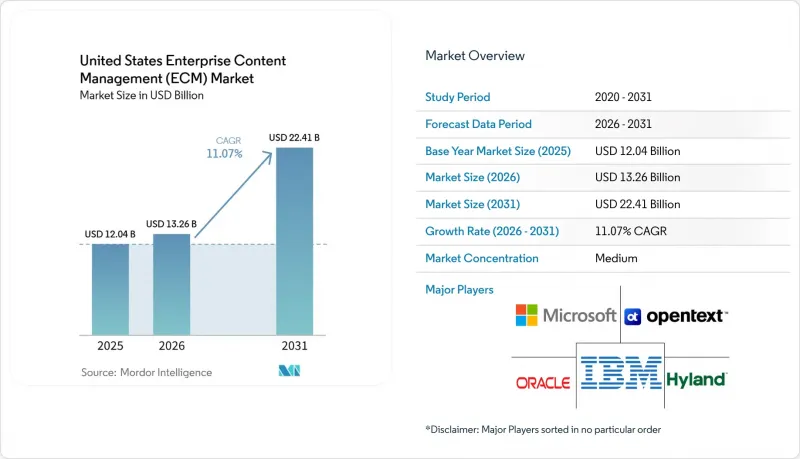
본 보고서는 솔루션 유형별(문서 관리, 기록 관리 등), 배포 모드별(온프레미스, 클라우드, 하이브리드), 기업 규모별(중소기업, 대기업), 최종 사용자 산업별(은행, 금융서비스 및 보험(BFSI), 정부·공공 부문, 의료 등)로 분류되어 있습니다. 시장 전망은 금액(달러) 기준으로 제시되어 있습니다.
미국의 기업 컨텐츠 관리(ECM) 시장 동향 및 인사이트
규제 대상 산업에서의 디지털 문서 표준화 가속화
문서 수명 주기 관리에 대한 규제 요건이 일부 부문에서 강화되면서, 이에 따라 미국의 기업 컨텐츠 관리(ECM) 시장 수요가 증가하고 있습니다. SEC 규칙 17a-4는 증권사에 대해 보존 방법의 선택권을 인정하고 있지만, 어느 선택지를 택하더라도 공식적인 전자 기록 관리와 신뢰할 수 있는 감사 가능성이 여전히 요구됩니다. 의료 분야에서는 HHS 민권국이 2024년 12월에 개정안을 제안하여, 대상 기관 및 업무 제휴사에 대해 기술 자산 인벤토리, ePHI(전자 보호 건강 정보)의 흐름을 보여주는 네트워크 맵, 그리고 연례 규정 준수 감사를 의무화하게 되었습니다. 이러한 요건은 보존 기간 관리, 접근 거버넌스, 감사 로그, 문서화된 폐기 워크플로우와 같은 현대적인 ECM 기능과 밀접하게 연계되어 있습니다. 기업이 하나의 규정 세트에 맞추어 컨텐츠 프로세스를 표준화하면, 그 동일한 구조가 다른 내부 및 외부 통제 수단도 뒷받침하는 경우가 많아, 보다 광범위한 도입을 정당화하기가 쉬워집니다.
클라우드 우선 컨텐츠 플랫폼으로의 급속한 전환
현재 미국의 기업 컨텐츠 관리(ECM) 시장에서 클라우드는 주요 아키텍처 옵션으로 자리 잡았으며, 구매자들은 이를 새로운 컨텐츠 프로그램의 기본 출발점으로 간주하고 있습니다. 현재 이러한 움직임은 인프라 비용 절감보다는 AI, 협업, 분산 액세스를 지원하는 철저한 거버넌스가 적용된 컨텐츠에 대한 수요에서 기인합니다. OpenText는 2026 회계연도 2분기 클라우드 매출이 4억 7,800만 달러였다고 보고했으며, 엔터프라이즈용 클라우드 수주액은 전년 동기 대비 18.0% 증가한 2억 9,500만 달러에 달했습니다. iManage는 2026년 5월, 전 세계 고객 기반의 78%가 클라우드로 전환했다고 발표했으며, 이는 규제가 엄격한 사용자조차도 핵심 리포지토리를 기존 환경에서 클라우드로 이전하고 있음을 보여줍니다. 클라우드 네이티브 거버넌스, 역할 기반 제어, AI 지원 인터페이스를 제공하지 못하는 벤더는 기존의 도입 모델을 유지하기가 점점 더 어려워지고 있습니다.
미국 대기업의 레거시 시스템 통합 복잡성
구식 ECM 환경은 여전히 ERP, CRM, 협업 및 아카이브 도구에 대한 맞춤형 링크에 의존하고 있으며, 이로 인해 미국의 기업 컨텐츠 관리(ECM) 시장 현대화가 지연되고 있습니다. 많은 대기업은 전환 기간 동안 기존 저장소와 신규 저장소를 병행하여 운영할 수밖에 없으며, 이로 인해 운영 부담이 증가하고 의사 결정 주기가 길어지고 있습니다. OpenText는 2026년 1월, eDOCS를 NetDocuments에 1억 6,300만 달러에 매각했습니다. 이는 각 벤더들이 클라우드와 AI에 다시 집중하는 가운데, 기존 포트폴리오를 정리하고 있는 실태를 보여주는 것입니다. 상세한 사용자 정의 규칙, 보존 기간 일정, 권한 모델을 갖춘 구매 기업은 마이그레이션 과정에서 더 어려운 과제에 직면합니다. 왜냐하면 이러한 제어 기능을 대상 환경에서 신중하게 재구축해야 하기 때문입니다. 그 결과, 현대화에 대한 수요는 지속되고 있지만, 주요 고객의 도입 속도는 둔화되고 있으며, 단계적인 마이그레이션 계획이 증가하고 있습니다.
부문 분석
2025년, 문서 관리는 미국 기업 컨텐츠 관리(ECM) 시장 점유율의 26.14%를 차지하며 최대 솔루션 카테고리가 되었습니다. 이러한 우위는 규정 준수 규칙이 일상 업무를 좌우하는 업계에서 문서의 수집, 보관, 검색에 대한 오랜 기간 수요에 힘입은 것입니다. 은행 및 금융 서비스 업계에서는 기록 보존 의무로 인해 정당성을 입증할 수 있는 문서 관리가 여전히 기본적인 구매 요건으로 남아 있습니다. 의료 업계에서는 전자 보호 건강 정보(ePHI)에 대한 거버넌스, 감사 가능성 및 접근 제어에 대한 기대가 더욱 높아짐에 따라 이러한 요구가 더욱 강해지고 있습니다.
기록 관리 및 사례 관리는 파일의 무결성과 추적 가능한 작업 이력이 중요시되는 법무, 의료, 공공 부문 환경에서 관련 요구를 지속적으로 충족시키고 있습니다. 웹 컨텐츠 관리는 대외적인 디지털 퍼블리싱을 지원하는 한편, 디지털 자산 관리는 대량의 브랜드 파일 및 미디어 파일을 관리하는 소매 및 미디어 업계에서 점점 더 주목받고 있습니다. 워크플로우 및 비즈니스 프로세스 관리는 2031년까지 연평균 성장률(CAGR) 17.42%를 나타낼 것으로 예측되며, 본 보고서에서 가장 빠르게 성장하는 솔루션 분야로 꼽히고 있습니다. 이러한 변화는 구매자의 관심이 컨텐츠 저장에서 관리된 일련의 절차를 통해 업무를 진행하는 것으로 이동하고 있음을 반영합니다. Box는 2026년 4월, 사람, AI 에이전트, 연결된 시스템 간에 작업을 분배하는 노코드 워크플로우 도구 ‘Box Automate’를 출시했는데, 이는 컨텐츠 관리와 프로세스 자동화가 융합되고 있음을 보여줍니다.
2025년, 미국 기업 컨텐츠 관리(ECM) 시장에서 클라우드가 72.83%를 차지하며 도입 모델로서 압도적인 선두를 확립했습니다. 이러한 대규모 도입 실적은 수년에 걸친 전환 활동은 물론, 구독형 제공, 원격 액세스 및 신속한 업데이트에 대한 폭넓은 지지를 반영하고 있습니다. iManage는 2026년 5월, 전 세계 고객 기반의 78%가 이미 자사의 클라우드 플랫폼을 이용하고 있으며, 2026년 중반까지 1년 동안 90개의 신규 고객을 확보했다고 보고했습니다. 또한, 구매자들이 AI 지원 환경과 보다 용이한 접근을 요구하는 가운데, 클라우드는 2031년까지 연평균 성장률(CAGR) 16.94%라는 최고치를 기록할 것으로 예측됩니다.
온프레미스 도입은 컨텐츠 보관 장소나 시스템 관리가 여전히 기밀성이 높은 연방 정부 기관, 국방 관련 환경, 그리고 엄격한 규제가 적용되는 금융 환경에서 여전히 중요한 역할을 수행하고 있습니다. 하이브리드 모델은 조직이 일부 기록을 관리된 환경에 보관하면서도 협업,분석, 그리고 새로운 AI 기능에는 클라우드를 활용할 수 있게 해주므로, 가교 역할을 하는 모델로서 그 중요성이 커지고 있습니다. 마이크로소프트의 ‘SharePoint Embedded’ 포지셔닝과 Purview를 기반으로 한 규정 준수 통합은 레거시 저장소와 새로운 클라우드 서비스 간의 연결 수단에 대한 수요를 반영하고 있습니다. 이러한 접근 방식을 통해 모든 것을 일괄적으로 교체해야 하는 부담이 완화되며, 대규모의 다양한 환경을 보유한 조직에 더 점진적인 전환 경로가 제공됩니다.
기타 혜택 :
- 엑셀 형식 시장 예측(ME) 시트
- 3개월간의 애널리스트 지원
자주 묻는 질문
목차
제1장 서론
제2장 조사 방법
제3장 주요 요약
제4장 시장 구도
제5장 시장 규모 및 성장 예측
제6장 경쟁 구도
제7장 시장 기회 및 향후 전망
AJY 26.09.03According to Mordor Intelligence, the United States enterprise content management (ECM) market size was valued at USD 12.04 billion in 2025 and is forecast to reach USD 22.41 billion by 2031, at a CAGR of 11.07% from 2026 to 2031.
This report is Segmented by Solution Type (Document Management, Records Management, and More), Deployment Mode (On-Premises, Cloud, and Hybrid), Enterprise Size (Small and Medium Enterprises, and Large Enterprises), and End-User Industry (BFSI, Government and Public Sector, Healthcare, and More). The Market Forecasts are Provided in Terms of Value (USD).
United States Enterprise Content Management (ECM) Market Trends and Insights
Accelerating Digital Document Standardization Across Regulated Industries
Regulatory demands for document lifecycle control are becoming stricter across several sectors, strengthening demand in the United States Enterprise Content Management (ECM) Market. SEC Rule 17a-4 gives broker-dealers a choice of storage approaches, but both options still require formal electronic recordkeeping and reliable auditability. In healthcare, the HHS Office for Civil Rights proposed changes in December 2024 that would require technology asset inventories, network maps showing ePHI flows, and annual compliance audits for covered entities and business associates. Those requirements align closely with modern ECM functions such as retention control, access governance, audit logs, and documented disposition workflows. Once firms standardize content processes for one rule set, the same structure often supports other internal and external controls, which makes broader rollouts easier to justify.
Rapid Shift Toward Cloud-First Content Platforms
Cloud is now the main architecture choice in the United States Enterprise Content Management (ECM) Market, and buyers are treating it as a default starting point for new content programs. The current move is less tied to infrastructure savings and more to the need for governed content that supports AI, collaboration, and distributed access. OpenText reported cloud revenue of USD 478 million in the second quarter of fiscal year 2026, and enterprise cloud bookings reached USD 295 million, up 18.0% year over year. iManage stated in May 2026 that 78% of its global customer base had migrated to the cloud, indicating that even highly regulated users are moving core repositories out of older environments. Vendors that cannot show cloud-native governance, role-based control, and AI-ready interfaces are finding it harder to defend older deployment models.
Legacy Integration Complexity in Large United States Enterprises
Older ECM estates still rely on custom links to ERP, CRM, collaboration, and archive tools, which slows modernization across the United States Enterprise Content Management (ECM) Market. Many large organizations must run both old and new repositories in parallel during migration, which increases operational effort and extends decision cycles. OpenText completed the divestiture of eDOCS to NetDocuments for USD 163 million in January 2026, which showed how vendors are pruning older portfolios as they refocus on cloud and AI. Buyers with deep custom rules, retention schedules, and permissions models face more challenging transitions because those controls must be carefully rebuilt in the target environment. The result is continued demand for modernization, but slower implementation and more staged migration plans in large accounts.
Other drivers and restraints analyzed in the detailed report include:
- Growing Need for Audit-Ready Records and Traceability
- Rising Demand for AI-Assisted Metadata Capture and Content Classification
- Data Residency and Compliance Concerns for Sensitive Content
For complete list of drivers and restraints, kindly check the Table Of Contents.
Segment Analysis
Document Management held 26.14% of the United States Enterprise Content Management (ECM) market share in 2025, making it the largest solution category. Its lead came from long-standing demand for document capture, retention, and retrieval in sectors where compliance rules shape daily operations. In banking and financial services, recordkeeping obligations still make defensible document control a basic purchase requirement. In healthcare, this need is reinforced by tighter expectations for ePHI governance, auditability, and controlled access.
Records Management and Case Management continue to serve related needs in legal, healthcare, and public-sector environments where file integrity and a traceable action history matter. Web Content Management supports outward-facing digital publishing, while Digital Asset Management is gaining more attention in retail and media settings that manage larger volumes of brand and media files. Workflow and Business Process Management is projected to grow at a 17.42% CAGR through 2031, making it the fastest-moving solution area in this report. That shift reflects a change in buyer focus from storing content to moving work through a set of governed steps. Box launched Box Automate in April 2026 as a no-code workflow tool that routes tasks across people, AI agents, and connected systems, which shows how content management and process automation are coming together.
Cloud accounted for 72.83% of the United States Enterprise Content Management (ECM) market in 2025, making it the clear leader in the deployment model. The large installed base reflects several years of migration activity and a wider preference for subscription delivery, remote access, and faster updates. iManage reported in May 2026 that 78% of its global customer base was already on its cloud platform, and the company had added 90 new customer logos in the year through mid-2026. Cloud is also projected to record the highest CAGR of 16.94% through 2031 as buyers seek AI-ready environments and easier access.
On-premises deployments still matter in federal agencies, defense-related settings, and tightly regulated financial environments where content location and system control remain sensitive. Hybrid is gaining relevance as a bridge model because it lets organizations keep some records in controlled environments while using the cloud for collaboration, analytics, and newer AI functions. Microsoft's SharePoint Embedded positioning, together with Purview-based compliance integration, reflects the demand for connectors between older repositories and newer cloud services. That approach reduces the pressure to replace everything at once and gives buyers a more gradual migration path that works for large, mixed estates.
Complete Report Scope:
- By Solution Type
- Document Management
- Records Management
- Workflow and Business Process Management
- Case Management
- Digital Asset Management
- Web Content Management
- Other Solutions
- By Deployment Mode
- On-Premises
- Cloud
- Hybrid
- By Enterprise Size
- Small and Medium Enterprises
- Large Enterprises
- By End-User Industry
- BFSI
- Government and Public Sector
- Healthcare
- IT and Telecommunications
- Manufacturing
- Retail
- Media and Entertainment
- Education
- Energy and Utilities
- Other End-User Industries
List of Companies Covered in this Report:
- OpenText Corporation
- Microsoft Corporation
- Hyland Software, Inc.
- Oracle Corporation
- IBM Corporation
- Adobe Inc.
- Box, Inc.
- Laserfiche, Inc.
- M-Files Corporation
- DocuWare GmbH
- Newgen Software Technologies Limited
- SER Group Holding GmbH
- Fabasoft AG
- Alfresco Software, Inc.
- KnowledgeLake, Inc.
- Objective Corporation Limited
- iManage LLC
- Egnyte, Inc.
- Everteam Group
- ELO Digital Office GmbH
Additional Benefits:
- The market estimate (ME) sheet in Excel format
- 3 months of analyst support
TABLE OF CONTENTS
1 INTRODUCTION
- 1.1 Study Assumptions and Market Definition
- 1.2 Scope of the Study
2 RESEARCH METHODOLOGY
3 EXECUTIVE SUMMARY
4 MARKET LANDSCAPE
- 4.1 Market Overview
- 4.2 Market Drivers
- 4.2.1 Accelerating Digital Document Standardization Across Regulated Industries
- 4.2.2 Rapid Shift Toward Cloud-First Content Platforms
- 4.2.3 Growing Need for Audit-Ready Records and Traceability
- 4.2.4 Rising Demand For AI-Assisted Metadata Capture and Content Classification
- 4.2.5 Expansion Of Citizen-Facing and Customer-Facing Digital Workflows
- 4.2.6 Hybrid Work and Distributed Collaboration Requirements
- 4.3 Market Restraints
- 4.3.1 Legacy Integration Complexity in Large Brazilian Enterprises
- 4.3.2 Data Residency And Compliance Concerns for Sensitive Content
- 4.3.3 Budget Pressure from Multi-Year Enterprise Software Modernization Cycles
- 4.3.4 Limited Internal ECM Skills in Mid-Market Organizations
- 4.4 Industry Value-Chain Analysis
- 4.5 Regulatory Landscape
- 4.6 Technological Outlook
- 4.7 Impact of Macroeconomic Factors on the Market
- 4.8 Porter's Five Forces Analysis
- 4.8.1 Threat of New Entrants
- 4.8.2 Bargaining Power of Buyers
- 4.8.3 Bargaining Power of Suppliers
- 4.8.4 Threat of Substitutes
- 4.8.5 Intensity of Competitive Rivalry
5 MARKET SIZE AND GROWTH FORECASTS (VALUE)
- 5.1 By Solution Type
- 5.1.1 Document Management
- 5.1.2 Records Management
- 5.1.3 Workflow and Business Process Management
- 5.1.4 Case Management
- 5.1.5 Digital Asset Management
- 5.1.6 Web Content Management
- 5.1.7 Other Solutions
- 5.2 By Deployment Mode
- 5.2.1 On-Premises
- 5.2.2 Cloud
- 5.2.3 Hybrid
- 5.3 By Enterprise Size
- 5.3.1 Small and Medium Enterprises
- 5.3.2 Large Enterprises
- 5.4 By End-User Industry
- 5.4.1 BFSI
- 5.4.2 Government and Public Sector
- 5.4.3 Healthcare
- 5.4.4 IT and Telecommunications
- 5.4.5 Manufacturing
- 5.4.6 Retail
- 5.4.7 Media and Entertainment
- 5.4.8 Education
- 5.4.9 Energy and Utilities
- 5.4.10 Other End-User Industries
6 COMPETITIVE LANDSCAPE
- 6.1 Market Concentration
- 6.2 Strategic Moves
- 6.3 Market Share Analysis
- 6.4 Company Profiles (includes Global Level Overview, Market Level Overview, Core Segments, Financials as Available, Strategic Information, Market Rank/Share for Key Companies, Products and Services, and Recent Developments)
- 6.4.1 OpenText Corporation
- 6.4.2 Microsoft Corporation
- 6.4.3 Hyland Software, Inc.
- 6.4.4 Oracle Corporation
- 6.4.5 IBM Corporation
- 6.4.6 Adobe Inc.
- 6.4.7 Box, Inc.
- 6.4.8 Laserfiche, Inc.
- 6.4.9 M-Files Corporation
- 6.4.10 DocuWare GmbH
- 6.4.11 Newgen Software Technologies Limited
- 6.4.12 SER Group Holding GmbH
- 6.4.13 Fabasoft AG
- 6.4.14 Alfresco Software, Inc.
- 6.4.15 KnowledgeLake, Inc.
- 6.4.16 Objective Corporation Limited
- 6.4.17 iManage LLC
- 6.4.18 Egnyte, Inc.
- 6.4.19 Everteam Group
- 6.4.20 ELO Digital Office GmbH
7 MARKET OPPORTUNITIES AND FUTURE OUTLOOK
- 7.1 White-Space and Unmet-Need Assessment


