

|
시장보고서
상품코드
2118116
미국의 컨테이너 디포 물류 시장 : 시장 점유율 분석, 업계 동향 및 통계, 성장 예측(2026-2031년)United States Container Depot Logistics - Market Share Analysis, Industry Trends & Statistics, Growth Forecasts (2026 - 2031) |
||||||
 Mordor Intelligence
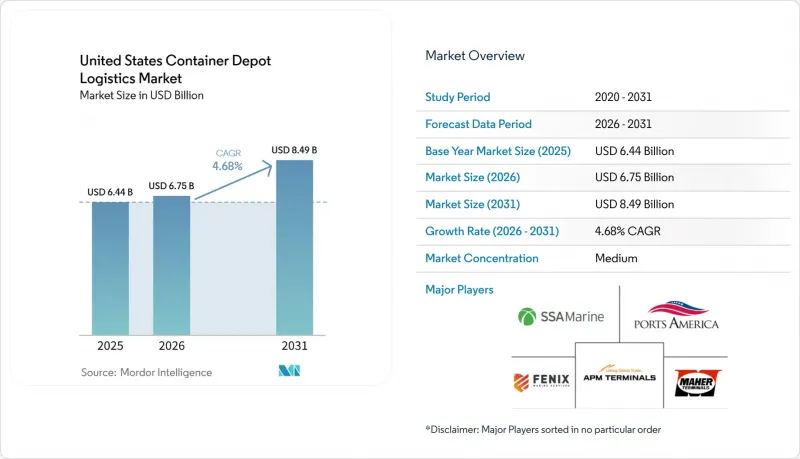
Mordor Intelligence에 의하면, 미국의 컨테이너 디포 물류 시장 규모는 2025년에 64억 4,000만 달러로 평가되었고, 2026년 67억 5,000만 달러에서 2031년까지 84억 9,000만 달러에 이를 것으로 예측되며, 예측 기간(2026-2031년) CAGR은 4.68%를 나타낼 전망입니다.
지속적인 수입 활동, 복합 운송망의 확대, 내륙 컨테이너 취급으로의 꾸준한 전환이 미국의 컨테이너 디포 물류 시장을 지속적으로 뒷받침하고 있습니다. 본 보고서는 디포 유형별(ICD, CFS, ECD, 항만형), 서비스 유형별(컨테이너 보관 서비스, 컨테이너 취급 서비스, 컨테이너 세척·세정 서비스, 기타), 컨테이너 유형별(드라이 컨테이너, 냉장 컨테이너), 무역 지향별(국제/환적, 국내), 지역별(북동부, 남동부, 중서부, 남서부, 서부)로 분류되어 있습니다. 시장 전망은 금액(달러) 기준으로 제시되어 있습니다.
미국의 컨테이너 디포 물류 시장 동향 및 인사이트
인터모달 철도 및 항만 혼잡 회피 수요
내륙 디포는 그렇지 않으면 항만 대기 줄에서 더 오래 체류하게 될 화물을 수용하고 있습니다. ITS Logistics는 2026년 6월, 운송 능력 제약이 지속되고 있는 데다 연료비 급등으로 인해 성수기 동안 하류 부문에서 가격이 급등할 위험이 높아짐에 따라, 미국 전역의 항만 및 철도 지역에서 우려 수준이 여전히 높은 상태라고 보고했습니다. 이러한 변화로 인해 시카고, 댈러스, 포트워스, 멤피스, 애틀랜타의 내륙 철도 램프 인근에 위치한 디포의 전략적 가치가 높아지고 있습니다. 이러한 거점들은 이전에는 연안 터미널 인근에 정체되어 있던 잉여 화물을 흡수하게 되었기 때문입니다. 철도의 비용 우위성 또한 내륙에서의 하역 대상 범위를 확대시키고 있으며, 혼잡 완화는 긴급 대응이 아닌 계획적인 활용 사례로 자리 잡고 있습니다. 2026년 5월 노퍽 서던(Norfolk Southern)사의 운행 서비스를 시작하여 연간 20만 컨테이너의 처리 능력을 갖춘,총 1억 3,400만 달러 규모의 신규 시설인 ‘게인즈빌 내륙항’은 미국 컨테이너 디포 물류 시장에서 내륙 회랑이 얼마나 전용 거점으로 자리 잡고 있는지를 보여주고 있습니다.
수입 컨테이너의 재배치 및 보관 주기 확대
컨테이너 취급 중, 직접 적재된 수입 화물의 운송이 아닌 재배치나 보관과 관련된 비중이 증가하고 있습니다. 미국 무역에서 매치백 효율의 저하와 빈 컨테이너 재배치 구간 증가로 인해, 더 많은 컨테이너가 운영에 복귀하기 전에 검사, 세척, 경미한 수리를 위해 디포를 경유해야만 하고 있습니다. 2025년 관세로 인한 재고 축적은 이러한 압박을 더욱 가중시켰습니다. 수입량 증가로 인해 빈 컨테이너 반환이 지연되면서, 전체 디포 네트워크에서 분류 및 임시 보관이 필요해졌기 때문입니다. 이러한 수요 기반은 평소의 수입 증가율과는 관련성이 낮으며, 수요의 급격한 변동 이후 운송업체가 설비의 균형을 어떻게 재조정하느냐는 점과 밀접하게 연관되어 있어 사업자에게 유리합니다. 또한, 단순한 보관에 그치지 않고 세척, 수리, 출하 준비와 같은 지속적인 업무를 창출하여 대규모 시설의 수익 안정성을 높이고 있습니다. 게다가 체류료 및 지연료 처리에 대한 연방 정부의 모니터링도 미국 컨테이너 디포 물류 시장에서 해운사 및 사업자들에게 빈 컨테이너의 체류 시간을 단축하고 야드의 효율을 개선하도록 촉진하고 있습니다.
야드 및 수리 업무의 인력 부족
미국의 컨테이너 디포 물류 시장에서 인력 부족이 게이트 요원, 컨테이너 취급, 전문적인 유지보수 업무에 계속해서 영향을 미치고 있습니다. 노동력의 고령화와 신입 사원의 교육 기간이 길기 때문에 운영 사업자는 업무 중단 후 인력 체제를 신속하게 재구축하기 어렵습니다. 이러한 인력 부족은 캘리포니아주, 애리조나주, 텍사스주에서 특히 심각합니다. 이 지역들은 게이트웨이의 처리량이 방대하기 때문에 인력 부족이 야드 내 컨테이너 회전율과 수리 리드타임에 미치는 영향이 더욱 커집니다. 2025년 중반 『로스앤젤레스 타임스』의 보도에 따르면, 수입 부진과 인력 부족이 로스앤젤레스 항의 업무에 타격을 입힌 결과, 항만 내 구인 건수가 급감한 것으로 나타났습니다. 운영사들은 자동화 및 장비 청정화 프로그램으로 대응하고 있지만, 냉장 컨테이너 정비, 용접, IICL 검사는 여전히 숙련된 기술자에 의존하고 있으며, 이들의 부족으로 인해 수리 기간이 길어지고 체류 위험이 높아지고 있습니다. 이러한 부담은 유지보수·수리 부문에서 가장 두드러지며, 전문가 한 명이 부족할 때마다 훨씬 더 광범위한 네트워크에서 컨테이너의 운항 재개가 지연될 가능성이 있습니다.
부문별 분석
2025년 현재, 내륙 컨테이너 창고는 미국 컨테이너 디포 물류 시장 규모의 38.20%를 차지하고 있으며, 2031년까지 연평균 성장률(CAGR) 7.54%로 확대될 것으로 예측됩니다. 이러한 규모와 성장률의 조합은 성숙한 물류 틈새 시장에서는 이례적인 것으로, 동일한 자산 유형이 현재 수요와 미래의 네트워크 재설계 모두를 견인하고 있기 때문입니다. ICD(내륙 컨테이너 디포)가 점유율을 확대하고 있는 이유는 게이트웨이의 혼잡을 완화하고, 보관, 통관 업무, 냉장 컨테이너 대기 및 환적을 내륙 수요 거점에 더 가까운 곳으로 옮길 수 있기 때문입니다. 따라서 미국의 컨테이너 디포 물류 시장은 해안 지역의 토지 부족으로 인해 철도와 연결된 내륙 회랑으로 운영 거점의 일부를 이전하고 있습니다. 게인즈빌 내륙항 및 기타 내륙 터미널 프로젝트는 운송업체와 철도 회사가 내륙 접근성을 2차적인 과잉 물량 처리 수단이 아닌, 컨테이너 흐름 설계의 핵심 요소로 인식하고 있음을 보여줍니다.
컨테이너 화물 스테이션이 안정적인 역할을 유지하고 있는 이유는 소매업체와 전자상거래 수입업체들이 게이트웨이 및 내륙 유통 거점 인근에서 LCL(컨테이너 단위 미만의 화물) 혼재 및 분할 하역을 여전히 필요로 하기 때문입니다. 빈 컨테이너 보관소는 수요의 급격한 변동 이후 운송업체들이 불충분한 설비 매칭 패턴을 해소하는 과정에서 검사, 세척, 재배치에 대한 수요가 증가함에 따라 혜택을 보고 있습니다. 항만 거점의 디포는 적시(JIT) 컨테이너 배치에 있어 여전히 중요한 역할을 수행하고 있습니다. 이는 터미널 인근에서 컨테이너의 신속한 회전을 요구하는 해운사들에게 선박에 대한 직접 접근이 여전히 중요하기 때문입니다. BNSF가 승인을 받은 4,500에이커 규모의 ‘버스토우 인터내셔널 게이트웨이’는 해안 야드에 부담을 주는 대신 내륙에서의 분류 및 환적을 핵심으로 하는 모델을 구축하고 있으며, 이는 장기적인 자본이 어디로 향하고 있는지를 보여줍니다. 이러한 부문 구조는 디포형 경쟁이 더 이상 단순한 야드 분류에 그치지 않고, 보다 광범위한 철도, 항만, 화물 네트워크 내에서 각 자산이 어떤 위치를 차지하는지에 초점이 이동하고 있음을 보여줍니다.
2025년, 미국 컨테이너 디포 물류 시장에서 컨테이너 보관 서비스가 34.99%의 점유율을 차지한 반면, 컨테이너 유지보수 및 수리 서비스는 2031년까지 연평균 성장률(CAGR) 8.70%를 나타낼 것으로 예측됩니다. 수입의 급증, 빈 컨테이너의 재배치, 수요 패턴의 변동과 같은 요인으로 인해 완충 용량이 지속적으로 활용되고 있기 때문에 보관 서비스는 여전히 가장 큰 서비스 부문으로 남아 있습니다. 이로 인해, 특히 항만이나 철도의 상황이逼迫했을 때 화주가 디포를 단기적인 조정 수단으로 활용하는 네트워크에서 보관 서비스는 안정적인 기반을 확보하고 있습니다. 대규모 발주 주기를 거치며 컨테이너의 평균 사용 연수가 늘어남에 따라, 유지보수 및 수리 서비스의 성장 속도가 가속화되고 있습니다. 이는 미국의 컨테이너 디포 물류 시장이 단순한 야드 점유율뿐만 아니라 서비스 밀도를 통해 더 많은 가치를 창출하고 있음을 의미합니다.
하역 서비스는 여전히 취급량에 좌우되고 있으며, 앞으로도 해상 터미널 및 내륙 디포의 취급량에 연동하여 추이를 보일 것으로 보입니다. 수입된 농산물 및 냉장 컨테이너에 대한 검사 및 생물 안전 대책이 엄격해지는 가운데, 세척·세탁 서비스의 중요성이 높아지고 있습니다. 환적, 선단 관리, 통관 조정 등 기타 부가가치 서비스는 사업자가 화물 사슬의 더 많은 단계에 지속적으로 관여할 수 있게 해주기 때문에 이익률 확대에 있어 가장 확실한 여지를 제공합니다. 연방 정부의 체류료 및 지연료 관행에 대한 모니터링 또한 컨테이너가 정비 작업을 기다리는 동안 수리 일정의 중요성과 서비스 실행의 신속화가 얼마나 중요한지를 부각시키고 있습니다. 예측 기간 동안, 더 폭넓은 서비스 메뉴를 보유한 사업자는 주로 보관에 의존하는 제공업체보다 운임 압박에 덜 노출될 것으로 예측됩니다.
기타 혜택
- 엑셀 형식 시장 예측(ME) 시트
- 3개월간의 애널리스트 지원
자주 묻는 질문
목차
제1장 서론
제2장 조사 방법
제3장 주요 요약
제4장 시장 구도
제5장 시장 규모 및 성장 예측(금액, 2026-2031년)
제6장 경쟁 구도
제7장 시장 기회 및 향후 전망
AJY 26.09.03According to Mordor Intelligence, the United States container depot logistics market size was valued at USD 6.44 billion in 2025 and estimated to grow from USD 6.75 billion in 2026 to reach USD 8.49 billion by 2031, at a CAGR of 4.68% during the forecast period (2026-2031).
Sustained import activity, wider intermodal links, and a steady move toward inland container handling continue to support the United States container depot logistics market. This report is Segmented by Depot Type (ICDs, CFS, Ecds, Port-Based), by Service Type (Container Storage, Container Handling, Container Cleaning and Washing, and More), by Container Type (Dry, and Reefer), by Trade Orientation (International/Transshipment, Domestic), and by Region (Northeast, Southeast, Midwest, Southwest, and West). The Market Forecasts are Provided in Terms of Value (USD).
United States Container Depot Logistics Market Trends and Insights
Intermodal Rail and Port Congestion Diversion Demand
Inland depots are taking freight that would otherwise sit longer inside port queues. ITS Logistics reported in June 2026 that concern levels remained elevated across the United States' port and rail regions, as capacity remained constrained and rising fuel costs increased the risk of downstream price surges during the peak season. The shift is raising the strategic value of depots near inland rail ramps in Chicago, Dallas, Fort Worth, Memphis, and Atlanta, as those sites now absorb overflow that previously stayed near coastal terminals. Rail's cost advantage is also widening the addressable base for inland handling, so congestion relief is becoming a planned use case instead of an emergency response. The new USD 134 million Gainesville Inland Port, which opened in May 2026 with Norfolk Southern service and 200,000-container annual capacity, shows how inland corridors are becoming dedicated nodes in the United States container depot logistics market.
Growth in Import Container Repositioning and Storage Cycles
A growing share of container activity is tied to repositioning and storage rather than direct loaded import movement. The weaker match-back efficiency in the United States trade and a higher volume of empty repositioning legs, which means more containers must cycle through depots for inspection, cleaning, and minor repair before returning to service. Tariff-led inventory stockpiling in 2025 added to this pressure, as higher inbound flows triggered a later wave of empty returns that had to be sorted and staged across depot networks. This demand base is useful for operators because it is less tied to day-to-day import growth and more tied to how carriers rebalance equipment after demand shocks. It also creates recurring work that extends beyond storage into washing, repair, and turn preparation, which improves revenue stability for larger facilities. Federal scrutiny of detention and demurrage practices is also pushing shipping lines and operators to shorten empty-container dwell time and improve yard efficiency across the United States container depot logistics market.
Labor Shortages in Yard and Repair Operations
Labor shortages continue to affect gate staffing, equipment handling, and specialized maintenance work across the United States container depot logistics market. An aging labor base and long training cycles for new hires limit how quickly operators can rebuild staffing depth after disruptions. These shortages are especially important in California, Arizona, and Texas, where high gateway volume magnifies the impact of any labor shortfall on yard turns and repair lead times. Los Angeles Times reporting in mid-2025 showed port job availability had fallen sharply as import softness and workforce constraints hit activity at the Port of Los Angeles. Operators are responding with automation and cleaner equipment programs, yet reefer servicing, welding, and IICL inspections still depend on trained technicians, whose scarcity extends repair cycles and increases detention exposure. The strain is most visible in maintenance and repair, where each missing specialist can delay container return-to-service for a much wider network.
Other drivers and restraints analyzed in the detailed report include:
- E-Commerce Led Domestic Container Movement
- Expansion of Value-Added Depot Services
- Emissions Compliance and Equipment Replacement Costs
For complete list of drivers and restraints, kindly check the Table Of Contents.
Segment Analysis
Inland container depots accounted for 38.20% of the United States container depot logistics market size in 2025 and are projected to expand at a 7.54% CAGR through 2031. That mix of scale and growth is unusual in a mature logistics niche, as the same asset type is driving both current demand and future network redesign. ICDs are gaining share because they relieve gateway congestion and move storage, customs work, reefer staging, and transloading closer to inland demand centers. The United States container depot logistics industry is therefore shifting part of its operating center away from coastal land scarcity and toward rail-linked inland corridors. Gainesville Inland Port and other inland terminal projects show that carriers and railroads now see inland access as a core piece of container flow design rather than a secondary overflow option.
Container freight stations keep a stable role because retailers and e-commerce importers still need less-than-container-load consolidation and deconsolidation near gateway and inland distribution points. Empty container depots benefit from higher inspection, washing, and repositioning needs as carriers work through weaker equipment match-back patterns after demand shocks. Port-based depots remain important for just-in-time equipment positioning because direct vessel access still matters for lines that want faster box turnaround near terminals. BNSF's approved 4,500-acre Barstow International Gateway shows where long-term capital is moving, with a model built around inland sorting and transloading rather than adding pressure to coastal yards. This segment structure shows that depot-type competition is now less about simple yard classification and more about where each asset sits within broader rail, port, and cargo networks.
Container storage services accounted for 34.99% of the United States container depot logistics market share in 2025, while container maintenance and repair services are set to grow at 8.70% CAGR through 2031. Storage remains the largest service line because import surges, empty repositioning, and volatile demand patterns all keep buffer capacity in use. That gives storage a steady base, especially in networks where shippers use depots as a short-term valve when port or rail conditions tighten. Even so, faster growth is moving toward maintenance and repair because container age profiles have lengthened after the large ordering cycle. This means the United States container depot logistics market is generating more value from service intensity rather than from basic yard occupancy alone.
Handling services remain volume-driven and will continue to track throughput at marine terminals and inland depots. Cleaning and washing services are gaining relevance where imported agricultural and reefer containers face tighter inspection and biosecurity routines. Other value-added services, including transloading, fleet management, and customs coordination, offer the clearest scope for margin expansion because they keep operators inside more steps of the cargo chain. Federal scrutiny of detention and demurrage practices also underscores the importance of repair scheduling and faster service execution when containers are awaiting maintenance work. Over the forecast period, operators with broader service menus should be less exposed to rate pressure than providers that depend mainly on storage.
Complete Report Scope:
- By Depot Type
- Inland Container Depots (ICDs)
- Container Freight Stations (CFS)
- Empty Container Depots (ECDs)
- Port-Based Container Depots
- By Service Type
- Container Storage Services
- Container Handling Services
- Container Maintenance and Repair (M&R) Services
- Container Cleaning & Washing Services
- Other Value-Added Logistics Services
- By Container Type
- Dry Containers
- Reefer Containers
- By Trade Orientation
- International/Transshipment Container Handling
- Domestic Container Movement
- By Region
- Northeast
- Southeast
- Midwest
- Southwest
- West
List of Companies Covered in this Report:
- SSA Marine
- Ports America
- APM Terminals
- Fenix Marine Services
- Maher Terminals
- Everport Terminal Services
- ConGlobal Industries, LLC
- Yusen Terminals
- Pacific Container Terminal
- ContainerPort Group
- IMC Logistics
- CSX Corporation
- Norfolk Southern Corporation
- BNSF Railway Company
- Union Pacific Corporation
- CMA CGM America (through terminal/depot operations)
- MSC Mediterranean Shipping Company USA
- Hapag-Lloyd USA
- Evergreen Shipping Agency (America) Corp.
- COSCO SHIPPING Lines (North America) Inc.
- Ocean Network Express (ONE) USA
- ZIM Integrated Shipping Services USA
Additional Benefits:
- The market estimate (ME) sheet in Excel format
- 3 months of analyst support
TABLE OF CONTENTS
1 Introduction
- 1.1 Study Assumptions and Market Definition
- 1.2 Scope of the Study
2 Research Methodology
3 Executive Summary
4 Market Landscape
- 4.1 Market Overview and Importance of Container Depot Logistics
- 4.2 Market Drivers
- 4.2.1 Intermodal Rail and Port Congestion Diversion Demand
- 4.2.2 Growth in Import Container Repositioning and Storage Cycles
- 4.2.3 E-Commerce Led Domestic Container Movement
- 4.2.4 Expansion of Value-Added Depot Services
- 4.2.5 Digital Yard Visibility and Appointment Management Adoption
- 4.2.6 Demand for Refrigerated Container Handling Readiness
- 4.3 Market Restraints
- 4.3.1 Labor Shortages in Yard and Repair Operations
- 4.3.2 Emissions Compliance and Equipment Replacement Costs
- 4.3.3 Rail and Truck Capacity Bottlenecks at Inland Hubs
- 4.3.4 Land Availability and Zoning Constraints Near Gateway Hubs
- 4.4 Regulatory Framework
- 4.5 Value Chain and Distribution Channel Architecture Analysis
- 4.6 Technology Innovations Outlook
- 4.7 Porter's Five Forces Analysis
- 4.7.1 Threat of New Entrants
- 4.7.2 Bargaining Power of Suppliers
- 4.7.3 Bargaining Power of Buyers
- 4.7.4 Threat of Substitutes
- 4.7.5 Rivalry Among Competitors
- 4.8 Container Throughput Trends
- 4.9 Import-Export Trade Analysis
- 4.10 Port and Terminal Infrastructure Analysis
- 4.11 Sustainability and ESG Analysis
- 4.12 Evolution of Container Depot Logistics Market
- 4.13 Impact of Geo-Political Events on Supply Chain Shifts
5 Market Size and Growth Forecasts (Value, 2026-2031)
- 5.1 By Depot Type
- 5.1.1 Inland Container Depots (ICDs)
- 5.1.2 Container Freight Stations (CFS)
- 5.1.3 Empty Container Depots (ECDs)
- 5.1.4 Port-Based Container Depots
- 5.2 By Service Type
- 5.2.1 Container Storage Services
- 5.2.2 Container Handling Services
- 5.2.3 Container Maintenance and Repair (M&R) Services
- 5.2.4 Container Cleaning & Washing Services
- 5.2.5 Other Value-Added Logistics Services
- 5.3 By Container Type
- 5.3.1 Dry Containers
- 5.3.2 Reefer Containers
- 5.4 By Trade Orientation
- 5.4.1 International/Transshipment Container Handling
- 5.4.2 Domestic Container Movement
- 5.5 By Region
- 5.5.1 Northeast
- 5.5.2 Southeast
- 5.5.3 Midwest
- 5.5.4 Southwest
- 5.5.5 West
6 Competitive Landscape
- 6.1 Market Concentration
- 6.2 Key Strategic Moves
- 6.3 Market Share Analysis
- 6.4 Company Profiles (includes Global level Overview, Market level overview, Core Segments, Financials as available, Strategic Information, Market Rank/Share for key companies, Products & Services, and Recent Developments)
- 6.4.1 SSA Marine
- 6.4.2 Ports America
- 6.4.3 APM Terminals
- 6.4.4 Fenix Marine Services
- 6.4.5 Maher Terminals
- 6.4.6 Everport Terminal Services
- 6.4.7 ConGlobal Industries, LLC
- 6.4.8 Yusen Terminals
- 6.4.9 Pacific Container Terminal
- 6.4.10 ContainerPort Group
- 6.4.11 IMC Logistics
- 6.4.12 CSX Corporation
- 6.4.13 Norfolk Southern Corporation
- 6.4.14 BNSF Railway Company
- 6.4.15 Union Pacific Corporation
- 6.4.16 CMA CGM America (through terminal/depot operations)
- 6.4.17 MSC Mediterranean Shipping Company USA
- 6.4.18 Hapag-Lloyd USA
- 6.4.19 Evergreen Shipping Agency (America) Corp.
- 6.4.20 COSCO SHIPPING Lines (North America) Inc.
- 6.4.21 Ocean Network Express (ONE) USA
- 6.4.22 ZIM Integrated Shipping Services USA
7 Market Opportunities and Future Outlook
- 7.1 White-space and Unmet-Need Assessment


